“Whataboutisms” are the perfect, all-purpose defense for all wrongdoings.
Yesterday, Donald Trump said he gladly would accept help from Russia in the 2020 election.
That is illegal. From an article in the 6/14/19 issue of the Chicago Tribune:
Federal Election Commission Chairwoman Ellen Weintraub released a statement Thursday making clear that candidates for public office may not receive help from a foreign government.
Tweeting her statement, Weintraub wrote, “I would not have thought I needed to say this.”
“Let me make something 100% clear to the American public and anyone running for public office,” Weintraub wrote.
“It is illegal for any person to solicit, accept, or receive anything of value from a foreign national in connection with a U.S. election. This is not a novel concept.”
Sen. Lindsey Graham of South Carolina, a staunch Trump ally, said “I think it’s a mistake of law. I don’t want to send a signal to encourage this.”
Then we come to the “whataboutism,” also quoted in the Tribune article:
But Graham likened Trump’s stance to Democratic support for a research firm run by British ex-spy Christopher Steele that explored Trump’s ties to Russia in the last campaign. (Steele was hired as a private citizen and used his contacts to gather information.)
It’s perfect. The idea is, if you break the law, you need only to find one other entity that has done anything questionable, and that immediately exonerates you.
Just find something — anything, really — that in some vague way approximates, or almost approximates, the illegal or immoral act and bingo, you’re home free.
Let me give you some other examples:
The claim: “Hitler was evil. He sent innocent people to die in concentration camps.”
The “whataboutism” that exonerates Hitler: What about Roosevelt? He sent innocent Japanese to concentration camps.
Hitler is cleared.
Here’s another:
Trump is an immoral, sex-crazed mysogneist. He cheated on all three wives, paid prostitutes to stay silent, walked in to watch naked women dressing for beauty contests, and boasted about groping women.
Whataboutism: What about Bill Clinton? He had affairs, too.
Therefore, Trump is innocent.
Or another: According to the Washington Post:
“It took President Trump 601 days to top 5,000 false and misleading claims in The Fact Checker’s database, an average of eight claims a day.
“But on April 26, just 226 days later, the president crossed the 10,000 mark — an average of nearly 23 claims a day in this seven-month period, which included the many rallies he held before the midterm elections, the partial government shutdown over his promised border wall and the release of the special counsel’s report on Russian interference in the presidential election.
“This milestone appeared unlikely when The Fact Checker first started this project during his first 100 days.
“In the first 100 days, Trump averaged less than five claims a day, which would have added up to about 7,000 claims in a four-year presidential term. But the tsunami of untruths just keeps looming larger and larger.”
And now for the “whataboutism”:
Whatabout Obama. He said, “If you like your health care plan, you can keep it.”
Therefore, either Trump is not a liar, or if he is, it doesn’t matter, because Obama was a liar.
You’ll see Trump’s defenders using whataboutisms every day, simply because Trump’s acts are so egregious, there are no true defenses.
Whataboutisms seem to say, “You can’t say anything negative about my guy, no matter how bad he may be, so long as your guy isn’t absolutely pure.”
It’s the perfect, all-purpose defense for the scoundrel.
Trump tried to explain his willingness to accept illegal election help from a foreign government as “opposition research.” They are not the same, and given that he is surrounded by lawyers, he knows it.
(In fact, he actually disputes it with FBI Director Christopher Wray
“Whataboutisms” appeal to the shallow thinkers — i.e Trump followers — who cannot see the inherent illogic.
Watch for “whataboutisms” in tomorrow’s newspapers, TV, and tweets. “Whataboutisms” are everywhere, perhaps because shallow thinkers and evil-doers are everywhere.
The most important problems in economics involve the excessive income/wealth/power Gaps between the richer and the poorer.
Wide Gaps negatively affect poverty, health and longevity, education, housing, law and crime, war, leadership, ownership, bigotry, supply and demand, taxation, GDP, international relations, scientific advancement, the environment, human motivation and well-being, and virtually every other issue in economics.
Implementation of The Ten Steps To Prosperity can narrow the Gaps:
Each day I receive an Email from dailybriefing@theweek.com. It contains ten paragraphs, each summarizing key world events from the previous day.
I was struck by the commonality of items in today’s edition. Here are excerpts:
(I’ve given the excerpts my own title:)
I call this one. “Gee Donald, what did you expect?”
Pompeo blames Iran for apparent tanker attacks
Secretary of State Mike Pompeo on Thursday blamed Iran for attacks on two oil tankers carrying petrochemicals in the Gulf of Oman near the Strait of Hormuz, a key waterway for oil shipments. Iran’s United Nations mission said it “categorically rejects” this “unfounded” claim.
Tensions have escalated in the Mideast as Iran appears poised to break the 2015 nuclear deal with world powers, an accord that President Donald Trump repudiated last year.
In the deal, Tehran agreed to limit its enrichment of uranium in exchange for the lifting of crippling sanction. Already, Iran says it quadrupled its production of low-enriched uranium.
Meanwhile, U.S. sanctions have cut off opportunities for Iran to trade its excess uranium and heavy water abroad, putting Tehran on course to violate terms of the nuclear deal regardless.
I call this next one, “Remind me again, what is the job of a press secretary?”
Trump says Sarah Huckabee Sanders leaving as press secretary
President Trump announced Thursday that White House Press Secretary Sarah Huckabee Sanders would leave her post next month. Trump called Sanders “a warrior,” and said she should run for governor back home in Arkansas.
Sanders is one of the few close Trump aides remaining from his campaign. Sanders said serving in the job was “the honor of a lifetime,” and that she would remain an “outspoken and loyal” Trump supporter.
Since Sanders succeeded Sean Spicer in the job in mid-2017, she has done away with regular White House press briefings and faced questions about her credibility.
[Her credibility took a serious blow after she admitted to special counsel Robert Mueller’s office that her public assertions that many FBI workers had expressed support for Trump’s firing of former FBI Director James Comey were fabricated.]
This next one is, “What? A Trump appointee broke the law? Who could have predicted that?”
Watchdog recommends firing Kellyanne Conway
The Office of Special Counsel, a government watchdog, said Thursday that President Trump should fire senior adviser Kellyanne Conway for violating a federal ethics law against partisan comments by federal employees.
The office, which is unrelated to former Special Counsel Robert Mueller’s office, said in a letter accompanying a report that Conway was a “repeat offender” of the Hatch Act’s prohibition against campaign politics in the federal workplace.
The letter, signed by agency head Henry Kerner, said Conway’s flouting of the law, “if left unpunished,” sends the message that other federal employees can do the same. “Her actions erode the principal foundation of our democratic system — the rule of law,” the letter said.
The White House rejected the assessment and demanded that Kerner withdraw the report.
[White House social media director Dan Scavino, former US ambassador to the UN Nikki Haley, Melania Trump’s spokeswoman, Stephanie Grisham, and at least another half dozen Trump White House staffers have also been reprimanded or warned by the special counsel’s office for Hatch Act violations.]
And this last one is, “Nothing wrong with my pals, despots like Putin, Kim, Salman, and Duterte, helping me win elections. Anyway, I’m the law.”
FEC chair stresses that accepting foreign election help is illegal
After President Trump said he would accept political dirt on opponents offered by foreign governments, Federal Election Commission Chairwoman Ellen Weintraub tweeted a statement Thursday clarifying that it is illegal to “solicit, accept, or receive anything of value from a foreign national in connection with a U.S. election.”
She added: “This is not a novel concept. Electoral intervention from foreign governments has been considered unacceptable since the beginnings of our nation.”
She added that anyone failing to tell the FBI about any “prohibited donation” or who “accepts foreign assistance risks being on the wrong end of a federal investigation.”
Trump earlier defended his remarks, tweeting that it would be “ridiculous” for him to report every conversation he has with a world leader to the FBI.
Ah yes, it’s just another day in Trumpland, where the law is only what Trump says it is, and America slides further into corruption and disgrace.
The June 12, 2019 issue of the Chicago Tribune contained an article explaining why the middle classes and the poor don’t need healthcare insurance.
Here are some excerpts and comments:
Medicare chief: ‘For all’ plan will cost more
By Lisa Schencker Chicago Tribune
The Tribune sat down with Seema Verma, head of the federal Centers for Medicare & Medicaid Services and an appointee of President Donald Trump.
Verma opposes Medicare for All, the idea of expanding Medicare to cover all Americans, and the administration said earlier this year it supports a Texas judge’s ruling that Obamacare is unconstitutional.
Just for clarity, Medicare for All and Obamacare are two separate issues that are related in only two ways:
Both “Medicare for All” and “Obamacare” would provide healthcare insurance for the middle classes and the poor
Trump and the Republican party, while opposing both plans, have not offered an alternative that would provide healthcare insurance to the non-rich.
Q: The doctors who support Medicare for All say it would allow doctors and hospitals to spend less money on administration because they wouldn’t be dealing with multiple insurance companies. What are your thoughts on that argument?
Virma: One of the things I hear a lot is we should go to Medicare for All because of the lower administrative costs.
The reality is we’re not spending enough on administration within Medicare. There’s a lot of bureaucracy that goes on with the Medicare program in terms of access to technology, protecting taxpayers against fraud and abuse and it’s because we haven’t made those investments in administering the program like you would see in the private sector.
The main issue with Medicare for All and having the government take over the entire program, is that we’re not going to see savings.
It’s actually going to cost more, which means taxpayers are going to pay more, and when they’re paying more, that’s going to lead to rationing of care and problems with access to care.
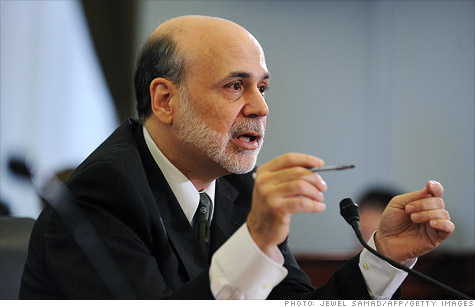
Bernanke & Greenspan: It’s our little secret. Don’t tell the people we don’t use their tax dollars.
The above arguments all have to do with costs: “Administrative costs,” “protecting taxpayers,” “not going to see savings,” and “taxpayers are going to pay more.”
But all are based on the deception that federal taxpayers pay for federal spending. They don’t.
The U.S. federal government is unlike state and local governments in that the federal government uniquely is Monetarily Sovereign.
The federal government invented the U.S. dollar, created the very first dollars from thin air, continues to create dollars from thin air, and never can run short of dollars.
Even if all federal tax collections fell to $0, the U.S. federal government could continue spending unlimited amounts, forever.
The U.S. government has a technology, called a printing press (or, today, its electronic equivalent), that allows it to produce as many U.S. dollars as it wishes at essentially no cost.
Unlike state and local governments, which keep their dollars in private banks, the federal government does not store tax dollars for future use.
Instead, when paying for goods and services, the federal government uniquely creates brand new dollars, ad hoc.
(If anyone disagrees with the above statements, I invite you to tell me how much money the federal government has. Take all the time you need.)
Q: According to some surveys, most Americans support a government-run health insurance system. How do you respond to that kind of public opinion?
A: When you dig a little bit deeper into those surveys and people understand that it means that they’re going to be stripped of their private coverage, that they’re not going to be able to make choices, that innovation is going to be impacted, that they may have longer wait times — when you put all those pieces together, Americans are not supportive of that.
This all is absolutely false.
Medicare does not “strip people of their private coverage,” nor would Medicare for All. No one is required to accept Medicare, and Medicare for All would require no one to give up their private health care insurance.
Central banks can issue currency effectively without limit. A government cannot become insolvent with respect to obligations in its own currency
However, Medicare users opt for the government’s Medicare plans because they are cheaper and more comprehensive than private insurance plans. Ask any Medicare user whether he wishes he still was paying for his private plan.
Virma doesn’t explain what “choices” would be taken away, but anyone who chooses not to accept Medicare can make that choice, and buy private health care insurance.
Medicare coverages are vast, and generally provide as much or more medical choices, as do private healthcare insurance policies.
Because a federal program does not need to worry about profits, Medicare for All has a far greater capability to pay for the most expensive medical treatments, as well as long term care.
As for “innovation,” Medicare simply is a payment method. Neither Medicare nor private insurance impact medical innovation, with the exception of coverages, and here Medicare has a huge advantage: Medicare is not guided by the need to make a profit.
The so-called “longer wait times” merely refer to the fact that more people, not just the rich, would be able to pay for healthcare.
With Medicare for All, more people would be able to visit doctors for periodic checkups. This, of course, is a good thing.
On the other side, fewer poor people would use the emergency room as their primary care source, which would free up that function for true emergencies.
As Medicare, and almost every other function in a capitalist society demonstrates, when demand goes up, supply goes up.
Medicare for All would result in more hospitals, doctors, etc. in more convenient locations.
Q: For a lot of people, the bottom line is that seniors look forward to being on Medicare. People are eager to turn 65 so they can be on Medicare and no longer have to have private insurance.
If seniors like it so much, why can’t it work for everyone?
Virma: We need to have a solution that provides affordable health care coverage and that all Americans have access to that.
But the Medicare program was uniquely designed for seniors and those seniors have paid into the program their entire lives, and we need to make sure that program is protected and preserved for those beneficiaries, and address access to affordable coverage for other Americans.
Virma, a Trump appointee, claims to want “a solution that provides affordable health care coverage and that all Americans have access to that” — in short, Medicare for All.
Sadly, Virma’s party has done everything in its power to cut and eliminate those very programs: Medicare, Medicaid and Obamacare.
In essence, the Republicans say, “I want everyone to be healthy, so let’s eliminate their healthcare.”
Salaried people (though not millions of others) have paid FICA taxes, but as we explained earlier, federal taxes do not fund federal spending (and in fact, onlyMedicare Part A is claimed to be funded by FICA).
Q: When it comes to the Affordable Care Act, a lot of people are unhappy with the way prices for health insurance have increased.
But they’re happy about the rules barring discrimination based on preexisting conditions and the disappearance of caps on how much insurers will pay for coverage.
There’s a feeling among some people that regulation is needed, that competition among insurers alone is not going to result in the best outcomes for people.
Virma: This administration supports protections for people with preexisting conditions and we understand there is some regulation that works well.
I think the issue is government overreach and going too far. While the (Affordable Care Act) has provided protection that we support, it has also driven up health insurance premiums.
This administration has given lip service to “protections for people with preexisting conditions,” but in reality, it has tried to eliminate the programs that provide those protections.
They call such protections, “government overreach” which is their description of any spending that does not benefit the rich.
Q: Should Americans continue to buy insurance through the Affordable Care Act exchange when the Trump administration has made it clear that it wants the law to disappear?
Virma: The law is not working. What we want to do is provide more affordable options for individuals.
Translation: “Not working” means, “Despite all our efforts to make the plan unworkable, it still is providing valuable benefits to low- and middle-income families and their children. Please ignore the fact that we have done nothing to ‘provide more affordable options for individuals.'”
Q: Would you encourage people to still buy on the exchange at this point?
Virma: For people that are eligible, we want to make sure they have as many options as possible, so if that works for them, then that’s certainly something that they might want to pursue.
Translation: We’ve tried to destroy all options for the non-rich, but we failed. Blame Senator McCain for saving Obamacare. So OK, go with what you have.
Q: When it comes to drug prices, insurers, pharmacy benefit managers and pharmaceutical companies all point the finger at one another.
Does the Trump administration believe in primarily directing its efforts toward the drug companies?
Virma: As we are talking about efforts to make health care more affordable, one of the things we’re looking at is drug pricing because that is one of the fastest growing areas of health care spending in the United States.
That being said, I do think there are fingers to be pointed in a lot of different directions. Some of the concerns we have with pharmaceutical companies is that Americans are not getting the best deals.
We also have a lot of concerns with the rebates that are going on in terms of (pharmacy benefit managers) and the rebates that are kind of behind the scenes deals that don’t result in seniors getting the best price possible.
One of the things we recently did was require pharmaceutical companies to actually put the prices of their drugs on TV ads. We’re tackling drug pricing from a lot of different angles.
“We’re tackling drug pricing from a lot of different angles.”
Translation: “We’ve done virtually nothing about drug prices, because drug companies’s profits go to our rich constituents. And sure, Medicare for All would pay for drugs, which would eliminate the cost issue, but we don’t want to mention that.”
Bottom line: Our Monetarily Sovereign federal government easily could fund a comprehensive, Medicare for All insurance plan that pays for doctors, nurses, hospitals, drugs, equipment, rehabilitation, and long-term care — with no deductions or tax collections.
But that plan would benefit the lower and middle-income people the most, which is exactly what the Republicans do not want.
So to prevent it, the Republicans say it’s “socialism” (it isn’t*), “unaffordable” (it isn’t*), “unworkable (it isn’t),” “government overreach” (it isn’t*), and it “strips away choices and takes away private insurance” (it doesn’t*).
“Socialism” is government ownership and control over production, distribution, land, etc. Medicare for All is just an insurance policy funded by the federal government.
Nothing is “unaffordable” for our Monetarily Sovereign federal government.
Medicare for All is merely an expansion of Medicare, which already has proved to be “workable.”
Rather than “overreach,” it is exactly what a government should be doing: Insuring the safety, health and wellbeing of the citizenry.
Medicare for all, rather than stripping away choices, would provide more choices, as it would make more medical procedures financially available to Americans.
The most important problems in economics involve the excessive income/wealth/power Gaps between the richer and the poorer.
Wide Gaps negatively affect poverty, health and longevity, education, housing, law and crime, war, leadership, ownership, bigotry, supply and demand, taxation, GDP, international relations, scientific advancement, the environment, human motivation and well-being, and virtually every other issue in economics.
Implementation of The Ten Steps To Prosperity can narrow the Gaps:
“Give me your tired, your poor, Your huddled masses yearning to breathe free, The wretched refuse of your teeming shore. Send these, the homeless, tempest-tost to me, I lift my lamp beside the golden door!”
lacy: “concerns over what it could mean for people fleeing poverty and violence in Central America.” what about concerns for the American people?
Northfaced: It’s not that you want to work and have a future for your children. It’s that Americans want that same thing. And it’s an issue of numbers. 5 people can’t have the same job. Thus, we do not need any more people in this country at all. Our own birth rates cover what is needed.
Tim: “Bring us your tired masses” was before there was any public assistance. That term should no longer be valid. But some–millions a year–are taking advantage of that further loophole, to the tune of $77k or more per illegal landing here. Per year. Times millions. Just sat in line at the grocery store where the person in front of me paid for sushi and other non essential items with a combo of WIC card and Lone Star public assistance card. Then she got into her $40k jacked up F-150 truck. See the problem here????
Warren: Question. Why would we ever let in a million foreigners every year who most likely will never obtain legal status and probably don’t care one way or the other?
James: Guatemala, Honduras, El Salvador and other Central American countries have a population that is improperly educated if at all, unwilling to work, untrained and unskilled, who are depending on their respective Governments for food, medical care and even the most basic of goods and services. THE MORE WHO LEAVE THEIR COUNTRIES IS THE PLAN. THIS IS THE BUSINESS MODEL FOR THEIR LEADERSHIP. It is working.
SR: i find it appalling that any American would welcome mass illegal immigration into the US. for any reason. it’s not the responsibility of the US to help every impoverished nation when most of the problem resides within those nations.
no libs: The root cause of the migration? Easy. Thoughts of sanctuary cities and FREE everything. In other words, the democrat paradise.
gene: The root cause is the media all day everyday stating “Claim asylum and you stay with free housing healthcare and food“. If your homeland is that bad stay and fix it.
Larry C: We have plenty of what they claim to be fleeing here and they would be faced with the same … if they were to get … here so they may as well stay … where they at least know and speak the language (spanish) …!
DanI; there is a bad housing shortage here. rents are commonly over 4 figures. and lesser places are horrible. new homes start at 200k for a cheap townhouse, and single fam homes are a third of a mil. we can’t manage influx of lots of new broke uneducated people. we have plenty of that already. add to that the over the top debt this country has, and we are not able in any way to handle it. THAT should be in the news for them to see.
lisa: It will only be a victory for the U.S. when we quit having hundreds piling up at our border demanding to be let in. Until then, keep those tariffs handy.
Shawn: Just get em out and keep em out.. Plain and simple come in the legal way.
The comments go on and on, all in the same vein.
On the surface, you might think the objections to immigration involve the need for the U.S. government, and taxpayers, to pay for immigrants’ benefits.
Or immigrants taking jobs away from Americans. Or immigrants supposedly not contributing to the economy, but only taking from the economy.
But those are mere excuses for a deeper concern: Gap Psychology.
Regular readers know that Gap Psychology describes the desire to distance oneself from those below in any income/wealth/power measure, and to come closer to those above.
It is Gap Psychology that gives us the seemingly ridiculous situation in which many of us resent the relatively few dollars received from the federal government by a poor person, yet have no concern about the astounding $150 billion that has been blessed upon Jeff Bezos, the head of Amazon.
Some might defend the Jeff Bezos, Bill Gates, Warren Buffetts of the world as deserving their wealth because they created it. But did they?
Did Bezos create the Amazon wealth, or did the 600 thousand Amazon employees have a hand in it? And what about the lenders who carried Amazon’s famous debt for all those unprofitable years? And then there are America’s generous (to the rich) tax laws.
Is Bezos more important to the future of America than are the estimated 11 million undocumented immigrants living here? If we spread Bezos’s $150 billion around to the 11 million undocumented immigrants, each would have almost $14,000.
Is Bezos really more important to the future of America than those 11 million people? Thousands of those people will become entrepreneurs, scientists, teachers, architects, doctors, judges, artists, in total contributing more to America than any Jeff Bezos.
Yet, because of Gap Psychology, the aforementioned “lisa,” “Northfaced,” “Tim,” “Warren,” et al are outraged about an “influx of new broke uneducated people” who, like America’s immigrants through the years, will build this nation far beyond what a dozen Warren Buffetts can accomplish.
The outrage stems not from the question of what is best for America, but rather from the fear that the lower levels might close in on the next levels.
In short, Gap Psychology creates the ironic situation in which we don’t resent the vast privileges of the rich as much as we resent the meager benefits to the poor.
We accept the rich and famous being given preference everywhere, but heaven forbid a poor person cutting ahead in line, and the fight will begin.
No facts can overcome Gap Psychology. You can offer proof that the undocumented immigrants are less criminal, more productive, less taking, more giving, and even more patriotic than native-born Americans, and it will make no difference to lisa, et al.
You can demonstrate why taxpayers do not pay even one penny toward federal aid to immigrants, and you can show that immigrants are no burden on the federal government. It will make no difference.
The issue is not in the facts. The issue is the fear that “they” will climb past us, and in doing so, push us further down some measurement ladder.
So if facts alone will not solve the immigration “problem,” what will?
I suggest that just as Gap Psychology is a reflection of “What am I?”, the solution must involve the same reflections.
Am I and my America brave or fearful? Heroic or cowardly? Generous or selfish? Cruel or compassionate? Wise or ignorant? Admired or disdained? Loved or loathed?
“. . . conceived in Liberty, and dedicated to the proposition that all men are created equal”vs. “America first.”
And this is where our leadership can take us. It sets the tone.
Sadly, today’s America has a “me-first,” “America-first,” selfish, “I’ve-got-mine, to-hell-with-you,” cowardly, lying, anti-science leadership.
Draft-dodging, cheating, bullying and destroying the underdog are seen as clever and strong.
Compassion is thought to be a sign of weakness.
That is today’s America, as given to you by our leaders.
It is not the America of the Declaration of Independence. It is not the America of the Bill of Rights. It is not the America described on the Statue of Liberty. It is not the America of the Gettysburg Address or of the “I have a dream” speech. America is not Reagan’s “shining city upon a hill whose beacon light guides freedom-loving people everywhere.”
We have become the harsh, selfish, Fox News, Breitbart, Tea Party, Trump/McConnell, despised America, populated by claims of “fake news,” enemies, “stone-cold losers,” and grade-school insults on Twitter.
We have enabled this America, and only we can change it.
The most important problems in economics involve the excessive income/wealth/power Gaps between the richer and the poorer.
Wide Gaps negatively affect poverty, health and longevity, education, housing, law and crime, war, leadership, ownership, bigotry, supply and demand, taxation, GDP, international relations, scientific advancement, the environment, human motivation and well-being, and virtually every other issue in economics.
Implementation of The Ten Steps To Prosperity can narrow the Gaps:

 #Monetary Sovereignty - Mitchell