Analogies, patterns, and relationships are three views of the same underlying phenomenon.
A relationship says that two or more things are connected in some way.
A pattern is a network of relationships that is sufficiently coherent to be recognized as a whole.
An analogy is the recognition that two different patterns share the same relationships.
In an earlier post, “Is there a limit to what we can understand?” we discussed a simple analogy: As a dog never will understand calculus, humans never will understand the universe.
Not that calculus is mystical or unknowable, but rather that a dog’s brain never evolved the conceptual machinery required to represent calculus. No amount of sniffing, barking, or loyalty will bridge that gap. Calculus simply does not exist within the dog’s cognitive architecture.
In that post, we said:
“Quantum entanglement may be our first clear encounter with that possibility. We know what it does with extraordinary precision. We can calculate correlations and verify them experimentally. But every familiar analogy fails.
“No picture drawn from ordinary space, objects, signals, or causes seems capable of containing the phenomenon without distortion.
“Entanglement is not merely difficult. Perhaps it lies beyond the range of concepts the human brain evolved to represent.”
There is no reason to believe that the human brain represents the ultimate stage of intelligence. Evolution equips organisms to survive, not to comprehend every aspect of reality. Just as there are ideas forever inaccessible to a dog, there may be an entire universe forever beyond the conceptual reach of human beings.
I’ve been trying to imagine what could that unknowable universe be? The question is almost circular. How can I imagine something that I cannot imagine? If an idea lies outside my cognitive architecture, Can I visualize what it would be like.
Then it occurred to me that the dog, in one important sense, does understand the results of calculus. It lives in a world shaped by calculus. Thrown balls follow trajectories that allow the dog to run and catch them. It experiences the consequences of calculous without understanding the underlying framework.
That suggested a question: What do humans experience that may be the consequence of principles we are fundamentally incapable of understanding? One possibility is the future itself.
We continually invent theories—block universes, multiple universes, branching universes, deterministic chains, probabilistic quantum events—in an effort to understand how reality progresses from the present into the future. How did the universe begin, or did it ever begin. How will it end — or never?
Though we simply may lack the mental machinery to visualize how the universe unfolds from one moment to the next, there plausibly may exist alien intelligences to whom the evolution of reality is as obvious as the path of a rolling ball is to us.
Imagine such a being looking at humanity with the same puzzled expression we reserve for a dog trying to carry a long stick through a narrow doorway and getting stuck. We think, “Why doesn’t the dog simply turn its head?”
Likewise, such an advanced being might wonder, “Why don’t humans simply see how the future unfolds?”
Perhaps the missing ingredient is not more information, but an entirely different way of perceiving relationships.
This thought led to another realization. Humans instinctively seek causes for any event. We are uncomfortable with the idea that an event may occur without any cause whatsoever. Quantum mechanics is fundamentally probabilistic. We do not know whether any event causes a radioactive substance to emit a particle. We just know that in a given time a certain number or particles will be emitted. We do not know which or why. It just happens randomly, so far as we can tell.
I find it almost impossible to visualize an effect with no cause. Can you? Mathematics allows us to describe such things, but description is not the same as intuition.
There is a profound difference between knowing and visualizing. I know the Sun is approximately ninety-three million miles away, yet I cannot truly visualize ninety-three million miles.
I know the Sun is enormous, yet I cannot genuinely picture something so large that it illuminates half a planet from such an unimaginable distance.
I know infinity as a mathematical concept, but I cannot visualize infinity. I know quantum entanglement, curved spacetime, and probabilistic wavefunctions through mathematics and language, yet none of these produces genuine mental imagery.
Our mathematics extends far beyond our intuition. It functions as a bridge across conceptual gaps that our evolutionary history left unfilled. We learn everything by analogy. We know what “A’ is because it is like “B,” with which we already are familiar.
In a sense, mathematics serves as the all-purpose analogy for learning what we cannot visualize. In quantum mechanics, the phrase, “Shut up and calculate” was commonly used to demonstrate, “Don’t try to visualize it. Just let the equations do the thinking.”
Perhaps another intelligence would not need that bridge. Even if the universe were fundamentally probabilistic, an advanced intelligence might not be troubled by the absence of classical causality. It might not think in terms of cause producing effect at all. Instead, it might simply recognize relationships.
Your dog does not know why food appears when you return home. It does not understand employment, grocery stores, refrigerators, or economics. It simply recognizes the pattern: You comes home → food appears. So, it finds your arrival salivating
Similarly, a vastly more capable intelligence might perceive relationships extending across decades. Two asteroids brush past one another. Thirty-seven years later lightning strikes a particular automobile.
To us, those events seem hopelessly disconnected. We demand every intermediate causal step. To the superior intelligence, they might simply belong together– not because it painstakingly computes trillions of interactions, but because it perceives the entire web of reality, simultaneously.
Consider this analogy: Humans recognize faces astonishingly well. You may encounter someone you have not seen for many years. Their hair has changed, their face has aged, their body has changed, yet we immediately think, “That’s Mary.”
If asked how you know, you struggle. Before you just met again, you would not have been able to visualize the exact shape of her nose, the angle of her jaw, the spacing of her eyes, or dozens of other measurable features. But now that you see the entire “her” everything comes together.
Recognition comes first. Explanation comes afterward.
I experienced something similar while painting, from memory, a picture of my late wife walking away into the distance. I painted and repainted without visualizing details. It began as just “anywoman” with her back turned to me. Then suddenly I recognized her. I had painted my wife without realizing it.
Even more remarkably, everyone else who sees the painting immediately recognizes her as well. Yet no one can explain precisely why. The painting simply possesses her pattern.
That is the key word. Pattern. We recognize patterns more than details.
Perhaps this is how a more advanced intelligence perceives reality. Not through isolated causal chains. Not through endless calculations. But through pattern recognition.
The brushing asteroids and the lightning strike belong to the same pattern in exactly the same way that my wife’s shoulders, posture, and neck belong to her. The advanced intelligence might find the cosmic relationship obvious.
Social humans evolved to recognize certain kinds of patterns. Faces. Voices. The way people walk. Often, at a distance, I see someone walking, and though they might be a vague blur to my elderly eyes, I know exactly who they are. I recognize the pattern of their walk, though I can’t articulate exactly what it is.
Similarly, sometimes I will fail to recognize someone whom I know, because I meet them “out of context.” I run into my dentist while walking in a park, and I have no idea who he is, though I have known him for years. It takes a few seconds of embarrassed stammering before the mystery is solved. The pattern is broken until I can regain it in my mind.
Dogs evolved to recognize scent patterns that are almost completely invisible to us. Bats evolved to recognize echo patterns. Bees evolved to recognize ultraviolet patterns. Every species inhabits its own pattern space.
Artists do this all the time. You paint or write something, and it just doesn’t look right. So you change it. You’re a decorator, and the room looks wrong. So you move a chair here, a table there, and suddenly it’s perfect.
Consider the “Golden Ratio.” 1.618033. . .
Some of the greatest mathematical minds of all ages, from Pythagoras and Euclid in ancient Greece, through the medieval Italian mathematician Leonardo of Pisa and the Renaissance astronomer Johannes Kepler, to present-day scientific figures such as Oxford physicist Roger Penrose, have spent endless hours over this simple ratio and its properties. …
Biologists, artists, musicians, historians, architects, psychologists, and even mystics have pondered and debated the basis of its ubiquity and appeal. In fact, it is probably fair to say that the Golden Ratio has inspired thinkers of all disciplines like no other number in the history of mathematics.
— The Golden Ratio: The Story of Phi, the World’s Most Astonishing Number
It is a pattern that humans find beautiful and perfect, and there is no agreement why. It’s not because we consciously measure the ratio, but because evolution tuned our visual system to appreciate patterns that occurred in our ancestral environment and are in some unknown way, beneficial
Imagine our hypothetical superior intelligence. It might look at the history of the universe the way we look at a face. It doesn’t calculate. It recognizes the sequence, asteroid encounter → 37 years → lightning strike may have the same kind of perceptual unity that the proportions of a familiar face have for us.
We ask it “How do you know they’re related?” It answers, “Can’t you feel it?”
Just as we can’t explain exactly why my painting is unmistakably my wife- just as why we don’t understand why the Golden Ratio is beautiful and perfect, there may be many patterns in time and space that we cannot sense, much less appreciate.
Mathematics may be humanity’s attempt to describe and understand patterns that we cannot directly perceive. Equations can describe relationships we don’t find intuitive.
IN SUMMARY
There is no reason for human pattern recognition to correspond to all reality. It corresponds to the problems evolution asked us to solve. There may be patterns beyond our recognition that other entities recognize and find equally pleasing — patterns in time and space.
Perhaps another intelligence evolved to recognize historical patterns spanning centuries, or dynamic relationships involving billions of interacting events. To such a being, history itself might appear as a single recognizable web.
The entire pattern of the universe would simply “look right.” This leads to a possible redefinition of intelligence. Perhaps intelligence is not primarily the ability to reason. Perhaps intelligence is fundamentally the ability to recognize certain patterns.
Experts in every field often recognize before they explain. The explanation comes later, usually for the benefit of someone who cannot yet perceive the pattern directly.
The greatest difference between humanity and a vastly more advanced intelligence may not be greater speed or memory. It may simply perceive patterns that are literally invisible to us.
The dog does not fail because it lacks determination. It fails because calculus lies outside its representational world. Likewise, humanity’s deepest mysteries may not be difficult because they are mathematically complicated. They may be difficult because they lie outside the kinds of patterns human brains evolved to recognize.
The universe may be waiting to be understood—not by gathering more facts, but by discovering entirely newly perceived relationships.
We learn through analogy. To understand something new, we compare it with something already familiar. We search for similarities, relationships, and recognizable structures. Analogy is the manifestation of something even more fundamental. The universe itself is built from patterns and relationships.
Everything we recognize as understanding is really the recognition of patterns. Everything we call explanation is the description of relationships. A melody is not merely a sequence of notes. It is a pattern. A face is not merely a collection of eyes, nose, and mouth. It is a pattern. The Golden Ratio is not simply a number. It is a recurring relationship.
Prime numbers are not interesting because of the numbers themselves, but because of the remarkable patterns that after years of searching, may remain hidden within their distribution.
Poetry moves us through patterns of rhythm, rhyme, sound, and meaning. A painting succeeds when its relationships simply feel right. The Mona Lisa is beautiful because the entire pattern possesses a coherence we feel, even when we cannot explain it.
“Amazing Grace” is more beautiful than many other songs because of the patterns and relationship of its notes, pitch, timing, expectations and wording, that generations of human brains have recognized as profoundly meaningful.
We recognize someone after thirty-seven years of changes, though we cannot specify precisely why. A dog recognizes its owner by the uniques patterns of the owner’s smell. A grandmaster recognizes a chess position. An experienced physician recognizes a disease. An artist recognizes a likeness. A decorator feels the “rightness” to patterns and relationships of furnishings.
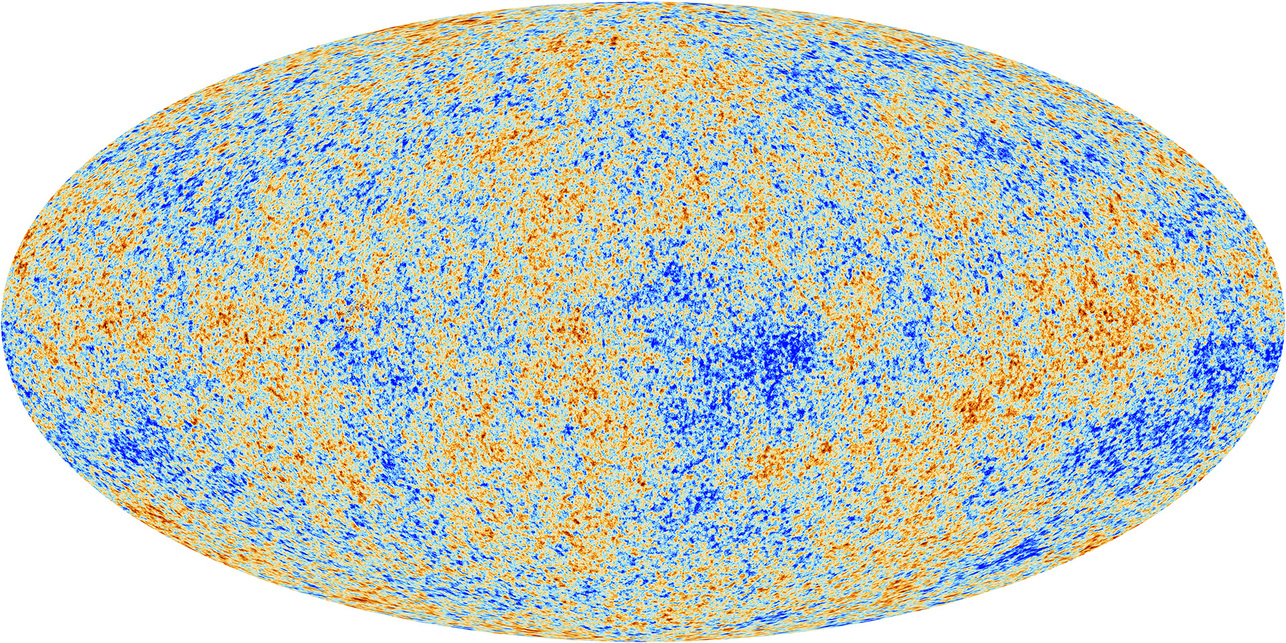
Intelligence itself may be nothing more—or less—than increasingly sophisticated pattern recognition. Mathematics extends our ability to discover patterns that intuition alone cannot reveal.
Language allows us to communicate patterns. Science organizes patterns. Art displays patterns. Music experiments with patterns. Humor surprises us by violating expected patterns. Love may itself be the recognition of another person’s unique pattern accumulated through history.
If there exists a vastly more advanced intelligence, perhaps it might not possess more facts than we do. It simply might perceive patterns that are invisible to us.
Reality may not fundamentally be particles, fields, energy, or information. Those merely may be our descriptions. Reality may just be patterns and relationships. When relationships fit together into a stable whole, our brains experience that as beauty, truth, elegance, familiarity, and understanding.
They all may be the same cognitive event occurring in different domains.
Matter, energy, space, time, life, consciousness, mathematics, music, beauty, and understanding are all different ways those patterns are organized, perceived, or described.
And much forever may hide beyond us.
Rodger Malcolm Mitchell
Rodger Malcolm Mitchell


A great and thoughtful post Rodger. Consider that the golden ratio is also a fibonacci sequence both of which are a trinity/trinitarian relationship. Likewise my assertion that the beneficial effects of every historical paradigm/pattern change is always an aspect or aspects of the natural philosophical concept of grace as in the integration of a duality/problem to the point of a thirdness greater oneness, i.e. a trinity/solution is what I call The Cosmic Code expressed in this formula:
[ ( A x Z ) -> C ) ]
Wisdom is itself a trinitarian intellectual process that practiced enables one to better recognize problems/dualities/logically opposed ideas, emotions or efforts and elicit thirdnesses from a synthesis of the duality. Furthermore grace/graciousness (or some other word that represents the same concept and experience like satori, enlightenment, etc.) is considered to be the ultimate wisdom. The following are considered wisdom and are also aspects of the concept/experience of grace: love/loving intention/loving action, flow/free flowingness, process/time itself, newness of nowness/presence/emergence/continuous change/progression/evolution…and economically and monetarily Gifting/the free gift.
I’m considering extending the above formula to include a fourthness/quadrinity which is simply a state of continuous trinity/grace/samadhi, etc thusly:
{ [ ( A x Z ) -> C ) ] —-> [ ( A x Z ) -> C ) ] —–> }
Finally, if I’m correct in saying that the beneficial effects of all historical paradigm changes are aspects of the concept of grace that would mean that we could better recognize and effect paradigm change in whatever system, body of knowledge or area of human endeavor because it would make paradigm change a “plug and play” straight forward intellectual process of discovering the relevant aspect of grace and its most efficacious application., i.e. a study of Paradigmology.
LikeLike