Well, there goes another excuse for not giving poor people money.

The sole purpose of government is to improve and protect the lives of the people.

Most people would like to have more money. This includes many of the rich, who already have more money than they can spend, but seem motivated to have even more.
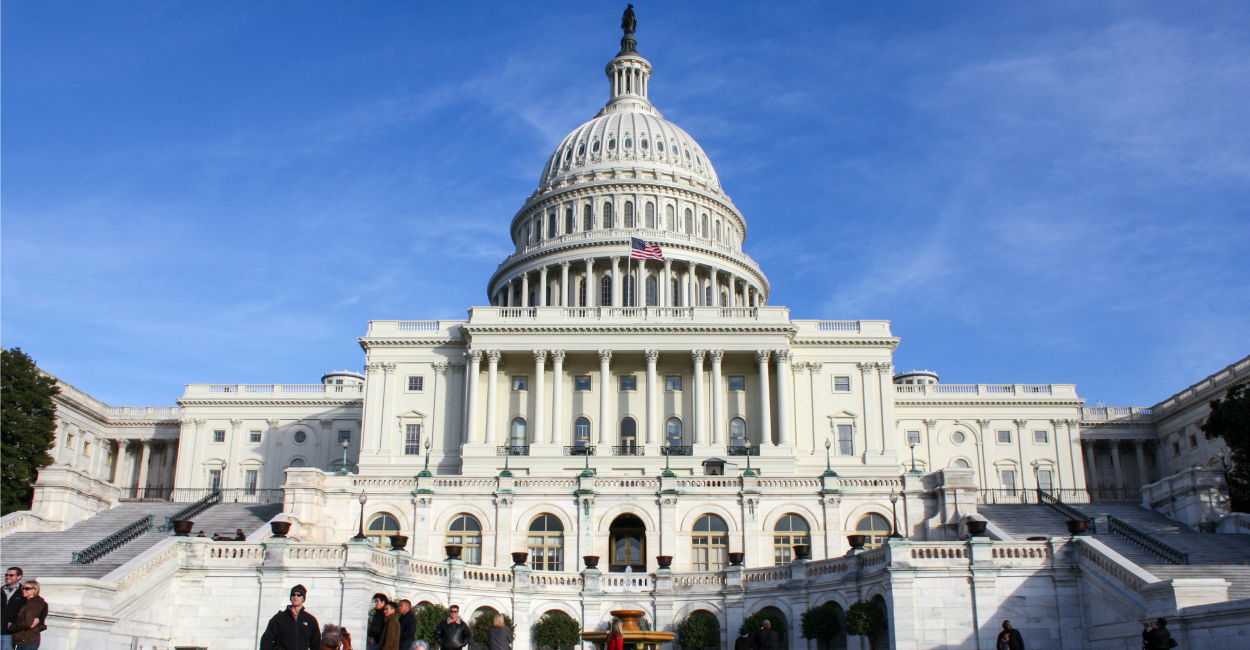
How Florida Is Pushing Back Against Government Overreach
The sole purpose of government is to improve and protect the lives of the people.

Gap Psychology describes the human desire to distance oneself from those below, on any social scale, and to approach those above.

Thus, growing “richer” requires widening the Gap. This involves not only gaining more for oneself but also depressing others.

Either approach widens the Gap.

That is why the rich, and the Republican Party of the rich, seem so adamant that giving people money will disincentivize people to work.

Strangely, or perhaps not so strangely, the rich do not feel the “disincentive” applies to them, for they generally claim to work just a hard as always, no matter how much more money they own.

Their story is that the poor and middle-classes are congenitally lazy, who only will labor if whipped by hunger, homelessness, or other deprivations.

The fact that millions of people work at demanding, or even dangerous jobs, for low or moderately low pay, does not seem to occur to those who claim that if people are given money, they will refuse to work.

It is a lie, or if not a lie, then at least an ivory tower misunderstanding by academics.

Ask a police officer or a fire-fighter or a public school teacher why they work. It is in the nature of human beings that most of us like to work, and we feel such emotions as worthlessness and boredom when we are not working.

In fact, lack of “something to do” is a major problem for retirees.

All of the above is the hypothesis. Here is some fact:

When a California city gave people a guaranteed income, they worked more — not less
Stockton’s experiment shows what $500 per month in “free money” can do for employment, mental health, and more.
By Sigal Samuel Mar 6, 2021

The city of Stockton, California, embarked on a bold experiment two years ago: It decided to distribute $500 a month to 125 people for 24 months — with no strings attached and no work requirements.

The people were randomly chosen from neighborhoods at or below the city’s median household income, and they were free to spend the money any way they liked. Meanwhile, researchers studied what impact the cash had on their lives.

The results from the first year of the experiment, which spanned from February 2019 to February 2020, are now in. And they’re extremely encouraging for its participants, and for advocates who see unconditional cash transfers as an effective way to help people escape poverty.

The most eye-popping finding is that the people who received the cash managed to secure full-time jobs at more than twice the rate of people in a control group, who did not receive cash.

Within a year, the proportion of cash recipients who had full-time jobs jumped from 28 percent to 40 percent. The control group saw only a 5 percent jump over the same period.

When confronted with a non-intuitive result, you surely must wonder, “How can that be? How would giving people money increase their desire to work for money?”

The researchers wrote in their report that the money gave recipients the stability they needed to set goals, take risks, and find new jobs.

In other words, when you’re drowning, all you can think about is staying afloat in the moment. That focus on the now, occupies all your energy and resources.

But if you are given a boat, you now can begin to think about getting food, shelter from the elements, finding land, signaling potential rescuers, etc.

One man in his 30s had been eligible for a real estate license for over a year but hadn’t gotten it because he just couldn’t afford to take time off work. Thanks to the freedom offered by the extra $500 per month, he said, his life was “converted 360 degrees … because I have more time and net worth to study … to achieve my goals.”

That’s a short-term example, but it also works in the longer term. Many intelligent youngsters do not stay in school, because their families need money now. So they are forced to find whatever low-paying jobs they can.

Eventually, these low-level jobs are the first to disappear. During any period or hard times, the under-educated are the first to need unemployment compensation.

Given money, they can continue in school, and find even better jobs, and/or create their own companies. They will be less likely to need unemployment compensation, later.

In the research done to date, unconditional cash does not tend to disincentivize work. In several programs — from Alaska and North Carolina in the US, to Finland and Spain in Europe — it has had no effect on employment either way.

In some cases, it seems to embolden people with an entrepreneurial bent; for instance, in Japan, initial survey results have shown that recipients are 3.9 times more interested in launching a new business.

Employment aside, there are clear benefits to unconditional cash programs. The Stockton experiment shows that getting unconditional cash tends to boost happiness, health, school attendance, and trust in social institutions, while reducing crime.

At its basic level, giving people money reduces their poverty, and crime, especially street crime, is an outgrowth of poverty.

(In the Stockton experiment, money) recipients spent most on necessities like food (37 percent), home goods and clothes (22 percent), utilities (11 percent), and car costs (10 percent). They spent less than 1 percent on alcohol or cigarettes.

These numbers offer a counter to harmful stereotypes and faulty assumptions: that people who become poor get that way because they’re bad at rational decision-making and self-control, and that they’ll blow free money on frivolous things or addictive substances. The evidence does not support these beliefs.

As part of its obligation “to improve and protect the lives of the people” government should give people money. This notion has been criticized on moral grounds. It’s as though not helping a drowning person will force a sink-or-swim mentality, which somehow is morally better.

But, allowing someone to drown is the ultimate immorality.

Here are excerpts from an article describing results around the world.

Everywhere basic income has been tried
Which countries have experimented with basic income — and what were the results?
By Sigal Samuel Updated Oct 20, 2020.

The general idea — that the government should give every citizen a regular infusion of free money with no strings attached — has been around since the 16th century. But it’s recently experienced a remarkable resurgence: Advocates ranging from tech billionaire Mark Zuckerberg to libertarian economist Milton Friedman to former Democratic presidential candidate Andrew Yang have endorsed it.

Many people, who otherwise might favor such a plan, are reluctant to “give money to people who don’t need it.” This belief is founded on two concerns:

  1. The false belief that federal taxes fund federal spending, while in fact no one — not you, not me, not our grandchildren — ever pay for federal spending. The concern, “Why should my money go to rich people?” does not apply to Monetarily Sovereign federal spending. The government creates, from thin air, all the dollars it spends.
  2. The legitimate belief that federal spending should help narrow the Gap between the rich and the rest. I suggest that the simplicity of “Give the same amount to everyone” is far more actionable, and just a fair, as an income-based (or wealth-based?). The rich always find a way to game the system, and they would game this system, too.

Alaska: Since 1982, the state has given each citizen an annual check just for being alive, effectively wiping out extreme poverty. The money — which can range from around $2,000 per person when oil prices are high to $1,000 in cheaper gas years — comes from the Alaska Permanent Fund, a state-owned investment fund financed by oil revenues.

Economists investigated whether the payment was leading people to work less and found that “the dividend had no effect on employment” overall.

North Carolina: Since 1997, revenue from a casino on tribal land has been given to every tribal member, no strings attached. Each person gets on average somewhere between $4,000 and $6,000 per year. Economists found that it doesn’t make them work less. It does lead to improved education and mental health, and decreased addiction and crime.

Manitoba, Canada: Choosing one farming town, Dauphin, as a “saturation site” where every family was eligible to participate in a basic income experiment. The basic income seemed to benefit residents’ physical and mental health — there was a decline in doctor visits and an 8.5 percent reduction in the rate of hospitalization — and high school graduation rates improved, too.

Finland: The government chose 2,000 unemployed citizens at random and gave them a check of 560 euros ($635) every month for two years. Participants were assured they’d keep receiving the money if they got a job. The income didn’t help them get jobs, but it did make them feel happier and less stressed. The recipients also reported that they felt more trust toward other people and social institutions — from political parties to the police to the courts — than they did before getting a basic income.

Spain’s “B-MINCOME” experiment started offering a minimum guaranteed income to 1,000 households randomly selected from some of Barcelona’s poorest districts. Under the two-year randomized controlled trial, households could receive up to 1,675 euros ($1,968) per month. There was also a control group of 383 households. Preliminary results showed that the basic income boosted life satisfaction and mental health while making participants neither more likely nor less likely to find employment.

Iran rolled out a nationwide unconditional cash transfer program to compensate for the phase-out of subsidies on bread, water, electricity, heating, and fuel. The government gave out sizable monthly payments to each family: 29 percent of the median household income on average. Economists found that “the program did not affect labor supply in any appreciable way.” The program is still running, and it’s the only such program in the world to run nationwide.

Namibia: All residents below the age of 60 living in the Otjivero-Omitara region of Namibia received a basic income: 100 Namibian dollars ($6.75) per person per month, no strings attached, regardless of their socioeconomic status. As a result, child malnutrition dropped and school enrollment rates went up, while poverty-related crime (like theft) fell.

India: Between 2011 and 2012, a pilot project in the state of Madhya Pradesh gave a basic income to some 6,000 Indians. Every man, woman, and child in eight villages received a monthly payment: 200 rupees ($2.80) for adults and 100 rupees for each child. The results: Receiving a basic income led to improved sanitation, nutrition, and school attendance.

Japanese billionaire Yusaku Maezawa announced that he would give away 1 billion Japanese yen — about $9 million — to 1,000 random Twitter followers. Recipients of the cash benefit are now 3.9 times more interested in launching a new business. Recipients saw a decrease in divorce rates, from 1.5 percent to 0.6 percent. And more than 70 percent of recipients said they experienced a significant increase in happiness.

SUMMARY

Poverty is the lack of money, and the cure for poverty is to supply money to the impoverished.

We use the term “poverty” to describe merely being short of money. It does not need to be the abject, begging-in-the-street form of poverty, to have a negative effect on a family.

Just being unable to afford college or unable to live in a good home, are serious monetary and psychological negatives, not only for one family, but for that family’s economic surroundings.

Poverty does not indicate a moral lack. It is the result of bad fortune, whether at birth or at any time thereafter. Punishment does not cure poverty, because poverty itself is punishment.

Blaming the needy for their situation provides no benefit, moral or monetary, either for the impoverished or for the rest of humanity.

Withholding money from the impoverished is like withholding medicine from the sick.

The U.S. federal government, being Monetarily Sovereign, has the unlimited ability to create dollars. It is infinitely rich. The dollars it would give in the form of a basic income are not tax dollars. No one ever will pay for those dollars. They are created ad hoc, from thin air.

People receiving money are not less likely to work; the reverse is true. And they are more likely to be more productive members of society and less likely to commit crimes.

Giving “no strings” money to people has time and again proved to benefit the people themselves and the rest of the private sector. Everyone benefits.

See Step #3, Social Security for All (below).

There are no downsides.

Rodger Malcolm Mitchell

Monetary Sovereignty Twitter: @rodgermitchell Search #monetarysovereignty Facebook: Rodger Malcolm Mitchell …………………………………………………………………………………………………………………………………………………………………………………………………………………………………………………………………………………………..

THE SOLE PURPOSE OF GOVERNMENT IS TO IMPROVE AND PROTECT THE LIVES OF THE PEOPLE.

The most important problems in economics involve:

  1. Monetary Sovereignty describes money creation and destruction.
  2. Gap Psychology describes the common desire to distance oneself from those “below” in any socio-economic ranking, and to come nearer those “above.” The socio-economic distance is referred to as “The Gap.”

Wide Gaps negatively affect poverty, health and longevity, education, housing, law and crime, war, leadership, ownership, bigotry, supply and demand, taxation, GDP, international relations, scientific advancement, the environment, human motivation and well-being, and virtually every other issue in economics. Implementation of Monetary Sovereignty and The Ten Steps To Prosperity can grow the economy and narrow the Gaps:

Ten Steps To Prosperity:

  1. Eliminate FICA
  2. Federally funded Medicare — parts A, B & D, plus long-term care — for everyone
  3. Social Security for all
  4. Free education (including post-grad) for everyone
  5. Salary for attending school
  6. Eliminate federal taxes on business
  7. Increase the standard income tax deduction, annually. 
  8. Tax the very rich (the “.1%”) more, with higher progressive tax rates on all forms of income.
  9. Federal ownership of all banks
  10. Increase federal spending on the myriad initiatives that benefit America’s 99.9% 

The Ten Steps will grow the economy and narrow the income/wealth/power Gap between the rich and the rest.

MONETARY SOVEREIGNTY

Should the United States be zero-sum or mutually beneficial?

Should the United States be zero-sum or mutually beneficial?

Most games are zero-sum. Baseball, football, basketball, gin rummy, etc. If you win, I lose, so I must do everything possible not only to win, but also to make sure you lose.

Is that the type of United States of which you would be proud and in which you wish to live?

Or would you prefer a mutually beneficial United States?

Would you prefer a nation in which my winning supports your winning?

Most families are mutually beneficial. The traditional TV family of father works, mother cooks, children help out and learn to become good people, is an example of mutual benefit.

Two companies competing for the same business are zero sum.

But what about a company and its employees? The best ones are mutually beneficial. When the companies prosper, the employees prosper.

The worst companies are zero-sum, with the employees trying to get the most and the companies trying to give the least.

I remember being a Chicago Bulls basketball fan during the era of perhaps the greatest player of all time, Michael Jordan. Externally, they were zero-sum. When they won, the other team lost.

But internally, the team and Jordan were smart enough to realize that great as he was, Jordon couldn’t do it alone. So he took a lower salary than he otherwise could command, so there would be enough money to pay Scottie Pippin, Dennis Rodman, et al.

Together they won six championships.

The team owners set a salary ceiling, so that the richest owner wouldn’t acquire all the best players. But as greedy as the owners were, they realized that they had to leave enough to motivate enough great players, so fans would be attracted.

As a result, the owners became rich, and so did the players.

The very concept of the United States came with the realization that to acquire the benefits of mutual protection, each state had to give up some of its sovereignty to a central government. The Constitution itself is a result of compromise, and our glorious, democratic world comes from mutual benefit.

The short-sighted are selfish, and they refuse to compromise. The far-sighted understand the power of compromise, and realize that over the long run, giving a little to get a little becomes what these days is known as a “win-win.”

Today, that compromise, win-win, mutually beneficial idea has been lost, especially by the Republican party.

This is a party, led by a psychopathic, short-sighted philosophy. It has become embedded with the notion that anything the Democrats wish to do must be fought, lest the Democrats receive credit, regardless of the benefits to the United States as a whole.

This is a party whose politicians 100% voted against the $1.9 million dollar stimulus package despite the fact that it contains many things Republican constituents want and need.

The problem: It was a package put forth by Democrats, and heaven forbid that “enemy” party receive voter goodwill, despite the fact that the majority of Republican voters support the bill.

This is a party that puts loyalty to Donald Trump above loyalty to America, to its middle-class, or to its poor.

The idea that a politician should represent his/her constituents is largely gone. The idea that a politician should follow his/her conscience and do the right thing is totally gone.

One must admire the morality of the Democrats who seriously consider the impeachment of a governor from their own party, because he may have been too flirtatious with young women, and because he lied about COVID in nursing homes.

Can you imagine the Republicans wanting to impeach a politician who has admitted to grabbing women “by their p*ssies, and whose ongoing lies helped kill 500,000+ Americans?

Today, there are only two questions in American politics:

  1. Will it help our side win?
  2. Will it help the other side lose?

Lying is fine. Exaggeration, misleading, and defrauding are expected. If one group of voters leans toward the other side, try to cheat them out of their vote.

And of course, the “I-didn’t-lose;-I-was-cheated divisiveness is an admired “win-at-all-costs” ploy.

As for “What’s-best-for-America,” even the electorate believes that’s a loser’s game. The voters have become accustomed to the narrow-minded, massively unpatriotic notion of “Me first; to-hell-with-everyone-else.”

Patriotism has devolved to waving a flag, chanting “USA, USA” and vilifying half of Americans.

And as for that 100% who voted against the stimulus packages, and still denounce it because some of the money goes to something they don’t like, really? Really 100%?

Are you so willing to sink the opposition and see the entire country sink into poverty, that you cannot find it within your hearts and minds to allot some dollars to the “blue” states you despise?

Do you really hate the blacks and Mexicans so much that you feel they should be disenfranchised during the next election, just to make sure they have no voice in the future?

Do you really enjoy the ranting misstatements of an anti-unity, alienating little twerp like Tucker Carlson, who would slam Mother Theresa and your mother, if he thought they were Democrats?

If so, then I thank God you were not among the ones who created the United States and our Constitution, else we would be a balkanized little bunch of fiefdoms, powerless and laughed at by the world.

Today, the self-proclaimed “patriots” of some states, wish to leave the union so they can wave the Confederate flag above their own miserable tribes, perhaps to re-install slavery and erect statues to traitors.

It was not always thus. There have been times, even within the past few decades, when politicians of opposing political parties, negotiated “what-is-best-for-America.”

Even recently, President Biden invited ten Republicans to the White House to discuss the stimulus package.

Well, that was a bloody waste of time. The Republicans wanted the infinitely rich federal government to spend less so the poor and middle-classes could receive less.

Even after the Dems compromised (fruitlessly, as it turns out) by cutting back on payments, still 100% of Republicans could find nothing to compromise about.

And horrors, the monetarily non-sovereign, on-the-edge-of-insolvency “blue” states will receive money to help support their poor urban areas that already send more dollars to the federal government than they receive.

I have news for you politicians and voters: The “winner-take-all, I-win, you-lose” attitude has not “made America great again.” Instead, it greatly has weakened the United States and turned us into the Divided States of America.

Once we were respected and admired. Today, we are scorned.

To paraphrase the Margueritaville song:

You Republicans claim
The Dems are to blame,
But you know,
It’s your own damn fault.

Rodger Malcolm Mitchell

Monetary Sovereignty Twitter: @rodgermitchell Search #monetarysovereignty Facebook: Rodger Malcolm Mitchell …………………………………………………………………………………………………………………………………………………………………………………………………………………………………………………………………………………………..

THE SOLE PURPOSE OF GOVERNMENT IS TO IMPROVE AND PROTECT THE LIVES OF THE PEOPLE.

The most important problems in economics involve:

  1. Monetary Sovereignty describes money creation and destruction.
  2. Gap Psychology describes the common desire to distance oneself from those “below” in any socio-economic ranking, and to come nearer those “above.” The socio-economic distance is referred to as “The Gap.”

Wide Gaps negatively affect poverty, health and longevity, education, housing, law and crime, war, leadership, ownership, bigotry, supply and demand, taxation, GDP, international relations, scientific advancement, the environment, human motivation and well-being, and virtually every other issue in economics. Implementation of Monetary Sovereignty and The Ten Steps To Prosperity can grow the economy and narrow the Gaps:

Ten Steps To Prosperity:

  1. Eliminate FICA
  2. Federally funded Medicare — parts A, B & D, plus long-term care — for everyone
  3. Social Security for all or a reverse income tax
  4. Free education (including post-grad) for everyone
  5. Salary for attending school
  6. Eliminate federal taxes on business
  7. Increase the standard income tax deduction, annually. 
  8. Tax the very rich (the “.1%”) more, with higher progressive tax rates on all forms of income.
  9. Federal ownership of all banks
  10. Increase federal spending on the myriad initiatives that benefit America’s 99.9% 

The Ten Steps will grow the economy and narrow the income/wealth/power Gap between the rich and the rest.

MONETARY SOVEREIGNTY

Fear and hatred, the evil twins of human emotion

Fear begets hatred.

These two emotions are twins, with fear being the firstborn and hatred eventually becoming the larger, evil twin.

It is impossible for you to hate what you do not already fear. 

Fear is the shrinking emotion, manifested in cowering and retreat. Hatred is the aggressive emotion, manifested in anger and aggression. Evolution has given us these twin emotions — the most powerful emotions we own — as survival responses to danger.

Bigotry is hatred, and like all hatred, bigotry is caused by fear. If you hate blacks, browns, yellows, or reds, it is because you fear them. It is your fear that enables your bigotry.

When you hate, you wish to harm the thing you fear. You stomp on a spider, but not on a butterfly. You fear the spider; you don’t fear the butterfly.

Often, you yourself cannot stomp on that spider, so you enlist a proxy to do your stomping. The Ku Klux Klan was formed to provide harm to the feared and hated blacks. For millions of bigots, the KKK provided the proxy, doing the harm the bigots could not or would not do themselves.

Hitler promoted the “danger” of Jews and Gypsies being traitors who polluted the Arian gene pool. Germans were taught fear, which progressed to hatred, against which no amount of logic, reason, or facts could prevail.

The result was mindless hatred. No amount of “stomping,” even a horrifying death camp for innocent men, women, and children, could erase the fear. Only total eradication — the “final solution” — could ease the distress of the haters.

Hitler was the proxy, who claimed he was the “only” one who could save the fearful Germans.

Woman shot inside U.S. Capitol during pro-Trump mob riot has died – The Denver Post
HATRED IS COWARDICE

Bullying is another symptom of fear. The bully is afraid the world will see his/her shortcomings, so he seeks to express dominance. The bully tries to distance himself from those who are weaker, thinking that will make him look strong.

Bullying is encouraged by mobs of people doing what they don’t have the courage to do alone.

All those with a dictatorial bent — including the Donald Trumps of the world — are aware of the relationship between fear and hatred and the public’s wish to have a proxy do harm to those who are feared.

Trump told you Mexicans are dangerous criminals and rapists. He told you Muslims are terrorists. He told you Democrats would endanger you by taking away your guns and allowing vicious aliens to run wild.

And he told you he was the “only” one who could save you.

Trump manipulated your emotions first by making you afraid, then by stoking your hatred, then by offering himself as your proxy for harming those he has trained you to fear and hate.

Fear and hatred are such powerful emotions, they override logic and reason. Trump’s followers know he is a liar, a bully, a thief, and an incompetent. They know intellectually, he is one of the worst human beings ever to fall into the Presidency.

Those who are educated in psychology know Trump is a psychopath.

But his followers forgave him for everything because he promised them protection from what they fear and punishment to those they hate.

That fear-to-hatred path is what drives cults. Leaders of cults warn their followers about the dangers of the “outside” world, then claim that only they, the leaders, can protect the followers from those dangers, thereby generating absolute allegiance and obedience to the cult.

Breaking the hatred and unholy bond to the leader requires allaying the fear.  Simple facts won’t do it; they are dismissed as “lies” by outsiders, and often serve as reinforcement of the leader’s warnings.

The hater not only must be made to feel comfortable with the object of his fears, but also be comfortable with rejecting the notion of fear, itself.

In short, it is a two-path journey.

On one path, the hater must be taught to look inward and to say to himself, “I am better than this. I am stronger than this. I safely can give these people my compassion.”

On the other path, the hater must be taught to look outward, at the object(s) of his hatred and say, “I do not fear them. They are people, just like me, and like me, they have hopes and loves and fears. They want the same kinds of things I want, and if I can get to know them better, we will find common ground.”

The most common fear-modulating device is called “exposure therapy,” which means what it sounds like. Graduated increases in exposure to the objects of your fear will reduce the fear which will reduce the hatred.

Example: Afraid of spiders? First, get a toy spider to play with. Then observe a real spider in a bottle. Then observe the spider on a table but trapped in a mesh cage.

Then reach into the cage with a pencil and touch the spider. Then reach in with your finger to touch the spider. Finally, reach in with your hand and allow the spider to walk in your palm.

Exposure therapy is difficult with humans. Even if you put a dozen black-fearing whites into a room together with a dozen white-fearing blacks, the two groups will tend to separate into”us” vs. “them.” Quite possibly, their fear and hatred will grow.

You see that effect in high schools and in prison populations.

Government encouraging inter-racial marriage probably long-term would reduce inter-racial fear and hatred. Presumably, there is some far away tipping point at which there are enough biracial children to create a quasi “herd-immunity” to racial fear and hatred. We won’t live long enough to see it.

There isn’t one basic cause of hatred-inducing fear. Every group is feared for something(s) different. For instance, blacks probably are feared most for crime. So, perhaps, the best cure for anti-black bigotry is to eliminate the anti-black fear by eliminating poverty.

Poverty is the single best predictor of crime, and crime begets fear, so eliminating black poverty would reduce anti-black bigotry.

Ironically, one way to reduce fear is to follow the lead of the cult leaders and induce another fear, a more acceptable fear.

During crises, people have been known to come together for mutual protection. Wars, for instance, tend to unite citizens of a nation under the banner of patriotism. The entire nation becomes the “we,” with the enemy becoming the “they.”

Ultimately, there may be no better way to eliminate hatred than to recognize it for what it is: An admission of weakness.

Haters like to pose as strong and forceful, when in fact they mask vulnerability and impotence. It was the cowards who comprised the lynch mobs and wore the KKK robes. It was the cowards who invaded Congress, doing in a mob what they would not have the courage to do alone.

Expressions of hatred are admissions of fear and weakness.

Teach that until it becomes common knowledge, and hatred may become less socially acceptable.

And maybe, just maybe, our democracy can avoid falling under the thumb of a brutal (and cowardly) dictator.

Rodger Malcolm Mitchell

Monetary Sovereignty Twitter: @rodgermitchell Search #monetarysovereignty Facebook: Rodger Malcolm Mitchell …………………………………………………………………………………………………………………………………………………………………………………………………………………………………………………………………………………………..

THE SOLE PURPOSE OF GOVERNMENT IS TO IMPROVE AND PROTECT THE LIVES OF THE PEOPLE.

The most important problems in economics involve:

  1. Monetary Sovereignty describes money creation and destruction.
  2. Gap Psychology describes the common desire to distance oneself from those “below” in any socio-economic ranking, and to come nearer those “above.” The socio-economic distance is referred to as “The Gap.”

Wide Gaps negatively affect poverty, health and longevity, education, housing, law and crime, war, leadership, ownership, bigotry, supply and demand, taxation, GDP, international relations, scientific advancement, the environment, human motivation and well-being, and virtually every other issue in economics. Implementation of Monetary Sovereignty and The Ten Steps To Prosperity can grow the economy and narrow the Gaps:

Ten Steps To Prosperity:

  1. Eliminate FICA
  2. Federally funded Medicare — parts A, B & D, plus long-term care — for everyone
  3. Social Security for all or a reverse income tax
  4. Free education (including post-grad) for everyone
  5. Salary for attending school
  6. Eliminate federal taxes on business
  7. Increase the standard income tax deduction, annually. 
  8. Tax the very rich (the “.1%”) more, with higher progressive tax rates on all forms of income.
  9. Federal ownership of all banks
  10. Increase federal spending on the myriad initiatives that benefit America’s 99.9% 

The Ten Steps will grow the economy and narrow the income/wealth/power Gap between the rich and the rest.

MONETARY SOVEREIGNTY

King Joe Manchin spreads the BS

Fate handed Sen.Joe Manchin (D-W.Va.), America’s ultimate swing voter, a big crown, and boy is he lovin’ it.

Suddenly, he has the entire Democratic Party sitting at his feet and fawning over his every word. Never mind that he often doesn’t know what he’s talking about. It’s pretty much the way the Republicans treat Donald Trump’s pronouncements, minus the grade-school insults.

Joe Manchin pledges to block Biden’s infrastructure bill if Republicans aren’t included

He’ll insist Republicans have more of a voice on President Biden’s next big package than they did on the COVID stimulus.

One wonders what “more of a voice” he means. The Republicans” version of a stimulus involved much less going to the poor and middle-classes, and lots more going to the rich.

As it is, the Dems caved by reducing the payout to the people who need it most. Should that payout have been cut even more?

But, it gets even worse:

Manchin said he’ll push for tax hikes to pay for Biden’s upcoming infrastructure and climate proposal, and will use his Energy Committee chairmanship to force the GOP to confront climate reality.

My conversation yielded the most extensive preview yet of how Manchin — a Democrat from a Trump state, in a 50-50 Senate, who relishes standing up to a Democratic White House — will use his singular power.

Federal taxes do not pay for federal spending. The government pays for its spending by creating brand new dollars, ad hoc. That is why it has been able to budget an additional $4 trillion in stimulus spending, with no tax increases.

Manchin said that with just a few concessions, it would have been possible to get some Republicans on the COVID relief package that passed the Senate this weekend on a party-line vote.

A few concessions?? The Dems gave them huge concessions — the much wanted $15 minimum wage is gone, and there is a 25% reduction in unemployment benefits — yet not a single Republican changed his/her vote. How do you explain that, Joe? Republicans need “more of a voice”? Really?

And he said he’ll block Biden’s next big package — $2 trillion to $4 trillion for climate and infrastructure — if Republicans aren’t included.

“I’m not going to do it through reconciliation,” which requires only a simple majority, like the COVID stimulus, Manchin said. “I am not going to get on a bill that cuts them out completely before we start trying.”

Manchin said Biden expects, and understands, the pushback: “He’s the first president we’ve had to really, really understand the workings of the Senate since LBJ.”

Asked if he believes it’s possible to get 10 Republicans on the infrastructure package, which could yield the 60 votes needed under normal Senate rules, Manchin said: “I sure do.”

It would be nice if Manchin understood the workings of the Senate. If he did, he would acknowledge that the Republicans do not want any Biden proposal to succeed.

The Republicans have one goal. They want to be able to crow about how Biden failed to get anything passed. To hell with America and its people. Votes and pleasing Trump are all they care about.

Manchin said the infrastructure bill can be big — as much as $4 trillion — as long as it’s paid for with tax increases. He said he’ll start his bargaining by requiring the package be 100% paid for.

Oh, good: A wholly unnecessary, $4 trillion tax increase. That ought to help the economy grow.

I have an idea, Joe: How about every member of Congress paying for his/her own health care insurance. Would that be a good start?

Manchin said that with all the debt we’re piling up, he’s worried about “a tremendous deep recession that could lead into a depression if we’re not careful. … We’re just setting ourselves up.”

Nice idea, except for one small fact, Joe: Recessions follow reductions in deficit growth and are cured by increases in deficit growth (aka, “stimulus”).

Reductions in federal debt growth lead to inflation
History repeatedly shows: Reductions in debt growth introduce recessions (vertical gray bars), and recessions are cured by increases in federal debt growth.

And as for depressions: Those are caused by debt reductions, and are cured by debt increases.

1804-1812: U. S. Federal Debt reduced 48%. Depression began 1807.
1817-1821: U. S. Federal Debt reduced 29%. Depression began 1819.
1823-1836: U. S. Federal Debt reduced 99%. Depression began 1837.
1852-1857: U. S. Federal Debt reduced 59%. Depression began 1857.
1867-1873: U. S. Federal Debt reduced 27%. Depression began 1873.
1880-1893: U. S. Federal Debt reduced 57%. Depression began 1893.
1920-1930: U. S. Federal Debt reduced 36%. Depression began 1929.
1997-2001: U. S. Federal Debt reduced 15%. Recession began 2001.

But hey, Joe, don’t let facts get in the way of myth.

He talked up an array of tax increases, including raising the corporate tax rate from the current 21% to 25% “at least,” and repealing “a lot of” the Trump tax cuts for the wealthy.

Manchin, sitting down with HBO in the Energy Committee hearing room where he now holds the gavel, said he’ll use his new position “to try and inject some reality” — starting with a hearing “on climate facts.”

Increasing the corporate tax rate, i.e. taking dollars from the private sector, will help grow the economy how?? Which economics books have you read, Joe?

Asked about Republican senators who won’t say that humans have affected climate, Manchin said: “Well, I think they know it.”

Of course, they know it. Every sentient human being on this planet knows it. So Joe, how exactly are you going to “inject some reality” when talking to people who already know the facts, but don’t give a damn?

Scientists have been injecting reality for decades. Now, you, the great and powerful Joe Manchin, are going to do the job?

Manchin warned fellow Democrats about ramming through legislation by simple majority: 

Excuse me, Joe, but in what world does majority rule constitute “ramming through legislation.” The filibuster is simple minority rule. Is that what you prefer?

“I would say this to my friends. You’ve got power … Don’t abuse it. And that’s exactly what you’ll be doing if you throw the filibuster out.”

I would say this to Joe Manchin. You’ve got power. Don’t abuse it. That is exactly what you would be doing if you are the one person overruling the Democratic President and the entire Democratic Party.

Joe, the Democratic voters of West Virginia put you in; they can put you out, and they will if someone “injects some reality” into the next election.

Rodger Malcolm Mitchell

Monetary Sovereignty Twitter: @rodgermitchell Search #monetarysovereignty Facebook: Rodger Malcolm Mitchell …………………………………………………………………………………………………………………………………………………………………………………………………………………………………………………………………………………………..

THE SOLE PURPOSE OF GOVERNMENT IS TO IMPROVE AND PROTECT THE LIVES OF THE PEOPLE.

The most important problems in economics involve:

  1. Monetary Sovereignty describes money creation and destruction.
  2. Gap Psychology describes the common desire to distance oneself from those “below” in any socio-economic ranking, and to come nearer those “above.” The socio-economic distance is referred to as “The Gap.”

Wide Gaps negatively affect poverty, health and longevity, education, housing, law and crime, war, leadership, ownership, bigotry, supply and demand, taxation, GDP, international relations, scientific advancement, the environment, human motivation and well-being, and virtually every other issue in economics. Implementation of Monetary Sovereignty and The Ten Steps To Prosperity can grow the economy and narrow the Gaps:

Ten Steps To Prosperity:

  1. Eliminate FICA
  2. Federally funded Medicare — parts A, B & D, plus long-term care — for everyone
  3. Social Security for all or a reverse income tax
  4. Free education (including post-grad) for everyone
  5. Salary for attending school
  6. Eliminate federal taxes on business
  7. Increase the standard income tax deduction, annually. 
  8. Tax the very rich (the “.1%”) more, with higher progressive tax rates on all forms of income.
  9. Federal ownership of all banks
  10. Increase federal spending on the myriad initiatives that benefit America’s 99.9% 

The Ten Steps will grow the economy and narrow the income/wealth/power Gap between the rich and the rest.

MONETARY SOVEREIGNTY