Fear and hatred, the evil twins of human emotion

Fear begets hatred.

These two emotions are twins, with fear being the firstborn and hatred eventually becoming the larger, evil twin.

It is impossible for you to hate what you do not already fear. 

Fear is the shrinking emotion, manifested in cowering and retreat. Hatred is the aggressive emotion, manifested in anger and aggression. Evolution has given us these twin emotions — the most powerful emotions we own — as survival responses to danger.

Bigotry is hatred, and like all hatred, bigotry is caused by fear. If you hate blacks, browns, yellows, or reds, it is because you fear them. It is your fear that enables your bigotry.

When you hate, you wish to harm the thing you fear. You stomp on a spider, but not on a butterfly. You fear the spider; you don’t fear the butterfly.

Often, you yourself cannot stomp on that spider, so you enlist a proxy to do your stomping. The Ku Klux Klan was formed to provide harm to the feared and hated blacks. For millions of bigots, the KKK provided the proxy, doing the harm the bigots could not or would not do themselves.

Hitler promoted the “danger” of Jews and Gypsies being traitors who polluted the Arian gene pool. Germans were taught fear, which progressed to hatred, against which no amount of logic, reason, or facts could prevail.

The result was mindless hatred. No amount of “stomping,” even a horrifying death camp for innocent men, women, and children, could erase the fear. Only total eradication — the “final solution” — could ease the distress of the haters.

Hitler was the proxy, who claimed he was the “only” one who could save the fearful Germans.

Woman shot inside U.S. Capitol during pro-Trump mob riot has died – The Denver Post
HATRED IS COWARDICE

Bullying is another symptom of fear. The bully is afraid the world will see his/her shortcomings, so he seeks to express dominance. The bully tries to distance himself from those who are weaker, thinking that will make him look strong.

Bullying is encouraged by mobs of people doing what they don’t have the courage to do alone.

All those with a dictatorial bent — including the Donald Trumps of the world — are aware of the relationship between fear and hatred and the public’s wish to have a proxy do harm to those who are feared.

Trump told you Mexicans are dangerous criminals and rapists. He told you Muslims are terrorists. He told you Democrats would endanger you by taking away your guns and allowing vicious aliens to run wild.

And he told you he was the “only” one who could save you.

Trump manipulated your emotions first by making you afraid, then by stoking your hatred, then by offering himself as your proxy for harming those he has trained you to fear and hate.

Fear and hatred are such powerful emotions, they override logic and reason. Trump’s followers know he is a liar, a bully, a thief, and an incompetent. They know intellectually, he is one of the worst human beings ever to fall into the Presidency.

Those who are educated in psychology know Trump is a psychopath.

But his followers forgave him for everything because he promised them protection from what they fear and punishment to those they hate.

That fear-to-hatred path is what drives cults. Leaders of cults warn their followers about the dangers of the “outside” world, then claim that only they, the leaders, can protect the followers from those dangers, thereby generating absolute allegiance and obedience to the cult.

Breaking the hatred and unholy bond to the leader requires allaying the fear.  Simple facts won’t do it; they are dismissed as “lies” by outsiders, and often serve as reinforcement of the leader’s warnings.

The hater not only must be made to feel comfortable with the object of his fears, but also be comfortable with rejecting the notion of fear, itself.

In short, it is a two-path journey.

On one path, the hater must be taught to look inward and to say to himself, “I am better than this. I am stronger than this. I safely can give these people my compassion.”

On the other path, the hater must be taught to look outward, at the object(s) of his hatred and say, “I do not fear them. They are people, just like me, and like me, they have hopes and loves and fears. They want the same kinds of things I want, and if I can get to know them better, we will find common ground.”

The most common fear-modulating device is called “exposure therapy,” which means what it sounds like. Graduated increases in exposure to the objects of your fear will reduce the fear which will reduce the hatred.

Example: Afraid of spiders? First, get a toy spider to play with. Then observe a real spider in a bottle. Then observe the spider on a table but trapped in a mesh cage.

Then reach into the cage with a pencil and touch the spider. Then reach in with your finger to touch the spider. Finally, reach in with your hand and allow the spider to walk in your palm.

Exposure therapy is difficult with humans. Even if you put a dozen black-fearing whites into a room together with a dozen white-fearing blacks, the two groups will tend to separate into”us” vs. “them.” Quite possibly, their fear and hatred will grow.

You see that effect in high schools and in prison populations.

Government encouraging inter-racial marriage probably long-term would reduce inter-racial fear and hatred. Presumably, there is some far away tipping point at which there are enough biracial children to create a quasi “herd-immunity” to racial fear and hatred. We won’t live long enough to see it.

There isn’t one basic cause of hatred-inducing fear. Every group is feared for something(s) different. For instance, blacks probably are feared most for crime. So, perhaps, the best cure for anti-black bigotry is to eliminate the anti-black fear by eliminating poverty.

Poverty is the single best predictor of crime, and crime begets fear, so eliminating black poverty would reduce anti-black bigotry.

Ironically, one way to reduce fear is to follow the lead of the cult leaders and induce another fear, a more acceptable fear.

During crises, people have been known to come together for mutual protection. Wars, for instance, tend to unite citizens of a nation under the banner of patriotism. The entire nation becomes the “we,” with the enemy becoming the “they.”

Ultimately, there may be no better way to eliminate hatred than to recognize it for what it is: An admission of weakness.

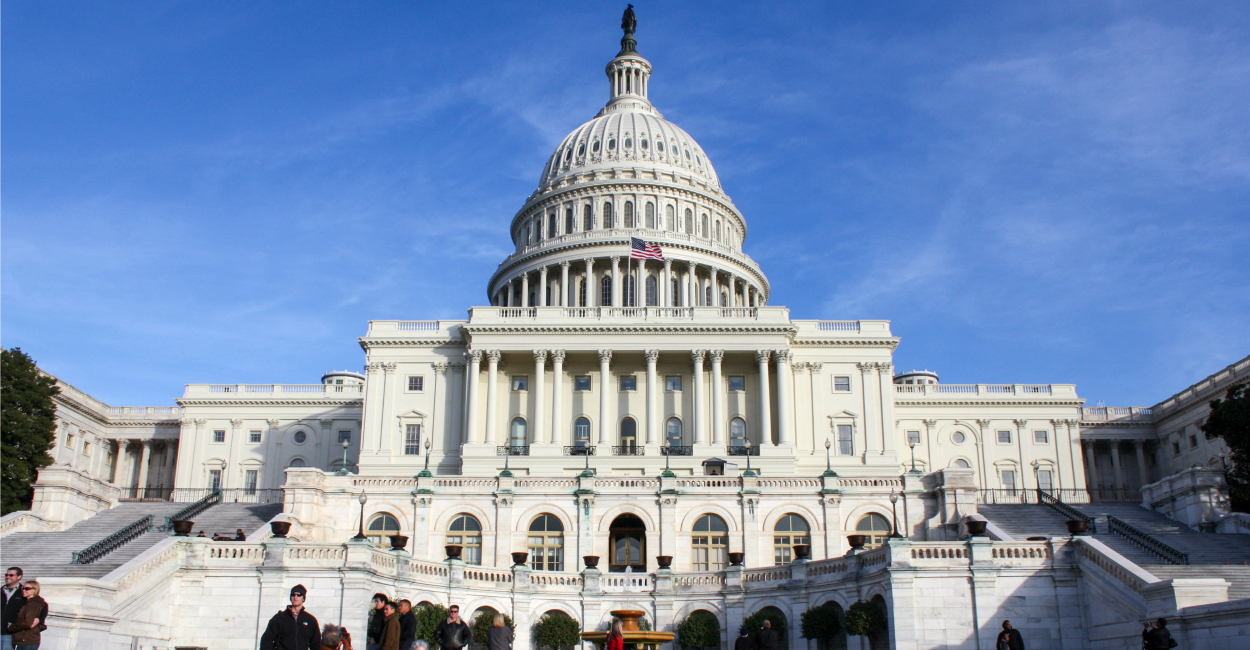
Haters like to pose as strong and forceful, when in fact they mask vulnerability and impotence. It was the cowards who comprised the lynch mobs and wore the KKK robes. It was the cowards who invaded Congress, doing in a mob what they would not have the courage to do alone.

Expressions of hatred are admissions of fear and weakness.

Teach that until it becomes common knowledge, and hatred may become less socially acceptable.

And maybe, just maybe, our democracy can avoid falling under the thumb of a brutal (and cowardly) dictator.

Rodger Malcolm Mitchell

Monetary Sovereignty Twitter: @rodgermitchell Search #monetarysovereignty Facebook: Rodger Malcolm Mitchell …………………………………………………………………………………………………………………………………………………………………………………………………………………………………………………………………………………………..

THE SOLE PURPOSE OF GOVERNMENT IS TO IMPROVE AND PROTECT THE LIVES OF THE PEOPLE.

The most important problems in economics involve:

  1. Monetary Sovereignty describes money creation and destruction.
  2. Gap Psychology describes the common desire to distance oneself from those “below” in any socio-economic ranking, and to come nearer those “above.” The socio-economic distance is referred to as “The Gap.”

Wide Gaps negatively affect poverty, health and longevity, education, housing, law and crime, war, leadership, ownership, bigotry, supply and demand, taxation, GDP, international relations, scientific advancement, the environment, human motivation and well-being, and virtually every other issue in economics. Implementation of Monetary Sovereignty and The Ten Steps To Prosperity can grow the economy and narrow the Gaps:

Ten Steps To Prosperity:

  1. Eliminate FICA
  2. Federally funded Medicare — parts A, B & D, plus long-term care — for everyone
  3. Social Security for all or a reverse income tax
  4. Free education (including post-grad) for everyone
  5. Salary for attending school
  6. Eliminate federal taxes on business
  7. Increase the standard income tax deduction, annually. 
  8. Tax the very rich (the “.1%”) more, with higher progressive tax rates on all forms of income.
  9. Federal ownership of all banks
  10. Increase federal spending on the myriad initiatives that benefit America’s 99.9% 

The Ten Steps will grow the economy and narrow the income/wealth/power Gap between the rich and the rest.

MONETARY SOVEREIGNTY

King Joe Manchin spreads the BS

Fate handed Sen.Joe Manchin (D-W.Va.), America’s ultimate swing voter, a big crown, and boy is he lovin’ it.

Suddenly, he has the entire Democratic Party sitting at his feet and fawning over his every word. Never mind that he often doesn’t know what he’s talking about. It’s pretty much the way the Republicans treat Donald Trump’s pronouncements, minus the grade-school insults.

Joe Manchin pledges to block Biden’s infrastructure bill if Republicans aren’t included

He’ll insist Republicans have more of a voice on President Biden’s next big package than they did on the COVID stimulus.

One wonders what “more of a voice” he means. The Republicans” version of a stimulus involved much less going to the poor and middle-classes, and lots more going to the rich.

As it is, the Dems caved by reducing the payout to the people who need it most. Should that payout have been cut even more?

But, it gets even worse:

Manchin said he’ll push for tax hikes to pay for Biden’s upcoming infrastructure and climate proposal, and will use his Energy Committee chairmanship to force the GOP to confront climate reality.

My conversation yielded the most extensive preview yet of how Manchin — a Democrat from a Trump state, in a 50-50 Senate, who relishes standing up to a Democratic White House — will use his singular power.

Federal taxes do not pay for federal spending. The government pays for its spending by creating brand new dollars, ad hoc. That is why it has been able to budget an additional $4 trillion in stimulus spending, with no tax increases.

Manchin said that with just a few concessions, it would have been possible to get some Republicans on the COVID relief package that passed the Senate this weekend on a party-line vote.

A few concessions?? The Dems gave them huge concessions — the much wanted $15 minimum wage is gone, and there is a 25% reduction in unemployment benefits — yet not a single Republican changed his/her vote. How do you explain that, Joe? Republicans need “more of a voice”? Really?

And he said he’ll block Biden’s next big package — $2 trillion to $4 trillion for climate and infrastructure — if Republicans aren’t included.

“I’m not going to do it through reconciliation,” which requires only a simple majority, like the COVID stimulus, Manchin said. “I am not going to get on a bill that cuts them out completely before we start trying.”

Manchin said Biden expects, and understands, the pushback: “He’s the first president we’ve had to really, really understand the workings of the Senate since LBJ.”

Asked if he believes it’s possible to get 10 Republicans on the infrastructure package, which could yield the 60 votes needed under normal Senate rules, Manchin said: “I sure do.”

It would be nice if Manchin understood the workings of the Senate. If he did, he would acknowledge that the Republicans do not want any Biden proposal to succeed.

The Republicans have one goal. They want to be able to crow about how Biden failed to get anything passed. To hell with America and its people. Votes and pleasing Trump are all they care about.

Manchin said the infrastructure bill can be big — as much as $4 trillion — as long as it’s paid for with tax increases. He said he’ll start his bargaining by requiring the package be 100% paid for.

Oh, good: A wholly unnecessary, $4 trillion tax increase. That ought to help the economy grow.

I have an idea, Joe: How about every member of Congress paying for his/her own health care insurance. Would that be a good start?

Manchin said that with all the debt we’re piling up, he’s worried about “a tremendous deep recession that could lead into a depression if we’re not careful. … We’re just setting ourselves up.”

Nice idea, except for one small fact, Joe: Recessions follow reductions in deficit growth and are cured by increases in deficit growth (aka, “stimulus”).

Reductions in federal debt growth lead to inflation
History repeatedly shows: Reductions in debt growth introduce recessions (vertical gray bars), and recessions are cured by increases in federal debt growth.

And as for depressions: Those are caused by debt reductions, and are cured by debt increases.

1804-1812: U. S. Federal Debt reduced 48%. Depression began 1807.
1817-1821: U. S. Federal Debt reduced 29%. Depression began 1819.
1823-1836: U. S. Federal Debt reduced 99%. Depression began 1837.
1852-1857: U. S. Federal Debt reduced 59%. Depression began 1857.
1867-1873: U. S. Federal Debt reduced 27%. Depression began 1873.
1880-1893: U. S. Federal Debt reduced 57%. Depression began 1893.
1920-1930: U. S. Federal Debt reduced 36%. Depression began 1929.
1997-2001: U. S. Federal Debt reduced 15%. Recession began 2001.

But hey, Joe, don’t let facts get in the way of myth.

He talked up an array of tax increases, including raising the corporate tax rate from the current 21% to 25% “at least,” and repealing “a lot of” the Trump tax cuts for the wealthy.

Manchin, sitting down with HBO in the Energy Committee hearing room where he now holds the gavel, said he’ll use his new position “to try and inject some reality” — starting with a hearing “on climate facts.”

Increasing the corporate tax rate, i.e. taking dollars from the private sector, will help grow the economy how?? Which economics books have you read, Joe?

Asked about Republican senators who won’t say that humans have affected climate, Manchin said: “Well, I think they know it.”

Of course, they know it. Every sentient human being on this planet knows it. So Joe, how exactly are you going to “inject some reality” when talking to people who already know the facts, but don’t give a damn?

Scientists have been injecting reality for decades. Now, you, the great and powerful Joe Manchin, are going to do the job?

Manchin warned fellow Democrats about ramming through legislation by simple majority

Excuse me, Joe, but in what world does majority rule constitute “ramming through legislation.” The filibuster is simple minority rule. Is that what you prefer?

“I would say this to my friends. You’ve got power … Don’t abuse it. And that’s exactly what you’ll be doing if you throw the filibuster out.”

I would say this to Joe Manchin. You’ve got power. Don’t abuse it. That is exactly what you would be doing if you are the one person overruling the Democratic President and the entire Democratic Party.

Joe, the Democratic voters of West Virginia put you in; they can put you out, and they will if someone “injects some reality” into the next election.

Rodger Malcolm Mitchell

Monetary Sovereignty Twitter: @rodgermitchell Search #monetarysovereignty Facebook: Rodger Malcolm Mitchell …………………………………………………………………………………………………………………………………………………………………………………………………………………………………………………………………………………………..

THE SOLE PURPOSE OF GOVERNMENT IS TO IMPROVE AND PROTECT THE LIVES OF THE PEOPLE.

The most important problems in economics involve:

  1. Monetary Sovereignty describes money creation and destruction.
  2. Gap Psychology describes the common desire to distance oneself from those “below” in any socio-economic ranking, and to come nearer those “above.” The socio-economic distance is referred to as “The Gap.”

Wide Gaps negatively affect poverty, health and longevity, education, housing, law and crime, war, leadership, ownership, bigotry, supply and demand, taxation, GDP, international relations, scientific advancement, the environment, human motivation and well-being, and virtually every other issue in economics. Implementation of Monetary Sovereignty and The Ten Steps To Prosperity can grow the economy and narrow the Gaps:

Ten Steps To Prosperity:

  1. Eliminate FICA
  2. Federally funded Medicare — parts A, B & D, plus long-term care — for everyone
  3. Social Security for all or a reverse income tax
  4. Free education (including post-grad) for everyone
  5. Salary for attending school
  6. Eliminate federal taxes on business
  7. Increase the standard income tax deduction, annually. 
  8. Tax the very rich (the “.1%”) more, with higher progressive tax rates on all forms of income.
  9. Federal ownership of all banks
  10. Increase federal spending on the myriad initiatives that benefit America’s 99.9% 

The Ten Steps will grow the economy and narrow the income/wealth/power Gap between the rich and the rest.

MONETARY SOVEREIGNTY

Should we build a moral computer?

The human brain can do far more, using less energy and with less mass, than any known computer.

No computer, from your little Apple Watch to Japan’s huge Fugaku (the world’s fastest computer, which can perform more than 415 trillion computations a second), can compare to what the human brain can accomplish.Man vs. machine: Is there a place for traditional media strategists amid  programmatic tech? - Features - MM&M - Medical Marketing and Media

So far as we currently know, and excepting certain past and present political leaders, your brain is the most complex and sophisticated object in the universe.

Yes, the mechanical monsters can do math really fast, and they almost never forget where their keys are, but still, they don’t have the power to operate every function of the human body, as well as the brain-body interface, does.

Consider just your 20 square feet of skin that your human brain oversees. Your skin, which is just one of the many organs in the human body, contains about 300 million cells, of which 30,000 die and are replaced every minute.

While all this creation, destruction, and replacement are happening, every inch of your skin senses the exact location of heat, cold, several kinds of touch, and pain, all of which are interpreted, every second, by your brain. Try to visualize a machine able to accomplish this.

Visualize driving your car at top speed, while thousands of parts are being replaced every minute.

And that’s just your approximately 8 lbs. of skin. Consider the rest of you. Various types of sight, sound, touch, heat, pain, and taste receptors are springled throughout your body, all monitored by your brain, and all with multiple functions. (Yes, there are taste receptors all over, even in your lungs.)

And though no computer in existence could handle even your body’s sensing and response needs, that is child’s play compared to your more sophisticated psychological tasks your brain handles.

What computer can feel fear, hatred, loneliness, joy, empathy, compassion, love, greed, disgust, etc., etc. How many different kinds of love can your brain feel?

And even that is child’s play compared to your more sophisticated brain tasks: Self-consciousness, pride, sangfroid, the creation of quantum mechanics, general relativity, evolution, math, and other sciences.

With all that computing power tucked in your skull, still you use computers for specialized tasks. Your brain was designed specifically to help you survive here, in this tiny environment you know as “earth,” in the year 2021.

But your brain includes desires, so you wish to do more than just survive in the here and now.

You wish to survive the new diseases that may come your way, and the meteors, and the comets, and the storms and the solar storms, and the global warming and cooling.

As a species, we wish to survive long term on our moon and on other moons and on other planets. And of course, we wish to survive our own foibles — the wars and prejudices our brains instigate.

And to accomplish that long-term survival, we will have to become smarter, and not just smarter, but better.

By “better,” I mean moral.

The purpose of morality is group survival, but morality is a mixed survival mechanism.

Short term, the least moral among us may have advantages. A crook acquires; a murderer eliminates competition. Even long-term, immorality can benefit the individual, though morality can support the survival of our species.

To accomplish all of our short- and long-term needs, we have two alternatives: Improve our brains or augment/replace our brains.

Nature has not improved our brains for millennia, so we currently focus on augmentation/replacement, which involves the use of computers.

===================================

Discover Magazine: The Singularity Might Redefine What It Means to Be Human and Machine
Ever since computers took shape — first filling rooms, then office desks, then pockets — they have been designed by human minds. Over the years, plenty of people have asked: What would happen if computers designed themselves?

Someday soon, an intelligent computer might create a machine far more powerful than itself. That new computer would likely make another, even more powerful, and so on. Machine intelligence would ride an exponential upward curve, attaining heights of cognition inconceivable to humans.

This, broadly speaking, is the singularity.

The singularity is a formidable proposition. Superintelligent computers might leap forward from nanotechnology to immersive virtual reality to superluminal space travel.

Instead of being left behind with our cell-based brains, humans might merge themselves with AI, augmenting our brains with circuits, or even digitally uploading our minds to outlive our bodies.

The result would be a supercharged humanity, capable of thinking at the speed of light and free of biological concerns.

Philosopher Nick Bostrom thinks this halcyon world could bring a new age entirely. “It might be that, in this world, we would all be more like children in a giant Disneyland — maintained not by humans, but by these machines that we have created,” says Bostrom, the director of Oxford University’s Future of Humanity Institute and the author of Superintelligence: Paths, Dangers, Strategies.

There’s the classic sci-fi nightmare of a robot revolution, of course, where machines decide they’d rather be in control of the Earth.

But perhaps more likely is the possibility that the moral code of a superintelligent AI — whatever that may be — simply doesn’t line up with our own.

An AI responsible for fleets of self-driving cars or the distribution of medical supplies could cause havoc if it fails to value human life the same way we do.

There are ways we might teach human morality to a nascent superintelligence. Machine learning algorithms could be taught to recognize human value systems, much like they are trained on databases of images and texts today.

Or, different AIs could debate each other, overseen by a human moderator, to build better models of human preferences.

But morality cuts both ways.

There may soon be a day, Bostrom says, when we’ll need to consider not just how an AI feels about us, but simply how it feels. “If we have machine intelligences that become artificial, digital minds,” he continues, “then it also becomes an ethical matter [of] how we affect them.”

In this age of conscious machines, humans may just have a newfound moral obligation to treat digital beings with respect.

Call it the 21st-century Golden Rule.

One problem: Teaching morality to a machine becomes a question of “whose morality.”

For instance, consider this man’s moral beliefs:

Indian police have arrested a man and accused him of decapitating his own teenage daughterin a rage over her relationship with another man he didn’t like

In what appears to be the latest gruesome case of so-called “honor killing” in the Asian nation. Police in the northern state of Uttar Pradesh said Sarvesh Kumar was arrested as he walked toward the local police station carrying his daughter’s head.

Honor crimes are a major problem in India, neighboring Pakistan, and other countries where family members — most often women and girls — are attacked and even killed by their relatives for bringing perceived shame onto the family.

Such crimes are more common in rural communities where centuries-old traditions and deep-rooted cultural norms still dictate the rules of everyday life.

While that murder may seem immoral to you, and definitely seems immoral to me, what would you call turning off a computer that is so advanced it is sentient? How different is that from murder?

We humans face an infinite number of moral dilemmas some of which are addressed by laws and some of which are addressed ad hoc. The fact that there are dilemmas indicates the absence of “right-or-wrong” answers.

Machines, by their very nature, can be physically much stronger and have more physical survivability than we humans have. If we also make them smarter and more imaginative who will rule whom?

Won’t it be vital to give them a moral imperative, while we still can?

But again, whose moral imperative? If there becomes a choice between killing a human vs. turning off a computer, which choice will a sentient computer make. And by the way, when exactly does a computer become sentient?

Fortunately, the human brain operates on a completely different system from the electronic artificial brain. So even with quantum computers being developed, I suspect computers will, for at least several human generations, continue lag well behind us in their overall capabilities.

That suspicion could change suddenly, however. Science does not work in a straight line.

Previously, the fastest vaccine ever created was the mumps vaccine, which required four years of development. Yet, months, perhaps years of developing the COVID-19 vaccine were eliminated via the evolutionary shortcut of CRISPR-Cas 9.

Tomorrow, a new way to create a superior artificial brain could be announced, and we immediately would be faced with the possibility of sentient computers, and all the dilemmas they would bring, from turning them on, ruling them, putting them into hazardous or unpleasant situations, and turning them off.

For instance:

 The First Steps Toward a Quantum Brain: An Intelligent Material That Learns by Physically Changing Itself

An intelligent material that learns by physically changing itself, similar to how the human brain works, could be the foundation of a completely new generation of computers.

Radboud physicists working toward this so-called “quantum brain” have made an important step. They have demonstrated that they can pattern and interconnect a network of single atoms, and mimic the autonomous behavior of neurons and synapses in a brain. 

Says project leader Alexander Khajetoorians, Professor of Scanning Probe Microscopy at Radboud University, “This requires not only improvements to technology, but also fundamental research in game-changing approaches.

Our new idea of building a ‘quantum brain’ based on the quantum properties of materials could be the basis for a future solution for applications in artificial intelligence.”

For artificial intelligence to work, a computer needs to be able to recognize patterns in the world and learn new ones.

Today’s computers do this via machine learning software that controls the storage and processing of information on a separate computer hard drive. “Until now, this technology, which is based on a century-old paradigm, worked sufficiently. However, in the end, it is a very energy-inefficient process,” says co-author Bert Kappen, Professor of Neural networks and machine intelligence.

The physicists at Radboud University discovered that by constructing a network of cobalt atoms on black phosphorus they were able to build a material that stores and processes information in similar ways to the brain, and, even more surprisingly, adapts itself.

An intelligent material that learns by physically changing itself, similar to how the human brain works, could be the foundation of a completely new generation of computers. Radboud physicists working toward this so-called “quantum brain” have made an important step. They have demonstrated that they can pattern and interconnect a network of single atoms, and mimic the autonomous behavior of neurons and synapses in a brain. 

Science, human survival, and morality march to different drum beats. We developed atomic energy first. Since then we have struggled to use it without destroying ourselves.

From corn to cows to trees to your pet dog, almost every living thing we touch has been subject to some measure of our evolutionary tinkering. But our evolutionary tinkering required years of trial and error, and sometimes didn’t work at all.

Now, with CRISPR-Cas9, we can do in a day what formerly took years. It has given us the power to eliminate malaria simply by eliminating the Anopheles Stephensi mosquito via what is known as a “gene drive.”

But should we eliminate that species? We already have, many times. But should we do it intentionally? That question is addressed in the New York Times Magazine, here.

The elimination of an entire species is no small decision. No one can say for certain what the side effects will be, what other animals will be affected and how?

And if we intentionally eliminate one species will we eliminate another unpopular species the same way?

But then, in reality, there is no question at all. If it’s possible to do it, someone will do it, and then someone else will do it. And the question will have been answered.

The title of this post is: “Should we build a moral computer?”

But in reality, a better title might be, When will we build a moral computer, and how will we survive it?

Rodger Malcolm Mitchell

Monetary Sovereignty Twitter: @rodgermitchell Search #monetarysovereignty Facebook: Rodger Malcolm Mitchell …………………………………………………………………………………………………………………………………………………………………………………………………………………………………………………………………………………………..

THE SOLE PURPOSE OF GOVERNMENT IS TO IMPROVE AND PROTECT THE LIVES OF THE PEOPLE.

The most important problems in economics involve:

  1. Monetary Sovereignty describes money creation and destruction.
  2. Gap Psychology describes the common desire to distance oneself from those “below” in any socio-economic ranking, and to come nearer those “above.” The socio-economic distance is referred to as “The Gap.”

Wide Gaps negatively affect poverty, health and longevity, education, housing, law and crime, war, leadership, ownership, bigotry, supply and demand, taxation, GDP, international relations, scientific advancement, the environment, human motivation and well-being, and virtually every other issue in economics. Implementation of Monetary Sovereignty and The Ten Steps To Prosperity can grow the economy and narrow the Gaps:

Ten Steps To Prosperity:

  1. Eliminate FICA
  2. Federally funded Medicare — parts A, B & D, plus long-term care — for everyone
  3. Social Security for all or a reverse income tax
  4. Free education (including post-grad) for everyone
  5. Salary for attending school
  6. Eliminate federal taxes on business
  7. Increase the standard income tax deduction, annually. 
  8. Tax the very rich (the “.1%”) more, with higher progressive tax rates on all forms of income.
  9. Federal ownership of all banks
  10. Increase federal spending on the myriad initiatives that benefit America’s 99.9% 

The Ten Steps will grow the economy and narrow the income/wealth/power Gap between the rich and the rest.

MONETARY SOVEREIGNTY

The economics scare-mongers defy facts. Were you fooled?

Since 1981, the CRFB (Committee for a Responsible Federal Budget) has been scaring you about a “soon-to-come economic doomsday.”

The fiscal apocalypse always is imminent — always just around the corner.

Does the fact that it never arrives embarrass the CRFB? Apparently not,

If you made the same wrong predictions every year for the past 40 years wouldn’t you be a bit hesitant about doing it yet again? And if you were one of the CRFB’s readers, wouldn’t you have learned long ago not to trust anything these people say?

It seems that being wrong again and again and again, doesn’t cause them any embarrassment, nor does it cause their followers any second thoughts.

The CRFB keeps peddling the same nonsense every year, using exactly the same words. Only the numbers change.

Today, the Congressional Budget Office (CBO) released its March 2021 Long-Term Budget Outlook, confirming that the federal budget is on an unsustainable long-term trajectory. 

Let us pause to examine the word “unsustainable.” What does it mean? The CRFB never says.

Does “unsustainable” mean the federal government will go bankrupt? No, that cannot happen.

It can happen to monetarily non-sovereign entities like U.S. states, counties, and cities. It can happen to euro nations because they are monetarily non-sovereign. It can happen to businesses, and to you and to me.

But it cannot happen to the U.S. government. It is Monetarily Sovereign. It creates U.S. dollars by the very act of paying creditors.

[To pay a creditor, the federal government sends instructions (in the form of a check or wire) to the creditor’s bank. The instructions say, “Pay to the order of________”

When the bank receives those instructions, it does as it is told. It increases the numbers in the creditor’s checking account. At the moment that happens, a money measure known as “M1” increases.

The bank then clears the instructions through the government’s own Federal Reserve Bank, which always approves government instructions. In short, the government approves its own instructions.

That is the way the federal government creates dollars.]

Because the government never can run short of instructions, it never can run short of dollars.

Does “unsustainable”  mean the federal government will be unable to pay its debts? No. Clearly having unlimited money gives the government unlimited ability to pay its debts.

Does “unsustainable” mean countries or people will begin to reject payment in dollars? No. The U.S. has a massive economy. Long after people begin to reject euros, and the money of smaller economies like those of Japan, Canada, Australia, England, China et al, they still will accept U.S. dollars.

Does “unsustainable” mean that one day, China will demand a return of all the dollars it has lent the U.S.? No. China has not lent the U.S. any dollars. (The U.S. government, having the unlimited ability to create dollars, has no need to borrow dollars.)

What erroneously is termed “borrowing” actually is China making deposits of U.S. dollars into its own T-security accounts held at the Federal Reserve Bank. There the dollars remain until China wants them back. The U.S. government has no need for them.

Whenever China wants those dollars returned, the Bank merely transfers them to China’s own checking account, at any bank in the world. This is a simple money transfer that is no burden on the U.S. or on taxpayers. It happens every day of the week.

Does “unsustainable” mean we will have uncontrolled inflation? No, our Monetarily Sovereign government has unlimited control over the value of the U.S. dollar, a control it has exercised many times over the years.

It formerly was accomplished by arbitrarily changing the dollar’s exchange value with gold or silver. Today, it is accomplished by arbitrarily changing the interest rates paid on Treasury Securities. Raising the rates makes the dollar more valuable (i.e., decreases inflation).

So what does “unsustainable” mean? It means, “We want you to be worried, frightened even, about some unknown thing lying in the shadows.” But folks, the only thing lying is the CRFB, and they do it every day:

Analysis of CBO’s March 2021 Long-Term Budget Outlook | Committee for a Responsible Federal Budget (crfb.org)

 Under current law, CBO projects federal debt held by the public to rise from less than 80 percent of GDP at the end of FY 2019 to 202 percent of GDP by 2051.

Under a more realistic scenario, debt could reach nearly 260 percent of GDP by 2051.

Why is it bad that the total of deposits into T-bill, T-note, and T-bond accounts (wrongly called “debt”) will be more than double Gross Domestic Product?

It isn’t. One has nothing to do with the other. It’s like announcing that the number of blond-haired people will be double the number of fire-plugs in Chicago. The “debt”/GDP ratio is an irrelevant apples/oranges comparison.

So-called “federal debt” is the total of deposits into T-security accounts, similar to bank savings accounts. In today’s federal bookkeeping system, it also is the net total of federal deficits run by the federal government in the 240 years since the U.S. began.

By contrast, GDP is a one-year total of spending by the U.S. public and private sectors. Increases or decreases in deposits do not correlate with increases or decreases in spending. The U.S. government has the power to stop accepting dollars in T-security accounts, while continuing to spend, forever.

Japan, which has a ratio exceeding 250%, long ago proved the meaninglessness of that meant-to-be-scary debt/GDP fraction.

Perhaps, that is why the CRFB never specifically says what problems the ratio supposedly causes — just a vague reference to “unsustainable.”

Deficits Will Explode. Under current law, CBO projects annual budget deficits will grow to 13.3 percent of GDP by 2051.

While this is lower than the COVID-driven deficit of 14.9 percent of GDP in FY 2020, it will be nearly three times higher than the 2019 deficit of 4.6 percent of GDP, roughly four times as high as the 3.3 percent of GDP average seen over the past 50 years, and higher than any point in modern history outside of World War II and the current crisis.

Ooooh, “explode”! How frightening. The CRFB fails to mention that 2020, 2019, the past 50 years, and World War II, all were periods of large deficits and of economic growth.

And what are those terrible “deficits” the CRFB wants to scare you with? Deficits are times when the federal government pumps more stimulus dollars into the private sector than it removes via taxing.

Not only does federal deficit spending stimulate economic growth, but the economy could not grow without federal deficit spending. In fact, when federal deficit spending is reduced, we have recessions and depressions.

When the growth in federal deficit spending is reduced (red line), we eventually have recessions, which are cured by increases in deficit spending. Other than that, there is no relationship between deficit spending and federal “debt” (blue line).

Is a growing economy something that should frighten you??? The idea is laughable.

Spending Will Continuously Outpace Revenue.

CBO projects spending will grow from 21.0 percent of GDP in 2019 to 31.8 percent of GDP by 2051, while revenue will grow from 16.3 to 18.5 percent of GDP.

Over the long term, rising health care, retirement, and interest costs will cause a significant increase in spending. Revenue will also grow under current law, but only modestly.

In the above paragraphs, the CRFB confuses federal finances with personal finances.

You and I, and indeed all monetarily non-sovereign entities, use income (“revenue”) to fund spending. Without some form of income, we can’t spend.

The Monetarily Sovereign government, which creates dollars, ad hoc, from thin air, whenever it spends, needs no income. In fact, the federal government destroys all income upon receipt.

When, for instance, your tax dollars reach the U.S. Treasury, they cease to be a part of any money measure (M0, M1, M2, M3). Your tax dollars effectively no longer exist.

While comparisons between revenue and spending are important for you and me, they are meaningless for the federal government. The CRFB intentionally confuses the two.

Major Trust Funds Are Headed Toward Insolvency.

CBO projects Highway Trust Fund (HTF) insolvency in FY 2022, Medicare Hospital Insurance (HI) trust fund insolvency in FY 2026, Social Security Old Age and Survivors Insurance (OASI) trust fund insolvency in calendar year 2032 and Social Security Disability Insurance (SSDI) trust fund insolvency in calendar year 2035.

On a theoretical combined basis, the Social Security program will be insolvent in calendar year 2032.

The major “trust funds” are not really trust funds (See “The phony ‘trust fund’ controversy”), and whatever one wishes to call them, they are not “headed for insolvency.”

Given that the federal government has the unlimited ability to create dollars, no federal agency can become insolvent unless the government wishes it to be insolvent. The federal government could (and should) end collection of the FICA tax, and still pay Social Security and Medicare benefits, forever.

The Long-Term Outlook is Similar to Last Year.

Ultimately, high debt levels will slow income and wage growth, increase interest payments, place upward pressure on interest rates, reduce the fiscal space available to respond to a recession or other emergency, place an undue burden on future generations, and heighten the risk of a fiscal crisis.

Once the current crisis ends, policymakers must work to get our long-term fiscal house in order.

It’s all a lie.

Increased debt levels (red line) have not slowed personal income growth (blue line).

As for “increased interest payments,” they stimulate economic growth by adding dollars to the private sector


There has been no “upward pressure on interest rates” which instead are at historic lows.

And because the federal government has the unlimited ability to create dollars, by definition it always has infinite “fiscal space” to respond to a recession or other emergency. It has demonstrated this infinite fiscal space by repeatedly passing multi-trillion dollar stimulus packages.

There is no burden on future generations. Future taxes will not fund today’s spending. The only burden on future generations would be a poverty burden if the government had not spent trillions to stimulate the economy.

And finally, “fiscal house in order” is a word-salad meaning nothing with regard to our Monetarily Sovereign federal government.

In Summary

The CRFB article is one gigantic lie, designed to scare those who do not understand the workings of a Monetarily Sovereign entity. It makes false claims that are contradicted by easily seen facts.

These are people who insist you are standing in the midst of a thunderstorm while you plainly can see the sun shining.

Michigan mansion once owned by Eminem is back on the market
Maintaining the Gap

Why does the CRFB lie about the economy? Because they are paid by, and controlled by, the very rich, who because of Gap Psychology, want you to accept higher taxes and lower federal benefits.

[“Rich” is a relative term. If you have $1,000, and everyone else has $1, you are rich.; The wider the Gap between you and those who are poorer, the richer you are.

“Gap Psychology” is the desire to become richer by widening the income/wealth/power Gap below, while narrowing the Gap above.

Being funded by the rich, the CRFB spreads lies that will influence you to believe the federal government can’t afford social benefits.

They want you meekly to accept your lower station in life, so that the rich can maintain or increase their control over America.]

This is the same motive behind the repeated, claims that federal deficit spending is the dreaded “socialism.” It isn’t. “Socialism” is government ownership and control. Though all governments are partly socialistic, most federal spending involves neither ownership nor control.

But the rich know that the word “socialism” has pejorative implications, so they apply it to such federal benefits as Medicare, Social Security, SNAP programs, etc.

It is all a lie proxies for the rich continually repeat until the false ideas are implanted so deeply into the public consciousness, that obvious facts are doubted.

Because of liars like the CRFB, the rich own you, and only the truth can set you free.

Rodger Malcolm Mitchell

Monetary Sovereignty Twitter: @rodgermitchell Search #monetarysovereignty Facebook: Rodger Malcolm Mitchell …………………………………………………………………………………………………………………………………………………………………………………………………………………………………………………………………………………………..

THE SOLE PURPOSE OF GOVERNMENT IS TO IMPROVE AND PROTECT THE LIVES OF THE PEOPLE.

The most important problems in economics involve:

  1. Monetary Sovereignty describes money creation and destruction.
  2. Gap Psychology describes the common desire to distance oneself from those “below” in any socio-economic ranking, and to come nearer those “above.” The socio-economic distance is referred to as “The Gap.”

Wide Gaps negatively affect poverty, health and longevity, education, housing, law and crime, war, leadership, ownership, bigotry, supply and demand, taxation, GDP, international relations, scientific advancement, the environment, human motivation and well-being, and virtually every other issue in economics. Implementation of Monetary Sovereignty and The Ten Steps To Prosperity can grow the economy and narrow the Gaps:

Ten Steps To Prosperity:

  1. Eliminate FICA
  2. Federally funded Medicare — parts A, B & D, plus long-term care — for everyone
  3. Social Security for all or a reverse income tax
  4. Free education (including post-grad) for everyone
  5. Salary for attending school
  6. Eliminate federal taxes on business
  7. Increase the standard income tax deduction, annually. 
  8. Tax the very rich (the “.1%”) more, with higher progressive tax rates on all forms of income.
  9. Federal ownership of all banks
  10. Increase federal spending on the myriad initiatives that benefit America’s 99.9% 

The Ten Steps will grow the economy and narrow the income/wealth/power Gap between the rich and the rest.

MONETARY SOVEREIGNTY