Here is the text of a letter Donald Trump may have composed just for me.
Dear Rodger,
Many people tell me I love America more than anyone ever has loved America in history, and that is why my billions of patriotic followers believe everything I tell them.
You know we all love America because you’ve seen me hug the flag and you see my followers wave flags.
Here’s more proof of my love for America: My followers put flags in their tweets like this:
They even carried flags into Congress when they tried to overturn the stolen election so there could be a peaceful transfer of power to me. That’s true patriotism, and it’s more than those snowflakes would do.
Here is what one of my writers told me to say about America.
Gap Psychology describes the common desire to distance oneself from those “below” in any socio-economic ranking, and to come nearer those “above.” The socio-economic distance is referred to as “The Gap.”
Wide Gaps negatively affect poverty, health and longevity, education, housing, law and crime, war, leadership, ownership, bigotry, supply and demand, taxation, GDP, international relations, scientific advancement, the environment, human motivation and well-being, and virtually every other issue in economics.Implementation of Monetary Sovereignty and The Ten Steps To Prosperity can grow the economy and narrow the Gaps: Ten Steps To Prosperity:
The number erroneously referred to as Federal “debt” is the total of outstanding Treasuries. When you buy a Treasury (T-bill, T-bond, T-note), you add to the so-called “debt.”
I say “so-called” because Treasuries are not debts of the United States, nor are they debts of taxpayers.
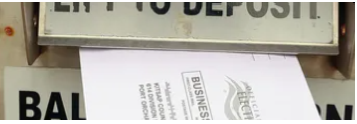
Treasuries are deposits into Treasury Security accounts.
They resemble bank safe deposit boxes in that the depositor, not the bank or U.S. government, owns the deposits, and the bank never touches them.
Similarly, the federal government neither uses nor even touches the dollars that are in Treasury accounts.
The federal government does not use tax dollars to pay off a T-bill, T-note, or T-bond. The dollars do not help fund federal spending. Nor are they owed by future taxpayers.
Upon maturity, the federal government returns the dollars in a T-account as though these dollars were in a safe-deposit box.
Thus the so-called federal “debt” cannot be too high, nor can it be “unsuitable” (another favorite word of debt worriers) any more than a safe deposit box’s contents can be too high or unsustainable.
The federal government pays its bills out of the General Fund, similar to a checking account, and by law, this fund cannot be negative.
As a bookkeeping device, the federal government sells enough T-securities to offset whatever would be a negative General Fund total.
This accounting trick has no practical significance because the Federal Reserve, now Monetarily Sovereign, has the unlimited ability to increase the dollar balance in the General Fund.
Quote from former Fed Chairman Ben Bernanke when he was on 60 Minutes: Scott Pelley: Is that tax money that the Fed is spending? Ben Bernanke: It’s not tax money… We simply use the computer to mark up the size of the account.
Statement from the St. Louis Fed: “As the sole manufacturer of dollars, whose debt is denominated in dollars, the U.S. government can never become insolvent, i.e., unable to pay its bills. In this sense, the government is not dependent on credit markets to remain operational.”
Treasury securities are not a form of borrowing; they are not owed by the government or taxpayers and do not help the government pay its bills. So what is their purpose:
They provide the world with a safe, convenient, interest-paying place to store unused dollars. This helps stabilize the value of the dollar.
Because the Fed arbitrarily determines the interest at which deposits will accumulate funds, these accounts help the Fed control overall interest rates.
Among those who don’t understand Treasuries (T-bills, T-bonds, T-notes), a persistent refrain is, “What if China dumps or stops buying Treasuries?” What would the federal government do?
That is like asking a bank, what if your big, safe-deposit-box customer started taking money out of his box? The answers are:
Nothing, or
If the government needed to add dollars to the total “debt,” the Monetarily Sovereign Federal Reserve would buy T-securities — as many as it wished, whenever it wanted.
Alan Greenspan: “A government cannot become insolvent with respect to obligations in its own currency.”
The U.S. is not unique in its unlimited ability to create dollars. The European Union has the unlimited ability to create euros:
Press Conference: Mario Draghi, President of the ECB Question: I am wondering: can the ECB ever run out of money? Mario Draghi: Technically, no. We cannot run out of money.
All of the above brings us to these excerpts from an article that appeared online:
Americans often quote the saying of President Theodore Roosevelt, “Speak softly but carry a big stick.” In other words, it is important to make only realistic threats.
(In that vein), threatening to dump US Treasuries is silly.
China is the second-largest foreign holder of US treasuries, only after Japan. China’s holdings of US treasury securities dropped to $980.8 billion in May, falling below $1 trillion for the first time in 12 years, according to data released by the US Department of the Treasury.
The further deterioration of China-US relations will likely have a direct impact on China’s risk appetite for holding US treasuries, and reducing holding of US treasuries could become a precautionary option.
This was the only large scale ultimatum the Global Times story presented and it’s bizarre to see that one mentioned. China and Japan have both been reducing their holdings of US Treasuries in recent years, with no adverse impact to the US government funding or the dollar.
….the real reason China cannot sell off its holdings of U.S. government bonds is because Chinese purchases were not made to accommodate U.S. needs.
Rather, China made these purchases to accommodate a domestic demand deficiency in China: Chinese capital exports are simply the flip side of the country’s current account surplus, and without the former, they could not hold down the currency enough to permit the latter.
To see why any Chinese threat to retaliate against U.S. trade intervention would actually undermine China’s own position in the trade negotiations, consider all the ways in which Beijing can reduce its purchases of U.S. government bonds…
China can buy other U.S. assets, other developed-country assets, other developing-country assets, or domestic assets. No other option is possible.
The first two ways would change nothing for either China or the United States. The second two ways would change nothing for China but would cause the U.S. trade deficit to decline, either in ways that would reduce U.S. unemployment or in ways that would reduce U.S. debt.
Finally, the fifth way would also cause the U.S. trade deficit to decline in ways that would likely either reduce U.S. unemployment or reduce U.S. debt; but this would come at the expense of causing the Chinese trade surplus to decline in ways that would either increase Chinese unemployment or increase Chinese debt.
By purchasing fewer U.S. government bonds, in other words, Beijing would leave the United States either unchanged or better off, while doing so would also leave China either unchanged or worse off.
China remains an export-depended economy (even though it is currently trying to shift its economic model).
Therefore, it needs to run a current account (or trade) surplus. If it does not, China will face either
more unemployment, for reduced exports mean that the Chinese exporters are forced to lay off workers,
or more debt, as Beijing will encourage large fiscal transfers to the households (social security, unemployment benefits, food stamps, etc.) or the creation of new businesses to mitigate the consequences of unemployment.
All this requires more money and, consequently, more debt.
This is why China purchases US Treasuries: to run trade surpluses and avoid higher debt/unemployment — not, as many think, to “help” American consumers so that they can purchase more Chinese imports.
China might make geopolitical waves by buying Japanese government debt. The yen is trading at very low levels and the Japanese central bank has had to buy over half the debt outstanding.
This is one of the steps the Federal Reserve could take and often has taken. The Japanese Central Bank is Monetarily Sovereign like the Fed and the EU.
Even if China wanted to buy Japanese debt to support Japan (as in make a point about the US failure to do much about its long-standing post financial crisis distress), it’s not clear the market is liquid enough for China to procure all that much.
In other words, this idea of punishing the US by dumping Treasuries may be appealing to a domestic audience, which has long been unhappy about the magnitude of China’s dollar foreign exchange reserves.
But no one knowledgeable in the US will lose sleep over it.
SUMMARY
The so-called federal “debt” is not a debt. lt is the total of depositsinto Treasury Security accounts, which are similar to bank safe-deposit boxes.
Neither the federal government nor future taxpayers owe the “debt.” To pay it off, which is done daily, the Treasury simply returns the contents of these accounts to the account owners.
These accounts serve two purposes: To provide a safe, interest-paying repository for unused dollars (which stabilizes the dollar) and to help the Fed control interest rates.
Thus, there is no danger inherent in a “too-large debt.” Even if China stopped buying T-securities, the U.S. government and U.S. taxpayers would be just fine.
Gap Psychology describes the common desire to distance oneself from those “below” in any socioeconomic ranking and to come nearer those “above.” The socio-economic distance is referred to as “The Gap.”
Wide Gaps negatively affect poverty, health and longevity, education, housing, law and crime, war, leadership, ownership, bigotry, supply and demand, taxation, GDP, international relations, scientific advancement, the environment, human motivation and well-being, and virtually every other issue in economics.Implementation of Monetary Sovereignty and The Ten Steps To Prosperity can grow the economy and narrow the Gaps: Ten Steps To Prosperity:
Now that Senator Sinema has signed on, the Inflation Reduction Act will pass by the scant majority of 51 to 50, including the Vice President’s vote.
Sinema had opposed closing the so-called carried interest tax loophole. Carried interest is treated as a long-term capital gain. Because it’s taxed at a lower rate than ordinary income, private equity, venture capital, and hedge fund operators benefit.
Presumably, she is in bed with those people.
Giving these over-paid number pushers an extra benefit is an anathema to anyone who wants the Gap between the rich and the rest narrowed. So, on that basis, the loophole should be closed.
But it is a federal tax, and federal tax dollars do not fund anything — they are destroyed upon receipt. So whatever reduces federal taxes (i.e., leaves more money in the private sector) benefits the economy.
The dollars you use to pay federal taxes are part of the M2 money supply measure. When those dollars reach the U.S. Treasury, they cease to be part of any money supply measure. Those dollars are destroyed.
When the government spends, it creates new dollars, ad hoc.
Because the Monetarily Sovereign Treasury has the infinite ability to create dollars, there is no answer to the question, “How much money does the Treasury have?” Thus, no measure includes Treasury dollars.
So, there is good and bad in that loophole, but on balance, including the loophole is good because it benefits the entire private sector.
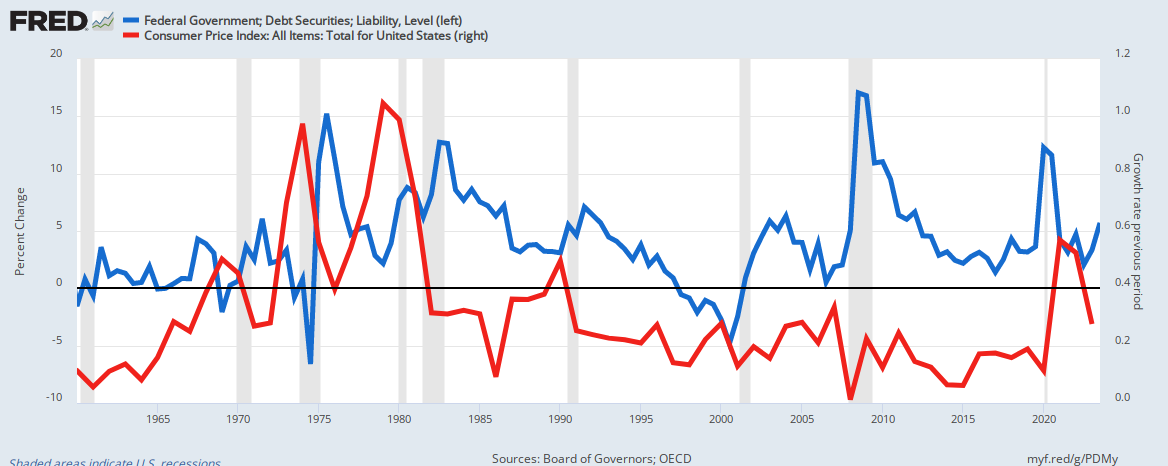
If the Committee for a Responsible Federal Budget’s numbers are correct, and federal deficits are reduced by $305 billion, that would be recessionary.
Reducing deficit growth causes recessions (vertical gray bars) which are cured by increased deficit growth.
Even worse than deficit growth reduction is debt reduction. That leads to depressions:
1804-1812: U. S. Federal Debt reduced 48%. Depression began 1807. 1817-1821: U. S. Federal Debt reduced 29%. Depression began 1819. 1823-1836: U. S. Federal Debt reduced 99%. Depression began 1837. 1852-1857: U. S. Federal Debt reduced 59%. Depression began 1857. 1867-1873: U. S. Federal Debt reduced 27%. Depression began 1873. 1880-1893: U. S. Federal Debt reduced 57%. Depression began 1893. 1920-1930: U. S. Federal Debt reduced 36%. Depression began 1929. 1997-2001: U. S. Federal Debt reduced 15%. A recession began 2001.
The CRFB predicts the federal debt would be reduced by nearly $2 trillion.
This means the federal government will take $2 trillion from the private sector (aka “the economy”) and destroy those dollars.
The most popular measure of an economy is Gross Domestic Product (GDP). It measures the total spending by the federal government everyone else in America, plus the net dollars flowing in from across our borders.
Mathematically, for GDP to grow, the private sector must have more dollars. A growing economy requires a growing supply of dollars; when the dollar supply shrinks, GDP shrinks. Simple arithmetic.
When GDP shrinks for two or more months, we call that a “recession,” and if the recession is exceptionally severe, we call it a “depression.”
[Depressions are often defined as recessions lasting longer than three years or resulting in a drop in annual GDP of at least 10 percent.]
The CRFB predicts a depression, though you wouldn’t know it from the tone of their article.
The Congressional Budget Office (CBO) just released its score of the Inflation Reduction Act (IRA) of 2022, legislation which would use Fiscal Year (FY) 2022 reconciliation instructions to raise revenue; lower prescription drug costs; fund new energy, climate, and health care provisions; and reduce the budget deficits.
Mixed bag:
Raising revenue is bad. That means “take more dollars from the private sector.” The federal government neither needs nor uses the dollars, while the private sector does both, need and use.
Lowering prescription drug costs would be good if it meant the government was going to pay. Unfortunately, it means the pharmaceutical companies will pay. Dollars will be shifted around in the private sector, and fewer will be available for research and development.
Fund new energy is good if “new energy” will mean “renewable” and “non-polluting.”
The climate and healthcare provisions seem good, depending on how they are implemented. One good thing, the Affordable Care Act will be strengthened financially.
“Reduce the budget deficits” is bad, bad, bad.
Unfortunately, getting the bill through the reconciliation process was legally and politically necessary. But reducing deficits does not reduce inflation.
Inflation is caused by shortages of crucial goods and services, most often oil and food. The only part of the Act that comes even close to reducing inflation is the “fund new energy” part, and again, we’ll have to see how that is implemented.
To call the bill the “Inflation Reduction Act” is both humorous and cynical, but that’s government.
Based on the CBO score, the legislation would reduce deficits by $305 billion through 2031 – including over $100 billion of net scoreable savings and another $200 billion of gross revenue from stronger tax compliance.
Again, that’s $305 billion taken from Gross Domestic Product at a time when the economy is in a recession and needs more, not fewer dollars.
Because the prescription drug savings would be larger than new spending, CBO finds the legislation would modestly reduce net spending by almost $15 billion through 2031, including by nearly $40 billion in 2031.
It’s unclear what the above paragraph is saying, but either $15 billion or $40 billion will be taken from pharmaceutical companies, a loss for the economy.
Once fully phased in, the plan would also slightly cut net taxes by about $2 billion per year – with expanded energy and climate tax credits roughly matching the size of new tax increases.
Cutting taxes benefits the private sector.
The legislation would generate nearly $300 billion of net revenue over a decade.
Translation: The legislation would generate nearly $300 billion of net loss for the economy over a decade.
Unlike prior versions of this reconciliation bill, such as the House-passed Build Back Better Act, this legislation would reduce deficits. Along with other elements of the bill, it is likely to reduce inflationary pressures and thus reduce the risk of a possible recession.
The above paragraph is wrong. Reducing deficits does not reduce inflationary pressures, and it absolutely does not reduce the risk of a possible recession.
Federal deficits (blue) do not correspond with inflation (red).
SUMMARY Inflation, i.e., a general price increase, is caused by shortages, not federal deficit spending.
Federal deficit spending can cure inflation when the spending helps cure the shortages. Example: Deficit spending to fund more oil/gas production.
Deficit reductions mathematically lead to GDP reductions by taking dollars from the private sector.
The Inflation Reduction Act will do many things, some good and some bad, but it will not reduce inflation.
——-//——-
[No rational person would take dollars from the economy and give them to a federal government that has the infinite ability to create dollars.]
Gap Psychology describes the common desire to distance oneself from those “below” in any socio-economic ranking, and to come nearer those “above.” The socio-economic distance is referred to as “The Gap.”
Wide Gaps negatively affect poverty, health and longevity, education, housing, law and crime, war, leadership, ownership, bigotry, supply and demand, taxation, GDP, international relations, scientific advancement, the environment, human motivation and well-being, and virtually every other issue in economics.Implementation of Monetary Sovereignty and The Ten Steps To Prosperity can grow the economy and narrow the Gaps: Ten Steps To Prosperity:
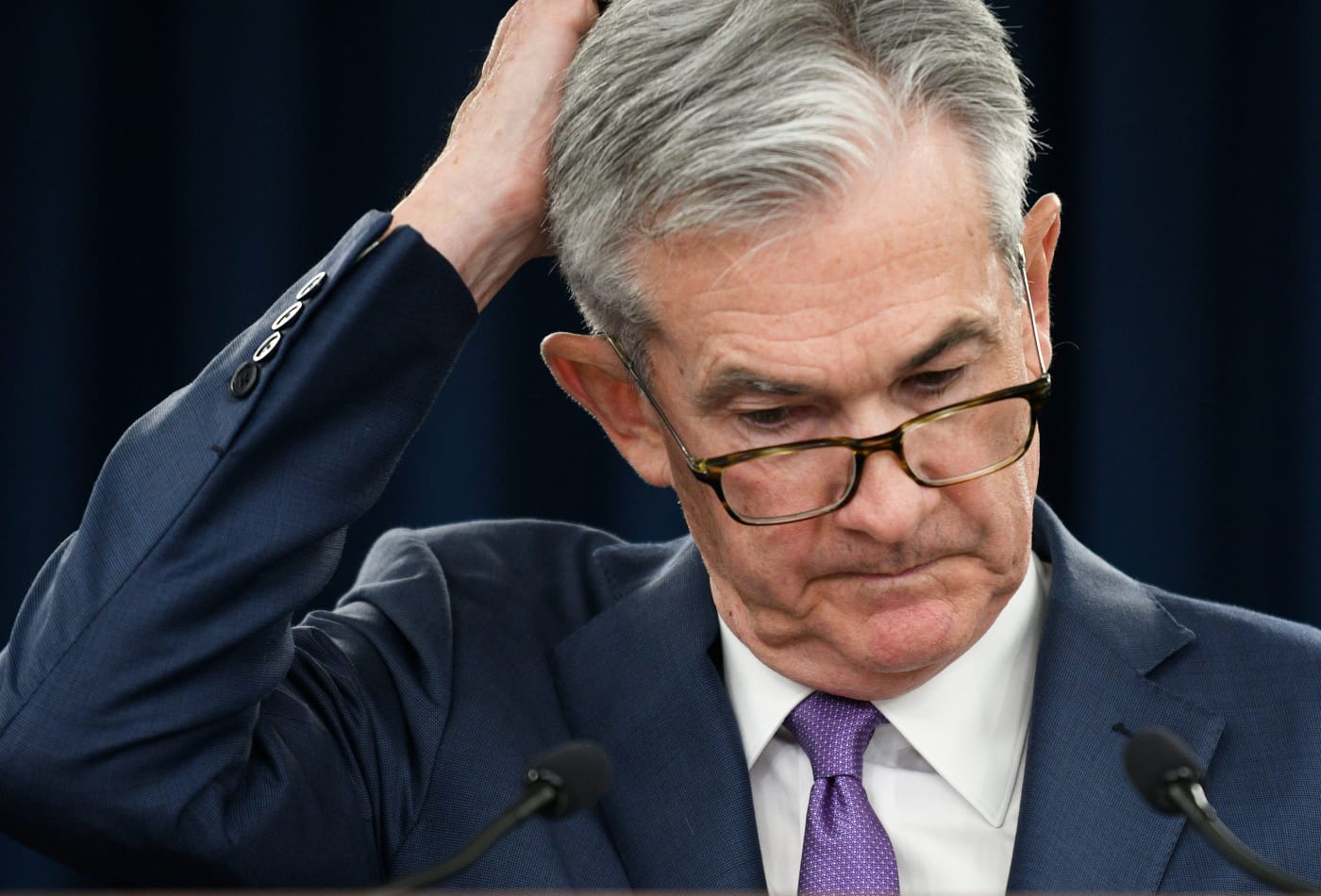
Fed Chairman Jerome Powell and President Joe Biden both wish to reduce inflation, prevent (or cure) a recession, and grow the economy.
Both receive the advice of top, uh, well-paid economists. Yet both favor precisely the opposite policies.
Powell admitted he doesn’t have the right tool but insists on continuing with the wrong tool.
Powell recently said, “I do not think the U.S. is currently in a recession, and the reason is there are too many areas of the economy that are performing too well. This is a very strong labor market … it doesn’t make sense that the economy would be in a recession with this kind of thing happening.”
Translation: He doesn’t understand what’s happening but denies it’s a recession.
Yet he raised interest rates by 0.75 percentage points for a second consecutive time to “cool” the economy.
By “cool,” he means the economy is growing too fast, which causes inflation.
He wishes to slow economic growth, which in his opinion, will cure inflation but not cause the recession he denies already is happening. Apparently, Powell thinks the opposite of “inflation” is “recession.” But the two can occur together in what’s called “stagflation.”
Prices are a function of supply and demand.Inflation occurs when there is an imbalance: Too little supply to meet the demand. Today’s inflation, and indeed all inflations through history, are not caused by demand growth but by supply shrinkage.
Historically, demand increases are not sudden, but supply decreases can come overnight. So markets can adjust to the former but struggle to adapt to the latter.
Today, we have the confluence of many shortages: Oil (energy), food, transportation, computer chips, autos, lumber, appliances, homes, labor, and many items related to the basic shortages. In terms of inflation, the single most crucial shortage is the oil (energy) shortage.
Since the cause of inflation is shortages, curing inflation requires curing shortages.
But Powell’s interest rate increases do not address shortages. They do not increase supply. Interest rate increases reduce both supply and demand. They reduce supply by making borrowing by manufacturers more expensive. They reduce demand by making borrowing by consumers more expensive.
Powell hopes that his rate increases will cut demand more than supply. He has no way to know or control whether this will happen. It’s just a hope.
But Jerome, be careful what you hope for; cutting demand impoverishes the supplier section, which leads to a recession.
To quote the Wall Street Journal:
Inflation is a global phenomenon inflicting significant financial pain on families everywhere. Rising costs are an urgent problem, and interest rates play a key role in maintaining price stability.
But urgency is no excuse for doubling down on a dangerous treatment.
As with any illness, the right medicine starts with the right diagnosis.
Unfortunately, the Fed has seized on aggressive rate hikes—a big dose of the only medicine at its disposal—even though they are largely ineffectiveagainst many of the underlying causes of this inflationary spike.
It’s a global problem, as is COVID, but the U.S. can solve this problem within our borders if we use the correct solutions.
As we often have said, the Fed has been tasked with a problem for which it has no tools — shortages of crucial goods and services. Only Congress and the President have the tools to cure shortages.
Mr. Powell has acknowledged this. He noted that elevated interest rates likely wouldn’t bring down gasoline or food prices. “There are many things we can’t affect,” he admitted —namely, the key causes of today’s inflation.
This is a monumental admission. The man tasked with curing inflation has admitted he doesn’t have the tool to do the job. Still, he persists in using that one tool that will lead to recession.
Higher interest rates won’t end skyrocketing energy prices caused by Vladimir Putin’s war on Ukraine. They won’t fix supply chains still reeling from the pandemic.
And they won’t break up the corporate monopolies that Mr. Powell admitted in January could be “raising prices because they can.”
If the Fed’s interest-rate hikes won’t address many causes of today’s inflation, it’s worth asking: What would they do?
When the Fed raises interest rates, increasing the cost of borrowing money, it becomes more expensive for businesses to invest in their operations.
As a result, employers will slow hiring, cut hours and fire workers, leaving families with less money. In the bloodless language of economists, that’s referred to as “dampening demand.”
It also is referred to as “causing a recession.”
But make no mistake: If the Fed cuts too much or too abruptly, the resulting recession will leave millions of people—disproportionately lower-wage workers and workers of color—with smaller paychecks or no paycheck at all.
But that is the whole plan. Make lower-wage workers and workers of color pay to stop inflation. The general sends the poor to the front, not caring how many die.
Mr. Powell has even conceded that the Fed’s actions may lead to a downturn, saying recession “is not our intended outcome at all, but it’s certainly a possibility.”
If all you have is a hammer, every problem looks like a nail. Who cares whether it works or not?
Despite these warnings, the Fed chairman still has cheerleaders for his rate-hiking approach. Chief among them is Larry Summers. “We need five years of unemployment above 5% to contain inflation—in other words, we need two years of 7.5% unemployment or five years of 6% unemployment or one year of 10% unemployment,” the former Treasury secretary recently told the London School of Economics.
You read that correctly: 10% unemployment. This is the comment of someone who has never worried about where his next paycheck will come from.
What can I say about Larry Summers that I haven’t said here, here, here, here,here, and here? The man has my admiration for his ability to fail into better jobs repeatedly.
Summers is a magical example of the Peter Principle: Being promoted to his level of incompetency is his sole success. What next, Larry? Kill the elderly to cut Social Security costs?
If Messrs. Powell and Summers have their way, the resulting recession will be brutal.
As in past downturns, Republicans in Congress will press for austerity—tax cuts for giant corporations and the rich, weaker regulation on big businesses, and little economic support for the most vulnerable.
Democrats should be ready to reject the Republican playbook and prepared to help working families survive.
Well, maybe, just maybe, the Dems are listening, especially if Sen. Joe Manchin remembers he’s a Democrat.
From Axios:
President Biden has slowly but substantially re-engineered significant parts of the American economy — achievements obscured by COVID, inflation and broad disenchantment. e domestic semiconductor industry, and accelerated U.S. viral research and vaccine production capabilities.
He might be on the cusp of the biggest domestic clean-energy plan in U.S. history.
Interestingly, it all has an America First twist— drilling more oilhere … fixing infrastructure here … moving chip-making here … increasing manufacturing jobs here … creating vaccines here.
The $280 billion CHIPS and Science Act provides grants, tax credits and other incentives to manufacture computer chips in the U.S. The White House says it’ll eventually lower the price of cars, dishwashers and computers.
Biden could get another huge win with the climate plan secretly negotiated by Senate Majority Leader Chuck Schumer and Sen. Joe Manchin. The package would provide new tax credits for buying EVs — plus rebates for buying efficient appliances and weatherizing homes, and tax credits for heat pumps and rooftop solar panels.
Biden’s $1 trillion infrastructurebill to rebuild roads, bridges and rail is one of the biggest packages signed by a president ever.
The Biden administration said it’ll pour $3 billion into the vaccine supply chain, creating thousands of U.S. jobs, and helping prepare for future threats.
Electric-vehicle manufacturing is growing in the U.S., with GM and Ford announcing plans for massive vehicle and battery plants across the Midwest and Appalachia. Fun fact: GM’s Mary Barra, who also chairs the Business Roundtable, is the CEO this White House has hosted most often.
These developments required bipartisanship (remember that?) — something Biden promised but gets little credit for, since these thin bands of Republican support look nothing like traditional bipartisanship.
Not only did Biden land these economic measures and a gun-control bill, but same-sex marriage protection is getting close — baby steps, but in a once unthinkable direction.
Biden has only a bare 50-50 Senate “majority” (depending on Sens. Manchin and Sinema). Even then, he is limited by reconciliationto avoid a purely political GOP. It has no ideas for anything but will filibuster everything the Dems submit.
Somehow, Biden managed to accomplish far more than Trump ever dreamed of. This is partly because Trump is an incompetent, corrupt psychopath, who cares only about himself, and the GOP is a crooked election machine.
But much credit belongs to “weak, timid” Biden, who plays the long game, insults no one, closes no doors, knows how to negotiate, and doesn’t whine about everyone else being at fault.
Whereas Trump split his time evenly among golf, tweeting insults, and self-aggrandizement, Biden moved slowly, quietly, but surely to accomplish, accomplish, accomplish.
Now, if only Powell would stand up and say, “I don’t have the right tool. Interest rates won’t cure shortages. Congress must pass spending bills to end key scarcities. That would end inflation and enrich the economy. And the people would thrive.”
That bit of honesty would send more shock waves through Congress than the attempted coup did.
Rodger Malcolm Mitchell
Monetary SovereigntyTwitter: @rodgermitchellSearch #monetarysovereigntyFacebook: Rodger Malcolm Mitchell
……………………………………………………………………..
THE SOLE PURPOSE OF GOVERNMENT IS TO IMPROVE AND PROTECT THE LIVES OF THE PEOPLE.
Gap Psychology describes the common desire to distance oneself from those “below” in any socio-economic ranking, and to come nearer those “above.” The socio-economic distance is referred to as “The Gap.”
Wide Gaps negatively affect poverty, health and longevity, education, housing, law and crime, war, leadership, ownership, bigotry, supply and demand, taxation, GDP, international relations, scientific advancement, the environment, human motivation and well-being, and virtually every other issue in economics.Implementation of Monetary Sovereignty and The Ten Steps To Prosperity can grow the economy and narrow the Gaps: Ten Steps To Prosperity: