Those of you who read, “It is 2019, and the phony federal debt “time bomb” still is ticking“, are aware that at least since 1940, and surely before, scaremongers have been calling the federal debt a “ticking time bomb.” Eighty years of being wrong. Still no explosion.
Those of you who read, “More scare nonsense from the CRFB,” know that this organization, funded by rich folks, wants you to believe what simply is not true: That the federal government can run short of its own sovereign currency, the U.S. dollar.
It can’t. It created the very first dollar, and continues to create dollars, ad hoc, every time it pays a creditor.
Even if all tax collections totaled $0, the federal government could continue paying its bills, forever.
Now that the latest CRFB (Committee for a Responsible Federal Budget) nonsense has been published, I feel obligated to demonstrate that it is . . . well, nonsense. If they keep publishing the lies I’ll keep publishing the truth.
The Congressional Budget Office (CBO) released its Budget and Economic Outlook for the next decade this morning, which warned that our debt is headed to uncharted waters (1).
Under current law, CBO projects debt will rise from 78 percent of the economy today to almost 93 percent by 2029 and over 152 percent within 30 years.
Under CBO’s Alternative Fiscal Scenario, which assumes the continuation of current policies, debt would reach 105 percent of the economy by 2029 and exceed record levels set after World War II by 2030 (2).
The following is a statement from Maya MacGuineas, president of the Committee for a Responsible Federal Budget:
“You need to go no further than this report to see the real state of the union – our national debt is rising rapidly, and trillion-dollar deficits are just on the horizon.
Numbers don’t lie, and anyone with a calculator on their phone can see that debt is a problem that can’t be ignored. (3)
“The debt doesn’t just burden future generations, (4) it also stands in the way of economic and political progress today. (5)
With the government now reopened, it is time for the new Congress and the President to work to put the country on more solid fiscal ground. (6)
“CBO’s annual report is a reminder that the situation is getting worse, not better. (7)
Lawmakers should come up with a plan now while the economy is strong to put our debt on a downward path and phase it in to avoid the much more disruptive choices that procrastination will bring. (8)
Look at the CRFB’s comments, point by point.
(1) Actually, these waters have been “charted” — by Japan, whose Debt to Gross Domestic Product ratio is above 250% — and there’s no sign it is “a problem that can’t be ignored.”
The waters also have been “charted” by the U.S. after WWII, and the chart shows the U.S. economy has grown quite well since WWII:
Federal debt has been “sustainable” since WWII, and has not been a “problem” (3), has not burdened any generations (4), and has not stood in the way of economic and political progress. (5).
Federal debt has been “sustainable” since WWII, and has not been a “problem.” Numbers don’t lie, but liars lie about numbers (3). Federal debt and GDP have grown together, which would not be the case if the debt were “a problem.”
Federal debt cannot “burden future generations” (4), because taxes do not fund the debt. The federal government pays off the debt every day, simply by returning the dollars that reside in those T-security accounts.
It is the lack of federal deficits that burdens generations:
Recessions come from deficit growth decline, and deficits are cured by deficit growth increases. The reason: Economic growth requires money growth, and deficits pump money into the economy.
Growing debt and has not stood in the way of economic and political progress. (5). We aren’t sure what “political progress” the CRFB means, but the relationship between debt growth and economic growth is clear.
The country is on “solid fiscal ground” (6) when deficits are growing, because deficits pump more dollars into the economy.
The country is on shaky fiscal ground when deficits are reduced, because a growing economy requires a growing supply of money.
All depressions have been introduced by reductions in federal debt, and most recessions have been introduced by reductions in deficit growth.
Depressions and recessions have been cured by debt growth.
(7) “The situation” is getting better because deficits are increasing, which means the federal government is pumping more dollars into the economy.
Putting federal debt on a downward path repeatedly has proven to cause depressions, by taking dollars out of the economy.
There is no reason to do this, however. The federal government is not like state and local governments, and not like you and me. It uniquely is Monetarily Sovereign.
Unlike state and local governments, and unlike you and me, the federal government cannot run short of its own sovereign currency.
Unlike us, the federal government does not have to “save up” to pay its bills. It does not need to wait for the economy to be strong. The U.S. federal government has the unlimited power to pay all its bills, whether the economy is growing, shrinking, or standing still.
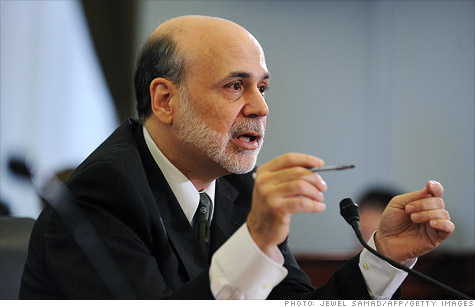
Ben Bernanke: “The U.S. government has a technology, called a printing press (or, today, its electronic equivalent), that allows it to produce as many U.S. dollars as it wishes at essentially no cost.”
Greenspan: “The CRFB tells people we’re running short of dollars.” Bernanke: “And people fall for it!”
Alan Greenspan: “Central banks can issue currency, a non-interest-bearing claim on the government, effectively without limit. A government cannot become insolvent with respect to obligations in its own currency.”
St. Louis Federal Reserve: “As the sole manufacturer of dollars, whose debt is denominated in dollars, the U.S. government can never become insolvent, i.e., unable to pay its bills. In this sense, the government is not dependent on credit markets to remain operational.
As always, the CRFB functions mostly as a shill for the very rich, to convince you your federal benefits — Social Security, Medicare, Medicaid, aids to poverty, aids to education, etc. — are unaffordable and must be reduced.
If you’re tired of the lies, don’t stand for them. Tell your national representatives that you know the facts.
You know: the government cannot run short of dollars
You know that growing deficits are necessary to grow the economy
You know that the federal debt is not real debt, but rather is the total of deposits into T-security accounts, similar to savings accounts or bank CDs.
You know the federal government easily can afford comprehensive Medicare-for-All
You know the federal government could provide free education for everyone
In short, you know the federal government can afford the Ten Steps to Prosperity (below).
Tell them to cut the crap rather than cutting budgets, because you know the truth and you’re not going to stand for their lies any longer.
The single most important problems in economics involve the excessive income/wealth/power Gaps between the have-mores and the have-less.
Wide Gaps negatively affect poverty, health and longevity, education, housing, law and crime, war, leadership, ownership, bigotry, supply and demand, taxation, GDP, international relations, scientific advancement, the environment, human motivation and well-being, and virtually every other issue in economics.
Implementation of The Ten Steps To Prosperity can narrow the Gaps:
The foundation of American democracy is our free and honest elections. Without them, the America you know and love simply would not exist.
The Russians attacked America by interfering in our Presidential election, just as surely as if they had dropped a bomb on an American city. America’s security depends on this interference being thoroughly investigated, and Russia and the perpetrators being punished.
Now for the questions, all of which have the same answer:
What is the word for an American who attempts to impede the investigation of an American enemy’s interference in our Presidential election? _______________
What is the word for an American who despite all evidence, and the testimony of all our intelligence organizations, denies that our enemy, Russia, interfered in our elections? ______________
What is the word for an American who attempts to impair an American Presidential election with materials stolen from an American political party by our Russian enemies? _______________
What is the word for an American who refuses to be interviewed by the investigator of Russian interference in an American Presidential election? _______________
What is the word for an American who tells witnesses not to cooperate with the investigation of Russian interference, denounces cooperating witnesses as “rats,” and threatens cooperating witnesses and their families? _______________
What is the word for an American who dangles pardons in front of non-cooperators who are convicted of helping to impede the investigation of Russian interference? _______________
What is the word for an American who praises and professes love for America’s dictatorial enemies, Putin and Kim, while insulting our allies? _______________
What is the word for an American who attempts to sabotage the organization (NATO) that helps protect America and its allies from our enemies? _______________
What is the word for an American who engages in secret meetings with a dictatorial enemy, then destroys all records of those meetings? _______________
What is the word for an American who conspires to benefit America’s primary enemy, in exchange for permission to execute a personally profitable project? _______________
What is the word for an American who appoints to head vital government agencies, incompetents and criminals who oppose the very purpose of those agencies? _______________
What is the word for an American who denigrates an American war hero, while lying to avoid his own military service? _______________
What is the word for an American who bribes women, for the purpose of affecting the outcome of a Presidential election? _______________
What is the word for an American who denies science to knowingly aid and abet the pollution of America’s air and water?
What is the word for an American who knowingly surrounds himself with criminal traitors? _______________
What is the word for an American who lies about innocent men, women, and children, to prevent them from becoming valuable American citizens? _______________
What is the word for an American who intentionally and cruelly destroys the livelihoods of millions of fellow Americans, for political purposes? ______________
What is the word for a political party that for the sake of politics, protects a traitor to America? ______________
What is the word for an American politician, who is a member of a political party, that protects a traitor to America? _______________
What is the word for an American who, despite massive evidence, knowingly votes for a traitor to America? _______________
The word, is “traitor.”
By now, all but the most bigoted and mule-headed among us knew the answer.
A new poll shows that a clear majority of Americans support Medicare for All—until they are told what it is and how it would work.
The survey conducted by the Kaiser Family Foundation finds that 56 percent of the country supports a “national health plan, sometimes called Medicare for All” and an even larger percentage—71 percent—supports the idea when told that it would “guarantee health insurance as a right for all Americans.”
When told that such a plan would eliminate health insurance premiums, 67 percent say they’re in favor.
One way to look at these numbers is as strong public approval for the broad outlines of a single-payer health care system, which would create a single national health insurance plan run by the federal government and financed through taxes.
That public is support is why so many 2020 Democratic presidential contenders have been warming up to the idea.
But the more revealing part of the survey, I think, comes from the questions focused on the costs of single payer, all of which caused support for Medicare for All to drop below 40 percent.
Told that it would eliminate private health insurance and require people to pay more in taxes, for example, support fell to 37 percent.
Yes, if you lie about the plan, by claiming taxes would be increased, fewer people will want it. No big surprise, there.
Told that it would cause some medical treatments and tests to be delayed, support dropped even further, to 26 percent.
Yes, add another lie, and even fewer people will want it.
Medicare for All supporters might complain that these are loaded descriptions that don’t accurately capture the reality of single payer, which they say is about freeing people from premiums while offering a guarantee of access.
But these are, at a very basic level, just descriptions of what an American single-payer system would do.
Wrong. They are not accurate descriptions at all. They are lies.
The most prominent such plan is the one put forth by Sen. Bernie Sanders (I–Vt.), which would eliminate all existing private health insurance plans in a four-year period.
Although it allows for some secondary private coverage once the system is in place, it requires most everyone in the U.S. to enroll in a new, government-run plan.
Wrong, again. No one would be “required” to move to a free plan that covers more than a for-fee plan. People would do that voluntarily.
Arguably the whole point of the most ambitious single-payer schemes is to move everyone off private insurance and onto a single federally managed plan; that’s not possible unless people who currently have private insurance get new coverage.
Wrong, yet again. The “whole point” is to provide free, comprehensive health care insurance to all who want it. Original Medicare was one small step in that direction. No one is forced to accept it, but the vast majority of those eligible do.
Some single-payer proposal would make the transition more slowly, but coverage disruption is not incidental; it’s the point.
And wrong, again. It’s not coverage “disruption.” It’s coverage improvement.
Mr. Suderman distorts facts to make people believe insurance is being taken from them, and that they are being “moved off private insurance.”
No one needs to be “moved” anywhere. People will choose to move, just as they moved to original Medicare.
Think about it. If you were offered comprehensive health care insurance, that covered everything — doctors, hospitals, home care, pharmaceuticals — everything, and at zero cost, would the government have to “move” you?
Financing that plan would require a massive increase in federal spending—about $32 trillion over a decade, according to estimates from think tanks across the political spectrum.
Even with the most carefree attitude toward debt and deficits, it is nearly unthinkable that an increase in government spending of that size would not come with higher taxes, probably much higher taxes, which would likely affect the middle class.d
“Unthinkable” for those whose knowledge ends at the monetarily non-sovereign, gold standard years. But perfectly “thinkable” for those who understand that a Monetarily Sovereign government cannot run short of its own sovereign currency.
It is impossible for the U.S. federal government unintentionally to run short of U.S. dollars. It creates dollars, ad hoc, by the simple act of paying a creditor. The more dollars it pays to creditors, the more dollars it creates.
The contention that waiting times for health care services would be longer is the most debatable of the bunch, but given the experience of other countries and the probable design of a full-scale single-payer plan, it’s a more than a plausible outcome.
Government-run health care systems like the ones in the United Kingdom (which is fully socialized) and Canada (a territorial single-payer system) are notorious for having long wait times for services such as cancer treatment.
The “long-wait-times” bogeyman is put forth by the right wing and the ignorant, to scare the public.
The cause of long wait times is insufficient money. Obviously, any program that is underfunded will experience long wait times.
But just as there is no reason for a Monetarily Sovereign government to underfund, there is no reason for long wait times.
Furthermore, the Sanders plan calls for significant reductions to reimbursements for health care providers, which, if implemented, would almost certainly put some health care centers out of business, reducing the number of doctors and other medical professionals.
And although it’s possible, in theory, to imagine a system that doesn’t cut provider rates, that would be far, far more expensive, and would require even higher taxes while robbing supporters of one of their favorite talking points—that Medicare for All is much cheaper, overall, than the current system.
Reductions to reimbursements for health care providers are absolutely, 100% unnecessary. Sanders cripples his own plan by telling the public the “Big Lie,” that federal taxes fund federal spending.
The “Big Truth” is: Even if the federal government didn’t collect a single penny in taxes, it could continue spending, forever.
The function of federal taxes is not to fund spending but rather to:
1. Control the economy by encouraging some activities and discouraging others. (Example: Home mortgages are tax deductible, while rents are not, because the government wanted to encourage home ownership.)
2. To narrow the gap between the richer and the poorer.
Medicare for All proponents might be pleased with the show of support found in the survey, but what those questions mostly revealed was that people say yes when you ask them if they favor a health care system that is essentially cost-free.
Yes, cost-free is exactly what Medicare-for-All could be and should be.
Clear public support, in other words, only materializes when you ignore the practical reality of making a transition from a mixed public/private system to single payer—higher taxes, longer waits, and the loss of existing private insurance arrangements.
Three lies were bundled into one short paragraph:
There is no need for higher taxes. (The federal government cannot run short of dollars.)
There is no need for longer waits. (Original Medicare has not caused longer waits.)
And there is no “loss” of existing insurance. (People voluntarily will move to free Medicare for all, just as they voluntarily moved to original Medicare.)
It truly is disgusting that both the proponents and the opponents of Medicare-for-All have not displayed the honesty and courage to tell the populace the truth.
Could it be that the public is not ready for the truth? Will all financial decisions continue to be based on the Big Lie.
The single most important problems in economics involve the excessive income/wealth/power Gaps between the have-mores and the have-less.
Wide Gaps negatively affect poverty, health and longevity, education, housing, law and crime, war, leadership, ownership, bigotry, supply and demand, taxation, GDP, international relations, scientific advancement, the environment, human motivation and well-being, and virtually every other issue in economics.
Implementation of The Ten Steps To Prosperity can narrow the Gaps: