Recently, I had a conversation with a young man who told me that federal deficit spending causes inflation.
If you took an economics course in school, you probably agree with him because that is what they teach. His logic was simple. He has been taught:
Federal deficit spending increases the supply of dollars. When one increases the supply of any product, without increasing demand, the value of that product decreases. When the value of the dollar decreases, we experience inflation.
Adding money to the economy increases demand, which, in the absence of increased supply, causes shortages, which create inflation.
The problem with #1 is that money is unlike any other product or service. The demand for money is relatively inelastic.
Example: You own a Tesla and learn that Teslas are now on sale at bargain prices. Will you buy an additional Tesla?
Or you see that tomatoes are on sale, but you have a dozen at home. Do you want additional tomatoes? Probably not.
But you have a million dollars and hear of an investment that will pay you another million at no risk. Do you want that additional million dollars? Probably so.
Currency printing didn’t cause inflation. Scarcities cause inflation, which causes a government to print currency.
The point: Federal deficit spending adds dollars to the economy, but that additional supply doesn’t reduce the dollar’s value.
In fact, if those extra dollars are used to obtain products or services that are in short supply, they can reduce the inflation caused by the shortages.
That is the problem with #2, because when the federal government spends dollars in the economy, the economy usually responds by increasing the supply of goods and services.
While deficit spending can be inflationary if it leads to excessive demand without corresponding increases in supply, spending can address supply-side constraints, boost productivity, and ultimately help reduce inflation.
There can be no economic growth without federal deficit spending.
The illusion that deficit spending causes inflation may come from hyperinflations, where governments print currencies in response to inflations.
It’s the “wheelbarrows filled with currency” visual we all have seen.
In those situations, inflation has been caused by scarcities of critical products and services, such as oil, food, labor, transportation, etc., and the additional dollars do nothing to relieve those scarcities.
When a government fails to address the real causes of inflation but instead prints currency, the inflation worsens,
The illusion of cause and effect is reversed. Money “printing” doesn’t cause inflation. Inflation can cause money printing if a government doesn’t understand what really causes inflation: Shortages of crucial goods and/or services.
It’s like a baseball team losing by five runs because it is short of good pitchers. So it trades its few decent pitchers for more hitters and starts losing by ten runs.
Here is a graph demonstrating the relationship (or rather, lack of relationship) between federal deficit spending and inflation:
The blue line shows the annual inflation rate in the U.S. The red line shows the annual deficit increase in the U.S. The lines are not parallel. Recessions (gray vertical bars) result from declining deficit growth and are cured by increased deficit growth.
Presumably, if federal deficit spending caused inflation, the two lines would generally be parallel. They are not. In fact, they tend to move in opposite directions.
One could use the above graph to demonstrate that federal deficit spending often cures inflation by reducing the shortages that do lead to inflation.
By comparison, please look at the following graph:
The blue line again shows the annual inflation rate. The green line shows the annual percentage changes in oil prices.
The lines in the above graph are essentially parallel, indicating a close relationship between oil prices and inflation.
Changes in oil supplies have had a far more profound and sudden effect on oil prices than changes in oil demand, which generally are slow.
Overall, the graphs suggest that federal deficit spending plays, at most, a minor role in inflation, and possibly none at all, while oil supplies (in addition to supplies of food, shipping, labor, and other products) are the main drivers of inflation.
Our most recent inflation was caused by COVID-related shortagesof oil, food, shipping, labor, metals, wood, and other products. When these shortages were eased by federal deficit spending, inflation eased.
This is an important fact because the threat of inflation is often used as an excuse for not federally funding social programs like Social Security, Medicare, and anti-poverty efforts.
The income/wealth/power Gapis what makes the rich wealthy. Without the Gap, no one would be rich; we would all be the same. The wider the Gap, the wealthier are the rich.
The wealthy are aware of this, and in their efforts to become even richer, they try to widen the Gap by increasing their own wealth and power and/or diminishing the resources of others.
One way they do this is by claiming that the social programs are becoming insolvent and so must be cut or taxes increased.
However, it is difficult for them to deny that the federal government could afford to fund these programs. Even the lie that the federal government would have to borrow dollars is easily debunked for two reasons:
As a Monetarily Sovereign entity, the federal government can create dollars at will by simply pressing keys on a computer.
Former Fed Chairman Ben Bernanke:“The U.S. government has a technology, called a printing press (or, today, its electronic equivalent), that allows it to produce as many U.S. dollars as it wishes at essentially no cost. It’s not tax money… We simply use the computer to mark up the size of the account.”
Even if the notion of future borrowing and increased interest payments were accurate (it isn’t), it would be of no significance to an entity that possesses the unlimited capacity to settle its debts by pressing computer keys. Statement from the St. Louis Fed:
“As the sole manufacturer of dollars, whose debt is denominated in dollars, the U.S. government can never become insolvent, i.e., unable to pay its bills. In this sense, the government is not dependent on credit markets to remain operational.”
So, the rich resort to the false claim that federal spending causes inflation.
What they fail to mention is the following graph, which highlights the relationships between federal deficits and recessions:
When federal deficit growth (red) decreases, we have recessions (vertical gray bars). Recessions always are cured by increases in federal deficit growth.
Economic growth requires money growth. Here is an example of the close relationship between economic growth and money growth
Gross Domestic Product (GDP) closely mirrors money (debt) growth.
The formula for Gross Domestic Product shows how money growth is necessary for economic growth:
GDP = Federal Spending + Non-Federal Spending + Net Exports
Net Exports generally are negative. (We import more than we export). So, GDP growth relies on federal and non-federal spending growth.
Federal Spending is a large part of M3, which in turn, is a large part of GDP. Federal Spending growth is necessary for GDP (economic) growth.
Then, of course, there is the fact that federal surpluses (the extreme version of deficit reduction) cause depressions (the extreme version of recessions). In fact, every depression in American history has resulted from surpluses.
1804-1812: U. S. Federal Debt reduced 48%. Depression began 1807.
1817-1821: U. S. Federal Debt reduced 29%. Depression began 1819.
1823-1836: U. S. Federal Debt reduced 99%. Depression began 1837.
1852-1857: U. S. Federal Debt reduced 59%. Depression began 1857.
1867-1873: U. S. Federal Debt reduced 27%. Depression began 1873.
1880-1893: U. S. Federal Debt reduced 57%. Depression began 1893.
1920-1930: U. S. Federal Debt reduced 36%. Depression began 1929.
1997-2001: U. S. Federal Debt reduced 15%. Recession began 2001.
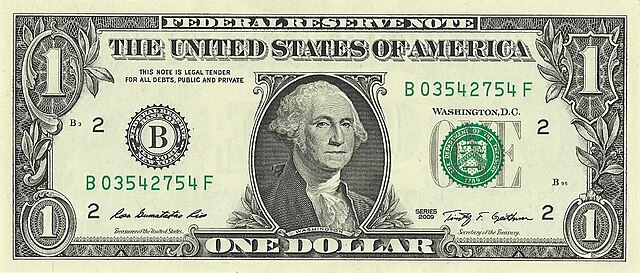
All money is a form of debt. Have you noticed that every dollar bill (“bill” is a word that denotes debt) is a Federal Reserve note (“note” is another word denoting debt)?
Each bill is signed by the Treasurer and the Secretary of the Treasury.
The U.S. dollar is nothing more than a number on the federal government’s books. It is not a physical entity. There are no physical dollars. The U.S. dollar bill is a title to a dollar showing that the bearer is owed a dollar by the United States government.
For example, an author owns a story he has written, though the story is not a physical entity. Similarly, the federal government is an author of federal dollars, though those dollars are not physical entities. And just as the author can create infinite stories, the government can create infinite dollars.
All debt requires collateral. The collateral for federal debt is “full faith and credit.”
This may sound nebulous to some, but it involves certain, specific, and valuable guarantees, among which are:
A. –The government will accept only U.S. currency in payment of debts to the government
B. –It unfailingly will pay all its dollar debts with U.S. dollars and will not default
C. –It will force all your domestic creditors to accept U.S. dollars if you offer them to satisfy your debt.
D. –It will not require domestic creditors to accept any other money
E. –It will take action to protect the value of the dollar.
F. –It will maintain a market for U.S. currency
G. –It will continue to use U.S. currency and will not change to another currency.
H. –All forms of U.S. currency will be reciprocal, that is five $1 bills always will equal one $5 bill and vice versa.
The value of debt, i.e., the U.S. dollar, is based in part on the value of its collateral. Should any of A – H no longer be in effect, the dollar’s value would plummet.
Another key factor influencing the value of the U.S. dollar is interest rates. Investments denominated in dollars, such as bonds and Treasury securities, are more sought after when they offer higher interest rates.
Be cautious with this, as the value of a bond decreases when interest rates rise. Newly issued bonds offer higher rates and compete with older bonds.
The key point is that dollars do not lose value, and inflation is not caused by the federal government’s increasing deficit spending. The government could easily fund Social Security and Medicare without imposing FICA taxes or triggering inflation.
The wealthy classes’ arguments for cutting SS and Medicare benefits and raising taxes are unfounded and based on misleading claims.
IN SUMMARY
Inflations are caused by scarcities, often due to oil and food shortages. Shortages of shipping, labor, metals, wood, and electronics can also be significant factors.
While deficit spending can be inflationary if it leads to excessive demand without corresponding increases in supply, spending can address supply-side constraints, boost productivity, and ultimately help reduce inflation.
Without federal deficit spending, there can be no economic growth and no solution to scarcity. The lack of federal debt growth causes recessions and depressions. Recessions are cured by federal (money) deficit growth.
The federal government could and should fund a comprehensive, no-deductible Medicare and Social Security for every man, woman, and child, regardless of age and income, while eliminating FICA.
We’ll end this post with excerpts from an article on the MSN website:
Some House Republicans (show) interest in reviving the party’s longtime passion for gutting the social safety net in the wake of Donald Trump’s reelection and the coming Republican trifecta.
Reports have surfaced about cuts to programs like Medicaid and food stamps to offset the cost of extending Trump’s 2017 tax cuts.
Others are openly suggesting that Medicare and Social Security may be on the chopping block as part of Elon Musk and Vivek Ramaswamy’s performative venture into government spending cuts through the new Department of Government Efficiency.
But MAGA Republicans on Capitol Hill who recently spoke to TPM were unwilling to be pinned down on the issue.
The Republican Party promulgates public ignorance about the differences between federal (Monetarily Sovereign) finances and personal (monetarily non-sovereign) finances to put forth a “small government” agenda that will widen the income/wealth/power Gap between the rich and the rest of us.
Rodger Malcolm Mitchell
Monetary SovereigntyTwitter: @rodgermitchellSearch #monetarysovereigntyFacebook: Rodger Malcolm Mitchell;MUCK RACK: https://muckrack.com/rodger-malcolm-mitchell; https://www.academia.edu/
……………………………………………………………………..
The Sole Purpose of Government Is to Improve and Protect the Lives of the People.
It often isn’t easy to determine whether information falls into the “miss-” (unintentional) category or the “dis-” (intentional) category.
For instance, Fox News has promulgated faulty information of the “dis-” sort, while your addled neighbor usually mouths “mis-“.
I have the infinite ability to create U.S. dollars just by pressing computer keys, but I want you to give me more dollars and keep fewer for yourself. Crazy, huh?
The following article comes from the Associated Press, so I would put it in the misinformation category.
National debt: Trump’s big challengePaying down $36T could limit his tax cuts, other policiesBy Josh Boak and Fatima Hussein Associated PressWASHINGTON — President-elect Donald Trump has big plans for the economy — and a big debt problem that will be a hurdle to delivering on them.Trump has bold ideas on tax cuts, tariffs and other programs, but high interest rates and the price of repaying the federal government’s debt could limit what he’s able to do.
High interest rates and debt do not prevent anything. The government has infinite money available to fund anything.
And heaven forbid we ever begin to “repay” the federal debt (which isn’t federal and isn’t debt).
The federal debt is the total of deposits in Treasury Security accounts, all wholly owned by the depositors, not the federal government.
These accounts can be “repaid” simply by returning the dollars currently in the accounts to the depositors. This would not burden the government, taxpayers, or anyone else.
The article’s authors believe that federal so-called “debt” should be reduced, which requires increased taxes and/or reduced deficits. This is what reducing federal debt causes:
Every U.S. depression has come on the heels of a federal “debt” reduction.
1804-1812: U. S. Federal Debt reduced 48%. Depression began 1807.
1817-1821: U. S. Federal Debt reduced 29%. Depression began 1819.
1823-1836: U. S. Federal Debt reduced 99%. Depression began 1837.
1852-1857: U. S. Federal Debt reduced 59%. Depression began 1857.
1867-1873: U. S. Federal Debt reduced 27%. Depression began 1873.
1880-1893: U. S. Federal Debt reduced 57%. Depression began 1893.
1920-1930: U. S. Federal Debt reduced 36%. Depression began 1929.
1997-2001: U. S. Federal Debt reduced 15%. Recession began 2001.
The reason is simple. Federal debt reduction removes dollars from the economy, which causes the economy to shrink. By definition, a shrinking economy is a depression.
There is no magic here. To grow, an economy must have a growing supply of spending money. The formula is:
GDP = Federal and Non-federal Spending + Net Exports
There is no way to avoid a recession or depression when the money supply shrinks. Basic mathematics.
Not only is the federal debt at roughly $36 trillion, but the spike in inflation after the coronavirus pandemic and Russia’s invasion of Ukraine have pushed up the government’s borrowing costs such that debt servicenext year will easily exceed spending on national debt.
Again, the AP writers demonstrate monumental ignorance about federalfinancing, which is quite different from the businessfinancing Donald Trump and Elon Musk know.
First, the federal government is Monetarily Sovereign and has the infinite ability to create U.S. dollars. So it has no need to borrow dollars and, indeed, doesn’t.
Statement from the St. Louis Fed: “As the sole manufacturer of dollars, whose debt is denominated in dollars, the U.S. government can never become insolvent, i.e., unable to pay its bills. In this sense, the government is not dependent on credit markets to remain operational.”
“Not dependent on credit markets” is Fed-speak for “doesn’t borrow.”
Those T-bills, T-notes, and T-bonds mistakenly are called “borrowing,” though they are depositsinto accounts similar to safe deposit boxes.
The government never owns those dollars, so it does not owe them. Instead, it merely holds them in a secure place and returns them to their owners to repay the so-called borrowing.
Second, “debt service” means interest payments, which the federal government can do endlessly without collecting a penny in taxes.
The higher cost of servicing the debt gives Trump less room to maneuverwith the federal budget as he seeks income tax cuts.
Unlike state and local governments, the federal government has infinite “room to maneuver.” Even if the misnamed “debt” were double or triple its current size, the federal government could cut taxes to $0 and still pay all its bills simply by pressing computer keys.
It’s also a political challenge because higher interest rates have made it costlier for many Americans to buy a home or new automobile. And the issue of high costs helped Trump reclaim the presidency in November’s election.
The Fed raises interest rates to fight inflation. However, contrary to popular wisdom, those higher rates actually cause inflation.
Almost every business must add interest to its cost of goods and services. Raising rates increases the cost of goods and services, which exacerbates inflation.
“It’s clear the current amount of debt is putting upward pressure on interest rates, including mortgage rates for instance,” said Shai Akabas, executive director of the economic policy program at the Bipartisan Policy Center. “The cost of housing and groceries is going to be increasingly felt by households in a way that are going to adversely affect our economic prospects.”
“Federal debt” (which isn’t federal and isn’t debt) does not put pressure on anything. Interest rates are set arbitrarily by the Fed and are not forced by anything.
The so-called “debt” isn’t federal, because the dollars always remain the depositor’s property. It isn’t debt because the government never owned or owed the dollars; it merely held them for depositors in safe storage.
The government doesn’t need to accept T-security deposits. T-securities’ purpose is not to provide the government with spending money but rather to provide a safe place for dollar holders to store unused dollars.
China, for instance, would much prefer to store its unused dollars in Treasury Security accounts than in any bank.
This safety stabilizes the dollar, making it attractive as the world’s primary money choice.
Akabas stressed that the debt service is already starting to crowd out government spendingon basic needs, such as infrastructure and education. About 1 in 5 dollars spent by the government are repaying investors for borrowed money, instead of enabling investments in future economic growth.
Because the federal government has infinite dollars, it does not borrow. So-called “debt service” is interest on T-security deposits.These payments do not “crowd out” spending. On the contrary, federal payments add growth dollars to the economy.
Bessent: I never knew that federal finances are different from business finances. Maybe that’s why President Trump chose me to be Treasury Secretary.It’s an issue on Trump’s radar. In his statement on choosing billionaire investor Scott Bessent to be his Treasury secretary, the Republican president-elect said Bessent would “help curb the unsustainable path of Federal Debt.”
The debt service costs along with the higher total debt complicate Trump’s efforts to renew his 2017 tax cuts, much of which are set to expire after next year. The higher debt from those tax cuts could push interest rates higher, making debt service even costlier and minimizing any benefits the tax cuts could produce for growth.
DT: Don’t tell anyone, but someone said federal finance is Monetarily Sovereign, while business finance is monetarily non-sovereign. I don’t know the difference, do you? EM: Never heard of it.
Utter nonsense. Tax collections could be cut to $0, and the government could continue to spend, forever.
Nothing “pushes” interest rates higher. They are set arbitrarily by the Fed.
“Clearly, it’s irresponsible to run back the same tax cuts after the deficit has tripled,” said Brian Riedl, a senior fellow at the Manhattan Institute and a former Republican congressional aide. “Even congressional Republicans behind the scenes are looking for ways to scale down the president’s ambitions.”
This is another classic example of ignorance about federal finance.
They don’t understand the difference between Monetarily Sovereign (federal government) and monetary non-sovereignty (state and local governments).
Democrats and many economists say Trump’s income tax cuts disproportionately benefit the wealthy, which deprives the government of revenues needed for programs for the middle class and poor.
The tax cuts disproportionately benefit the wealthy but do not deprive the government of revenues. It has infinite revenues. The ignorance is appalling.
“The president-elect’s tax policy ideas will increase the deficit because they will decrease taxes for those with the highest ability to pay, such as the corporations whose tax rate he’s proposed reducing even further to 15%,” said Jessica Fulton, vice president of policy at the Joint Center for Political and Economic Studies, a Washington-based think tank that deals with issues facing communities of color.
Increasing the deficit adds growth dollars to the economy. Cutting corporate taxes helps the economy grow. The federal deficit is not a burden on the government or on taxpayers.
Seemingly, the Joint Center for Political and Economic Studies doesn’t understand basic economics.
Trump’s team insists he can make the math work.“The American people reelected President Trump … to implement the promises he made on the campaign trail, including lowering prices. He will deliver,” said Karoline Leavitt, the Trump transition spokeswoman.
He won’t deliver if he increases import duties as he promises. American consumers pay those duties.
When Trump was last in the White House, the federal government was spending $345 billion annually to service the national debt. It was possible to run up the national debt with tax cuts and pandemic aid because the average interest rate was low, making repayment costs manageable even as debt levels climbed.
The federal government doesn’t pay for debt; it merely returns depositors’ money. In any event, the federal government has the infinite ability to pay for anything without collecting taxes.
The sole purposes of taxes are to:
Control the economy by taxing what the government wishes to discourage and by giving tax breaks to what the government wishes to reward and
To assure demand for the U.S. dollar by requiring taxes be paid in dollars.
Federal taxes do not provide the federal government with spending money.
Congressional Budget Office projections indicate that debt service costs next year could exceed $1 trillion. What fueled the increased cost of servicing the debt? Higher interest rates.
Translation: The federal government will pump more than 1 trillion growth dollars into the economy at no cost to anyone.
A political leader not knowing the differences between Monetary Sovereignty and monetary non-sovereignty is like a baker not knowing the differences between salt and sugar.In April 2020, when the government was borrowing trillions of dollars to address the pandemic, the yield on 10-year Treasury notes fell as low as 0.6%. They’re now 4.4%, having increased since September as investors expect Trump to add several trillions of dollars onto projected deficits with his income tax cuts.
The federal government never borrows dollars. It has the infinite ability to create dollars.
Treasury securities do not represent borrowing. They are deposits, easily returned simply by sending them back to their owners.
The Fed arbitrarily determines interest rates, which could be 0% if it chooses to.
Democratic President Joe Biden can point to strong economic growth and successfully avoiding a recessionas the Federal Reserve sought to bring down inflation. Still, deficits ran at unusually high levels during his term. That’s due in part to his initiatives to boost manufacturing and address climate change, and to the legacy of Trump’s previous tax cuts.
Federal deficits are income for the economy. Without federal deficits, the economy would not grow, and the greater the deficits, the greater the growth.
People in Trump’s orbit, as well as Republican lawmakers, are already scouting out ways to reduce spending to minimize the debt and bring down interest rates.
The Fed could bring down interest rates simply by lowering the base rate. Reducing federal debt causes depression.
Elon Musk and Vivek Ramaswamy, the wealthy businessmen leading Trump’s efforts to cut government costs, have proposed simply refusing to spend some of the money approved by Congress. It’s an idea that Trump has also backed, but it would likely provoke challenges in court as undermining congressional authority.
Musk and Ramaswamy are showing pure ignorance. They seemingly don’t understand that our Monetarily Sovereign government has the infinite ability to create dollars.
The so-called “debt” does not burden the government or taxpayers.
Refusing to spend money is refusing to insert growth dollars into the economy.
Russell Vought, the White House budget director during Trump’s first term and Trump’s choice to lead it again, put out an alternative proposed budget for 2023 with more than $11 trillion in spending cuts over 10 years to potentially generate a surplus.
Translation: Russell Vought proposed costing the economy $11 trillion.
Trump has also talked up tariffs on imports to generate revenues and reduce deficits, while some GOP lawmakers have discussed adding work requirements to trim Medicaid expenses.
Tariffs on imports are identical to taxes. Thus, Trump wants to increase taxes and reduce economic income.
SUMMARY
Our leaders’ ignorance of the difference between federal and business finance is like a baker’s ignorance of the difference between salt and sugar.
Decisions based on ignorance cause massive damage. Try baking a cake using salt instead of sugar.
The facts are:
The U.S. federal government is uniquely Monetarily Sovereign. It creates dollars simply by pressing computer keys. It never can run short of dollars.
The U.S. economy is monetarily non-sovereign. During recessions and depressions, it can and often does run short of dollars.
Being Monetarily Sovereign, the federal government never borrows dollars. Treasury bonds are fundamentally different from corporate bonds. Treasury bonds are a safe storage device, while corporate bonds are used to obtain spending dollars. The same word, “bonds,” describes two completely different functions.
While state government taxes provide states with spending money, federal taxes have a different purpose — to control the economy and assure demand for the U.S. dollar.
In short, confusion arises when words like “bond,” “note,” “debt,” “owe,” and even “tax” have different purposes and functions when applied to federal finances vs. personal finances.
It’s one thing for the public not to understand the differences. It’s far worse when our political leaders don’t.
Rodger Malcolm Mitchell
Monetary SovereigntyTwitter: @rodgermitchellSearch #monetarysovereigntyFacebook: Rodger Malcolm Mitchell;MUCK RACK: https://muckrack.com/rodger-malcolm-mitchell; https://www.academia.edu/
……………………………………………………………………..
The Sole Purpose of Government Is to Improve and Protect the Lives of the People.
My dear friends,
Gosh, we were having so much fun ruining the lives of immigrants, gays, and those who aren’t Christian; we forgot that cruelty knows no boundaries. If we elect leaders based on how cruel they can be, eventually, that meanness will bounce back to bite us.
Here, carry my import duties. Yes, I told you China would carry them, but — SUPRISE!–I lied. You’ll carry them as long as I am President. Thank you for voting for me.
We also seem to have forgotten that the American economy is the world’s largest business, and running a business so big takes level-headed talent and brains.
It certainly doesn’t call for a many-times business bankrupt, morally bankrupt, proven con artist.
Yet here we are, and here is what it will cost you.
I’ll bet you never thought of these when you cast your ballot for the Party of Hatred.
Excerpts from an articlethat appeared in my daily MSN feed. With slight edits, it describes just a few of the costs you will pay for Trump’s meanness and mismanagement.1. HomeownershipRising housing prices have already made buying a home difficult for many, but in the coming years, homeownership could become even more elusive. If large-scale deportations of undocumented workers occur, the construction industry will face higher labor costs, driving up the cost of building new homes.Increased tariffs on imported construction materials would also make housing more expensive, putting homeownership even further out of your reach.2. College EducationThe cost of higher education has been climbing for decades. While deportation and tariffs don’t directly impact tuition, economic ripple effects could still play a role. Undocumented immigrants are taxpayers too and collectively contribute an estimated $11.74 billion to state and local coffers each year via a combination of sales and excise, personal income, and property taxes.3. HealthcareHealthcare costs are expected to keep rising. If tariffs are applied to imported medical equipment and supplies, you’ll pay more for your healtcare.4. RetirementRising costs from tariffs on goods and services that affect everyday expenses may make it more difficult for you to set aside money for your future.5. Quality ChildcareDeporting undocumented workers, many of whom are employed in childcare roles, could reduce the availability of affordable options. This would increase demand and drive up prices, making quality care a luxury for you.6. GroceriesFood prices could climb even higher. The deportation of undocumented farmworkers, who make up a large part of the agricultural workforce, would lead to reduced food production, especially for labor-intensive crops like fruits and vegetables.Tariffs on imported food products and storage containers would further drive up prices, leaving you with fewer affordable, healthy food choices.7. Travel and VacationsTravel has become more expensive due to rising fuel costs and accommodation prices. Tariffs on imported goods in the travel industry, like airplane parts and automotive components, could increase these prices.Additionally, labor shortages in the hospitality sector, if exacerbated by deportation, may lead to reduced services and higher costs, making your vacations a rare treat.8. CarsThe cost of new cars, particularly electric vehicles (EVs), rise as tariffs on imported car parts drive up manufacturing expenses, making it harder for you to afford a reliable vehicle.9. Home Repairs and MaintenanceThe cost of maintaining your home is already high due to inflation and supply chain issues. Deporting undocumented workers, many of whom are employed in home repair and construction, could worsen labor shortages and drive up the prices you must pay.If tariffs are imposed on building materials, the expense of your necessary repairs would further increase, making home maintenance a serious financial burden on you.10. Assisted Living and Elder CareThe cost of elder care is expected to rise significantly as demand grows. Deporting undocumented caregivers would create labor shortages, driving up wages and the cost of caring for dad, mom, or you. Tariffs on imported medical supplies and equipment could also make assisted living facilities more expensive, putting quality elder care further out of your reach.
While we’re on the subject of being cruel to all those whose income is less than seven figures, we would be remiss if we didn’t mention Medicaid, the health insurance for people who cannot afford healthcare insurance.
In any contest to name the cruelest and most useless healthcare “reform” favored by Republicans and conservatives, it would be hard to beat the idea of applying work requirements to Medicaid. Yet, it’s back on the table, teed up by congressional Republicans as a deficit-cutting tool. In a rational world, this idea would have been consigned to the dumpster long ago, and forever. It’s billed as a way to reduce joblessness, but doesn’t. It’s billed as an answer to the purported complexity of Medicaid, but makes the system more complicated for enrollees and administrators. If they can’t work, they get no healthcare. Let them and their kids suffer and die.It’s billed as a money-saving reform, but adds to Medicaid’s costs. Democrats view Medicaid as a health insurance program that helps people pay for health care…Republicans view Medicaid as a government welfare program. House Budget Committee Chairman Jodey Arrington (R-Texas) gave the game away last week when he told reporters that a “responsible and reasonable work requirement” for Medicaid would produce about $100 billion in savings over 10 years, or $10 billion a year.
Translation: “We want take $10 billion a year from our poorest Americans.”
That wouldn’t make much to defray the estimated $4-trillion 10-year cost of extending parts of the 2017 Republican tax cut for the rich, which is the ostensible reason for seeking out penny-ante savings in budget categories such as a social safety net.There are only two ways to extract even $10 billion in savings from Medicaid: Strip benefits from the program, or throw enrollees out.
This relies on the false assumption that Medicaid costs must be reduced.
But, the U.S. federal government, being Monetarily Sovereign, never can run short of dollars. Even if it didn’t collect a penny in taxes, it could fund 100% of Medicaid, forever.
Yes, the states pay a small share, and that too, is unnecessary and costly to taxpayers. While state taxpayers pay for state spending, federal taxpayers pay for nothing. All federal spending is funded by new dollars created by the Treasury. Not a penny of your taxes goes to fund the federal government.
My guess: Not one of you Republican voters knew that.
One other thing about imposing work requirements on Medicaid: It’s illegal. That’s the conclusion of federal judges who reviewed the idea the last time it was implemented, during the first Trump term.U.S. District Judge James E. Boasberg and a three-judge panel of the U.S. Court of Appeals for the District of Columbia found that work requirements didn’t serve the program’s objectives, specifically the goal of bringing health coverage to low-income Americans. Medicaid work requirements remain a beloved hobby horse of conservatives. The idea is a component of Project 2025, the right-wing road map to federal policy changes in a second Trump administration. Conservatives have an historic disdain for Medicaid. This derives, as Drew Altman of the health policy think tank KFF astutely observed, in part from the divergent partisan views of the program: Thinking of Medicaid as welfare serves another aspect of the conservative program, in that it makes Medicaid politically easier to cut, like all “welfare” programs. Ordinary Americans don’t normally see these programs as serving themselves, unlike Social Security and Medicare, which they think of as entitlements (after all, they pay for them with every paycheck).
Franklin D. Roosevelt, the creator of Social Security, also created FICA, not to fund Social Security (or later, Medicare), but to make people feel they are “entitled” to the benefit. That way, as Roosevelt said, “No damn politician could cancel my Social Security.”
Sadly, the damn politicians have found ways to cut SS payments by taxing them, and are trying to cut Medicaid. Notice the commonality: The cuts always hurt the poor. Never the rich.
The rich reap billions from tax shelters unavailable to you, but those shelters just keep growing.
From the concept of Medicaid as welfare it’s a short step to loading it with eligibility standards and administrative hoops to jump through; Republicans tend to picture Medicaid recipients as members of the undeserving poor, which aligns with their view of poverty as something of a moral failing. Work requirements, then, become both a punitive element and a goad toward “personal responsibility,” a term that appears in Project 2025’s chapter on Medicaid. The idea that work requirements for Medicaid can have a measurable effect on joblessness is the product of another misconception, which is that most Medicaid recipients are the employable unemployed. As is often the case with right-wing tropes, this is completely false. The Trump administration had approved Medicaid work requirements for 13 states and had approvals pending in nine others — all were under the control of Republican governors or legislatures or both — before the waivers ran into the court blockade and ultimately into the accession of the Biden administration. Enrollees who didn’t meet the requirement for three months were summarily excised from Medicaid and couldn’t reenroll until the following year. Evidence compiled by healthcare advocates suggested that administrative snafus largely prevented even employed enrollees from submitting evidence of employment. Work hour reports had to be made online, even though the reporting website was out of order for long stretches and many enrollees didn’t have adequate internet access. The effect of the policy on health coverage in Arkansas was calamitous. Medicaid enrollment fell by a stunning 12 percentage points. The percentage of uninsured respondents in the 30-49 age cohort, which was the first group targeted in a stepwise introduction of the requirement, rose to 14.5% in 2018 from 10.5% in 2016. Project 2025’s Medicaid chapter falsely states that the ACA “mandates that states must expand their Medicaid eligibility standards” to include all individuals with income at or below 138% of the federal poverty level.” The truth is that this was originally part of the ACA, but it was invalidated by the Supreme Court, which ruled that the federal government must give states the choice of whether to accept the expansion. That’s the state of affairs to this day. The Supreme Court decision came down in 2012, so the Project 2025 authors don’t have much of an excuse for their ignorance of the facts. Anyway, 10 states, most of them deep red, still haven’t accepted the expansion.
If you live in Alabama, Florida, Georgia, Kansas, Mississippi, South Carolina, Tennessee, Texas, Wisconsin, or Wyoming, your state has chosen not to expand Medicaid. This has left many low-income individuals in a “coverage gap” where they earn too much to qualify for Medicaid but not enough to afford private insurance.
There’s no financial reason for it. The federal government pays 90% of the cost, and those dollars actually would enrich your state. It’s just right wing cruelty.
Did you vote Republican in the last election? You get what you voted for.
Don’t be fooled. The Project 2025 folks and their adherents in the coming Trump White House don’t want to make Medicaid more efficient, as they claim. They want to make it less relevant and less effective — and cheaper, the better to preserve those tax cuts for the rich. Those 72 million enrollees? They’ll just be collateral damage.
The irony is that many of the poor and middle class voted for Trump, blithely assuming that all his cruelty and hatred was directed at “those other people, not at me.”
Sorry folks. Cruelty and hatred know no bounds. They seep out from under rocks, and before you realize it, they are drowning you.
Approve cruelty against your neighbor, and you will be next. Then you can whine crocodile tears, crying, “It isn’t fair. I’m not one of them. I never thought it could happen to ME.”
And this is only the beginning of your tribulations — call them “Trumpulations.”
Rodger Malcolm Mitchell
Monetary SovereigntyTwitter: @rodgermitchellSearch #monetarysovereigntyFacebook: Rodger Malcolm Mitchell;MUCK RACK: https://muckrack.com/rodger-malcolm-mitchell; https://www.academia.edu/
……………………………………………………………………..
The Sole Purpose of Government Is to Improve and Protect the Lives of the People.
When my wife died, I decided I didn’t need two homes, so I gave my Illinois home to my children and moved permanently to Florida.
Because we don’t have snow and ice, the weather here generally is more accommodating for us elderly than up north, though the occasional hurricane can be stressful.
An article in the South Florida Sun Sentinel describes a growing problem- local and national. Here are some excerpts:
As South Florida’s seniors grow older, experts warn of the ‘silver tsunami’ financial crisis By Lisa J. Huriash | lhuriash@sunsentinel.com, November 18, 2024 Aging experts unveiled a grim outlook for aging seniors who increasingly are impoverished and dependent on government help to get by. And in South Florida, they say the numbers are reaching more of a crisis level as the number of seniors grow, often with no pensions and not enough savings — relying instead on Social Security benefits. “If you aren’t being kept up at night by the impending ‘silver tsunami,’ then you aren’t paying attention,” declared Broward County Commissioner Steve Geller, who is also the chair of the South Florida Regional Planning Council.
Also, keep in mind the tsunami of misinformation and disinformation regarding the so-called “impending insolvency” of Social Security and Medicare, the two main federal benefits received by the elderly.
Commonly referred to as the “silver tsunami,” residents age 65 and older are projected to number more than 2.13 million in the seven-county region by 2050, reflecting an increase of 54.5% since 2021, according to the Planning Council.
While the article discusses South Florida, the situation is nationwide.
The U.S. population of 65 and older has grown significantly over the past decade.
From 2010 to 2020, this age group increased by 38.6%, from 40.3 million to 55.8 million, the fastest growth rate since 1880 to 1890.
Over the past decade, the increase of 15.5 million people in this age group is the largest-ever 10-year numeric gain. This rapid growth is largely driven by the aging of the Baby Boomer generation (those born between 1946 and 1964), who began turning 65 in 2011.
Of these residents, 520,000 will be 85 years of age or older, reflecting a projected increase of 133.6% from 2025 to 2050. A conference about “preparing for the silver tsunami” was held Friday at Florida Atlantic University in Boca Raton, presented by the South Florida and Treasure Coast Regional Planning Councils. There, experts shared what the future could look like, using figures from the U.S. Census, and studies by state agencies, the Federal Reserve Bank, and more:
— By 2034, Americans ages 65 and older will outnumber those 18 and younger for the first time.
— Nearly half of elderly unmarried women rely on Social Security for 90% of their income, compared to 22% of all seniors.
— Older Americans are carrying more debt into retirement.
— The age-85-and-older population in southeast Florida will more than double in 25 years, which means the need for more elder care.
— The median income for American adults is $50,290 while their average annual expenses are $57,818.
Social Security
The average monthly Social Security benefit is $1,907, or $22,884 a year. “There is a disconnect of how much people understand they have to save,” said Angela Antonelli, a research professor and executive director of the Georgetown University Center for Retirement Initiatives. One in five Americans rely on Social Security for 90% or more of their income, she said. “Social Security does not keep you out of poverty,” she said.
Social Security could and should keep you out of poverty. There is no excuse for a Monetarily Sovereign nation, with the infinite ability to create dollars, to allow its elderly citizens to fall into poverty.
Affordability is not a factor for a Monetarily Sovereign government. Even without collecting a penny in taxes, the federal government could fund a generous version of Social Security, which would keep you out of poverty. So why not?
On Friday, experts urged policymakers to use the information to try to think of ways to create change when it comes to crucial areas of health care, transportation, housing and finances.Nan Rich, a panelist, said “right now we have a crisis in our community when it comes to seniors,” especially as the condos they purchased in the 1970s now are in need of expensive repairs and maintenance.
Pallet shelters. Are these little boxes the solutions for your Grandma? Is this the best America can do for its elderly? “Pray it doesn’t rain, granny.”
Florida is monetarily non-sovereign. Unlike the U.S. federal government, Florida cannot create infinite money. It would need to levy taxes to fund senior healthcare, transportation, housing, and finances.
The federal government, by contrast, could and should do it without taxes.
There is also an expectation that more seniors are facing being homeless, and Rich said she’s trying to make headway there, too: The county is expected to soon make a decision on whether to build Pallet shelters, tiny transitional houses for the homeless. Miami-Dade County has nearly half a million residents age 65 and older. But poverty is the highest for seniors than any other age group, said Tyler Moroles, assistant division director of the Section 8 Housing Choice Voucher Program for Miami-Dade. While housing is expensive for everyone — the median rent is $2,100 which requires a salary of $75,600 to be affordable — it’s nearly impossible for the thousands of seniors in public housing. The average senior income there is $14,691 a year. The county is now redeveloping 1,800 public housing units to create more living spaces. This year, 137,000 applicants have applied for housing vouchers, he said, and only 5,000 of those were chosen. “It’s a national issue, we’re trying to deal with it,”he said.
There is no good reason why the states are left to deal with national issues where the fedeal government’s money provides a solution.
Among the issues that the experts pondered: What changes does government need to prepare for, such as “granny flats” to allow housing additions so multiple generations can live together “to encourage senior-friendly housing” and allow seniors to age in place.
“Senior friendly” Pallet shelters? Really? Is that where you would like t0 spend your remaining days?
Health careThere is a national shortage of 30,000 geriatricians, said Dr. Naushira Pandya, the chair of Geriatrics at NSU. “There will never be enough geriatricians for what we need,” she said. “The need is really great.” It’s an “intellectual challenge” to treat the host of medical issues, but it doesn’t get the same level of enthusiasm as other medical fields, she said.
Becoming a geriatrician requires 12-14 years of college and $200,000 – $350,00 in tuition, including undergraduate and medical school tuition, plus living expenses during residency and fellowship.
While the government may be unable to give you back the years, it can undoubtedly underwrite the costs.
That panel conversation sparked an idea to attract more doctors to specialize in geriatrics by state Sen. Gayle Harrell, R-Stuart, who noted how this year’s “Live Healthy” legislation assists in loan repaymentsfor doctors who work in underserved areas.
What a concept! Put them deeply in debt and then force them to work in low-remuneration areas, so paying off the debt will be especially difficult.
How about this: No loans. Have the federal government pay their all their expenses, and give them a supplemental salary if they work in “underserved areas.”
Transportation“Most adults will outlive their ability to drive by seven to 10 years,” warned panelist Laura Streed, the senior associate state director of AARP of Florida. Chris Stephenson, the transportation mobility director of the Senior Resource Association in Indian River County, which provides services including Meals on Wheels and adult day care: “Isolation can have profound health consequences. Yet if seniors don’t have adequate transportation they are homebound.}He shared a popular program in Palm Beach County that has adapted “to meet the needs of our senior population.” It uses Uber and other ride-sharing companies “to fill the gaps” to get seniors to public transit stations, which might be too far to reach by walking. Karen Deigl, president and CEO of Senior Resource Association urged policy makers to enhance public transit by creating routes that connect to neighboring counties, make transit accessible with wheelchair lifts and low floors, and a voice that calls out each stop, and allow same-day trip requests. Because “some people just shouldn’t drive,” she said. Lisa J. Huriash can be reached at lhuriash@sunsentinel.com. Follow on X, formerly Twitter, @LisaHuriash
CONCLUSION
The population is aging which leads to multiple problems. Many possible solutions have been proposed, almost all of which involve funding.
The federal government, being Monetarily Sovereign, has the infinite ability to fund anything without collecting taxes.
Strangely, the resistance to “big government” seems not to extend to big state and local government—just big federal government—though the federal government is the one entity that easily can fund all the solutions without burdening taxpayers.
Even more strangely, the resistance to” big government” comes primarily from the party that elevated a dictator wanna-be to the Presidency.
Go figure.
Rodger Malcolm Mitchell
Monetary SovereigntyTwitter: @rodgermitchellSearch #monetarysovereigntyFacebook: Rodger Malcolm Mitchell;MUCK RACK: https://muckrack.com/rodger-malcolm-mitchell; https://www.academia.edu/
……………………………………………………………………..
The Sole Purpose of Government Is to Improve and Protect the Lives of the People.