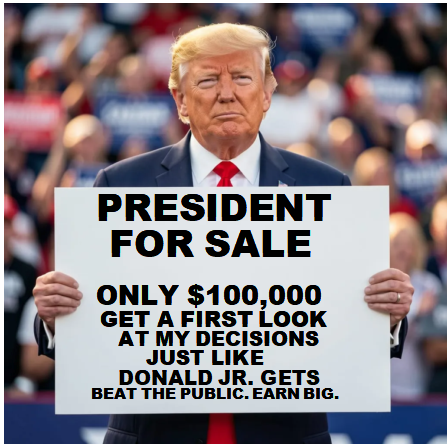
Here is how Trump continues to aid neighbors and make America great. No, this time we’re not talking about making war on Cuba or kidnapping the Venezuelan president after attacking Venezuelan boat in international waters.
No, we’re not talking about unilaterally breaking our treaty with Iran and threatening the exitance of our NATO allies.
No, we’re not talking about taking Greenland by force or stepping away from Ukraine to provide assistance to Russia.
This time, it’s “making America great again by” attacking Canada, rather than extending aid, while Canada suffers from wildfires.
Trump imposes 50% tariffs on Canadian goods, citing disputes over autos, alcohol and cheese
PUBLISHED: July 20, 2026 at 5:01 PM EDT | UPDATED: July 20, 2026 at 6:51 PM EDT
By JOSH BOAK
WASHINGTON (AP) — President Donald Trump on Monday imposed 50% tariffs on most Canadian goods, declaring that Canada has unfairly discriminated against American autos, alcohol and dairy products.
The move could unleash a new wave of economic chaos, with risks of higher inflation and further fraying of relations between two nations that had been closely woven together before Trump’s return to the White House.
The administration official previewing the action insisted on anonymity on a call with reporters to preview the president’s actions and said that Trump signed three proclamations to launch the tariffs under Section 338 of the 1930 Trade Act. Several Democratic lawmakers last year proposed repealing the section because they said Trump could use it to destabilize the economy.
The new 50% tariffs would exclude energy products, potash, fish and critical minerals, but they would include goods that had previously been protected from import taxes by the United States-Mexico-Canada Agreement, or USMCA. That 2020 trade pact was not renewed by the U.S., triggering a new set of negotiations that could run until 2036.
Canada faces the risk of a broader trade war
The tariffs could escalate into a wider trade war as Canada seeks to defend its economy.
Ontario Premier Doug Ford saw a possible showdown ahead. “If these tariffs proceed, Canada should respond tariff for tariff, dollar for dollar,” Ford posted on social media.
Chris Swonger, CEO of the Distilled Spirits Council of the United States, also called for a deal: “We encourage policymakers on both sides of the border to pursue a negotiated solution that restores market access for U.S. spirits and avoids further harm to the U.S. hospitality sector.”
But the use of a Great Depression-era law to impose the tariffs broadens some of the risks, as those tariffs could be applied to other U.S. trading partners, not just Canada, and inject “massive uncertainty” into the global economy, said Scott Lincicome, vice president of general economics at the Cato Institute, a libertarian think tank.
In case you didn’t know, the Cato Institute is a right-wing organization that usually could be counted upon to back Trump. Even they seem to be growing tired of his lies and incompetence.
“We crossed the Rubicon,” Lincicome said. “The invocation of 338 is the nuclear option for Trump tariffs.”
Tariffs are also a political challenge for Trump
The new tariffs carry serious political and economic risks for Trump ahead of the November midterm elections for control of Congress. His “Liberation Day” tariffs last year in April provoked a financial market meltdown over concerns about inflation and a recession, prompting him to walk back the rates for a period of negotiation.
The Supreme Court ruled this February that Trump had lacked the legal authority to impose the tariffs by declaring an economic emergency, causing the administration to find alternative ways to raise import taxes based on a series of legal authorities.
Tariffs are taxes on imports, which companies can then pass along to consumers in the form of higher prices. The president maintains that the costs created by tariffs will cause manufacturing to relocate to the U.S., though there is little evidence of that in the economic data.
“These new taxes will raise prices on American families and likely lead to retaliation against the very industries Trump purportedly wants to protect,” said Rep. Suzan DelBene, D-Wash., who is chair of the Democratic Congressional Campaign Committee.
The latest import taxes could worsen Trump’s weak ratings on the economy. He promised voters when running for the presidency that he would bring prices down, but the annual inflation rate has risen since he became president because the tariffs and the war in Iran are pushing up oil prices.
Trump has repeatedly targeted Canada on trade issues
The Trump administration official said the president had also requested that his aides look into additional tariffs on Canada because its wildfires hurt air quality in the U.S. He had publicly threatened to do so in social media posts.
This is the same President who denies the global warming that makes wildfires more likely and more serious. Rather than help solar power, he taxes it while promoting “beautiful clean coal.”
Trump claims in the proclamations that Canada discriminates against American autos, alcohol and cheese relative to other nations, but his argument rests in large part on retaliatory actions taken by Canada after the U.S. president imposed tariffs on Canada under the pretext that it should do more to stop fentanyl smuggling.
The White House said that, regarding alcohol, all but two Canadian provinces and territories halted the purchase and retailing of American alcoholic beverages beginning last year, which was also a response to Trump’s tariffs and taunts of making Canada the 51st state.
But Trump has long objected to Canada’s treatment of U.S. cheese, saying in his proclamation that Canada discriminates against the U.S. compared to Europe on dairy products.
Cheese? This is all about cheese? I am so proud of America, and the way we treat our neighbors. Oh, did I mention Mexico, as yet another neighbor whose citizens suffer because of Trump’s neighborly actions.
Yes, we certainly are becoming great again, the envy of the world. Because of Trump’s leadership, everyone looks upon us as that “shining city on a hill” symbolizing America as a beacon of hope, exceptionalism and moral guidance.
Economics measures our material life. It doesn’t tell us our morals, our intelligence, our courage or lack of it. It tells us about our material possessions.
Economics can be thought of as resting upon four legs. The first leg is Gap Psychology. The second is Monetary Sovereignty. The third is Team, and the fourth is “Gress,” which I will explain.
Gap Psychology describes the desire to distance oneself from those below, in any ranking criteria, and to come closer to those above. We term the distance between those who have less or more as “The Gap.”
“Wealthy,” as a description is a comparison, not an absolute. If you own $10,000, you are wealthy if everyone else owns $1,000, but you are poor if everyone else owns $100,000.
“Don’t look. Stay away from him.”
Gap Psychology is the common desire to distance oneself from those who have less and to align more closely with those who have more. The wider the gap below and the narrower the gap above, the wealthier a person feels. To become wealthier, one must see the gap below widen and/or the gap above narrow.
Thus, it is most common for people to want the wealth Gap below to widen and the wealth Gap above to narrow — which explains why the wealthy so often want to cut Social Security, Medicare and poverty benefits, while increasing taxes on those benefits.
When we are wealthy, we tend to wear more expensive clothing, though not to be warmer. We move to more expensive houses that provide no additional shelter. More expensive cars get us to our destination no easier or faster.
A mined diamond has no greater sparkle than does a lab-made gem. We want things that “lesser”individuals can’t afford, for that very reason: They are unaffordable to those “below.,” thus demonstrating our superiority.
We are a social species. Gap Psychology may seem to manifest as greed, or envy, but it really reflects our social desire to be respected, admired and perhaps even feared. That desire has an evolutionary basis, for the most respected, admired and feared among us is more likely to receive the best food, shelter, mate, and protections from the group, as do the person’s progeny.
Wealth, prestige, influence, education, athletic ability, artistic achievement, scientific discovery, and moral leadership all become scoreboards upon which human beings measure themselves and use as a protective wall.
Without Gap Psychology, civilization would stagnate. People strive because they wish to become better recognized, respected, admired, and remembered, by others and in their own imagination.
The scientist pursuing a breakthrough, the entrepreneur building a company, the artist creating beauty, the athlete pursuing a championship, and the teacher inspiring children all respond to the same fundamental drive.
My late wife taught learning-disabled children. Her reward was not solely financial, which was minimal It was the respect of her fellow teachers, the admiration of her students, the gratitude of their parents, the personal knowledge that she excelled at one of society’s most important and demanding tasks, and so, the feeling of personal accomplishment. The drive for excellence itself is one expression of Gap Psychology.
When society measures success by how far one rises above others, poverty and domination become inevitable prices for victory as the higher ranked use their powers to push down the rest.
Monetary Sovereignty is an often-misunderstood tool.
The purpose of government is not to balance budgets or maximize employment. Those are accounting goals. The true purpose of government is to protect and improve the lives of the governed. It is the reason why we voluntarily surrender many of our freedoms — to gain the aid and protection of a government.
Sadly, most governments do not follow that prescription.
The U.S. federal government, as well as the national governments of China, Britain, Canada, Mexico, Australia et al are Monetarily Sovereign. The are the creators of their respective currencies and make all the laws regarding those currencies.
No modern currency is physical. All modern currencies are mere entries in a balance sheet kept by the sovereign nation. Printed paper and coins are only titles to currencies; they are used as evidenceof ownership, but the currencies themselves are nothing but bookkeeping numbers.
A monetarily Sovereign government never unwillingly can run short of its sovereign currency.
Thus, a Monetarily Sovereign nation never unintentionally can run short of its sovereign currency as the government cannot run short of numbers. The Monetarily Sovereign government controls the laws that control the books, files, and ledgers that contain the numbers. Your bank account consists of numbers. Nothing more.
Even if the U.S. government didn’t collect a penny in taxes, it could continue spending forever. Federal taxes do not supply the federal government with spending money. Instead, the purpose of federal taxes is:
To control the economy by taxing what the government wishes to discourage and by giving tax breaks to what the government wishes to reward.
To assure demand for the U.S. dollar by requiring taxes be paid in dollars.
By contrast, an American state, county, and city, along with euro nations, businesses and individuals all are monetarily non-sovereign.
They do not have the unlimited ability to create the currency they use. They do need taxes and other forms of income to provide spending money.
For example, France, Italy and Germany are euro users, but not sovereign over the euro. They, like their citizens, can run short. (The European Union is, like the U.S. federal government, Monetarily Sovereign, but over the euro. It cannot unintentionally run short of euros.)
Think of the board game, “Monopoly” where the players are non-sovereign over Monopoly dollars and can run short, but the Bank, by rule, never can run out of Monopoly dollars. In the Monopoly game, the Bank is Monetarily Sovereign.
While a Monetarily Sovereign entity cannot instantly create physicalresources, it can finance every available real resource. Hospitals, schools, research laboratories, transportation systems, energy production, food production, environmental restoration, and medical care all become questions of real capacity rather than imaginary financial scarcity.
Social Security, Medicare, Medicaid et al only can run short of dollars if Congress and the President want that outcome. At the simple press of a computer key, the dollars would be available
Monetary Sovereignty therefore removes the false financial excuse for poverty. The unceasing stories about Social Security, Medicare et al running short of dollars are false, designed by the very rich to convince the populace to accept fewer benefits and to pay more taxes.
The purpose, as always, is for the rich to widen the Gap below, and to narrow the Gap above, which makes the rich richer and the poor poorer.
That said, even if every family possessed a Star Trek replicator, and could create everything at no cost, people still would compete for prestige, admiration, influence, and power. It is both the strength and weakness of humanity, and has h ad powerful affects on human evolution.
Which brings us to the third leg, Team.
TEAM
A team is more than a collection of people. A team is an organization with a shared purpose. A team can function as a dictatorship, a democracy or a combination.
The advantage of a dictatorship is that it can make quick, unquestioned decisions and maintain easily understood and rapidly obeyed goals. Democracies tend to be slower, with more time spent in discussions, arguments, false steps and changes in direction as new leaders are elected.
Dictatorships usually have more continuity and predictability of top leadership and are less constrained by the meandering and uncertain will of the people. As a result, democracies tend to be more fragile while dictatorships tend to be more lasting.
We win because we all have each other’s back.
By contrast, democracies gain from more varied input, more ideas, more discussion, more evaluation and more authorship that leads to more enthusiastic effort and willing cooperation from the governed.
Example: Sports teams tend to be less democratic and more dictatorial, though when they are a combination, they can be powerful. Basketball coach Phil Jackson became a legend because he was able to combine the two types of leadership to gain team goals.
His Chicago Bulls basketball team possessed extraordinary talent. But talent alone does not produce championships. History is filled with gifted teams that destroyed themselves through ego and mixed purpose.
Jackson’s genius was not designing basketball plays. His genius was creating a quasi-democracy. Officially, the Bulls appeared hierarchical. Jerry Reinsdorf owned the team. Jackson coached it. Michael Jordan was its superstar.
In reality, Jackson created something very different. Every player mattered. Every player was heard. Every player understood that his success depended upon everyone else’s success. Jackson may have been the greatest listener in sports.
Jordan remained fiercely competitive, but Jackson persuaded him that championships—not scoring titles—were the true measure of his greatness. Jordan even accepted less pay than he might have earned elsewhere because keeping the Team together mattered more to him than maximizing his immediate personal income.
It was the best of all worlds. Gap Psychology, victory, and success meant “Team” more on the Bulls than on most other sports organizations.
Had the Bulls been a typical sports dictatorship, they might have failed, despite their talent. While dictatorships have the seeming advantage of quick, certain decisions, they are disadvantaged by the lack of input from various sources and by lack of shared goals.
Today, America has a President who wishes to be, and functions like, a dictator. Donald Trump makes fast decisions, and equally fast changes of mind. His indecision is contagious and leads to morale problems.
Though poorly educated, Trump has a psychopathically exalted opinion of his capabilities. Thus, he hires incompetents to carry out his ever-changing instructions. He prefers to be surrounded by unquestioning, incompetent sycophants, so he receives very little real help. As a result, his decisions often prove disastrous for the nation.
Extreme poverty is an environment common to dictatorships. Civil unrest and violent overthrow is the way dictatorships usually acquire and lose leadership. America’s Jan. 6th was a classic dictator’s attempt at regime change.
“Uneasy lies the head that wears the crown.” That is the disadvantage all tyrants face.
Every tyranny eventually suffers from the same disease: the leader hears only echoes of his own opinions. That is why democracies often outperform dictatorships over longer periods. Democracies continually reconstruct themselves through criticism, elections, disagreement, debate, and new ideas. Like living organisms, democracies survive by repairing and improving themselves.
Dictatorships appear strong because they endorse brutality and change so little. Democracies endure because they continually evolve. A democracy succeeds because it creates more meaningful relationships among ideas than a dictatorship allows.
And that brings us to “Gress.”
GRESS
Gress is an invented word.
Gap Psychology supplies civilization’s ambition. “I want something more.”
Monetary Sovereignty supplies civilization’s resources. “The means can be made available.”
Team supplies civilization’s group wisdom and concern. “With each doing our best, together we win.”
Gress is the spark of action and improvement.
“Gress” is the common suffix of these concepts:
progress — move forward
regress — move backward
digress — move aside
ingress — move into
egress — move out
transgress — move across a boundary
congress — come or move together
aggress — move toward or attack
The suffix -gress is derived from the Latin root “gressus,”which means “step.” It is used in English to form words that describe movement, progression, or the act of going in a particular direction.
In short, “Gress” is the action button. It makes use of Gap Psychology, Monetary Sovereignty, and Team. Without “Gress” the desires of Gap Psychology settle into inert wishful thinking. Without “Gress,” Monetary Sovereignty goes unused. Without “Gress,” a Team has no belief or energy. A perfectly unified team can loaf on a bench forever without “Gress.”.
Other words don’t quite do it.
Initiative sounds too individual.
Enterprise sounds too commercial.
Curiosity seeks knowledge but need not apply it.
Progress assumes improvement, though movement may prove harmful.
Innovation refers mainly to novelty.
Agency means the capacity to act, not the impulse to act.
Restlessness supplies energy but not direction.
Purpose supplies direction but not movement.
Ambition overlaps heavily with Gap Psychology.
Gress can contain all of them.
Gress would include curiosity, dissatisfaction, experimentation, risk, communication, imagination, science, debate, education, and the willingness to disturb an existing arrangement.
It is not merely activity. People can work furiously to preserve the status quo. Gress is transformative action—the tendency to test what exists against what might exist and then attempt the crossing.
I had that idea. I wish I would have done it.
Science is organized gress. Democracy is political Gress because it permits criticism, correction, and replacement. Education transmits Gress. Team magnifies Gress by allowing discoveries and efforts to accumulate rather than die with one individual.
Information exchange gives Gress memory. Gap Psychology gives it emotional energy. Monetary Sovereignty can give it resources. Team can expand its abilities.
For many centuries, human species was short of Gress. Animals mostly lack it. Religion may have held us back somewhat, but in the last two centuries, things have begun to come together for Gress. This may be temporary or it may be a new permanent feature of humanity.
Think of the ideas you may have had but never followed up. Think of the places you could have gone, but didn’t, and now regret not having done so. Think of the causes you support mentally, but not physically.
You understand Gap Psychology. You understand Monetary Sovereignty. You understand Team. But have you contacted your Congressional representatives to demand what you want them to do?
If not, that is a symptom of lacking Gress.
Thus, the four legs, Gap Psychology, Monetary Sovereignty, Team, and Gress, all need to be understood and harnessed to achieve the best outcome for any nation.