It never happened

It never happened.

The biggest story of the year, perhaps of the century, never happened.

  1. Then-President Donald Trump did not pre-emptively announce without evidence, that if he lost the election, it will have been stolen.
  2. After he lost the election, Trump did not repeat his fact-free claim that the election was stolen.
  3. More than 50 judges plus the Supreme Court, many of them Republican-appointed, did not rule that there was no evidence to show the election was stolen.
  4. A crazed mob of traitors did not attack the Capitol of the United States and attempt to reverse the democratic election of President Joe Biden and Vice President Kamila Harris.
  5. Many of the patriotic, flag-flying neo-fascists did not attempt to find Mike Pence, Nancy Pelosi, and others with the intention of kidnapping or killing them
  6. Donald Trump did not incite the attempted coup, the first coup attempt in U.S. history
  7. After the insurrection, Donald Trump did not express his appreciation for the traitors.
  8. Donald Trump did not encourage such far-right, neo-fascist conspiracy theorists as Alex Jones, QAnon, Proud Boys, Sean Hannity, et al to spread riot-inducing lies
  9. The entire Republican Party has not closed its eyes to the attempted coup and is not trying to pretend Trump is innocent of treason.
  10. The GOP is not filled with conspiracy theorists pushing outrageous and dangerous claims that the GOP is supporting.

I know none of these things happened because surely, “law and order” politicians would not have forgotten so soon.

But in fact, forgetting seems to be what they really are doing.

Today (1/29/2021) I clicked on http://www.foxnews.com and these are the stories I found.

-WH dodges as Biden sits with secretary paid by fund linked to GameStop scandal
-Barstool’s Dave Portnoy accuses Robinhood of stealing from own clients
-GameStop stock short seller losses total more than $19B, data firm says
-Barstool’s Dave Portnoy, Mets’ Steve Cohen spar over GameStop drama
-Ex-FBI lawyer whose big lie fueled Russia probe sentenced to probation
-Special counsel Durham investigation ‘making good progress,’ Barr says
-Fauci at odds with Biden’s chief of staff over research about schools reopening
-Fauci says coronavirus variants a ‘wakeup call’ to be nimble in vaccine development
-March for Life virtual rally to take place amid coronavirus pandemic
-FBI investigation into DC pipe bomb suspect reveals new details; reward increased to $100G
-ERIC SHAWN: We were told Jimmy Hoffa was buried in a metal barrel — guess what Fox Nation found
-Chilling new details emerge in Texas murder-suicide
-Ex-NY Times editor Bari Weiss bashes former paper over ‘press release’ praising Kamala Harris’ stepdaughter
-Meet the bull leading the charge on GameStop phenomenon
-What to know about the GameStop stock price frenzy
-Dave Portnoy slams Robinhood over GameStop trading scandal: ‘Flat out criminal’
-Google deletes nearly 100,000 negative Robinhood reviews
-‘Squad’ member blasts Wall Street over GameStop scandal: ‘Send them to prison’
-Republican senator: GameStop, Robinhood scandal shows ‘the fix is in’ on Wall Street
-Montana brothers seen on viral video chasing Capitol Police officer face charges, prosecutors say
-This is unity? White House silent as AOC claims Cruz ‘almost had me murdered’
-Biden signs 40 executive orders and actions in 9 days, shunning Congress
-Biden climate orders put Wyoming in crosshairs
-Chicago union won’t teach in-person without vaccine, as most others return
-Our hometown president’: Florida Republicans embrace Trump
-Getting the COVID-19 vaccine? Don’t take over-the-counter pain relievers beforehand, experts say
-Chinese biotech firm had ulterior motive when offering to build COVID labs across US: report
-Gaetz fires back after Cheney ‘taunts’ him for wearing makeup on TV
-Police chief resigns after girlfriend outs alleged ‘double/triple life,’ secret family and children
-Johnson & Johnson reveals how effective one-shot vaccine is against coronavirus
-Sicilian village auctioning homes for $1 and paying for renovations
-Actor’s estranged wife breaks silence on cannibalism scandal: ‘No. Words.’
-Tim Tebow tells story of ‘miracle baby’ during March for Life speech
-Chiefs rookie gets hurt in practice, will miss Super Bowl: report
-Nikki Bella and Artem Chigvintsev reveal their wedding date
-‘The Mentalist’ star Simon Baker and wife split after 29 years of marriage
-‘Naked and afraid’: Actress who first placed starring role in ‘Game of Thrones’ talks being replaced by Emilia Clarke
-‘Baywatch’ star’s new marriage started as affair, ex claims
-‘Shark Tank’ star Kevin O’Leary says AOC’s ‘Tax The Rich’ sweatshirt proves this about socialists
-Your new Chevrolet Corvette Stingray won’t let you drive it fast until its ready
-Nunes: When will real world Americans get their voice back on social media?
-Rep. Malliotakis: We need answers from Cuomo on COVID deaths and we need them now
-Pelosi needs to apologize to nation for saying House GOP is ‘enemy within’: Rep. Norman
-Hannity: Biden’s executive orders causing ‘life-changing’ problems
-Tucker: Our financial system is dangerously corrupt
-Charles Payne: ‘Shame on’ Robinhood for blocking high-flying stock buys
-Firms crack down on GameStop investors after short sellers panic
-Dagen McDowell: Andrew Cuomo’s career might be over after nursing home report
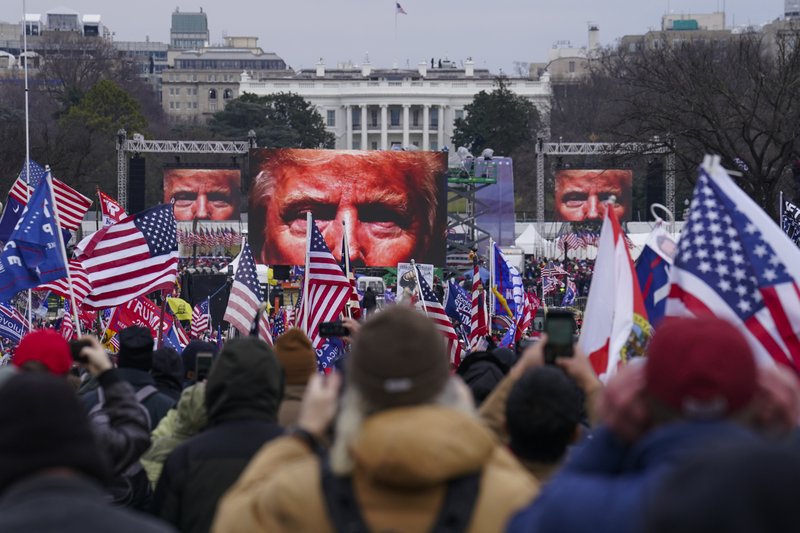
Records: Trump allies behind rally that ignited Capitol riot
It never happened, And anyway . . .

Not a word about the biggest story of the year, perhaps the century, that a losing Presidential candidate attempted a violent coup — a treasonous takeover of the American government by force.

Had the insurrectionists been successful, America’s democracy, our entire form of government, would be gone.

We would be a dictatorship like Hitler’s, Mussolini’s, Kim’s et al.

And yet, here we are, listening to Hannity, Carlson, Ingrahm, et al, tell us the violent acts of treason we saw and heard with our own eyes and ears are nothing to worry about.

They never happened.

And anyway, the insurrection doesn’t compare to the Black Lives Matter protests

And anyway, it was really a bunch of Black Lives Matter people who entered the Capitol.

And anyway, it was staged by George Soros as a false-flag operation.

And anyway, the Democrats are kidnapping children and eating them, just like Trump backer, QAnon says.

And anyway, there are more important things to do than to punish a former President who tried to destroy the American government.

And anyway, it’s unconstitutional to punish someone after they leave office.

And anyway, it’s the “cancel culture.”

And anyway, all those Republican-appointed judges who ruled against Trump are crooked and biased.

And anyway, they’re trying to take away our guns and our religion.

And anyway, all politicians lie, so what the big deal with Trump’s lies?

And anyway, what about Hillary and Benghazi?

And anyway, what about free speech?

Pay no attention to how close America came to losing our government to a mob sent by a psychopathic President of the United States.

None of that is important.

What’s really important is whether private citizen Hunter Biden might have received money from Russia or China.

The rumor is that Hunter made illegal millions by cheating students of Biden University and tax cheating the government with Biden Foundation.

And I heard that by lying about COVID and then refusing to do anything to protect people — in fact, even refusing to wear a mask — Hunter Biden caused the deaths of hundreds of thousands of Americans.

Yes, I even heard that Hunter surrounded himself with criminals and other unsavories like: Steve Bannon, Tom Price, Scott Pruitt, Paul Manafort, Rick Gates, Michael Flynn, Michael Cohen, Chris Collins, Salvatore Testa, Fat Tony Salerno, Roger Stone, Felix Sater, Jeffrey Epstein, Alexander Acosta, George Papadopoulos, Alex Van der Zwaan, Konstantin Kilimnik, Ralph Shortey, and Timothy Nolan.

But don’t worry; Hunter pardoned a bunch of them.

Yes, Hunter Biden should be punished severely for all that.

I heard it on Hannity.

And as for anyone selling out America. That never happened.

Ask Fox News.

Rodger Malcolm Mitchell

Monetary Sovereignty Twitter: @rodgermitchell Search #monetarysovereignty Facebook: Rodger Malcolm Mitchell …………………………………………………………………………………………………………………………………………………………………………………………………………………………………………………………………………………………..

THE SOLE PURPOSE OF GOVERNMENT IS TO IMPROVE AND PROTECT THE LIVES OF THE PEOPLE.

The most important problems in economics involve:

  1. Monetary Sovereignty describes money creation and destruction.
  2. Gap Psychology describes the common desire to distance oneself from those “below” in any socio-economic ranking, and to come nearer those “above.” The socio-economic distance is referred to as “The Gap.”

Wide Gaps negatively affect poverty, health and longevity, education, housing, law and crime, war, leadership, ownership, bigotry, supply and demand, taxation, GDP, international relations, scientific advancement, the environment, human motivation and well-being, and virtually every other issue in economics. Implementation of Monetary Sovereignty and The Ten Steps To Prosperity can grow the economy and narrow the Gaps:

Ten Steps To Prosperity:

  1. Eliminate FICA
  2. Federally funded Medicare — parts A, B & D, plus long-term care — for everyone
  3. Social Security for all or a reverse income tax
  4. Free education (including post-grad) for everyone
  5. Salary for attending school
  6. Eliminate federal taxes on business
  7. Increase the standard income tax deduction, annually. 
  8. Tax the very rich (the “.1%”) more, with higher progressive tax rates on all forms of income.
  9. Federal ownership of all banks
  10. Increase federal spending on the myriad initiatives that benefit America’s 99.9% 

The Ten Steps will grow the economy and narrow the income/wealth/power Gap between the rich and the rest.

MONETARY SOVEREIGNTY

Why do we hoard the infinite?

Monetary Sovereignty (MS) could not be simpler. The entire doctrine is based on one basic fact:

A Monetarily Sovereign entity cannot unintentionally run short of its own sovereign currency.

Everything devolves from that.President Richard Nixon decoupled the United States dollar from gold on in August 1971, allowing the Federal Reserve greater ability to increase the money supply. Factbar 39 minted June 10, 2018 11:04am | 10 claims claimed by GodwinS 1.3301 ETH ...

The U.S. government today, is Monetarily Sovereign.

For most of its history, it was on some form of metal standard, gold and/or silver.

But being on a metal standard limited the government’s ability to create dollars.

The supply of the metal limited the supply of money.

The U.S. finally became fully MS in 1971, when Richard Nixon ended the last gold standard, perhaps his single greatest act.

Today, the federal government could, if it wished, spend many trillions of dollars without collecting even one dollar in taxes. One might argue about the effect of such spending, but the government’s ability to do it is beyond debate.

Some types of spending will grow the economy more, faster, or in a better way than would other types of spending. But to various degrees, all federal spending grows the economy. This is a mathematical certainty derived from the equation:

Gross Domestic Product = Federal Spending + Non-federal Spending + Net Exports

Worries about the federal debt and deficit being  “a ticking time bomb” or that the federal government is “broke,” or that the debt/GDP ratio is “unsustainable,” generally are based on the false belief that the federal government is like state and local governments, i.e. monetarily non-sovereign,

This false belief has led to several nonsensical activities:

  1. The collection of federal taxes to “pay for” federal purchases. (The federal government needs no tax dollars.)
  2. The establishment of mythical “trust funds” — Social Security Trust Fund, Medicare Trust Fund, Highway Trust Fund, ostensibly to pay federal bills. (They aren’t real trust funds and they pay for nothing.)
  3. The unnecessary collection not only of federal taxes in general, but of specifically earmarked taxes, for instance, FICA taxes. (FICA is the most regressive tax among all the regressive taxes in America.)

For example, consider this article from the Peter G. Peterson Foundation website:

Federal trust funds bear little resemblance to their private-sector counterparts, and therefore the name can be misleading.

A “trust fund” implies a secure source of funding. However, a federal trust fund is simply an accounting mechanism used to track inflows and outflows for specific programs.

In private-sector trust funds, receipts are deposited and assets are held and invested by trustees on behalf of the stated beneficiaries. In federal trust funds, the federal government does not set aside the receipts or invest them in private assets.

Rather, the receipts are recorded as accounting credits in the trust funds, and then combined with other receipts that the Treasury collects and spends.

Further, the federal government owns the accounts and can, by changing the law, unilaterally alter the purposes of the accounts and raise or lower collections and expenditures.

The above is an accurate description of how federal “trust funds” really work. Sadly, the accuracy disappears with the following sentence:

When revenues for a trust fund fall short of expenses, the Treasury must finance payments through additional borrowing from the public.

Wrong.

Think about it. Why would any entity, having the unlimited ability to create its own sovereign currency, resort to borrowing? Further, where would the public obtain funds to lend to the government.

The federal government, in fact, does not borrow. Those Treasury securities (T-bills, T-notes, T-bonds) you may own are not the result of lending. They are the result of money deposits into T-security accounts — money the federal government never touches.

We have provided links for further discussions of these points, as all of the above merely is introductory to an article we now will discuss.

$1,400 Stimulus Payments Would Be a Waste of Money
President Joe Biden wants to provide additional stimulus checks of $1,400 to the majority of Americans. 
By Steve Chapman, schapman@chicagotribune.com

Last spring, the Treasury Department sent out “economic impact payments” to some 160 million people, in the amount of $1,200 for each adult who qualified. Gallup then asked people if they would like the government to give them more money.

 Only 17% said no — a group possibly dominated by those who didn’t qualify the first time and were seething with resentment.

In December, when then-President Donald Trump proposed to distribute another round of checks of $2,000 per person, he again found a receptive audience. Two-thirds of Americans were prepared to shoulder their patriotic duty to accept more money. But in the end, Congress agreed to payments of just $600.

President Joe Biden now wants to make up the difference, providing checks of $1,400 to the vast majority of Americans. In the middle of an economic crisis brought on by a raging pandemic, there are many ways the federal government could spend money that would be cost-effective as well as humane.

Stimulus payments are not one of them.

Private sector spending can be evaluated on the basis of “cost-effectiveness.” Federal spending cannot, for one simple reason: Cost is not an issue for an entity that has an infinite supply of money.

Further, contrary to popular wisdom, “waste” is not an issue, either. “Waste” is just the federal government pumping growth dollars into a part of the private sector that someone doesn’t like, so he terms it “waste.”

The real waste is the waste of human effort — the millions of valuable hours wasted calculating and paying taxes to the federal government, which destroys tax dollars upon receipt.

The only issues are: What should be accomplished and how should it be accomplished, no matter the cost.

Now here’s an interesting fact that most people don’t know: The Medicare “trust funds” consist of the Hospital Insurance (HI) fund (Part A) and the Supplementary Medicare Insurance (SMI) fund (Part B).

Unless reforms are enacted, the Trustees estimate that Medicare’s HI Trust Fund will be depleted in 2026. The SMI fund, however, cannot be depleted as contributions from the federal government’s general fund are set to cover any remaining deficit after premiums paid by beneficiaries are taken into account.

Translation: The federal government does with the SMI fund what it should do with all so-called “funds.” It simply pays the bills.

There is no talk about insolvency, or “borrowing,” or “ticking time bombs.” The federal government uses its infinite ability to pay the SMI bills.

It could and should do exactly the same thing for Social Security, Medicare (Part A), highways, et al.  We could have Social Security for All, and Medicare for All without spending one cent of taxpayer money.

The question, “How will you pay for it?” will justly fall into the dustbin of history.

Mr. Chapman continues:

Now is no time for austerity.

Millions of people have lost jobs. Tens of thousands of businesses have closed. The federal government should be ready to take on large amounts of new debt to alleviate widespread hardship and keep the economy from collapsing.

Not “debt.” Federal debt (i.e. deposits in T-security accounts) pays for nothing. The federal government should be ready to implement large amounts of new spending.

But that obligation is no excuse for outlays that are poorly suited to either task. True, additional stimulus checks will help Americans who are in serious need, but they will help a lot more people who are not.

Any individual making $99,000 or less or two-adult household with an income of $150,000 or less was eligible for the full amount of the first payments.

So what if stimulus checks go to people whose income exceeds the $99K and $150K thresholds? This is America’s middle-class. By what logic should they not receive money?

The checks are commonly referred to as stimulus payments, but they’re not designed to stimulate the economy. Nor is stimulus what the economy needs.

When a normal recession hits, people spend less as they lose their jobs or fear losing them, which causes the economy to contract further. The federal government can help in the short run by giving people money to spend.

But this time, the economy contracted because the pandemic shut down or curtailed a wide range of activities. Giving people money doesn’t help when they can’t or don’t want to do so many things that involve outlays of cash — dining out, going to a movie, buying clothes, taking a trip or hosting a party. It’s like wasting matches trying to light a sodden firecracker.

The futility of this approach became clear after the first round of payments. A study published by the National Bureau of Economic Research found that just 40% of the money was spent on goods and services, with the balance going to pay down debt or increase savings.

Who says paying down debt and increasing savings is not economically beneficial for the private sector?? When did that not become stimulative for today’s current economy and for tomorrow’s economy?

The $600 checks cost $166 billion, and following up with $1,400 payments would bring the total to as much as $600 billion, according to the Committee for a Responsible Federal Budget.

That money could be dispensed in far more productive ways — to keep companies from going bankrupt, enable tenants to pay their rent or finance COVID-19 treatment, testing and vaccinations.

Why not do both? The federal government is not financially constrained. It should do everything to grow the economy, and especially the middle classes, and not be limited to Mr. Chapman’s favorite exercises.

Limiting the payments to individuals making up to $50,000 and families with incomes up to $75,000 would save $200 billion while concentrating the help on people most likely to need it and most likely to spend it.

Except what is the purpose of “saving” $200 billion for a government that can create trillions at the touch of a computer key. Clearly, Mr. Chapman wrongly believes the federal government’s ability to spend is limited.

It would be far better for the federal government to save families than to save money.

And now come classic economic ignorance:

For Washington to skimp on urgent needs during a crisis would be a false economy. But that doesn’t excuse pumping out cash with a fire hose.

Every dollar borrowed enlarges the swollen federal debt.

We’re lucky that interest rates are low now, making it cheap to borrow. But they won’t stay low forever, and when they rise, taxpayers will groan under the weight.

The federal government has a fire hose, but Mr. Chapman would put out the economic fire with a garden hose — for no reason.

Again, the federal government does not borrow, and that number incorrectly he terms “swollen federal debt” is neither swollen nor debt. It is just a bookkeeping number over which the federal government has total control. It is not a burden on the government or on taxpayers.

Finally, low interest rates do not benefit a government that has the unlimited ability to create dollars.

Most Americans would be happy for the federal government to give them free money, just as they would be happy for someone to offer them free beer or free food. They may not realize they’re volunteering to pick up the tab.

That would be true if federal taxes funded federal spending. But they do not.

Federal taxes go up and down, and neither move correlates with federal spending. Federal tax increases and federal tax cuts are not in any way related to federal spending increases and cuts.

Steve Chapman, a member of the
Tribune Editorial Board,
blogs at http://www.chicagotribune.com/chapman .
schapman@chicagotribune.com
Twitter @SteveChapman13

Chapman wants to hoard the dollars of which we have infinite. He should know better.

Rodger Malcolm Mitchell

Monetary Sovereignty Twitter: @rodgermitchell Search #monetarysovereignty Facebook: Rodger Malcolm Mitchell …………………………………………………………………………………………………………………………………………………………………………………………………………………………………………………………………………………………..

THE SOLE PURPOSE OF GOVERNMENT IS TO IMPROVE AND PROTECT THE LIVES OF THE PEOPLE.

The most important problems in economics involve:

  1. Monetary Sovereignty describes money creation and destruction.
  2. Gap Psychology describes the common desire to distance oneself from those “below” in any socio-economic ranking, and to come nearer those “above.” The socio-economic distance is referred to as “The Gap.”

Wide Gaps negatively affect poverty, health and longevity, education, housing, law and crime, war, leadership, ownership, bigotry, supply and demand, taxation, GDP, international relations, scientific advancement, the environment, human motivation and well-being, and virtually every other issue in economics. Implementation of Monetary Sovereignty and The Ten Steps To Prosperity can grow the economy and narrow the Gaps:

Ten Steps To Prosperity:

  1. Eliminate FICA
  2. Federally funded Medicare — parts A, B & D, plus long-term care — for everyone
  3. Social Security for all or a reverse income tax
  4. Free education (including post-grad) for everyone
  5. Salary for attending school
  6. Eliminate federal taxes on business
  7. Increase the standard income tax deduction, annually. 
  8. Tax the very rich (the “.1%”) more, with higher progressive tax rates on all forms of income.
  9. Federal ownership of all banks
  10. Increase federal spending on the myriad initiatives that benefit America’s 99.9% 

The Ten Steps will grow the economy and narrow the income/wealth/power Gap between the rich and the rest.

MONETARY SOVEREIGNTY

What is the ideology of today’s Republican party?

Visualize examining a printed photograph under a microscope. You will just see colored dots. Only when you step back will you see the patterns that comprise the photo.Abraham Lincoln Statue, Washington, DC - Lost New England

In the most recent American Presidential election, 74 million people voted for the Republican candidate.

In that group were every sort of human being you can imagine.

There were good Republicans and bad Republicans, men and women, rich and poor, cruel and kind, selfish and generous, black, yellow, red, white — everything.

But step back and you will see patterns that comprise today’s Republican party.

The Republicans have advertised themselves as conservative.

No one knows exactly what that means, but generally, it has to do with conserving traditional values: marriage and family, religion, law and order, honesty and truth, and reliability.

That is the conservative ideology. But, it is not currently the Republican ideology.

Michael Oakeshott, English philosopher and political theorist, wrote, “To be conservative is to prefer the familiar to the unknown, to prefer the tried to the untried, fact to mystery, the actual to the possible, the limited to the unbounded, the near to the distant, the sufficient to the superabundant, the convenient to the perfect, present laughter to utopian bliss.”

So, of course, today’s Republican Party opted for a thrice-married, oft-cheating (Stormy Daniels et al), family-destroying (family separation at the border) multi-convicted criminal (Trump University, Trump foundation), who promised to build a wall Mexico would pay for, and who promised a dramatic political change (“drain the swamp”), and who promised to replace Obamacare with something better.

He lied more than 30,000 times including lies about COVID-19 (His lies helped kill 400,000+ Americans), lies about global warming which will kill many more thousands of future Americans), lies about vaccination, and most recently, attempted to sabotage America’s democracy, with more lies.

In short, the current leader of the Republican Party may be the least conservative human on this planet, the very antitheses of all the Republicans claim to believe and to defend.

More recently, the GOP first abandoned tradition by refusing to allow Merrick Garland a Supreme Court Justice position, using the excuse that the nomination was too close to the next Presidential election, then abandoned their own new tradition by seating Amy Coney Barrett shortly before a Presidential election.

So much for conservatism and tradition.

This Republican loss of ideology didn’t happen overnight, however. It began with Lyndon Johnson, or rather with a white racial revolt against Lyndon Johnson’s “Great Society.”

Until the 1960s, the southern states had traditionally voted against the Republican’s self-proclaimed “Party of Lincoln” since the Confederate States’ lost the Civil War.

But by appealing to the anti-integration, states’ rights, and law-and-order sentiments of many Southerners, Richard Nixon was able to sway enough bigots to the Republican ticket to win election.

In 1970, Nixon’s political strategist, Kevin Phillips said,

“From now on, the Republicans are never going to get more than 10 to 20 percent of the Negro vote and they don’t need any more than that… but Republicans would be shortsighted if they weakened enforcement of the Voting Rights Act.

The more Negroes who register as Democrats in the South, the sooner the Negrophobe whites will quit the Democrats and become Republicans.

That’s where the votes are. Without that prodding from the blacks, the whites will backslide into their old comfortable arrangement with the local Democrats.

That became Nixon’s famous “Southern Strategy,” and at that instant in 1970, the Republican Party, unofficially became The Party of Bigotry.

Yet racial bigotry alone did not bring the Republicans what they wanted most: Power.

In 1994, Newt Gingrich, Dick Armey promoted the “Contract with America,” which listed promises made to America’s voters, including:

  • A balanced budget amendment to the Constitution. (This balance only could be accomplished by cutting social benefits to the middle- and lower-income groups.)
  • An anti-crime package: Stronger truth in sentencing, death penalty provisions, more prisons, and law enforcement (all of which were programs that disproportionately would punish lower-income groups and people of color.)
  • Acts supposedly to discourage illegitimacy and teen pregnancy by cutting cash welfare, prohibiting welfare to young mothers, cutting Aid to Families with Dependent Children, and enacting a two-years-and-out provision with work requirements.
  • “Loser pays” laws, limits on punitive damages, and weakening of product-liability laws (to benefit business at the expense of consumers).
  • Capital-gains tax cuts and risk assessment/cost-benefit analysis (ostensibly to aid small businesses, though the capital gains tax cuts were a windfall to the rich).

What racial bigotry alone could not accomplish, racial bigotry + financial bigotry produced. The Republicans were able to convince Americans that their greatest danger came from people of color and the poor, together with the false claim that America was running short of money to support them.

In1994 elections the Republicans gained 54 House and 9 U.S. Senate seats, flipping both chambers. Cruelty and bigotry worked.

The Tea Party movement was formed to oppose President Barack Obama’s progressive agenda. It called for lower taxes on the rich, a reduction of the national debt and deficit through decreased government spending (especially on social programs), and specifically opposed federally-funded universal healthcare.

“We’re broke,” Ohio Republican Boehner lied on NBC’s “Meet the Press.” “What’s really dangerous is if we do nothing…We’re going to deal with the entitlement problem.”

Boehner also said he’s encouraged by tea party members pushing Republicans to go farther in their proposed benefit cuts.

Today’s Republican party has no foundational beliefs, no doctrine, no ideology other than mere re-election. No Republican has announced, “We need to help these people,” or “We need to do the right thing.” Everything is solely for election.

Back in 2010, the Senate’s Republican leader, Mitch McConnell said, “The single most important thing we want to achieve is for President Obama to be a one-term president.” 

Not the elimination of hunger or poverty, not the improvement of Americans’ health. Not education, jobs, or housing. No, his most important goal was to win the next election.

Period.

Thus, the Republican Party became totally, self-indulgent and thoroughly “Trumpized.” GOP politicians have forgotten why they wanted to run for office, back in the days when some actually wanted to go to Washington and do good.

They cut taxes on the rich merely to receive money from the rich. They oppose immigration and minorities, because these groups are not big contributors and because the religious voting right hates immigrants and minorities. They are the ultimate real politik.

Just a Trump is a psychopath, the entire GOP has become the Psychopath Party, immune to compassion or sense of duty.

Now they are debating whether Trump’s calls for brute force to destroy America’s electoral system, constitute treason.

Really? Debating what happened right before your eyes? Or has that debate become so embarrassing, that now the debate has been switched to whether convicting a traitor after he leaves office would be “constitutional?”

This is exactly what happens when a nation’s leadership, loses all sense of morality, and yields only to the naked lust for power.

And that is today’s Republican party, the erstwhile “Party of Lincoln.”

Poor old Abe must be twisting in his grave.

Rodger Malcolm Mitchell

Monetary Sovereignty Twitter: @rodgermitchell Search #monetarysovereignty Facebook: Rodger Malcolm Mitchell …………………………………………………………………………………………………………………………………………………………………………………………………………………………………………………………………………………………..

THE SOLE PURPOSE OF GOVERNMENT IS TO IMPROVE AND PROTECT THE LIVES OF THE PEOPLE.

The most important problems in economics involve:

  1. Monetary Sovereignty describes money creation and destruction.
  2. Gap Psychology describes the common desire to distance oneself from those “below” in any socio-economic ranking, and to come nearer those “above.” The socio-economic distance is referred to as “The Gap.”

Wide Gaps negatively affect poverty, health and longevity, education, housing, law and crime, war, leadership, ownership, bigotry, supply and demand, taxation, GDP, international relations, scientific advancement, the environment, human motivation and well-being, and virtually every other issue in economics. Implementation of Monetary Sovereignty and The Ten Steps To Prosperity can grow the economy and narrow the Gaps:

Ten Steps To Prosperity:

  1. Eliminate FICA
  2. Federally funded Medicare — parts A, B & D, plus long-term care — for everyone
  3. Social Security for all or a reverse income tax
  4. Free education (including post-grad) for everyone
  5. Salary for attending school
  6. Eliminate federal taxes on business
  7. Increase the standard income tax deduction, annually. 
  8. Tax the very rich (the “.1%”) more, with higher progressive tax rates on all forms of income.
  9. Federal ownership of all banks
  10. Increase federal spending on the myriad initiatives that benefit America’s 99.9% 

The Ten Steps will grow the economy and narrow the income/wealth/power Gap between the rich and the rest.

MONETARY SOVEREIGNTY

Our trade deficit with China rose. Why should you care?

The words “deficit” and “surplus” have emotional meanings beyond their rational meanings. “Deficit” has bad connotations, and a “surplus” generally is good.

So when you see a headline saying the federal government’s deficit exceeds $2 trillion, you immediately worry.

Antique Balance Scales | LoveToKnow
For every deficit, there is a surplus. Federal deficits enrich the economy.

Similarly, when you learn China’s trade surplus with the United States has grown 7.1% (meaning our trade deficit has grown), your knee jerk reaction might be negative.

But . . .

. . . for every debit there is a credit and for every deficit, there is a surplus.

When the US federal government runs a deficit, someone must run a surplus.

Mostly, that “someone” is the U.S. economy. Federal deficits, rather than being feared, should be encouraged because federal deficits enrich the private sector.

And the private sector is another way of saying, “the economy.”

So, would you rather see the federal government, which has infinite dollars, run a deficit, or would you prefer that the economy, which has limited dollars, run a deficit?

Take your choice.

And while you’re choosing, remember that when the U.S. federal government runs a surplus (and so, the U.S. economy runs a deficit) we have recessions or depressions.

Fortunately, the federal government has tended to run deficits, which is why the U.S. economy has tended to grow.

U.S. depressions tend to come on the heels of federal surpluses.

1804-1812: U. S. Federal Debt reduced 48%. Depression began 1807.
1817-1821: U. S. Federal Debt reduced 29%. Depression began 1819.
1823-1836: U. S. Federal Debt reduced 99%. Depression began 1837.
1852-1857: U. S. Federal Debt reduced 59%. Depression began 1857.
1867-1873: U. S. Federal Debt reduced 27%. Depression began 1873.
1880-1893: U. S. Federal Debt reduced 57%. Depression began 1893.
1920-1930: U. S. Federal Debt reduced 36%. Depression began 1929.
1997-2001: U. S. Federal Debt reduced 15%. Recession began 2001.

Now, let us consider those times when the U.S. runs a trade deficit. These are different from a federal deficit or an economic deficit.

It is perfectly possible, common actually, for the U.S. economy to run a surplus while America runs a trade deficit. It is, in fact, the rule rather than the exception.

Look at this recent headline: China trade surplus with US widens 7.1% to $317 bn in 2020

In 2020, the U.S. economy ran a surplus versus the U.S. government. The federal government sent more dollars into the economy than the economy sent to the U.S. government. But the U.S. economy ran a deficit versus the Chinese economy.

More specifically, the U.S. economy and the Chinese economy buy goods and services from each other. So there is an exchange of money and of goods and services.

When the U.S. economy runs a trade deficit with the Chinese economy, we send them more money and they send us more goods and services. Thus, the term “trade deficit” focuses only on the money-exchange aspect.

If we were to focus on goods and services, we properly would say that we ran a “trade surplus.”

When evaluating the process, does the U.S. benefit more from receiving a surplus of goods and services, or would we benefit more from receiving a surplus of money?

In one view, it’s an even exchange. The money is worth exactly the same as the goods and services. But from the standpoint of benefit to the U.S., which is preferable, receiving a surplus of goods and services, or receiving a surplus of money?

The U.S. government, being Monetarily Sovereign has the infinite ability to create money. It never can run short of U.S. dollars. But the U.S. economy does not have the infinite ability to create goods and services. It can, and generally does, run short of goods and services, which it can get via money.

Ben Bernanke: “The U.S. government has a technology, called a printing press (or, today, its electronic equivalent), that allows it to produce as many U.S. dollars as it wishes at essentially no cost.”

Having an infinite supply of money, but a limited supply of goods and services, indicates that the U.S. always should run a money deficit with a goods and services surplus — and generally it does.

Receiving money from China is of no benefit to the U.S. economy because the U.S. government has the power to provide infinite money to the U.S. economy.

Even if the U.S. economy sold next to nothing to the Chinese economy, the U.S. economy could prosper by running a surplus with the U.S. federal government — and that is what happens during the vast majority of the time. China sells us more than we sell them, yet our economy grows because the U.S. government provides our economy with money.

Think of it from the standpoint of resources. We create all the dollars we wish, simply by pressing computer keys at virtually no cost to us. But China sends us goods and services which cost China labor and diminishing natural resources to produce.

The reality is that we receive valuable goods and services in exchange for nothing but numbers on a balance sheet.

Who has the better deal? Think of that as you read these excerpts:

China trade surplus with US widens 7.1% to $317 bn in 2020
Donald Trump made narrowing the trade gap with China a key priority when he came to office four years ago
January 14, 2021

China’s trade surplus with the United States widened last year, underlining the failure of Donald Trump to narrow the gap during his tenure, while demand soared for electronics and medical equipment during the coronavirus pandemic.

Ridiculous, isn’t it? Our government pressed a few computer keys and in return received “electronics and medical equipment during the coronavirus pandemic.” And this exchange is what Donald Trump wanted to cut??!

He actually preferred that we send China less money, and more of something substantial, in exchange for their electronics, et al.

The pick-up came on the back of a jump in exports through most of last year as China’s factories kicked back into gear from the second quarter following a strict lockdown that managed to broadly contain Covid-19 and allow economic activity to return.

Trump had made addressing the gaping trade gap with China a priority when he took office four years ago, and signed a partial agreement with Beijing to boost the country’s purchases of goods such as soybeans.

Rather than paying China with something that costs us nothing to produce (i.e. dollars), Trump and his advisors wanted to pay them with soybeans that require sweat labor, and physical resources to produce.

But Chinese customs data showed the surplus with the US climbed 7.1 percent to $316.9 billion in 2020.

The figure is a 14.9 percent jump from 2017’s surplus of $275.8 billion — which was already a sensitive political issue due to Trump’s claims that China held unfair practices and killed US jobs.

This brings us to a fundamental question:

Should America’s economic goal be to make Americans labor? Or should America’s economic goal be to provide Americans with the fruits of labor?

Put simply, would you prefer to work more and receive less, or would you prefer to work less and receive more?

The prior option describes America’s working poor. The latter option describes the very rich. On a national level, it describes the royals of Saudi Arabia, who sit back and spend petro-dollars, which they use to purchase all the goods and services they want.

Given your choice of two lifestyles, which do you find preferable.

(Or perhaps more realistically, would you like to labor a bit less and to receive a lot more? That’s known as “running a trade deficit.”)

You already do run a trade deficit with your local grocer and drug store. You give them money, and they give you goods and services. The problem is, that unlike the Monetarily Sovereign U.S. government, you are monetarily non-sovereign.

You cannot create infinite money at the touch of a computer key. Because the U.S. public, and most of the politicians do not understand the implications of Monetary Sovereignty, they make decisions inimical to the true welfare of America.

US-China relations have deteriorated to their worst in decades under the Trump administration, largely because of the trade war that saw Washington hit Chinese imports with huge tariffs — drawing retaliation and tit-for-tat moves.

In an interview with The Wall Street Journalthis week, US Trade Representative Robert Lighthizer defended the Trump administration’s tactics of imposing tariffs on hundreds of billions of dollars in Chinese goods.

So greatly did the Trump administration misunderstand Monetary Sovereign, that it levied taxes on the American economy (aka “import duties) hoping to force China to pay money we don’t need in exchange for our soybeans, etc.

There is a penalty for ignorance, and we pay it every day.

One final note: Some might object that if everyone produced nothing and imported everything, the world would be impoverished, which is true. But we aren’t suggesting that extreme.

We merely say that for a Monetarily Sovereign nation, having the unlimited ability to create its own sovereign currency, imports are more beneficial than exports, and trade “deficits” are an economic advantage.

In essence, trade deficits provide free goods and services.

In summary: Would you prefer to work more and receive less, or to work less and receive more? As a nation, we have that choice, but first, we need to understand Monetary Sovereignty.

Rodger Malcolm Mitchell

Monetary Sovereignty Twitter: @rodgermitchell Search #monetarysovereignty Facebook: Rodger Malcolm Mitchell …………………………………………………………………………………………………………………………………………………………………………………………………………………………………………………………………………………………..

THE SOLE PURPOSE OF GOVERNMENT IS TO IMPROVE AND PROTECT THE LIVES OF THE PEOPLE.

The most important problems in economics involve:

  1. Monetary Sovereignty describes money creation and destruction.
  2. Gap Psychology describes the common desire to distance oneself from those “below” in any socio-economic ranking, and to come nearer those “above.” The socio-economic distance is referred to as “The Gap.”

Wide Gaps negatively affect poverty, health and longevity, education, housing, law and crime, war, leadership, ownership, bigotry, supply and demand, taxation, GDP, international relations, scientific advancement, the environment, human motivation and well-being, and virtually every other issue in economics. Implementation of Monetary Sovereignty and The Ten Steps To Prosperity can grow the economy and narrow the Gaps:

Ten Steps To Prosperity:

  1. Eliminate FICA
  2. Federally funded Medicare — parts A, B & D, plus long-term care — for everyone
  3. Social Security for all or a reverse income tax
  4. Free education (including post-grad) for everyone
  5. Salary for attending school
  6. Eliminate federal taxes on business
  7. Increase the standard income tax deduction, annually. 
  8. Tax the very rich (the “.1%”) more, with higher progressive tax rates on all forms of income.
  9. Federal ownership of all banks
  10. Increase federal spending on the myriad initiatives that benefit America’s 99.9% 

The Ten Steps will grow the economy and narrow the income/wealth/power Gap between the rich and the rest.

MONETARY SOVEREIGNTY