Will Medicare-for-all save money for Americans? That’s not the point.

It takes only two things to keep people in chains: The ignorance of the oppressed and the treachery of their leaders.

……………………………………………………………………………………………………………………………….

Step #2. of the Ten Steps to Prosperity (see below) is Federally funded Medicare — parts A, B & D, plus long-term care — for everyone.

It is a Step that in its essence has been adopted, more or less, by the Democrats, especially by Bernie Sanders and Elizabeth Warren.Image result for quack medicine
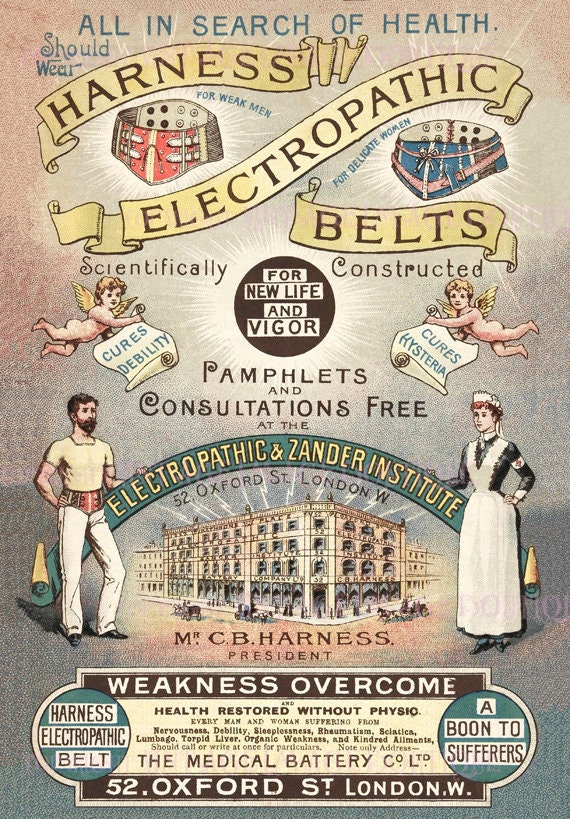
Unfortunately, even those who favor the program on humanitarian grounds continue to struggle with the question, “How will you pay for it?”

They shouldn’t have to struggle. The real answer is quite simple, straightforward and honest.

Yet, either in ignorance or intent, the answers they give always seem to be wrong, convoluted, and unbelievable. They preach “quack economics.”

How much will Medicare-for-all save Americans? A lot.
Ryan Cooper, THEWEEK, February 21, 2020

The merits of Medicare-for-all, have been pushed off the front burner of the news stove.

But academic research in that area has not stopped. And over the past few months, several studies have examined one of the key questions on Medicare-for-all: namely, would it save American society money?

The moral and practical questions, “Would it improve America’s health and business efficiencies,” often are forgotten. But even the “save-money” question doesn’t receive a straight and believable answer.

The unanimous answer is yes. Putting everyone on a world-class universal Medicare program — with no premiums, no deductibles, no co-insurance, and almost no co-pays, paid for with taxes — would leave most of us with more money in our pockets.

And other research demonstrates that there would probably not be a giant increase in health care use if it is passed.

Before continuing with the THEWEEK article, we’ll give you the real answer to the title question: Federally funded Medicare, Parts A, B, and D, plus long-term care for everyone would:

  1. Save Americans many billions of dollars
  2. Improve America’s health
  3. Improve business efficiency, and
  4. Narrow the Gap between the rich and the rest.
  5. And it would not have to be paid for with taxes

To be fair, a few commentators have been keeping the discussion going. John Oliver, for instance, provided a quite good breakdown of Medicare-for-all in his show Last Week Tonight:

Oliver notes that some studies have found enormous savings, and even the libertarian Mercatus Center found a small cost improvement.

However,  the Urban Institute concludes it’s impossible to say what might happen on costs.

The Urban Institute did not actually study the Medicare-for-all bill sponsored by Bernie Sanders. Instead they substituted their own plan in which reimbursement rates are assumed to be 15 percent higher than in the Sanders plan. That’s why their cost estimate is so high, but it simply has nothing to do with what the actual bill in question might do if implemented.

By analogy, the Urban Institute saw the movie “Dumb and Dumber” and concluded that “The Godfather” was silly, frivolous fluff.

The moral: Never trust Urban Institute’s evaluation of economic proposals or movies.

Furthermore, they seriously underestimate the potential administrative cost savings for hospitals (relying on a fact sheet from a lobbyist group), and simply assume “utilization,” or use of medical services, will dramatically increase (more on this later).

Well, “relying on a fact sheet from a lobbyist group” certainly sounds like the kind of research you should trust, wouldn’t you say? It’s a real credit to the Urban Institute.

Christopher Cai and others surveyed the best 22 studies on the subject, and aggregated the results. They found that 19 of the analyses “predicted net savings … in the first year of program operation and 20 … predicted savings over several years; anticipated growth rates would result in long-term net savings for all plans.

More recently, Alison P. Galvan and others examined the cost of Sanders’ bill directly. They constructed a mathematical model to examine what setting the various parameters of a Medicare-for-all model would cost, and plugged in the figures in Sanders’ bill and their best estimates of other factors.

They calculated “that the Medicare-for-all Act would reduce national health-care expenditure by more than $458 billion, corresponding to 13.1 percent of health-care expenditure in 2017. We also project that the Medicare-for-all Act would save more than 68,500 lives every year, compared with the status quo.

All of the above would be quite exciting if federal taxpayers funded any Medicare for All plan — but better yet, federal taxpayers don’t fund any federal expenses.

The federal government, unlike state and local governments, is uniquely Monetarily Sovereign, so federal taxpayers (also unlike state and local taxpayers) do not fund federal government spending.

Alan Greenspan: “A government cannot become insolvent with respect to obligations in its own currency.”
Ben Bernanke: “The U.S. government has a technology, called a printing press (or, today, its electronic equivalent), that allows it to produce as many U.S. dollars as it wishes at essentially no cost.”
St. Louis Federal Reserve: “As the sole manufacturer of dollars, whose debt is denominated in dollars, the U.S. government can never become insolvent, i.e.,unable to pay its bills. In this sense, the government is not dependent on credit markets to remain operational.”

Federal taxes are destroyed upon receipt — they cannot be found in any money-supply measure. Try to learn how much money the federal government has, and you will not discover an answer. The answer is: “Infinite.”

The federal government creates brand new dollars every time it pays a bill.

Discussions of cost, as it relates to affordability or federal tax, are essentially meaningless.

That brings me back to utilization. Dr. Adam Gaffney found that when lots more people got access to care, use generally did not increase — instead it was redistributed across the population.

The people using the most care used a bit less, while the people formerly shut out of the system used a lot more.

This argument is sure to lead conservatives to shout about the dread “rationing,” presenting the Medicare-for-all future as some kind of Soviet breadline.

(However,)  Gaffney et al. cite suggestive evidence that medical providers under our current system tend to dial up their recommended care to keep their facilities full, even if that requires frivolous or unnecessary procedures, while dialing it back when everyone has coverage and there are plenty of customers.

In actual practice, not only would federal support for Medicare-for-All encourage the creation of more hospitals, more doctors, more nurses, and more health-care facilities, but America already verges on surplus.

That is why so many unnecessary procedures are recommended. In business, it’s called “filling the pipeline.”

America already has a tremendous amount of rationing — by price. About 28 million Americans have no health insurance, and a further 44 million are underinsured.

Across the country, every day tens of millions of Americans are rationing their insulin, taking taxis to the emergency room, walking around with wrecked joints or rotting teeth, or begging bystanders not to call an ambulance when they are grievously injured.

In the United States today, rich people can get all the care they want, even if it’s pointless or elective, because they can use their money to cut to the front of the line, while poor routinely have to wait for months or simply go without.

The U.S. currently has only 2.3 doctors per 1,000 residents — about a quarter fewer than Norway, a third fewer than France, and less than half as many as Cuba. We could surely use a couple hundred thousand more physicians — and if their pay was more in line with international norms, it wouldn’t even cost much.

This last is a critical point. For reasons having to do with the myth of unaffordability, current Medicare skimps on medical payments. You who have Medicare see the bills. A doctor bills $500 and receives $150.

So to pay for those years of education and intern semi-slavery doctors have to load up on patients and (sorry to say this) schedule questionably necessary procedures.

There are zero reasons why Medicare is so frugal. The federal government cannot run short of dollars. It has the infinite ability to pay for anything.

If Medicare paid more, there would be more medical facilities and more medical personnel. People and businesses go where the money is.

To give you an example: My former primary care physician saw 2,500 patients. Getting an appointment could take weeks.

I suggested he become a concierge doctor and cut his load. But he was locked in by his contract with his hospital group, and even then he can’t make hospital visits. Those are made by hospitalists — doctors who are hospital employees.

So, my wife and I decided to switch to concierge doctors. We pay an annual fee of $2,500 each, and our two doctors each have 300-400 patients.

Not only can we always get same-day appointments, if we wish, and not only do our doctors know us intimately, but even more importantly, when there is a crisis, the doctor is there for us.

Recently, my wife had a serious situation that required two separate, two-week hospital stays. Her concierge doctor, who was at her bedside every day, and knew her entire medical background, consulted with the various specialists. There was no need for medical personnel to waste time “getting up to speed.”

And it was very comforting, as doctor and nurses I didn’t know, rushed in and out of her room, to have her doctor, whom I did know, patiently explain to me what medicines and procedures were being administered and what the prognoses were.

That is the way medicine should work in America, and easily could work in America — personal, one-on-one, caring and knowing.

And it would work that way if not for the persistent myth of unaffordability that permeates every discussion of Medicare-for-All.

But that’s a question for the future. At bottom, the research is clear: Medicare-for-all would save the United States money, probably quite a lot, and save tens of thousands of lives.

Once a baseline of universal coverage is established, we can start fixing up the rest of the health care system. With some time and effort, Americans could have their health care cake and eat it too.

The history of medicine is littered with ignorance.

The phrenologist, astrologist, and the snake oil salesmen have been replaced by the debt Henny Pennys, who claim we simply can’t afford medical care for everyone (except for the rich, that is).

With some time, effort, and an understanding of what Monetary Sovereignty can accomplish, every man, woman, and child in America could have free, informed, professional medical care.

Sadly, ignorance has its penalties, and we suffer for it.

Those who regularly preach doom because of government budget deficits (as I regularly did myself for many years) might note that our country’s national debt has increased roughly 400 fold during the last of my 77-year periods. That’s 40,000%!

Suppose you had foreseen this increase and panicked at the prospect of runaway deficits and a worthless currency. To “protect” yourself, you might have eschewed stocks and opted instead to buy 3 1/4 ounces of gold with your $114.75.

And what would that supposed protection have delivered/ You would now have an asset worth about $4,200, less than 1% of what would have been realized from a simple, unmanaged investment in American business. 

Warren Buffett

Rodger Malcolm Mitchell
Monetary Sovereignty
Twitter: @rodgermitchell
Search #monetarysovereignty Facebook: Rodger Malcolm Mitchell

…………………………………………………………………………………………………………………………………………………………………………………………………………………………………………………………………………………………..

THE SOLE PURPOSE OF GOVERNMENT IS TO IMPROVE AND PROTECT THE LIVES OF THE PEOPLE.

The most important problems in economics involve:

  1. Monetary Sovereignty describes money creation and destruction.
  2. Gap Psychology describes the common desire to distance oneself from those “below” in any socio-economic ranking, and to come nearer those “above.” The socio-economic distance is referred to as “The Gap.”

Wide Gaps negatively affect poverty, health and longevity, education, housing, law and crime, war, leadership, ownership, bigotry, supply and demand, taxation, GDP, international relations, scientific advancement, the environment, human motivation and well-being, and virtually every other issue in economics.

Implementation of Monetary Sovereignty and The Ten Steps To Prosperity can grow the economy and narrow the Gaps:

Ten Steps To Prosperity:

1. Eliminate FICA

2. Federally funded Medicare — parts A, B & D, plus long-term care — for everyone

3. Provide a monthly economic bonus to every man, woman and child in America (similar to social security for all)

4. Free education (including post-grad) for everyone

5. Salary for attending school

6. Eliminate federal taxes on business

7. Increase the standard income tax deduction, annually. 

8. Tax the very rich (the “.1%”) more, with higher progressive tax rates on all forms of income.

9. Federal ownership of all banks

10. Increase federal spending on the myriad initiatives that benefit America’s 99.9% 

The Ten Steps will grow the economy and narrow the income/wealth/power Gap between the rich and the rest.

MONETARY SOVEREIGNTY

The rising cost of education. Where have we heard that before?

Student debt is a barrier to American economic and scientific success.

An article in THE WEEK Magazine serves as the basis for this post. It decries the rising cost of college education, tries to assign blame, and offers solutions.

Today’s American economy relies on people who have attended college.

Nearly all, large companies are managed by college-educated people.

They are the ones creating jobs for Americans.

Today’s scientific advances come from those who have attended college. Our political leaders attended college.

Our information leaders have been college-educated. Our military leaders are college-educated.

College education is beneficial to all Americans, even to those who never attend college or even attend any school at all.

America without college would be a backwater, 3rd world country.

Yet today, millions of young Americans, potentially great leaders, either cannot afford college or have been punished financially for attending.

We are hamstringing our future.

THE WEEK Magazine
College: No easy fix as costs keep climbing
Columbia University: Headed toward six-figure costs

Prepare yourself for a $400,000 price tag for college, said Alia Wong in TheAtlantic.com.

A new analysis found that the sticker price to attend the University of Chicago will pass the $100,000-per-year mark by 2025, and “at least a handful of other U.S. colleges”—Harvey Mudd College, Columbia University, and Southern Methodist University—“will follow suit soon after.”

While only 42 percent of Chicago’s undergraduates paid the full tuition cost in the 2016-17 school year, those sticker prices keep growing.

Colleges have turned to “complex financial math” to balance high tuition with discounts and financial aid, said Pete D’Amato in The Hechinger Report.

College costs have rocketed up. Millions of people are unable to afford advanced education. Colleges are forced to give some people free or discounted education. The others languish.

And these discounts are financed by the people who don’t receive discounts, which sends regular tuition costs even higher.

If this cost of education story sounds eerily familiar, it’s because exactly the same story exists for the cost of medical care.

Hospital costs rocketed up. Millions of people are unable to afford proper health care. Hospitals are forced to give some people free or discounted care.

And these discounts are paid for by the people who don’t receive discounts, which makes regular hospitalization costs even higher.

Two situations — education and healthcare — both vital for all of America, and both becoming less and less affordable.

Out-of-control college costs have become a central issue in the Democratic campaign, said Danielle Kurtzleben in NPR.org. Last week, a rift opened up over how to fix them—and especially over “who should get to go to college for free?”

Bernie Sanders and Elizabeth Warren “have pitched plans making free public college available to all.”

By contrast, Pete Buttigieg launched an ad ripping plans that make college “free even for the kids of millionaires.” Buttigieg’s own proposal would offer tuition-free college to most students at public four-year colleges, but it would taper off those benefits for people from higher-earning families.

The weaknesses of Sanders’s, Warren’s and Buttigieg’s education proposals is the same as the weaknesses of their healthcare proposals:

All three candidates make the false assumption that any federal expenditures somehow must be “paid for” by taxes or by spending reductions.

Yet, a Monetarily Sovereign government neither needs nor uses tax dollars or any other form of income. The U.S. government creates brand new dollars, ad hoc, every time it pays a bill.

In fact, paying bills is the method by which the federal government creates dollars.

One proposal, from Warren, would wipe out up to $50,000 of college debt.

Good idea. There is absolutely not one reason why the federal government needs or should receive a payback from students.

The Department of Education may soon offer income-sharing agreements that would let students delay repayment until they get a job following graduation, with the borrower “on the hook for a certain percentage of income” after that.

Bad idea. There is no purpose for a “delay” in payment rather than simply eliminating the repayment. There is no reason to keep borrowers “on the hook.”

House members also want to reduce the number of federal repayment plans from 14 to two. Currently, it is “a complicated system critics say leads to needless defaults.”

It’s not the system that leads to defaults. It’s the entire repayment concept. Why fiddle with a bad concept, when it easily could be, and should be, eliminated?

Not every proposal has been well received, said Aarthi Swaminathan in Yahoo.com. Sen. Rand Paul last week unveiled “a plan to fix the student debt crisis” by letting borrowers withdraw up to $5,250 from their 401(k) or IRA account tax- and penalty-free for tuition or student loans.

Critics, however, say Rand just kicks the can down the road with a plan that’s “detrimental to Americans’ future security.”

The critics are right. Sadly, Rand Paul never has demonstrated any understanding of federal financial reality.

And then there are  excerpts from is this article:

While candidates posture, Midwestern universities take action on student debt
At Indiana University, nearly half of all bachelor’s degree graduates leave without student loan debt.
By Michael McRobbie, Chicago Tribune

At Indiana University, which awarded more than 21,000 degrees last year, nearly half of all bachelor’s degree graduates leave the institution with zero student loan debt, and 82% have less than $30,000.

Many public Midwestern institutions are hard at work implementing a variety of aggressive but sensible policy measures that are proving successful.

These include minimizing tuition increases; reducing operating costs; increasing student financial assistance; promoting on-time graduation; expanding online education; greatly reducing the costs of digital textbooks for students; and introducing comprehensive financial literacy and wellness programs.

Three of the “measures” — minimizing tuition increases, increasing student financial assistance, and greatly reducing the costs of digital textbooks — merely mean that some students will have to pay more, in order for other students to pay less.

Two of the “measures” — reducing operation costs, and promoting on-time graduation — leave one to wonder: Haven’t you been doing that all the time, and if not, why not.

One “measure” — introducing comprehensive financial literacy and wellness programs — seems to be something a distraction from the problem of school costs.

Regarding the latter, we are just one of a number of Midwestern institutions, including Ohio State University, the University of Oklahoma and the University of Wisconsin-Madison, that have recently launched innovative financial advising, money management and peer-coaching practices to help students make wise borrowing decisions.

Would a “wise borrowing decision be: Don’t borrow to attend college, or don’t attend college.”

Furthermore, bipartisan legislation in Congress would require colleges and universities that accept federal aid to send an annual “debt letter” to every student — a practice that we pioneered in 2012 — estimating their total loan debt and future monthly payments.

Issuing that letter to each loan recipient is now the law in Indiana and required of all colleges.

And upon receiving that letter, what is a student supposed to do? Leave college. Stop buying lunch?

On the policy front, a number of Midwestern and other institutions are deeply engaged at the national level in serious and thoughtful conversations among key stakeholders regarding the future of federal student financial aid.

These institutions are talking about ensuring greater accessibility to the high-quality education they provide, increasing the transparency of financial aid information and designing effective strategies to improve student success and help build the knowledgeable and well-trained workforce that our nation needs.

“Deeply engaged,” “thoughtful conversations, “effective strategies” — it sounds like a bunch of academic blah, blah, blah to me.

Obviously, there is still a lot of work to be done to prevent the specter of major debt from looming over our best and brightest graduates.

What we need to address the student debt issue — less posturing and more practical solutions.

Michael McRobbie is president of Indiana University and chair of the Association of American Universities Board of Directors.

There is one practical solution, and it is the same practical solution for healthcare: Single-payer.

The federal government is the one entity that, being Monetarily Sovereign, has the ability and the mandate to fund anything that benefits America and its people:

Federally funded Medicare — parts A, B & D, plus long-term care for everyone;
Free education (including post-grad) for everyone;
Salary for attending school.

In short, Steps #2, 4, and 5 of the “Ten Steps to Prosperity,” not only would accomplish the mission but stimulate the overall economy.

Rodger Malcolm Mitchell
Monetary Sovereignty
Twitter: @rodgermitchell
Search #monetarysovereignty Facebook: Rodger Malcolm Mitchell

…………………………………………………………………………………………………………………………………………………………………………………………………………………………………………………………………………………………..

The most important problems in economics involve:

  1. Monetary Sovereignty describes money creation and destruction.
  2. Gap Psychology describes the common desire to distance oneself from those “below” in any socio-economic ranking, and to come nearer those “above.” The socio-economic distance is referred to as “The Gap.”

Wide Gaps negatively affect poverty, health and longevity, education, housing, law and crime, war, leadership, ownership, bigotry, supply and demand, taxation, GDP, international relations, scientific advancement, the environment, human motivation and well-being, and virtually every other issue in economics.

Implementation of Monetary Sovereignty and The Ten Steps To Prosperity can grow the economy and narrow the Gaps:

Ten Steps To Prosperity:

1. Eliminate FICA

2. Federally funded Medicare — parts A, B & D, plus long-term care — for everyone

3. Provide a monthly economic bonus to every man, woman and child in America (similar to social security for all)

4. Free education (including post-grad) for everyone

5. Salary for attending school

6. Eliminate federal taxes on business

7. Increase the standard income tax deduction, annually. 

8. Tax the very rich (the “.1%”) more, with higher progressive tax rates on all forms of income.

9. Federal ownership of all banks

10. Increase federal spending on the myriad initiatives that benefit America’s 99.9% 

The Ten Steps will grow the economy and narrow the income/wealth/power Gap between the rich and the rest.

MONETARY SOVEREIGNTY

The text of a speech I never will give to my friends at our country club, because they probably won’t believe me, and who needs the aggravation?

Our country club invites speakers to give presentations about various, interesting subjects.

I could volunteer to present my friends and neighbors with information they don’t have, and should have, and would find interesting.

Sadly, I’ve found that most people want to hear what they already believe, and they tend to become angry at anyone who tells them otherwise.

What follows is the text of a speech I never will give to my friends at the club because they probably won’t believe me, and at my age, who needs the aggravation?

…………………………………………………………………………………………………………………………………………………….

TEN THINGS YOU ABSOLUTELY DON’T KNOW ABOUT OUR ECONOMY — BUT YOU SHOULD

I’m going to tell you some things about our economy, and specifically about money — a subject which you already understand quite well because you have lots of it. Image result for money sign

But I’m going to tell you ten things you didn’t know.

The vast majority of you own more than a million U.S. dollars, which used to be a much-respected sum, but no longer is.

Because you own so many dollars, let me ask you this: What does a U.S. dollar look like? For instance, what is the color of the U.S. dollar?

Green, right?

And what is a dollar made of? How big is it?

Paper and about 6 inches?Image result for dollars

And what is the purpose of dollars?

They are a medium of exchange and a measure of value or wealth. OK?

And, if the purpose of dollars is, for example, to act as a medium of exchange, that means you exchange dollars for the goods and services you want, right?

.

Image result for pallet of dollars

So, for instance, let’s say you walk into a car dealership to buy a car.

After proper negotiation, you give the dealer a giant stack, let’s say 75,000, of those green, 6-inch pieces of paper, and he gives you the car keys.

That’s the way it works, right? You schlep big stacks of paper around?

No?? It doesn’t work that way??

Actually, to buy that car, you sign some papers that probably are not green and don’t measure 6 inches.Image result for signing car dealer's documents

And in fact, I venture to guess, that while the vast majority of your life’s purchases do involve dollars, they do not involve green pieces of paper.

You gave that car dealer $75,000. So, let me ask you again, What did those dollars — the dollars you gave the dealer — look like?

The answer is: Those dollars didn’t look like anything. They are bookkeeping entries.

The U.S. dollar is not a physical entity. The dollar is a legal entity. It is a group of laws. You can’t see, smell, taste, feel, or hear a dollar any more than you can see, smell, taste, feel, or hear a law.

Image result for car, house titles
Titles

That green piece of paper is not a dollar; it is a dollar bill. It represents the ownership of a dollar. Just as a car title is not a car, and a house title is not a house, a dollar bill is not a dollar.

A dollar bill is a bearer title to a dollar.

A dollar is a legal entity that exists only in law books. And if there is one thing you know about governments and laws it’s this: A government can make as many laws as it wishes. A government cannot run short of laws.Image result for how many laws are there

Before the year 1780, there were no U.S. dollars. Then, as if by magic, the U.S government created from thin air, a bunch of laws, and among them were laws that created from thin air, millions of dollars.

And not only did the government laws and dollars from thin air, but it created other laws from thin air that gave those dollars a value relative to ounces of silver.

In 1792 the US Congress passed the Coinage Act, which states that the U.S. dollar coin must contain four hundred and sixteen grains of standard silver.Image result for 416 grains of silver

And ever since, the U.S. government has continued to create more and more laws, and more and more dollars from thin air, and has continued to pass laws changing the value of U.S. dollars.

All of this was arbitrary, and arbitrarily changed many times, and it demonstrated the unique sovereign power of the federal government over the U.S. dollar.

The American government proved what so many other governments had proved and continue to prove to this day:Image result for monetary sovereignty

The U.S. federal government has the unlimited ability to pass laws, which means it has the unlimited ability to create its sovereign currency, the U.S. dollar and the unlimited ability to give the dollar any value it wishes. 

The term for that is Monetary Sovereignty.

You now know more than 90% of the people — make that 99% of the people — in America.

You know more than most of the media. You know more than most of the politicians. You even know more than most of the economists.

Why do I say that? Because every day, the media, the politicians and the economists tell you the U.S. federal debt is too high. It’s “unsustainable.”Related image

What does “unsustainable” mean? It means the U.S. government will not have enough dollars to pay off its debt.

It even may mean the U.S. government won’t be able to make payments against its debt or even to cover the interest payments.

And it might mean that the government will have to raise taxes on you and your children to obtain dollars to pay its debt.

And as you now have learned, that is all nonsense.

Think about it, and answer for yourself these two questions:Image result for infinite dollars

  1. How can a government that has the unlimited ability to create dollars from thin air, run short of dollars to pay its debts? (It can’t.)
  2. Does a government having the unlimited dollars to pay its debts, need to ask you or your children for tax dollars? (No.)

What? The federal government doesn’t need your tax dollars?

That’s right folks, those tax dollars you sweat and strain to obtain, and then send to the government — the U.S. government does not need those tax dollars.Related image

In fact, the federal government destroys your tax dollars upon receipt.

Really.

Think of it this way. Have you ever played the board game, Monopoly?

It usually is played with four players, one of whom also serves as the Bank.

Think of the Bank as the federal government and the players as the U.S. economy.

Image result for monopoly dollars
Monopoly money

According to the game rules, or laws, the Bank starts the game by distributing a certain amount of Monopoly money to each player.

One time, my friends and I wished to play Monopoly, but when we opened the box we discover the board, some game tokens, and some instruction cards, but no Monopoly dollars inside.

What would you have done?

No problem. The Bank simply took a sheet of paper and drew four columns, one for each player.

Like the U.S. federal government, the Bank created dollars out of thin air, simply by writing numbers into each player’s column.Image result for four-columned sheet

The Bank has no source of dollars other than the rules or laws of the game.

Obviously, the Bank could have written any starting number at the top of each column.

Like the federal government, the Monopoly Bank has the unlimited power to create Monopoly dollars.

Then, as the game progressed, the Bank kept paying out and receiving dollars.

When the Bank paid out more dollars than it received, this was a deficit for the Bank and a surplus for the players — that is, a surplus for the economy — just like in the real world.

Now here comes the interesting part: At various points in the game, the rules require players to pay money to the Bank, either for properties, for fines, or for taxes.

Let’s say a player must pay a $100 tax to the Bank. In that case, 100 was deducted from that player’s column.

But where did the $100 go? The Bank had no column. The $100 simply disappeared. Those tax dollars were destroyed, just like in the real world.

That is why, if you ask someone, “How much money does the federal government have,” you will not get an answer.  The federal government has infinite money.

If the federal government doesn’t need or use tax dollars, why does it collect them? Two reasons:

  1. To control the economy. It taxes what it wishes to limit and it gives tax breaks to what and whom it wishes to reward.
  2. To control the middle- and lower-income groups. Taxes provide a handy excuse for limiting benefits and preventing the non-rich from asking for benefits.

Why does the federal government wish to limit benefits to the non-rich?

Image result for poor man with a cow
A rich man

The rich run America.

Indeed the rich run the world.

“Rich” is a comparative word. You are rich if you have $100 and everyone else has $1, but you are poor if you have $1 million and everyone else has $10 million.

The rich wish to be richer which requires widening the gap between them and the non-rich.

The gap can be widened not only by giving more to the rich, but also by giving less to the non-rich.Image result for boss, behind big desk, employee

The desire to widen the gap between those below, on any economic measure, and to narrow the gap above, is called Gap Psychology

The rich are motivated by Gap Psychology.

The rich want the gap between you and them to widen.

That is why you are told falsely that Medicare for All, and Social Security for All, and the growing debt all are unsustainable.

And as for that so-called “debt,” it isn’t even a debt — at least not in the way you usually think about debt.Image result for lending officer and poor borrower

Loans are made to those who need money.

But the federal government has no need to borrow money. The U.S. federal government already has infinite money.

Those so-called “loans” to the federal government actually are deposits into T-bill, T-note, and T-bond accounts held at the Federal Reserve Bank.

They are deposits, similar to your bank savings account deposit.

When China “lends” to the U.S government, it actually opens T-bill accounts and directs dollars from its checking account at the Federal Reserve Bank to be deposited into its T-bill accounts, also at the Federal Reserve Bank.

There China’s dollars stay, in its T-bill accounts, accumulating interest until the T-bills mature.

Then, how does the government pay off its Chinese loans? It merely sends the dollars that are sitting in China’s T-bill accounts, back to China’s checking account.

It’s a simple dollar transfer. It does this every day.

No tax dollars involved. No burden on the government or future generations.

If the government doesn’t use the dollars in Treasury accounts, why then does the government issue T-bills, notes, and bonds? Two primary reasons:

  1. To provide a safe parking place for unused dollars, which stabilizes the dollar, and
  2. To assist the Federal Reserve in controlling interest rates

In summary, and contrary to what you have been told, the federal debt is not a burden on anyone, not on you, not on your grandchildren and not on the government.

Why is this important?Related image

Well, for one thing, you repeatedly have been told that the Social Security Trust Fund is running out of money, and to save Social Security, we must either increase FICA taxes or reduce benefits.

In fact, benefits already have been reduced by increasing the qualifying ages.

But the U.S. government has the unlimited ability to create dollars. It cannot go broke, And because the U.S. government cannot go broke, no agency of the government can go broke, unless that is what the politicians want.

The Supreme Court, Congress, and the Presidency all are agencies of the government. Have you ever heard concerns about any of them going broke? No, and you never will.

The idea that Social Security can run short of dollars is false. Even if all FICA collections were zero, the federal government could continue paying benefits, forever.Image result for medicare for all

And then we come to the newly famous “Medicare-for-All.”

In its best case, Medicare for All would lower the entrance age to zero, eliminate deductibles, cover long-term care completely, and pay for all drugs.

Who wouldn’t want all health costs to be free? People want it. Companies — except for insurance companies — want it. The benefits to America would be enormous.Image result for federal government handing out money

And yet, Medicare-for-All  is controversial, primarily because of one question: Who would pay for it?”

And the answer, very simply is, the federal government could pay for the whole thing, without levying even a dollar in taxes. It simply would do what it always has done, to fund every federal expense: Create dollars from thin air.

Oh,” you say. “Sure the government can print money.

“But, remember what happened to Weimar Germany. Remember what happened to Zimbabwe. We’re talking about hyperinflation. People carrying wheelbarrows full of money.”Related image

I’ll let you in on a well-kept secret: Every hyperinflation and nearly every inflation in history has been caused not by deficit spending, but rather by shortages — usually shortages of food and/or energy.

Think of the Zimbabwe hyperinflation. The government took farmland from farmers and gave it to non-farmers.

Predictably, that caused a food shortage, which caused the hyperinflation.

Rather than importing more food, and training people to farm, which would have cured the shortage and the hyperinflation, the Zimbabwe government simply printed currency of higher denominations.

When you hear that the price of potatoes has gone up, do you immediately think it’s because the federal government is spending too much? No, the price of potatoes goes up when there is a shortage of potatoes.

In fact, the best way for a government to end an inflation is to increase deficit spending to cure the shortage.

Potato prices gone up? The solution: More deficit spending to import more potatoes, and/or to pay more farmers to grow more potatoes, and/or

That is the irony of inflations. They can be cured by deficit spending to eliminate the shortages.

The government has other means of ending inflations: It can raise interest rates which strengthen the dollar by creating more demand for dollars.

And it can simply revalue the dollar vs. other currencies, which it has done often in its 240-year history. Being sovereign over the dollar, the government can do anything it wishes with the dollar.

The U.S. government is Monetarily Sovereign.

Your city is not Monetarily Sovereign. Nor is your county. Nor is your state. Nor is your business. Nor are the euro nations. Nor are you, nor am I. But the federal government is. It has unlimited sovereign power over the U.S. dollar, which is nothing more than a creation of federal law.

And that makes all the difference.

And remember that statement at the beginning of this post: “The U.S. dollar is not a physical entity. The dollar is a legal entity. It is a group of laws. You can’t see, smell, taste, feel, or hear a dollar any more than you can see, smell, taste, feel, or hear a law.”

If you don’t believe it, the kindly describe the dollars we Monopoly players used when the game didn’t have any paper certificates. What color were those dollars? What did they smell and feel like?

In summary:

  1. The federal government created the very first dollar, and subsequent dollars, out of thin air, simply by writing federal laws, also out of thin air.
  2. Dollars are not physical entities; they are legal entities, and so to the federal government, they are in unlimited supply.
  3. Even if all federal tax collections fell to $0, the federal government easily could continue spending, and paying all its bills, forever.
  4. Unlike state and local governments, the federal government is Monetarily Sovereign, so it cannot run short of its own sovereign currency, the U.S. dollar.
  5. No agency of the federal government can run short of dollars unless Congress and the President want it to.
  6. Social Security and Medicare are federal agencies. They cannot run short of dollars unless Congress and the President want them to.
  7. Because the federal government is Monetarily Sovereign, it does not borrow its own sovereign currency. The primary purposes of federal debt are to stabilize the dollar and to help control interest rates.
  8. The federal government, being sovereign over the dollar, has absolute control over the value of the dollar, also known as inflation. The government can give the dollar any value it chooses.
  9. Inflations are caused by shortages, most often shortages of food or energy,  and seldom if ever,  by federal deficit spending, which actually can control inflation.
  10. Being Monetarily Sovereign, the federal government has absolute control over inflation, either by raising interest rates, and/or by using deficit spending to eliminate shortages.

…………………………………………………………………………………………………………………………………………………..

And that is the speech I’d like to give to my wealthy country-club friends.

But have you ever heard the biblical line, “A prophet is not without honor except in his own country, among his own relatives, and in his own house”?

This prophet doesn’t wish to duck thrown tomatoes, and anyway, who needs the aggravation?

Rodger Malcolm Mitchell
Monetary Sovereignty
Twitter: @rodgermitchell
Search #monetarysovereignty Facebook: Rodger Malcolm Mitchell

…………………………………………………………………………………………………………………………………………………………………………………………………………………………………………………………………………………………..

The most important problems in economics involve:

  1. Monetary Sovereignty describes money creation and destruction.
  2. Gap Psychology describes the common desire to distance oneself from those “below” in any socio-economic ranking, and to come nearer those “above.” The socio-economic distance is referred to as “The Gap.”

Wide Gaps negatively affect poverty, health and longevity, education, housing, law and crime, war, leadership, ownership, bigotry, supply and demand, taxation, GDP, international relations, scientific advancement, the environment, human motivation and well-being, and virtually every other issue in economics.

Implementation of Monetary Sovereignty and The Ten Steps To Prosperity can grow the economy and narrow the Gaps:

Ten Steps To Prosperity:

1. Eliminate FICA

2. Federally funded Medicare — parts A, B & D, plus long-term care — for everyone

3. Provide a monthly economic bonus to every man, woman and child in America (similar to social security for all)

4. Free education (including post-grad) for everyone

5. Salary for attending school

6. Eliminate federal taxes on business

7. Increase the standard income tax deduction, annually. 

8. Tax the very rich (the “.1%”) more, with higher progressive tax rates on all forms of income.

9. Federal ownership of all banks

10. Increase federal spending on the myriad initiatives that benefit America’s 99.9% 

The Ten Steps will grow the economy and narrow the income/wealth/power Gap between the rich and the rest.

MONETARY SOVEREIGNTY

Everyone wants price transparency in health care, except for . . . well . . . almost everyone.

Price transparency in health care is a great idea.

Let’s say your house needs a new roof. You solicit three bids, you obtain references, and you choose the cheapest, best-referenced roofer. That’s the way to make expensive purchases.

Image result for older person looking at a computer
How do I do this?

Let’s say you need a knee operation. You can do the same: Solicit three bids from doctors, anesthesiologists, hospitals and the hospitals’ pharmacies, and then you obtain references for all of the above.

Finally, you’ll choose the cheapest, best referenced of each. Right?

Not a chance.

Maybe, just maybe, you’ll find reliable and informed (from Aunt Suzie?) references for doctors, and maybe the doctors all will give you estimates of cost, and maybe the doctors won’t tell you, “Cost depends on what we find.”

Even then, will you really manage to receive cost estimates for all the ambulances, nurses, anesthesiologists, hospitals, rehabs, and pharmaceuticals, many of which you can’t anticipate?

The whole process is way too complex, uncertain, and beyond your lay understanding. And anyway, your insurance may pick up 80%, or less, so why even bother?

Overall, it’s an impossible task, but it is exactly the “solution” the rich people think you should follow, and to assist you, they contribute to articles about medical care “price transparency,” when they should be talking about free medical care.

The idea is to make you believe you actually can do something about high medical prices, and if you don’t, it’s all your fault.

How Price Transparency Can Control the Cost of Health Care
March 1, 2016 Publisher: Robert Wood Johnson Foundation Publication: Health Policy

Many people are calling for greater price transparency in health care, where patients can clearly see the price of a treatment and determine how much they will pay out-of-pocket before receiving care.

Experts have long agreed that price transparency in the health care industry has a number of positive consequences.

It is an important information-gathering tool for consumers who want to compare prices so they can make more informed decisions about their health care.

Most people in American want greater price transparency and would compare health care prices if given the option, according to Public Agenda.

Oh, sure you would.

If, by some miraculous intervention, you managed to learn what your doctor, hospital, nurses, medicines, etc. will cost, then what?

Are you going to shop around for the cheapest nurses and ambulance service? Will you search out the cheapest anesthesiologist and the bargain-priced hypodermic needle?

When was the last time you did that?

The Healthcare Financial Management Association highlights a number of tools that can be used to increase price transparency, like Member Payment Estimator by Aetna®, as well as crowdsourced platforms like ClearHealthCosts.

Check out the Member Payment Estimator and you’ll be told:

“The Member Payment Estimator lets employees — our members — estimate how much they’ll pay out of pocket for medical tests, office visits and procedures ahead of time. No more surprise bills. Or bills that are higher than expected.

“About 43 percent of households put off care because of costs. Our online tool lets employees compare costs for up to 10 doctors or facilities at once.

“This helps them avoid paying more than they have to.”

Isn’t that exactly what you want? To slog through price comparisons of medical factors you don’t understand and can’t evaluate for quality, so you can judge whether to go to Hospital A which has the cheapest aspirin prices or Hospital B, which offers a half dozen room-rate alternatives?

Even if that labor appeals to you, the deck still is stacked against you:

Many providers and insurance companies have succeeded in keeping health care prices opaque using non-disclosure agreements and restrictive gag clauses in contracts.

Because of this, a majority of states have been unsuccessful in achieving greater price transparency to help consumers make educated choices about their health care.

And, surprisingly, even the insurance companies don’t want medical price transparency.

Insurers and hospitals love secret prices
Steven Pearlstein
The Washington Post
As costs skyrocket, the Department of Health and Human Services is proposing new rules that would require hospitals to publish “their minimum and maximum rates for 300 common services.”

And, given this list, you, being an “expert” in medical procedures, will easily calculate which “common services” will apply to your next procedure, and then you will add up all those costs to make your medical decision. Sure you will.

And you’ll especially be delighted when you learn that the big bucks went to the thousands of “uncommon” services, which just happened to be the ones your procedure involved.

It would also make insurers reveal the prices they’ve negotiated for services and publish them on an interactive website that lets customers compare providers.

Thus, knowing your hospital’s gross profit on 300 common services, you’ll be able to . . . uh, what? . . . . go to the least profitable hospital??

Hospitals and insurers have teamed up to fight this. Hospitals claim that the rule would compel them to stop offering discounts and raise prices. That’s nonsense.

Look at New Hampshire. The state began “listing how much customers of different insurance plans would be charged at different hospitals and labs for medical imaging such as X-rays, CT scans, and MRIs.”

After five years, out-of-pocket costs fell 11 percent while the cost of imaging for insurers went down as well.

That’s nice. The costs your insurer pays would decline. But . . .

And the insurance companies? You might think lower costs would make them happy.

But they don’t actually want to drive down prices; in fact, “both hospitals and insurers profit more when prices and premiums are high.”

The thing the insurers “really care about is whether they are getting a better price than their competitors.” Transparency would expose this con game.

In summary:

  1. The medical community doesn’t want price transparency
  2. The insurance companies don’t want price transparency
  3. And you shouldn’t want price transparency if it is a substitute for free Medicare for all — which is exactly what it would be.

And that is the whole con. You are supposed to believe that price transparency is a good alternative to free health care, which our Monetarily Sovereign government easily could fund.

The insurance companies surely don’t want Medicare for All, because it would put them out of business.

And the rich, who control America, don’t want Medicare for All, because that would narrow the income/wealth/power Gap between the rich and you.

And strangely, even you don’t want Medicare for All because you cruelly have been lied to and told it is “socialism” (It isn’t).

As a result, you prefer to keep your incomplete, expensive health insurance policy and all its deductibles, or do without health care insurance at all.

After all, if it doesn’t cost you anything it’s too good to be true.

You want to pay, pay, pay — unlike the rich and the politicians who get their comprehensive health care free.

Rodger Malcolm Mitchell
Monetary Sovereignty
Twitter: @rodgermitchell
Search #monetarysovereignty Facebook: Rodger Malcolm Mitchell

…………………………………………………………………………………………………………………………………………………………………………………………………………………………………………………………………………………………..

The most important problems in economics involve:

  1. Monetary Sovereignty describes money creation and destruction.
  2. Gap Psychology describes the common desire to distance oneself from those “below” in any socio-economic ranking, and to come nearer those “above.” The socio-economic distance is referred to as “The Gap.”

Wide Gaps negatively affect poverty, health and longevity, education, housing, law and crime, war, leadership, ownership, bigotry, supply and demand, taxation, GDP, international relations, scientific advancement, the environment, human motivation and well-being, and virtually every other issue in economics.

Implementation of Monetary Sovereignty and The Ten Steps To Prosperity can grow the economy and narrow the Gaps:

Ten Steps To Prosperity:

1. Eliminate FICA

2. Federally funded Medicare — parts A, B & D, plus long-term care — for everyone

3. Provide a monthly economic bonus to every man, woman and child in America (similar to social security for all)

4. Free education (including post-grad) for everyone

5. Salary for attending school

6. Eliminate federal taxes on business

7. Increase the standard income tax deduction, annually. 

8. Tax the very rich (the “.1%”) more, with higher progressive tax rates on all forms of income.

9. Federal ownership of all banks

10. Increase federal spending on the myriad initiatives that benefit America’s 99.9% 

The Ten Steps will grow the economy and narrow the income/wealth/power Gap between the rich and the rest.

MONETARY SOVEREIGNTY