A Libertarian tells “the truth” about federal debt.

What follows is an article by a Libertarian, interspersed with a few whiffs of reality.

The national debt is over $34 trillion. It’s time to tell the truth about the U.S. government’s finances Story by Libertarian Alvaro Vargas Llosa

Yes, Mr. Vargas Llosa, it is time to tell the truth about government finances. Some might say, “Well, past time. Sadly, your article does not do it. The purpose of government financing is not to give the government more money. Because the U.S. federal government is Monetarily Sovereign, it already has infinite money.

Former Federal Reserve Chairman Alan Greenspan: “A government cannot become insolvent with respect to obligations in its own currency. There is nothing to prevent the federal government from creating as much money as it wants and paying it to somebody. The United States can pay any debt it has because we can always print the money to do that.”

Former Federal Reserve Chairman Ben Bernanke: “The U.S. government has a technology, called a printing press (or, today, its electronic equivalent), that allows it to produce as many U.S. dollars as it wishes at essentially no cost. It’s not tax money… We simply use the computer to mark up the size of the account.

The purpose of the federal government — any government, in fact — is to improve the lives of the people. One measure of the improvement is Gross Domestic Product, the total amount of spending in an economy. Here is what federal deficit spending has done to Gross Domestic Product.
As deficit spending increasingly adds dollars to the economy, the economy grows.
While the self-proclaimed “truth-tellers” complain about federal deficits and debt (red), America’s Gross Domestic Product (blue) has risen enormously. “Ah,” they say, “but all that “money printing” has caused inflation, so Americans really are poorer now.” I call the “truth-tellers” attention to the following graph.
Real (inflation-adjusted) GDP per person has risen enormously for the past 90 years.
That graph shows that the average American is wealthier today than at any time in history. Federal deficit spending enriches Americans. But—and it’s a big “but”— averages don’t tell the full story because of the income/wealth/power Gap, You can read more about that at the link.

If anyone living in the United States in the decades immediately after the Second World War had predicted the self-inflicted financial mess the U.S. government now finds itself in, nobody would have taken that person seriously.

A normal human would say that a “financial mess” is a situation in which a person has difficulty paying his/her financial obligations. But as Messrs. Greenspan and Bernanke explain, the Monetarily Sovereign U.S. government has no such difficulty. It pays all its financial obligations simply by creating more dollars. So what does Mr. Vargas Llosa mean by “financial mess“? Nowhere in his article does he explain. Typical for “debt- truth tellers” who use frightening words to deceive.

For most of American history, until the mid-1970s, annual federal spending and revenue were roughly in balance—the exceptions being in wartime.

Contrast that with the federal deficit in fiscal year 2023, which topped $1.7 trillion, an amount larger than Mexico’s total economy (the 12th largest in the world).

It exceeded $1 trillion again in the first eight months of the current fiscal year and, according to the Congressional Budget Office’s latest forecast, released on June 18, will approach $2 trillion by the end of fiscal 2024.

Translation: In 2023, the federal government pumped 1.7 trillion growth dollars into the economy. In the first eight months of the current fiscal year, it pumped another 1 trillion growth dollars into the economy and expects to pump 2 trillion growth dollars into the economy by the end of fiscal 2024. These are dollars that go into the pockets of Americans at no cost to anyone — not to you, not to your friends and family, not to your neighbors. Why? Because federal taxes don’t fund federal spending. Even if federal tax collections totaled $0, the federal government could continue spending forever. The Monetarily Sovereign U.S. federal government neither needs nor uses income. (It is different for state and local governments, businesses, and euro governments, all of which are monetarily non-sovereign, and they do need and use income to fund spending.) The U.S. federal government destroys all the income it receives. Paying creditors is the primary process by which the federal government creates dollars. To pay a creditor, the federal government first creates instructions (checks, wires, etc.) instructing the creditor’s bank to increase the balance in the creditor’s checking account. The instant the creditor’s bank obeys those instructions, new dollars are added to the creditor’s checking account and to the M2 money supply measure. Those dollars are not deducted from the M2 money supply. The bank clears those instructions through the Federal Reserve. Thus the federal government approves its own instructions, which is why it never can run short of dollars. By contrast, when a local government sends instructions, M2 dollars are deducted from the local government’s checking account in a bank and added to a creditor’s bank account. No net dollars are created. They merely are transferred. Not understanding the differences between Monetary Sovereignty and monetary non-sovereignty marks one as ignorant about economics.

This has fueled a massive increase in the federal debt, which now totals $34 trillion, about $6 trillion more than America’s gross domestic product (GDP), the value of all the goods and services produced by America’s 330 million residents in a year.

If we count Social Security and Medicare liabilities, total debt is several times larger than GDP.

The debt/GDP ratio is meaningless. Those who quote it hope to scare you with irrelevant numbers. Federal debt is not a burden on the government or on taxpayers. It is nothing like private sector debt. Neither you nor anyone else pays for the federal debt—never has, never will. The so-called “debt” is nothing more than dollars deposited into T-security accounts. The contents of these accounts are wholly owned by the depositors and never used by the federal government. The purpose of T-accounts is not to provide spending money to the government. The purpose is to stabilize the dollar by:
  1. Providing a storage place for unused dollars that is safer than any private bank account.
  2. To help the Fed control interest rates by providing a “floor” rate.
Upon request by the owners, the dollars in T- accounts are transferred back to their owners. This is not a financial burden on the federal government, and no tax dollars are involved.

The consequences are sobering. Politicians like to use euphemisms to describe what they’re doing. Government spending, in the current vernacular, is referred to as “investment.”

Government spending, however, crowds out investment, which explains why private investment, the equivalent of 4.8% of GDP, is 30% lower than in 2000.

Government spending is more properly termed “investments,” not “debt. The economy doesn’t care where he investments come from. In fact, federal spending creates new growth dollars, while private investment only moves existing dollars. The “truth tellers” prefer the government to reduce its spending under the false narrative that this somehow will grow the economy. But:

GDP = Federal Spending + Non-federal Spending + Net Exports.

I have yet to communicate with a debt “truth-teller” who can explain the math of how cuts to federal spending will increase GDP.

At the same time, the purchasing power of the U.S. dollar, a reflection of both the federal government’s finances and the Federal Reserve’s money printing, also is down: by more than 50% since 2000.

That’s called “inflation,” and as we have seen, the economy has enjoyed real (inflation-adjusted) growth.

As a result of this economic mismanagement, the U.S. government will pay close to $900 billion this year just in interest payments on the national debt—and, according to Congressional Budget Office (CBO) projections, which assume an idyllic scenario of no major wars, no recessions, and no financial crises, debt service will steadily increase to some $5.3 trillion by 2054.

Translation: This year, at no cost to anyone, the government will pump 900 billion growth dollars into the economy in interest payments alone. In 2054, the government will pump 5.3 trillion growth dollars into the economy — also at no cost to anyone. Most of those dollars will go into the pockets of the American people.

It was hard enough sustaining a debt that stood at 106% of GDP during WWII, when the country’s savings rate was 24%, but sustaining a much higher level of indebtedness with today’s 3% savings rate defies the imagination.

Oh, Mr. Vargas Llosa, I’ll bet you’re not even trying to use your imagination.  The only difficulty in “sustaining” the debt came from being on a gold standard, which limited the government’s ability to create dollars. But Nixon took us off the gold standard in 1971 (Roosevelt did it for domestic us in 1933), and since then the federal government has had the infinite ability to “sustain” any level of deficit spending. It never can run short of dollars. Private savings and the debt/GDP ratio are irrelevant to the government’s ability to “sustain.” but one must assume Mr. Vargas Llosa tosses in those numbers for fear effect, not because they make any sense whatsoever.

This catastrophe has been a long time in the making. In 1993, for instance, the annual deficit amounted to 3.8% of GDP, and the debt, which seemed astronomically high at a “mere” $4.4 trillion, was Lilliputian by today’s standards.

The U.S.’s real GDP was approximately $7.1 trillion in 1993. In 2023, it increased to approximately $21.6 trillion. And this is a “catastrophe”?? One hopes we continue to have “catastrophes” like that.

The trend goes back longer than that. The growth of the U.S. government in modern times is the story of post-WWII America.

President Dwight Eisenhower seems to have been the last guy in the post-WWII era who understood that the welfare state, the warfare state, and tax cuts not backed by tough spending cuts are incompatible with fiscally responsible government, or at least with reasonably-sized government.

During Eisenhower’s term, we suffered, not one, not two, but three recessions. One, called the “Eisenhower Recession,” occurred between 1957 and 1958. We had a sharp contraction in economic activity, high unemployment, and a decline in industrial production. Is that an example of “fiscal responsibility?”
The “wonderful” Eisenhower years. Three recessions. When federal deficit spending declined, GDP declined into recessions,
The 1953-54 recession was caused by the reduced deficit spending for the Korean War. This is a regular pattern: Reduced deficit spending leads to a recession, which is cured by increased deficit spending.  See below.
A. Economic growth = B. Federal deficit growth + C. private sector spending. Cut B and C, and A declines into recession. Simple math.
The reason for the pattern is clear. Reduced deficit spending adds fewer growth dollars to the economy, so the economy sinks into recession. Curing the recession requires increased growth dollars.

Between 1950 and 1970, total debt (including government, household, corporate, and financial) was stable at about 150% of GDP. After Nixon did away with what was left of the gold standard in 1971, it was off to the races. Since then, total debt has grown by nearly 5,600%, more than double the U.S. economic growth rate.

This is another sleight-of-hand debt/GDP comparison that is meaningless. Nothing can be learned from comparing federal debt (i.e., the net cumulative total of deposits into Treasury Security accounts) vs. GDP (the total of all government and private spending in any given year). They are akin to comparing tons of butter eaten in the past 10 years with the number of butterflies born this year. Totally meaningless. If you don’t believe me, see Debt To GDP Ratio By Country. Scroll down to the middle of the page, where you will see every nation’s Debt/GDP ratio, from the highest (Japan) to tied for the lowest (Taiwan and several others). Look at those ratios, and you will see they tell you nothing about a nation’s ability to pay its bills.

There was a time, even in the middle of the Cold War, when government leaders, despite their international responsibilities and the onerous legacy of the New Deal and Great Society that nobody dared reverse, understood the need for fiscal discipline and containing the growth of government.

And there it is: The Libertarian belief in an “onerous legacy” of programs designed to aid middle and lower-income groups. That is the “onerous legacy” that gave us Social Security, Medicare, the War on Poverty, the Office of Economic Opportunity and the Economic Opportunity Act, a Job Corps for disadvantaged individuals, established work-study programs and community action initiatives, provided health insurance for elderly Americans, improving access to medical care, legislation addressing environmental concerns and conservation efforts, supported education, and Civil Rights Laws, focused on reducing racial injustice and promoting equality. Is it any wonder that a right-wing Libertarian should consider those “onerous?” After all, they cost dollars the government creates at the touch of a computer key, and much to Libertarian dismay, narrow the Gap between the rich and the rest.

The 12 years under Presidents Ronald Reagan and George H. W. Bush averaged a 4% deficit due to defense spending increases, abandonment of domestic restraint—a legacy of Johnson’s “bread and butter” years and the Nixon-Ford presidencies’ about-face on most of the economic principles they previously had espoused—and the unfunded tax cuts influenced by Arthur Laffer’s notion that tax cuts would pay for themselves.

Oh, yes, cut defense spending to weaken the military at a time when we are the last hope for democracy. And eliminate the “bread and butter” for the poor and disadvantaged. Perfect. And then there were the “unfunded tax cuts,” which is an oxymoron. Taxes need to be funded by the people. No one needs to fund tax cuts. They don’t need to be paid for, and the government doesn’t need or use taxes. In fact, it destroys all tax dollars it receives.

The new millennium distorted matters even further, with the annual deficit from 2002 to 2023 averaging 5% over the two decades, 20% higher than nominal economic growth, which averaged 4.2%.

And yet again he mentions the meaningless debt/GDP ratio. It never ends for the Libertarians.

President Obama, under whom the deficit was double the Congressional Budget Office’s original projections, got the spending spree started, with Presidents Trump and Biden taking it to new levels.

And the economy grew massively.

It’s now come down to this. Unless a new generation of leaders has the courage to cut such “untouchables” as the defense, education, justice, and homeland security budgets, and privatize the Social Security program (as more than 40 countries wisely have done), sooner or later, the current trajectory of federal finances will lead to an extremely ugly place.

The above is a perfect description of the effort to widen the Gap between the rich and the rest, while weakening our economy and our national defense.

If you think things are bad now, just wait.

If we ever elect a right-wing, Libertarian fool to be President, along with our current, right-wing SCOTUS, and right-wing governors, things can get much worse. Rodger Malcolm Mitchell Monetary Sovereignty Twitter: @rodgermitchell Search #monetarysovereignty Facebook: Rodger Malcolm Mitchell; MUCK RACK: https://muckrack.com/rodger-malcolm-mitchell

……………………………………………………………………..

The Sole Purpose of Government Is to Improve and Protect the Lives of the People.

MONETARY SOVEREIGNTY

The cure for all (OK, many) of your problems.

Recently, I read an article about one of my less favorite subjects, sewage, and it had me thinking about one of my most favorite subjects, federal spending. Brief background:
  1. The U.S. federal government, being Monetarily Sovereign, has the infinite ability to spend U.S. dollars. It is not limited by tax collections, so-called “debt,” or anything but government whim. It could pay a $100 trillion invoice tomorrow simply by pressing a computer key.
  2. Federal spending never causes inflation. Scarcities lead to all price increases. The cure for inflation is to cure scarcities, which the government can accomplish by funding and distributing the scarcities causing inflation.
Here are excerpts from the article that stoked my thinking:

We need rapid political intervention to end sewage pollution crise

THE UK has a very mucky problem. News feeds overflow with videos of raw sewage gushing into rivers during heavy rain.

Thames Tideway Pr Image
The Thames Tideway is a “super sewer” running under central London

In our report (see Sewage crisis: The truth about British rivers and how to clean them up), we explore why the country still dumps untreated waste into waterways and how to fix this.

The solution, it turns out, includes thinking about the water system as a whole: tackling sewage pollution is also about fixing flooding and drought problems. Tougher governance is essential, too.

The UK isn’t alone. Australia and the US have similar issues. 

In the UK, much of the blame has been leveled at privatized water companies. They have run up enormous debts while giving away billions to shareholders. They have also failed on many metrics, including poorly-maintained pipes.

However, the real culprit is the government, which has failed to give water companies stringent enough targets or enforce those that have been set.

It is a pattern we have seen over and over, from banking crashes to nuclear power accidents.

Hmmm. Question: What do banking crashes, nuclear power accidents, and sewage pollution have in common? Answer: The same thing global warming, health care, retirement care, food and housing scarcities, water shortages, and a myriad of other problems that bedevil us: Money. We intellectually know how to address, if not solve, many of our most important problems, but in many cases, ignorance limits funding. Read the “The truth about British rivers and how to clean them up” article, and you’ll see solutions: Stop using combined (water and sewage) systems, send rainwater to storage and treatment plants, construct artificial wetlands, etc. The problem: Money. The article says, “Hundreds of billions of pounds.” But, like the U.S. government, the British government doesn’t seem to realize it is Monetarily Sovereign. It already has those “hundreds of billions of pounds” at its fingertips — the fingertips that can tap a computer key and instantly pay any bill without resorting to taxation. Let’s visualize some of the other problems we can address or even solve: Problem: Sickness. Address the problem via federal funding of:
  1. Comprehensive, no-deductible Medicare for every man, woman, and child in America, regardless of age, income, or health
  2. All forms of medical research, mainly research unlikely to be addressed by the private sector because of limited profitability potential.
  3. Healthcare facilities like hospitals and long-term care facilities.
  4. Doctors, nurses, and other health workers.
  5. R&D into the causes and cures for all human, animal, and plant illnesses.
Problem: Global warmingAddress the problem via federal funding of:
  1. Non-carbon energy creation — solar, geothermal, wind, water, nuclear (fission and fusion), hydrogen, and fuel cells.
  2. Electric cars, trains, trucks, and planes
  3. Roadways specifically designed to accommodate electric vehicles
  4. Home and business heating and cooling structural improvements, including insulation and reflective materials
  5. R&D methods of climate control.
Problem: Poverty and crime. Address the problems via federal funding of:
  1. Social Security and retirement benefits for every man, woman, and child in America, regardless of age and income/wealth.
  2. Free education, through postgraduate, for everyone who wants it.
  3. Reduce employeres’ costs associated with paying employees. Eliminate the FICA tax and business-funded health care and retirement programs.
  4. Greatly reduce or eliminate the federal taxes paid by all but the wealthiest Americans. Alternative methods: Tax deductions for rent paid and for home-owning costs.
  5. R&D methods of control.
Problems: Inflation, hunger, degradation of the environment. Address the problems via federal funding of:
  1. (Short term) Oil drilling and refining, plus biofuels.
  2. All aspects of farming, including education and efficient land use, R&D of more efficient farming tools and methods
  3. Current construction materials and methods plus R&D of new materials.
  4. Current storage and distribution systems plus R&D of new systems.
  5. Current and new computers, including quantum computers, chips, and algorithms.
  6. R&D  of maintenance of the environment plus support for all the sciences.
The potential for federal spending is limitless, but fortunately, the federal government’s ability to spend is unlimited. Our collective imagination is the only thing that limits our ability to address and cure all our ills. Think of any problem facing humanity, and you soon will imagine how federal spending could address or even cure that problem. Monetary Sovereignty shows that we humans were given the tools to create a paradise on Earth. Our brains open the universe to us, and our invention of money provides us with motivation. Most Americans, even in “red” states, even die-hard MAGAs recognize the above-mentioned problems and want solutions. But whether via ignorance or intent, the false claims that federal spending is “unaffordable,” “unsustainable,” “socialism,” “inflationary,” or requires tax increases, have held us back. Federal spending is none of those. Federal spending by our Monetarily Sovereign government is infinitely affordable and sustainable. We never can run short of dollars. Federal spending is not socialism, which is government ownership and control, not financial support. And, of course, the federal government neither needs nor uses tax dollars. It created new dollars to pay all bills. We need only to understand that we have the necessary tools, money and brains, then to use those tools and stop fighting each other. Sadly, we also have been given hatred, greed, and ignorance, so our Janus personalities have held us down, and I fear, eventually will destroy us. Rodger Malcolm Mitchell Monetary Sovereignty Twitter: @rodgermitchell Search #monetarysovereignty Facebook: Rodger Malcolm Mitchell

……………………………………………………………………..

The Sole Purpose of Government Is to Improve and Protect the Lives of the People.

MONETARY SOVEREIGNTY

Why is inflation so hard to defeat?

I come from Chicago, and so am, by DNA, a Bears fan.

We Bears fans often ask, “Given that they repeatedly have high draft choices, why are their teams so bad, year after year?” (Cleveland Browns fans can empathize.)

The answer can be stated in two words: Bad leadership. And that also answers the title question, “Why is inflation so hard to defeat?” Bad leadership.

Here are quotes from the Committee for a Responsible Federal Budget (CRFB), which usually parrots the propaganda of the very rich:

Inflation is currently surging at the fastest rate in more than four decades, with the Consumer Price Index (CPI) up 8.2 percent over the past year and Personal Consumption Expenditure (PCE) price index up 6.2.

By comparison, the Federal Reserve (“the Fed”) generally targets 2 percent annual PCE inflation.

In general, the federal government has two types of tools available to fight inflation. Monetary policy, conducted by the Federal Reserve, can raise interest rates.

Or fiscal policy, controlled by the Congress and President, can adjust taxes and spending.

Immediately, they limit possible tools to those that impact the “not-rich” and widen the Gap between the rich and the rest. It’s known as “Gap Psychology,” the human desire to widen the income/wealth/power Gap below you and to narrow it above you.

“Raise Interest Rates” Impacts homebuyers who seek mortgages.

Adjust Taxes: “Adjust” is a disingenuous word for “raise.” When taxes are raised, the rule always includes exceptions and loopholes for the rich, not for the rest of us.

Adjust Spending: Here, “adjust” means “cut.” Deceptively, the CRFB uses one word to mean two opposite things.

When federal spending is cut, benefits to the middle and the poor always suffer. The false “need” to cut spending will be reflected in the Big Lie in economics that Social Security and Medicare are “running short of dollars” and that all aids to the poor, students, renters, etc., are “unaffordable.” Utter nonsense.

Specifically, Congress and the President can use their tools to assist the Federal Reserve in its efforts to fight inflation. Using fiscal policy in this situation can:

  • Ensure all federal actions are rowing in the same direction;
  • Reduce recessionary pressures and support stronger economic growth;
  • Diversify and limit the economic pain from inflation-reducing actions; and
  • Reduce the budgetary cost of fighting inflation.

The CRFB wants everyone to “row in the same direction.” Lovely words. But it also wants to “support stronger economic growth” and “limit economic pain” while raising taxes and cutting spending.

What the CRFB means by “rowing in the same direction.”

It is impossible to support economic growth and limit economic pain while raising federal taxes and cutting federal spending. Absolutely, 100% impossible.

Federal Reserve in fighting inflation. Through deficit-reducing tax and spending changes, they can help temper demand, boost supply, and directly or indirectly lower prices in the economy.

Translation of the above sentence: “By taking dollars out of the economy, they can take dollars from consumers, reduce supply, and drive the economy into a recession.

Congress and the President should act soon to pass legislation that helps fight inflation on all of these fronts.  

Key to any legislation will be deficit reduction, which 55 of the nation’s top economists and budget experts recently explained is one tool in helping to ease inflationary pressures.

Translation: “55 of the nation’s top economists say to ease inflation, we must plunge the economy into a recession. (And never mind about stagflation, which we have no idea how to fight.) This is known as “austerity,” which was attempted in the euro nations. [From the Harvard Business Review, September 28, 2018]:

Eurozone governments – especially those in struggling Southern European countries (Spain, Greece, or Portugal) – switched dramatically towards austerity in the years 2010-2014.  

Most experts now agree that these policies had such damaging and persistent negative effects on growth that they were self-defeating.

Governments were reducing spending in order to bring their debt levels under control. But GDP fell so much that . . . debt became even less sustainable than before the austerity measures were implemented.

Consider that euro nations are monetarily non-sovereign, like you and me. Their debt is like my debt and yours. We are not Monetarily Sovereign, so we don’t have the unlimited ability to create dollars.

They had to cut debt because the Monetarily Sovereign EU wouldn’t support them. The Monetarily Sovereign U.S. doesn’t and shouldn’t cut “debt” (which isn’t real debt) or deficits, and there is no reason for the U.S. to undergo the horrors of austerity.

But that is exactly what the “55 top economists” recommend.

At a minimum, Congress and the President should stop adding to the deficits, so that fiscal policy is not worsening inflation.

Translation: “At a minimum, Congress and the President should stop adding dollars to the private sector so that a recession is assured.”

In addition to helping contain inflation, thoughtful deficit reduction can also help to grow the economy, reduce geopolitical risks, improve fairness and efficiency of the budget and tax code, and put the national debt on a more sustainable path.

Translation: “In addition to helping cause a recession, mindless deficit reduction can also help to shrink the economy, exacerbate geopolitical risks, have no effect on the fairness and efficiency of the budget and tax code, and put the nation on a path to a recession or depression.

When federal debt growth (green line) shrinks, we have recessions (vertical gray bars), which are cured by federal debt growth increases.

Inflation in the United States has been elevated for 22 months and shows few signs of abating.

High inflation originated from a mismatch between total demand and supply in the economy – largely as a result of constraints from the COVID-19 pandemic and an aggressive fiscal and monetary policy response. 

Translation: Inflation has been growing because COVID caused reductions in the supply of oil, food, computer chips, shipping, labor, and other goods and services. The resultant scarcities caused prices to rise.

The Federal Reserve has already begun to act, raising interest rates by three percentage points since March of 2022, beginning to shrink its balance sheet, and signaling further tightening – with rates headed toward 4.6 percent by the end of 2023 – until inflation is brought under control.

Translation: The Federal Reserve’s massive interest rate increases have done nothing to increase the supplies of oil, food, etc., so they have done nothing to cure inflation.

Economists believe that monetary policy should play the lead role in stabilizing the economy because of the Federal Reserve’s ability to act quickly and effectively to adjust interest rates, using its technical expertise and political insulation to balance competing priorities.

In this case, the Fed can expeditiously and gradually raise interest rates and shrink its balance sheet – based on real-time data – to encourage savings, discourage large purchases, and reduce wealth-driven consumption.

And as we can see, the Fed’s expeditious and gradual interest rate raise has cured inflation. Oh, it hasn’t because it does nothing to remedy shortages?

Would someone please tell the CRFB and the 55 top economists? And by the way, “Encourage savings, discourage large purchases, and reduce wealth-driven consumption” describes a recession.

Yet even as the Fed is better equipped to bring down inflation, doing so is not without its challenges.

Higher interest rates put upward pressure on the unemployment rate and can also lead to financial instability – especially when rates are increased well above the long-term neutral rate (believed to be 2.5 to 3.0 percent).

Indeed, some recent research suggests the inverse relationship between inflation and unemployment described under the Phillips curve might be particularly strong now, suggesting a high “sacrifice ratio” whereby reductions in inflation require large increases in unemployment.

The CRFB has it all backward. High prices don’t cause unemployment. Unemployment occurs because shortages of goods and services discourage hiring. You don’t hire more people when you can’t produce, ship, or service.

In acting alone to fight inflation, there is a substantial risk and perhaps likelihood the Fed’s actions will spur an economic recession.

Finally, one factual statement from the CRFB. More than a “substantial risk. It borders on certainty.

The Federal Reserve has only a limited set of tools to fight inflation, which work by boosting interest rates.

While generally effective in reducing inflation, higher interest rates can also impose substantial pain on the housing and labor markets, reduce investments that promote long-term growth, and take a long time to affect the economy.

Translation: Replace the word “effective” with “ineffective and economically harmful.” The rest of the sentence is correct.

For these and other reasons, economists and policymakers have long supported supplementing monetary policy with fiscal stimulus to fight recessions.

Elemendorf and Furman, for example, argue policymakers should sometimes use fiscal policy even though monetary policy is superior.

Fiscal stimulus (i.e., federal deficit spending) always (not “sometimes”) is necessary. It should be targeted toward reducing shortages: More federal spending to aid oil exploration and production, to aid and encourage food production, and to encourage hiring.

The first step: The FICA tax should be eliminated, a monumental and useless drag on the economy. The federal government neither needs nor even uses FICA dollars for anything. It destroys them upon receipt.

When FICA dollars are sent to the Treasury, they come from the nation’s M1 money supply measure. But when they reach the Treasury, they cease to be part of any money supply measure. They effectively are destroyed.

There is no measure for the government’s money supply because the government has infinite money.

Specifically, spending increases and tax cuts work to boost demand in the near term, while high levels of projected deficits and debt can boost inflation expectations.

One standard measure of an economy is Gross Domestic Product (GDP). It is a measure of spending. The CRFB admits that federal spending increases will increase GDP.

And what will federal spending decreases do? Right, they will decrease GDP.

“Recession” is a decline in GDP for two or more quarters, and a depression is a decline in GDP for two or more years. Unwittingly, the CRFB and the 55 top economists have admitted recommending a recession or depression as the cure for inflation.

This is especially true if markets believe the government will attempt to inflate away a portion of its debt.

The notion of the federal government inflating away its debt is nonsense on several levels.

I. The federal government’s “debt” is nothing like personal or local government debt. It’s deposits into privately owned T-security accounts, which the government pays off upon maturity simply by returning the dollars.

The government neither uses nor even touches those dollars. You, as a depositor, own them.

The government spends using dollars newly created, ad hoc. The federal government never can run short of its sovereign currency.

II. Inflation does not affect the government’s ability to return the dollars in T-security accounts. Federal interest rate increases affect the number of dollars in those accounts, but the number does not affect the government’s ability to return those dollars.

No matter how large the “debt” (that isn’t a debt), the government just returns the dollars. It’s like a safe deposit box. No matter the value, the contents belong to you, and the Bank simply returns them.

III. The CRFB’s comments demonstrate their confusion between federal (Monetarily Sovereign) debt vs. state government and personal (monetarily nonsovereign) debt.

It’s the classic case of using one word with two unrelated meanings.

Personal debt comes from borrowing, wherein the borrower needs the dollars for some use. Federal “debt” comes from the federal government’s desire to stabilize the dollar by providing a safe haven for unused dollars.

The government neither needs nor uses those dollars. It has the unlimited ability to create dollars for any purpose.

Contrary to popular myth, the U.S. federal government never borrows U.S. dollars. Same reason: It has the infinite ability to create new dollars. Additionally, those T-security accounts help the government control interest rates.

Sadly, the CRFB either doesn’t understand economics or deliberately misleads its readers on behalf of the rich. Their hope might be to discourage the “not-rich” from asking for benefits, thereby increasing the Gap and making the rich comparatively more affluent.

Enacting deficit reduction during a period of high inflation can also help to reassure markets that elected officials are committed to responsible policy and won’t attempt to undermine Federal Reserve tightening in the future should inflation persist.

What can one say about the above nonsense? Deficit reduction (aka subtracting dollars from the economy) during high inflation will assure the markets that elected officials are committed to causing a recession or a depression.

While higher interest rates help to fight inflation, they also increase the risk of a recession by weakening labor markets and threatening financial stability.High interest rates also discourage personal and business investment, which in turn slows long-term income and economic growth.

Right, CRFB, except for the false “help fight inflation” part. But what happened to the CRFB’s “row in the same direction” philosophy?

Following their warning about the risk of recession, the CRFB published many word-salad paragraphs that could be summarized thus: “We should increase deficit spending without increasing deficit spending” and do all that to “stimulate the economy without stimulating the economy.”

Got it?

Of course, they had to finish with the Big Lie in economics that the federal government’s spending is constrained by tax income. Like the Bank in a Monopoly game, the federal government doesn’t need tax dollars. It can create all the new dollars it needs.

Even if all tax collections totaled $0, the federal government could continue spending forever.

Given the risks and threats from deficits and debt, substantial deficit reduction is needed even absent high inflation.

Surging prices makes deficit reduction more necessary and urgent while dramatically reducing any macroeconomic risks associated with near-term deficit reduction.

Wha? Surging prices . . . reduce risks of near-term recession?? Where did that idea come from?

Broke Sam Stock Illustration - Download Image Now - American Culture, Bankruptcy, Cartoon - iStock
The lie they want you to believe.

It’s almost as wrong-headed as their final paragraph:

Rather than continuing to enact policies that increase deficits and worsen inflationary pressures, Congress and the President should act swiftly to enact deficit-reducing legislation that would help the Federal Reserve fight inflation today, while putting the national debt on a more sustainable path for years to come.

So there it is folks. Allowing the world to deposit dollars into T-security accounts is not sustainable because . . . well, no one knows why.

It’s just what the rich want you to believe, so you will be docile and obedient when they tell you they have to cut Social Security, Medicare, ACA, aid to students, assistance to the poor, and, oh yes, raise your taxes.

The rich become more prosperous by widening the Gap between the rich and the poor.

Why is inflation so hard to defeat? We Bear fans understand the concept perfectly. Bad leadership.  

Rodger Malcolm Mitchell

Monetary Sovereignty Twitter: @rodgermitchell Search #monetarysovereignty Facebook: Rodger Malcolm Mitchell

……………………………………………………………………..

The Sole Purpose of Government Is to Improve and Protect the Lives of the People.

MONETARY SOVEREIGNTY

The Medicare disgrace keeps getting worse

BACKGROUND Being Monetarily Sovereign, the federal government (unlike state and local governments) can never run short of its sovereign currency, the U.S. dollar.

Even if the federal government didn’t collect a penny in taxes, it could continue spending forever.

The sole excuse for federal taxes is that they help the government control the economy by taxing what it wishes to discourage and providing tax breaks for what it wishes to encourage.

That is why, for instance, homeownership receives tax advantages while renting receives none. The federal government wished to encourage homeownership.

Why then does the federal government tax salaries at the highest rate while giving tax breaks to almost every other form of income?

The rich own the government.

And why does the government collect the Medicare and Social Security taxes? Is the government trying to discourage salaries, Medicare, and Social Security?

No, the reason is simple. The federal government is bought, paid for, and owned by the rich, thanks to Supreme Court decisions that bribe money is a form of free speech.

And it is the rich who receive most of their income from non-salary sources.

Medicare/Social Security taxes are designed to fall least heavily on the rich. To distance themselves from the rest of us, the rich have forced the federal government to give them breaks on taxes.

The federal government neither needs nor uses tax dollars. It destroys tax dollars, which is why the following is a disgrace:

The wholly unnecessary, unneeded, unused Medicare Part B premium has more than tripled since 2000.
  1. Medicare Part A is hospital insurance. It covers hospital stays and services provided by skilled nursing facilities along with home health care and hospice.
  2. Medicare Part B is outpatient medical insurance. Part B coverage applies whenever you see your doctor, receive outpatient care, or obtain preventive care.
  3. Medicare Part C, known as “Medicare Advantage,” provides coverage to seniors through private insurance companies, contracted by the federal government.
  4. Medicare Part D provides prescription drug coverage.

And here is the more interesting information: 

Monthly premiums for Part A are $0 for people who have worked long enough to qualify for Social Security benefits

If Medicare Part B charges rather substantial premiums — more than $2 thousand a year —  and Medicare Part A is given free to people who supposedly “paid for” Social Security, who pays for Part A?

Answer: The federal government simply creates the dollars that pay for Part A. No taxes. No fake “trust fund.” No worries that it is becoming insolvent. 

In that sense, Medicare Part A is like almost all other federal agencies: The Senate, the House of Representatives, the President and White House, the Supreme Court, the CIA, NFA, the military, etc. It simply is funded by federal money creation.

None of them levy dedicated taxes. None of them are burdened with a “trust fund.” The whole Medicare/Social Security taxes and trust fund performance is nothing but a charade.

The government takes money from you and destroys it.

Why? 

The answer: To prevent you from asking for the kinds of tax benefits the rich routinely receive. How else do you believe a billionaire like Donald Trump paid no income taxes in 10 out of 15 years beginning in 2000?

Think of it: You pay more taxes than did a billionaire. And when you ask for benefits, you are told the government can’t afford them. That is The Big Lie.

You were brought up to believe “there’s no such thing as a free lunch,” and that everything must be paid for. While that’s true for state and local governments, and for businesses, and for you, it’s not true for the federal government.

The government can create infinite dollars by pressing computer keys. Federal deficit spending costs you nothing, not one penny in taxes.

All this came to mind yet again when I saw these articles:

Calls intensify to roll back Medicare premium increaseDec. 13, 2021

The head of a Senate panel that oversees Medicare says the Biden administration should use its legal authority to cut back a hefty premium increase soon hitting millions of enrollees, as a growing number of Democratic lawmakers call for action amid worries over rising inflation.

Last month, Medicare announced one of the largest increases ever in its “Part B” monthly premium for outpatient care, nearly $22, from $148.50 currently to $170.10 starting in January.

The agency attributed roughly half the hike, about $11 a month, to the need for a contingency fund to cover Aduhelm, a new $56,000 Alzheimer’s drug from Biogen whose benefits have been widely questioned.

First: Medicare doesn’t need or use premiums. The federal government has the infinite ability to pay for Medicare, and as for those premiums, they are destroyed upon receipt by the Treasury.

That premium increase was wholly unnecessary. No matter what costs Medicare faces, the federal government simply pays them. Part A charges no premiums. Nether should Part B. (Or Part D for that matter.)

Second: The government can do whatever it wishes regarding Social Security and Medicare finances. It can increase premiums, cut premiums or do without premiums, altogether. 

Third: The “trust funds” are not real trust funds and the so called “trustees” are not trustees. The whole system merely is bookkeeping line items showing how many dollars come in and how many go out. The federal government has total control over its books and can change those numbers at will.

Fourth: The government doesn’t need or use “contingency funds.” It creates ad hoc dollars every time it pays a bill. As previous Fed Chairmen have said:

Alan Greenspan: “A government cannot become insolvent with respect to obligations in its own currency.”

Ben Bernanke: “The U.S. government has a technology, called a printing press (or, today, its electronic equivalent), that allows it to produce as many U.S. dollars as it wishes at essentially no cost.”

Subsequently, the manufacturer of Aduhelm cut the price in half, reducing Medicare’s anticipated payments. You might thing the government would return the premium dollars it had overcharged.

“That has generated sizeable savings for Medicare. But those savings will not be passed along to Medicare Part B enrollees in the form of a premium reduction — at least not this year.”

Then, from a related article:

Two years ago, plenty of pundits were warning that the pandemic-induced economic plunge would blow huge holes in these two mammoth social insurance battleships.

But reports issued this month by the trustees of the two programs show that the strong economic rebound last year contributed to slight improvements in the health of both Social Security and Medicare. [As federal agencies, Social Security and Medicare are as “healthy” as the entire federal government.]

More people were working and paying Federal Insurance Contributions Act, or FICA, taxes last year.

As a result, Social Security’s trustees forecast that the combined retirement and disability trust funds will be depleted in 2035—one year later than last year’s forecast.

The Medicare trustees report that the Hospital Insurance, or HI, trust fund will be emptied in 2028—two years later than forecast last year.

Let’s summarize:

  1. The federal government has absolute control over the finances of Medicare and Social Security. It can add, subtract or transfer dollars at will
  2. Neither the federal government nor any agency of our Monetarily Sovereign federal government can run short of its sovereign currency (the dollar) unless Congress and the President want that to happen. The government has infinite dollars.
  3. Yet, the government unnecessarily takes growth dollars (FICA taxes) from the private sector (aka “the economy”), dollars it neither needs nor uses.
  4. In fact, the government destroys those FICA dollars upon receipt.
  5. Nevertheless, when faced with a possible cost hike, the goverment recently increased the amount of money it unnecessarily takes from the economy.
  6. When the cost hike didn’t materialize, the government decided to keep the additional, unnecessary dollars it had taken from the economy rather than returning them.
  7. At some time in the future, the government falsely will claim that one or both of the fake “trust funds” is running short of dollars, and will take even more dollars from the private sector to keep the fake “trust funds” from fake “insolvency.”
  8. This chicanery makes the public believe federal financing is like personal financing, where spending relies on income. The belief prevents the public from demanding more benefits that the government easily could provide at the tap of a computer key.
  9. The fundamental purpose of all this is to widen the Gap between the rich and the rest, which is the way the rich, who run America, become richer.

The private sector, i.e. the people of America, are being cheated by their own government. Unfortunately, even the people who pretend to protect us promulgate the Big Lie that federal taxes are necessary to fund federal spending.

For most Medicare enrollees, the premium is deducted from their Social Security checks.

 Without further action, it would swallow up a significant chunk of seniors’ 5.9% cost of living increase. “Rather than assessing the current $21.60 per month … premium increase in full, I urge you to reduce the amount,” Senate Finance Chairman Ron Wyden, D-Ore., wrote health secretary Xavier Becerra.

“Reduce” the amount? How about, “Eliminate the entire premium”? Is it possible that Senate Finance Chairman Ron Wyden doesn’t understand that federal taxes don’t fund federal spending?

Quote from Ben Bernanke when he was on 60 Minutes:
Scott Pelley: Is that tax money that the Fed is spending?
Ben Bernanke: It’s not tax money… We simply use the computer to mark up the size of the account.

No, it isn’t possible. Senators are in on the scheme.

A copy of the letter was provided to The Associated Press on Monday. There was no immediate response from the administration.

But Wyden wrote Becerra that as secretary of Health and Human Services, he has “broad authority” to determine the “appropriate contingency margin” to use in setting premiums.

If Wyden has “broad authority,” he should set the amount to be collected at $0. The Federal government would continue to fund Medicare as before. 

Given that Medicare is still developing its formal policy for covering Aduhelm, Wyden said there is a clear rationale for collecting less up front at this particular time.

“It is possible that any near-term Medicare coverage for Aduhelm … could have a limited and narrow scope,” he wrote.

“Uncertainty” over the drug’s financial impact on Medicare appeared to be driving much of the calculation of the new premium, Wyden noted.

The drug will have no financial impact on Medicare. With or without paying for Aduhelm, the federal government still will have infinite dollars. Aduhelm will make no change in that.

Soon after Medicare announced the increase last month, Vermont Independent Sen. Bernie Sanders called on the administration to roll it back.

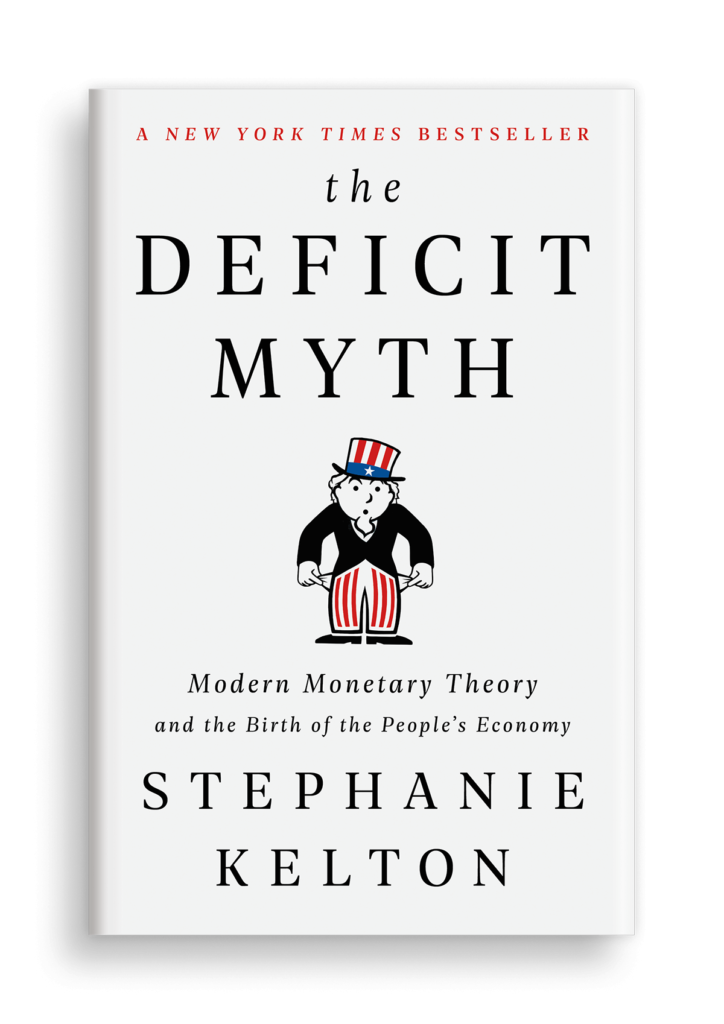
Sanders knows the truth. He had employed Professor Stephanie Kelton, a lady who understands Monetary Sovereignty, to be Chief Economist for the Democrats on the Senate Budget Committee and economic advisor to Bernie Sanders.

Wyden also said he had concerns and was exploring options.

And last week Democratic Senators Maggie Hassan of New Hampshire, Jacky Rosen of Nevada, Chris Van Hollen of Maryland, Mark Kelly of Arizona, and Jack Reed of Rhode Island wrote President Joe Biden that “we must address this issue as quickly as possible.”

Some groups representing older people are anticipating a backlash from Medicare recipients if nothing is done.

The way to “address the issue” is to tell the American public that federal taxes do not fund federal spending.

Period.

———-//———-

[No rational person would take dollars from the economy and give them to a federal government that has the infinite ability to create dollars.]

Rodger Malcolm Mitchell
Monetary Sovereignty

Twitter: @rodgermitchell Search #monetarysovereignty
Facebook: Rodger Malcolm Mitchell

……………………………………………………………………..

THE SOLE PURPOSE OF GOVERNMENT IS TO IMPROVE AND PROTECT THE LIVES OF THE PEOPLE.

The most important problems in economics involve:

  1. Monetary Sovereignty describes money creation and destruction.
  2. Gap Psychology describes the common desire to distance oneself from those “below” in any socio-economic ranking, and to come nearer those “above.” The socio-economic distance is referred to as “The Gap.”

Wide Gaps negatively affect poverty, health and longevity, education, housing, law and crime, war, leadership, ownership, bigotry, supply and demand, taxation, GDP, international relations, scientific advancement, the environment, human motivation and well-being, and virtually every other issue in economics. Implementation of Monetary Sovereignty and The Ten Steps To Prosperity can grow the economy and narrow the Gaps: Ten Steps To Prosperity:

  1. Eliminate FICA
  2. Federally funded Medicare — parts A, B & D, plus long-term care — for everyone
  3. Social Security for all
  4. Free education (including post-grad) for everyone
  5. Salary for attending school
  6. Eliminate federal taxes on business
  7. Increase the standard income tax deduction, annually. 
  8. Tax the very rich (the “.1%”) more, with higher progressive tax rates on all forms of income.
  9. Federal ownership of all banks
  10. Increase federal spending on the myriad initiatives that benefit America’s 99.9% 

The Ten Steps will grow the economy and narrow the income/wealth/power Gap between the rich and the rest.

MONETARY SOVEREIGNTY