MMT’s divorce from reality: Jobs Guarantee and inflation fear

Modern Monetary Theory (MMT) is a cousin to Monetary Sovereignty (MS), in that both concepts acknowledge the indisputable fact that the U.S. federal government’s ability to spend is not constrained by the availability of funds.
Modern monetary theory and Monopoly money : r/wallstreetbets
Neither the federal government nor any federal agency can run out of money unless Congress wants it to. Federal “Trust Funds” are a lie to prevent you from receiving federal benefits.
In short, the Monetarily Sovereign federal government cannot run short of dollars. It cannot “go broke.” It neither needs nor uses tax dollars. Similarly, no agency of the federal government (Medicare, Medicaid, Social Security, et al) can run short of dollars unless Congress wants it to. Even if all federal tax collections were $0, the government could continue spending, forever. This is true of all sovereign issuers of a sovereign currency. Federal taxes do not pay for federal spending. The federal government pays for all spending by creating new dollars. Federal tax dollars are destroyed upon receipt.

Alan Greenspan: “A government cannot become insolvent with respect to obligations in its own currency.”

Ben Bernanke: “The U.S. government has a technology, called a printing press (or, today, its electronic equivalent), that allows it to produce as many U.S. dollars as it wishes at essentially no cost.”

Quote from Ben Bernanke when, as Fed chief, he was on 60 Minutes: Scott Pelley: Is that tax money that the Fed is spending? Ben Bernanke: It’s not tax money… We simply use the computer to mark up the size of the account.

Statement from the St. Louis Fed: “As the sole manufacturer of dollars, whose debt is denominated in dollars, the U.S. government can never become insolvent, i.e., unable to pay its bills. In this sense, the government is not dependent on credit markets to remain operational.”

Press Conference: Mario Draghi, President of the ECB, 9 January 2014 Question: I am wondering: can the ECB ever run out of money? Mario Draghi: Technically, no. We cannot run out of money.

Sadly, MMT believers go astray with two false beliefs: MMT’s Jobs Guarantee and the belief that federal deficit spending can cause inflation. I. JOBS GUARANTEE Briefly, JG is just what it sounds like: The government guarantees it will find or provide (it’s not clear which) a job for anyone who wants a job. We have published many articles describing the foolishness of that proposal. Rather than repeat the many, many reasons why the JG is naive, wrongheaded, and damaging, we’ll just provide you with these references:
How the MMT “Jobs Guarantee” ignores humanity. MMT’s “Jobs Guarantee”: The final nail in the coffin of this naive, foolish program One more reason why the MMT Jobs Guarantee is a con job The MMT Jobs Guarantee con job More proof the MMT’s “Jobs Guarantee” can’t work The Jobs Guarantee (JG) mouse Another word on MMT’s Jobs Guarantee and “The Rise Of Bullshit Jobs” Life in a Jobs Guarantee (JG) World The JG (Jobs Guarantee) vs the GI (Guaranteed Income) vs the EB (Economic Bonus) Why Modern Monetary Theory’s Jobs Guarantee is like the EU’s euro: A beloved solution to the wrong problem. Will people still work if the government gives them money?
Now, circumstances have arrived to demonstrate reality in the face of MMT’s academic ignorance.
All those people quitting jobs, where are they going? Kristin Schwab, Oct 28, 2021 You may have heard the news that last week’s initial unemployment claims fell to a new pandemic low. But even though layoffs are decreasing, it’s also true that lots of workers are leaving their jobs and lots of employers are still having trouble filling them. So, where are the workers who are leaving jobs going? Right now, it is statistically more difficult to become a receptionist than to get into Harvard. That’s according to data from ZipRecruiter, where Julia Pollak is chief economist. “I have a lot of bad news for job seekers in certain occupations. Some are much more competitive even,” Pollak said. Some of these jobs are specialized or senior roles, but a lot of them are what Pollak calls pleasant jobs with predictable schedules, such as in customer service or communications — and fields like airport security.
Guess what, MMT? People aren’t simply mindless pegs to be fitted into crap-job holes as JG would do. Human beings have desires. They want — no, demand — good jobs: Good pay, good conditions, good futures. MMT’s JG program, designed by academics who have not experienced reality, relies on people being so desperate they will take any job offered. When people are selective about their lives, JG falls apart.
“So, jobs where you have some degree of prestige, perhaps a uniform and a union looking out for your interests,” Pollak said. The growing interest in jobs that are more stable and offer better pay and benefits makes sense when you compare them to jobs that require similar skills and are begging people to come back — think less predictable or less protected industries like trucking and restaurants.
Imagine that, MMT, people want stability, better pay, and better benefits, not what a federal JG bureaucracy offers them.
“If you’re a worker at a restaurant and suddenly the restaurant is short-staffed, it’s going to be that much harder for you to actually manage your shift,” said Daniel Zhao, an economist at Glassdoor. People are tired, burned out and fed up. And a lot of them are looking for a new work-from-home lifestyle. Glassdoor said searches for remote roles is up more than 350% in the last year. Whether everyone can get one is a different story.
The paternalistic Jobs Guarantee was a depression-era solution, that is as appropriate as a hand-crank calculator in today’s computer age. Sadly, MMT still doesn’t get it. Instead of JG nonsense, we finally are leaning toward Step #3 of the Ten Steps to Prosperity: Social Security for All. II SOCIAL SECURITY FOR ALL The following article calls it, “Guaranteed Basic Income” (GBI). Different name, same fundamental concept: Instead of finding crap jobs for the poor, simply give people money.
Guaranteed basic income is coming By Alice Yin and John Byrne Chicago Tribune, The Tribune’s Gregory Pratt contributed Thousands of struggling Chicago residents will receive monthly cash payments from the city of Chicago as it becomes home to one of the largest guaranteed income programs in the U.S. Mayor Lori Lightfoot’s $31.5 million basic income program is just a sliver of the total $16.7 billion budget, which will be buoyed by federal COVID-19 relief funds and won City Council approval Wednesday. Few details of the pilot have been hammered out yet, except that 5,000 households will receive $500 per month for a year — with no strings attached. The lowest-income residents who suffered financial blows from the COVID-19 pandemic will be the focus. When the funds go out, Chicago will join a contingent of American cities that have warmed up to the concept of guaranteed income. Once deemed a pipe dream in mainstream politics, the idea of handing unconditional cash directly to those in need has particularly gained steam during the coronavirus-fueled recession, when most Americans saw multiple rounds of stimulus checks and other temporary social safety net expansions. However, guaranteed income pilots have launched before the pandemic too, such as in Stockton, California, under former Mayor Michael Tubbs. The program doled out $500 monthly payments to a small subset of low-income families. In June 2020, Tubbs started the coalition Mayors for a Guaranteed Income, which now has more than 50 mayors on board, more than two dozen of whom are piloting the concept in some form. Though Lightfoot has touted her proposal as the largest in U.S. history, Los Angeles is in the process of implementing its own guaranteed income pilot targeting 3,000 households with $1,000 a month for a year. Andrew Yang, a Democratic presidential candidate in 2020, has also championed a more far-reaching version of cash assistance known as universal basic income, which would go out to all adults regardless of means.
Rather than insisting on the Puritanical demand that people must labor in order to survive (i.e JG), more enlightened city governments recognize that at least at some basic level, poverty is harmful to the whole nation, and Americans have a right to live. The irony is that monetarily non-sovereign cities (which are financially limited) are doing it rather than the Monetarily Sovereign federal government, which is financially unlimited. But that is why the efforts are so small, with just a few thousand households receiving benefits.
Not all Chicago aldermen were on board with Lightfoot’s plan. Her overall budget passed 35-15, with some of the opposition pointing to the basic income program. Southwest Side Ald. Matt O’Shea said after the vote that the pilot won’t work because “in two years, we won’t be able to afford it.” He’d rather see resources spent on boosting child care and “getting people back to work,” he said. “Just giving money out to people when there’s tens of thousands of jobs in our city right now, that’s not something I can support,” O’Shea said.
But that is the whole point. There are “tens of thousands of jobs” people don’t want. Arrogant academic snobs claim the “underclass” should be grateful to work crap jobs for crap wages. Those are Gap Psychology words. They serve only to widen the Gap between the rich and those below. JG is cruel and ignorant. It dooms people to failure. It is bad economics. Giving people money turns them into consumers whose spending helps the entire economy. Apparently, people are tired of the “work ’til you drop” routine. They have the strange desire to lead pleasant lives, no matter what the rich tell them. If people won’t work, it’s not because of laziness, as the rich love to claim. It’s because the jobs are unattractive.
Back in March, when aldermen held a hearing on a proposal over direct monthly checks, caucus chairman Jason Ervin said it would be a “slap in the face” to proceed with guaranteed income before setting up a reparations programs for descendants of slaves.
That’s a perfect example of the old, “We can’t do this before we do that” stalling routine. It’s like this: “We can’t feed them until we clothe them, and we can’t clothe them until we house them, and we can’t house them until we educate them, and we can’t educate them until we give them free healthcare, and we can’t afford to give them free healthcare until we raise taxes — and we can’t raise taxes because no one wants that. “So we can’t do anything. Sorry.”
One of City Council’s loudest voices for direct cash assistance has been Northwest Side Ald. Gilbert Villegas, who said his mother received a monthly $800 stipend through the Social Security survivors death benefits program after his father died. Villegas introduced a proposal ordinance this spring that largely resembled Lightfoot’s plan of $500 monthly payments to 5,000 households, but it did not pass.
Villegas’s mother received benefits from a federal agency, that is funded from an unlimited source. City governments are not unlimited sources.
Still, Villegas said he’s prepared to go all-in on helping work out the details of Lightfoot’s program. He wants an eligibility threshold of households earning 300% or less of the federal poverty level, and Chicago Public Schools families should be prioritized, he said.
The problem with income eligibility programs is they are expensive to administer, unfair to those who barely miss out, and subject to cheating.
Though most guaranteed income programs are still nascent, researchers have examined the effects — with limitations. The current pilots in place are narrow in size and duration, said Carmelo Barbaro, executive director of the University of Chicago Inclusive Economy Lab. Still, there is promise in further investigating the results because unlike other safety-net programs, direct cash assistance is simpler to implement, he said. Broadly accessible and unconditional cash transfers like Chicago’s guaranteed income pilot are intended to address those limitations of existing programs,” Barbaro wrote in an email. “The cost of such programs is higher, but the benefits could also be higher.”
No deductible, comprehensive Social Security for All is affordable for the federal government (as are all federal expenses). It would be simple to administer, and massively beneficial to the economy.
University of Pennsylvania professor Ioana Marinescu, an economist who has also studied such programs, said the early signs show that some of the outcomes feared by critics may not have materialized. A 2014 research review on the effect of cash transfers on alcohol and tobacco purchases, for example, found virtually no change in or even a decrease in spending on these so-called temptation goods. “There’s advantages to cash in terms of flexibility,” Marinescu said. “There could be drawbacks if you’re worried that people misuse the cash. But that doesn’t seem to be the case based on the empirical evidence.”
The rich like to portray the poor as ignorant sloths who will use any extra money for drinking, gambling, smoking, and drugs. That gives the rich a fake excuse to widen the Gap and thereby make themselves richer. Republicans, the party of the rich, invariably vote against money for the poor. (The Gap is what makes the rich rich. Without the Gap, no one would be rich. We all would be the same. The wider the Gap, the richer the rich are.) The lack of money is the biggest problem in any economy. The best way to cure that problem is to give people money. The rich hate it, and invent excuses for not doing it, because they don’t want the Gap between the rich and the rest to be narrowed. III Inflation Contrary to popular myth, inflation never is caused by “too much” federal deficit spending. Inflation always is caused by shortages of key goods and services.
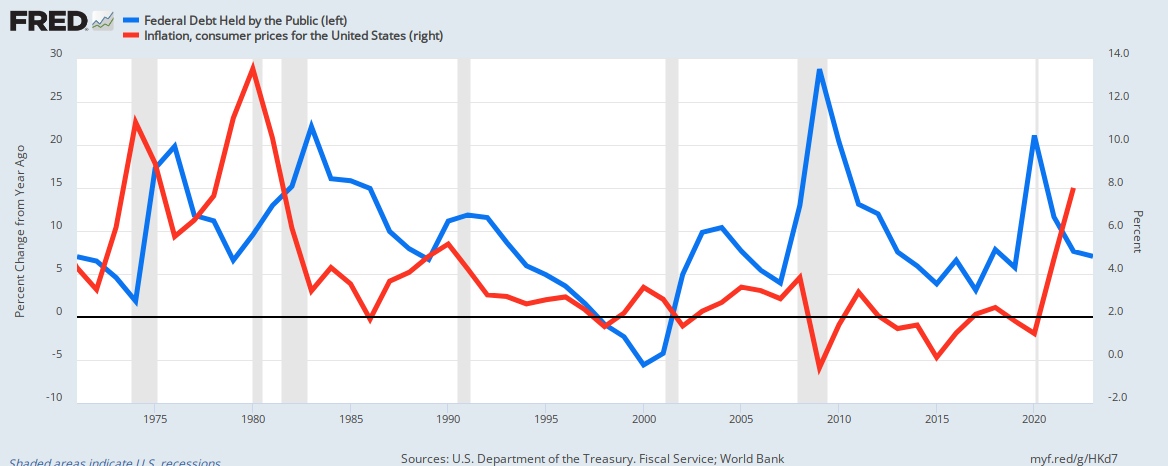
There is no correlation between federal deficit spending (blue line) and inflation (red line).
Today’s inflation is related to shortages of energy, labor, food, and computer chips. Inflation actually can be cured by additional federal spending to pay for scarce goods and services. In Summary
  1. The Monetarily Sovereign federal government has infinite access to dollars. Neither the government nor any agency of the government can run short of dollars unless Congress wants that to happen.
  2. Federal taxes do not “pay for” federal spending. Federal spending is paid for by the creation of new dollars, which the government has the infinite ability to do.
  3. Federal spending does not cause inflation. Inflation is caused by the scarcity of key goods and services. Federal spending can cure inflation by paying for scarce goods and services.
  4. America is not short of jobs. America is short of good jobs. Modern Monetary Theory’s Jobs Guarantee will solve zero problems, and in fact exacerbate a “crap jobs” economy.
  5. Poverty, the lack of money, is bad for the American economy. Poverty is not cured by bad jobs, but rather by putting money in the hands of the impoverished. This creates new consumers, whose purchases grow the economy,  which grows businesses that are able to provide attractive jobs.
It all begins putting with money into the hands of the people, which the U.S. federal government has the infinite ability to provide. Rodger Malcolm Mitchell Monetary Sovereignty Twitter: @rodgermitchell Search #monetarysovereignty Facebook: Rodger Malcolm Mitchell

……………………………………………………………………..

THE SOLE PURPOSE OF GOVERNMENT IS TO IMPROVE AND PROTECT THE LIVES OF THE PEOPLE.

The most important problems in economics involve:
  1. Monetary Sovereignty describes money creation and destruction.
  2. Gap Psychology describes the common desire to distance oneself from those “below” in any socio-economic ranking, and to come nearer those “above.” The socio-economic distance is referred to as “The Gap.”
Wide Gaps negatively affect poverty, health and longevity, education, housing, law and crime, war, leadership, ownership, bigotry, supply and demand, taxation, GDP, international relations, scientific advancement, the environment, human motivation and well-being, and virtually every other issue in economics. Implementation of Monetary Sovereignty and The Ten Steps To Prosperity can grow the economy and narrow the Gaps: Ten Steps To Prosperity:
  1. Eliminate FICA
  2. Federally funded Medicare — parts A, B & D, plus long-term care — for everyone
  3. Social Security for all
  4. Free education (including post-grad) for everyone
  5. Salary for attending school
  6. Eliminate federal taxes on business
  7. Increase the standard income tax deduction, annually. 
  8. Tax the very rich (the “.1%”) more, with higher progressive tax rates on all forms of income.
  9. Federal ownership of all banks
  10. Increase federal spending on the myriad initiatives that benefit America’s 99.9% 
The Ten Steps will grow the economy and narrow the income/wealth/power Gap between the rich and the rest.

MONETARY SOVEREIGNTY

Thanks for nothing Sen. Manchin and the GOP

Self-proclaimed “moderate,” but in reality, coal whore, Sen. Joe (Global warming? What global warming?) Manchin demanded cuts to the Democrat’s “Build Back Better” program. Here is just one of the proposals that had to be cut in order to receive Manchin’s blessing.

From AXIOS AM, By Mike Allen, Oct 29, 2021

Manchin’s vote is necessary because 100% of Republicans have vowed to vote against ANY program proposed by Democrats. (That’s called “Making America Great Again” aka “Trump Before Country,” and “Trump Before World.”) With paid family leave OUT of the Build Back Better framework released by the White House yesterday, the U.S. remains one of seven countries without paid leave for new moms, Bloomberg reports. The others: Marshall Islands, Micronesia, Nauru, Palau, Papua New Guinea and Tonga, per UCLA’s World Policy Analysis Center. Congratulations Manchin and Trump Republicans. You have helped America to join the Marshall Islands, Micronesia, Nauru, Palau, Papua New Guinea, and Tonga. What an honor. It demonstrates how great we have become. A true world leader. Rodger Malcolm Mitchell Monetary Sovereignty Twitter: @rodgermitchell Search #monetarysovereignty Facebook: Rodger Malcolm Mitchell

……………………………………………………………………..

THE SOLE PURPOSE OF GOVERNMENT IS TO IMPROVE AND PROTECT THE LIVES OF THE PEOPLE.

The most important problems in economics involve:
  1. Monetary Sovereignty describes money creation and destruction.
  2. Gap Psychology describes the common desire to distance oneself from those “below” in any socio-economic ranking, and to come nearer those “above.” The socio-economic distance is referred to as “The Gap.”
Wide Gaps negatively affect poverty, health and longevity, education, housing, law and crime, war, leadership, ownership, bigotry, supply and demand, taxation, GDP, international relations, scientific advancement, the environment, human motivation and well-being, and virtually every other issue in economics. Implementation of Monetary Sovereignty and The Ten Steps To Prosperity can grow the economy and narrow the Gaps: Ten Steps To Prosperity:
  1. Eliminate FICA
  2. Federally funded Medicare — parts A, B & D, plus long-term care — for everyone
  3. Social Security for all
  4. Free education (including post-grad) for everyone
  5. Salary for attending school
  6. Eliminate federal taxes on business
  7. Increase the standard income tax deduction, annually. 
  8. Tax the very rich (the “.1%”) more, with higher progressive tax rates on all forms of income.
  9. Federal ownership of all banks
  10. Increase federal spending on the myriad initiatives that benefit America’s 99.9% 
The Ten Steps will grow the economy and narrow the income/wealth/power Gap between the rich and the rest.

MONETARY SOVEREIGNTY

Why is Medicare the way it is?

The purpose of government is to improve and protect the lives of the governed.

Is the Medicare Advantage plan an admission that Medicare itself is unnecessarily incomplete?

Rolls-Royce Phantom Prices, Reviews and New Model Information
Free, but with strings.

A story: You receive a call from the wealthiest man on earth. He owns an infinite amount of money.

He tells you he’s in the mood to do a good deed.

He has picked your name randomly, not based on anything but the luck of the draw, and he is giving you a free, no-strings-attached, Rolls Royce automobile.

Well, actually, there are two small strings. You must choose between two Rolls.

One has no heater. The other has no air conditioning.

And you must wait until you are 65 years old before you pick your car.

This puzzles you, so you ask him, “Why would someone having infinite money decide that when does his good deed, he gifts you a car that is missing either a heater or air conditioner?”

And why must you wait until you’re 65?

What’s his purpose?

While you ponder that question, consider this: The federal government, being uniquely Monetarily Sovereign, has infinite dollars. It never can run short of its own sovereign currency.

The government provides you with Medicare, which comes in two basic “models,” Original Medicare and Medicare Advantage.

And you typically must wait until you are 65 to join (with certain exceptions).

But Medicare and Medicare Advantage have different options depending on many of your personal factors.

WHY? Why doesn’t Original Medicare simply cover all medical conditions for everyone?

The American Association of Retired People (AARP) published “8 Reasons to Change Medicare:

1. My prescription costs have jumped.
That happens usually due to one of two scenarios: You’ve been prescribed a new drug your Plan D policy doesn’t cover, or your current medicines have fallen off your Plan D’s formulary (list of covered medicines), Neuman says.

Each September, Part D prescription plans will send out a list of changes to drug coverage, giving you time to make sure your medicines are still covered.

If not, you can shop around for another plan or ask your doctor to apply for an exception in covering your favored medicine.

WHY? Why must a person pay extra for Part D, and why must that person shop around for a plan that covers all his medicines?

2. I’ve decided to spend my winters (or summers) in a different state.
Advantage plans typically charge more to go to doctors outside of their networks; in some cases they won’t cover any charges if it’s not an emergency.

So a Midwesterner might have to pay more to see out-of-network doctors while in Florida.

You need to read the details of your plan, or talk with a representative, to know where you stand. If you’ll be living a dual-residence existence for years to come, you might consider a switch to original Medicare, with the usual caveats.

WHY? Why the “in-network, out-of-network” rigamarole?

3. I need surgery and prefer a specific doctor.
Original Medicare allows patients to choose any doctor or hospital that accepts Medicare.

But if you’re in a Medicare Advantage plan and its surgeons don’t meet your needs, you may need a different MA plan or to switch to OM.

The people who really need to focus on whether doctors are in network are those who’ve suffered major problems like cancer and heart attack, says Joseph Antos, health care expert at the American Enterprise Institute.

“A specialist may be key to their treatment,” he says.

WHY? Why does one Medicare plan cover any doctors or hospitals that accept Medicare and the other plan doesn’t?

4. I’m super healthy and rarely need a doctor.
If you’re in original Medicare, all should be well: As a “pay-for-service” arrangement, not seeing the doctor isn’t costing you anything extra beyond your mandatory parts B and D monthly insurance premiums.

If you’re in an MA plan in which you’re paying a monthly premium on top of your standard Part B premium, that may be for a plan that offers lots of extras , such as gym memberships.

Consider switching to a lower-cost MA plan that doesn’t offer services you don’t plan to use in the coming year.

WHY? Why are there any premiums, and why does one plan not cover the “extras?

5. I’ve been diagnosed with a chronic condition.
A serious medical change should trigger a full review of your Medicare coverage. Make sure your Plan D policy pays for new prescriptions.

Consider the care you’ll need . If you want disease-specific programs, find an MA plan that offers them.

But if you will need lots of specialists, there’s an argument for OM. Making critical changes early can “really affect your pocketbook and save you money,” says Gretchen Jacobson, a vice president with the Commonwealth Fund.

WHY? Why the difference in plans? Why doesn’t one plan cover everything?

6. My income has dropped sharply.
If you are in original Medicare, your Part B monthly premium is locked in, but your Part D drug plan isn’t.

And there’s a chance you can find a lower-cost policy that covers the medicines you are on.

If you’re in an Advantage plan, consider a switch to a plan in which there is no extra payment on top of the mandatory Part B premium.

And you might qualify for help. Ask your state Medicaid office about Medicare Savings Programs. Find the state offices here or call 800-MEDICARE (800-633-4227).

WHY? Why is there a monthly premium? Why does one plan not even lock in premiums? Why the difference in costs?

7. My former employer is changing its retiree health benefits.
Some companies provide retirees with Medigap supplemental insurance, which covers many health costs not covered by OM.

If you have changes to your retiree benefit coverage, or for some reason that coverage no longer is offered, contact Medicare’s Benefits Coordination & Recovery Center (855-798-2627).

Someone can tell you whether you fall in the window in which Medigap insurers cannot deny you coverage based on preexisting conditions.

WHY? Why are some retirees not covered by Medigap supplemental? Why is there even a need for supplemental?

8. My regular doctor is no longer in network for my plan.
If you deeply want to stay with a doctor, ask directly whether he or she is moving to a different MA plan, accepting OM patients or dropping out of Medicare completely.

If you decide to make a change, make sure a short-term decision won’t affect your long-term coverage (for example, switching to original Medicare to temporarily stay with one doctor but sacrificing Medigap coveragefor the long term).

It might be safer to ask your doctor to recommend a colleague in your current plan.

I’m in need of serious dental care. Original Medicare doesn’t cover routine dental care costs, but many Medicare Advantage plans do.

If you don’t have your own dental insurance and can’t afford dentistry costs out of pocket, consider finding an MA plan that will cover a portion of the costs of your needed work.

Antos warns that figuring out what portion of your dental bills an MA plan will cover is complicated, so it helps to know what services you will use in the coming year.

WHY? Why does a person need to consult a crystal ball to guess what medical coverage will be needed at some unknown time in the future?

WHY?


HERE IS WHY: Our Monetarily Sovereign government has infinite funds. It can afford any expense, even without collecting a single dollar in taxes. It has ultimate control over the value of the dollar, i.e. inflation.

Thus, the federal government has the unlimited ability to fund comprehensive, no-deductible Medicare for every man, woman, and child in America. There is no financial reason why you, your family and everyone you know does not have free, total healthcare protection.

But . . . 

At the behest of the very rich, who run America, our information leaders promulgate the Big Lie that taxpayers fund federal spending, and that the federal government is in danger of running short of dollars if spending increases without tax increases.

You have been sold the bill of goods that “there is no such thing as a free lunch,” and that federal spending causes inflation, and that the phony Medicare “trust fund” is running short of money.

The rich do this to widen the Gap between the rich and the rest, for it is the Gap that makes them rich. The wider the Gap, the richer they are.

Better “Medicare for All” plans have been proposed, but they have been rejected supposedly because tax dollars are needed to pay for it. 

They aren’t. It’s the Big Lie, the sole purpose of which is to make the rich richer.

There is no other purpose.

Rodger Malcolm Mitchell Monetary Sovereignty Twitter: @rodgermitchell Search #monetarysovereignty Facebook: Rodger Malcolm Mitchell

……………………………………………………………………..

THE SOLE PURPOSE OF GOVERNMENT IS TO IMPROVE AND PROTECT THE LIVES OF THE PEOPLE.

The most important problems in economics involve:

  1. Monetary Sovereignty describes money creation and destruction.
  2. Gap Psychology describes the common desire to distance oneself from those “below” in any socio-economic ranking, and to come nearer those “above.” The socio-economic distance is referred to as “The Gap.”

Wide Gaps negatively affect poverty, health and longevity, education, housing, law and crime, war, leadership, ownership, bigotry, supply and demand, taxation, GDP, international relations, scientific advancement, the environment, human motivation and well-being, and virtually every other issue in economics. Implementation of Monetary Sovereignty and The Ten Steps To Prosperity can grow the economy and narrow the Gaps: Ten Steps To Prosperity:

  1. Eliminate FICA
  2. Federally funded Medicare — parts A, B & D, plus long-term care — for everyone
  3. Social Security for all
  4. Free education (including post-grad) for everyone
  5. Salary for attending school
  6. Eliminate federal taxes on business
  7. Increase the standard income tax deduction, annually. 
  8. Tax the very rich (the “.1%”) more, with higher progressive tax rates on all forms of income.
  9. Federal ownership of all banks
  10. Increase federal spending on the myriad initiatives that benefit America’s 99.9% 

The Ten Steps will grow the economy and narrow the income/wealth/power Gap between the rich and the rest.

MONETARY SOVEREIGNTY

Libertarians and Republicans sell the inflation myth to widen the Gap between the rich and the rest.

Let me begin at the end, with a summary: “Inflation,” or “price inflation” as some prefer to call it, never is the traditional “too much money chasing too few goods.” It always is “too few goods (and services).” Never, “too much money.”

Inflation always is caused by shortages of key goods and services, most often, energy, food, and/or labor.

I’ll explain by quoting from the following article:
High Inflation Is Here To Stay But the people in power won’t even say as much, let alone do something about it. BRUCE YANDLE News that the September Consumer Price Index (CPI) rose by 5.4 percent on a year-over-year basis should be evidence enough for Federal Reserve Chair Jerome Powell, White House economists, and even the president to admit that we have more than a temporary inflation uptick on our hands. Better yet, it’s proof that we should avoid adding fuel to the fire, even if it means cutting back on President Joe Biden’s multi-trillion-dollar American Rescue Plan.
“Fuel to the fire” means federal deficit spending. Mr. Yandle wrongly believes federal deficits lead to inflation. So let us address that myth directly. If the myth were true, an increase in federal deficit spending should correspond to an increase in prices. But does it?
There is no relationship between inflation (red line) and changes in federal deficit spending (blue line).
We see absolutely no evidence that deficit spending has led to today’s, or any day’s, inflation. Sadly, the myth is taken for granted as truth, and seldom do we see anyone daring to doubt it.
Until recently, evidence of inflation exceeding 2 percent—the Fed’s traditional goal for inflation—has been dismissed as temporary or transitory, and for good reason. Newly printed stimulus money has been passing through the system. This, accompanied by serious supply-chain disruptions, might be over in another 12 months—if we’re lucky.
Ah, “supply-chain disruptions,” (aka shortages). Here, too briefly, Mr. Yandle hints at the fact that shortages are primary cause of inflation. Does that give Mr. Yandle a clue? Apparently not:
Then in August, the Biden administration indicated that 2021’s economy would show as much as 4.8 percent inflation—but, with an optimistic spin, would fall to 2.5 percent the next year. Meanwhile, there is some stimulus money pending in the yet-to-be determined infrastructure bill, and that complicates the issue. Avoiding the hard truth or waiting before countering inflationary forces carries a cost. In this case, delays could mean harsher action later when, for example, the Fed hits the money brakes harder to cool the economy. In such a case we might see interest rates head to the ceiling, construction activity and high-tech investment plummet, and the economy roll into a recession.
Mr. Yandle, staying with the false “spending causes inflation” trope, is not clear about what he means by “money brakes.”  If he thinks that raising interest rates would lead to recession, you would expect there to be an inverse relationship between interest levels and Gross Domestic Product growth. Is there?
There is not the expected inverse relationship between interest rates (brown) and GDP growth (green).
The above graph does not indicate Mr. Yandle’s expected inverse relationship between interest rates and GDP growth. In fact, we see something of a positive relationship. Contrary to the knee-jerk, temporary reaction of the stock markets, high interest rates seem to correspond with high GDP growth. Why? Probably because higher rates force the federal government to pump more interest (i.e. growth) dollars into the economy. If by, “hit the money brakes,” Mr. Yandle means add fewer dollars to the economy, he undoubtedly is correct. Economic growth, by formula, requires money growth.

GDP = Federal Spending+ Non-federal Spending + Net Exports

Clearly, GDP growth relies on spending growth, and one seldom will see spending growth without money growth.
In 1978, the CPI was exceeding 7.5 percent and economic growth was slowing because of deliberate Fed action to cool the economy.
“Cool the economy” surely is not anyone’s goal, if “cooling” means reduced economic growth. But Mr. Yandle, and other economists love to use ambiguous terminology, to protect themselves from error. Increasing interest rates does not “cool” an economy, but reducing federal deficits does “cool” economic growth.
Fed chair Paul Volcker “hit the brakes” long and hard and squeezed out inflation, along with employment growth.
 
Although rising interest rates didn’t cut into GDP, there is a very close relationship between the money supply (approximated by total debt) and GDP growth.
Again, Yandle, intentionally or unintentionally uses imprecise terms. In what way did Volker “hit the brakes”? We assume Yandle means “raised interest rates.” If so, that clearly does not hit any economic brakes, nor ever has. Higher interest rates do not cause recessions. But increases in money supply do cause increased GDP growth.
No one in authority wants to admit that the dollars we hold are systematically losing their purchasing power.
“No one”? Actually, everyone understands and says we are in an inflation. The only questions being, Why?” “How deep?” and “How long?” The “why” is shortages. The “how deep” and “how long” depend on what the government does. If it spends to reduce shortages, the inflation will not be deep or long. If it does as Mr. Yandle wants — cuts spending — we probably will fall into a stagflation.
We are being quietly robbed by Washington’s dollar-printing press, with politicians calling the shots. The presses are not operating without drivers.
Wrong, wrong, wrong. As we have shown in the first graph (above), the “dollar-printing press” does not cause inflation.
Seemingly, it’s okay for the Fed chair to recognize CPI heading north, but only if he qualifies the trip by calling it temporary. And while Washington analysts argue that COVID-19 disruptions are affecting just some key items, such as used cars and lumber—
“Just some key items”? Really? How about, virtually all items and labor? How about oil, food, electronics, rare earths, etc., etc.
— and that ports clogged with container ships waiting for workers, drivers, and trucks to be unloaded are the culprit—an analysis of the price movements in the July Consumer Spending Index, which is the Fed’s preferred inflation measuring rod, shows 84 percent of included items rising.
That’s right. Clogged ports and a shortage of workers and drivers, also leads to the product shortages that are the causes of inflation. Amazing that Mr. Yandle doesn’t see it.
The price increases are widespread, which suggests they are embedded.
“Embedded” into shortages. What Mr. Yandle doesn’t recognize is that increased federal spending can cure inflation by curing shortages.
No matter how analysts choose to slice and dice the data, the answer is the same: The U.S. inflation rate calls for taking offsetting actions, such as avoiding direct distributions of stimulus or minimum family income dollars (though not harsh, invasive measures to cool off the economy).
The perfect right-wing solution to everything: Cut family income.
Let us not forget that inflation is not about rising prices. The rising price level is the result of an inflated money supply—all those trillions of stimulus dollars now out and chasing harder after goods and services.
Exactly and diametrically wrong. Inflation IS about rising prices and IS NOT about money supply. Despite all the counter-evidence, Mr. Yandle promulgates the “deficits cause inflation” myth. Why does he avoid fact in favor of fiction? Here’s a hint:
BRUCE YANDLE is a distinguished adjunct fellow with the Mercatus Center at George Mason University. Wikipedia: The Mercatus Center at George Mason University is a libertarian, non-profit, free-market-oriented research, education, and outreach think tank. The Koch family has been a major financial supporter of the organization since the mid-1980s. Charles Koch serves on the group’s board of directors.
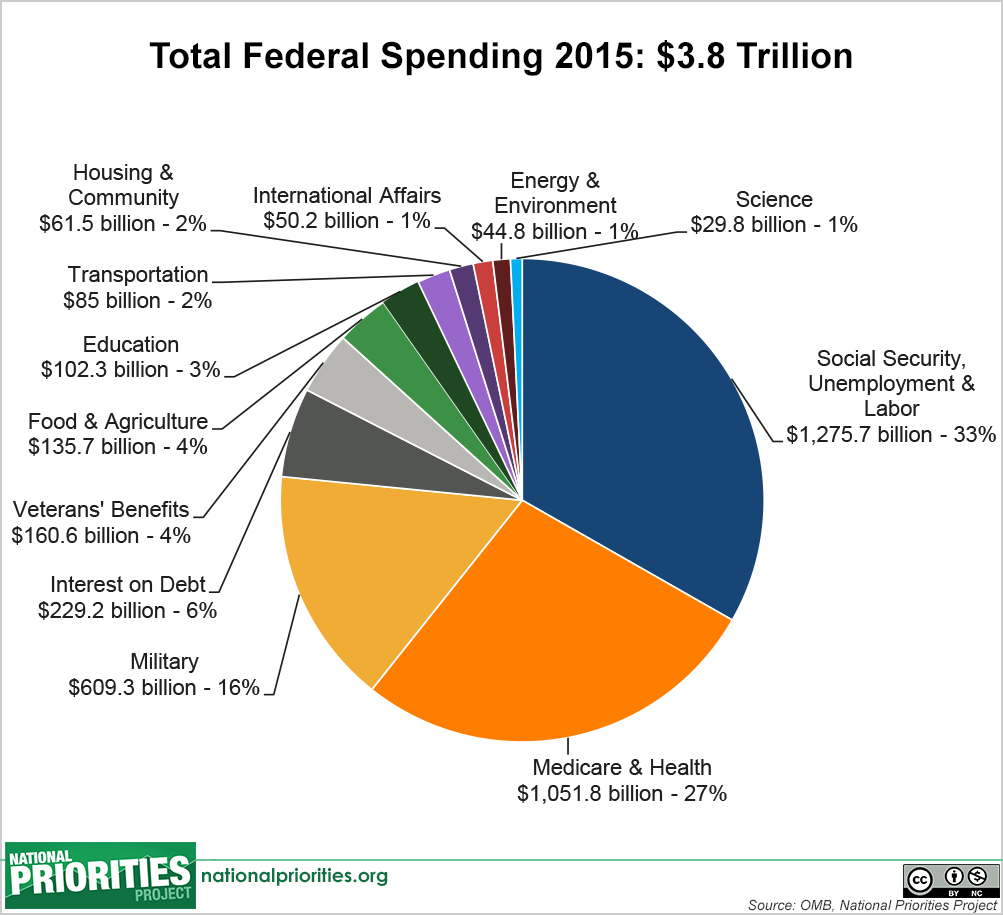
And there you have it. Yandle is a Libertarian being paid by a think tank that is supported (bribed) by the infamous and wealthy Kochs. Their goal in life seems to be to widen the Gap between the rich and the rest. Widening the Gap is how the rich become richer. (Without the Gap no one would be rich. We all would be the same.) The rich widen the Gap, i.e. become richer, by gaining more for themselves or by forcing the rest to have less. By blaming federal deficits for inflation, Yandle, Mercatus, and the Kochs are able to demand the next “logical” step, cut deficit spending on such social programs as: Social Security, Medicare, and all poverty aids. Along with the military, those constitute the largest federal deficit expenditures.
Libertarians and Republicans falsely claim that deficit spending should be cut to cure inflation. They are deceptive and wrong.
The rich widen the Gap by bribing thought leaders:
  1. Economists are bribed via “think tank” salaries and payments to universities
  2. The Media are bribed via ownership and advertising dollars
  3. Politicians are bribed via political contributions and promises of lucrative employment later
Libertarians and Republicans wrongfully claim that deficit spending should be cut to cure inflation. But, cuts to federal deficit spending do not cure inflation. Rather, spending cuts cause recessions and depressions, while punishing the poor and middle classes. Yandle’s suggested cuts simply would make the rich richer and the rest, poorer. In short, Yandle’s cuts would widen the Gap between the rich and the rest, and we believe that is what he is paid to want. Rodger Malcolm Mitchell Monetary Sovereignty Twitter: @rodgermitchell Search #monetarysovereignty Facebook: Rodger Malcolm Mitchell

……………………………………………………………………..

THE SOLE PURPOSE OF GOVERNMENT IS TO IMPROVE AND PROTECT THE LIVES OF THE PEOPLE.

The most important problems in economics involve:
  1. Monetary Sovereignty describes money creation and destruction.
  2. Gap Psychology describes the common desire to distance oneself from those “below” in any socio-economic ranking, and to come nearer those “above.” The socio-economic distance is referred to as “The Gap.”
Wide Gaps negatively affect poverty, health and longevity, education, housing, law and crime, war, leadership, ownership, bigotry, supply and demand, taxation, GDP, international relations, scientific advancement, the environment, human motivation and well-being, and virtually every other issue in economics. Implementation of Monetary Sovereignty and The Ten Steps To Prosperity can grow the economy and narrow the Gaps: Ten Steps To Prosperity:
  1. Eliminate FICA
  2. Federally funded Medicare — parts A, B & D, plus long-term care — for everyone
  3. Social Security for all
  4. Free education (including post-grad) for everyone
  5. Salary for attending school
  6. Eliminate federal taxes on business
  7. Increase the standard income tax deduction, annually. 
  8. Tax the very rich (the “.1%”) more, with higher progressive tax rates on all forms of income.
  9. Federal ownership of all banks
  10. Increase federal spending on the myriad initiatives that benefit America’s 99.9% 
The Ten Steps will grow the economy and narrow the income/wealth/power Gap between the rich and the rest.

MONETARY SOVEREIGNTY