In the previous post, “That Big Lie just keeps on rollin’ along,” and in many earlier posts, we discussed how the media, economists, and your politicians have been telling you “The Big Lie” which is:
Would this make you angry?
Federal taxes fund federal spending.
In fact, federal taxes fund nothing, and knowing that, you either shrug your shoulders or you get angry and start phoning/writing your politicians.
I hope the latter.
Think of it this way. What if Amazon or some other retailer cheated you out of $1,000. Or someone picked your pocket.
How angry would you be? How many phone calls would you make and what letters would you write?
Then think of all those unnecessary tax dollars you send to the federal government. A lot more than $1,000 I assume.
Or what if your boss screwed you out of last month’s salary? Compare that to the screwing you are getting from Social Security, all because of The Big Lie.
The wage base is the amount of a worker’s earnings that are taxable for Social Security purposes.
The 6.2% Old Age, Survivors and Disability Insurance (OASDI) tax, which funds various Social Security programs, applies only to the first $147,000 of a worker’s earnings for 2022.
But this number is also tied to changes in inflation and is likely to go up significantly in 2023.
That 6,2% against $147,000 (if your salary is that high) comes to $9,114 taken from you that pays for nothing.
But it gets worse. When your company decides on salaries, it figures the total cost of employing you. Because your company also must pay $9,114, it deducts the money from what it is willing to pay you.
Trust me on this. I have owned several companies and that is exactly the way we decided how much we could afford to pay for employees.
So, immediately, you are paying up to $18 thousand for nothing to a government that has the infinite ability to create dollars and neither needs nor uses your dollars.
The wage base in 2021, for example, was $142,800, but the high rate of inflation in 2021 pushed that number 2.9% higher.
Workers should expect another bump up in 2023, meaning higher earners should expect to pay more in Social Security taxes.
The original and fundamental purpose of Social Security is to help people financially when they no longer work. So one would think that the less you have earned over the years, the more financial help you need.
But Social Security doesn’t work that way. It gives more help to the people who have been earning more all these years.
And, defying all logic, it pays more money to people who already have enough money to tide them past their “normal” retirement age.
Here is what the government says:“You can start receiving your Social Security retirement benefits as early as age 62. However, you are entitled to full benefits when you reach your full retirement age. If you delay taking your benefits from your full retirement age up to age 70, your benefit amount will increase.”
Get it? If you have enough money not to need Social Security help when you are 62, you’ll be paid more for every year you wait.
That might make sense if the federal government was like a private insurance company, and had only a limited number of dollars available.
But the federal government has infinite dollars, so it makes no sense to pay wealthier people more.
Although no one wants to pay more taxes, the increase in the wage base has a silver lining for high earners.
While more of their income will be taxed, more of their earnings also will be credited to their future Social Security benefit.
Again, the richer are given more than the poorer.
The amount you earn in your working career is one of the most important factors in determining your ultimate payout — along with when you file for benefits.
The people who most need financial help are given less, and the people who need less are given more.
Although all of these potential changes for 2023 are notable, probably the biggest question about Social Security is what it will look like by the mid-2030s.
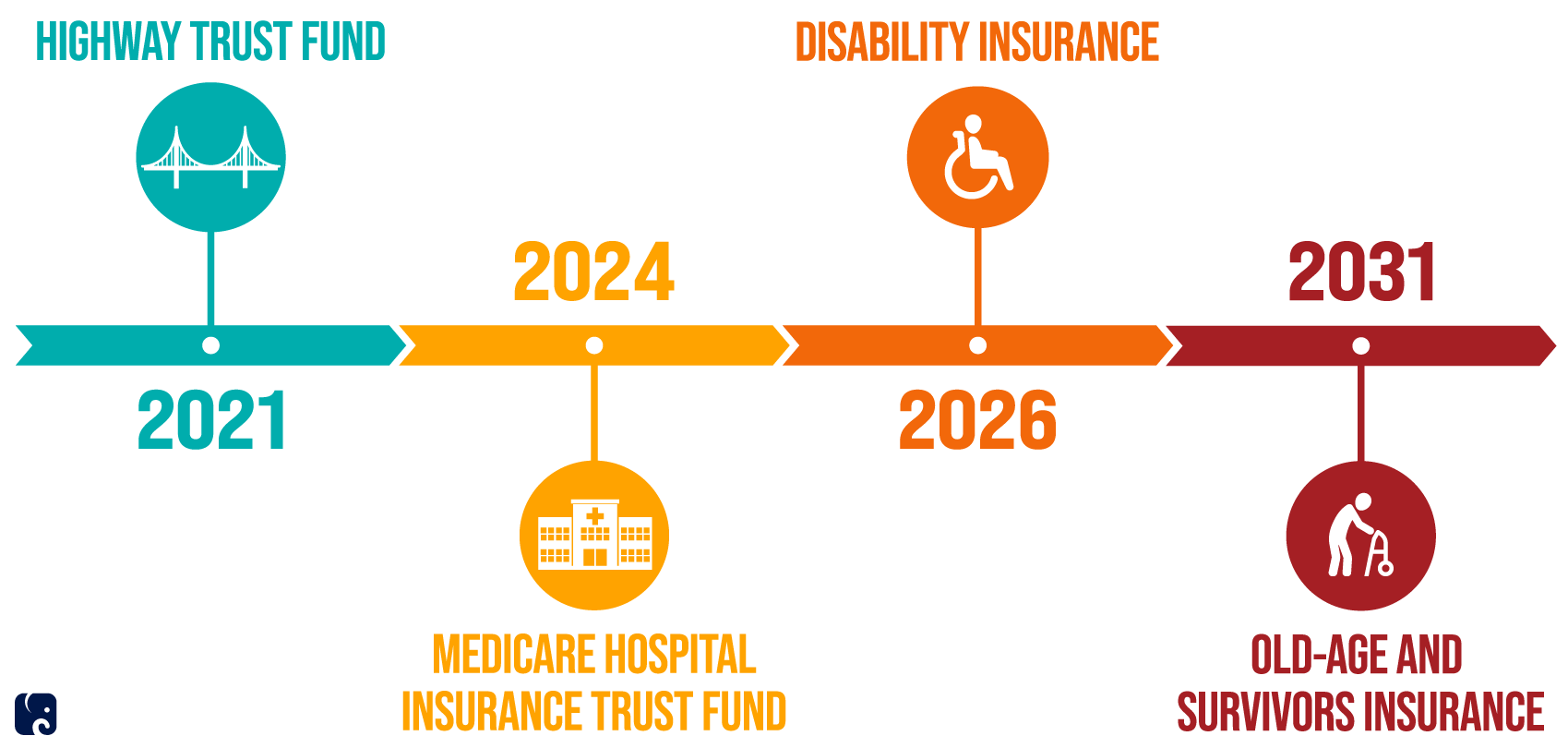
At that point, the SSA anticipates that the Social Security Trust Fund will be exhausted.
The government wants you to believe that Social Security is like private insurance, where you pay premiums, and your premiums pay for benefits.
But, if premiums are insufficient to pay promised benefits, the insurance company goes broke and you get nothing.
Social Security is not like that. You pay “Social Security taxes,” but those taxes do not pay for benefits.
As we saw in the previous post, the so-called “Trust Fund” is not in any way like a real trust fund. The SS “trust fund” merely is a ledger balance that the federal government can change at will.
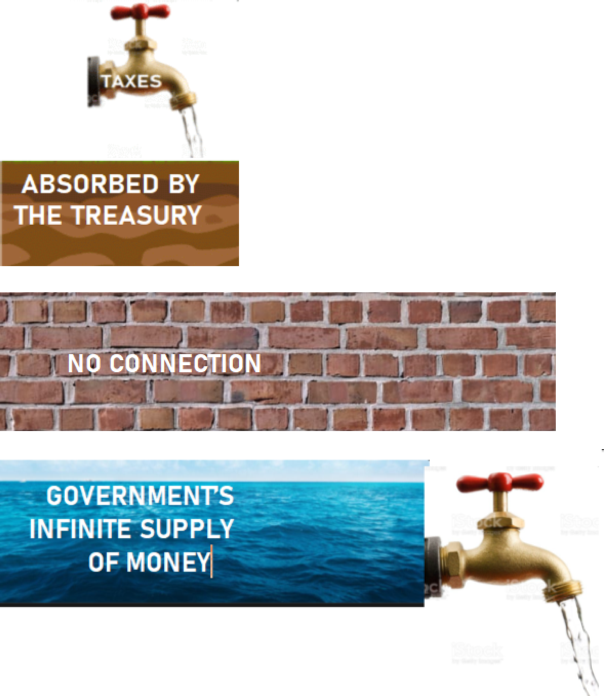
PRIVATE TRUST FUNDSOCIAL SECURITY METHODThe government wants you to visualize the process like this,<————– with your taxes going into the trust fund and the trust fund paying your benefits.In reality, the process looks like this——————>
Your taxes disappear into the Treasury, and the Monetarily Sovereign federal government pays you from its infinite supply of dollars.
There is no fiscal connection between your tax dollars and your benefits. Even if everyone paid $0 taxes, the federal government could pay your benefits, forever.
While Social Security will continue to pay benefits, thanks to payroll taxes on current workers, estimates see benefit levels dropping to 80% of current levels.
Social Security can pay any benefits Congress and the President wants it to pay, regardless of payroll taxes.
Although some type of legislative solution is likely to crop up over the next decade, both current workers and retirees should keep an eye on ongoing developments.
Here, the author of the article, perhaps unknowingly, may admit that the benefits are totally under Congress’s control when he uses the term “legislative solution,” rather than a fiscal solution.
The legislative solution would be to eliminate the fake connection between taxes and benefits and simply pay benefits. After all, benefits are paid to Congress, SCOTUS, POTUS and almost every other federal agency, without reference to tax collections.
In summary, thousands of dollars are being taken from you under the false pretense that federal taxes fund federal spending.
The only time this will stop is when you get angry at having your pocket picked and express your anger, loudly and clearly.
Gap Psychology describes the common desire to distance oneself from those “below” in any socio-economic ranking, and to come nearer those “above.” The socio-economic distance is referred to as “The Gap.”
Wide Gaps negatively affect poverty, health and longevity, education, housing, law and crime, war, leadership, ownership, bigotry, supply and demand, taxation, GDP, international relations, scientific advancement, the environment, human motivation and well-being, and virtually every other issue in economics.Implementation of Monetary Sovereignty and The Ten Steps To Prosperity can grow the economy and narrow the Gaps: Ten Steps To Prosperity:
Some lies do, too, especially The Big Lie in economics.
The Big Lie ranks as the most significant lie because it affects virtually everything Congress does — every bill, every speech, every vote, every proposal, every crooked backroom deal.
The Big Lie is the biggest because it adversely affects every man, woman, and child in America, plus many men, women, and children in the rest of the world.
The Big Lie rains on us all.
The Big Lie is the biggest because it is so clearly and obviously wrong, on the same level of truth as claiming that the stars are pinholes in a black, velvet sky.
The Big Lie in economics is: Federal taxes fund federal spending.
There are only two types who promulgate the Big Lie:
Those who do not understand economics. That includes you unfortunate souls who wasted years of your lives obtaining economics degrees at prestigious schools like the U. of Chicago. You could have learned the facts at less prestigious, but far better economics schools, like UMKC.
Those liars who do not give a gnat’s behind about the people of America and the world., and are interested only in power.
The next time you hear or read of someone expressing The Big Lie, you can decide which of the two he/she is.
Here’s today’s expression of The Big Lie as seen in the South Florida Sun-Sentinel.
Dems work to revive economic bill Boosted taxes on some would extend Medicare’s solvency Senate Majority Leader Chuck Schumer, D-N.Y., is working on a revised economic legislative package. J. Scott Applewhite/AP By Alan Fram Associated Press
WASHINGTON — Senate Democrats want to boost taxes on some high earners and use the money to extend the solvency of Medicare, the latest step in the party’s election-year attempt to craft a scaled-back version of the economic package that collapsed last year, Democratic aides said.
The sentence above expresses The Big Lie in all its glory.
Medicare is a federal agency. It is part of the federal government.
The federal government and its agencies cannot run short of dollars unless that is what Congress and the President want. That is why federal taxes do not fund federal spending.
The federal government is an infinite cornucopia.
The federal government is an infinite cornucopia that never runs dry.
“Boosted taxes” would not extend Medicare’s solvency.
Today, the U.S. Treasury does not have the money to extend the solvency of any federal agency.
Instead, the government creates the necessary dollars, by the act of paying bills.
Even if all federal tax collections were $0, the federal government could continue spending, forever.
The U.S. federal government is unlike state and local governments, businesses, euro nations, you, and me. The U.S. federal government uniquely is Monetarily Sovereign.
I’m sorry to tell you that you are not Monetarily Sovereign. You can run short of dollars. You can be unable to pay for some things. You can be insolvent.
The federal government and its agencies cannot.
The government passed the laws that created the very first dollars. The government passed as many laws as it needed.
Those laws created as many dollars as the government wanted and gave those dollars the value the government wished.
Finally, in 1971, President Richard Nixon unilaterallyordered the cancellation of the direct convertibility of the United States dollar to gold.
This allowed the federal government to create infinite dollars at any time and for any purpose, merely by passing laws.
Former Federal Reserve Chairman Alan Greenspan: “A government cannot become insolvent with respect to obligations in its own currency.”
Because the U.S. government cannot become insolvent, no agency of the U.S. government can become insolvent unless Congress and the President want it to become insolvent.
Each of those hundreds of federal agencies is funded by federal money creation. Yet, for political reasons that have nothing to do with reality, just a few agencies are limited by fake “trust funds.”
“The largest and best-known trust funds finance Social Security, portions of Medicare,highways, mass transit, and pensions for government employees.
“Federal trust funds bear little resemblance to their private-sector counterparts, and therefore the name can be misleading.
“A ‘trust fund’ implies a secure source of funding. However, a federal trust fund is simply an accounting mechanism used to track inflows and outflows for specific programs.
“In private-sector trust funds, receipts are deposited and assets are held and invested by trustees on behalf of the stated beneficiaries. In federal trust funds, the federal government does not set aside the receipts or invest them in private assets.
“Rather, the receipts are recorded as accounting credits in the trust funds and then combined with other receipts that the Treasury collects and spends.
“Further, the federal government owns the accounts and can, by changing the law, unilaterally alter the purposes of the accounts and raise or lower collections and expenditures.”
In short, Congress and the President can do anything they damn well please with the “trust funds.” They can add dollars, subtract dollars, or eliminate the “trust funds” altogether.
The government doesn’t need to search for U.S. dollars. It creates U.S. dollars.
As for Medicare, only Part A is related to a trust fund. Part B is funded the same way virtually all other agencies are funded — the same way the military, Congress, SCOTUS, the White House, et al. are funded — via payment from the federal government’s General Fund.
And in no case do federal taxes pay for anything.
Former Federal Reserve Chairman Ben Bernanke: “The U.S. government has a technology, called a printing press (or, today, its electronic equivalent), that allows it to produce as many U.S. dollars as it wishes at essentially no cost.”
In the United States, the money supply is categorized by various monetary aggregates, including M0, M1, and M2.
The monetary base, or M0, equals coin currency, physical paper, and central bank reserves.
M1, typically the most commonly used aggregate, covers M0 in addition to demand deposits and travelers’ cheques.
M2 covers M1 in addition to savings deposits and money market shares.
When you pay your federal taxes, you take M1 dollars from your checking account and send them to the U.S. Treasury. Dollars held by the Treasury are not counted in any money-supply measure because the Treasury has access to infinite dollars.
Adding dollars to infinite dollars is still infinite dollars. Thus, the Treasury effectively destroys your federal tax dollars upon receipt. They are not used for anything.
To pay its bills, the Monetarily Sovereign federal government creates new dollars ad hoc. When it approves an invoice for payment, the government (or the appropriate agency) sends instructions (not dollars) to the creditor’s bank, instructing the bank to increase the balance in the creditor’s checking account.
The instant the bank obeys those instructions, new dollars are added to the M1 money supply. Tax dollars are destroyed, and new dollars are created. That is the federal government’s method for creating dollars, which is why federal taxes do not fund federal spending.
(State and local governments, being monetarily non-sovereign, operate differently. Their tax dollars remain in the economy by being deposited into private banks. Those same tax dollars are used for invoice payment.)
Continuing with the Sun-Sentinel article:
Majority Leader Chuck Schumer, D-N.Y., and Sen. Joe Manchin, D-W.Va., could be edging toward a compromise the party hopes to push through Congress this summer over solid Republican opposition. Manchin scuttled last year’s bill.
Under the latest proposal, people earning more than $400,000 a year and couples making more than $500,000 would have to pay a 3.8% tax on their earnings from tax-advantaged businesses called pass throughs. Until now, many of them have been using a loophole to avoid paying that levy.
That would raise an estimated $203 billion over a decade, which Democrats say would go to delay until 2031 a shortfall in the Medicare trust fund that pays for hospital care.
That fund is currently projected to start running out of money in 2028.
And it’s all a lie, The Big Lie.
Manchin “scuttled” last year’s bill because, through ignorance or maliciousness, he claimed it would cost too much and/or increase the deficit too much.
But “cost” is meaningless for an entity with the infinite ability to create dollars, and the “deficit” adds growth dollars to the economy.
Deficits are so crucial to economic growth that we have recessions when deficits don’t grow enough.
When federal deficit growth declines, we have recessions cured by increased deficit growth. Rising federal deficits are necessary to stimulate economic growth.
Continuing the article:
Most U.S. businesses are pass-throughs, which include partnerships and sole proprietorships and range from one-person law practices to some large companies.
Owners count the profits as income when they pay individual income taxes, but such companies do not pay corporate taxes — meaning they avoid paying two levels of taxation.
Translation: Because of The Big Lie, Schumer and Manchin have devised a plan whereby $203 Billion growth dollars would be removed from the private sector.
Contrary to what The Big Lie tells you, those dollars will not pay for anything. They simply will be destroyed.
Presumably, new dollars will be created to delay a fictional shortfall in a non-existent “trust fund.”
Democrats this week also sent the parliamentarian a separate 190-page piece of the emerging Schumer-Manchin compromise aimed at lowering prescription drug costs for patients and the government.
Provisions include requiring Medicare to negotiate drug prices, limiting beneficiaries’ out-of-pocket costs to $2,000 annually and increasing federal subsidies for copays and premiums for some low-income people.
There are both bad and good in the above. The bad part is “negotiate drug prices,” which means the government would pay the private sector (“the economy) less for drugs. Reducing federal payments is recessionary.
The good part is “increasing federal subsidies,” which is stimulative.
Democrats say both plans will show voters they are battling to curb health care costs and protect Medicare, positions they say will be dangerous for Republicans to oppose.
The government should “battle health care costs” by creating a generous, comprehensive, no-deductible Medicare for All program, not by taking money from the economy.)
Former Fed Chairman Ben Bernanke when he was on 60 Minutes: Scott Pelley: Is that tax money that the Fed is spending? Ben Bernanke: It’s not tax money… We simply use the computer to mark up the size of the account.
Schumer and Manchin have been bargaining privately for weeks on a package aides say could include around $500 billion in spending and tax credits, more than paid for with about $1 trillion in revenue and other savings.
Translation: “More than paid for” means the federal government, which has infinite money, unnecessarily will take 1 trillion growth dollars out of the economy, which has limited money.
The suggestions of progress were emerging seven months after Manchin derailed a roughly $2 trillion, 10-year social and environment bill, dealing a stunning blow to a cornerstone of Biden’s domestic agenda.
That’s 2 trillion potential stimulus dollars that are denied the economy.
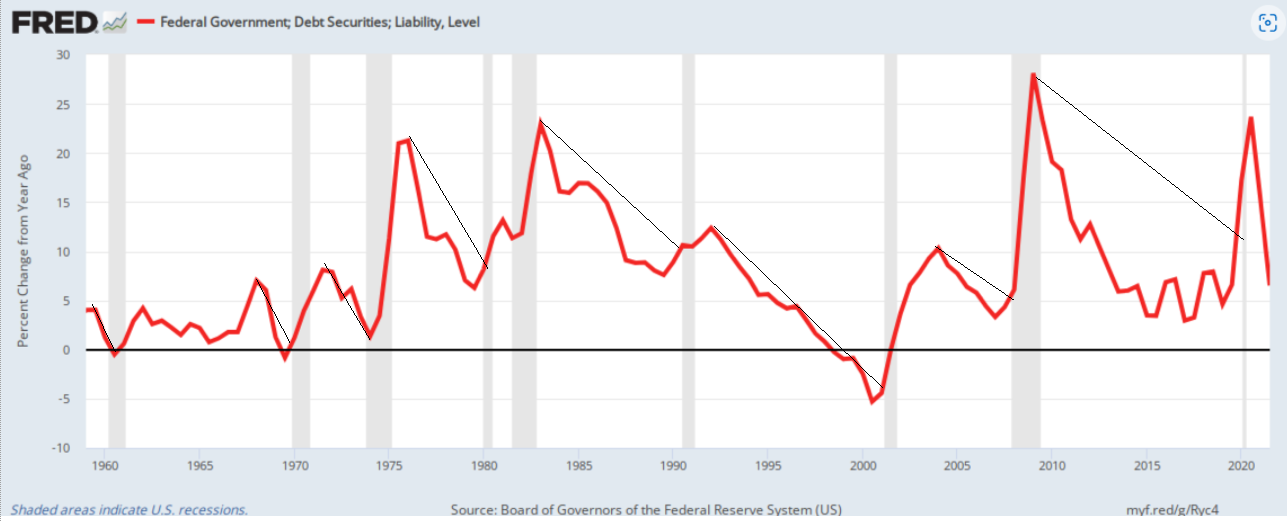
And now we come to the other phase of The Big Lie. Call it “The Big Lie II,” the claim that federal deficit spending causes inflation.
This one has been an article of faith in most economics classes — the notion that inflation is “too many dollars chasing too few goods.” It’s memorable, even poetic in its rhythm, but it isn’t factual.
There is no predictive relationship between the money supply (blue line) and inflation (red line).
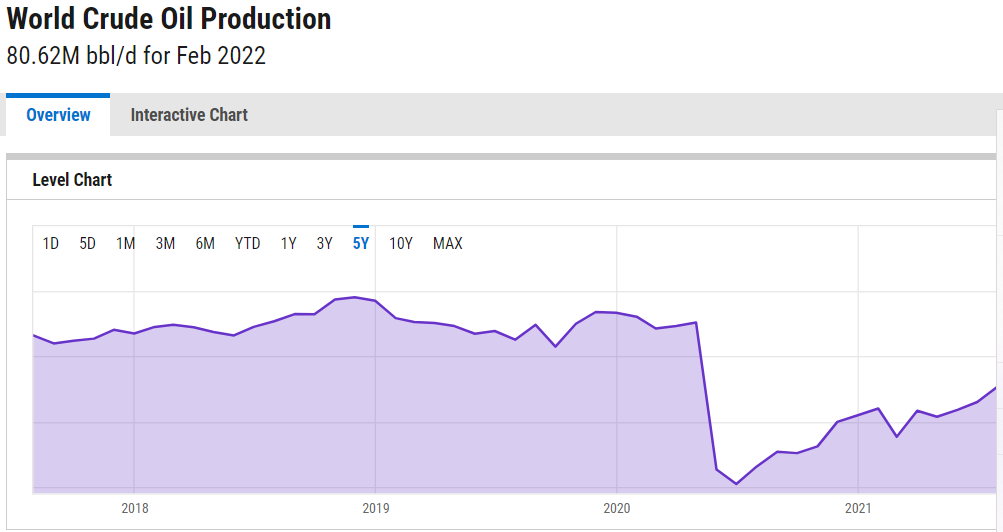
Inflation is caused by shortages. Today, the primary cause of inflation is the oil shortage, while other critical goods and services shortages contribute.
Those essential goods and services include lumber, computer chips, shipping, foods, housing, labor, and other commodities too numerous to list.
And no, those shortages were not caused by “too much money.” Too much money did not cause you to eat, build, ship, or live in more houses.
All of those shortages resulted from less production and/or supply. In fact, most shortages can be cured by more federal spending to increase supply and availability.
COVID, not deficit spending, caused oil production to drop precipitously, and even today, the oil shortage has not been cured. That is the primary reason for today’s inflation.
Additional deficit spending, not less, and certainly not the Fed’s interest rate increases, will cure the oil shortage and inflation. All inflations are supply-shortage problems, not excessive-demand problems.
The Fed cannot cure the shortage problems by manipulating interest rates.
The Democratic-run House approved the measure in November, but Manchin abruptly withdrew his support because of its cost and worries that it would fuel inflation.
That is what Manchin said. If he really believed it, he is a victim of The Big Lie. If he didn’t believe it, he is a liar.
Polls show widespread public alarm over recent months’ historically high inflation rates, supply chain problems, and other economic issues that, along with President Joe Biden’s dismal popularity ratings, are pushing voters toward Republicans, the GOP says.
And then, for one last statement of The Big Lie II:
Asked for comment, a spokesperson for Senate Minority Leader Mitch McConnell said the Kentucky Republican told constituents this week that Democrats would make inflation “considerably worse” by reviving their economic bill.
McConnell is terrified that the Democrats would be able to revive their economic bill because that would stimulate the economy just before the elections, the last thing the GOP wants.
[Taxation: No rational person would take dollars from the economy and give them to a federal government that has the infinite ability to create dollars.]
Gap Psychology describes the common desire to distance oneself from those “below” in any socio-economic ranking, and to come nearer those “above.” The socio-economic distance is referred to as “The Gap.”
Wide Gaps negatively affect poverty, health and longevity, education, housing, law and crime, war, leadership, ownership, bigotry, supply and demand, taxation, GDP, international relations, scientific advancement, the environment, human motivation and well-being, and virtually every other issue in economics.Implementation of Monetary Sovereignty and The Ten Steps To Prosperity can grow the economy and narrow the Gaps: Ten Steps To Prosperity:
You can’t say we weren’t warned. Hitler warned us, but like the Germans before us, we didn’t listen. Now, we have been repeating Germany’s mistakes.
Read this reprint from a post titled “Astoundingsimilarities: Hitler in America. It’s happening now.” It posted way back in September 2016, when Trump was still running for office.
Some have focused on the social and political conditions in post-World War I Germany, which Hitler expertly exploited — a yearning for a return to German greatness; unemployment and economic distress; and longstanding ethnic prejudices and fears of “foreignization.”
Hmmm . . . “Make America great again,” anti-Muslim, build a wall. Now, who is that?
Hitler as a politician who rose to power through demagoguery, showmanship and nativist appeals to the masses.
Hitler was often described as an egomaniac who “only loved himself” — a narcissist with a taste for self-dramatization and what Mr. Ullrich calls a “characteristic fondness for superlatives.”
Using the Hitler playbook, down to the smallest detail.
What about this: do demagoguery, showmanship, and nativist appeals sound familiar? And which egomaniacal politician describes everything about himself as “incredible.”
A former finance minister wrote that Hitler “was so thoroughly untruthful that he could no longer recognize the difference between lies and truth” and editors of one edition of “Mein Kampf” described it as a “swamp of lies, distortions, innuendoes, half-truths and real facts.”
Which politician not only lies the most of any in recent memory but repeatedly denies the incontrovertible evidence of lies?
And this:
Hitler was an effective orator and actor, adept at assuming various masks and feeding off the energy of his audiences.
Although he concealed his anti-Semitism beneath a “mask of moderation” when trying to win the support of the socially liberal middle classes, he specialized in big, theatrical rallies.
Which politician is a professional TV actor? Who boasts about massive rallies with thousands of cheering people? Which politician breeds hatred of minorities? And this:
He peppered his speeches with coarse phrases and put-downs of hecklers.
Even as he fomented chaos by playing to crowds’ fears and resentments, he offered himself as the visionary leader who could restore law and order.
Which politician yells “Get ’em outa here” when heckled? Which politician promises to enforce “law and order”? And this:
Hitler increasingly presented himself in messianic terms, promising “to lead Germany to a new era of national greatness,” though he was typically vague about his actual plans.
He often harked back to a golden age for the country, the better “to paint the present day in hues that were all the darker.
Everywhere you looked now, there was only decline and decay.”
Which politician repeatedly tells us we are losing to the Chinese, the Mexicans, and the terrorists- losing, losing, losing- but is vague about plans (sometimes claiming they are “secret.”?) And this:
Because the understanding of the masses “is feeble,” Hitler said, effective propaganda needed to be boiled down to a few slogans that should be “persistently repeated until the very last individual has come to grasp the idea that has been put forward.”
Seen any political slogans printed on hats and constantly repeated in speeches to remind the “feeble” masses? And this:
Hitler’s rise was not inevitable. There were numerous points at which his ascent might have been derailed.
(But) in addition to economic woes and unemployment, there was an “erosion of the political center” and a growing resentment of the elites.
(There was) the belief of Hitler supporters that the country needed “a man of iron” who could shake things up.
“Why not give the National Socialists a chance?” a prominent banker said of the Nazis. “They seem pretty gutsy to me.”
Does resentment of elites (aka “the establishment”) ring a bell? What about the need for change, to “shake things up”? And this:
(Hitler’s) conservative coalition partners believed either that he was not serious or that they could exert a moderating influence on him.
Know of any politicians whose own party continues to try to moderate them? Was there speculation about politicians not really being serious about running for President? And this:
Hitler, it became obvious, could not be tamed.
The independent press was banned or suppressed and books deemed “un-German” were burned.
Think. Which American politician wants to sue the press for unflattering articles? Germans believed, “It cannot happen here.” But, as the author asks . . .
What persuaded millions of ordinary Germans to embrace Hitler and his doctrine of hatred?
How did this “most unlikely pretender to high state office” achieve absolute power in a once democratic country and set it on a course of monstrous horror?
It happened in Germany. Actually, it has happened in many countries. People fundamentally are the same, everywhere, and everywhere they can be led like sheep to the slaughter by Hitlerian leaders.
Yes, it can happen here. It, in fact, is happening here, right in front of our noses. Don’t believe, even for one second, that we are immune.
Were it not for a few heroes who resisted Trump, we would have lost America’s democracy. Even now, there are Hitler, uh, Trump believers who would sacrifice America for a charlatan.
“Those who fail to learn from history are doomed to repeat it.”George Santayana
Learn.
Rodger Malcolm Mitchell
Monetary SovereigntyTwitter: @rodgermitchellSearch #monetarysovereigntyFacebook: Rodger Malcolm Mitchell
……………………………………………………………………..
THE SOLE PURPOSE OF GOVERNMENT IS TO IMPROVE AND PROTECT THE LIVES OF THE PEOPLE.
Gap Psychology describes the common desire to distance oneself from those “below” in any socioeconomic ranking and to come nearer those “above.” The socioeconomic distance is referred to as “The Gap.”
Wide Gaps negatively affect poverty, health and longevity, education, housing, law and crime, war, leadership, ownership, bigotry, supply and demand, taxation, GDP, international relations, scientific advancement, the environment, human motivation and well-being, and virtually every other issue in economics.Implementation of Monetary Sovereignty and The Ten Steps To Prosperity can grow the economy and narrow the Gaps: Ten Steps To Prosperity:
The Federal Insurance Contributions Act (FICA) is a U.S. law that mandates a payroll tax on the paychecks of employees, as well as contributions from employers, to fund the Social Security and Medicare programs.
The answers to the questions can be summarized as: The purpose of federal taxes is to fund federal spending. You can find these answers at the indicated links and in thousands of places on the Internet, except . . .
Dates “trust funds” supposedly will exhaust their cash, except it’s all a lie. The “trust funds” are not real trust funds, and there is no cash. Congress and the President have total control over all spending, which is done with newly created dollars, ad hoc. The government never can run short of dollars.
State and local taxes stay in the economy (aka, the private sector). They are deposited in private banks and then are used to fund state and local spending.
But federal taxes are destroyed upon receipt. They no longer stay in the economy. They no longer are part of the money supply measure M2. They cease to exist.
This fact is not understood by the vast majority because of the erroneous communications sent every day.
I. The Purpose of the Federal Gas Tax
Biden says decision on gas tax holiday may come this week Aamer Madhani and Josh Boak Associated Press REHOBOTH BEACH, Del. (AP) — The administration is increasingly looking for ways to spare the public from higher prices at the pump, which began to climb last year and surged after Russia invaded Ukraine in February.
The Biden administration has already released oil from the U.S. strategic reserve and increased ethanol blending for the summer, in additional to sending a letter last week to oil refiners urging them to increase their refining capacity.
Yet those efforts have yet to reduce price pressures meaningfully, such that the administration is now considering a gas tax holiday. Taxes on gasoline and diesel fuel help to pay for highways.
There it is, the Big Lie that federal taxes pay for things.
The government, being Monetarily Sovereign, has the infinite ability to create its own sovereign currency, the U.S. dollar.
The federal government never unintentionally can run short of dollars. Even if total federal tax collections equaled $0, the federal government could continue spending, forever. The federal government already has unlimited dollars to pay for highways.
Given that simple fact, there is no reason why the federal government would need to collect taxes for spending. The sole function of the federal gas tax is to discourage driving. It’s an effort to reduce gasoline usage.
And that is the fundamental difference between federal finances vs. state/local government finances. State and local governments can and do run short of dollars. Their taxes do fund spending.
Federal taxes have only one purpose: Taxes discourage what the government wants to limit, and tax breaks encourage what the government wants to grow.
The Penn Wharton Budget Model released estimates Wednesday showing that consumers saved at the pump because of gas tax holidays in Connecticut, Georgia and Maryland.
Sadly, the state and local governments, which do not have the infinite ability to create dollars are doing what the federal government should have done.
In an interview Sunday on ABC’s “This Week,” Treasury Secretary Janet Yellen expressed an openness to a federal gas tax holiday to give motorists some relief.
Oil refiners say their ability to produce additional gas and diesel fuel is limited, meaning that prices could remain high unless demand starts to wane.
The gas tax holiday would encourage driving, but this would reduce supplies, thereby increasing prices. Clearly, Janet Yellen has no plan for reducing inflation.
In all fairness, however, reducing inflation requires reducing shortages of key goods and services, and that is Congress’s job, not the Fed’s.
Only Congress has the power to increase supplies of scarce goods and services.
The American Petroleum Institute and American Fuel & Petrochemical Manufacturers sent a joint letter to Biden on Wednesday that said refineries are operating near their maximum capacityalready and nearly half of the capacity taken off line was due to the facilities converting to renewable fuel production.
A gas tax holiday would make the scarcity situation worse, although there would be an economic benefit to not removing dollars from the economy.
“Today’s situation did not materialize overnight and will not be quickly solved,” the letter said. “To protect and foster U.S. energy security and refining capacity, we urge to you to take steps to encourage more domestic energy production,” including new infrastructure and reducing regulatory burdens.
That letter does indicate one of the steps the federal government should take to fight inflation: Take steps to encourage more domestic energy production,” including new infrastructure.
Last week, the Federal Reserve stepped up its drive to tame inflation by raising its key interest rate by three-quarters of a point — its largest increase in nearly three decades — and signaled more large rate increases to come.
The cause of inflation is shortages of gas, oil, foods, shipping, computer chips, lumber, housing, and labor. An increase in interest rates will not address any of those causes.
II. The purpose of FICA
The Federal Insurance Contributions Act (FICA) is a U.S. law that mandates a payroll tax on the paychecks of employees, as well as contributions from employers, to fund the Social ecurity and Medicare programs.
Wrong again. Federal taxes fund nothing.
The sole purpose of FICA, as told by President Franklin D. Roosevelt, was so that “no damn politician can ever scrap my Social Security program” (because it is an earned benefit ostensibly funded by the workers themselves.) FICA is not economics. FICA is psychology.
Sadly, rather than protecting Social Security, FICA and its fake “trust funds” have been an excuse for reducing benefits.
Social Security has undergone significant changes since Fuller received her first check, including the addition of disability benefits in 1956. Today, 59 million retired workers, spouses, disabled workers and survivors get monthly payments averaging $1,194.
The latest overhaul came in 1983, when Social Security was on the brink of insolvency. Congress increased payroll taxes, cut benefits and gradually extended the age when retirees can claim full benefits.
The changes shored up Social Security’s finances so it could absorb the initial wave of retiring baby boomers.
The preceding paragraphs demonstrate the lie about Social Security being paid by “trust funds.”
Social Security was “on the brink of insolvency” only because Congress and President Reagan wanted to cut benefits. Otherwise, they merely could have authorized additional federal payments to the program, just as they do when the Army needs more money.
In a real “trust fund,” the trustees (the government) could not arbitrarily add disability benefits. In a real trust fund, the trustee could not arbitrarily extend the age for claiming full benefits. In a real trust fund, the trustee could not arbitrarily invent new rules about working people receiving or not receiving benefits.
Social Security is nothing more than a government agency, and like all other government agencies, it rises or falls on the whim of Congress and the then-current President.
In that sense, it is no different from the military, NASA, or the FBI, except none of them are limited by a fake “trust fund.”
III. The purpose of federal income taxes.
You can spend your life searching sources, and the vast majority will tell you something like this one:
“Taxes (in all their various forms) are the revenue streamthat a government needs to provide the services that its citizenry demand of it. If you want the government to perform some action, well, it needs some money to pay for it. Taxes are how we do that.”
The first clue that the author doesn’t know what he or she is talking about comes from the words, “a government.” The tacit assumption is that the finances of a monetarily sovereign government are the same as the finances of a monetarily non-sovereign government.
The former are money creators like the governments of the U.S., Canada, the UK, Mexico, Australia, et al. The latter are money users like the governments of Illinois, Chicago, France, Italy, et al.
Money creators cannot run short of their own sovereign currency, and for that reason they neither need nor use tax.
Former Federal Reserve Chairman, Alan Greenspan: “A government cannot become insolvent with respect to obligations in its own currency.”
The U.S. government cannot run short of dollars. Similarly, the Canadian, UK, Mexican, Australian etc. government cannot run short of their currencies.
By contrast, money users like the Illinois and Chicago governments can run short of dollars, and the governments of France, Italy, etc. can run short of euros. So they need to collect taxes. That is the way they acquire euros.
In further contrast, the European Union is monetarily sovereign. It cannot run short of euros.
Press Conference: Mario Draghi, former President of the European Central Bank, 9 January 2014 Question: “I am wondering: can the ECB ever run out of money?” Mario Draghi: “Technically, no. We cannot run out of money.”
Since federal taxes do not fund federal spending, why does the federal government collect them?
The purposes of U.S. federal taxes are.
1. To narrow the gap between the rich and the rest. An overly wide gap gives the rich too much power in any economy, so tax rates take income into consideration, with increased rates for increased income.
Unfortunately, this purpose is followed more in the breach than in reality, because the rich have managed to distort tax collections in their favor. One outstanding example is Donald Trump, who despite being a billionaire, did not pay any federal taxes at all in 8 of the past 10 years.
2. To control the economy by taxing what the government wishes to discourage and giving tax breaks to what the government wishes to discourage.
A partial example is the gasoline tax which to a very small degree discourages gasoline usage. “Sin” taxes on cigarettes and alcohol fall into this category.
And then there is the real purpose of federal taxes:
3. To make the unwary populace believe that federal deficit spending is harmfulso, federal benefits must be limited or taxes must be increased.
This is the insidious Big Lie promulgated by the rich, to widen the Gap between them and the rest of the people.
It is the reason why you repeatedly are told that the Social Security “trust fund” pays SS benefits, and the Medicare “trust fund” pays Medicare benefits, and both are running short of money. Neither of the so-called “trust funds” are real trust funds. Neither pays benefits and neither can run short of money unless Congress and the President want them to run short.
As with all federal agencies, the federal government pays for everything by creating new dollars, ad hoc.
In perhaps overly simple terms, it works like this for Social Security:
An agency of the federal government creates instructions (check or wire) from thin air and sends these instructions to your bank
Your bank is instructed to increase the balance in your checking account.
When your bank obeys those instructions, dollars are created and added to the M1 money supply.
Your bank then “clears” (gets approval) the instructions through the Federal Reserve, which also is an agency of the federal government.
Thus, the circle is completed withone agency of the federal government’s approving the dollar-creation instructions by another agency of the federal government.
That is why federal checks don’t bounce. The federal government approves its own instructions.
Compare that to an agency of a state or local government. It too sends instructions to banks, and the banks obey those instructions. But when the banks try to clear the instructions through the Federal Reserve, the instructions will bounce unless the state or local government’s accounts have sufficient reserves.
For state/local governments, there is no self-approval system of dollar payments.
Actual dollar creation is done by banks at the instruction of the federal government. Those green paper Federal Reserve Notes printed by the Treasury are not in themselves, dollars. They are bearer titles to dollars.
Just as a house title document is not a title — it’s just a piece of paper — until it refers to a specific house, a dollar bill is just a piece of paper until it refers to a specific dollar on the government’s balance sheets.
Dollars are like laws. They have no physical existence. You can’t hear, feel, smell, taste, or see a law or a dollar.
Dollars are only numbers on balance sheets. The Treasury provides banks with Federal Reserve Notes which merely are titles to dollars.
Banks use Federal Reserve Notes (dollar bills) as a substitute for increasing numbers in accounts. People use Federal Reserve Notes as titles to dollars that exist only as numbers on federal balance sheets.
For example, if you were to use dollar bills to purchase a car, you would exchange your title to dollars for the title to the car. The car seller then would own the dollar titles, proving he owned the numbers on the government’s books, and you would own the car title proving you own the car.
Gap Psychology describes the common desire to distance oneself from those “below” in any socio-economic ranking, and to come nearer those “above.” The socio-economic distance is referred to as “The Gap.”
Wide Gaps negatively affect poverty, health and longevity, education, housing, law and crime, war, leadership, ownership, bigotry, supply and demand, taxation, GDP, international relations, scientific advancement, the environment, human motivation and well-being, and virtually every other issue in economics.Implementation of Monetary Sovereignty and The Ten Steps To Prosperity can grow the economy and narrow the Gaps: Ten Steps To Prosperity:





 Hmmm . . . “Make America great again,” anti-Muslim, build a wall. Now, who is that?