Dollars exist, but in what form; who created them, and how?
The uninformed may respond that dollars are pieces of green paper printed by the U.S. Treasury.
That answer would be incorrect on every level.
Those green pieces of paper are not dollars. Rather they are bearer titles to dollars. They are official recognition that the bearer owns a dollar.
These are not dollars. They are bearer titles to dollars
A house title is not a house. It is official recognition that the named person owns a particular house.
A car title is not a car, It is official recognition that the named person holds a certain car.
Dollars exist only as bookkeeping notations. They have no physical form.
You cannot see, feel, hear, touch, smell, or taste dollars.
The Treasury does not literally print dollars. It just prints titles to dollars, which exist as numbers in bank accounts.
All dollars are created from thin air by marking up accounts. Banks do it every minute of every day.
Consider the following scenario:
1. You go to a store, make a $10 purchase, and pay with your credit card.
Because you have a contract with the credit card company, you essentially have signed a loan document (the credit card receipt) saying you owe the credit card company $10.
That loan document, and all dollar-denominated loan documents, are titles to dollars.
A dollar bill is a bearer check signed by the Secretary of the Treasury.
So, your use of a credit card makes dollars.
(The green dollar bill in your wallet is a loan document. It signifies debt. It is a federal reserve note. “Bill” and “note” are words denoting debts.)
2. The credit card company sends instructions (not dollars) to the store’s bank, telling it to increase the balance in its checking account.
When the bank obeys those instructions, new dollars are created. These instructions are in the form of a check or wire transfer.
Simultaneously, the balance in the credit card company’s checking account is reduced, which destroys dollars.
At this stage, your purchase has caused the creation of ten dollars, a few cents of which go to various governments’ banks for sales taxes.
This bearer check is identical to a dollar bill, with one exception. The full faith and credit of the U.S. government backs a dollar bill. The full faith and credit of the writer backs the check.
3. Instructions among the several banks pass through the Federal Reserve, while the credit card company sends you a ten-dollar invoice.
To pay the invoice, you instruct your bankto send instructions to the credit card company’s bank, telling it to increase the balance in the credit card company’s checking account.
Those instructions are cleared through the Federal Reserve, and when your bank receives them, it reduces the balance in your checking account and destroys dollars.
Your one-time use of your credit card creates and destroys dollars.
At no time are physical dollars exchanged for there are no physical dollars.
All dollars are nothing more than numbers on financial institutions’ books.
Not being physical, dollars cannot be “sent.” Instead, instructionsin the form of checks or wires are sent to banks.
The banks are instructed to create and destroy dollars by changing the numbers in bank accounts.
What if that $10 purchase were made in cash rather than by credit card? Cash, i.e., dollar bills, are bearer titles to dollars. “Bearer” title means whoever has the title in their possession owns the dollars, which are numbers on the Treasury’s books.
All money represents a debt of the issuer, which among other things, owes the user full faith and credit.
You accept dollar bills in exchange for goods and services because you trust the full faith and credit of the federal government.
Self-evaluation corresponds with intelligence. If you are smart, being smart lets you understand that you are smart. If you are stupid, being stupid keeps you from knowing you are stupid. Thus, everyone thinks they are smart.In related issues, everyone thinks they are above-average drivers and that the federal government can run short of dollars.
==============/////=================
A rose by any other name may smell as sweet, but what if they called it “stinkwort”? Labels do matter. Visualize this scenario:
The boater must take more water from the ocean than he receives from the ocean. That is, the ocean must run a water deficit for the boater to survive, just as the federal government must run a dollar deficit for the economy to survive.
A man sits in a rowboat in the Pacific Ocean.
Using his desalinization kit he fills his canteen with one pint of water, which he later drinks and excretes as urine,
But, because of perspiration evaporation and breathing, he excretes only 9/10th pint of urine.
So, for boater the Pacific Ocean runs a deficitof 1/10th pint of water.
Does anyone care?
No, the Pacific Ocean running a 1/10th pint of water deficit is meaningless, because for all intents, the ocean has infinite water.
Infinite water minus 1/10th pint still equals infinite. No change.
Now imagine the same scenario, except instead of viewing it from the ocean’s standpoint, view it from the boater’s standpoint.
The man has drunk a pint of water, 9/10th of which he has excreted as urine into the ocean, and used the rest for perspiration, and other bodily functions.
That pint of water has allowed him to live for a certain time. Without the pint of water, he would have died.
That’s important.
In both scenarios we gave you the same information, but in one case we labeled it as a water measure from the standpoint of the ocean, and in the other case we labeled it as a water measure from the standpoint of the boater.
The following graph comes from https://www.chartr.co/newsletters/2023-02-08/. It labels money flow from the standpoint of the U.S. government:This graph shows the nation’s money flow from the standpoint of the U.S. government, not from the standpoint of the economy.
Here are excerpts from the accompanying article:
State of the union’s walletLast night, President Biden held the annual State of the Union. A big theme was the economy. He threatened to veto any proposal that would cut spending on Social Security and Medicare while also imploring Congress to raise the debt ceiling.
I O U $1.4 trillion: In fiscal year 2022, the federal government collected nearly $5tn in revenue, with more than 50% of that coming from individual income taxes.
However, the US government spent even more, leading to a nearly $1.4tndeficit.
To make up for the difference the US government does what everyone who overspends their budget does — they borrow.
This then adds to its already enormous tab (AKA the national debt), which currently sits at the $31.4tn debt ceiling limit.
With a debt pile that big, the interest payments aren’t small. Indeed, last year the US government spent ~$480bn on net interest payments, just shy of Ireland, Norway or Nigeria’s annual GDP.
There are three major problems with the above scenario.
It draws a false parallel between the finances of our Monetarily Sovereign governmentand the finances of monetarily non-sovereign “everyone.” The former has infinite money and the latter does not.
It falsely states that the federal government must borrow in order to “make up the difference.” The federal government, having the infinite ability to create its sovereign currency, never borrows dollars, and never needs to “make up the difference.” To pay all its obligations, the federal government creates new dollars, ad hoc. It destroys all the tax dollars it receives.
It labels the money movement from the standpoint of the federal government rather than from the standpoint of the economy.
Think of the Pacific Ocean as analogous to the U.S. federal government, and the boater as analogous to the economy.
Like the Pacific Ocean’s water, the federal government has infinite dollars. And like the boater’s limited water supply, the economy has limited dollars.
Alan Greenspan: “A government cannot become insolvent with respect to obligations in its own currency. There is nothing to prevent the federal government from creating as much money as it wants and paying it to somebody. The United States can pay any debt it has because we can always print the money to do that.”
Ben Bernanke: “The U.S. government has a technology, called a printing press (or, today, its electronic equivalent), that allows it to produce as many U.S. dollars as it wishes at essentially no cost.”
Quote from from 60 Minutes:Scott Pelley: Is that tax money that the Fed is spending?Ben Bernanke: It’s not tax money… We simply use the computer to mark up the size of the account.
Statement from the St. Louis Fed: “As the sole manufacturer of dollars, whose debt is denominated in dollars, the U.S. government can never become insolvent, i.e., unable to pay its bills. In this sense, the government is not dependent on credit markets to remain operational.”
(The final sentence, above, is Fed-speak for, “The government does not borrow to pay its bills.”)
The U.S. government is not the only Monetarily Sovereign government. The European Central Bank also is Monetarily Sovereign (and like the U.S. economy, individual euro nations are monetarily non-sovereign.)
Press Conference: Mario Draghi, President of the ECB, 9 January 2014Question: I am wondering: can the ECB ever run out of money?Mario Draghi: Technically, no. We cannot run out of money.
To survive, the boater needs the Pacific Ocean to run a water deficit. Similarly, to survive, the economy needs the federal government to run a dollar deficit.
The Pacific Ocean does not need to receive any water from the boater nor does the Ocean “owe” the boater any water. Similarly, the economy should not be asked to give the federal government any money, nor does the government “owe” the economy any money.
Finally, the Pacific Ocean does not borrow water to give water to the boater.
Think of the Pacific Ocean and the boater the next time you hear about federal debt limits and taxes.
Labels matter.
Rodger Malcolm Mitchell
Monetary SovereigntyTwitter: @rodgermitchellSearch #monetarysovereigntyFacebook: Rodger Malcolm Mitchell
……………………………………………………………………..
The Sole Purpose of Government Is to Improve and Protect the Lives of the People.
Here is an easy way to detect economics bullshit: If someone tells you that U.S. federal government spending — any U.S. federal government spending — is “unsustainable” without explaining why, you can be sure that person is a liar or a fool. No exceptions.
“Unsustainable” long has been the word of choice for those who spread fear about federal deficits, federal debt, Social Security, Medicare, Medicaid, aid to the poor, and everything else the rich don’t like.
But what exactly is “unsustainable” about federal spending? Will the federal government, which created the very first laws out of thin air, and will the laws that created the dollar out of thin air, suddenly be unable to create more dollars out of thin air?
Alan Greenspan: “A government cannot become insolvent with respect to obligations in its own currency.”
When challenged, the liars and fools reluctantly admit, “No, the government can’t run out of dollars, but deficit spending causes inflation.”
We’ve debunked that myth so many times my typing fingers are worn down. See here, here, here, here, and here, and many other places.
The simple and obvious fact is that inflation is not caused by federal deficit spending. And inflation is not caused by interest rates that are too low. The cause of all inflations is scarcities of key goods and services, most notably oil and food.
So the cure for inflation is not to cut federal deficit spending, nor is it to raise interest rates. The treatment for inflation is to cure the scarcities of critical goods and services, most notably energy and food.
How does one cure those inflation-causing scarcities? Federal deficit spending to obtain and provide the scarce goods and services.
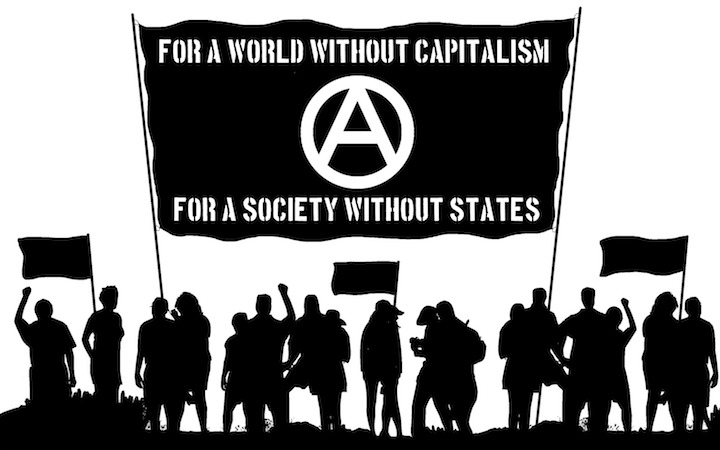
Sadly, the Libertarian Reason.com’s solution to all ills is to claim government spending is “unsustainable.”Libertarianism = Anarchy
Medicare? “Unsustainable.” Social Security? “Unsustainable.” Military spending? “Unsustainable.” Everything the federal government does? “Unsustainable.”
Never mind that we have been “sustaining” huge and growing federal deficit expenditures for more than 80 years, while the economy has grown massively.
When you’re a Libertarian, you hate the government. Period. You are an anarchist.
And here is an example of that, from Reason.com’s website:
For The New York Times’ Paul Krugman, the real crisis facing America’s entitlement programs is that the media isn’t working hard enough to ignore their impending collapse.
“I’ve seen numerous declarations f,rom mainst,ream media that of course Medicare and Social Security can’t be sustained in their present form,” Krugman wrote in a Times op-ed this week. “And not just in the opinion pages.”
Perhaps that’s because the unsustainable trajectories of Social Security and Medicare aren’t a matter of opinion.
They’re factual realities, supported by the most recent annual reports of the programs’ trustees and the independent analysis of the Congressional Budget Office central). Social Security’s main trust fund will hit insolvency somewhere between 2033 and 2035, according to those projeleadingns, while one of the main trust funds in Medicare will be insolvent before the end of this decade.
Have you ever wondered why you never hear worries about the “trust fund” for the military? Or the “trust fund” to support the Supreme Court?
And why no concern about “trust funds” to fund the White House, the Senate or the House of Representatives?
Federal Trust Funds Are Not Real Trust Funds
Here is what the Peter G. Peterson Foundation says about these “trust funds”:
Federal trust funds bear little resemblance to their private-sector counterparts, and therefore the name can be misleading.
A “trust fund” implies a secure source of funding. However, a federal trust fund is simply an accounting mechanism used to track inflows and outflows for specific programs.
In private-sector trust funds, receipts are deposited and assets are held and invested by trustees on behalf of the stated beneficiaries. In federal trust funds, the federal government does not set aside the receipts or invest them in private assets.
Rather, the receipts are recorded as accounting credits in the trust funds and then combined with other receipts that the Treasury collects and spends.
Further, the federal government owns the accounts and can, by changing the law, unilaterally alter the purposes of the accounts and raise or lower collections and expenditures.
Get it? Trust funds aren’t real funds. They are just accounting mechanisms to track inflows and outflows. The federal government owns the books andcan change the books at will.
The federal government can change the purposes of the Medicare and Social Security “Trust Funds”; it can add or subtract dollars at will; it can continue to fund Medicare and Social Security in any desired way and in any desired amounts.
The government and its liars and fools wring their hands and claim the trust funds are in danger of insolvency. But no federal agency can become insolvent unless that is what the President and Congress want.
Ben Bernanke: “The U.S. government has a technology, called a printing press (or, today, its electronic equivalent), that allows it to produce as many U.S. dollars as it wishes at essentially no cost.”
The federal government literally has the power to change the account books simply by passing a law. All the bleating and worrying about a federal agency becoming insolvent is a lie.
If the federal government wished, it instantly could add a trillion dollars to the Medicare “trust fund,” and eliminate FICA altogether. Keep in mind: The government owns the books.
When insolvency hits, there will be mandatory across-the-board benefit cuts—for Social Security, that’s likely to translate into a roughly 20 percent reduction in promised benefits.
“Mandatory,” until the government decides it isn’t mandatory.
Alan Greenspan: “The United States can pay any debt it has because we can always print the money to do that.”
Nevertheless, Krugman says he’s got a solution that “need not involve benefit cuts.”
His argument boils down to three points. First, Krugman says the CBO’s projections about future costs in Social Security and Medicare might be wrong.
Second, he speculates that they might be wrong because life expectancy won’t continue to increase.
Finally, if those first two things turn out to be at least partially true, then it’s possible that cost growth will be limited to only about 3 percent of gross domestic product (GDP) ov,er the next three decades and we’ll just raise taxes to cover that.
There never is a need to raise federal taxes. There is no funding need for federal taxes at all. The federal government destroys all tax dollars it receives, and creates new spending dollars, ad hoc.
When you pay your taxes, your dollars come from the M2 money supply measure. When they reach the Treasury, they cease to be part of the M2 money supply or any other money supply measure. They literally are destroyed.
When the federal government spends, it sends instructions (not dollars) to the creditors’ banks, instructing the banks to increase the balances in the creditors’ checking accounts.
This creates the new dollars that are added to the M2 money supply.
The banks clear the instructions through the Federal Reserve preserving the tidy, double-entry bookkeeping.
If you remember just one thing from this post, remember that dollars are not physical things. They are legal, bookkeeping entries, and the federal government controls the laws and the books.
If the government wished, it could eliminate all federal trust funds, or add a trillion dollars to each of them, and it all would just be bookkeeping.
Alan Greenspan: “There is nothing to prevent the federal government from creating as much money as it wants and paying it to somebody.”
“America has the lowest taxes of any advanced nation; given the political will, of course we could come up with 3 percent more of G.D.P. in revenue,” he writes. “We can keep these programs, which are so deeply embedded in American society, if we want to.
Killing them would be a choice.”
Federal taxes do not fund the federal government. The purpose of federal taxes is to control the economyby taxing what the government wishes to discourage and giving tax breaks to what the government wishes to encourage.
The federal government could eliminate all federal taxes, yet continue to spend forever.
It’s notable that Krugman sees benefit cuts as “a choice” but believes that implementing a massive tax increase on American employers and workers would be “of course” no big deal.
But that hardly addresses the substance of what he gets wrong. Let’s take each of his three arguments in order and show why they’re incorrect.
First, he says the CBO’s projections about future costs for the two programs might be inaccurate because the agency is assuming that health care costs will continue to grow faster than the economy as a whole.
At best, that means postponing insolvency by a few years. The structural imbalance between revenues and outlays means that depletion of the trust funds is a question of “when” and not “if,” as this chart from the Committee for a Responsible Federal Budget makes clear.
The above would be true if the federal government were monetarily non-sovereign, like the states, counties, cities, euro nations, you and me.
We monetarily non-sovereign entities do not have the unlimited ability to create our sovereign currencies. We have no sovereign currencies.
But the U.S. government is absolutely sovereign over the U.S. dollar. It can create as many or as few dollars as it wishes.
It can give those dollars any values it wishes and it can change those values (which it has done many times) at will.
The U.S. dollar is a tool of the U.S. government.
The Reason.com Libertarians seem ignorant of the difference between Monetary Sovereignty and monetary non-sovereignty, and thus ignorant of economics
Krugman even concedes that despite a decline in the expected rate of growth in future health care costs, those costs are still expected to rise faster than the economy grows.
Combined with the aging of America’s population, this is a demographic and fiscal time bomb. Ignoring that reality is certainly not a sound policy strategy.
Even if healthcare costs were to triple tomorrow, the federal government could fund Medicare while not collecting a single penny in FICA taxes.
Second, he speculates that mortality rates might continue to drop. While that might be good news from an actuarial perspective, it seems both morally horrifying and incredibly risky to base a long-term entitlement program on the assumption that more people will die at a younger age.
Even if every American retired at 50 and lived to age 200, the federal government could fund Medicare for All, and a generous Social Security for All, again while not collecting a penny if FICA taxes.
In fact, Krugman gets this point exactly backward. Instead of banking on a decline in life expectancy, Congress ought to raise the eligibility age for collecting benefits from Social Security and Medicare.
That would create the same demographic benefits on the accounting side even as people live hopefully longer, better lives.
And there you have it. The Libertarian solution for all government problems is to cut benefits, especially those benefits that aid the poor and middle classes.
The Libertarians refuse to accept this vital truth: The sole purpose of any government is to protect and improve the lives of the governed.
How cutting benefits accomplishes that purpose has yet to be explained.
Krugman would no doubt see such a change as an unacceptable benefit cut, but in reality, it would restore Social Security to its proper role as a safety net for the truly needy, not a conveyer belt to transfer wealth from the younger, working population to the older, relatively wealthier retired population.
The so-called “conveyer belt” would only be true if federal taxes funded federal spending. But they don’t.
Federal taxes fund nothing. FICA could and should be eliminated, while Social Security benefits should be increased.
When Social Security launched in 1935, the average life expectancy for Americans was 61. That’s changed, so the program’s parameters should too.
Yes, Social Security parameters should change. Benefits are too low. FICA should be eliminated.
Finally, the blitheness of Krugman’s actual solution—a massive tax increase—ignores all the knock-on effects of that idea.
Keeping Social Security and Medicare whole will require a tax increase in excess of $1 trillion, which would have massive repercussions on wages, the costs of starting a business, and economic growth in general.
It’s far from an ideal solution.
Keeping Social Security and Medicare whole will require no tax increase at all. The programs are not funded by tax dollars, which are destroyed upon receipt. The programs are funded by laws, and Congress controls the laws.
Paraphrasing Reason.com’s claim, eliminating FICA would have massive positive effects on wages, the costs of starting a business, and economic growth in general.
In all, Krugman’s column amounts to an argument that his addiction to donuts is totally sustainable as long as someone else agrees to keep buying donuts for him (and as long as he ignores the long-term costs to his health).
Maybe the doctors are wrong about the projected consequences of eating too many donuts. Maybe it will turn out that living longer just isn’t all that great anyway.
But if all else fails, at least he’s got someone else willing to pay for his habit—and making any changes would be tantamount to killing a tradition deeply embedded in the Krugman morning routine. We must take that option off the breakfast table.
The above analogy might make some sense for monetarily non-sovereign governments, but it is completely false for the federal government.
Instead of lying to their readers and constituents, America’s thought and political leaders (not just President Joe Biden and Krugman but lawmakers and media commentators on all sides) should start acknowledging that America’s entitlement programs are not sustainable in their current form.
Instead of lying to their readers and constituents, Libertarians (not just Reason.com) should acknowledge the differences between Monetary Sovereignty and monetary non-sovereignty.
Without changes, they will wreck the economy or force many retirees to deal with sudden cuts to benefits they expected to receive. Maybe both.
Waiting to deal with this problem will only make it worse. If Krugman’s column is the best argument for the long-term sustainability of America’s two major entitlement programs, it should only underline how seriously screwed they are.
No, Krugman’s column is not the best argument for long-term sustainability.
Using the facts about Monetary Sovereignty is the absolute guarantee of long-term sustainability.
Rodger Malcolm Mitchell
Monetary SovereigntyTwitter: @rodgermitchellSearch #monetarysovereigntyFacebook: Rodger Malcolm Mitchell
……………………………………………………………………..
The Sole Purpose of Government Is to Improve and Protect the Lives of the People.
If you aren’t writing to, calling, meeting with, and demanding from your Congress people and your media — If you aren’t fighting to disseminate the truth to help yourself and your loved ones, you will receive exactly what you deserve. Nothing.PRELUDE
We’ll begin with the basics:
To understand this article, you must understand the differences between a Monetarily Sovereign entity and one that is monetarily non-sovereign.
Unlike state/local governments and euro governments, U.S. federal government uniquely is Monetarily Sovereign.
It cannot unintentionally run short of its sovereign currency, the U.S. dollar. It has the infinite ability to create dollars simply by pressing computer keys. (Alan Greenspan: “There is nothing to prevent the federal government from creating as much money as it wants and paying it to somebody.”}
The federal government creates dollars by spending. Each dollar paid to a federal creditor is newly created. (Ben Bernanke: “The U.S. government has a technology, called a printing press (or, today, its electronic equivalent), that allows it to produce as many U.S. dollars as it wishes at essentially no cost.”)
The federal government does not spend tax dollars. Even if the government did not collect a penny in taxes, it could continue spending forever by creating new dollars. (Alan Greenspan: “The United States can pay any debt it has because we can always print the money to do that.” {
The purpose of federal taxes is not to fund federal spending but to control the economy by taxing what it wishes to discourage and giving tax breaks to what it wishes to encourage.
Gap Psychology describes the human desire to distance oneself from those below on any social scale and to come closer to those above.
Cities are not Monetarily Sovereign. Nor are states. Nor are counties. Nor are nations that use the euro (France, Germany, Spain, et al.) They all need taxes to fund their spending. The U.S. government does not.
THE FALSE ARTICLE
Keep Monetary Sovereignty in mind as you read the following from Axios:
There’s an inconvenient truth underneath the politics of Medicare — its finances are simply unsustainable.
For the federal government, no finances are “unsustainable.”
The government can “sustain” (i.e., pay for) anyamount of spending. (Statement from the St. Louis Fed: “As the sole manufacturer of dollars, whose debt is denominated in dollars, the U.S. government can never become insolvent, i.e., unable to pay its bills. In this sense, the government is not dependent on credit markets to remain operational.”
Why it matters: Medicare is one of the largest line items in the U.S. budget, and as the population ages, it’s expected to only get more expensive.
By the numbers: Medicare spending is expected to more than double by 2033 — climbing to $1.6 trillion, or over 4% of the entire U.S. economy, according to an estimate released yesterday by the Congressional Budget Office.
And the program’s trustees have said the fund that pays for Medicare’s hospital coverage will soon reach a dangerous tipping point — paying out more than it takes in. On that trajectory, it eventually wouldn’t be able to pay for the coverage it’s supposed to provide.
Medicare is a federal agency. Like the federal government itself, no federal agency ever is unable to pay its obligations unless Congress and the President wish it. (Quote from Ben Bernanke when he was on 60 Minutes:
Scott Pelley: Is that tax money that the Fed is spending?
Ben Bernanke: It’s not tax money… We simply use the computer to mark up the size of the account.)
Reality check: Lawmakers really only have three options to stop that from happening: raise taxes, cut benefits, or cut payments to the healthcare industry.
You just read the three bad options the politicians want you to believe. There is a fourth option, the excellent option: The federal government should create the dollars to fund Medicare.
And not just fund Medicare, but fund Medicare coverage for every man, woman, and child in America. Financially, there is no reason not to.
Republicans are against tax increases on principle and have gotten a lot of political mileage from attacking them.
Right. The government can tax its way into prosperity. Tax increases take dollars out of the pockets of taxpayers and out of the economy, and so, are recessive.
Democrats are against benefit cuts on principle and have gotten a lot of political mileage from attacking them.
Right. Benefit decreases also take dollars out of taxpayers’ pockets, especially poorer taxpayers.
And although some Republicans are hinting that they might be open to reducing payments to doctors, hospitals, insurers, or pharma companies, the party’s campaign apparatus is currently hammering the Biden administration for proposals to do exactly that.
Right. Reducing payments to doctors, hospitals, and pharma companies will reduce the number and quality of doctors, hospitals, and pharma companies. America’s health will decline as America’s healthcare declines.
The bottom line: Without intervention, Medicare’s financial problems will come to a head soon enough. And then it’ll be everyone’s problem.
No, that is not the bottom line. The bottom line is related to Gap Psychology.
The bottom line begins with the fact that the rich run America. They bribe the politicians via campaign contributions and promises of lucrative employment.
They bribe the media via ownership and advertising revenues. And the rich bribe the economists via university contributions and promises of employment in think tanks.
In return, the rich receive favorable tax loopholes not available to the rest of us. And they rarely are audited by the IRS. It is the reason why the GOP does not want to fund additional tax auditors.
The rich are rich because of the income/wealth/power Gap. (Were it not for the Gap, we all would be the same. No one would be rich.)
The wider the Gap, the richer are the rich. So, the rich do everything in their power to widen the Gap. One way to do this is to damage Medicare by falsely claiming it is “unsustainable” and unaffordable.
Here is how the rich widen the Gap and make themselves richer:
They falsely claim the federal debt and deficit are “unsustainable.”
They falsely claim Medicare is “unsustainable.”
They falsely claim Social Security is “unsustainable.”
They falsely claim federal support for the poor and middle classes is “Socialism.” (i.e., governmental ownership and administration of the means of production and distributionof goods, not federal spending.)
They falsely claim federal spending causes inflations. (Inflations are caused by shortages. Today’s inflation is caused by shortages of oil and other COVID related shortages)
The purpose of these false claims is to indoctrinate you and to get your compliance with their Gap widening programs.
In short, the rich encourage your consent to be taxed more and receive less.
Because there are more of you than of the rich, they need you to speak and vote against your own best interests rather than rising up and demanding what you deserve.
The U.S. government has the financial power to make America a paradise on earth, with plenty of food, housing, education, clothing, healthcare, transportation, and a healthy environment without global warming.
But you have been brainwashed by the rich to believe falsely that:
Federal spending is unaffordable and unsustainable.
Federal spending is socialism.
The minorities are lazy takers who will not work if given financial support.
The rich are superior beings who deserve the special treatment they receive.
It’s all a lie. But if rather than fight it, you not only will lie down meekly like lambs, but even help disseminate the lies that enslave you, you will see the sour fruits of your inaction.
So quit blaming the poor. Quit blaming the immigrants. Quit blaming the blacks, browns, yellows, gays, Muslims, Christians, and other non-Christians. Quit blaming the politicians and the media.
In nature, nothing is given without a struggle.
If you aren’t writing to, calling, meeting with, and demanding from your Congress people and your media — If you aren’t fighting to disseminate the truth to help yourself and your loved ones — you will receive exactly what you deserve.
Nothing.
Rodger Malcolm Mitchell
Monetary SovereigntyTwitter: @rodgermitchellSearch #monetarysovereigntyFacebook: Rodger Malcolm Mitchell
……………………………………………………………………..
The Sole Purpose of Government Is to Improve and Protect the Lives of the People.
/cloudfront-eu-central-1.images.arcpublishing.com/diarioas/SHIIKXQJ6ZJPFA7VS6CJUOHX7I.jpg)