Abortion has been much in the news lately, And everyone seems to have a different opinion.
Despite claims that abortion is murder, the abortion argument is not based on a moral issue. Nor is it a health issue. Nor is it a biological issue. Nor is it a logical or scientific issue. Nor is it a social issue.
The life importance of a sperm and egg, vs. an embryo vs. a fetus vs. a mother vs. a child is a digression from the real argument.
The heated battle over abortion rights fundamentally comes down to a religious issue. All discussion of which religion is right and which is wrong are exercises in futility. Are conservative and reform Jews right and Roman Catholics wrong? Are Hindus right and Unitarians wrong?
The questions are senseless, and the answers are equally senseless. They have been debated for thousands of years, and will be debated for thousands more.
Further, all people claiming membership in any one religion don’t think alike. Some Catholics support abortion; some Jews don’t.
The abortion debate is comparable to debates about which city is better or which college is better. Logic means nothing. Taking sides means everything.
Our religion bans all abortions. Yours doesn’t. We don’t care about your religion. Our religion rules.
The 1st Amendment to the Constitution begins, “Congress shall make no law respecting an establishment of religion, or prohibiting the free exercise thereof . . . ”
But we face arguments about what “establishment” and “free exercise” mean.
Many of our ancestors came across an ocean to avoid the one-religion-for-all Church of England.
It was why our founders attempted to build a wall between the government and religion, the so-called “separation of church and state.”
Of late, the right-wing has narrowed that separation, and the overturning of Roe is just one of several recent decisions in that vein.
Any discussion of abortion involves four main questions:
I. What is abortion? II. When is abortion” III. How is abortion? IV. Why is abortion?
I. What is Abortion? There are many definitions:
Bing.com defines abortion: The deliberate terminationof a human pregnancy, most often performed during the first 28 weeks of pregnancy
British Pregnancy Advisory Service (BPAS): Abortion is when a pregnancy is ended so that it doesn’t result in the birth of a child. Sometimes it is called ‘termination of pregnancy.
Harvard Medical School: Abortion is the removal of pregnancy tissue, products of conception or the fetus and placenta (afterbirth) from the uterus.
American Pregnancy Association: Abortion is a procedure to end a pregnancy. It uses medicine or surgery to remove the embryo or fetus and placenta from the uterus.
Wikipedia: The termination of a pregnancy by removal or expulsion of an embryo or fetus. An abortion that occurs without intervention is known as a miscarriage or “spontaneous abortion“; these occur in approximately 30% to 40% of pregnancies. When deliberate steps are taken to end a pregnancy, it is called an induced abortion, or less frequently, “induced miscarriage.” The unmodified word abortion generally refers to an induced abortion.
Britannica:The expulsion of a fetus from the uterus before it has reached the stage of viability (in human beings, usually about the 20th week of gestation).
Immediately, we see many differences in what people mean by “abortion.”
Is it the expulsion of a fetus? Is it the removal of an embryo? Can abortion happen even before an embryo is formed?
When drafting laws, specificity is necessary. There is a vast difference between an embryo and a fetus, or between expulsion and removal.
Birth is a highly complicated procedure that begins with all the preparations of the human male and female bodies, even prior to insemination.
Any interruption or change in these preparations can prevent a live birth, and be called an “abortion,” depending on one’s viewpoint. There are religions that consider contraceptives to be a form of abortion that should be prohibited.
Any law banning abortion should be clear.
To be illegal, must “abortion” be deliberate or can it be accidental?
What about a woman who takes any drug (alcohol included) or does any strenuous activity that results inan abortion? Has she broken a law?
Is it her purpose or her state of mind that is the deciding factor?
The law must take all these variables into consideration.
II. When is an abortion? Begin with the question, “What is pregnancy?”
Gestational age can be confusing. Most people think of pregnancy as lasting 9 months. And it’s true that you’re pregnant for about 9 months.
But because pregnancy is measured from the first day of your last menstrual period — about 3-4 weeks before you’re actually pregnant — a full-term pregnancy usually totals about 40 weeks from LMP — roughly 10 months.
This is important, because some abortion laws specify time periods when abortion is legal or illegal. Yet, there are significant differences among the various measurements of when pregnancy has begun.
In the first 2 weeks of your menstrual cycle. You have your period. About 2 weeks later, the egg that’s most mature is released from your ovary — this is called ovulation.
After it’s released, your egg travels down your fallopian tube toward your uterus. If the egg meets up with a sperm, they combine. This is called fertilization.
So far, we are up to 4 weeks into the pregnancy process and still no fetus.
The fertilized egg moves down your fallopian tube and divides into more and more cells. It reaches your uterus about 3–4 days after fertilization.
The dividing cells then form a ball that floats around in the uterus for about 2–3 days.
Georgia bans abortions after 6 weeks of pregnancy.There is no agreement about when “pregnancy” begins. But under any circumstance, Georgia’s ban comes well before the existence of a fetus.
III. How is an abortion? There are two types of abortion: Medical and surgical.
In a first-trimester medical abortion, a patient usually begins by taking a mifepristone pill. The medicine, also known as RU-486 or the “abortion pill,” blocks the hormone progesterone, which stops the fetus from growing.
The second drug, misoprostol, is usually taken 24 to 48 hours later. It causes the uterus to contract and empty.
Seven states — Arkansas, Idaho, Kentucky, Nebraska, Oklahoma, South Dakota and Utah — require patients to be told that abortions by mifepristone can be reversed with doses of progesterone, despite a lack of scientific evidence.
At the end of the first trimester, the average fetus is about the size of an adult’s little finger.
A first-trimester surgical abortion is called vacuum or suction aspiration.
A suction device is used to empty the uterus in a procedure that can be done in five to 10 minutes.
A second-trimestersurgical abortion is called dilation and evacuation.
For this type of abortion, the process of dilating the cervix may need to begin the day before the procedure.
On the day of the procedure, a numbing agent may be given, or sedation may be offered. A health-care provider uses forceps and a suction device to remove the fetus and placenta.
The procedure itself usually takes between 10 and 30 minutes. It is done in a clinic or operating room.
Dilation and evacuation can generally be performed throughout the second trimester of pregnancy. It accounts for an estimated 95 percent of abortions performed in the second trimester in the United States.
A second-trimestermedical abortion is called an induction.
Medication is given to induce labor by causing the uterus to contract and expel the fetus and placenta.
Different medications can be used, including a combination of misoprostol and mifepristone, or misoprostol alone. In some cases, high-dose oxytocin is delivered through an IV.
The process can take 12 to 24 hours and generally occurs in a hospital.
Induction abortions mostly take place after 16 weeks and can be used throughout the second trimester.
Induction abortion is less common than dilation and evacuation, but one study found it is the primary method of termination in cases of fetal abnormalities in the late second trimester and early third trimester.
Third-trimester abortions are performed in only a handful of clinics and hospitals in the United States. Methods for third-trimester abortions vary based on the circumstances.
Confusion sometimes crops up over what is and is not abortion. Abortion is a medical intervention that ends a pregnancy.
Pregnancy begins when a fertilized egg implants in the uterus. Methods used to prevent pregnancy before it occurs are called contraceptives.
The morning-after pill is an emergency contraceptive that primarily works by stopping the release of an egg from an ovary but may also prevent implantation of a fertilized egg.
It is taken orally. The over-the-counter version, sold under brand names including Plan B, is generally taken within three days of intercourse, and the prescription version, Ella, can be taken within five days of intercourse.
An intrauterine device (IUD) is a contraceptive that works mainly by reducing sperm’s ability to fertilize an egg.
There are two types: copper and hormonal. In copper IUDs, copper ions decrease sperm’s ability to move.
In hormonal IUDs, progestin thickens mucus in the uterus, making it harder for sperm to enter the uterus and reach an egg. A hormonal IUD may also prevent implantation.
An IUD is placed into the uterus by a health-care worker and can remain in place for five to 10 years, depending on the type.
IV. Why is an abortion?
A number of factorsmay lead a woman to decide that abortion is the best option in her circumstances.
Every woman’s reasons for abortion will be different, and it’s impossible to fully understand the circumstances each woman is facing that leads her to her abortion decision. However, here are some of the common reasons why women have abortions, according to a survey conducted by theGuttmacher Institute:
Social Reasons for Abortions: Almost always, women choose abortion in response to an unplanned or unwanted pregnancy. Oftentimes, an unplanned pregnancy happens at a less-than-ideal time, and women may choose abortion for one (or more) of the following reasons:
A baby would have a drastic impact on their current life.
They are having relationship problems with the baby’s father.
They are done having children.
They are not ready to have a baby at their age or maturity level.
Financial Reasons for Abortion: Having a baby is expensive, and raising that baby to adulthood is even more expensive. In addition to the various medical costs associated with pregnancy and childbirth, it costs an average of $245,000 to raise a child to age 18.
They are unmarried and concerned about affording a baby on one income.
They are pursuing higher education (or planning to pursue higher education) and can’t afford the costs of raising a baby while being a full-time student.
They are unemployed.
They feel they can’t afford to adequately care for themselves and their children.
While social and financial concerns are the most common reasons why women have abortions, there are also some other, less common (but just as valid) reasons why a woman might choose abortion:
Pressure from others. Only 0.5 percent of women surveyed choose abortion because they feel pressured to do so by the baby’s father, their parents or other people in their lives.
Non-consensual sex. A woman may choose abortion if conception was the result of rape or sexual assault.
IN SUMMARY Abortion is argued on many levels: Moral, health, biological, medical, and scientific. There is no widespread agreement on such variables as:
What is abortion?
When is abortion?
Why is abortion?
How is abortion
The life importance of a sperm and egg, vs. an embryo vs. a fetus vs. a mother vs. a child vs, society is a digression from the real argument.
The heated battle over abortion rights fundamentally comes down to a religious issue.
Rodger Malcolm Mitchell
Monetary SovereigntyTwitter: @rodgermitchellSearch #monetarysovereigntyFacebook: Rodger Malcolm Mitchell
……………………………………………………………………..
THE SOLE PURPOSE OF GOVERNMENT IS TO IMPROVE AND PROTECT THE LIVES OF THE PEOPLE.
Gap Psychology describes the common desire to distance oneself from those “below” in any socio-economic ranking, and to come nearer those “above.” The socio-economic distance is referred to as “The Gap.”
Wide Gaps negatively affect poverty, health and longevity, education, housing, law and crime, war, leadership, ownership, bigotry, supply and demand, taxation, GDP, international relations, scientific advancement, the environment, human motivation and well-being, and virtually every other issue in economics.Implementation of Monetary Sovereignty and The Ten Steps To Prosperity can grow the economy and narrow the Gaps: Ten Steps To Prosperity:
Sometimes all you can do is shake your head at the desperate backward thinking of the gun-nuts.
Videos of the Uvalde school shooting showed scores of trained police milling in a hallway for over an hour while a gunner took his sweet time shooting children and teachers in a classroom.
The police not only were well-armed but had bullet-proof vests and shields, and the classroom door was unlocked.
They could have burst in at any time and taken the shooter down.
Were they afraid for their own lives? Did they fear they accidentally might shoot a child or a teacher? Did all their training go out the window when faced with the sudden reality of an armed killer?
Who knows?
But what is clear is that the shooter had a legal gun that never should have been legal, as that gun has no purpose other than to murder people.
In every classroom?
Unlike a pistol, a high-powered, semi-automatic rifle is not a self-defense weapon. It’s an attack weapon. It’s a mass murder weapon no better than a bomb.
A gun seller cannot determine who is a “good guy” or a “bad guy.”
Once you decide that guns should be widely available to everyone who wants one, you can’t separate the good from the bad.
So because of SCOTUS’s intentional misreading of the now-sacred 2nd Amendment, America has more gun deaths per capita than any nation.
You parents who have lost loved ones to gun violence — I feel your pain, but if you voted for right-wing gun-nuts, you have only yourselves to blame.
By what logic are military-style gun manufacturers immune from liability for the proper use of their product, which is to kill people?
The Constitution’s words “well-regulated” intentionally are ignored by the right-wing self-proclaimed SCOTUS textualists.
The Constitution’s unambiguous word “militia” intentionally is misrepresented by the right-wing, self-proclaimed SCOTUS originalists.
A dishonest right-wing Congress, despite massive evidence, cannot bring itself to criticize a corrupt Donald Trump and his gang of crazy miscreants.
Or better yet?
We also have a dishonest, right-wing SCOTUS that unconstitutionally applies the Pope’s abortion laws to the entire minority-Catholic nation. Meanwhile, they ignore the dishonesty of Clarence Thomas and his white-supremacist wife.
Because the entire right-wing — Congress, SCOTUS, FoxNews, and the Libertarians– has been corrupted, we are treated to upside-down articles like the following. It’s straight out of the book “1984” where illogic is the new logic, and lies are the new truth:
Only you can be relied upon to protect you and your loved ones. Ignore anybody who claims otherwise. J.D. TUCCILLE | 7.18.2022
If you really need further evidence of how foolish it is to surrender your right to protect yourself and defer to government employees who are supposed to assume that responsibility, the record of police non-response during the Uvalde mass murder should do the job.
Those who, in the future, continue to insist that we disarm ourselves and venerate government enforcers who are tasked to protect us should be unceremoniously kicked to the curb.
Get off your soapbox J.D. Tuccille. Don’t turn our children and their teachers into armed vigilantes.
No one “insists you disarm yourself.” But you want to arm 4th-grade children (!) and their teachers and not rely on “government employees” (i.e., the police and the courts) for protection. What could possibly go wrong?
We ask government employees, also known as “teachers,” to educate our children. Is that O.K., J.D.?
And please, let’s ignore facts. For instance, Chicago’s West and South side neighborhoods are loaded with “self-protection” guns and guess what, J.D. That’s where most of the gun killing is. Explain that if you can.
Admittedly, Tuccille is one of those dopey Libertarians (a former managing editor of Reason.com) who hate everything government (until they need help). Then they bleat for the government to protect them while complaining there aren’t enough police in the neighborhood.
But his article is astonishingly crazy, even for him.
J.D., if you are reading this post, here’s some information: Among those killed was 10-year-old Alexandra “Lexi” Rubio, the daughter of well-armed Uvalde County Sheriff Deputy FelixRubio.
He was on the scene but failed to protect his own daughter. So there goes the Libertarian logic about being armed to protect your family, or, J.D., are you claiming little Lexi herself should have been armed?
Or, J.D., what the hell are you saying? Should parents sit in every classroom with AR-15s at the ready?
“At Robb Elementary, law enforcement responders failed to adhere to their active shooter training, and they failed to prioritize saving the lives of innocent victims over their own safety,” finds a devastating report published July 17 by the Texas House of Representatives Investigative Committee on the Robb Elementary Shooting.
J.D., they had active shooter training and failed to act, so what makes you think the Uvalde’s sweet teachers, Mrs. Garcia and Mrs. Mireles, would have had the training and the courage to blast that shooter out of his shoes?
Is that your plan for the future? Arm Mrs. Garcias and Mrs. Mireles so they can get in a firefight with the intruder?
I can see the headline now: “Dozens of Kids Killed As Terrified Teacher Wildly Sprays Bullets At Student She Didn’t Recognize. ‘I Thought He Might Have A Gun.'”
“The first wave of responders to arrive included the chief of the school district police and the commander of the Uvalde Police Department SWAT team.
Or, J.D., perhaps we should give all the teachers, young and old, male or female, SWAT training. Wouldn’t you rather teachers spend their time training with guns than learning and teaching silly stuff like reading, writing, and arithmetic?
But the massive police presence, 376 officers in all, did not help address the unfolding chaos.
That makes obvious the reason for officials’ earlier foot-dragging; police conduct at Uvalde contradicts the stories authoritarians peddle about our relationship with the government.
Mostly left-wing politicians tell us that regular people should be deprived of firearms and even of the right to self-defense while the government exercises it for us.
Primarily right-wing politicians insist we should “back the blue” and venerate government-employed law enforcers who will protect us from threats so that we don’t have to do it ourselves.
These politicians nominally oppose one another, but they offer the same basic argument: We should trust the government and not take responsibility for our own safety.
The usual Libertarian extremist B.S. from J.D. He says, don’t trust the police; do it yourself. That is the “Wild West” Libertarian plan.
His generalization is disgusting. The Uvalde police we incompetent, so don’t trust any police, right?
Few left-wing politicians say people should be deprived of their protective firearms, though perhaps AR-15s, machine guns, rocket launchers, and hand grenades should not be considered “firearms” used for protection.
And then, as J.D. provides his twisted side of the story, read this side:
A scathing 77-page investigative report not only found the Uvalde police at fault during the Robb Elementary School mass shooting, but it also noted that school administrators “did not adequately prepare” for a potential shooter.”
The report was released on Sunday by the Texas House of Representatives Investigative Committee. Investigators charged that school administrators adopted a “regrettable culture of noncompliance” with safety and security measures leading up to the shooting, placing partial blame at their feet.
This noncompliance “turned out to be fatal,” it asserted.
Administrators “tacitly condoned” unsafe practices, according to the report, because they knowingly violated or allowed others to violate rules that required doors to be closed and locked at the school.
“The west door to the west building was supposed to be continuously locked.
When the attacker approached on May 24, 2022, it was unlocked, and he was able to enter the building there,” the report stated.
Oops. Here are people who “tacitly condoned” unsafe practices, “knowingly violated or allowed others to violate rules,” and couldn’t even be bothered to lock a door, but J.D. Tuccille wants to give them all guns.
In their defense, they are teachers, not trained police officers, all of whom J.D. disses as mere “government employees.”
The top of their minds is teaching children, a job that is hard enough, especially these days with all the crazy politicians burning books and parents screaming about things they know not.
So to add armed protection to teachers’ already massive responsibilities would be just plain foolish. And keep in mind that teachers are government employees, whom J.D. despises.
Back to J.D.’s article:
Gun control? Back the blue? The people peddling those slogans have little to offer beyond empty promises and deserve nothing but contempt.
Only youcan be relied upon to protect you and your loved ones, and you should ignore anybody who claims otherwise.
So folks, forget about gun control which doesn’t work because it doesn’t exist. Thank you, Republicans.
The next time you see a crime being committed, don’t bother to call the police. The Libertarians offer you one of their best ideas. Call a teacher.
Or better yet, call a 4th grader.
Or, go after the criminal yourself with your guns a-blazin’.
Gap Psychology describes the common desire to distance oneself from those “below” in any socio-economic ranking and to come nearer those “above.” The socio-economic distance is referred to as “The Gap.”
Wide Gaps negatively affect poverty, health and longevity, education, housing, law and crime, war, leadership, ownership, bigotry, supply and demand, taxation, GDP, international relations, scientific advancement, the environment, human motivation and well-being, and virtually every other issue in economics.Implementation of Monetary Sovereignty and The Ten Steps To Prosperity can grow the economy and narrow the Gaps: Ten Steps To Prosperity:
BACKGROUND Being Monetarily Sovereign, the federal government (unlike state and local governments) can never run short of its sovereign currency, the U.S. dollar.
Even if the federal government didn’t collect a penny in taxes, it could continue spending forever.
The sole excuse for federal taxes is that they help the government control the economy by taxing what it wishes to discourage and providing tax breaks for what it wishes to encourage.
That is why, for instance, homeownership receives tax advantages while renting receives none. The federal government wished to encourage homeownership.
Why then does the federal government tax salaries at the highest rate while giving tax breaks to almost every other form of income?
The rich own the government.
And why does the government collect the Medicare and Social Security taxes? Is the government trying to discourage salaries, Medicare, and Social Security?
No, the reason is simple. The federal government is bought, paid for, and owned by the rich, thanks to Supreme Court decisions that bribe money is a form of free speech.
And it is the rich who receive most of their income from non-salarysources.
Medicare/Social Security taxes are designed to fall least heavily on the rich. To distance themselves from the rest of us, the rich have forced the federal government to give them breaks on taxes.
The federal government neither needs nor uses tax dollars. It destroys tax dollars, which is why the following is a disgrace:
The wholly unnecessary, unneeded, unused Medicare Part B premium has more than tripled since 2000.
Medicare Part A is hospital insurance. It covers hospital stays and services provided by skilled nursing facilities along with home health care and hospice.
Medicare Part B is outpatient medical insurance. Part B coverage applies whenever you see your doctor, receive outpatient care, or obtain preventive care.
Medicare Part C, known as “Medicare Advantage,” provides coverage to seniors through private insurance companies, contracted by the federal government.
Medicare Part D provides prescription drug coverage.
And here is the more interesting information:
Monthly premiums for Part A are $0 for people who have worked long enough to qualify for Social Security benefits
If Medicare Part B charges rather substantial premiums — more than $2 thousand a year — and Medicare Part A is given free to people who supposedly “paid for” Social Security, who pays for Part A?
Answer: The federal government simply creates the dollars that pay for Part A.No taxes. No fake “trust fund.” No worries that it is becoming insolvent.
In that sense, Medicare Part A is like almost all other federal agencies: The Senate, the House of Representatives, the President and White House, the Supreme Court, the CIA, NFA, the military, etc. It simply is funded by federal money creation.
None of them levy dedicated taxes. None of them are burdened with a “trust fund.” The whole Medicare/Social Security taxes and trust fund performance is nothing but a charade.
The government takes money from you and destroys it.
Why?
The answer: To prevent you from asking for the kinds of tax benefits the rich routinely receive.How else do you believe a billionaire like Donald Trump paid no income taxes in 10 out of 15years beginning in 2000?
Think of it: You pay more taxes than did a billionaire. And when you ask for benefits, you are told the government can’t afford them. That is The Big Lie.
You were brought up to believe “there’s no such thing as a free lunch,” and that everything must be paid for. While that’s true for state and local governments, and for businesses, and for you, it’s not true for the federal government.
The government can create infinite dollars by pressing computer keys. Federal deficit spending costs you nothing, not one penny in taxes.
All this came to mind yet again when I saw these articles:
The head of a Senate panel that oversees Medicare says the Biden administration should use its legal authority to cut back a hefty premium increase soon hitting millions of enrollees, as a growing number of Democratic lawmakers call for action amid worries over rising inflation.
Last month, Medicare announced one of the largest increases ever in its “Part B” monthly premium for outpatient care, nearly $22, from $148.50 currently to $170.10 starting in January.
The agency attributed roughly half the hike, about $11 a month, to the need for a contingency fund to cover Aduhelm, a new $56,000 Alzheimer’s drug from Biogen whose benefits have been widely questioned.
First: Medicare doesn’t need or use premiums. The federal government has the infinite ability to pay for Medicare, and as for those premiums, they are destroyed upon receipt by the Treasury.
That premium increase was wholly unnecessary. No matter what costs Medicare faces, the federal government simply pays them. Part A charges no premiums. Nether should Part B. (Or Part D for that matter.)
Second: The government can do whatever it wishes regarding Social Security and Medicare finances. It can increase premiums, cut premiums or do without premiums, altogether.
Third: The “trust funds” are not real trust funds and the so called “trustees” are not trustees. The whole system merely is bookkeeping line items showing how many dollars come in and how many go out. The federal government has total control over its books and can change those numbers at will.
Fourth: The government doesn’t need or use “contingency funds.” It creates ad hoc dollars every time it pays a bill. As previous Fed Chairmen have said:
Alan Greenspan: “A government cannot become insolvent with respect to obligations in its own currency.”
Ben Bernanke: “The U.S. government has a technology, called a printing press (or, today, its electronic equivalent), that allows it to produce as many U.S. dollars as it wishes at essentially no cost.”
Subsequently, the manufacturer of Aduhelm cut the price in half, reducing Medicare’s anticipated payments. You might thing the government would return the premium dollars it had overcharged.
“That has generated sizeable savings for Medicare. But those savings will not be passed along to Medicare Part B enrollees in the form of a premium reduction — at least not this year.”
Then, from a related article:
Two years ago, plenty of pundits were warning that the pandemic-induced economic plunge would blow huge holes in these two mammoth social insurance battleships.
But reports issued this month by the trustees of the two programs show that the strong economic rebound last year contributed to slight improvements in the health of both Social Security and Medicare. [As federal agencies, Social Security and Medicare are as “healthy” as the entire federal government.]
More people were working and paying Federal Insurance Contributions Act, or FICA, taxes last year.
As a result, Social Security’s trustees forecast that the combined retirement and disability trust funds will be depleted in 2035—one year later than last year’s forecast.
The Medicare trustees report that the Hospital Insurance, or HI, trust fund will be emptied in 2028—two years later than forecast last year.
Let’s summarize:
The federal government has absolute control over the finances of Medicare and Social Security. It can add, subtract or transfer dollars at will
Neither the federal government nor any agency of our Monetarily Sovereign federal government can run short of its sovereign currency (the dollar) unless Congress and the President want that to happen. The government has infinite dollars.
Yet, the government unnecessarily takes growth dollars (FICA taxes) from the private sector (aka “the economy”), dollars it neither needs nor uses.
In fact, the government destroys those FICA dollars upon receipt.
Nevertheless, when faced with a possible cost hike, the goverment recently increased the amount of money it unnecessarily takes from the economy.
When the cost hike didn’t materialize, the government decided to keep the additional, unnecessary dollars it had taken from the economy rather than returning them.
At some time in the future, the government falsely will claim that one or both of the fake “trust funds” is running short of dollars, and will take even more dollars from the private sector to keep the fake “trust funds” from fake “insolvency.”
This chicanery makes the public believe federal financing is like personal financing, where spending relies on income. The belief prevents the public from demanding more benefits that the government easily could provide at the tap of a computer key.
The fundamental purpose of all this is to widen the Gap between the rich and the rest, which is the way the rich, who run America, become richer.
The private sector, i.e. the people of America, are being cheated by their own government. Unfortunately, even the people who pretend to protect us promulgate the Big Lie that federal taxes are necessary to fund federal spending.
For most Medicare enrollees, the premium is deducted from their Social Security checks.
Without further action, it would swallow up a significant chunk of seniors’ 5.9% cost of living increase. “Rather than assessing the current $21.60 per month … premium increase in full, I urge you to reduce the amount,” Senate Finance Chairman Ron Wyden, D-Ore., wrote health secretary Xavier Becerra.
“Reduce” the amount? How about, “Eliminate the entire premium”? Is it possible that Senate Finance Chairman Ron Wyden doesn’t understand that federal taxes don’t fund federal spending?
Quote from Ben Bernanke when he was on 60 Minutes: Scott Pelley: Is that tax money that the Fed is spending? Ben Bernanke: It’s not tax money… We simply use the computer to mark up the size of the account.
No, it isn’t possible. Senators are in on the scheme.
A copy of the letter was provided to The Associated Press on Monday. There was no immediate response from the administration.
But Wyden wrote Becerra that as secretary of Health and Human Services, he has “broad authority” to determine the “appropriate contingency margin” to use in setting premiums.
If Wyden has “broad authority,” he should set the amount to be collected at $0. The Federal government would continue to fund Medicare as before.
Given that Medicare is still developing its formal policy for covering Aduhelm, Wyden said there is a clear rationale for collecting less up front at this particular time.
“It is possible that any near-term Medicare coverage for Aduhelm … could have a limited and narrow scope,” he wrote.
“Uncertainty” over the drug’s financial impact on Medicare appeared to be driving much of the calculation of the new premium, Wyden noted.
The drug will have no financial impact on Medicare. With or without paying for Aduhelm, the federal government still will have infinite dollars. Aduhelm will make no change in that.
Soon after Medicare announced the increase last month, Vermont Independent Sen. Bernie Sanders called on the administration to roll it back.
Sanders knows the truth. He had employed Professor Stephanie Kelton, a lady who understands Monetary Sovereignty, to be Chief Economist for the Democrats on the Senate Budget Committee and economic advisor to Bernie Sanders.
Wyden also said he had concerns and was exploring options.
And last week Democratic Senators Maggie Hassan of New Hampshire, Jacky Rosen of Nevada, Chris Van Hollen of Maryland, Mark Kelly of Arizona, and Jack Reed of Rhode Island wrote President Joe Biden that “we must address this issue as quickly as possible.”
Some groups representing older people are anticipating a backlash from Medicare recipients if nothing is done.
The way to “address the issue” is to tell the American public that federal taxes do not fund federal spending.
Period.
———-//———-
[No rational person would take dollars from the economy and give them to a federal government that has the infinite ability to create dollars.]
Gap Psychology describes the common desire to distance oneself from those “below” in any socio-economic ranking, and to come nearer those “above.” The socio-economic distance is referred to as “The Gap.”
Wide Gaps negatively affect poverty, health and longevity, education, housing, law and crime, war, leadership, ownership, bigotry, supply and demand, taxation, GDP, international relations, scientific advancement, the environment, human motivation and well-being, and virtually every other issue in economics.Implementation of Monetary Sovereignty and The Ten Steps To Prosperity can grow the economy and narrow the Gaps: Ten Steps To Prosperity:
You have heard that the Federal Reserve is trying to cure inflation by raising interest rates slowly.
And you may repeatedly have read on this site (here, and here, and here, and here) that the Fed does not have the best tools to stop inflation, and that despite their best efforts, inflation will continue and be joined by recession..
The Fed has two tools: Raising interest rates and to some degree, reducing money-supply growth.
Contrary to popular belief, neither can cure inflations, but both are very good at creating recessions.
Sadly, a recession is not the opposite of inflation. (Deflation is.) A recession is the opposite of growth and prosperity. The Fed is trying to cure inflation via recessionary means.
Today, as we predicted, the Fed is failing miserably in its assigned task.
The annual inflation rate for the United States is 9.1%for the 12 months ended June 2022, the largest annual increase since November 1981 and after rising 8.6% previously, according to U.S. Labor Department data published July 13.
Since the Fed doesn’t have the tools to cure inflations, who does? As you will see, Congress and the President have that power. But, out of ignorance, intent, or political chicanery, Congress and the President won’t use their power of the purse to prevent or end inflation.
To explain this, we first must discuss the myth that raising interest rates cures inflation.
It isn’t a secret that prices have risen over the past year. Americans have seen the highest inflation rates since 1982, based on the CPI (Consumer Price Index), which increased by 0.8 percent in February and 7.9 percent YoY.
Now, the Federal Reserve is about to raise interest rates.
The CPI measures the average change over time in the prices for urban consumers on typical consumer goods and services.
Although raising interest rates might seem harsh when prices are already high, it’s intended to eventually lead to a drop in inflation.
The primary reason the Federal Reserve (or the Fed) raises interest rates is to cause a slowdown in economic growth.
Interest rates determine how costly it is for consumers and businesses to borrow.
Economic growth is not the same as inflation. We can have fast economic growth without inflation, so slowing growth is not a cure for inflation.
Yet, the purpose of raising interest rates is to slow growth, and that is recessionary.
When no one is rich or poor.
A recession is “a period of temporary economic decline during which trade and industrial activity are reduced, generally identified by a fall in GDP in two successive quarters.”
The Fed does not want to cause a recession, so its interest rate increases must slow economic growth (i.e., GDP growth) while not causing GDP to fall.
The Fed hopes that by raising interest rates, consumers and businesses will delay new investments, which will help lower demand and temper prices.
The Gapbetween the rich and the rest is what makes them rich. Without the Gap, no one would be rich. We all would be the same. The wider the Gap, the richer they are.
Although that is what the Fed claims to hope, delaying new investments does not lower demand.
It likely willlower supply by discouraging investment in Research & Development and production.
Let’s examine the logic. Inflation exists when the demand for critical goods and services exceeds the supply of those goods and services, creating shortages.
Shortages cause all inflations. ALL.
Because reducing demand leads to recessions, the non-recessionary prevention/cure for inflation is to increase the supply of scarce, critical goods and services.
Here are some of the critical goods and services for which supply must be increased:
I. Oil. As we have shown in several previous posts (here, here, here, here, etc.), inflation is highly impacted by the price of oil. It is the most critical product affecting inflation.
Oil prices are determined by scarcity. Inflation (red) closely parallels oil scarcity (blue).
Every industry and virtually every product and service uses oil in some way. Any increase in oil prices will cause a general rise in product/service prices (aka inflation).
Oil prices are determined by scarcity.
It is essential to reduce the oil shortage to fight inflation.
The oil shortage could be cured by reducing demand, but that would be recessionary.
The non-recessionary method for reducing the oil shortage involves federal fundingfor oil research, exploration, drilling, refining, and distribution, plus federal funding for oil substitutes like solar, wind, geothermal, electrical, nuclear, etc. power.
More federal funding, not less, could cure inflation. Interest rate manipulation does nothing to increase the supply of oil.
Higher interest rates could exacerbate the oil scarcity situation by negatively affecting the oil supply.
Interest rate manipulation can affect the oil demandonly to the degree that it depresses the economy. Exchanging recession and depression for inflation is a bad tradeoff, yet that is the Fed’s solution.
II. Food. Second to oil, food is the next most crucial inflation-related product. Food shortages have caused many hyperinflations around the world.
The infamous Zimbabwe hyperinflation began when the government took farmland from experienced white farmers and gave it to inexperienced black farmers. The predictable result: A massive food shortage leading to an equally massive increase in food prices.
Raising interest rates will not help farmers grow more food.
An ongoing outbreak of highly pathogenic avian influenza (HPAI) reduced the U.S. egg-layer flock and drove a 5.0-percent increase in retail egg prices in May 2022 following a 10.3-percent increase in April.
Higher interest rates will not cure the meat and egg shortage.
The ongoing HPAI outbreak has also contributed to increasing poultry prices as over 40 million birds in 36 States have been affected.
The disease prevalence also impacts international demand for U.S. poultry. Price impacts of the outbreak will be monitored closely.
Poultry prices are now predicted to increase between 13.0 and 14.0 percent, and egg prices are predicted to increase between 19.5 and 20.5 percent in 2022.
Higher interest rates will not solve the poultry shortage.
Fish and seafood prices are now predicted to increase between 8.5 and 9.5 percent in 2022.
Higher interest rates will not cure the fish and seafood shortage.
Rapid increases in the consumption of dairy products have driven increases in retail prices in recent months.
This trend continued in May 2022 with a 2.6-percent increase in the prices for dairy products.
Dairy product prices are predicted to increase between 10.5 and 11.5 percent in 2022.
Higher interest rates will not cure the dairy shortage.
Following large price increases in January–May 2022, forecast ranges for fats and oils, processed fruits and vegetables, sugar and sweets, cereal and bakery products, and other foods have been adjusted upward.
In 2022 compared with 2021, fats and oils prices are predicted to increase between 14.0 and 15.0 percent, processed fruits and vegetables prices between 7.5 and 8.5 percent, sugar and sweets prices between 6.5 and 7.5 percent, cereal and bakery product prices between 10.0 and 11.0 percent, and other food prices between 10.0 and 11.0 percent.
Higher interest rates will not cure food shortages unless the plan is to force people to starve because of food scarcity and unaffordability.
A plan to solve inflation by forcing people to eat less food is repugnant to any but the most heartless demagogue. Yet that is exactly the Fed’s plan.
Interest rates are the Fed’s primary tool for impacting inflation. Borrowing is more expensive, but on the plus side, earnings on high yield savings accounts increase.
An increase in earnings on high-yield savings accounts cannot begin to offset the damage of inflation. It’s like using a sponge to offset the floods caused by global warming.
The food shortages can be moderated by additional federal deficit spending to support farming.
The government should pay farmers to grow rather than pay them not to grow, as was done when there were surpluses.
Additional federal fundingfor farmer education, the use of more efficient land use and crops, farm insurance, modern farm equipment, and shipping would reduce the shortage of farm products.
Strangely, the Fed focuses on “core inflation” which eliminates consideration of oil and food, the primary inflationary instigators. It’s like eliminating thoughts about hitting and pitching to arrive at “core” baseball wins.
III. Labor. COVID precipitated a labor shortage that has not abated. Federal deficit spending for the development and administration of vaccines and other healthcare helped moderate the shortage of labor.
Although the shortage, which manifested during COVID, and still continues, other factors were involved, notably compensation.
The salaries and benefits being offered were not tempting enough for many potential workers.
While the right-wing favors cutting benefits to force employees back to work, the more humanitarian approach is to increase remuneration.
Not only are employers forced to cut salaries to make room for FICA, but employer-provided healthcare insurance is an additional employment cost that must be considered when determining salaries.
These costs could be eliminated, salaries could be raised, and more people would come to work, if the federal government funded comprehensive, no-deductible Medicare for all, and took that burden from the salary consideration.
That reduction in labor scarcity would require additional federal deficit spending.
The Federal Reserve plans to raise interest rates several times in 2022.
The Fed’s main objectives are maximum employment, stable prices, and moderate long-term interest rates.
2 percent is the target interest rate, so 7.9 percent over the past year is nearly quadruple that rate.
Interest rate increases will do nothing to achieve maximum employment, nothing to stabilize prices, and of course, nothing to achieve 2% interest rates.
The Fed currently is doing nothing to achieve its three goals. Quite the opposite. The Fed is doing the exact opposite of its stated goals by hoping to “cool” the economy (Fedspeak for recessing the economy).
In short, the Fed is applying leeches to cure anemia.
To fight the economic impacts of the COVID-19 pandemic, the Fed dropped rates to zero.
The Fed has been talking about rate hikes for months. Increases were expected even before Russia invaded Ukraine and impacted oil and raw material costs.
Economists expect up to seven incremental rate increases, beginning with a likely quarter-point raise (25 basis points), according to CNBC. Some economists have suggested the Fed may add 50 basis points on some of these increases.
Why seven increases? How did the Fed arrive at that number? No one knows.
Consumers have already been hit with high prices on goods like groceries, furnishings, clothing, airline fares, and especially high fuel prices.
IV. Other shortages. Lumber, housing, computer chips, shipping, cars, clothing, airline seats, etc. all are in short supply, and each scarcity could be moderated by well-directed federal spending.
Think of any scarcity, and you will have no trouble imagining how the federal government could help cure that scarcity via additional federal spending.
The federal government’s greatest skill is to throw money at a problem. It costs taxpayers nothing; it stimulates the economy; and when properly planned, can help solve the problem.
The proposed interest rate hikes will not increase the supply of oil or food. Nor will they increase the supply of housing, lumber, computer chips, cars, clothing, airline fares, furnishings, shipping, or labor, all of which are in short supply.
Additional deficit spending, not reductions in deficit spending, can reduce the shortages of scarce goods and services. Inflations always are caused by shortages.
Interest rate hikes will exacerbate those shortages, thus exacerbating inflation. The only possible “benefit” of rate increases (if one can call it a “benefit”) is that it will cut Gross Domestic Product and recess the economy.
A recession isn’t expected due to promising labor markets, but low-income workers will likely suffer.
And there we have it. The usual government response to any emergency is to punish the poor and middle-income classes. When deficits (wrongly) are deemed too high, the first instinct is to cut Social Security, cut medicare, and cut all poverty aids.
So far, it appears that a recession is unlikely in 2022, largely due to the fact that the labor market is strong.
Diane Swonk, the chief economist at Grant Thornton, told CNBC the employment market continues to improve.
However, the Fed must be cautious to avoid raising rates too quickly, which could slow down the economic recovery and lead to higher unemployment.
The labor market is “strong” (i.e., low unemployment) because people must work to pay their high bills. But the labor market is “weak” because there is a shortage of labor.
Raising interest rates will not reduce the shortages that cause inflation. Cutting federal spending only will recess an economy already weakened by scarcity and previous interest rate increases.
The government could end the inflation with more, not less, government spending to eliminate shortages and with lower, not higher, interest rates.
But the government, ruled by the rich, prefers to pretend that inflation must be cured at the expense of the poor and middle classes.
The Gap makes them rich, and the wider the Gap, the richer they are. Everything the Fed does is in service of a wider Gap.
At the start of this post, we told you that Congress and the President could prevent and cure inflations. But they pretend federal spending causesinflation.
For many in Congress, this is sheer ignorance. For others it is politics. Neither side wants the other side to succeed, and because Congress now is evenly divided, no one can overcome the minority rule system.
America’s founders created the minority rule system to entice the low-population states to join the union, so between the two-Senators-per-state voting system and the filibuster, a minority can prevent any progress unless one party has a super majority.
Add in House gerrymandering and the Presidential electoral college, and you have a creaky, arthritic government designed for obstruction, not for progress.
If all that were not bad enough, we are burdened with a Supreme Court that claims money is free speech and should not be limited, so money in politics has reached outrageous levels.
Finally, we also have a Supreme Court that now does not want agencies making decisions that offend the right wing, when in reality, agencies are the only ones capable of making decisions, thus tossing so many wrenches into the gears of progress, we are frozen.
In short, the Fed doesn’t have the tools, Congress doesn’t have the will, and the President doesn’t have the Congress or agencies.
Inflation will charge along with no one solving the scarcity problem until the private sector does it.
Capitalism, with its focus on profits and competition, eventually will reduce scarcities, at which time the Fed, Congress, the President, and both political parties will claim credit for “getting us out of this mess.”
The rich will prosper and the rest will suffer, and life will return to its normal domination by the rich.
Gap Psychology describes the common desire to distance oneself from those “below” in any socio-economic ranking, and to come nearer those “above.” The socio-economic distance is referred to as “The Gap.”
Wide Gaps negatively affect poverty, health and longevity, education, housing, law and crime, war, leadership, ownership, bigotry, supply and demand, taxation, GDP, international relations, scientific advancement, the environment, human motivation and well-being, and virtually every other issue in economics.Implementation of Monetary Sovereignty and The Ten Steps To Prosperity can grow the economy and narrow the Gaps: Ten Steps To Prosperity:
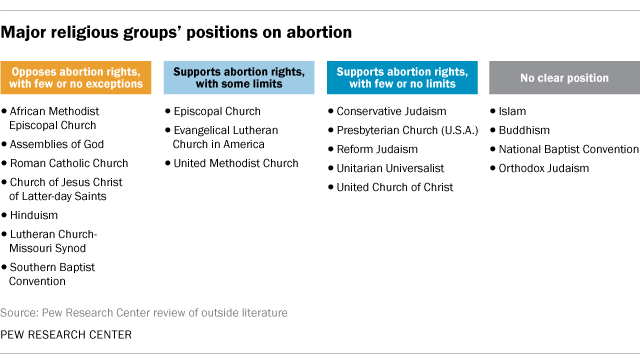 Are conservative and reform Jews right and Roman Catholics wrong? Are Hindus right and Unitarians wrong?
The questions are senseless, and the answers are equally senseless. They have been debated for thousands of years, and will be debated for thousands more.
Further, all people claiming membership in any one religion don’t think alike. Some Catholics support abortion; some Jews don’t.
The abortion debate is comparable to debates about which city is better or which college is better. Logic means nothing. Taking sides means everything.
Are conservative and reform Jews right and Roman Catholics wrong? Are Hindus right and Unitarians wrong?
The questions are senseless, and the answers are equally senseless. They have been debated for thousands of years, and will be debated for thousands more.
Further, all people claiming membership in any one religion don’t think alike. Some Catholics support abortion; some Jews don’t.
The abortion debate is comparable to debates about which city is better or which college is better. Logic means nothing. Taking sides means everything.









 #Monetary Sovereignty - Mitchell