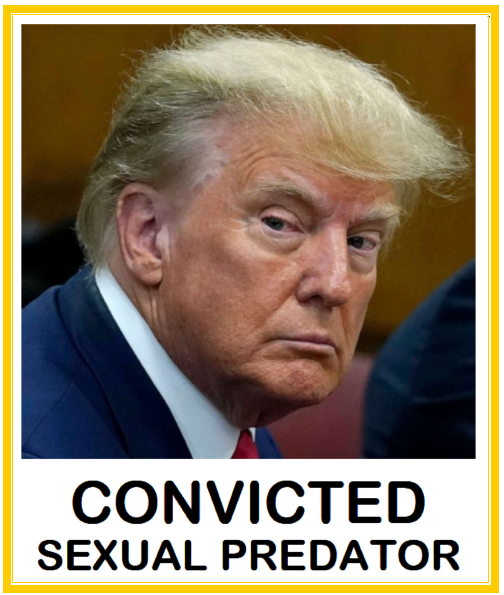
Because the Republican Party, the self-proclaimed party of Patriotism, Family Values, and Law & Order, seems to have made its selection for the next President of the United States, we offer this portrait to be hung in RNC offices and/or used on yard signs.
It should serve as a reminder to all Americans, especially Republican voters and their families, what the Republican Party really stands for.
Congress is in a political battle over a meaningless — no, fraudulent — debt limitthat handcuffs federal spending for no good reason.
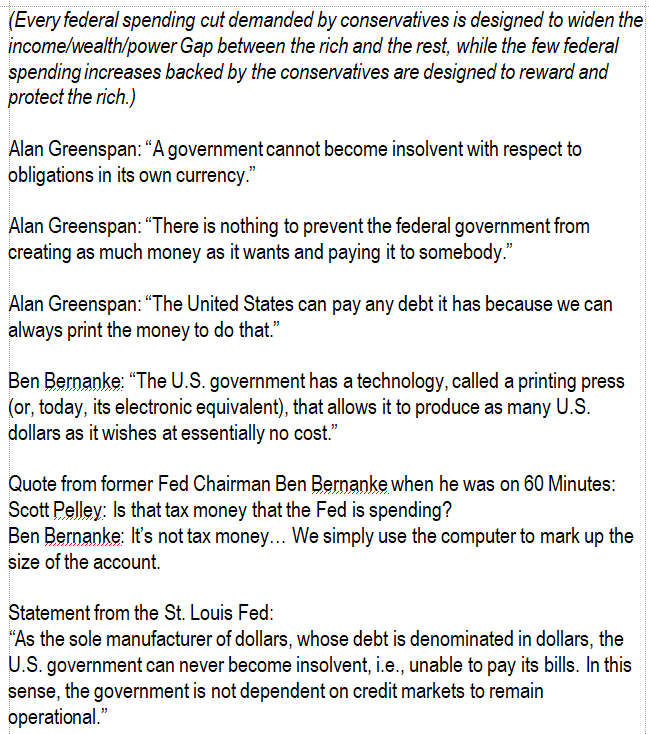
Alan Greenspan: “The United States can pay any debt it has because we can always print the money to do that.”
Scott Pelley (On “60 Minutes”): “Is that tax money that the Fed is spending?”
Ben Bernanke: “It’s not tax money… We simply use the computer to mark up the size of the account.”
With the federal government having limitless financial resources, why does poverty continue as a persistent problem in America?
When the child tax credit, first established in 1997, was expanded for a year in 2021, it was a major political and social win for the country. The Biden administration’s decision not only added to the amount of the tax credit and converted the payment from a year-end lump sum to monthly payments; it also abandoned the work requirement for parents.
This immediately affected one third of all children in the U.S., including 52 percent of Black children and 41 percent of Hispanic children, whose families were formerly excluded because the parents earned too little to qualify for the tax credit. ,
The tax credit expansion lifted 3.7 million children out of poverty by December 2021 without significantly reducing parents’ work participation.
Then in January 2022, the expanded tax credit expired, which plunged 3.7 million back into poverty, with higher percentage increases in poverty among Hispanic and Black children.
The credit showed us that cash assistance could help families stay afloat and, contrary to some political beliefs, parents would not leave the labor system because of it.
The child tax credit expansion is one step toward a universal basic income that could eliminate poverty without increasing unemployment.
Providing a government-funded monthly payment to every individual would broadly lift them out of poverty while providing millions of children a better chance at a good education, improved health, and higher future earnings.
This payment would benefit millions and save hundreds of billions of dollars by reducing the social costs of poverty.
The question becomes: Can we convince our elected officials that poverty is not a moral failing but a social condition that can be addressed by establishing an income floor below which no one falls.
There is a widely held expectation that able-bodied adults should work for their income.
Empirical evidence from the means-tested minimum income experiments of the 1970s in the U.S. and recent analysis of a similar experiment in Manitoba, among other research, support the idea that few people actually stop working when they are simultaneously receiving a guaranteed income.
Such research also shows that those who stop working for wages do so for good reasons, such as attending school or taking care of young children, and that a modest guaranteed minimum income can enable people to work who otherwise could not.
The norm that every abled person receiving cash payments should be seeking a job can also be challenged.
First, holding a job is not the only form of work. Taking care of children and elders is work—work that is performed mostly by women without compensation.
A basic income is a way of supporting and recognizing that work without intrusive state monitoring and reinforcement of gendered division of labor.
Poverty negatively affects health and longevity, education, housing, law and crime, bigotry, supply and demand, GDP, scientific advancement, the environment, human motivation and well-being, and virtually every other economic issue.
Why, then, are we more interested in Hunter Biden’s business dealings and Donald Trump’s groping of women than we are in poverty when the cure for poverty lies within easy reach?
Last Updated on March 15, 2021, by Filip Poutintsev
A Universal Basic Income (UBI) is an unconditional cash payment given at regular intervals by the government to all residents, regardless of their earnings or employment status.
It isn’t clear from the article whether non-citizens or even criminals would be included or excluded. I suggest that every resident, legal or not, except only convicted felons in jail, receive the UBI.
No public purpose would be served by refusing to include non-citizens, as they have the same human needs and make the same contributions to the economy as citizens.
Pros and Cons of Universal Basic IncomeThe intention behind the payment is to provide enough to cover the basic cost of living and provide financial security.
The concept is also seen as a way to offset job losses caused by technology. In times of crisis, a UBI can also provide a social safety net with minimum admin costs.
Different programs outline who exactly receives the income—some state that all citizens would get it regardless of what they make, while other programs may only give it to those who fall below the poverty line.
A universal basic income has three key components. It is universal – no citizen is excluded. Everyone gets the same assistance, irrespective of their gender, wealth, age, or occupation.
It is unconditional, that is, the transfer is done without any per-condition which means the recipient does not have to perform any task to be eligible for the income.
It is direct – money reaches the targeted beneficiary directly, without the involvement of any middleman.
It also should not be taxed by the federal government or by any state/local government.
Automation has fundamentally changed the structure of the world’s economy. Elon Musk said, robotics will take away most people’s jobs, so a universal income is the only solution. Here are some of the pros and cons of UBI:
Pros of Universal Basic Income1. Reduces PovertyA UBI is a program to be delivered in cash, unconditionally, and to everyone.
Namibia’s UBI program, the Basic Income Grant (trialed in 2007-2012), reduced household poverty rates from 76% of residents before the trial started to 37% after one year.
Child malnutrition rates also fell from 42% to 17% in six months.
Advocates for UBI believe that in some of the richest countries in the world, no one should be too poor to live. UBI would bring everyone’s income above the poverty line. It gives people enough money for their basic needs and necessities.
2. Fights UnemploymentWith advanced technology taking over more and more blue and white-collar jobs, UBI would act as a security net for the millions of people who will be left jobless by the tech revolution.
The concept of UBI is also seen as a way to offset job losses caused by technology.
Some people argue that a universal basic income gives people the incentive to do the jobs that they want to do and not the ones that they have to do.
Also, workers could afford to wait for a better job or better wages.
3. Greatly Improves Work IncentivesUnder existing arrangements, people may see their welfare payments reduced if they find work, gain promotion, work more hours, or gain better-paid work.
A critical reason “means-tested benefits” can be counterproductive. They decrease the net benefit of labor, especially at the lower levels.
Example: A person receiving $5,000 a month, only if he earns nothing, is less likely to accept a $6,000 a month job. His labors would earn him a net of only $1,000 a month.
People find themselves in a poverty trap — a poverty trap that has been created by the same system that is supposed to be helping them out of poverty.
Under a Basic Income system, however, people will no longer be penalized for finding work or working harder. Finding work or increasing their hours won’t result in any reduction in their Basic Income payments.
4. Provides Financial SecurityMany of the jobs that we take for granted today are going to be gone in the future due to artificial intelligence, robotics, and other technology. People will be able to know that they will have enough money to meet their fundamental needs, even though their circumstances may change quite substantially.
In times of crisis, a UBI can also provide a social safety net.
5. Controls DiscriminationUBI guarantees an income for non-working parents and caregivers, thus empowering important unpaid roles, especially for women.
Those who suffer domestic abuse, mainly women, become trapped in violent situations because they don’t have the means to leave them. UBI would make leaving an abusive partner easier from a financial point of view.
6. Boost Self-Employment and EntrepreneurshipSomebody who wishes to work on new business ideas could use UBI income to support their initiative.
Even the most successful businesses often had a tough time making a decent profit in their early years. But to have a dynamic, enterprising economy, we need people to be able to take risks involved in starting a new business.
And UBI would enable more people to take those risks.
I’ll add to the “Pro” list:
7. The UBI dollars would be added to the private sector, increasing economic growth.
Economic Growth usually is measured by Gross Domestic Product (GDP).
GDP=Federal Spending + Non-federal Spending + Net Exports. Increased federal deficit spending mathematically must increase economic growth.
Obviously, UBI would require federal spending. It also would result in more non-federal spending by the people receiving UBI, which leads to:
8. UBI would stimulate business growth by enriching customers’ spending ability. In response, businesses would hire more, pay more, and provide better working conditions to attract workers.
9. UBI would help utilize America’s brainpower by making it possible for more people to be educated through high school, college, and beyond. Those are the people who would create the inventions, arts, sciences, and businesses that advance America.
Cons of Universal Basic Income1. Decreases Motivation to WorkThe biggest concern is that UBI would encourage millions of workers to stop working.
This is the false message about “paying people not to work.” Because the UBI would be given to everyone, it doesn’t pay people not to work. Work or not, everyone would be paid.
As the earlier article showed, the “stop working” dictum is false:
1. a If people aren’t working, there is less taxable income.
The problem here is that people will get money without doing anything. It may encourage people to be lazy and live off benefits.
Free income may not incentivize people to get jobs and could make work seem optional.
Sneering at the poor reflects the false belief that the poor are poor because they are lazy, and if they only would try harder instead of getting drunk, taking drugs, and lounging in front of the TV, they no longer would be poor.
Psychologically, this is how those who aren’t poor justify their better financial situations while exalting themselves in their own estimation. The reality is that the poor, on average, work harder in less gratifying jobsthan those who have more income and wealth.
Everyone wants a better life. America is one of the world’s wealthiest nations. On average, Americans have more money than the residents of almost any other country. Even poor Americans often lead better lives than the average people in many other countries.
Yet we work.
Think about it: If people with money were disincentivized from working, we would be a nation of the unemployed. But we work because we want more and better no matter what we have.
That Chevy you once lusted for is no longer good enough. Now that you have more money, you’ll want a Lexus. If you make even more, you might want a Bentley, a Hawaiian vacation, and a second home in Florida.
The sum of human wants never is satisfied. The poor have even greater desires than the rest of us and are even more motivatedto have more money to pay for those wants.
Giving a poor person extra money creates the taste for even more. So ingrained is the common myth of impoverished laziness that the author repeats it here;
2. Retards Economic GrowthIf people get money without doing anything, it may encourage people to be lazy. Some people may choose to work part-time instead of full-time.
Others may leave the labor force for years when they would have otherwise worked. If people transition away from full-time work, the economy will suffer.
UBI has the potential to directly decrease the growth of the economy, namely GDP growth, through reductions to labor force participation.
#1 and #2 repeatedly have been proven wrong.
3. Highly ExpensiveThe best argument against UBI is its feasibility. UBI has been seen as a flawed idea, not least because it would be prohibitively expensive unless accompanied by deep cuts to the rest of the safety net.
Sacrificing all other social programs for the sake of a UBI is a terrible idea. According to a study, the cost of implementing UBI in the United States is estimated to be about 3.9 trillion annually.
The figure varies depending on whether children are included and at what benefit level. So, UBI is either very expensive or very stingy.
The authors, Bhatt and Poutintsev, must be ignorant of Monetary Sovereignty. The federal government has infinite spending dollars. Whether the cost is $3.9 trillion a year or $39 trillion, the government could create and spend those dollars with just a touch on a computer key.
The federal debt has risen from about $50 billion in 1940 to about $ 30 TRILLION this year, and at no time has the government ever had difficulty paying its bills.
Taxes aren’t the issue. The government simply creates the dollars to do it. Always has. Always will.
The UBI can be considered “very expensive” (depending on how that term is defined), but there never is a reason for it to be “stingy.”
As you ponder that, your thoughts may turn to inflation, which we will discuss after we review point #4,
4. Inequality/InjusticeIs it necessary to give the same amount of money to billionaires as those born into poverty?
Universal Basic Income (UBI) takes money from the poorand gives it to everyone, increasing poverty and depriving the poor of needed targeted support.
UBI takes money from no one, not the poor or rich. Federal finances are different from state/local government finances. Federal taxes do not fund federal spending.
Federal taxes remove money from the private sector (aka the economy). They are economically recessive. Federal spending adds money to the economy and is economically stimulative.
While federal taxes go to the U.S. Treasury, where they are destroyed, state and local tax dollars go to banks, where they are recirculated and remain in the M2 money supply. State/local taxes are neither recessive nor stimulative, and state/local government spending likewise is neither recessive nor stimulative.
The federal government does not spend taxpayer dollars. To pay for things, the federal government creates new dollars ad hoc, and these dollars grow the economy.
UBIs are less cost-effective than targeted welfare programs because many people lack more than just cash.
Some proponents have suggested UBI could be restricted to certain populations and only allowed for those who are below the poverty line.
“Targeted” welfare programs come with the implicit belief that government knows what is best for each family and can provide individualized solutions.
I suggest the best course is to give people money and allow each person or family to determine their own best use of that money.
5. High Tax and InflationThere is a question, what gets cut to fund UBI? The answer is the cost of a universal basic income will have to be met through higher taxes. That will lead to higher taxes to pay for the benefits.
That would increase poverty and inequality rather than reduce them.
This question is based on ignorance of Monetary Sovereignty. The federal government has the infinite ability to pay any amount while not collecting any taxes at all. Nothing needs to be cut to fund UBI.
If everyone suddenly received a basic income, it would create inflation.
Inflation will be triggered because of increased demand for goods and services. There won’t be an improved standard of living in the long run because of inflated prices.
The above is based on the false belief that federal spending causes inflation. There is no evidence of that ever happening.
All inflations through history have been caused by critical goods and services shortages, notably oil and food. While giving people money will cause an increase in demand for many products, it also causes an increase in supply as manufacturers respond.
The two lines would move on parallel paths if federal deficit spending (red) caused inflation (blue). There is no relationship between the movements of the lines.Inflation is caused by shortages of crucial goods and services, the most important of which is oil. The lack of oil is quickly reflected in its price. Price changes in oil are substantially parallel to inflation changes.
The two above graphs demonstrate that federal deficit spending has not caused inflation, but oil shortages have.
ConclusionThe concept of UBI has been under debate for some years in global forums. The main advantage is that it ensures a minimum income standard for everyone.
Opponents of UBI say that it does not reduce poverty, deprives the poor of needed targeted support, provides a disincentive to work, and weakens the economy.
The opponents are demonstrably wrong. UBI absolutely would reduce poverty by providing the poor with money.
Giving money to the poor and allowing them individually (instead that a government bureaucrat) to determine how best to use it is the best form of “targeted support.”
Like all of us, the poor want more in life than just enough dollars to afford to laze at home rather than work. It is a terrible myth, fostered by the rich, that the poor are inherently lazy, unambitious slugs with no desire for improvement.
The UBI would strengthen the economy by adding dollars to the GDP and improving business sales.
The Remaining Question
That UBI works cannot be doubted. Medicare, Social Security, the earned income tax credit, and the child tax credit are relatives of UBI that have successfully reduced poverty and increased overall GDP.
The federal government easily can afford any level of UBI.
Alan Greenspan: “There is nothing to prevent the federal government from creating as much money as it wants and paying it to somebody.”
Ben Bernanke: “The U.S. government has a technology, called a printing press (or, today, its electronic equivalent), that allows it to produce as many U.S. dollars as it wishes at essentially no cost.”
Statement from the St. Louis Fed: “As the sole manufacturer of dollars, whose debt is denominated in dollars, the U.S. government can never become insolvent, i.e., unable to pay its bills. In this sense, the government is not dependent on credit markets to remain operational.”
The remaining question is: How much UBI should the federal government provide?
The U.S. economy and the economies of individuals in the U.S. comprise what in mathematics is known as a “level two chaotic system.”
A chaotic system is a dynamic system highly influenced by its beginnings. A chaotic system can’t be explained because it’s impossible to see how all its variables interact. There are two kinds of chaotic systems: level one chaotic systems and level two chaotic systems.
A level-one chaotic system is not affected by predictions we make about it. For example, the weather is a level one chaotic system. We can make predictions about the weather tomorrow, but those predictions don’t have the ability to change the weather tomorrow.
A level two chaotic systemis affected by predictions we make about it. For example, the oil market is a level two chaotic system. If we predict that the price of oil will increase from $90 a barrel today to $100 a barrel tomorrow, traders will buy a bunch of oil today to benefit from the rise in price tomorrow. But this action increases oil prices today, changing the price of oil tomorrow.
Similarly, politics is a level two chaotic system. If someone were to have predicted the Arab Spring and told Egypt’s President Mubarak that a revolution was imminent, he would have taken action to prevent it, perhaps lowering taxes and increasing government handouts.
In doing so, he likely would have prevented the Arab Spring, nullifying the original prediction.
Level two chaotic systems are inherently unpredictable.
The classic example of chaos is the “butterfly effect,” wherein a butterfly flapping its wings in Brazil causes a hurricane to damage the coast of North Caroline.
Economics is highly chaotic because it blends two chaotic systems, business, and psychology. Thus, while economists make predictions and are eager to point to successful forecasts, the fact is that forecasting success is, at best, intermittent.
That said, while I feel sure that any level of UBI would reduce poverty and grow the economy, caution is the best approach to uncertainty.
One thought would be to give each man, woman, and child in America $1000 per month — $12,000 per year — tax-free. That would add about $4 trillion to the economy.
For comparison:
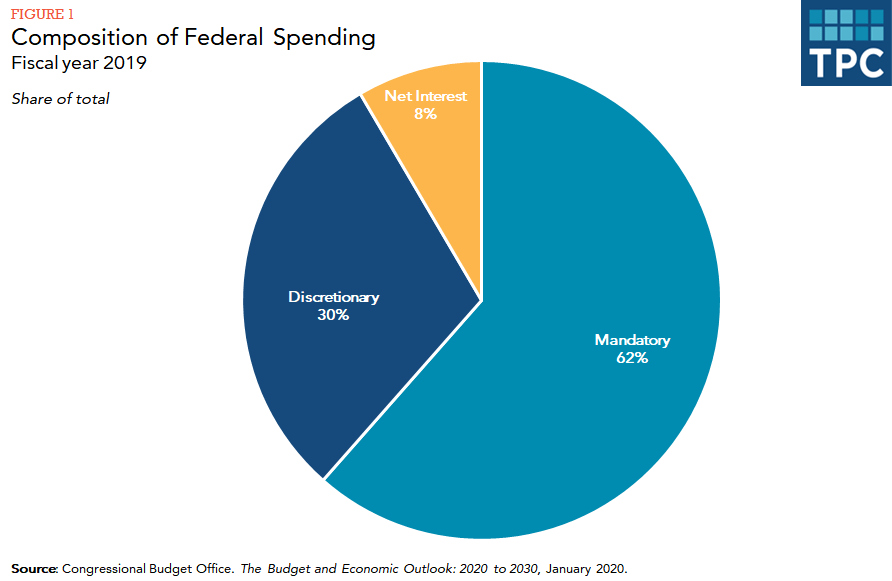
Federal spending totaled $4.4 trillion in 2019.
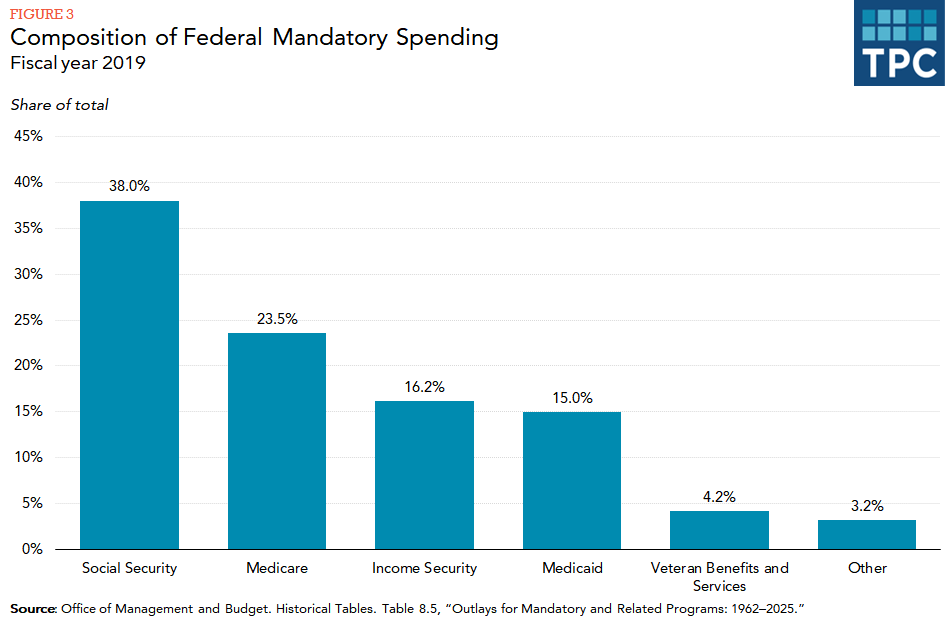
The $1000 would be on top of whatever is received from Medicare, Social Security, and other benefit programs.
After the first year, Congress could evaluate the program’s effectiveness in lifting the poor and growing the economy.
There is no valid reason not to do it. It’s how America can regain its moral and economic leadership.
Rodger Malcolm Mitchell
Monetary SovereigntyTwitter: @rodgermitchellSearch #monetarysovereigntyFacebook: Rodger Malcolm Mitchell
……………………………………………………………………..
The Sole Purpose of Government Is to Improve and Protect the Lives of the People.
We have discussed this for many, many years.But because of the new, ultra-partisan, endlessly repeated efforts led by the right wing to reduce any benefits to the non-rich, the truth must be repeated so it can fight through the fog of lies to be remembered.
No rational person would take dollars from the economy and give them to a federal government that has the infinite ability to create new dollars.
Yet, that same rational person approves collecting tax dollars from the private sector and giving them to the federal government.
It is illogical to the extreme, yet it is universally countenanced. So much for human mental superiority.
Economics is a combination of mathematics and psychology. Economists lose their place during attempts to blend the two, for instance, when they claim that something must happen when historically it seldom or never happens.
The most important problems in economics involve just two issues:
Gap Psychology describes the common desire to distance oneself from those “below” in any socio-economic ranking and to come nearer those “above.” The socio-economic distance is referred to as “The Gap.”
Wide Gaps negatively affect poverty, health and longevity, education, housing, law and crime, war, leadership, ownership, bigotry, supply and demand, taxation, GDP, international relations, scientific advancement, the environment, human motivation and well-being, and virtually every other issue in economics.
Insolvency, the phony issue: Cutting SS and Medicare is again being touted as the “only” way to avoid national insolvency. It is a lie.
The federal government, being Monetarily Sovereign, has infinite money to support all its agencies. No federal agency becomes insolvent unless Congress and the President want that.
The notion that funds for Medicare and Social Security — and no other federal agency — are limited by a tax on the lower side of the income scale — FICA — is absurd. Billionaire Donald Trump doesn’t pay that tax; you do.
The fact that the so-called “debt ceiling” has arbitrarily been raised 94 times should give any thinking person pause to consider the idiocy of the ceiling itself.
An astounding 94 increases, the sky hasn’t fallen, and still we debate it.
Ask your neighbor why we have a debt ceiling that we have increased 94 times. I promise he will give you an ignorant answer. Why?
Because the sole purpose of the debt ceiling is to take advantage of the ignorant.
Your neighbors believe they understand economics. They don’t. They think federal financing resembles personal financing. It doesn’t.
If you try to explain it to them, they will resist understanding it. In their ignorance, they will laugh at what they perceive as your ignorance.
Their ignorance is akin to flat-earth believers, who assure you that ships sailing west eventually will fall over the edge. No amount of evidence can convince a flat-earther or a federal debt worrier. They are beyond the evidence.
Ignaz Semmelweis failed to convince doctors to wash their hands
How do I know? I’ve been doing this for nearly 30 years. Why do I keep doing it? Every so seldom, I meet someone open to learning, which requires changing one’s beliefs.
So despite meeting thousands of learning-resistant people, the relatively few who use their brains give me hope.
Federal Taxes: They do not fund federal spending. The U.S. Treasury destroys all dollars it receives and creates new dollars every time it pays a creditor.
To pay an invoice, the federal government sends instructionsas a check or wires (not dollars) to the creditor’s bank, telling the bank to raise the balance in the creditor’s checking account.
When you send your M2 tax dollars to the Treasury, those dollars immediately disappear from any money supply measure. The reason: Our Monetarily Sovereign government has the infinite ability to create dollars from thin air, so trying to measure its supply of dollars would make no sense.
Adding dollars to infinite dollars yields infinite dollars. No change.
The sole purposes of federal taxes are:
To discourage what the government doesn’t like and to give tax breaks to what the goverment likes
To create demand for the dollar by requiring taxes to be paid in dollars.
That’s it. Taxes do not provide the federal government with spending money.
The sole purpose of the debt ceiling is to sell the lower-income groups the false idea that the government cannot afford to give them benefits.
There is a political purpose, however: To give the party that is out of power leverage over the party that is in power.
Federal finances are nothing like personal finances.
The useless and misleading “debt limit” should be eliminated. The so-called “debt” is the net total of deposits into T-security accounts (T-bills, T-notes, T=bonds). These deposits are:
Like the contents of safe deposit boxes: Owned by the depositors, not by the federal government
Not used by the federal government
Not borrowed by the federal government. The federal government never borrows dollars.
Not touched by the federal government
Not a debt of the federal government
Paid back simply by returning the dollars in the accounts.
The useless and misleading Social Security “trust funds” are:
Not recipients of FICA tax dollars, which are destroyed upon receipt by the Treasury.
Not paying for Social Security or Medicare, which are funded by new dollar creation like all federal programs.
Illusions, established by President Franklin D. Roosevelt, in a (failed) psychological attempt to keep Congress from cutting Social Security.
And contrary to popular myth, federal deficit spending never has caused inflation. There is no historical relationship between federal spending and inflation.
If federal deficit spending (red) caused inflation (blue), the lines would be parallel. They are not.
Rather than causing inflation, federal deficit spending prevents and cures recessions.
Recessions (vertical gray bars) follow decreases in federal deficit spending (red line) and are cured by increases in federal deficit spending.
Federal “debt” reduction caused every depression in U.S. history.
1804-1812: U. S. Federal Debt reduced 48%. Depression began 1807. 1817-1821: U. S. Federal Debt reduced 29%. Depression began 1819. 1823-1836: U. S. Federal Debt reduced 99%. Depression began 1837. 1852-1857: U. S. Federal Debt reduced 59%. Depression began 1857. 1867-1873: U. S. Federal Debt reduced 27%. Depression began 1873. 1880-1893: U. S. Federal Debt reduced 57%. Depression began 1893. 1920-1930: U. S. Federal Debt reduced 36%. Depression began 1929. 1997-2001: U. S. Federal Debt reduced 15%. A recession began 2001.
All inflations in history have been caused by the scarcity of critical goods and services, mainly oil and food. This is demonstrated by the graph below:
The graph showing federal deficit spending vs. inflation shows no relationship between the two. The graph showing oil prices vs. inflation shows a strong relationship. Oil prices reflect oil scarcity. Thus, inflation is not caused by federal spending but rather by scarcity.
As we said, this has been discussed before on this site.
But past Republican parties, though heavily favoring the rich over the poor, were not led by demonic, psychopathic dictator wannabe who would burn down your house and our entire nation for the chance to rule the ashes.
IN SUMMARY
The federal government is uniquely Monetarily Sovereign. It cannot unintentionally run short of dollars.
When you are told that Medicare and Social Security benefits must be decreased and FICA taxes must be increased, that is a lie, and the person saying it is a liar, ignorant, or both.
The federal “debt” is not a problem, not even a debt, not paid for by your grandchildren, and is necessary for economic growth.
Efforts to decrease the federal “debt” are, in reality, efforts to make the rich richer by widening the Gap between the rich and the rest. The wider the Gap, the richer they are.
Unfortunately, when you try to explain this to your friends, their previous indoctrination will prevent them from believing what is in their self-interest.
So they naively will continue approving and justifying federal tax increases and federal benefit decreases, much to the amusement of the rich, who have blessed themselves with tax loopholes and income not subject to FICA taxes.
All you can do is to keep fighting, and forgive them, for they know not what they do.
There was a time when the Libertarians were a sort of third road between liberalism and conservatism, an anarchist movement that opposed both sides equally.
No more.
The Libertarian website, Reason.com, has gone full-bore, white supremacist, fascist, Fox News, Breitbart, Trump-bigoted denialism, as witness the following article:
The problem with convicting members of the “Western chauvinist” Proud Boys on seditious conspiracy charges is that it wrongly elevates a violent tantrum by a bunch of thugs to the level of an insurrection, and it lets officials who prosecute them puff themselves up as saviors of the republic.
Worse, the case took liberties with a statute that is probably best forgotten to arrive at its conclusion when normal criminal law could have punished rioters without putting the criminal justice system through contortions.
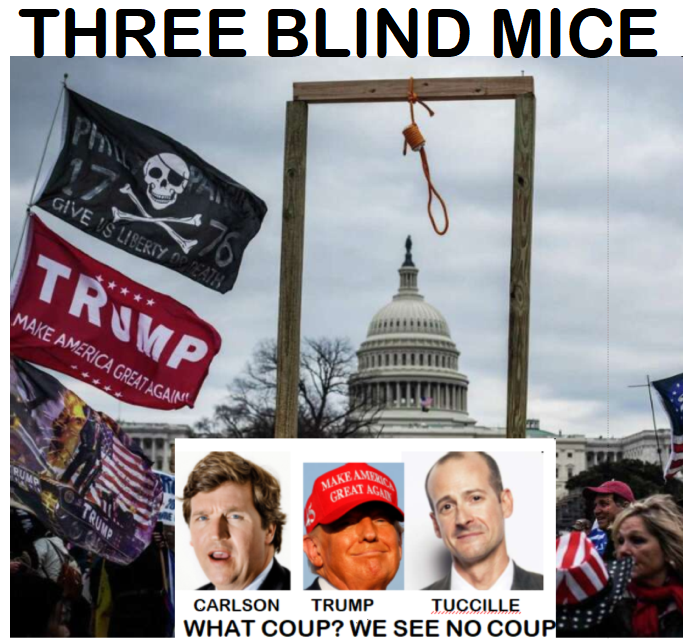
At this point, you may be shaking your head and wondering whether the article really was written by Tucker Carlson, whose lies about the insurrection (yes, insurrection is precisely what it was) were too much even for Fox (especially since those lies cost Fox upwards of $750 million.)
Apparently, Carlson’s costly lies were suitable for J.D. Tuccille, a former managing editor of Reason.com and current contributing editor.
“A jury in the District of Columbia today returned guilty verdicts on multiple felonies against five members of the Proud Boys, finding four of the defendants guilty of seditious conspiracy for their actions before and during the breach of the U.S. Capitol on Jan. 6, 2021,” the Department of Justice trumpeted last week.
“According to the evidence at trial, in the months leading up to Jan. 6, the defendants plotted to oppose by force the lawful transfer of presidential power, and to prevent the Members of Congress, and the federal law enforcement officers who protect them, from discharging their duties.”
See the pejoratives, “puff themselves up,” “saviors of the republic”?
He’s describing people who saw criminals committing treason and tried those criminals before a jury, who also saw criminals committing treason, and said so.
Libertarian Tuccille would have you believe that trying, by force, to prevent the “lawful transfer of presidential power” is just, in his words, “a tantrum by thugs.”
A “TANTRUM”? Really, J.D.?
A tantrum is a little boy lying on his back, kicking his heels, and demanding not to be taken home from Disneyland.
A tantrum is the wailing from the little girl who wanted a pony for her birthday and only got a dress.
A tantrum is Ron DeSantis trying to punish a teacher for daring to mention that America’s law enforcement has mistreated blacks.
Armed traitors, crashing through barriers to break into Congress, injuring several police, and with the sole purpose of overturning the U.S. government, while stalking Nancy Pelosi and threatening to hang the Vice President of the United States because he wouldn’t install Traitor Donald Trump as President — that is a bit more than a Tuccille “tantrum.”
If all that does not rise to the level of treason, J.D., why don’t you describe to the world precisely what you think constitutes treason?
In former days, traitors were hung or electrocuted. These traitors got off easy.
“At my Senate confirmation hearing just over a month after January 6th, I promised that the Justice Department would do everything in its power to hold accountable those responsible for the heinous attack that sought to disrupt a cornerstone of our democracy: the peaceful transfer of power to a newly elected government,” huffed Attorney General Merrick Garland, a man who gives every impression that he tremendously enjoys the smell of his own emissions.
“Today’s verdict is another example of our steadfast commitment to keeping those promises.”
Oh, Attorney General Merrick Garland “huffed”?
Is that supposed to mean his outrage was misplaced at seeing traitors roaming the halls of Congress, seeking to prevent the lawful installation of the President?
And the “smell of his own emissions” is the description of the man doing his job exactly as it should be done (unlike the Trumpian toadies who preceded him in that post.)
Would a simple “Tut tut,” a slap on the wrist, “boys will be boys'” admonition to not do it again have pleased Tuccille more?
Really, J.D., what is there about a vicious attempt to overturn a national election that has you outraged about a criminal conviction?
And so, we’re told, the republic is safe from those who would rise against it in insurrection.
But before we consign former Proud Boys leader Enrique Tarrio and codefendants Ethan Nordean, Joseph Biggs, and Zachary Rehl to the history books alongside Mosby and Quantrill, Confederate guerrillas of the sort who inspired the seditious conspiracy statute to begin with, let’s consider an important obstacle:
There’s sparse evidence of a meaningful conspiracy “to overthrow, put down, or to destroy by force the Government of the United States” as required by law.
Shouldn’t a Conspiracy Be Better Organized? “The FBI has found scant evidence that the Jan. 6 attack on the U.S. Capitol was the result of an organized plot to overturn the presidential election result”
“Sparse evidence” except for the plans to gather off-site, and to bring weapons, and to advance on the Capitol at a specific time, even before the crowd arrived from Trump’s exhortations.
“Sparse evidence”? Are we to doubt our eyes and ears while maniacs, emboldened by the head maniac, did everything they could to prevent democratically elected Joe Biden from taking office?
That’s just a little tantrum?
Reuters noted in August 2021. “‘Ninety to ninety-five percent of these are one-off cases,’ said a former senior law enforcement official with knowledge of the investigation.
‘Then you have five percent, maybe, of these militia groups that were more closely organized.But there was no grand scheme with Roger Stone and Alex Jones and all of these people to storm the Capitol and take hostages.'”
Except for building the gallows, searching for Pence, and the “Where are you Nancy?” hunting for Pelosi.
Get this. “Only” five percent of several thousand people — that makes what, several hundred? — created the plot, with the rest of the bunch merely followers.
So your claim, J.D. is several hundred people are too few to commit treason?? And because they were disorganized, it couldn’t be treason??
For instance, if the bank robbers failed to obtain a worthy getaway car — a sign of disorganization — they should not be prosecuted for attempting to rob the bank? What a novel idea from the Libertarian.
And because you and your cronies have failed ever to develop an organized plan for running America without a government, J.D., does that mean the Libertarians are not a real political movement?
Or as a result of disorganization, “only” a few police died, instead of many more, it all was just a tantrum?
That said, if anybody was among those “more closely organized,” it was the Proud Boys, and the Oath Keepers of the earlier case. But still, prosecutors and the judge had to get creative to arrive at a verdict.
“The sedition trial…was characterized by frequent delays, frayed relations between the defense and prosecution and several decisions by the presiding judge, Timothy J. Kelly, that tested the boundaries of conspiracy law,” reported Alan Feuer and Zach Montague for The New York Times.
It wasn’t the crime that bothers you; it was the “frequent delays and frayed relations” to which you object?
Would you have preferred that the judge rush things through, and the defense and prosecutor got together and sang Kumbaya? Would that have made for a fairer trial”
“Judge Kelly’s rulings allowed prosecutors to introduce damning evidence about the violent behavior and aggressive language of members of the Proud Boys who had only limited connections to the five defendants.
The evidence was damning because the Proud Boys is an organization devoted to the violent overthrow of the U.S. government, in short, a conspiracy of traitors.
The rulings also permitted jurors to convict on conspiracy even if they found there was no plan to disrupt the certification of the election, but merely an unspoken agreement to do so.”
“No plan,” just an “unspoken agreement”? Huh?
If it wasn’t a plan and wasn’t spoken, how did all those traitors know when to show up and then to march in single file, like a well-trained military unit?
The jury heard the evidence and decided that there was a plan and an agreement and that the traitors were speaking quite loudly, screaming in fact, and they came damn close to succeeding.
Only by fractions of a second and a few inches did they fail. They didn’t find Pence. They didn’t find Pelosi. America got lucky.
“Mr. Tarrio was not even in Washington on Jan. 6, having been kicked out of the city days earlier by a local judge presiding over a separate criminal matter,” they added.
And Hitler was not even in France when the Nazis took over. And the Mafia boss seldom iss on site when the murders are committed.
“The Justice Department’s take, of course, fits the narrative favored by Democrats who reflexively describe the Capitol riot as an ‘insurrection.'” Reason’s Jacob Sullum observed.
“But that term implies a level of planning and organization that does not fit the chaotic reality of what happened that day.”
Ah, and there it is: “Favored by Democrats,” J.D. Tuccille’s unintended admission that the attempted coup was a Republican operation, and that he is a GOP apologist.
White supremacists, fascists, and Libertarians hate Democrats. The self-anointed GOP Party of Law and Order, hates the Democrats when they prosecute crimes initiated by Donald J. Trump, the newfound hero of Libertarianism.
The “chaotic reality” is that people planned to use force to stop the count and to stop America’s Democracy, and had they succeeded, the chief traitor would now be the dictator of America.
There’s no easy way to portray the resulting conviction as anything other than a stretch. In fact, less-loaded criminal charges could and did serve to penalize the defendants for their disruptive actions in Washington.
“Destruction of property, impeding Congress, and assaulting police officers, while crimes, don’t allow prosecutors and their political allies to portray themselves in heroic terms.
Josh Hawley runs for his life.
That is how Tuccille, who surely would have been hiding under his desk and wetting his pants, had he been faced with the violent traitors, insults those who defended America.
(Or Tuccille would have joined Josh (rabbit) Hawley, running terrified.) He cowardly insults the real heroes, the police, while treasonably defending the indefensible.
Rioters are violent troublemakers, but seditious conspirators can be portrayed as part of a larger movement that intends harm to the whole country.
Lest we forget, the “larger movement that intends to harm the whole country exists. It is the MAGA “stop the steal” movement, as fascist as any movement in America.
Sadly, having learned nothing from the relative taps on the wrists the insurrectionists received, they continue with their election denial, even today.
But that is not anti-democracy, anti-America enough for the Libertarians.
Had the traitors succeeded, Pence would have been hung; Pelosi might have been injured or killed; even more, police would have died, and Congress would have become meaningless.
But sedition, according to Tuccille? Nah.
And now comes the false comparison of all false comparisons, typical of the right-wing, white supremacy crowd of bigots with which Tuccille seems to have aligned:
The Trump administration floated pulling this same stunt with seditious conspiracy charges (often incorrectly framed as just “sedition”) against rioters during the civil unrest of the summer of 2020.
“Attorney General William Barr told the nation’s federal prosecutors to be aggressive when charging violent demonstrators with crimes, including potentially prosecuting them for plotting to overthrow the U.S. government,” The Wall Street Journal’s Aruna Viswanatha and Sadie Gurman reported at the time.
“Sedition charges require proof of efforts to overthrow the United States Government,” Harvard Law’s Laurence Tribe responded.
“Talking in these terms based on what’s happening is grotesquely irresponsible. It’s way beyond monarchical. It’s paranoid and dictatorial. Opus Dei, anyone?”
Likewise, the ACLU called Barr’s proposed seditious conspiracy prosecutions “a tyrannical and un-American attempt to suppress our demands for racial justice and an end to police violence.”
See, in the Tuccille, Libertarian world, when unarmed blacks are killed by police, again, and again, and again, and again, and again, and again, and again, and again, and finally, in frustration at the law’s unwillingness to protect them they riot, this supposedly is similar to Trump’s “patriots” trying to overturn the government.
What was their MAGA grievance? They didn’t like the outcome of the election and with no evidence whatsoever, claimed it was stolen and decided to steal it back.
Tuccille claims the two situations are the same. What a disgusting and thoroughly false comparison
Now the shoe is on the other foot, with a new administration wielding seditious conspiracy charges as weapons against another set of rioters with a different flavor of politics.
Yes, it’s just a “different flavor of politics.” To Tuccille, the coup was just a few poor little Republicans, who persecuted by the police, are innocently airing their grievances. Right?
Again, the rioters’ actions would justify prosaic criminal prosecutions if their partisan loyalties weren’t at odds with those in power.
But why just punish political opponents for bad behavior when you can smear them and their associates as dangers to the nation?
Hey, now, trying to overturn democracy is just “bad behavior” akin to shoplifting or parking in a no-parking zone. Right?
In a country as divided as ours, everything becomes a bludgeon against hated others. Politics ruin everything, including the criminal justice system.
And with his final words, Libertarian J.D. Tuccille, at last, tells the truth. Politics has ruined the criminal justice system.
Ask any black or Mexican or gay or Muslim or Jew who has lived under the bootheel of the right-wing, fascist, bigoted group known as the Libertarian/GOP.
Ruining the criminal justice system is the specialty of hate-mongering bigots, like those Southern sheriffs who wore white sheets and lynched blacks.
Yet even they didn’t try to overturn the election of the President of the United States.
That was left to the Proud Boys and their apologists, Tucker Carlson, Donald Trump and the Tuccille Libertarians.


 The $1000 would be on top of whatever is received from Medicare, Social Security, and other benefit programs.
After the first year, Congress could evaluate the program’s effectiveness in lifting the poor and growing the economy.
There is no valid reason not to do it. It’s how America can regain its moral and economic leadership.
Rodger Malcolm Mitchell
The $1000 would be on top of whatever is received from Medicare, Social Security, and other benefit programs.
After the first year, Congress could evaluate the program’s effectiveness in lifting the poor and growing the economy.
There is no valid reason not to do it. It’s how America can regain its moral and economic leadership.
Rodger Malcolm Mitchell




 #Monetary Sovereignty - Mitchell