- The U.S. federal government is Monetarily Sovereign. It has infinite dollars at its disposal. It never unintentionally can run short of U.S. dollars.
- Unlike state and local governments, the federal government is not funded by taxpayers. Instead, it pays all its bills by creating new dollars ad hoc.
- Even if the federal government did not collect a single penny in taxes, it still could continue spending as always.
- 37.9 million people are living in poverty in the U.S., according to 2021 Census Bureau figures.
- Congress is in a political battle over a meaningless — no, fraudulent — debt limit that handcuffs federal spending for no good reason.
Alan Greenspan: “The United States can pay any debt it has because we can always print the money to do that.”
Scott Pelley (On “60 Minutes”): “Is that tax money that the Fed is spending?” Ben Bernanke: “It’s not tax money… We simply use the computer to mark up the size of the account.”
With the federal government having limitless financial resources, why does poverty continue as a persistent problem in America?Poverty negatively affects health and longevity, education, housing, law and crime, bigotry, supply and demand, GDP, scientific advancement, the environment, human motivation and well-being, and virtually every other economic issue. Why, then, are we more interested in Hunter Biden’s business dealings and Donald Trump’s groping of women than we are in poverty when the cure for poverty lies within easy reach?The U.S. Could Help Solve Its Poverty Problem with a Universal Basic Income A universal basic income wouldn’t lead to adults leaving their jobs and could lift millions of children into a brighter future. By Michael W. Howard on January 6, 2023, Scientific American Magazine
When the child tax credit, first established in 1997, was expanded for a year in 2021, it was a major political and social win for the country. The Biden administration’s decision not only added to the amount of the tax credit and converted the payment from a year-end lump sum to monthly payments; it also abandoned the work requirement for parents.
This immediately affected one third of all children in the U.S., including 52 percent of Black children and 41 percent of Hispanic children, whose families were formerly excluded because the parents earned too little to qualify for the tax credit. ,
The tax credit expansion lifted 3.7 million children out of poverty by December 2021 without significantly reducing parents’ work participation.
Then in January 2022, the expanded tax credit expired, which plunged 3.7 million back into poverty, with higher percentage increases in poverty among Hispanic and Black children.
The credit showed us that cash assistance could help families stay afloat and, contrary to some political beliefs, parents would not leave the labor system because of it.
The child tax credit expansion is one step toward a universal basic income that could eliminate poverty without increasing unemployment.
Providing a government-funded monthly payment to every individual would broadly lift them out of poverty while providing millions of children a better chance at a good education, improved health, and higher future earnings.
This payment would benefit millions and save hundreds of billions of dollars by reducing the social costs of poverty.
The question becomes: Can we convince our elected officials that poverty is not a moral failing but a social condition that can be addressed by establishing an income floor below which no one falls.
There is a widely held expectation that able-bodied adults should work for their income.
Empirical evidence from the means-tested minimum income experiments of the 1970s in the U.S. and recent analysis of a similar experiment in Manitoba, among other research, support the idea that few people actually stop working when they are simultaneously receiving a guaranteed income.
Such research also shows that those who stop working for wages do so for good reasons, such as attending school or taking care of young children, and that a modest guaranteed minimum income can enable people to work who otherwise could not.
The norm that every abled person receiving cash payments should be seeking a job can also be challenged.
First, holding a job is not the only form of work. Taking care of children and elders is work—work that is performed mostly by women without compensation.
A basic income is a way of supporting and recognizing that work without intrusive state monitoring and reinforcement of gendered division of labor.
It isn’t clear from the article whether non-citizens or even criminals would be included or excluded. I suggest that every resident, legal or not, except only convicted felons in jail, receive the UBI. No public purpose would be served by refusing to include non-citizens, as they have the same human needs and make the same contributions to the economy as citizens.11 Pros and Cons of Universal Basic Income By Kishore Bhatt,
Last Updated on March 15, 2021, by Filip Poutintsev
A Universal Basic Income (UBI) is an unconditional cash payment given at regular intervals by the government to all residents, regardless of their earnings or employment status.
For a Monetarily Sovereign government, administrative costs are irrelevant.Pros and Cons of Universal Basic Income The intention behind the payment is to provide enough to cover the basic cost of living and provide financial security.
The concept is also seen as a way to offset job losses caused by technology. In times of crisis, a UBI can also provide a social safety net with minimum admin costs.
Different programs outline who exactly receives the income—some state that all citizens would get it regardless of what they make, while other programs may only give it to those who fall below the poverty line.
A universal basic income has three key components. It is universal – no citizen is excluded. Everyone gets the same assistance, irrespective of their gender, wealth, age, or occupation.
It also should not be taxed by the federal government or by any state/local government.It is unconditional, that is, the transfer is done without any per-condition which means the recipient does not have to perform any task to be eligible for the income.
It is direct – money reaches the targeted beneficiary directly, without the involvement of any middleman.
A critical reason “means-tested benefits” can be counterproductive. They decrease the net benefit of labor, especially at the lower levels. Example: A person receiving $5,000 a month, only if he earns nothing, is less likely to accept a $6,000 a month job. His labors would earn him a net of only $1,000 a month.Automation has fundamentally changed the structure of the world’s economy. Elon Musk said, robotics will take away most people’s jobs, so a universal income is the only solution. Here are some of the pros and cons of UBI:
Pros of Universal Basic Income 1. Reduces Poverty A UBI is a program to be delivered in cash, unconditionally, and to everyone.
Namibia’s UBI program, the Basic Income Grant (trialed in 2007-2012), reduced household poverty rates from 76% of residents before the trial started to 37% after one year.
Child malnutrition rates also fell from 42% to 17% in six months.
Advocates for UBI believe that in some of the richest countries in the world, no one should be too poor to live. UBI would bring everyone’s income above the poverty line. It gives people enough money for their basic needs and necessities.
2. Fights Unemployment With advanced technology taking over more and more blue and white-collar jobs, UBI would act as a security net for the millions of people who will be left jobless by the tech revolution.
The concept of UBI is also seen as a way to offset job losses caused by technology.
Some people argue that a universal basic income gives people the incentive to do the jobs that they want to do and not the ones that they have to do.
Also, workers could afford to wait for a better job or better wages.
3. Greatly Improves Work Incentives Under existing arrangements, people may see their welfare payments reduced if they find work, gain promotion, work more hours, or gain better-paid work.
I’ll add to the “Pro” list: 7. The UBI dollars would be added to the private sector, increasing economic growth. Economic Growth usually is measured by Gross Domestic Product (GDP). GDP=Federal Spending + Non-federal Spending + Net Exports. Increased federal deficit spending mathematically must increase economic growth. Obviously, UBI would require federal spending. It also would result in more non-federal spending by the people receiving UBI, which leads to: 8. UBI would stimulate business growth by enriching customers’ spending ability. In response, businesses would hire more, pay more, and provide better working conditions to attract workers. 9. UBI would help utilize America’s brainpower by making it possible for more people to be educated through high school, college, and beyond. Those are the people who would create the inventions, arts, sciences, and businesses that advance America.People find themselves in a poverty trap — a poverty trap that has been created by the same system that is supposed to be helping them out of poverty.
Under a Basic Income system, however, people will no longer be penalized for finding work or working harder. Finding work or increasing their hours won’t result in any reduction in their Basic Income payments.
4. Provides Financial Security Many of the jobs that we take for granted today are going to be gone in the future due to artificial intelligence, robotics, and other technology. People will be able to know that they will have enough money to meet their fundamental needs, even though their circumstances may change quite substantially.
In times of crisis, a UBI can also provide a social safety net.
5. Controls Discrimination UBI guarantees an income for non-working parents and caregivers, thus empowering important unpaid roles, especially for women.
Those who suffer domestic abuse, mainly women, become trapped in violent situations because they don’t have the means to leave them. UBI would make leaving an abusive partner easier from a financial point of view.
6. Boost Self-Employment and Entrepreneurship Somebody who wishes to work on new business ideas could use UBI income to support their initiative.
Even the most successful businesses often had a tough time making a decent profit in their early years. But to have a dynamic, enterprising economy, we need people to be able to take risks involved in starting a new business.
And UBI would enable more people to take those risks.
This is the false message about “paying people not to work.” Because the UBI would be given to everyone, it doesn’t pay people not to work. Work or not, everyone would be paid. As the earlier article showed, the “stop working” dictum is false:Cons of Universal Basic Income 1. Decreases Motivation to Work The biggest concern is that UBI would encourage millions of workers to stop working.
For the federal government, “taxable income” isn’t an issue. It neither needs nor uses nor even retains tax dollars. It destroys them upon receipt and creates new dollars, ad hoc, to pay its bills.1. a If people aren’t working, there is less taxable income.
Sneering at the poor reflects the false belief that the poor are poor because they are lazy, and if they only would try harder instead of getting drunk, taking drugs, and lounging in front of the TV, they no longer would be poor. Psychologically, this is how those who aren’t poor justify their better financial situations while exalting themselves in their own estimation. The reality is that the poor, on average, work harder in less gratifying jobs than those who have more income and wealth. Everyone wants a better life. America is one of the world’s wealthiest nations. On average, Americans have more money than the residents of almost any other country. Even poor Americans often lead better lives than the average people in many other countries. Yet we work. Think about it: If people with money were disincentivized from working, we would be a nation of the unemployed. But we work because we want more and better no matter what we have. That Chevy you once lusted for is no longer good enough. Now that you have more money, you’ll want a Lexus. If you make even more, you might want a Bentley, a Hawaiian vacation, and a second home in Florida. The sum of human wants never is satisfied. The poor have even greater desires than the rest of us and are even more motivated to have more money to pay for those wants. Giving a poor person extra money creates the taste for even more. So ingrained is the common myth of impoverished laziness that the author repeats it here;The problem here is that people will get money without doing anything. It may encourage people to be lazy and live off benefits.
Free income may not incentivize people to get jobs and could make work seem optional.
#1 and #2 repeatedly have been proven wrong.2. Retards Economic Growth If people get money without doing anything, it may encourage people to be lazy. Some people may choose to work part-time instead of full-time.
Others may leave the labor force for years when they would have otherwise worked. If people transition away from full-time work, the economy will suffer.
UBI has the potential to directly decrease the growth of the economy, namely GDP growth, through reductions to labor force participation.
The authors, Bhatt and Poutintsev, must be ignorant of Monetary Sovereignty. The federal government has infinite spending dollars. Whether the cost is $3.9 trillion a year or $39 trillion, the government could create and spend those dollars with just a touch on a computer key. The federal debt has risen from about $50 billion in 1940 to about $ 30 TRILLION this year, and at no time has the government ever had difficulty paying its bills. Taxes aren’t the issue. The government simply creates the dollars to do it. Always has. Always will. The UBI can be considered “very expensive” (depending on how that term is defined), but there never is a reason for it to be “stingy.” As you ponder that, your thoughts may turn to inflation, which we will discuss after we review point #4,3. Highly Expensive The best argument against UBI is its feasibility. UBI has been seen as a flawed idea, not least because it would be prohibitively expensive unless accompanied by deep cuts to the rest of the safety net.
Sacrificing all other social programs for the sake of a UBI is a terrible idea. According to a study, the cost of implementing UBI in the United States is estimated to be about 3.9 trillion annually.
The figure varies depending on whether children are included and at what benefit level. So, UBI is either very expensive or very stingy.
UBI takes money from no one, not the poor or rich. Federal finances are different from state/local government finances. Federal taxes do not fund federal spending. Federal taxes remove money from the private sector (aka the economy). They are economically recessive. Federal spending adds money to the economy and is economically stimulative. While federal taxes go to the U.S. Treasury, where they are destroyed, state and local tax dollars go to banks, where they are recirculated and remain in the M2 money supply. State/local taxes are neither recessive nor stimulative, and state/local government spending likewise is neither recessive nor stimulative. The federal government does not spend taxpayer dollars. To pay for things, the federal government creates new dollars ad hoc, and these dollars grow the economy.4. Inequality/Injustice Is it necessary to give the same amount of money to billionaires as those born into poverty?
Universal Basic Income (UBI) takes money from the poor and gives it to everyone, increasing poverty and depriving the poor of needed targeted support.
“Targeted” welfare programs come with the implicit belief that government knows what is best for each family and can provide individualized solutions. I suggest the best course is to give people money and allow each person or family to determine their own best use of that money.UBIs are less cost-effective than targeted welfare programs because many people lack more than just cash.
Some proponents have suggested UBI could be restricted to certain populations and only allowed for those who are below the poverty line.
This question is based on ignorance of Monetary Sovereignty. The federal government has the infinite ability to pay any amount while not collecting any taxes at all. Nothing needs to be cut to fund UBI.5. High Tax and Inflation There is a question, what gets cut to fund UBI? The answer is the cost of a universal basic income will have to be met through higher taxes. That will lead to higher taxes to pay for the benefits.
That would increase poverty and inequality rather than reduce them.
The above is based on the false belief that federal spending causes inflation. There is no evidence of that ever happening. All inflations through history have been caused by critical goods and services shortages, notably oil and food. While giving people money will cause an increase in demand for many products, it also causes an increase in supply as manufacturers respond.If everyone suddenly received a basic income, it would create inflation.
Inflation will be triggered because of increased demand for goods and services. There won’t be an improved standard of living in the long run because of inflated prices.


The opponents are demonstrably wrong. UBI absolutely would reduce poverty by providing the poor with money. Giving money to the poor and allowing them individually (instead that a government bureaucrat) to determine how best to use it is the best form of “targeted support.” Like all of us, the poor want more in life than just enough dollars to afford to laze at home rather than work. It is a terrible myth, fostered by the rich, that the poor are inherently lazy, unambitious slugs with no desire for improvement. The UBI would strengthen the economy by adding dollars to the GDP and improving business sales. The Remaining Question That UBI works cannot be doubted. Medicare, Social Security, the earned income tax credit, and the child tax credit are relatives of UBI that have successfully reduced poverty and increased overall GDP. The federal government easily can afford any level of UBI.Conclusion The concept of UBI has been under debate for some years in global forums. The main advantage is that it ensures a minimum income standard for everyone.
Opponents of UBI say that it does not reduce poverty, deprives the poor of needed targeted support, provides a disincentive to work, and weakens the economy.
Alan Greenspan: “There is nothing to prevent the federal government from creating as much money as it wants and paying it to somebody.”
Ben Bernanke: “The U.S. government has a technology, called a printing press (or, today, its electronic equivalent), that allows it to produce as many U.S. dollars as it wishes at essentially no cost.”
Statement from the St. Louis Fed: “As the sole manufacturer of dollars, whose debt is denominated in dollars, the U.S. government can never become insolvent, i.e., unable to pay its bills. In this sense, the government is not dependent on credit markets to remain operational.”
The remaining question is: How much UBI should the federal government provide? The U.S. economy and the economies of individuals in the U.S. comprise what in mathematics is known as a “level two chaotic system.”A chaotic system is a dynamic system highly influenced by its beginnings. A chaotic system can’t be explained because it’s impossible to see how all its variables interact. There are two kinds of chaotic systems: level one chaotic systems and level two chaotic systems.
A level-one chaotic system is not affected by predictions we make about it. For example, the weather is a level one chaotic system. We can make predictions about the weather tomorrow, but those predictions don’t have the ability to change the weather tomorrow.
A level two chaotic system is affected by predictions we make about it. For example, the oil market is a level two chaotic system. If we predict that the price of oil will increase from $90 a barrel today to $100 a barrel tomorrow, traders will buy a bunch of oil today to benefit from the rise in price tomorrow. But this action increases oil prices today, changing the price of oil tomorrow.
Similarly, politics is a level two chaotic system. If someone were to have predicted the Arab Spring and told Egypt’s President Mubarak that a revolution was imminent, he would have taken action to prevent it, perhaps lowering taxes and increasing government handouts.
In doing so, he likely would have prevented the Arab Spring, nullifying the original prediction.
Level two chaotic systems are inherently unpredictable.
The classic example of chaos is the “butterfly effect,” wherein a butterfly flapping its wings in Brazil causes a hurricane to damage the coast of North Caroline. Economics is highly chaotic because it blends two chaotic systems, business, and psychology. Thus, while economists make predictions and are eager to point to successful forecasts, the fact is that forecasting success is, at best, intermittent. That said, while I feel sure that any level of UBI would reduce poverty and grow the economy, caution is the best approach to uncertainty. One thought would be to give each man, woman, and child in America $1000 per month — $12,000 per year — tax-free. That would add about $4 trillion to the economy. For comparison: Federal spending totaled $4.4 trillion in 2019.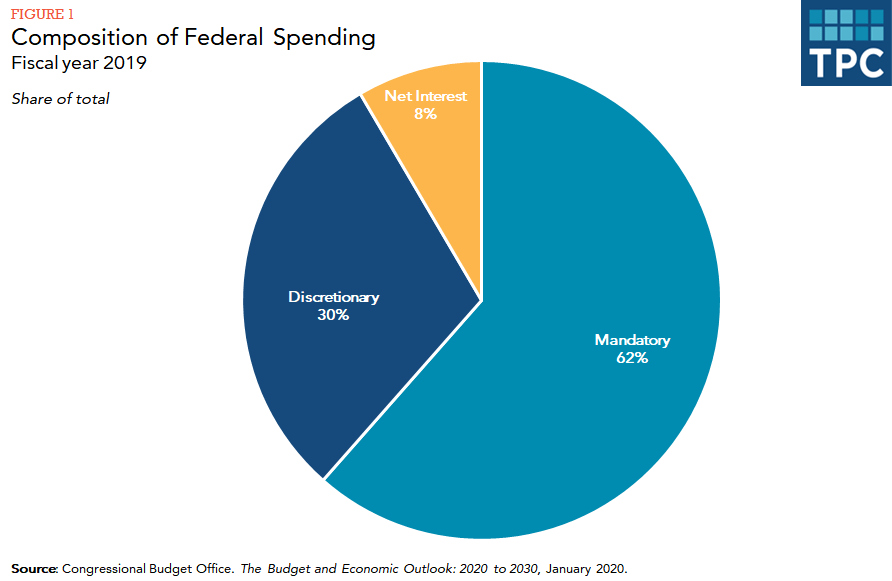
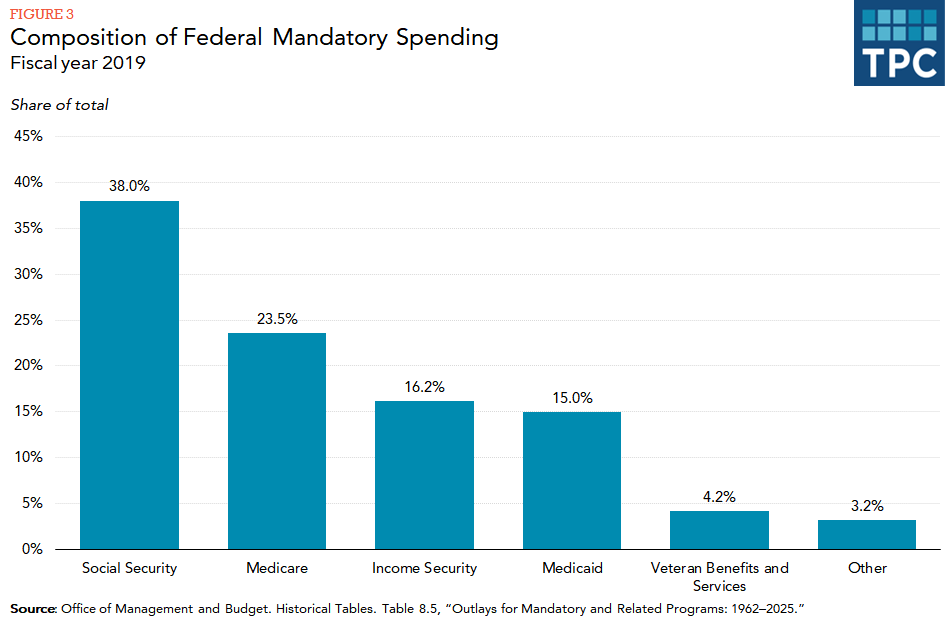 The $1000 would be on top of whatever is received from Medicare, Social Security, and other benefit programs.
After the first year, Congress could evaluate the program’s effectiveness in lifting the poor and growing the economy.
There is no valid reason not to do it. It’s how America can regain its moral and economic leadership.
Rodger Malcolm Mitchell
Monetary Sovereignty
Twitter: @rodgermitchell Search #monetarysovereignty
Facebook: Rodger Malcolm Mitchell
The $1000 would be on top of whatever is received from Medicare, Social Security, and other benefit programs.
After the first year, Congress could evaluate the program’s effectiveness in lifting the poor and growing the economy.
There is no valid reason not to do it. It’s how America can regain its moral and economic leadership.
Rodger Malcolm Mitchell
Monetary Sovereignty
Twitter: @rodgermitchell Search #monetarysovereignty
Facebook: Rodger Malcolm Mitchell
……………………………………………………………………..
The Sole Purpose of Government Is to Improve and Protect the Lives of the People.
MONETARY SOVEREIGNTY

 #Monetary Sovereignty - Mitchell