Make America Disgraced Again. MADA

With his slogan, “Make America Great, Again,” Trump implied that America was not great. And, historically speaking, he was right that America has not always been great.

There were, in fact, many times when we Americans disgraced ourselves.

  1. We Americans disgraced ourselves during the years we enslaved, tortured and killed black people.
  2. We Americans disgraced ourselves when we imprisoned Japanese Americans during WWII.
  3. We Americans disgraced ourselves when we turned away the SS St. Louis, loaded with Jews trying to escape Hitler.
  4. We Americans disgraced ourselves during the years we refused voting rights for women and blacks.
  5. We Americans disgraced ourselves during the years of anti-Irish sentiment.
  6. We Americans disgraced ourselves when we killed native Americans, and broke our treaties with them.
  7. We Americans disgraced ourselves when we prosecuted the Vietnam war, unnecessarily killing millions of innocent Vietnamese and Americans.
  8. We Americans still disgrace ourselves by jailing, per capita, more people than any other nation on earth, and then compounding the problem by giving guns — high-powered guns — to any fool who wants one.
  9. We Americans still disgrace ourselves by denying millions of people affordable health care, while “lesser” countries offer it.
  10. Millions of Americans disgrace themselves by supporting an absurd, immoral, ill-prepared, unqualified President.

Though America has been great in many, many ways, and still is, it is being led far, far from its previous glories.

Image result for trump
(I have second thoughts about everything.” [At G7, 8/24/2019]

Newsweek DAILY BRIEFING – 08.21.2019
TRUMP ADMIN TO DETAIN CHILDREN INDEFINITELY
The Trump administration has issued a rule change that would end limits on migrant minors’ time in detention and limit safeguards against cruel and unsanitary conditions.

California Senator Kamala Harris asked on Twitter Wednesday, “how does detaining families longer make our border secure or stop transnational gangs — things the DHS should actually be spending their time doing?”

Senator Elizabeth Warren: “The Flores agreement mandates that migrant children cannot be held in detention for more than 20 days. Today, the Trump administration announced its plans to roll back Flores—putting thousands of children in danger.

Inspectors found soiled, emotionally distraught children who were unable to brush their teeth or shower. The administration tried to justify not providing kids with soap and toothbrushes.

The new rule would remove a 20-day limit on detaining families in jails. Families will now be sent to “family residential centers” where they will remain until their immigration case is heard.

It takes an average of 713 days for a judge to hear a case.

“The detention of children can lead to trauma, suicidal feelings, and exposure to dangerously inadequate medical care,” said Clara Long, acting deputy Washington director at Human Rights Watch. “No amount of time in detention is safe for children and prolonged detention is particularly harmful.”

The torturing of innocent men, women, and children is not the badge of a great nation.

The Trump administration, rather than making America great again, instead has chosen to repeat the worst, immoral, cruel excesses of previously disgraced administrations.

Trump’s method for “making America great, again,” includes insulting our allies:

Trump scolds Denmark, calls prime minister ‘nasty’
By Jan M. Olsen and Laurie Kellman Associated Press
Trump said Wednesday he scrapped his trip to Denmark because the prime minister made a “nasty” statement when she rejected his idea to buy Greenland as an absurdity.

“You don’t talk to the United States that way, at least under me,” Trump told reporters in Washington. “I thought it was not a nice statement, the way she blew me off.”

Danish Prime Minister Mette Frederiksen called the whole thing “an absurd discussion” and said she was “disappointed and surprised” that Trump had canceled his visit.

Trump said Frederiksen’s comment labeling his idea as absurd “was nasty.

Trump’s cancellation was “deeply insulting to the people of Greenland and Denmark,” former Prime Minister Helle Thorning-Schmidt wrote on Twitter.

Claus Oxfeldt, chairman of Denmark’s main police union, told Danish media that “It has created great frustrations to have spent so much time preparing for a visit that is canceled,” Oxfeldt was quoted as saying.

There stood Trump, whose every tweet insults someone,* suddenly becoming hyper-sensitive by claiming “America” was insulted when the Danish Prime Minister rightfully called his absurd idea, “absurd.” ( *See: The 598 People, Places and Things Donald Trump Has Insulted on Twitter)

No, Mr. Trump, you are not America, and America was not insulted. You, however, are known internationally as an absurd boor, and that, unfortunately, reflects poorly on us Americans.

In short, every day, it is you Mr. Trump, who insults America.

Trump doubles down on charge that Jews who vote Democrat are ‘disloyal’ [The New York Times]
President Trump on Wednesday repeated his allegation that Jews who vote for Democrats are “being very disloyal to Jewish people and very disloyal to Israel.”

Trump also thanked conservative radio host Wayne Allyn Root (an evangelical Christian) for saying Jews in Israel love Trump “like he’s the King of Israel” and “the second coming of God.

Jonathan Greenblatt, the head of the Anti-Defamation League, said Trump was trying to make himself out to be a savior. “Literally, it’s hard to think of something less kosher than telling the Jewish people you’re the king of Israel, and therefore, we should have some fidelity to you.”

Trump’s comment that Jews are, or should be, loyal to Israel, is part of the bigot’s old trope that Jews are not loyal to the country in which they live.

It was the excuse Hitler gave for murdering them. That slur, together with Trump’s love for dictators, has him re-emerging as the next Hitler “wannabe.”

And as for showing loyalty to a bigot like Trump, the vast majority of Jews have learned from Hitler, the cost of bigotry. When any group is maltreated by a bigot, eventually the maltreatment falls on the Jews. It’s always the Jews.

With Trump as its leader, America cannot claim greatness, nor can those who continue to back Trump.

Trump says he’s ‘Chosen One’ to take on China over trade
From CNBC
President Trump on Wednesday framed his trade war with China in religious terms, saying he was “the Chosen One” to confront Beijing over economic policies he considers unfair to the U.S.

“This isn’t my trade war, this is a trade war that should have taken place a long time ago. Somebody had to do it,” Trump said. He then looked up and pointed to the heavens, saying, “I am the Chosen One.”

Historically, dictators have portrayed themselves as God, or one chosen by God.

From the Pharaohs to Rafael Trujillo (“God in Heaven, Trujillo on Earth”) to Francisco Macias Nguema (“There is no other God than Macias Nguema”) to Trump’s pal, Kim Jong-Il (“Creator of the Universe“).

Will Americans, one day, refer to Donald Trump as “the chosen one”?

Every day, Trump disgraces America and each of us. Fortunately, every four years, we are given the ability to reverse our past errors of judgment or immorality.

Rodger Malcolm Mitchell
Monetary Sovereignty
Twitter: @rodgermitchell
Search #monetarysovereignty Facebook: Rodger Malcolm Mitchell

…………………………………………………………………………………………………………………………………………………………………………………………………………………………………………………………………………………………..

The most important problems in economics involve the excessive income/wealth/power Gaps between the richer and the poorer.

Wide Gaps negatively affect poverty, health and longevity, education, housing, law and crime, war, leadership, ownership, bigotry, supply and demand, taxation, GDP, international relations, scientific advancement, the environment, human motivation and well-being, and virtually every other issue in economics.

Implementation of The Ten Steps To Prosperity can narrow the Gaps:

Ten Steps To Prosperity:

1. Eliminate FICA

2. Federally funded Medicare — parts a, b & d, plus long-term care — for everyone

3. Provide a monthly economic bonus to every man, woman and child in America (similar to social security for all)

4. Free education (including post-grad) for everyone

5. Salary for attending school

6. Eliminate federal taxes on business

7. Increase the standard income tax deduction, annually. 

8. Tax the very rich (the “.1%”) more, with higher progressive tax rates on all forms of income.

9. Federal ownership of all banks

10. Increase federal spending on the myriad initiatives that benefit America’s 99.9% 

The Ten Steps will grow the economy, and narrow the income/wealth/power Gap between the rich and you.

MONETARY SOVEREIGNTY
Money Bail: The pro-rich, anti-everyone-else “tax” on the accused

“Equal justice under law” is a phrase engraved on the front of the United States Supreme Court building in Washington D.C. 

On October 1, 2016, we published the post titled, Money bail: Another foible of the Gaps,  Here are a few notes based on that post:

The income/wealth/power Gaps between the rich and the rest, constitute the single, most important economic problem facing America and the world.

The Gaps exacerbate crime, disease, poor education and housing, infrastructure decline, the ecology, unnecessary war, and unfair justice, among other issues.”

I read where an 18-year-old accused of fatally shooting a man was ordered held in lieu of $5 million bail.

Why $5 million? The clear purpose was to make the bail unaffordable for the man, so that he will not be loose on the street.

Why offer any bail at all? Answer: So if it turned out that he was rich, he could avoid jail while he awaited trial.

But, if he had enough money to make bail, would that have proved he offered less risk to the public, while awaiting trial, or was more likely to show up for his trial?

Rich people jump bail all the time.

A judge or magistrate decides the amount of bail by weighing many factors:

— the risk of the defendant fleeing,
— the type of crime alleged,
— the ‘dangerousness‘ of defendants, and
— the safety of the community.

Money bail falsely presumes that poorer people, who are less likely to afford bail money, must be more likely to flee and are more dangerous to the community.

Money bail forces many innocent people to remain in jail for months, simply because they cannot afford to pay.

Sometimes judges set bail at a low amount, even $500. What is the purpose? Why set bail at all, and just rely on the accused to show up for trial?

And what if the accused is too poor even to afford payment of that low amount of bail? What does that prove?

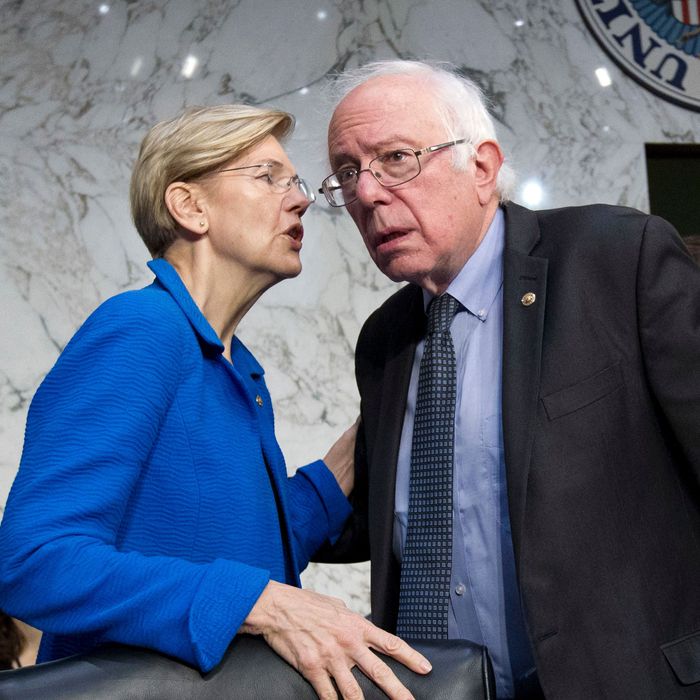
Here is what Bernie Sanders had to say:

“For most of our history as a country, the United States incarcerated people at about the same rates as other western democracies do today.

“In the early 1970s we had the same low crime rate as today, but we now have an incarceration rate five times higher. Indeed, America is now the world’s leading jailer.

“We lock up more than 2 million people in America, which is more of our own people than any country on Earth.

“Hundreds of thousands of incarcerated people in America have not been convicted of a crime and are solely in jail because they can’t afford their bail. We are criminalizing poverty.”

“Right now, hundreds of thousands of people without a criminal conviction are in jail simply because they could not afford bail. Young people can spend hundreds of days in jail, only to be acquitted — yet the severe damage to their lives cannot be undone.

“This is why Bernie introduced the No Money Bail Act of 2018 to end cash bail and to end the criminalization of poverty in America. ”

See also: S: 3271

The money bail system is a relic of the old imperial view that the rich are honest and dependable, while the poor are criminal and irresponsible.

When a judge imposes, for instance, a million-dollar bail, what does that tell you? It says that the judge doesn’t trust the accused to return for trial.

But that bail might require a poor man to languish in jail for weeks or months, while a rich man will be free to go about his business, spend time with his family, perhaps even travel.

And if he is wealthy enough, he even may leave the jurisdiction, sacrifice the million dollars, and go free to a foreign jurisdiction, without enduring a trial.

The notion that the rich can be trusted more than the poor not only is false and bigoted, but dangerous to society.

As currently practiced, it is a violation of the Sixth Amendment to the Constitution and the U.S. Code:”In all criminal prosecutions, the accused shall enjoy the right to a speedy and public trial . . . ”

18 U.S.C. § 3161 – U.S. Code – Unannotated Title 18. Crimes and Criminal Procedure § 3161. Time limits and exclusions:

Any information or indictment charging an individual with the commission of an offense shall be filed within thirty days from the date on which such individual was arrested or served with a summons in connection with such charges.

If an individual has been charged with a felony in a district in which no grand jury has been in session during such thirty-day period, the period of time for filing of the indictment shall be extended an additional thirty days.

In any case in which a plea of not guilty is entered, the trial of a defendant charged in an information or indictment with the commission of an offense shall commence within seventy days from the filing date (and making public) of the information or indictment, or from the date the defendant has appeared before a judicial officer of the court in which such charge is pending, whichever date last occurs.

If a defendant consents in writing to be tried before a magistrate judge on a complaint, the trial shall commence within seventy days from the date of such consent.

Any period of delay resulting from a continuance granted by any judge on his own motion or at the request of the defendant or his counsel or at the request of the attorney for the Government, if the judge granted such continuance on the basis of his findings that the ends of justice served by taking such action outweigh the best interest of the public and the defendant in a speedy trial.

In short, the Constitution allows an innocent person to be held for 60 to 70 days, to any length of time that “serves the ends of justice.”‘

So if you are accused of a crime you didn’t commit, and you don’t have access to the bail money set by a judge, you could suffer in jail for weeks, months, years — even for longer than a guilty verdict would impose.

If you are rich, you don’t need to worry about that.

Is that equal justice for all?

Some might claim that the bail system actually protects you, because if it didn’t exist, judges might be tempted to keep innocent you in jail longer, just to protect against you fleeing.

Judges are people. They do smart things and they do stupid things. They convict innocent people and find guilty people innocent. There is no failsafe method of justice.

But, we trudge on.

Americans believe it is better to release a guilty person than to imprison an innocent person. (That is why we require all 12 people in a jury, rather than just a majority, to agree on criminal charges.)

But the bail system imprisons innocent people every day — often for long periods.

I suggest we eliminate the entire bail system, and replace it with an honor system along with an ankle bracelet system.

Yes, that will allow some criminals to flee, and it also will allow some to create crimes while awaiting trial. But that is the price we should be willing to pay so that we stop imprisoning innocent people for lengthy terms.

It is far more in keeping with the purposes of the Sixth Amendment.  

Rodger Malcolm Mitchell
Monetary Sovereignty
Twitter: @rodgermitchell
Search #monetarysovereigntyFacebook: Rodger Malcolm Mitchell

…………………………………………………………………………………………………………………………………………………………………………………………………………………………………………………………………………………………..

The most important problems in economics involve the excessive income/wealth/power Gaps between the richer and the poorer.

Wide Gaps negatively affect poverty, health and longevity, education, housing, law and crime, war, leadership, ownership, bigotry, supply and demand, taxation, GDP, international relations, scientific advancement, the environment, human motivation and well-being, and virtually every other issue in economics.

Implementation of The Ten Steps To Prosperity can narrow the Gaps:

Ten Steps To Prosperity:

1. Eliminate FICA

2. Federally funded Medicare — parts a, b & d, plus long-term care — for everyone

3. Provide a monthly economic bonus to every man, woman and child in America (similar to social security for all)

4. Free education (including post-grad) for everyone

5. Salary for attending school

6. Eliminate federal taxes on business

7. Increase the standard income tax deduction, annually. 

8. Tax the very rich (the “.1%”) more, with higher progressive tax rates on all forms of income.

9. Federal ownership of all banks

10. Increase federal spending on the myriad initiatives that benefit America’s 99.9% 

The Ten Steps will grow the economy, and narrow the income/wealth/power Gap between the rich and you.

MONETARY SOVEREIGNTY

THE WEEK Magazine spreads the Big Lie

THE WEEK Magazine is an outstanding, left-leaning publication that might be expected to opt for more social spending. Sadly, they too are caught up in the traditionally right-wing Big Lie.

The Big Lie is: Federal finances are similar to personal, state government, and local government finances, so the federal government needs tax income in order to spend.

State and local government spending is funded by state and local taxes. Federal spending is not.

While you and your local governments require income in order to spend, the federal government creates its own income. It has no need for taxes.

The Big Lie is disseminated by the very rich, who are motivated by Gap Psychology, the common motivation to distance oneself from those below, and to approach those above. The rich wish to widen the income/wealth/power Gap between them and the rest of the populace.

The easiest way to accomplish this: Cut federal benefits to the non-rich.

The very rich disseminate the Big Lie by influencing our primary, trusted information sources: The media, politicians, and university economists.

The media are influenced via advertising dollars and media ownership.
The politicians are influenced via campaign contributions and promises of future lucrative employment.
The university economists are influenced via university contributions and jobs in think tanks.

Here is a classic example of a medium, THE WEEK Magazine, doing the bidding of the very rich:

Why is 2030 significant? (August 18, 2019)
It’s the year when America’s so-called dependency ratio — or the percentage of nonworking citizens who rely on those who are employed — will exceed 70 percent.

“Nonworking citizens do rely on those who are employed,” but only if we are talking about state and local government assistance, not federal assistance.

The reason: State and local taxes do fund various social services; federal taxes do not.

The federal government, being Monetarily Sovereign, has the unlimited ability to create its own sovereign currency, the U.S. dollar.

Even if all tax collections totaled $0, the federal government could continue spending, forever.

The federal government does not need or use tax dollars for anything, and indeed, destroys tax dollars upon receipt. Federal taxpayers do not support nonworking citizens. Federal deficit spending fends Social Security.

The article continues:

This will have profound consequences for Social Security and Medicare, the former of which is now projected to exhaust its $2.9 trillion reserve by 2035.

(At that point, unless Congress increases taxes or cuts benefits, only payroll taxes from a shrinking workforce would finance the program, and benefits would likely be reduced by 20 percent.)

To widen the Gap between the rich and the rest, the rich focus on the two biggest social benefits, Social Security and Medicare, by making the false claim that these two programs are funded by payroll taxes (FICA).

They are not. They are funded by federal deficit spending.

Congress does not need to “increase taxes or cut benefits.” To fund unlimited Social Security and Medicare for All, Congress and the President merely need to agree to spend what is needed — which the government has the unlimited ability to do.

For example, the Tax Relief Act of 2010 gave a two-percentage-point payroll/self-employment tax holiday for employees and those self-employed. The purpose was to help the economy recover from the “Great Recession” of 2008.

Social Security benefits were not reduced, which made it obvious that the federal government has the unlimited ability to fund Social Security, or indeed any expenditure, without collecting taxes.

The article continues:

Will this affect the economy? 
As the percentage of Americans with full-time jobs drops, so, too, will GDP.

Researchers from Har­vard’s Med­i­cal School and the RAND Corp. recently compared the growth rates of states that are aging at different paces. Their findings were startling. For every 10 percent jump in the portion of a population over 60, economic growth fell 5.5 percent.

Nationally, the group estimated, the aging of America’s workforce has already lopped 1.2 percent off Gross Domestic Proeduct (GDP) this decade; this may explain why the average rate of growth has been a meager 2.3 percent since 2009.

Another vexing question is how well America’s consumer-driven economy will hold up when so many of us are living frugally on fixed incomes.

The article, accidentally or intentionally, omits one key mathematical fact. The equation for GDP is:

GDP = Federal Spending + Non-federal Spending + Net Exports

To instantly increase GDP, Congress needs only to increase one term in the equation — Federal Spending — which Congress has the unlimited ability to do.

Not only would a federal spending increase, in of itself, immediately increase GDP, but the downstream effects of a federal spending increase also would be to increase non-federal spending (by putting more dollars into consumers’ pockets).

And there is no fundamental need for fixed-income Americans to live frugally. The federal government could solve that problem with the stroke of a pen and the press of a computer key.

Merely enact the Ten Steps to Prosperity (At the end of this post).

Former Federal Reserve Chairman, Ben Bernanke: “The U.S. government has a technology, called a printing press (or, today, its electronic equivalent), that allows it to produce as many U.S. dollars as it wishes at essentially no cost.”

The article continues:

How about health care? 
American spending on health care is expected to rise from about $4 trillion a year to $6 trillion, or 19.4 percent of GDP, by 2027.

By 2025, U.S. health-care providers believe they will face a collective shortage of about 500,000 home health aides, 100,000 nursing assistants, and 29,000 nurse practitioners. Some are also bracing for a shortage of up to 122,000 doctors by 2032.

This problem was complicated by Congress capping Medicare reimbursement to teaching hospitals for each resident in 1997, when there was talk of a doctor glut. 

The problem could be solved by uncapping Medicare reimbursements and by enacting Steps #2, #4, and #5 of the Ten Steps to Prosperity.

What other problems are ahead? 
Cities will need to adjust their infrastructure for older people: Crosswalk timers will have to be reset to give them more time to get across the street, and far more curb cutouts for walkers and wheelchairs will need to be installed.

The problem, ironically, will be worse in the sidewalk-less, car-oriented suburbs America created to make Baby Boomer childhoods so utopian.

What happens to tens of millions of suburban residents when they’re 85 and unable to drive or walk to stores, community centers, or doctors?

All of the above problems, and many not even mentioned, can be solved with money, of which the federal government has an unlimited supply.

Former Federal Reserve Chairman, Alan Greenspan: “A government cannot become insolvent with respect to obligations in its own currency.”

When THE WEEK Magazine writes about a non-working citizens problem, a retirement problem, a Social Security problem, a health care problem, a GDP problem, an infrastructure problem et al, what the publication really is writing about is a money problem.

Given an unlimited supply of dollars — which Congress has available to it — all these problems can be prevented and solved.

The very rich do not want you to understand that simple fact, because they wish to widen the Gap between them and you.

It truly is sad that even a liberal-leaning publication promulgates the Big Lie, that federal taxes fund federal spending.

By failing to differentiate between federal government finances vs. state/local government finances and personal finances, THE WEEK Magazine reinforces the myths that make the rich richer and the rest poorer.

Rodger Malcolm Mitchell
Monetary Sovereignty
Twitter: @rodgermitchell
Search #monetarysovereigntyFacebook: Rodger Malcolm Mitchell

…………………………………………………………………………………………………………………………………………………………………………………………………………………………………………………………………………………………..

The most important problems in economics involve the excessive income/wealth/power Gaps between the richer and the poorer.

Wide Gaps negatively affect poverty, health and longevity, education, housing, law and crime, war, leadership, ownership, bigotry, supply and demand, taxation, GDP, international relations, scientific advancement, the environment, human motivation and well-being, and virtually every other issue in economics.

Implementation of The Ten Steps To Prosperity can narrow the Gaps:

Ten Steps To Prosperity:

1. Eliminate FICA

2. Federally funded Medicare — parts a, b & d, plus long-term care — for everyone

3. Provide a monthly economic bonus to every man, woman and child in America (similar to social security for all)

4. Free education (including post-grad) for everyone

5. Salary for attending school

6. Eliminate federal taxes on business

7. Increase the standard income tax deduction, annually. 

8. Tax the very rich (the “.1%”) more, with higher progressive tax rates on all forms of income.

9. Federal ownership of all banks

10. Increase federal spending on the myriad initiatives that benefit America’s 99.9% 

The Ten Steps will grow the economy, and narrow the income/wealth/power Gap between the rich and you.

MONETARY SOVEREIGNTY
 

The coming recession — and fake predictions.

I predict a recession is coming. I just don’t know when.

Clearly, that is a fake prediction, because a recession always is coming. Perhaps tomorrow; perhaps in 50 years;  perhaps in a thousand years. But a recession always is coming.

Yet, the savants, who for many years predicted imminent recessions, finally were rewarded with the Great Recession of 2008. Now, they never fail to beat their chests, boasting about their prescience.

It works like this: When they are wrong, no one remembers. When they are right, no one is allowed to forget. Making such predictions is a no-lose proposition for an economist, or for any other forecaster.

Now the same savants (or perhaps different savants) are predicting another recession, and if we have a recession at any time in the next two, or even ten, years, you can be sure the chest-thumping will commence.

This chest-thumping will generate idol-worship amongst then masses. Here is a true example:

For three consecutive years, my wife (a football maven) correctly and remarkably predicted the exact number of games the Chicago Bears would win.

Despite her modesty, the word got out, and she became a goddess. So before the fourth year, our friends wanted to know her god-like predictions.

Sadly, her streak did not continue, and she was wrong because the Bears managed to acquire a handful of super game-changers.

Sic transit gloria mundi? Not exactly. Her reputation continues. People still want her predictions, which embarrasses her.

Predicting tomorrow is tough, but predicting that something will happen a year or two from now, is a pretty good gig. It can make one famous, especially if one happens to luck into the stopped-clock syndrome (right twice a day).

Here is an article, written in May of 2018, that is illustrative:

7 Smart Market Thinkers Predict When The Next Recession Will Start
John Mauldin Senior Contributor, President of Mauldin Economics

People often ask what I do on my travels and what it’s like to sit in dinners with serious market thinkers. So, let me tell you about my recent meetings with…

Art Cashin, of UBS and CNBC fame;
Peter Boockvar, who writes several letters every day covering markets and the latest economic data;
Lakshman Achuthan, founder of the Economic Cycle Research Institute and the guru on economic cycles. Membership to his “club” costs well into six figures yearly.
Randall (Randy) Forsyth, lead columnist at Barron’s
Barry Habib, who, according to Zillow, is the country’s top housing and mortgage analyst;
Brent Donnelly, Forex maven extraordinaire; and
New friend Jonathan Golub, Chief U.S. Equity Strategist at Credit Suisse.

[All made predictions about the “coming” recession.]

…………………………………………………………………………………………………………………………………………

When Will the Next U.S. Recession Start?
The average prediction was for the second half of 2019—just in time for the 2020 U.S. elections. Golub was the outlier, being certain it will be 2022.

There were a couple of late 2018 guesses. Lakshman thinks the economy is beginning to cycle down but probably not enough for a recession this year.

My own vote is for late 2019, though I may turn more bullish as medium-term data comes in.

Well, as for the 2018 predictors — we probably will not hear from them, again.

If we have a recession this year (2019), you can be sure those oracles will broadcast their powers to the heavens. Otherwise, we will hear the sounds of silence from them, too.

“Sadly” for the oracles, we already are into latish 2019, the clock is ticking louder, and still no recession.

There was a temporary market jolt because of an “inversion” (short term Treasuries paying more than long-term Treasuries).  Inversions supposedly predict recessions; they came before six out of the last.

But inversions, in of themselves, are just predictions being made by bond buyers. People who make predictions based on inversions simply are saying, “Bond buyers predict a recession, so I will, too.”

Now, as of this writing, the marketers have returned to wondering what idiocy our President will throw at them next.

I, being a courageous soul, will make a far more daring prediction than the above mavens have. I predict we will not have a recession in 2019, or even in the next three years.

Predicting a negative is tougher. If I prove to be wrong, you will not let me forget it. But, if I am right, years will have passed, and by then I either will be dead or I almost surely will have forgotten what I wrote.

So it’s a “lose-lose.” Now that is courageous.

Here is my reasoning:

Federal deficits are rising.
In our post, “National Debt Clock: The Sign of Ignorance,” we discussed the fact that federal deficits are projected to rise above $1 trillion annually.

A misnamed federal “deficit” (aka economic surplus) happens when the government takes fewer dollars out of the economy in taxes than it puts in by spending.

In short, the economy is projected to receive an additional trillion growth dollars.

I’d call that a “surplus,” but I don’t make the rules.

Historically (and logically) recessions occur when deficit growth declines:

Recessions (vertical lines) begin with deficit growth reductions, and are cured with deficit growth increases.

The reason deficit growth cures recessions: Recessions are caused by insufficient dollars in the economy, which reduces both supply and demand. Deficits add growth dollars to the economy.

Loan delinquency rates are low
The “Great Recession” of 2008 began when the delinquency rate on single-family home mortgages (green line) was 3.67%, and the rate for credit card loans (blue line) was 4.8%.

Today both rates hover near 2.63%.

Home mortgage delinquency rates (blue line) Credit card loan delinquency rates (green line)

When the public is not having great difficulty paying its mortgages and daily bills, future purchasing is more likely, which is counter-recessionary.

Now let’s look at the delinquency rate on all loans, personal and business:

At the beginning of the “Great recession,” delinquency rates for all loans had risen to 2.86%. In the first quarter, 2019, the rate was 1.53%.

The Republicans and the Democrats
Traditionally,  Republicans, the deniers of Monetary Sovereignty, have been the chief deficit scolds, demanding any federal spending that benefits the middle- and lower-income groups, be cut.

Thus, we have the constant GOP drum-beat for cuts to Social Security, Medicare, Medicaid, ACA, food stamps and other poverty aids, housing, education, and all regulations that protect the public.

While that drum-beat continues, it isn’t quite so loud these days, what with the Trump administration defending and passing trillion-dollar deficits, and debt ceilings losing their attraction.

Meanwhile, the Democrats, who now own the House of Representatives, and soon perhaps, the Presidency, usually love spending for the masses, Clinton’s second term being an ill-fated exception (His debt cuts caused a recession).

So, the nation can look forward to perhaps five years of growing, trillion-dollar-plus deficits continuing to pump major stimuli into the economy.

In summary: The combination of huge federal money inputs to the economy (erroneously termed “deficits”), and the low loan delinquency rates, bespeak economic growth for the next few years.

No recession, folks.  Lean back and enjoy the ride.

Now let us pray we don’t encounter a meteor or some other kind of black swan.

Rodger Malcolm Mitchell
Monetary Sovereignty
Twitter: @rodgermitchell
Search #monetarysovereigntyFacebook: Rodger Malcolm Mitchell

…………………………………………………………………………………………………………………………………………………………………………………………………………………………………………………………………………………………..

The most important problems in economics involve the excessive income/wealth/power Gaps between the richer and the poorer.

Wide Gaps negatively affect poverty, health and longevity, education, housing, law and crime, war, leadership, ownership, bigotry, supply and demand, taxation, GDP, international relations, scientific advancement, the environment, human motivation and well-being, and virtually every other issue in economics.

Implementation of The Ten Steps To Prosperity can narrow the Gaps:

Ten Steps To Prosperity:

1. Eliminate FICA

2. Federally funded Medicare — parts a, b & d, plus long-term care — for everyone

3. Provide a monthly economic bonus to every man, woman and child in America (similar to social security for all)

4. Free education (including post-grad) for everyone

5. Salary for attending school

6. Eliminate federal taxes on business

7. Increase the standard income tax deduction, annually. 

8. Tax the very rich (the “.1%”) more, with higher progressive tax rates on all forms of income.

9. Federal ownership of all banks

10. Increase federal spending on the myriad initiatives that benefit America’s 99.9% 

The Ten Steps will grow the economy, and narrow the income/wealth/power Gap between the rich and you.

MONETARY SOVEREIGNTY