The Ten Steps to Prosperity. How we can recover and grow from here.

America is sick.

The Trump administration, built on lies and bigotry, changed us from that Reaganesque vision of a, “shining city upon a hill,” to a walled-in, back alley filled with spite, hatred, cruelty, incompetence, and corruption.

And now, the coronavirus, which despite (or because of) Trump’s meandering attempts first to ignore and then to downplay it, has become the knife to the heart of America’s economy.

Today, while most nations struggle furiously to minimize the adverse medical and financial effects of the pandemic, America’s leader struggles furiously to minimize the political effects on himself.

“The people be damned, so long as I get elected in November” is the overriding criterion, and that is why Trump runs a “too little, too late” administration.

Our many problems require many solutions, but they all coalesce into two words: Leadership and Money.

For Leadership, we have Donald Trump, the Republican Party, and the right-wing media — in short, none. Trump’s focus begins and ends with himself and what will be good or bad for his continuing in power.

When right-wing hero and information source, Rush Limbaugh said, “ . . . this virus is the common cold,” he expressed the anti-science ignorance of his mindless followers.

Fox & Friends Ainsley Earhardt told us this is “the safest time to fly.” Fox Business’s Trish Regan reported that the virus is a “scam” to “impeach the president.”

The Atlantic’s McKay Coppins summarized today’s conservative message: “Pay no attention to the fake-news fear-mongering about the coronavirus. It’s all political hype. Things are going great.

The Republican Party is one huge toady, an oily, bootlicking group that has surrendered all its morality, all its functions, and all its power to a proven psychopath (See: A psychopath slipped into the White House . . .).

America would not notice if every Republican in Congress merely stayed asleep in bed and allowed a machine to cast their “Whatever Trump wants” votes. Nothing would change.

With no Leadership to save us, we are left to rely on Money, and here we must pray for common ground between Trump and the Democrats.

The first step is to remove from the dialog any voice for those of Libertarian bent, the folks whose knee-jerk response to any situation is to call for reduced government and reduced government spending. They believe any level of each, no matter how trivial, is too much.

Solving America’s economic problems by cutting government and government spending would be like trying to win a war by eliminating soldiers and equipment.

The Libertarian notion that the federal deficit and debt are “unsustainable” is divorced from reality and ignorant of federal financing and federal deficit spending, which has “sustained” a 50,000% increase over the past eighty years.

Two hundred and forty years ago, American’s Monetarily Sovereign government created from thin air the first laws that created its sovereign currency, and arbitrarily through the years, gave that currency varying values. Today, America’s government continues to own absolute control over the supply and value of the dollar.

Though the government does not always use that unlimited power to create dollars and to control their value, as witness the unnecessary collection of federal taxes, and occasional inflations, the power remains available, like a sheathed sword.

In short, the federal government simply cannot run short of dollars, and it can set the value of the dollar at any level it chooses.

The sole question, with regard to our current crises, is: How shall these unlimited powers best be used?

In searching for a direction, we might look to Modern Monetary Theory (MMT), a philosophy that well understands the federal government’s abovementioned powers.

Sadly though, MMT was founded on, and still remains dedicated to the dual goals, “Full employment and stable currency,” neither of which addresses today’s crises.

From MMT’s standpoint, “mission accomplished.” We already have both full employment and a stable currency — have had them for several years.  Further, any “full employment” goal would be achieved by a “government-as-employment-agency,” a concept that is stunning in its ivory-tower innocence.  (See: How the MMT “Jobs Guarantee” ignores humanity and MMT’s “Jobs Guarantee”: The final nail in the coffin of this naive, foolish program.)

By contrast, MS is dedicated to the dual goals, grow the economy and narrow the income/wealth/power Gap between the rich and the rest.

Wide Gaps negatively affect poverty, health and longevity, education, housing, law and crime, war, leadership, ownership, bigotry, supply and demand, taxation, GDP, international relations, scientific advancement, the environment, human motivation and well-being, and virtually every other issue in economics.

To grow the economy and narrow the income/wealth/power Gap between the rich and the rest, MS proposes the implementation of the Ten Steps to Prosperity.

Here are links to descriptions of each Step.

The Ten Steps To Prosperity:

1. Eliminate FICA

2. Federally funded Medicare — parts A, B & D, plus long-term care — for everyone

3. Provide a monthly economic bonus to every man, woman and child in America (similar to social security for all)

4. Free education (including post-grad) for everyone

5. Salary for attending school

6. Eliminate federal taxes on business

7. Increase the standard income tax deduction, annually. 

8. Tax the very rich (the “.1%”) more, with higher progressive tax rates on all forms of income.

9. Federal ownership of all banks

10. Increase federal spending on the myriad initiatives that benefit America’s 99.9% 

The sole purpose of government is to improve and protect the lives of the people. The Ten Steps will help accomplish the dual goals of growing the economy and narrowing the income/wealth/power Gap between the rich and the rest.

Step 1. Eliminate FICA. This step is first because it not only is easily implemented — simply stop collecting this useless, regressive tax — but also because it instantly would begin to add growth dollars to the economy and to the pockets of working (and spending) people. It could be done, today.

Step 2. Federally funded Medicare would address the medical and financial tragedies that will be visited upon the American populace. The deleterious effects of the virus will be physically and financially long-lasting.

Step 3. Social Security for all would address the massive financial impact the virus will have on the American people. It is a way to pump regular infusions of money into a starving economy. It is a controlled version of “helicopter money.

Steps 4. and 5. Pay for education. Clearly,  America needs more medical personnel and others in the sciences associated not just with health, but every human area touched by science. Ironically, the man who preaches “MAGA” is anti-science, and does not understand that science leadership is necessary to make a nation great.

Step 6. Eliminate federal taxes on business. Under ordinary circumstances, this always would benefit the economy, but today the government needs to go further and directly support the industries that have been hit hardest and are most vital. Transportation and food service are notable examples.

Steps 7 and 8. Increase the standard deduction and tax the highest income groups more. Increasing the standard deduction already has begun. It should continue, year after year, until only the very highest income groups are taxed. The federal government has no need for, nor use of, tax income. It creates new dollars, ad hoc, to pay its bills. Federal tax dollars are destroyed upon receipt (See: Federal tax dollars are destroyed).

Step 9. Federal ownership of all banks. In addition to eliminating the rampant and ongoing criminality of the banking industry, this step would solidify government controls over the money supply, interest rates, and inflation. Private ownership of banks offers no social, financial, or economic benefit to the public.

Step 10. General. This can include the many initiatives that would help achieve the twin goals of growing the economy and narrowing the Gap, i.e. improving and protecting the lives of the people. Examples:

A. Free “Meals on Wheels” to those who want them, rich or poor, old or young, sick or healthy.
B. Increased support for science.
C. Increased support for infrastructure.
D. Increased support for housing.
E. Specific to today’s medical crisis:

1. Fully paid sick leave for all Americans
2. Debt relief for those impacted by the virus
3. Massive “Manhattan Project” approach to finding treatments and cures for all communicable diseases. (See: Manhattan Project)

All of the above would improve the lives of the American people. Although they would be costly, there would be no cost to the American people. The federal government, which has infinite money and infinite control over the value of the dollar, could fund them all without collect one extra penny in taxes.

In summary, a vast number of our ailments can be addressed with federal government money, which is free and infinite. We must not let those who are ignorant about federal finances continue to build roadblocks to the improvement of American lives.

The most important problems in economics involve:

  1. Monetary Sovereignty describes money creation and destruction.
  2. Gap Psychology describes the common desire to distance oneself from those “below” in any socio-economic ranking, and to come nearer those “above.” The socio-economic distance is referred to as “The Gap.”

We must spend the money to lift us, and we must narrow the Gap to lift us all.

Rodger Malcolm Mitchell
Monetary Sovereignty
Twitter: @rodgermitchell
Search #monetarysovereignty Facebook: Rodger Malcolm Mitchell

How Trump will protect you if you have pre-existing medical conditions.

Fox News anchor Martha MacCallum asked President Donald J. Trump how he would protect people with pre-existing conditions, which are guaranteed under the Affordable Care Act (aka Obamacare).

Image result for trump crowds
Sure, I’ll protect you. Trust me. Would I lie to you?

Here is her question:

“Because the issue of pre-existing conditions, you say you’re going to protect them.

But your administration is also fighting Obamacare in the courts.

So how do you promise you’re going to protect them based on that?”

Here is Trump’s answer:

“That’s what I said.  We want to terminate Obamacare because it’s bad.  Look, we’re running it really well, but we know it’s defective.  It’s very defective.  We got rid of the worst part.  And that was a very important thing.  You know getting rid of the individual mandate was a very important thing.

“But we want to get something — if we can get the House, you’ll have the best healthcare and health insurance anywhere on the planet.  But we have to get the House back.

“Now, that means we have to hold the Senate.  We have to get the House.  We have to, obviously, keep the White House.  But, what we’re doing is managing it really well.

“Now, it’s a case; it’s called Texas vs. — you understand — it’s Texas who is suing.  They want to terminate it.  But everybody there is also saying, and everybody — we have our great senator from Pennsylvania. 

“Thank you very much, Pat, for being here.  And Pat Toomey.

“And — but, very important — and our — by the way, our great congressmen, I have to say, they were warriors.  Right?   Real warriors, in terms of the fake impeachment.  I will tell you that. 

“But, so Texas is trying — and it’s Texas and many states — they’re trying to terminate, but they want to put something that’s much better.  They’re terminating it to put much better.  And they’ve all pledged that preexisting conditions, 100 percent taken care of.”

In summary, Trump cares about one thing: Keeping himself in power.

As for health care and pre-existing conditions, he doesn’t have a clue. It’s all a con job to fool the suckers. He is such an obvious charlatan, his followers must be the most easily duped people in human history.

Meanwhile, Trump and the Republicans have devoted years — YEARS (!) — to trying to get rid of Obamacare, and in all those years, despite repeated Trump promises, they never have come up with a plan that covers people with pre-existing conditions.

Never.

So why would they be able to, or even want to, come up with a plan, now?

This is what Trump additionally has said:

“I was the person who saved Pre-Existing Conditions in your Healthcare, you have it now, while at the same time winning the fight to rid you of the expensive, unfair and very unpopular Individual Mandate…..

“and, if Republicans win in court and take back the House of Representatives, your healthcare, that I have now brought to the best place in many years, will become the best ever, by far. I will always protect your Pre-Existing Conditions, the Dems will not!”

And while all that double-talk was spewing from Trump’s mouth, his bootlickers were in full throat. Here is what they had to say about Chairman Kim’s . . . uh, President Trump’s . . .  handling of another medical emergency, the VIRUS:

Mike Pence:
“This team has been, at your direction, Mr. President, meeting every day since it was established.”

Health and Human Services Secretary Alexander Azar:
“Thank you, Mr. President, for gathering your public health experts here today and for your strong leadership in keeping America safe. Because of this hard work and the president’s leadership, the immediate risk to the American public has been and continues to be low.

The president’s early and decisive actions, including travel restrictions, have succeeded in buying us incredibly valuable time. … The president’s actions taken with the strong support of his scientific advisors have proven to be appropriate, wise, and well-calibrated to the situation.”

Pence:
“You know, Mr. President, you said from early on that we were going to have a whole-of-government approach. But the truth is, as evidenced by all these great industry leaders, it’s really a whole-of-America approach.”

Trump:
“Right.”

Pence:
“And the American people deserve to know that, according to all of our experts, the risk to the average American of contracting the coronavirus remains low. And that’s largely owing to your decision, Mr. President, to suspend all travel from China into the United States and to quarantine all Americans that are returning. … We’re grateful for that, Mr. President.”

(Kiss) (Kiss) (Kiss)(Kiss) (Kiss) (Kiss)

Trump:
“Be sure to kiss both cheeks, boys.”

OK, that last one isn’t true, so far as we know.

Here’s what Trump really said:

Trump:
(While at the Centers for Disease Control). “Every one of these doctors said, How do you know so much about this? Maybe I have a natural ability. Maybe I should have done that instead of running for president.”

Also, the sun came up this morning. Trump took credit for that, while both Pence and Azar complimented him for the beauty of the sky.

And this is what is running your healthcare: An incompetent and his sycophants.

If you get sick, in this greatest nation on earth, good luck paying for your medical services.

Rodger Malcolm Mitchell
Monetary Sovereignty
Twitter: @rodgermitchell
Search #monetarysovereignty Facebook: Rodger Malcolm Mitchell
…………………………………………………………………………………………………………………………………………………………………………………………………………………………………………………………………………………………..

THE SOLE PURPOSE OF GOVERNMENT IS TO IMPROVE AND PROTECT THE LIVES OF THE PEOPLE.

The most important problems in economics involve:

  1. Monetary Sovereignty describes money creation and destruction.
  2. Gap Psychology describes the common desire to distance oneself from those “below” in any socio-economic ranking, and to come nearer those “above.” The socio-economic distance is referred to as “The Gap.”

Wide Gaps negatively affect poverty, health and longevity, education, housing, law and crime, war, leadership, ownership, bigotry, supply and demand, taxation, GDP, international relations, scientific advancement, the environment, human motivation and well-being, and virtually every other issue in economics.

Implementation of Monetary Sovereignty and The Ten Steps To Prosperity can grow the economy and narrow the Gaps:

Ten Steps To Prosperity:

1. Eliminate FICA

2. Federally funded Medicare — parts A, B & D, plus long-term care — for everyone

3. Provide a monthly economic bonus to every man, woman and child in America (similar to social security for all)

4. Free education (including post-grad) for everyone

5. Salary for attending school

6. Eliminate federal taxes on business

7. Increase the standard income tax deduction, annually. 

8. Tax the very rich (the “.1%”) more, with higher progressive tax rates on all forms of income.

9. Federal ownership of all banks

10. Increase federal spending on the myriad initiatives that benefit America’s 99.9% 

The Ten Steps will grow the economy and narrow the income/wealth/power Gap between the rich and the rest.

MONETARY SOVEREIGNTY

Two questions that solve the Medicare-for-All dilemma.

It takes only two things to keep people in chains: The ignorance of the oppressed and the treachery of their leaders.

……………………………………………………………………………………………………………………………….

Before you read yet another article about Medicare-for-All and the “Who Will Pay For It” question, please take some time to think about, and answer, just two questions:Image result for hospital bed ill people in hospital

  1. Do you believe every American should have medical care, or should some Americans be forced to do without medical care?
  2. If you believe every American, rich or poor, should have medical care, who will pay for it?

Peter Suderman, the features editor at Reason.com, writes regularly on health care, the federal budget, tech policy, and pop culture. He believes the government should not pay for health care.

I don’t know why; he never says. He is a libertarian, so he doesn’t like “big” government. Why? Again, he never says. How big is too big? Yet again, he never says.

But if the government doesn’t pay, all who’s left is you.

    • You pay if your company pays because your company figures the cost of health care insurance as being part of your salary.
    • You pay if your insurance company pays; it’s in your premiums.
    • You pay if the hospital emergency room pays because that forces the hospital to raise prices for all other services.
    • You pay if no one pays, and some Americans lack health care; their ill health means they can’t be productive contributors to the U.S. economy.
    • You pay if your city, county, or state pays for health care because these governments rely on your taxes to fund all their spending.

In short, there is no magic. You always have to pay, directly or indirectly. Except, there is magic. It’s the magic of Monetary Sovereignty.

The U.S. federal government is Monetarily Sovereign. About 240 years ago, the new U.S. government created the U.S. dollar — millions of them from thin air — simply by creating laws from thin air.

Alan Greenspan: “A government cannot become insolvent with respect to obligations in its own currency.”
Ben Bernanke: “The U.S. government has a technology, called a printing press (or, today, its electronic equivalent), that allows it to produce as many U.S. dollars as it wishes at essentially no cost.”
St. Louis Federal Reserve: “As the sole manufacturer of dollars, whose debt is denominated in dollars, the U.S. government can never become insolvent, i.e.,unable to pay its bills. In this sense, the government is not dependent on credit markets to remain operational.”

Since then it has continued to create laws and dollars, all from thin air. The very first dollars were not funded by taxes. They were created by laws.

And ever since then, the tax dollars you send to Washington, DC, willingly or grudgingly, still pay for nothing. Even if you don’t send a single tax dollar or even a tax penny to Washington, the U.S. federal government still could continue spending, endlessly.

So you, as a voter, have two choices:

  1. You can continue to pay for your healthcare, either via direct payment from your checking account, or via indirect payment through your company’s insurance plan, or via indirect payment via higher hospital charges, or you can pay by being sick without care, or
  2. The federal government can pay, and it would cost you nothing.

That’s it. Just two choices. There are no other options.

All those people who complain about the cost of Medicare-for-All really are telling you that you should pay, directly or indirectly.

Keep that in mind as you read the following excerpts:

How to pay for Medicare-for-All. Multiple estimates have found that the single-payer plan, which would eliminate virtually all private health insurance, would require more than $30 trillion in additional government spending over a decade, a historically unprecedented sum.

Additional federal government spending costs you nothing. The federal government already has spent more than $20 trillion dollars, and it has cost you nothing.

How do I know? Because the federal debt is more than $20 trillion dollars, and the federal debt represents federal spending you clearly have not paid for. 

Further, the taxes you paid don’t even fund any federal spending. Unlike state and local taxes, federal tax dollars are destroyed upon receipt. (The federal government creates brand new dollars, ad hoc, every time it pays a recipient.)

And if an additional $30 trillion really is needed for healthcare, that means Americans currently are doing without $30 trillion worth of healthcare. That’s way too much sickness not being treated in this, the world’s wealthiest nation.

Bernie Sanders cited a a study “that just came out of Yale University, published in Lancet magazine, one of the prestigious medical journals in the world.”

The study purports to show that Sanders’ Medicare-for-All plan would save $450 billion a year, and 68,000 lives.

A detailed article produced by Kaiser Health News and Politifact, however,  (disagrees).

The Lancet study assumes, for example, that the Sanders plan could pay Medicare rates across the board.

Medicare rates are far lower than private insurance rates, and the hospital lobby is a powerful political force that has successfully fought off payment reductions in multiple venues.

Suderman ignores one simple fact: The “hospital lobby” has existed a long time, and Medicare exists — and “its rates are far lower than private insurance rates.” How did that happen?

Could it be that past left-wing Congresses were more caring and moral than today’s right-wing Senate?

Not that it really matters, for as we have said on numerous occasions, the federal government, being Monetarily Sovereign, can afford anything. In fact, the more the federal government deficit spends, the more economic growth dollars enter the private sector.

That is how economies grow.

The Lancet study Sanders cites also lowballs the likely increase in utilization that would come from eliminating copayments and other cost-sharing mechanisms, as Sanders’ Medicare-for-All plan calls for.

Although it allows that the newly insured would use more care, it assumes that the currently insured would not seek to use more health services.

As Harvard health policy researcher Adrianna McIntyre points out, that’s deeply unrealistic.

Yes, utilization would increase, and that is a very good thing, indeed.

It is quite doubtful that people would make unnecessary visits to the doctor or hospital, just because they are free. So the additional utilization would benefit healthfulness. That is the whole idea: To improve America’s health.

There are other problems as well, most notably that the study simply doesn’t account for about $4 trillion in expected long-term care spending that would be part of the bill under Sanders’ Medicare-for-All plan.

Is this supposed to be a bug or a feature? The lack of long-term care, particularly for the elderly, is a real disgrace in America. Visualize yourself without long-term care insurance and having to choose between care at a facility, and no care, dying alone at home.

The heartlessness of Suderman’s position is truly stunning.

The study handwaves away research suggesting that its headline “lives saved” figure is substantially overstated.

Is 68,000 lives saved too high and estimate? Suderman never says what the “correct” number is. How about 50,000 saved lives? 40,000 saved lives? How many saved lives are too few for Suderman to be concerned about?

The question of how to pay for Medicare-for-All has come up quite frequently in the debates, and the repetition may even be having a substantial impact on the race.

Sen. Kamala Harris (D–Calif.)struggled with the (payment) question. Her stumbles probably contributed to her declining position in the race, and she eventually left the field.

Sen. Elizabeth Warren (D–Mass.) released a complex financing scheme. This generated substantial criticism and helped demonstrate how she relies on a veneer of wonkiness to avoid tough questions.

Eventually, Warren released a second plan that called for a delayed implementation of full-fledged Medicare for All, which many (understandably) read as a sign that she wasn’t serious about the idea.

In both cases, we learned something essential about the candidates and how they respond to pressure: Harris didn’t have a firm initial grasp of the policy mechanics, and she flailed and flip-flopped in search of a politically palatable answer. Warren bandwagoned with the most progressive candidate, eventually releasing a dubious (but detailed) plan that suggested she wasn’t serious, then followed it with another one that undercut the first, all while pretending it didn’t.

The same is now true of Sanders. And his response, it appears, is to point to an obviously unsound study conducted by a sympathetic voice, and then lie about the rest of the existing research.

The Medicare for All financing question is not just a policy question. It is a test of character—and Sanders failed it.

No, Mr. (Libertarian) Peter Suderman, the Medicare-for-All is not just a test of character. It also is a test of economic knowledge, and you failed both tests.

You failed the test of character by giving the back of your hand to all the sick people who are or will, lead lives of misery or die early because they can’t afford proper care. You throw compassion to the wind, and prefer to talk about money.

And you failed the test of economic knowledge because you don’t understand the difference between federal financing vs. state and local government, business, and personal financing.

You also don’t understand the effect that illness has on America’s economic growth. (Perhaps the coronavirus will teach you.)

And while the Democrats may favor Medicare-for-all for compassionate and economic reasons, they too display a stunning ignorance of federal financing.

And that ignorance will kill a program the people of this nation so greatly need.

Will Medicare-for-all save money for Americans? That’s not the point.

It takes only two things to keep people in chains: The ignorance of the oppressed and the treachery of their leaders.

……………………………………………………………………………………………………………………………….

Step #2. of the Ten Steps to Prosperity (see below) is Federally funded Medicare — parts A, B & D, plus long-term care — for everyone.

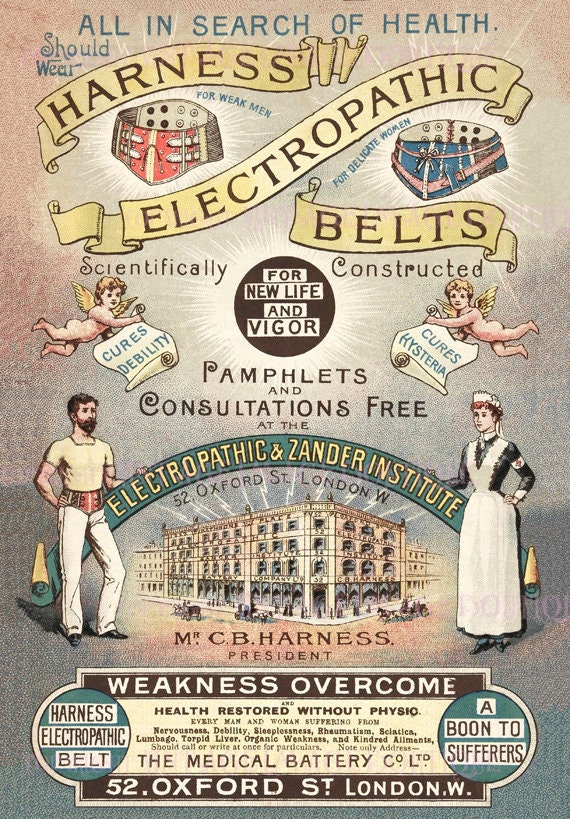
It is a Step that in its essence has been adopted, more or less, by the Democrats, especially by Bernie Sanders and Elizabeth Warren.Image result for quack medicine

Unfortunately, even those who favor the program on humanitarian grounds continue to struggle with the question, “How will you pay for it?”

They shouldn’t have to struggle. The real answer is quite simple, straightforward and honest.

Yet, either in ignorance or intent, the answers they give always seem to be wrong, convoluted, and unbelievable. They preach “quack economics.”

How much will Medicare-for-all save Americans? A lot.
Ryan Cooper, THEWEEK, February 21, 2020

The merits of Medicare-for-all, have been pushed off the front burner of the news stove.

But academic research in that area has not stopped. And over the past few months, several studies have examined one of the key questions on Medicare-for-all: namely, would it save American society money?

The moral and practical questions, “Would it improve America’s health and business efficiencies,” often are forgotten. But even the “save-money” question doesn’t receive a straight and believable answer.

The unanimous answer is yes. Putting everyone on a world-class universal Medicare program — with no premiums, no deductibles, no co-insurance, and almost no co-pays, paid for with taxes — would leave most of us with more money in our pockets.

And other research demonstrates that there would probably not be a giant increase in health care use if it is passed.

Before continuing with the THEWEEK article, we’ll give you the real answer to the title question: Federally funded Medicare, Parts A, B, and D, plus long-term care for everyone would:

  1. Save Americans many billions of dollars
  2. Improve America’s health
  3. Improve business efficiency, and
  4. Narrow the Gap between the rich and the rest.
  5. And it would not have to be paid for with taxes

To be fair, a few commentators have been keeping the discussion going. John Oliver, for instance, provided a quite good breakdown of Medicare-for-all in his show Last Week Tonight:

Oliver notes that some studies have found enormous savings, and even the libertarian Mercatus Center found a small cost improvement.

However,  the Urban Institute concludes it’s impossible to say what might happen on costs.

The Urban Institute did not actually study the Medicare-for-all bill sponsored by Bernie Sanders. Instead they substituted their own plan in which reimbursement rates are assumed to be 15 percent higher than in the Sanders plan. That’s why their cost estimate is so high, but it simply has nothing to do with what the actual bill in question might do if implemented.

By analogy, the Urban Institute saw the movie “Dumb and Dumber” and concluded that “The Godfather” was silly, frivolous fluff.

The moral: Never trust Urban Institute’s evaluation of economic proposals or movies.

Furthermore, they seriously underestimate the potential administrative cost savings for hospitals (relying on a fact sheet from a lobbyist group), and simply assume “utilization,” or use of medical services, will dramatically increase (more on this later).

Well, “relying on a fact sheet from a lobbyist group” certainly sounds like the kind of research you should trust, wouldn’t you say? It’s a real credit to the Urban Institute.

Christopher Cai and others surveyed the best 22 studies on the subject, and aggregated the results. They found that 19 of the analyses “predicted net savings … in the first year of program operation and 20 … predicted savings over several years; anticipated growth rates would result in long-term net savings for all plans.

More recently, Alison P. Galvan and others examined the cost of Sanders’ bill directly. They constructed a mathematical model to examine what setting the various parameters of a Medicare-for-all model would cost, and plugged in the figures in Sanders’ bill and their best estimates of other factors.

They calculated “that the Medicare-for-all Act would reduce national health-care expenditure by more than $458 billion, corresponding to 13.1 percent of health-care expenditure in 2017. We also project that the Medicare-for-all Act would save more than 68,500 lives every year, compared with the status quo.

All of the above would be quite exciting if federal taxpayers funded any Medicare for All plan — but better yet, federal taxpayers don’t fund any federal expenses.

The federal government, unlike state and local governments, is uniquely Monetarily Sovereign, so federal taxpayers (also unlike state and local taxpayers) do not fund federal government spending.

Alan Greenspan: “A government cannot become insolvent with respect to obligations in its own currency.”
Ben Bernanke: “The U.S. government has a technology, called a printing press (or, today, its electronic equivalent), that allows it to produce as many U.S. dollars as it wishes at essentially no cost.”
St. Louis Federal Reserve: “As the sole manufacturer of dollars, whose debt is denominated in dollars, the U.S. government can never become insolvent, i.e.,unable to pay its bills. In this sense, the government is not dependent on credit markets to remain operational.”

Federal taxes are destroyed upon receipt — they cannot be found in any money-supply measure. Try to learn how much money the federal government has, and you will not discover an answer. The answer is: “Infinite.”

The federal government creates brand new dollars every time it pays a bill.

Discussions of cost, as it relates to affordability or federal tax, are essentially meaningless.

That brings me back to utilization. Dr. Adam Gaffney found that when lots more people got access to care, use generally did not increase — instead it was redistributed across the population.

The people using the most care used a bit less, while the people formerly shut out of the system used a lot more.

This argument is sure to lead conservatives to shout about the dread “rationing,” presenting the Medicare-for-all future as some kind of Soviet breadline.

(However,)  Gaffney et al. cite suggestive evidence that medical providers under our current system tend to dial up their recommended care to keep their facilities full, even if that requires frivolous or unnecessary procedures, while dialing it back when everyone has coverage and there are plenty of customers.

In actual practice, not only would federal support for Medicare-for-All encourage the creation of more hospitals, more doctors, more nurses, and more health-care facilities, but America already verges on surplus.

That is why so many unnecessary procedures are recommended. In business, it’s called “filling the pipeline.”

America already has a tremendous amount of rationing — by price. About 28 million Americans have no health insurance, and a further 44 million are underinsured.

Across the country, every day tens of millions of Americans are rationing their insulin, taking taxis to the emergency room, walking around with wrecked joints or rotting teeth, or begging bystanders not to call an ambulance when they are grievously injured.

In the United States today, rich people can get all the care they want, even if it’s pointless or elective, because they can use their money to cut to the front of the line, while poor routinely have to wait for months or simply go without.

The U.S. currently has only 2.3 doctors per 1,000 residents — about a quarter fewer than Norway, a third fewer than France, and less than half as many as Cuba. We could surely use a couple hundred thousand more physicians — and if their pay was more in line with international norms, it wouldn’t even cost much.

This last is a critical point. For reasons having to do with the myth of unaffordability, current Medicare skimps on medical payments. You who have Medicare see the bills. A doctor bills $500 and receives $150.

So to pay for those years of education and intern semi-slavery doctors have to load up on patients and (sorry to say this) schedule questionably necessary procedures.

There are zero reasons why Medicare is so frugal. The federal government cannot run short of dollars. It has the infinite ability to pay for anything.

If Medicare paid more, there would be more medical facilities and more medical personnel. People and businesses go where the money is.

To give you an example: My former primary care physician saw 2,500 patients. Getting an appointment could take weeks.

I suggested he become a concierge doctor and cut his load. But he was locked in by his contract with his hospital group, and even then he can’t make hospital visits. Those are made by hospitalists — doctors who are hospital employees.

So, my wife and I decided to switch to concierge doctors. We pay an annual fee of $2,500 each, and our two doctors each have 300-400 patients.

Not only can we always get same-day appointments, if we wish, and not only do our doctors know us intimately, but even more importantly, when there is a crisis, the doctor is there for us.

Recently, my wife had a serious situation that required two separate, two-week hospital stays. Her concierge doctor, who was at her bedside every day, and knew her entire medical background, consulted with the various specialists. There was no need for medical personnel to waste time “getting up to speed.”

And it was very comforting, as doctor and nurses I didn’t know, rushed in and out of her room, to have her doctor, whom I did know, patiently explain to me what medicines and procedures were being administered and what the prognoses were.

That is the way medicine should work in America, and easily could work in America — personal, one-on-one, caring and knowing.

And it would work that way if not for the persistent myth of unaffordability that permeates every discussion of Medicare-for-All.

But that’s a question for the future. At bottom, the research is clear: Medicare-for-all would save the United States money, probably quite a lot, and save tens of thousands of lives.

Once a baseline of universal coverage is established, we can start fixing up the rest of the health care system. With some time and effort, Americans could have their health care cake and eat it too.

The history of medicine is littered with ignorance.

The phrenologist, astrologist, and the snake oil salesmen have been replaced by the debt Henny Pennys, who claim we simply can’t afford medical care for everyone (except for the rich, that is).

With some time, effort, and an understanding of what Monetary Sovereignty can accomplish, every man, woman, and child in America could have free, informed, professional medical care.

Sadly, ignorance has its penalties, and we suffer for it.

Those who regularly preach doom because of government budget deficits (as I regularly did myself for many years) might note that our country’s national debt has increased roughly 400 fold during the last of my 77-year periods. That’s 40,000%!

Suppose you had foreseen this increase and panicked at the prospect of runaway deficits and a worthless currency. To “protect” yourself, you might have eschewed stocks and opted instead to buy 3 1/4 ounces of gold with your $114.75.

And what would that supposed protection have delivered/ You would now have an asset worth about $4,200, less than 1% of what would have been realized from a simple, unmanaged investment in American business. 

Warren Buffett

Rodger Malcolm Mitchell
Monetary Sovereignty
Twitter: @rodgermitchell
Search #monetarysovereignty Facebook: Rodger Malcolm Mitchell

…………………………………………………………………………………………………………………………………………………………………………………………………………………………………………………………………………………………..

THE SOLE PURPOSE OF GOVERNMENT IS TO IMPROVE AND PROTECT THE LIVES OF THE PEOPLE.

The most important problems in economics involve:

  1. Monetary Sovereignty describes money creation and destruction.
  2. Gap Psychology describes the common desire to distance oneself from those “below” in any socio-economic ranking, and to come nearer those “above.” The socio-economic distance is referred to as “The Gap.”

Wide Gaps negatively affect poverty, health and longevity, education, housing, law and crime, war, leadership, ownership, bigotry, supply and demand, taxation, GDP, international relations, scientific advancement, the environment, human motivation and well-being, and virtually every other issue in economics.

Implementation of Monetary Sovereignty and The Ten Steps To Prosperity can grow the economy and narrow the Gaps:

Ten Steps To Prosperity:

1. Eliminate FICA

2. Federally funded Medicare — parts A, B & D, plus long-term care — for everyone

3. Provide a monthly economic bonus to every man, woman and child in America (similar to social security for all)

4. Free education (including post-grad) for everyone

5. Salary for attending school

6. Eliminate federal taxes on business

7. Increase the standard income tax deduction, annually. 

8. Tax the very rich (the “.1%”) more, with higher progressive tax rates on all forms of income.

9. Federal ownership of all banks

10. Increase federal spending on the myriad initiatives that benefit America’s 99.9% 

The Ten Steps will grow the economy and narrow the income/wealth/power Gap between the rich and the rest.

MONETARY SOVEREIGNTY