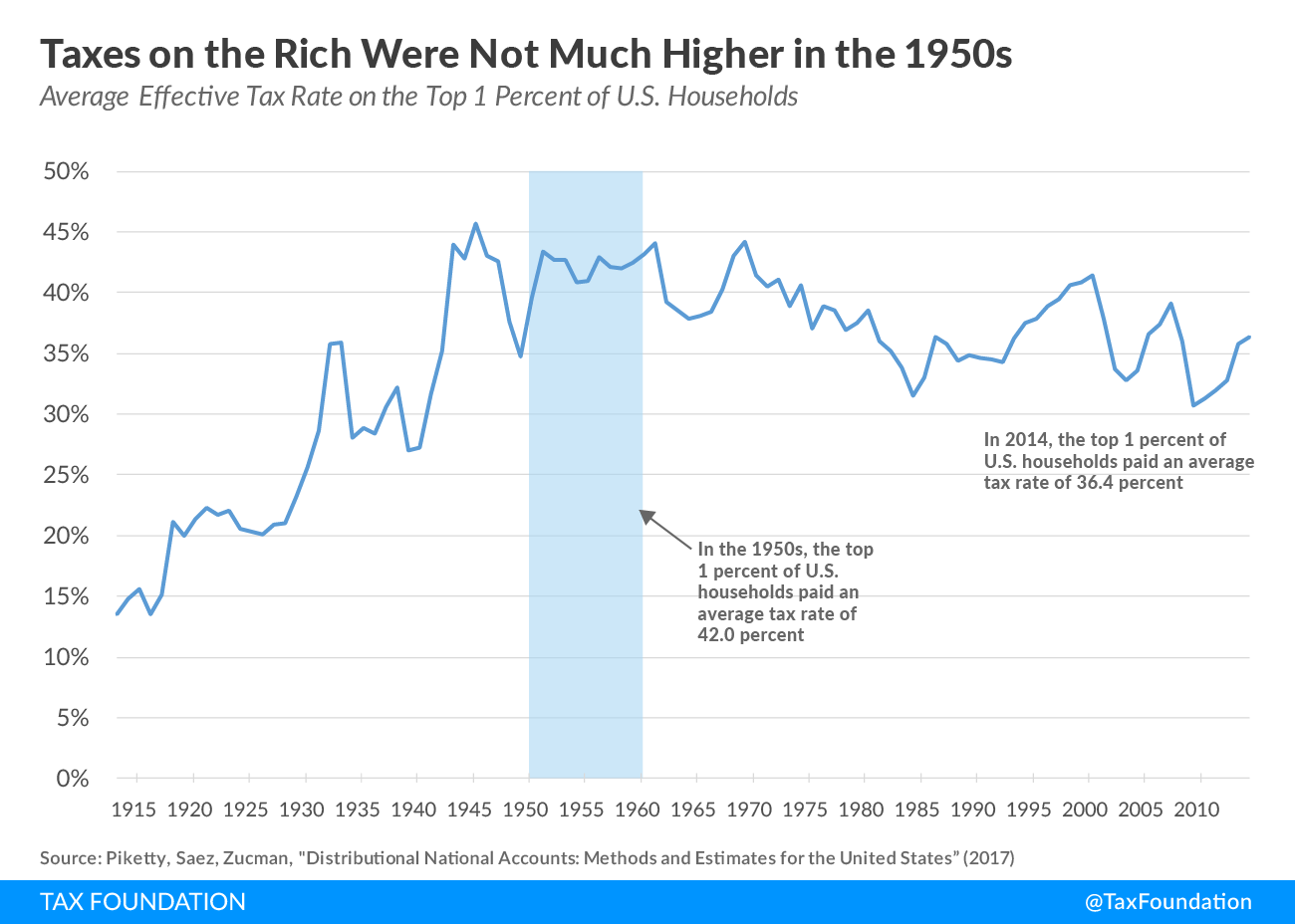
The rich will try to cut Social Security and Medicare by telling you the Big Lie in economics.

As you read this post, think about these two simple questions. What would happen if your city, county, and state stopped collecting taxes. What would happen if the U.S. government stopped collecting taxes? 

Later, if you’re in school, you can ask your economics professor. See if he/she knows.

—–/////—–

“Rich” is a comparative. A person earning $100,000 is rich if everyone else earns $10,000. But that person earning $10,00 is rich if everyone else earns $1,000.

The income/wealth/power Gap below you and above you determines how rich you are. The average annual income in 1930 was about $4,800. Adjusted for inflation, that’s equivalent to $85,000 today.

Thus, the wealthy need to make you poorer to make themselves richer. Here is how they plan to do it:

In a June 13 Fox Nation debate, Sen. Lindsey Graham said seniors may have to “take a little less” and “pay a little more in” when debating Social Security solvency, reports Knewz via MSN.

Graham commented while debating Sen. Bernie Sanders during a “Senate Project” debate.

There is not one legitimate reason why seniors will “have to” take less or pay more. Not one. The U.S. federal government, being Monetarily Sovereign, cannot run short of dollars.

Alan Greenspan:A government cannot become insolvent with respect to obligations in its own currency. There is nothing to prevent the federal government from creating as much money as it wants and paying it to somebody. The United States can pay any debt it has because we can always print the money to do that.”

And because the federal government cannot become insolvent, no federal government agency can become insolvent unless that is what Congress and the President want.

Social Security and Medicare are not funded by FICA taxes or other taxes. Like every other federal agency, these agencies, including Congress, the Supreme Court, the White House, the armed services, etc., are funded by new dollar creation.

Ben Bernanke: “The U.S. government has a technology, called a printing press (or, today, its electronic equivalent), that allows it to produce as many U.S. dollars as it wishes at essentially no cost.”

Keep these facts in mind as you read the following:

Senator Sanders: Bring your Social Security plan to the floor. All it does is raise taxes. People like me must take a little less and pay a little more to get out of this mess.

Quote from 60 Minutes: Scott Pelley: Is that tax money that the Fed is spending? Ben Bernanke: It’s not tax money… We simply use the computer to mark up the size of the account.

Even Sanders, a proponent of Medicare for All and increased Social Security parrots the Big Lie that federal taxes fund federal spending.

We must adjust the age again like Ronald Reagan and Tip — Tip O’Neil did. There is a bipartisan way forward. You describe problems, but your answer is always the government — it’s always socialism,” Graham said.

Graham deceivingly uses the epithet “socialism.” But it’s not socialism. Socialism is government ownership and control, not government funding.

Strangely, he doesn’t use that word when describing his own salary, which, in fact, is socialism, as is the Veteran’s Administration Hospitals, the military, and the U.S. court system.

The cost of supporting SCOTUS, POTUS, Congress, and many other approximately 1,000 federal agencies has increased, but we don’t hear that spending for those agencies needs to be cut.

Instead, federal spending goes up to accommodate increased needs. In 2023, the federal government spent $1.7 trillion more than it collected in taxes.

The federal government has spent over $33 TRILLION more than it has collected in taxes.

The federal government has spent over $33 TRILLION more than it has collected in taxes. Yet, the government has no problem paying its creditors.

Federal deficits are not a burden or obligation on anyone. A federal deficit is merely the number of growth dollars the government pumps into the economy. You and I don’t owe those dollars. Even the government doesn’t owe those dollars. They have already been paid to creditors.

No one owes the federal deficit or debt. Those are just record-keeping numbers.

Why, then, do people who know better (or should know better) talk about having to raise taxes?

Sanders admitted that Social Security “has a solvency issue,” but his proposal — also backed by Sen. Elizabeth Warren — would extend solvency for 75 years while increasing benefits for recipients by $2,400 per year.

Sanders’s proposal would ostensibly fund this expansion of Social Security via a tax on high-earning households, per CNBC.

While I have no object to a tax on high-earning households, it has several problems:

  1. It would have trouble passing Congress, whose members are bribed by the rich not to tax wealthy folk.
  2. Even if high-income were taxed at higher rates, the rich don’t pay those rates. They slip through tax loopholes Congress has given them.
  3. Most importantly, Social Security does not have a “solvency issue,” nor do taxes fund Social Security.

Social Security has an ignorance issue — Congress, the President, and the public wrongly claim FICA funds Social Security (and Medicare).

President Franklin D. Roosevelt, the originator of Social Security, instituted the FICA tax not to fund Social Security but to protect it. “We put those payroll contributions there to give the contributors a legal, moral, and political right to collect their pensions… With those taxes in there, no damn politician can ever scrap my Social Security program.”

Little did he expect that the “damn politicians” would find a way to kill Social Security by the death of a thousand cuts.

Originally, Social Security benefits were not taxable income. However, This was not a law provision, nor anything that President Roosevelt did or could have “promised.”

It resulted from a series of administrative rulings issued by the Treasury Department in the program’s early years. 

In 1983, GOP President Ronald Reagan and Congress changed the law by explicitly authorizing the taxation of Social Security benefits. This was part of the 1983 Amendments, and this law overrode the earlier administrative rulings from the Treasury Department.

Aside from the fact that federal taxes don’t fund federal spending, the federal government taxing its own benefits — the right hand gives, and the left hand takes away — defies logic.

And here is the ultimate irony. People who earn more receive higher benefits. Why?

Why does a person earning $100,000 a year receive higher Social Security benefits than a person earning $30,000 a year? Shouldn’t it be the other way around?

Federal poverty benefits are based on how little you earn. But Social Security is based on how much you earn. It’s a senseless formula based on the Big Lie that federal taxes fund federal spending.

Federal taxes fund nothing. The purposes of federal taxes are:

  1. To narrow the income/wealth/power Gap between the rich and the rest. (But because of tax loopholes, the rich pay a lower percentage of their income in taxes than the rest of us. Federal taxes actually widen the Gap.)
  2. To assure demand for the U.S. dollar by requiring taxes to be paid in dollars. (But there is no shortage of demand for U.S. dollars. Even people, businesses, and nations that don’t pay taxes want dollars.)
  3. To control the economy by taxing what the government wishes to discourage and giving tax breaks to what the government wishes to reward. (But by bribing Congress, the rich have twisted this purpose to their favor. They are the  ones being rewarded with tax breaks.)
  4. To fool the public into believing that their federal benefits are limited by taxes collected.

Does the White House have a solvency issue? The Supreme Court? Congress? The Army? The Air Force? The Central Intelligence Agency? The U.S. Treasury? The Federal Reserve?

No. These agencies never are said to be in danger of insolvency. Why do we see a special tax, ostensibly to support Social Security and Medicare, but no special taxes to support the White House, the Supreme Court, Congress, et al?

Because the function of FICA is not to fund Social Security and Medicare but to provide political cover for limiting these programs. They are programs supposedly to benefit the powerless. But the federal government neither needs nor uses tax dollars.

In fact, your federal tax payments are destroyed upon receipt by the U.S. Treasury. (See: “Does the U.S. Treasury Really Destroy Your Tax Dollars?”)

Congress and the President claim that taxes fund spending so they can pretend to be “forced” to cut benefits by blaming “insolvency.”

Graham also said that Sanders’ Medicare for All program would eliminate private-sector health care, which would be extremely costly.

“Costly” to whom? Cost means nothing to the federal government, which, being Monetarily Sovereign, has the infinite ability to pay any invoice to any creditor.

A “Medicare for All” would cost consumers nothing. That is the whole point of the program.

So, to whom would it be “costly.” Answer: The health insurance companies would lose all that lucrative income. That’s why every Senator in Congress has received bribes (aka “campaign contributions”) from health insurance companies — every single one.

Knewz reported that Sanders and 14 other senators introduced the Medicare for All plan in May to “guarantee health care in the United States as a fundamental human right to all.”

“There has to be some sense of responsibility here. You just can’t tax people into oblivion and turn every problem over to the government,” Graham said.

You can’t turn “every” problem over to the government. Still, we expect certain basics from our government — Enough food to feed our loved ones and ourselves, a safe place to live, and protection from attack by domestic criminals and foreigners. Education, and healthcare.

If you elected officials can’t provide those basics, who needs you? Get lost. We’ll elect someone who understands the purpose of government.

SUMMARY

The bottom line of this entire article is a straightforward truth. Unlike state/local governments, the U.S. federal government does not pay its bills with tax dollars. It destroys every tax dollar it receives.

State/local governments, being monetarily non-sovereign, survive on tax dollars. But, even if the federal government collected zero taxes, it could continue spending, forever. It cannot become insolvent.

Social Security and Medicare are federal agencies. They cannot become insolvent unless that is what Congress and the President want.

The government has the infinite ability to pay creditors by creating new dollars ad hoc. Having that infinite ability, the federal government does not borrow.

Treasury securities — T-bills, T-notes, and T-bonds– erroneously termed “borrowing” should be called “money storage.” The sole purposes of T-securities are:

  1. To provide a safe place to store unused dollars and
  2. To help the Federal Reserve control interest rates.

Every dollar deposited into T-security accounts remains the property of the depositors. They neither are touched, borrowed, nor owed by the government.  

The federal government pays all its creditors on time and in full. Thus, the federal debt merely is an accounting number that shows how many growth dollars have been pumped into the economy. Increasing the misnamed “debt” increases the growth dollars added to Gross Domestic Product.

Far from being a worrisome burden, the growing federal “deficit” and “debt” are absolutely necessary for a healthy economy.

Why isn’t every economist in America broadcasting this truth? That is a mystery I’ve not been able to solve.

Any ideas?

Rodger Malcolm Mitchell

Monetary Sovereignty

Twitter: @rodgermitchell

Search #monetarysovereignty

Facebook: Rodger Malcolm Mitchell

……………………………………………………………………..

THE SOLE PURPOSE OF GOVERNMENT IS TO IMPROVE AND PROTECT THE LIVES OF THE PEOPLE.


Why is medical care unaffordable for so many Americans?

We’ll begin with a few facts:
  1. The U.S. federal government is Monetarily Sovereign (See: Monetary Sovereignty.)  It created the first U.S. dollars from thin air, and it retains the unlimited ability to create more U.S. dollars. The government never unintentionally can run short of U.S. dollars. Even if all federal tax collections ended, the federal government could continue spending forever.
  2. State and local governments are monetarily non-sovereign. They can and often do run short of dollars.
  3. Because the U.S. government cannot run short of dollars, it has no need for tax dollars. In fact, it destroys all tax dollars upon receipt at the Treasury. (See: “Does the Federal Government Really Destroy Your Tax Dollars?“) Taxes are paid with dollars from the M2 money supply, and when they reach the Treasury, they cease to exist in any money supply measure. Thus, the federal government does not spend taxpayers’ dollars.
  4. By contrast, state/local governments do need and spend taxpayers’ dollars.
  5. Contrary to popular wisdom, federal spending does not cause inflation. Inflation always is caused by shortages of critical goods and services, usually oil, food, and labor. (See: “Cause of Inflation.”) Inflations can be cured by additional government spending to cure shortages.
  6. Federal deficit spending is necessary for economic growth. The greater the spending, the greater the growth. (See: “Four Reasons Why Federal Deficits Are Absolutely Necessary.“)
Keep those facts in mind as you read excerpts from the following article:New Oxfam Poll: Most Americans Believe We Should Help Working Poor |  HuffPost Impact

The Commonwealth Fund Health Care Affordability Survey, fielded for the first time in 2023, asked U.S. adults with health insurance, and those without, about their ability to afford their health care — whether costs prevented them from getting care, whether provider bills left them with medical debt, and how these problems affected their lives.

Many Americans have inadequate coverage that’s led to delayed or forgone care, significant medical debt, and worsening health problems.

While having health insurance is always better than not having it, the survey findings challenge the implicit assumption that health insurance in the United States buys affordable access to care.

Difficulties affording care are experienced by people in employer, marketplace, and individual market plans, as well as people enrolled in Medicaid and Medicare.

Private insurance is burdened by the profit motive, which restricts the number and amount of benefits offered. However the federal government has no profit motive and has the unlimited ability to create dollars. So why is Medicare inadequate?

For the survey, our analysis focuses on 6,121 working-age respondents, those 19 to 64. 

Survey Highlights

    • Large shares of insured working-age adults surveyed said it was very or somewhat difficult to afford their health care: 43 percent of those with employer coverage, 57 percent with marketplace or individual-market plans, 45 percent with Medicaid, and 51 percent with Medicare.
    • Many insured adults said they or a family member had delayed or skipped needed health care or prescription drugs because they couldn’t afford it in the past 12 months: 29 percent of those with employer coverage, 37 percent covered by marketplace or individual-market plans, 39 percent enrolled in Medicaid, and 42 percent with Medicare.
    • Cost-driven delays in getting care or missed care made people sicker. Fifty-four percent of people with employer coverage who reported delaying or forgoing care because of costs said a health problem of theirs or a family member got worse because of it, as did 61 percent in marketplace or individual-market plans, 60 percent with Medicaid, and 63 percent with Medicare.
    • Insurance coverage didn’t prevent people from incurring medical debt.Thirty percent of adults with employer coverage were paying off debt from medical or dental care, as were 33 percent of those in marketplace or individual-market plans, 21 percent with Medicaid, and 33 percent with Medicare.
    • Medical debt leads many people to delay or avoid getting care or filling prescriptions: more than one-third (34%) of people with medical debt are in employer plans, 39 percent in the marketplace or individual-market plans, 31 percent in Medicaid, and 32 percent in Medicare.
Healthcare insurance, whether private or government-funded, is inadequate. Given the fact that the federal government has infinite dollars, why are so many Americans suffering with too-costly-but-inadequate insurance? Medicare, for instance, is far less than comprehensive. Why does Medicare have Part A, Part B, Part C, and Part D, each with different options and costs? Why not simply a Medicare that covers everything for everyone at no cost? What Medicare Doesn't Cover Why, if the federal government has infinite money, are these expenses not covered, and why are there deductibles and added costs to complete coverages? You have been told, falsely, that the federal government is like state/local governments, business, you and me, in being monetarily non-sovereign. You have been told falsely, that the federal government spends taxpayers’ dollars and can run short of dollars. You have been told, falsely, that to provide benefits, the federal government must levy taxes and spend taxpayers’ money. It’s all a lie.

Alan Greenspan: “A government cannot become insolvent with respect to obligations in its own currency. There is nothing to prevent the federal government from creating as much money as it wants and paying it to somebody. The United States can pay any debt it has because we can always print the money to do that.”

Quote from former Fed Chairman Ben Bernanke when he was on 60 Minutes: Scott Pelley: Is that tax money that the Fed is spending? Ben Bernanke: “It’s not tax money… We simply use the computer to mark up the size of the account. The U.S. government has a technology, called a printing press (or, today, its electronic equivalent), that allows it to produce as many U.S. dollars as it wishes at essentially no cost.”

Statement from the St. Louis Fed: “As the sole manufacturer of dollars, whose debt is denominated in dollars, the U.S. government can never become insolvent, i.e., unable to pay its bills. In this sense, the government is not dependent on credit markets to remain operational.”

The U.S. government is not the only Monetarily Sovereign entity. For example:

Press Conference: Mario Draghi, President of the ECB, 9 January 2014 Question: I am wondering: can the ECB ever run out of money? Mario Draghi: Technically, no. We cannot run out of money.

Given its infinite money supply, why does the federal government not provide free, comprehensive, no-deductible insurance to every man, woman, and child in America? Why must you, as an American, risk bankruptcy, sickness, and death because your insurance is inadequate? What is the Big Lie? The Big Lie is the claim that federal taxes fund federal spending. To pay its bills, the federal government creates new dollars ad hoc by tapping computer keys. Whenever you read an article claiming the federal government is “spending taxpayers’ dollars; it is a lie. State and local governments spend taxpayers’ dollars; the federal government does not. Why are you being lied to, and where are the lies coming from? The lies are coming from the healthcare insurance industry, the media, the economists, and the politicians. It’s easy to understand why the insurance industry lies about the federal government’s not funding healthcare insurance: The profit motive. The insurance industry does not want to lose the huge profits in selling healthcare coverage. But why do the media, economists, and politicians lie? Because they are bribed. The media are bribed by advertising dollars and by ownership. The economists are bribed by university contributions and by promises of lucrative jobs in “think tanks.” The politicians are bribed by campaign contributions and by promises of lucrative jobs with industry. Who is doing the bribing? The very rich? Why are the rich bribing? Gap psychology says people grow richer and more powerful by widening the Gap between them and those below them in any income/wealth/power measure. That is the primary way the rich make themselves more affluent. How do the rich widen the Gap below them? They get more for themselves, but importantly, they make sure those below them get less. They use their influence to reduce the federal benefits paid to those less wealthy. The rich disseminate the lie that Medicare and Social Security are running short of dollars, so benefits must be reduced, and taxes must be increased (See: “Starve the Poor.”) What should be done? First, the useless, harmful FICA tax should be eliminated. Like all federal taxes, it funds nothing. Worse, it punishes the low-income worker and widens the Gap between the rich and the rest. Second, the federal government should pay for free, comprehensive Medicare for All, with no limits and no deductions. One free plan for everyone; no Part A, B, C, D. No Medicaid. No “Donut holes.” No Medicare Advantage plans. The public must learn that federal spending is beneficial, and it costs nothing. The more the federal government spends on healthcare, the more the overall economy will grow and prosper. Ignorance is the weapon used by the rich to dominate the rest. That is the reason medical services are unaffordable for so many Americans. Rodger Malcolm Mitchell Monetary Sovereignty Twitter: @rodgermitchell Search #monetarysovereignty Facebook: Rodger Malcolm Mitchell

……………………………………………………………………..

The Sole Purpose of Government Is to Improve and Protect the Lives of the People.

MONETARY SOVEREIGNTY
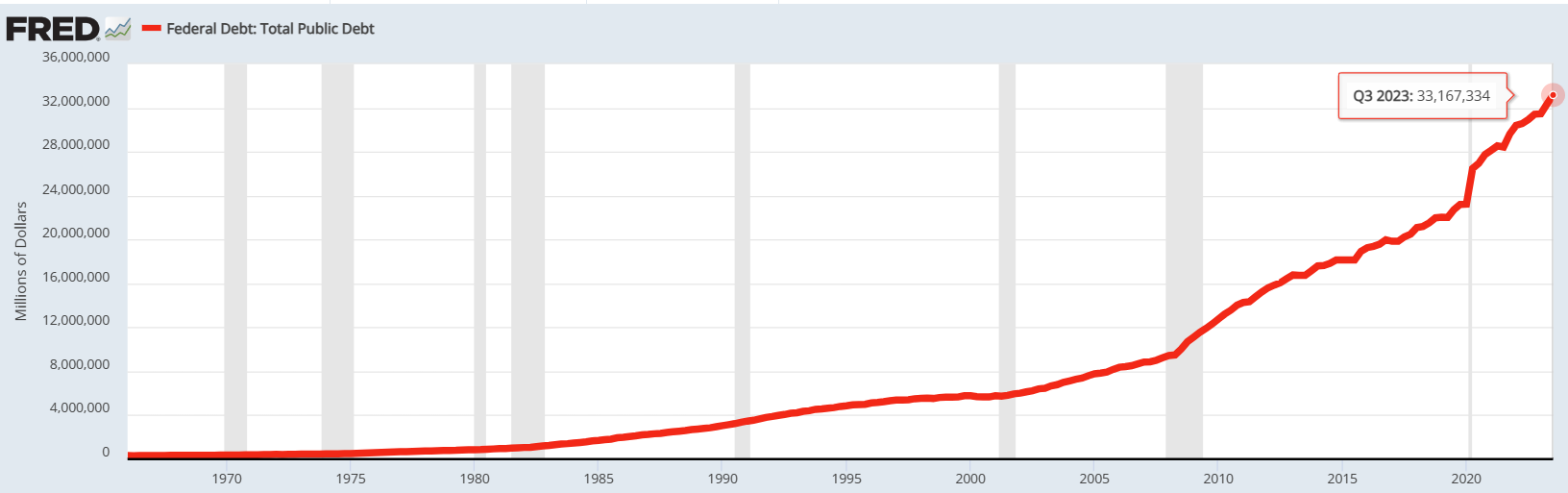
Is Medicare For All too good to be true and too much to ask?

Visualize this:
  1. A federally funded Medicare program that doesn’t just begin when you reach a certain age but covers every man, woman, and child in America, regardless of age or physical condition.
  2. That Medicare has no deductibles, so Medicare Supplements are unnecessary. All doctors, hospitals, nurses, and other healthcare professionals would be covered.
  3. It pays for all approved drugs, 100%.
  4. It covers every body part, including teeth (dental), eyes, and brain (psychiatry).
  5. It covers all equipment, from crutches to wheelchairs to eyeglasses.
  6. It covers all forms of long-term care with no age or dollar limits.
  7. It covers all forms of approved preventive medicine, including spas, gyms, fitness centers, exercise equipment, etc.
  8. It would be free to all. No healthcare taxes (FICA) would be collected. Companies would not fund employees’ health care insurance.
Further, visualize (correctly) that for the Monetarily Sovereign federal government, money is no object. The federal government can afford anything. Is that too good to be true? I thought about that question again when I read an article about Medicaid terminations. Here are some excerpts:

Lawsuit accuses state of ‘illegal’ Medicaid terminations By Caroline Catherman, Orlando Sentinel

Three Florida residents are suing the state’s Agency For Healthcare Administration and Department of Children and Families, alleging the public health insurance program for low-income and disabled people sent out illegal termination notices.

U.S. doctor: Treatment 'worth trying' in case of sick baby Charlie
Healthcare cancelled in Florida

A class-action lawsuit was filed Tuesday by the National Health Law Program and Florida Health Justice Project on behalf of a mom, her 2-year-old daughter, and a 1-year-old.

The suit alleges that Florida violated the Medicaid Act and the U.S. Constitution’s Due Process Clause by failing to give adequate notification to people losing coverage and failing to give them a shot at appealing.

The Due Process Clause has been interpreted by the U.S. Supreme Court as requiring “prior notice and a meaningful opportunity to be heard when an individual is in jeopardy of losing benefits,” according to the National Health Law Program.

Why did Florida terminate the health insurance coverage for some low-income and disabled people? The answer, of course, is “money.” Some bureaucrats, at the behest of Governor Ron DeSantis, decided that certain low-income and disabled should lead their miserable lives in greater misery so that the state of Florida can save money — money that perhaps could be used for shipping poor migrants to some other state? But why does the state of Florida need to save healthcare money when the federal government has infinite money? The Feds could pay for the above-described Medicare, so low-income and disabled people wouldn’t need to lack care. Here’s why:
    • The politicians on both sides of the aisle claim (falsely) that the government’s money supply is limited [Being Monetarily Sovereign, the federal government never unintentionally can run short of its sovereign currency, the U.S. dollar.
    • They claim (falsely) that the federal debt is “unsustainable” and will bankrupt the nation. [The federal government can instantly pay any bills of any size merely by clicking computer keys. It cannot be bankrupt for lack of dollars.]
    • They claim (falsely) that federal spending is funded by federal taxes and that Medicare itself is headed for insolvency. [Because the federal government has the infinite power to create dollars, it neither needs nor uses tax dollars, all of which it destroys upon receipt. As a federal agency, Medicare can run short of money only if the federal government wants it to.]
    • They claim (falsely) that federal spending for Medicare would be the dreaded “socialism.” [All governments spend money, but socialism is government ownership and control, not just spending.]
    • They claim (falsely) that federal deficit spending causes inflation. [Inflation never is caused by federal spending. All inflations are caused by shortages of critical goods and services, more commonly oil and food. Federal spending can cure inflation if used to obtain and distribute scarce goods.]
The federal government and the media have been crying “wolf” (or, in this case, “poverty”) since 1940, calling the federal debt a “ticking time bomb”. Yet, no one seems to notice that it never explodes.

Some people were told they had exceeded income limits but weren’t told Medicaid’s limits or how much DCF determined they made. 

There is no reason for federally funded medical insurance to have income limits. It’s possible to be wealthy while having a low income. Further, there are all kinds of income, each with different implications for a person’s ability to pay for medical services: Taxable, tax-free, liquid, hidden, deferred. No public purpose is served by income limits. The government simply should fund Medicare for everyone rather than creating Byzantine rules that accomplish nothing.

The mom of the 1-year-old named in the suit didn’t realize that the toddler was losing coverage until after her pediatrician told her that her child no longer had health insurance. She didn’t understand how to appeal, the suit states.

There is no reason for an infinitely rich government to put people through such heartache. It should pay everyone’s bills the same way, without “gotcha” rules.

“People don’t know that the reason for termination might be incorrect, that DCF was using the wrong information, or they made a wrong determination.

“They don’t know that they ought to challenge it. 

More than 182,000 Floridians have been issued notices saying they are no longer eligible for coverage since April, after the end of a COVID-era policy that banned states from dropping people from the program for low-income children, families, and young adults, even if they became ineligible.”

It’s ridiculous that the bureaucratically determined “end of COVID” policy should mark the beginning of rules that already have punished 182,000 Floridians and millions of other Americans.

“The scope of terminations in Florida and the State’s knowledge of inadequate notices are certainly egregious.

In a news release, “Unfortunately, similar patterns are happening in states across the country,” said Amanda Avery, senior attorney at the National Health Law Program.

The suit says Florida has known for years that their Medicaid termination notices are flawed.

In a 2018 case study of the state’s termination process, state officials reported “being well aware that notices sent to beneficiaries generate confusion” and that the “current notices that describe applicants as ineligible are considered insufficient explicit in terms of an explanation.”

The lawsuit asks that people who received “unconstitutional” notices regain Medicaid coverage until they are given new notices, with enough information to understand how and if they can appeal, Harmatz said.

Over the last few months, Florida has faced criticism for taking away sick kids’ coverage months before they were scheduled to undergo review, according to the state’s prioritization plan.

Ccatherman@orlandosentinel.com; @CECatherman Twitter

It’s another example of an economically ignorant government, intentionally or not, punishing its poorest, least-able-to-protest citizens. The solution is a free, comprehensive healthcare insurance coverage for every American paid for by an infinitely wealthy, knowledgeable, compassionate federal government. It’s not-too-good-to-be-true. It’s just good. Is that too much to ask? Rodger Malcolm Mitchell Monetary Sovereignty Twitter: @rodgermitchell Search #monetarysovereignty Facebook: Rodger Malcolm Mitchell

……………………………………………………………………..

The Sole Purpose of Government Is to Improve and Protect the Lives of the People.

MONETARY SOVEREIGNTY

Has your health insurer refused to cover a procedure or pharmaceutical? Time for Medicare for All?

ProPublica is an excellent source of accurate information about the government and its failings. (One might say it is the diametric opposite of FoxNews/QAnon/Tucker Carlson/Marjorie Greene/Donald Trump/MAGA, et al.). Here are excerpts from an article about private healthcare insurance. Follow the link below for the full text.

ProPublica Health Care How Often Do Health Insurers Say No to Patients? No One Knows. Insurers’ denial rates — a critical measure of how reliably they pay for customers’ care — remain mostly secret to the public. Federal and state regulators have done little to change that. by Robin Fields June 28, 5 a.m. EDT

It’s one of the most crucial questions people have when deciding which health plan to choose: If my doctor orders a test or treatment, will my insurer refuse to pay for it?Denial of Insurance Claims

After all, an insurance company that routinely rejects recommended care could damage your health and finances.

The question becomes more pressing as many working Americans see their premiums rise as their benefits shrink.

Yet, how often insurance companies say no is a closely held secret.

There’s nowhere that a consumer or an employer can look up all insurers’ denial rates — let alone whether a particular company is likely to decline to pay for procedures or drugs that its plans appear to cover.

In collaboration with The Capitol Forum, ProPublica has been examining the hidden world of insurance denials.

A previous story detailed how one of the nation’s largest insurers flagged expensive claims for special scrutiny; a second story showed how a different top insurer used a computer program to bulk-deny claims for some common procedures with little or no review.

Cigna, one of the country’s largest insurers, has built a system that allows its doctors to instantly reject a claim on medical grounds without opening the patient file, leaving people with unexpected bills, according to corporate documents and interviews with former Cigna officials.

Over a period of two months last year, Cigna doctors denied over 300,000 requests for payments using this method, spending an average of 1.2 seconds on each case.

The insurance industry’s profit motive supersedes the mission to help people pay their medical bills.

In 2010, federal regulators were granted broad authority through the Affordable Care Act to require that insurers provide information on their denials. This data could have meant a sea change in transparency for consumers.

But more than a decade later, the federal government has collected only a fraction of what it’s entitled to. And what information it has released, experts say, is so crude, inconsistent, and confusing that it’s essentially meaningless.

Why? Because healthcare insurers fund massive bribes (aka “election contributions”) to politicians at all levels of government. They want the information to be hidden.

The national group for state insurance commissioners gathers a more detailed, reliable trove of information. ProPublica requested the data from every state’s insurance department, but none provided it.

Two states collect their information on denials and make it public, but their data covers only a tiny subset of health plans serving a small number of people.

The main trade groups for health insurance companies, AHIP (formerly known as America’s Health Insurance Plans) and the Blue Cross Blue Shield Association, say the industry supports transparency and complies with government disclosure requirements.

Yet the groups have often argued against expanding this reporting, saying the burdens it would impose on insurance companies outweigh consumers’ benefits.

You just read excuse #1. “It costs too much.” Then when #1 doesn’t work, they do the Trumpian dance and come up with excuse #2::

“Denial rates are not directly comparable from one health plan to another and could lead consumers to make inaccurate conclusions on the robustness of the health plan,” Kelly Parsons, director of media relations for the Blue Cross Blue Shield Association, said in an email.

And then they follow up with #3, #4, and #5. Most claims are paid; there are errors, and doctors provide incomplete information.

The trade groups stress that a substantial majority of patient claims are approved and that there can be good reasons — including errors and incomplete information from doctors — for some to be denied.

Not to be content, we are treated to five more excuses, #6 (no context), #7 (doesn’t indicate quality), #8 (doesn’t say why), and #9 (doesn’t tell what happened after) and #10 (what the patient or doctor should do).

“More abstract data about percentages of claims that are approved or denied have no context and are not a reliable indicator of quality — it doesn’t address why a claim was or was not approved, what happened after the claim was not approved the first time, or how a patient or their doctor can help ensure a claim will be approved,”

AHIP spokesperson Kristine Grow said in a written response to questions from ProPublica. “Americans deserve information and data relevant to their health and circumstances.”

I’ll leave the pious generalities to remind you that the insurance industry is one of the most data-driven industries on earth. Insurance companies employ well-paid actuaries who spend their lives determining such things as:
  1. The likelihood of a claim
  2. The cost variables of each claim
  3. The coverages have proved to be and are likely to be the most expensive, and their cost?
  4. The claims that have been and should be denied, based on such factors as immediate cost, long-term cost, likely results of lawsuits and their costs, details that affect costs, subrogation probabilities, etc., etc. etc?
In short, insurance companies already have all the data at their fingertips, but they don’t want you to know them.

The limited government data suggests that insurers deny between 10% and 20% of the claims they receive. Aggregate numbers, however, shed no light on how denial rates may vary from plan to plan or across types of medical services.

Some advocates say insurers have a good reason to dodge transparency.

Refusing payment for medical care and drugs has become a staple of their business model, in part because they know customers appeal less than 1% of denials, said Wendell Potter, who oversaw Cigna’s communications team for more than a decade before leaving the industry in 2008 to become a consumer advocate.

“That’s money left on the table that the insurers keep,” he said.

The insurers do what they know they can get away with. That is what keeps PI (personal injury) attorneys in the business. If you watch TV, you might have noticed the hundreds of ads by lawyers who tell you that if they don’t collect, you pay nothing for their services. How can they all do that? How can they give away millions of dollars worth of services and still pocket millions of dollars for themselves? They know insurance companies too often deny claims that never should be denied. The insurance companies know it, too. When lawyers enter the picture, they feel confident they will collect. The insurance company knows it will lose. So they settle. It’s a multi-billion dollar game. But aren’t those billions of dollars in settlements costly? Yes, but less expensive than paying the claims that should have been borne in the first place.

At least one insurer disputes this. In an email, Potter’s former employer, Cigna, said that his “unsubstantiated opinions” don’t reflect the company’s business model.

In a separate written statement, Cigna said it passes on the money it saves “by lowering the cost of health care services and reducing wasteful spending” to the employers who hire it to administer their plans or insure their workers.

Blah, blah, blah. More double-talk. The undeniable fact remains that denying claims while paying their attorneys, paying claimants’ attorneys, paying settlements, and even paying penalties is still more profitable than paying rightful claims. They know it because their well-paid actuaries tell them.

The few morsels insurers have served up on denials stand in stark contrast to the avalanche of information they’ve divulged in recent years on other fronts, often in response to government mandates.

Starting last year, for example, insurers began disclosing the prices they’ve negotiated to pay medical providers for most services.

Experts say it’ll take similar mandates to make insurers cough up information on denials, partly because they fear plans with low denial rates would be a magnet for people already ailing.

Insurance companies want to cover you if you never need them. If you need them, they don’t want you.

“Health plans would never do that voluntarily, would give you what their claim denial rates are, because they don’t want to attract sicker people,” said Mila Kofman, who leads the District of Columbia’s Affordable Care Act exchange and previously served as Maine’s superintendent of insurance.

They are in the business to make a profit, not to help people. Compare the profit motivation of an insurance company with the motivation of, for example, Medicare, the sole purpose of which is to aid sick people. It’s an attitudinal thing. To Medicare, you are a patient. To an insurance company, you are a customer. To Medicare, you have medical problems. To insurance companies, you have costly claims.

About 85% of people with insurance who responded to a recent Kaiser Family Foundation survey said they want regulators to compel insurers to disclose how often they deny claims.

In September 2009, amid a roiling national debate over health care, the California Nurses Association made a startling announcement: Three of the state’s six largest health insurers had each denied 30% or more of the claims submitted to them in the first half of the year.

Think about that astounding 30% denial rate. Can you imagine so many erroneous claims?

California insurers instantly said the figures were misleading, inflated by claims submitted in error or for patients ineligible for coverage.

But wait! The insurance companies complained the reporting would be too burdensome, which means they didn’t yet have the information. They would need to gather it. But if they still need to gather the information, how do they know the figures are misleading?

The Affordable Care Act was a game changer when it came to policing insurers and pushing them to be more transparent.

The law aimed at insurers’ practice of excluding people with preexisting conditions, the most flagrant type of denial, and required companies offering plans on the marketplaces created under the law to disclose their prices and detail their benefits.

A less-noticed section of the law demanded transparency from a much broader group of insurers about how many claims they turned down, and it put the Department of Health and Human Services in charge of making this information public.

The disclosure requirements apply to health plans sold on the new marketplaces and employer plans that cover most Americans.

The law’s proponents in the Obama administration said they envisioned a flow of accurate, timely information that would empower consumers and help regulators spot problematic insurers or practices.

That’s not what happened.

The federal government didn’t start publishing data until 2017 and thus far has only demanded numbers for plans on the federal marketplace known as Healthcare.gov. About 12 million people get coverage from such plans — less than 10% of those with private insurance.

Federal regulators say they eventually intend to compel health plans outside the Obamacare exchanges to release details about denials but have made no move.

Within the limited universe of Healthcare.gov, Kaiser Family Foundation’s analyses show that insurers, on average, deny almost 1 in 5 claims and that some reject more than 1 in 3 each year.

But there are red flags suggesting insurers may not report their figures consistently. Companies’ denial rates vary more than expected, ranging from as low as 2% to as high as almost 50%.

Plans’ denial rates often fluctuate dramatically from year to year. A gold-level plan from Oscar Insurance Company of Florida rejected 66% of payment requests in 2020, then turned down just 7% in 2021.

That insurer’s parent company, Oscar Health, was co-founded by Joshua Kushner, the younger brother of former President Donald Trump’s son-in-law Jared Kushner.

That doesn’t sound suspicious at all. Nor does the fact that Jared received $2 BILLION unexplained dollars from the Saudis, but that’s another story.

An Oscar Health spokesperson said in an email that the 2020 results weren’t a fair reflection of the company’s business “for a variety of reasons” but wouldn’t say why.

A reasonable guess would be that the “variety of reasons” features, “We made up the numbers, and when they didn’t look good, we made up new numbers.”

“We closely monitor our overall denial rates, and they have remained comfortably below 20% over the last few years, including the 2020-2021 time period,” the spokesperson wrote.

It’s not clear what is “comfortable”about a 20% denial rate. When you buy insurance, do you feel good about “only” 20% of your claims being denied?

The federal government provides numbers on insurers’ denials of claims for services from what the industry calls “in-network” medical providers, those with contracts with the insurer.

But it doesn’t include claims for care outside those networks. Patients often shoulder more costs for out-of-network services, ramping up the import of these denials.

In recent years, doctors and patients have complained bitterly that insurers require them to get approval in advance for an increasing array of services, causing delays and, in some instances, harm.

Medicare doesn’t require prior approval, but private insurance does. Why? Because prior approval provides an additional venue for denial of claims, and almost never is litigated.

The government, however, hasn’t compelled insurers to reveal how many requests for prior authorization they get or what percent they deny.

These and other specifics — particularly about which procedures and treatments insurers reject most — would be necessary to turn the government’s data into a viable tool to help consumers choose health plans, said Eric Ellsworth, the director of the health data strategy at Consumers’ Checkbook, which designs such tools.

The U.S. Department of Labor regulates over 2 million health plans, including many in which employers pay directly for workers’ health care coverage rather than buying it from insurance companies.

According to the Kaiser Family Foundation, roughly two-thirds of American workers with insurance depend on such plans.

In short, employers of 2/3 of American workers are finding the insurance industry so profitable (and so crooked) they have decided to dip into that trough themselves. And how many employees are willing to risk suing their own employer for denying a claim?

In July 2016, an arm of the Labor Department proposed rules requiring these plans to reveal a laundry list of never-before-disclosed information, including how many claims they turned down.

In addition, the agency said it was considering whether to demand the dollar amount of the denied care cost, as well as a breakdown of why plans turned down claims or denied behavioral health services.

The disclosures were necessary to “remedy the current failure to collect data about a large sector of the health plan market,” as well as to satisfy mandates in the Affordable Care Act and provide critical information for agency oversight, a Labor Department factsheet said.

Trade groups for employers, including retailers and the construction industry, immediately pushed back.

Of course, they did. The companies have a captive audience –people held captive not only by their jobs but by ignorance of the facts — so the employers fight like hell to keep things as they are.

The U.S. Chamber of Commerce said complying with the proposal would take an amount of work not justified by “the limited gains in transparency and enforcement ability.”

How do they know what will be “the limited gains in transparency and enforecement ability”? They know because they know how much the insurance companies have been cheating  customers.

The powerful business group made it sound like having to make the disclosures could spark insurance Armageddon: Employers might cut back benefits or “eliminate health and welfare benefits.”

Fact: Those so-called “benefits” are not benefits at all. They are paid for by the employees in that they are deducted from employees’ salaries. How? The companies determine the cost of those “benefits” when determining what to pay people. The employer knows that if he pays someone a $50,000 salary, his actual cost must include his share of FICA, healthcare insurance, retirement, and all other so-called “benefits.”  That $50,000 salary comes to more than $60,000. When hiring for a $50,000 salary, the employer has to ask himself, “Is this guy worth more than $60,000?

Trade groups for health insurance companies, which often act as administrators for employers that pay directly for workers’ health care, joined with business groups to blast the proposal.

The Blue Cross Blue Shield Association called the mandated disclosures “burdensome and expensive.” AHIP questioned whether the Labor Department had the legal authority to collect the data and urged the agency to withdraw the idea “in its entirety.”

“Burdensome and expensive,” not because they don’t already have the data. They have them but they don’t want anyone to know them.

The proposal also drew opposition from another, less expected quarter: unions. Under some collective bargaining agreements, unions co-sponsor members’ health plans and would have also been on the hook for the new reporting requirements.

The AFL-CIO argued the requirements created a higher disclosure standard for plans overseen by the Labor Department.

To be fair and avoid confusion, the group said, the Labor Department should put its rules on ice until federal health regulators adopted equivalent ones for plans this proposal didn’t cover.

That’s the “It’s unfair to tell us to do the right thing if the other guys don’t do the right thing.” See, it’s all about “fairness.” And then, when regulators “adopt equivalent plans, we’ll offer another excuse. We have an endless supply of excuses.”

By the time the Labor Department stopped accepting feedback, Donald Trump had been elected president.

One trade association for large employers pointed out that the Affordable Care Act, which partly drove the new rules, was “a law that the incoming Administration and the incoming leadership of the 115th Congress have vowed to repeal, delay, dismantle, and otherwise not enforce.

The law survived the Trump administration, but the Labor Department’s transparency push didn’t. The agency withdrew its proposal in September 2019

A Labor Department spokesperson said the Biden administration has yet to make a plan to revive it.

By this time, you’re beginning to see a pattern. Those whose income relies on claims denial — insurance companies, politicians, unions, and employers — all fight against revealing the data to the public. The profit motive does not burden the Affordable Care Act and Medicare. Although Medicare does deny some claims, most of that is because of involvement with an unproven drug or procedure. And much of the rest has to do with the false belief that FICA finances claim payments. But FICA pays for nothing. All Medicare payments are financed by new dollar creation. Every dollar you pay into FICA is destroyed upon receipt by the federal government. (For an explanation of that startling fact, click here.)

Ultimately, the National Association of Insurance Commissioners, a group for the top elected or appointed state insurance regulators, has assembled the most robust details about insurance denials.

The association’s data encompasses more plans than the federal information, is more consistent, and captures more specifics, including numbers of out-of-network denials, information about prior authorizations, and denial rates for pharmacy claims. All states except New York and North Dakota participate.

Yet, consumers need access. The commissioners’ association only publishes national aggregate statistics, keeping the rest of its cache secret.

When ProPublica requested detailed data from each state’s insurance department, none would hand it over.

When even the government won’t disclose data like out-of-network denials, denial rates for pharmacy claims and other non-personal infomation, you know, for certain, that the data are hidden for a nefarious reason. You can be positive there is something to hide that should not be hidden.

More than 30 states said insurers had submitted the information under the authority commissioners are granted to examine insurers’ conduct. And under their states’ codes, they said, examination materials must be kept confidential.

The commissioners association said state insurance regulators use the information to compare companies, flag outliers, and track trends.

Regulators can make that comparison, but you are not allowed to. What do the regulators do with the information? Apparently, nothing.

Birny Birnbaum, a longtime insurance watchdog who serves on the group’s panel of consumer representatives, said the association’s approach reflects how state insurance regulators have been captured by the insurance industry’s demands for secrecy.

“Many seem to view their roles as protectors of industry information, as opposed to enforcers of public information laws,” Birnbaum said in an email.

That is why the insurance industry is so lavish with its bribes.

Connecticut and Vermont compile their own figures and make them publicly accessible. Connecticut began reporting information on denials first, adding these numbers to its annual insurer report card in 2011.

Vermont demands more details, requiring insurers that cover more than 2,000 Vermonters to publicly release prior authorization and prescription drug information that is similar to what the state insurance commissioners collect.

Perhaps most usefully, insurers have to separate claims denied because of administrative problems — many of which will be resubmitted and paid — from denials that have “member impact.” These involve services rejected on medical grounds or because they are contractually excluded.

Mike Fisher, Vermont’s state health care advocate, said there’s little indication consumers or employers are using the state’s information, but he still thinks the prospect of public scrutiny may have affected insurers’ practices.

The most recent data shows Vermont plans had denial rates between 7.7% and 10.26%, considerably lower than the average for plans on Healthcare.gov.

“I suspect that’s not a coincidence,” Fisher said. “Shining a light on things helps.”

SUMMARY The insurance industry bribes the politicians not to reveal statistics on claim denial. The reason” Claim denial is an integral part of the insurance industry business model. Too many denials must come not for medical reasons or for reasons the insurance industry wants you to know. They happen for profit reasons. A comprehensive Medicare plan for every man, woman, and child in America is a threat to the insurance industry. They wrongly claim that somehow, privately funded insurance is better than federally funded insurance. There is no functional reason why America needs privately-owned, for-profit insurance companies that collect medical dollars but provide no medical services. It is a costly scam. The insurance companies, in essence, tell you, “Give me your healthcare dollars. We’ll give some of them to doctors, nurses, and hospitals and keep as much as we can for ourselves.” What’s the purpose of having middlemen take some of your hard-earned medical dollars? It would be far better for the federal government to tell you, “You don’t have to give us anything. We’ll create the dollars and pay them to the doctors, nurses, and hospitals. It won’t cost you a cent. You and your doctors will make the medical decisions. We’ll just pay for them.” That is the way medicine should and could operate. When Bernie Sanders offered his Medicare for All plan, even his “weak tea” version of coverage was denounced as unaffordable and socialism. It is neither. The federal government, being Monetarily Sovereign, can afford anything that requires dollars, and has no need to collect taxes to pay for it. The federal government pays for everything by creating new dollars, ad hoc. And forget about that ignorant “socialism” claim:

Socialism social and economic doctrine that calls for public rather than private ownership or control of property and natural resources.

Merely paying for things, which all governments do, is not socialism. America needs a comprehensive, no deductible, leaning-over-backwards-to- be-generous form of Medicare for every man, woman, and child in America. No public purpose is served by private insurance companies, who not only extract dollars from the public for no common good, but require government supervision to (failingly) prevent fraud on the public. Further, they enrich the lawyers who must sue them. None of this benefits the public and all of it costs the public. A federally funded, comprehensive, no-dedictible Medicare for every man, woman, and child in America, would cost nothing, suffer from much less criminality, and in fact add growth dollars to the economy. Rodger Malcolm Mitchell Monetary Sovereignty Twitter: @rodgermitchell Search #monetarysovereignty Facebook: Rodger Malcolm Mitchell

……………………………………………………………………..

The Sole Purpose of Government Is to Improve and Protect the Lives of the People.

MONETARY SOVEREIGNTY