Why you cannot have healthcare insurance (unless you are rich or a politician).

The June 12, 2019 issue of the Chicago Tribune contained an article explaining why the middle classes and the poor don’t need healthcare insurance.

Here are some excerpts and comments:

Medicare chief: ‘For all’ plan will cost more
By Lisa Schencker Chicago Tribune

The Tribune sat down with Seema Verma, head of the federal Centers for Medicare & Medicaid Services and an appointee of President Donald Trump.

Verma opposes Medicare for All, the idea of expanding Medicare to cover all Americans, and the administration said earlier this year it supports a Texas judge’s ruling that Obamacare is unconstitutional.

Just for clarity, Medicare for All and Obamacare are two separate issues that are related in only two ways:

  • Both “Medicare for All” and “Obamacare” would provide healthcare insurance for the middle classes and the poor
  • Trump and the Republican party, while opposing both plans, have not offered an alternative that would provide healthcare insurance to the non-rich.

Q: The doctors who support Medicare for All say it would allow doctors and hospitals to spend less money on administration because they wouldn’t be dealing with multiple insurance companies. What are your thoughts on that argument?

Virma: One of the things I hear a lot is we should go to Medicare for All because of the lower administrative costs.

The reality is we’re not spending enough on administration within Medicare. There’s a lot of bureaucracy that goes on with the Medicare program in terms of access to technology, protecting taxpayers against fraud and abuse and it’s because we haven’t made those investments in administering the program like you would see in the private sector.

The main issue with Medicare for All and having the government take over the entire program, is that we’re not going to see savings.

It’s actually going to cost more, which means taxpayers are going to pay more, and when they’re paying more, that’s going to lead to rationing of care and problems with access to care.

Image result for bernanke and greenspan
Bernanke & Greenspan: It’s our little secret. Don’t tell the people we don’t use their tax dollars.

The above arguments all have to do with costs: “Administrative costs,” “protecting taxpayers,” “not going to see savings,” and “taxpayers are going to pay more.”

But all are based on the deception that federal taxpayers pay for federal spending. They don’t.

The U.S. federal government is unlike state and local governments in that the federal government uniquely is Monetarily Sovereign.

The federal government invented the U.S. dollar, created the very first dollars from thin air, continues to create dollars from thin air, and never can run short of dollars.

Even if all federal tax collections fell to $0, the U.S. federal government could continue spending unlimited amounts, forever.
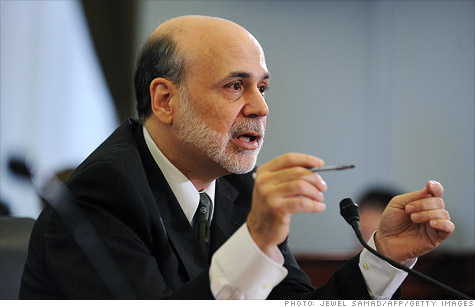
Image result for bernanke
The U.S. government has a technology, called a printing press (or, today, its electronic equivalent), that allows it to produce as many U.S. dollars as it wishes at essentially no cost.

Unlike state and local taxpayers’ dollars, that do help fund state and local government spending, federal taxpayer’s dollars are destroyed upon receipt.

Unlike state and local governments, which keep their dollars in private banks, the federal government does not store tax dollars for future use.

Instead, when paying for goods and services, the federal government uniquely creates brand new dollars, ad hoc.

(If anyone disagrees with the above statements, I invite you to tell me how much money the federal government has. Take all the time you need.) 

Q: According to some surveys, most Americans support a government-run health insurance system. How do you respond to that kind of public opinion?

A: When you dig a little bit deeper into those surveys and people understand that it means that they’re going to be stripped of their private coverage, that they’re not going to be able to make choices, that innovation is going to be impacted, that they may have longer wait times — when you put all those pieces together, Americans are not supportive of that.

This all is absolutely false.

Medicare does not “strip people of their private coverage,” nor would Medicare for All. No one is required to accept Medicare, and Medicare for All would require no one to give up their private health care insurance.

Image result for greenspan
Central banks can issue currency effectively without limit. A government cannot become insolvent with respect to obligations in its own currency

However, Medicare users opt for the government’s Medicare plans because they are cheaper and more comprehensive than private insurance plans. Ask any Medicare user whether he wishes he still was paying for his private plan.

Virma doesn’t explain what “choices” would be taken away, but anyone who chooses not to accept Medicare can make that choice, and buy private health care insurance.

Medicare coverages are vast, and generally provide as much or more medical choices, as do private healthcare insurance policies.

Because a federal program does not need to worry about profits, Medicare for All has a far greater capability to pay for the most expensive medical treatments, as well as long term care.

As for “innovation,” Medicare simply is a payment method. Neither Medicare nor private insurance impact medical innovation, with the exception of coverages, and here Medicare has a huge advantage: Medicare is not guided by the need to make a profit.

The so-called “longer wait times” merely refer to the fact that more people, not just the rich, would be able to pay for healthcare.

With Medicare for All, more people would be able to visit doctors for periodic checkups. This, of course, is a good thing.

On the other side, fewer poor people would use the emergency room as their primary care source, which would free up that function for true emergencies.

As Medicare, and almost every other function in a capitalist society demonstrates, when demand goes up, supply goes up.

Medicare for All would result in more hospitals, doctors, etc. in more convenient locations.

Q: For a lot of people, the bottom line is that seniors look forward to being on Medicare. People are eager to turn 65 so they can be on Medicare and no longer have to have private insurance.

If seniors like it so much, why can’t it work for everyone?

Virma: We need to have a solution that provides affordable health care coverage and that all Americans have access to that.

But the Medicare program was uniquely designed for seniors and those seniors have paid into the program their entire lives, and we need to make sure that program is protected and preserved for those beneficiaries, and address access to affordable coverage for other Americans.

Virma, a Trump appointee, claims to want “a solution that provides affordable health care coverage and that all Americans have access to that” — in short, Medicare for All.

Sadly, Virma’s party has done everything in its power to cut and eliminate those very programs: Medicare, Medicaid and Obamacare.

In essence, the Republicans say,  “I want everyone to be healthy, so let’s eliminate their healthcare.”

Salaried people (though not millions of others) have paid FICA taxes, but as we explained earlier, federal taxes do not fund federal spending (and in fact, only Medicare Part A is claimed to be funded by FICA).

Q: When it comes to the Affordable Care Act, a lot of people are unhappy with the way prices for health insurance have increased.

But they’re happy about the rules barring discrimination based on preexisting conditions and the disappearance of caps on how much insurers will pay for coverage.

There’s a feeling among some people that regulation is needed, that competition among insurers alone is not going to result in the best outcomes for people.

Virma: This administration supports protections for people with preexisting conditions and we understand there is some regulation that works well.

I think the issue is government overreach and going too far. While the (Affordable Care Act) has provided protection that we support, it has also driven up health insurance premiums.

This administration has given lip service to “protections for people with preexisting conditions,” but in reality, it has tried to eliminate the programs that provide those protections.

They call such protections, “government overreach” which is their description of any spending that does not benefit the rich.

Q: Should Americans continue to buy insurance through the Affordable Care Act exchange when the Trump administration has made it clear that it wants the law to disappear?

Virma: The law is not working. What we want to do is provide more affordable options for individuals.

Translation: “Not working” means, “Despite all our efforts to make the plan unworkable, it still is providing valuable benefits to low- and middle-income families and their children. Please ignore the fact that we have done nothing to ‘provide more affordable options for individuals.'”

Q: Would you encourage people to still buy on the exchange at this point?

Virma: For people that are eligible, we want to make sure they have as many options as possible, so if that works for them, then that’s certainly something that they might want to pursue.

Translation: We’ve tried to destroy all options for the non-rich, but we failed. Blame Senator McCain for saving Obamacare. So OK, go with what you have.

Q: When it comes to drug prices, insurers, pharmacy benefit managers and pharmaceutical companies all point the finger at one another.

Does the Trump administration believe in primarily directing its efforts toward the drug companies?
Virma: As we are talking about efforts to make health care more affordable, one of the things we’re looking at is drug pricing because that is one of the fastest growing areas of health care spending in the United States.

That being said, I do think there are fingers to be pointed in a lot of different directions. Some of the concerns we have with pharmaceutical companies is that Americans are not getting the best deals.

We also have a lot of concerns with the rebates that are going on in terms of (pharmacy benefit managers) and the rebates that are kind of behind the scenes deals that don’t result in seniors getting the best price possible.

One of the things we recently did was require pharmaceutical companies to actually put the prices of their drugs on TV ads. We’re tackling drug pricing from a lot of different angles.

“We’re tackling drug pricing from a lot of different angles.”

Translation: “We’ve done virtually nothing about drug prices, because drug companies’s profits go to our rich constituents. And sure, Medicare for All would pay for drugs, which would eliminate the cost issue, but we don’t want to mention that.”

Bottom line: Our Monetarily Sovereign federal government easily could fund a comprehensive, Medicare for All insurance plan that pays for doctors, nurses, hospitals, drugs, equipment, rehabilitation, and long-term care — with no deductions or tax collections.

But that plan would benefit the lower and middle-income people the most, which is exactly what the Republicans do not want.

So to prevent it, the Republicans say it’s “socialism” (it isn’t*), “unaffordable” (it isn’t*),  “unworkable (it isn’t),” “government overreach” (it isn’t*), and it “strips away choices and takes away private insurance” (it doesn’t*).

  • “Socialism” is government ownership and control over production, distribution, land, etc. Medicare for All is just an insurance policy funded by the federal government.
  • Nothing is “unaffordable” for our Monetarily Sovereign federal government.
  • Medicare for All is merely an expansion of Medicare, which already has proved to be “workable.”
  • Rather than “overreach,” it is exactly what a government should be doing: Insuring the safety, health and wellbeing of the citizenry.
  • Medicare for all, rather than stripping away choices, would provide more choices, as it would make more medical procedures financially available to Americans.

Rodger Malcolm Mitchell
Monetary Sovereignty
Twitter: @rodgermitchell
Search #monetarysovereigntyFacebook: Rodger Malcolm Mitchell

…………………………………………………………………………………………………………………………………………………………………………………………………………………………………………………………………………………………..

The most important problems in economics involve the excessive income/wealth/power Gaps between the richer and the poorer.

Wide Gaps negatively affect poverty, health and longevity, education, housing, law and crime, war, leadership, ownership, bigotry, supply and demand, taxation, GDP, international relations, scientific advancement, the environment, human motivation and well-being, and virtually every other issue in economics.

Implementation of The Ten Steps To Prosperity can narrow the Gaps:

Ten Steps To Prosperity:

1. Eliminate FICA

2. Federally funded Medicare — parts a, b & d, plus long-term care — for everyone

3. Provide a monthly economic bonus to every man, woman and child in America (similar to social security for all)

4. Free education (including post-grad) for everyone

5. Salary for attending school

6. Eliminate federal taxes on business

7. Increase the standard income tax deduction, annually. 

8. Tax the very rich (the “.1%”) more, with higher progressive tax rates on all forms of income.

9. Federal ownership of all banks

10. Increase federal spending on the myriad initiatives that benefit America’s 99.9% 

The Ten Steps will grow the economy, and narrow the income/wealth/power Gap between the rich and you.

MONETARY SOVEREIGNTY

Medicare for All: The real stumbling block

Imagine that everyone in America — you, your family, your friends and neighbors — everyone,  could receive health care from doctors, hospitals, rehab facilities, extended care facilities, and all pharmaceuticals and equipment, and never have to worry about cost.

Related image
A choice?

Imagine you being forced to choose between your financial devastation vs. sickness or death for your loved ones.

Then, imagine the federal government paying all your health-related bills, leaving you free from worry.

The rich in America already live in such a glorious world, but for most of us, current and future health affordability is an ongoing concern.

Yet, many non-rich Americans oppose even the concept of Medicare for All. Why?

1. It’s unsustainable. Debt fear mongers have been promulgating that myth for at least 80 years.In 1940, when the federal debt was $40 Billion, the fear-mongers were calling it a “ticking time bomb.

“Every year afterward, they have pounded the same lies into our brains: “The federal government will go broke. It’s “unsustainable.” Your children’s taxes will have to go up.”

Today, the debt is $20 Trillion, and the government has not gone broke, and indeed cannot go broke, and taxes have not risen.

2. It’s socialism. Actually it isn’t. It’s progressivism. Socialism is government ownership and control, not merely government support.

The federal government supports many things: Social Security, Medicare, Medicaid, poverty aids, education, etc. Shall we eliminate them?

Additionally, we do allow many forms of real socialism: The military, roads, bridges and dams, public libraries, NASA, the VA, etc. Shall we eliminate those, too?

3. It will cause inflation or hyperinflation. Although in the past 80 years, federal debt has risen an astounding 50,000%, inflation has averaged close to the Fed’s 2.5% target.

The reason is that the Fed has tools it needs to prevent and cure inflations, among which is: Control over interest rates.

Raising rates increases demand for the dollar, making it more valuable, so fewer dollars are needed to buy goods and services.

While federal “debt” (blue, i.e. deposits into T-security accounts) increased massively, inflation (red) increased modestly.

4. We don’t have enough resources. What this really means is: “If the poor start using doctors, hospitals, et al, then there won’t be enough doctors and hospitals for me.”

These objectors believe that a viable health-care system relies on the poor not being able to afford health-care — that “limited” resources should be reserved for the wealthier among us. This is America?

A nation’s resources grow with the money available to  pay for them. Funded by a government’s unlimited ability to pay, resources are unlimited.

5. It will take money and jobs from the health insurance industry. Right, just as public transportation takes money and jobs from taxi drivers.

Some jobs will be added in the federal sector. But in any event, the notion that the poor should do without healthcare so that the insurance industry can keep its jobs is ridiculous. It’s an example of misplaced priorities.

The above are fake reasons, used to conceal the real reason, which is described in the following, brief, “THE WEEK Magazine” (2/22/19) article:

Despite all the attention tech gets, the biggest five insurance and health benefits companies have greater revenues than the FAANGS – Facebook, Amazon, Apple, Netflix, and Google.

The top five health insurers and benefit managers expect &787 billion in revenue for 2019, compared with $784 billion for the FAANGS.

Pharmacy benefit manager CVS, the biggest of the health-care group, expects revenues of $246 billion.

In short, the insurance companies, that massively bribe politicians with campaign contributions and promises of lucrative employment later, don’t want the federal government to offer you better, more comprehensive, no deductible insurance at no cost.

OpenSecrets.org reveals:

One-third of Senate Democrats have cosponsored the Medicare for All Act, which Sanders introduced in September.

Democrats who haven’t cosponsored the bill received 146 percent more money on average from health insurance companies between 2011 and 2016 than those who have ($147,186 to $59,789)

If you’ve been told lies #1 thru #5, there is a good chance the source either is ignorant of economic reality or has been bribed by the health insurance industry.

Rodger Malcolm Mitchell
Monetary Sovereignty
Twitter: @rodgermitchell
Search #monetarysovereigntyFacebook: Rodger Malcolm Mitchell

…………………………………………………………………………………………………………………………………………………………………………………………………………………………………………………………………………………………..

The most important problems in economics involve the excessive income/wealth/power Gaps between the richer and the poorer.

Wide Gaps negatively affect poverty, health and longevity, education, housing, law and crime, war, leadership, ownership, bigotry, supply and demand, taxation, GDP, international relations, scientific advancement, the environment, human motivation and well-being, and virtually every other issue in economics.

Implementation of The Ten Steps To Prosperity can narrow the Gaps:

Ten Steps To Prosperity:

1. Eliminate FICA

2. Federally funded medicare — parts a, b & d, plus long-term care — for everyone

3. Provide a monthly economic bonus to every man, woman and child in America (similar to social security for all)

4. Free education (including post-grad) for everyone

5. Salary for attending school

6. Eliminate federal taxes on business

7. Increase the standard income tax deduction, annually. 

8. Tax the very rich (the “.1%) more, with higher progressive tax rates on all forms of income.

9. Federal ownership of all banks

10. Increase federal spending on the myriad initiatives that benefit America’s 99.9% 

The Ten Steps will grow the economy, and narrow the income/wealth/power Gap between the rich and you.

MONETARY SOVEREIGNTY

That didn’t take long: More debt-related idiocy

No sooner did I publish “It is 2019, and the phony federal debt ‘time bomb’ still is ticking (Thursday, Jan 24 2019)” when here comes a typically wrongheaded article:

New Poll: Medicare for All Is Popular Until You Explain How It Works
Support drops when you tell people it would require higher taxes, longer lines, and switching insurance plans. Peter Suderman|Jan. 24, 2019

A new poll shows that a clear majority of Americans support Medicare for All—until they are told what it is and how it would work.

The survey conducted by the Kaiser Family Foundation finds that 56 percent of the country supports a “national health plan, sometimes called Medicare for All” and an even larger percentage—71 percent—supports the idea when told that it would “guarantee health insurance as a right for all Americans.”

When told that such a plan would eliminate health insurance premiums, 67 percent say they’re in favor.

One way to look at these numbers is as strong public approval for the broad outlines of a single-payer health care system, which would create a single national health insurance plan run by the federal government and financed through taxes.

That public is support is why so many 2020 Democratic presidential contenders have been warming up to the idea.

No, Mr. Suderman, the plan would not be “financed through taxes.” And this lie is the primary cause of confusion.

But the more revealing part of the survey, I think, comes from the questions focused on the costs of single payer, all of which caused support for Medicare for All to drop below 40 percent.

Told that it would eliminate private health insurance and require people to pay more in taxes, for example, support fell to 37 percent.

Yes, if you lie about the plan, by claiming taxes would be increased, fewer people will want it. No big surprise, there.

Told that it would cause some medical treatments and tests to be delayed, support dropped even further, to 26 percent.

Yes, add another lie, and even fewer people will want it.

Medicare for All supporters might complain that these are loaded descriptions that don’t accurately capture the reality of single payer, which they say is about freeing people from premiums while offering a guarantee of access.

But these are, at a very basic level, just descriptions of what an American single-payer system would do.

Wrong. They are not accurate descriptions at all. They are lies.

The most prominent such plan is the one put forth by Sen. Bernie Sanders (I–Vt.), which would eliminate all existing private health insurance plans in a four-year period.

Although it allows for some secondary private coverage once the system is in place, it requires most everyone in the U.S. to enroll in a new, government-run plan.

Wrong, again. No one would be “required” to move to a free plan that covers more than a for-fee plan. People would do that voluntarily.

Arguably the whole point of the most ambitious single-payer schemes is to move everyone off private insurance and onto a single federally managed plan; that’s not possible unless people who currently have private insurance get new coverage.

Wrong, yet again. The “whole point” is to provide free, comprehensive health care insurance to all who want it. Original Medicare was one small step in that direction. No one is forced to accept it, but the vast majority of those eligible do.

Some single-payer proposal would make the transition more slowly, but coverage disruption is not incidental; it’s the point.

And wrong, again. It’s not coverage “disruption.” It’s coverage improvement.

Mr. Suderman distorts facts to make people believe insurance is being taken from them, and that they are being “moved off private insurance.”

No one needs to be “moved” anywhere. People will choose to move, just as they moved to original Medicare.

Think about it. If you were offered comprehensive health care insurance, that covered everything — doctors, hospitals, home care, pharmaceuticals — everything, and at zero cost, would the government have to “move” you?

Financing that plan would require a massive increase in federal spending—about $32 trillion over a decade, according to estimates from think tanks across the political spectrum.

Even with the most carefree attitude toward debt and deficits, it is nearly unthinkable that an increase in government spending of that size would not come with higher taxes, probably much higher taxes, which would likely affect the middle class.d

“Unthinkable” for those whose knowledge ends at the monetarily non-sovereign, gold standard years. But perfectly “thinkable” for those who understand that a Monetarily Sovereign government cannot run short of its own sovereign currency.

It is impossible for the U.S. federal government unintentionally to run short of U.S. dollars. It creates dollars, ad hoc, by the simple act of paying a creditor. The more dollars it pays to creditors, the more dollars it creates.

The contention that waiting times for health care services would be longer is the most debatable of the bunch, but given the experience of other countries and the probable design of a full-scale single-payer plan, it’s a more than a plausible outcome.

Government-run health care systems like the ones in the United Kingdom (which is fully socialized) and Canada (a territorial single-payer system) are notorious for having long wait times for services such as cancer treatment.

The “long-wait-times” bogeyman is put forth by the right wing and the ignorant, to scare the public.

The cause of long wait times is insufficient money. Obviously, any program that is underfunded will experience long wait times.

But just as there is no reason for a Monetarily Sovereign government to underfund, there is no reason for long wait times.

Furthermore, the Sanders plan calls for significant reductions to reimbursements for health care providers, which, if implemented, would almost certainly put some health care centers out of business, reducing the number of doctors and other medical professionals.

And although it’s possible, in theory, to imagine a system that doesn’t cut provider rates, that would be far, far more expensive, and would require even higher taxes while robbing supporters of one of their favorite talking points—that Medicare for All is much cheaper, overall, than the current system.

Reductions to reimbursements for health care providers are absolutely, 100% unnecessary. Sanders cripples his own plan by telling the public the “Big Lie,” that federal taxes fund federal spending.

The “Big Truth” is: Even if the federal government didn’t collect a single penny in taxes, it could continue spending, forever.

The function of federal taxes is not to fund spending but rather to:

1. Control the economy by encouraging some activities and discouraging others. (Example: Home mortgages are tax deductible, while rents are not, because the government wanted to encourage home ownership.)
2. To narrow the gap between the richer and the poorer.

Medicare for All proponents might be pleased with the show of support found in the survey, but what those questions mostly revealed was that people say yes when you ask them if they favor a health care system that is essentially cost-free.

Yes, cost-free is exactly what Medicare-for-All could be and should be.

Clear public support, in other words, only materializes when you ignore the practical reality of making a transition from a mixed public/private system to single payer—higher taxes, longer waits, and the loss of existing private insurance arrangements.

Three lies were bundled into one short paragraph:

  1. There is no need for higher taxes. (The federal government cannot run short of dollars.)
  2. There is no need for longer waits. (Original Medicare has not caused longer waits.)
  3. And there is no “loss” of existing insurance. (People voluntarily will move to free Medicare for all, just as they voluntarily moved to original Medicare.)

It truly is disgusting that both the proponents and the opponents of Medicare-for-All have not displayed the honesty and courage to tell the populace the truth.

Could it be that the public is not ready for the truth? Will all financial decisions continue to be based on the Big Lie.

Rodger Malcolm Mitchell
Monetary Sovereignty
Twitter: @rodgermitchell
Search #monetarysovereigntyFacebook: Rodger Malcolm Mitchell

…………………………………………………………………………………………………………………………………………………………………………………………………………………………………………………………………………………………..

The single most important problems in economics involve the excessive income/wealth/power Gaps between the have-mores and the have-less.

Wide Gaps negatively affect poverty, health and longevity, education, housing, law and crime, war, leadership, ownership, bigotry, supply and demand, taxation, GDP, international relations, scientific advancement, the environment, human motivation and well-being, and virtually every other issue in economics.

Implementation of The Ten Steps To Prosperity can narrow the Gaps:

Ten Steps To Prosperity:
1. Eliminate FICA

2. Federally funded medicare — parts a, b & d, plus long-term care — for everyone

3. Provide a monthly economic bonus to every man, woman and child in America (similar to social security for all)

4. Free education (including post-grad) for everyone

5. Salary for attending school

6. Eliminate federal taxes on business

7. Increase the standard income tax deduction, annually. 

8. Tax the very rich (the “.1%) more, with higher progressive tax rates on all forms of income.

9. Federal ownership of all banks

10. Increase federal spending on the myriad initiatives that benefit America’s 99.9% 

The Ten Steps will grow the economy, and narrow the income/wealth/power Gap between the rich and you.

MONETARY SOVEREIGNTY


If you could provide free, comprehensive healthcare to everyone . . .

If you were a multi-trillionaire, and you easily could afford to provide free healthcare to every man, woman, and child in America, would you do it?Image result for rich man

Imagine, no sick child dying from a treatable illness, no parent suffering without a doctor, no homeless person languishing in what should be curable pain — and you could do this simply by writing a check.

Would you do it?

Would you do it if it all could be accomplished by your command, without it costing you even one cent? All you would need to do is say, “Give everyone health care.” Would you do it?

Or would you just let sick people suffer and die too soon?

You actually do have that choice and you do have that power. Your choice is to tell your Senators and Representatives to create a comprehensive, no-deductible Medicare-for-All plan that covers all hospitals, all doctors, all medically approved treatments, and all pharmaceuticals.

And yes, it won’t cost you even one cent, because the U.S. federal government, being Monetarily Sovereign, creates new dollars, ad hoc, every time it pays a bill.

Federal finances are different from city, county, and state finances. These local governments are monetarily non-sovereign. They do not create dollars by paying bills. They can run short of dollars and become insolvent. They need and use tax dollars, which they deposit in banks.

By contrast, the government neither needs nor even uses tax dollars. Those federal tax dollars, that are taken from your paycheck or your checking account, are destroyed upon receipt. They never see a bank. They never are part of any money-supply measure.

Even if all federal tax collections, including federal income taxes, FICA payroll taxes,  federal luxury taxes, — every federal tax of every kind — were eliminated, the federal government could continue spending forever. It never can run short of its own sovereign currency, the U.S. dollar.

With Medicare for all, we’re not talking about socialism, where the government owns all the hospitals and employs all the health care providers. (That’s like the Veteran’s Administration).

We’re talking about the U.S. government being the insurer — taking the place of private insurance companies, but providing much more comprehensive coverage than any insurance company could afford — and not charging you or your employer anything.

If you were Monetarily Sovereign, like the U.S. government is, you easily could provide comprehensive, no-cost medical insurance to every American.

And yet, many Americans, not understanding the facts of Monetary Sovereignty, say they don’t want to change. They want to continue paying for private insurance. They want to continue paying FICA. They want to continue paying deductibles and being subject to limitations.

They want to continue paying the 20% copay Medicare charges. And they want to continue paying for Medicare Part D, or thousands, or hundreds of thousands, for expensive drugs. 

They want each insurance company to offer a different formulary, so it becomes necessary to hunt through multiple companies to learn whether certain drugs are covered, only to be surprised when the doctor prescribes a new drug that isn’t covered.

This is what people say they want, but it’s not what you really want. No one would.

We Americans have been deceived by the politicians, who have been bought and paid for by the insurance and pharmaceutical industries. Here are some of the lies we have been told:

1. Medicare-for-All is socialism.
As we said previously, with  socialism, the government owns and operates all the medical providers.

In Medicare-for-All, the government merely would pay for medical services, just as private insurance companies now do — just as Medicare now does, though Medicare is too limited.

2. Medicare-for-All would cost too much.
There are only two alternatives for medical services: Either someone pays or someone does without.

Thus, Americans have these choices:

*The federal government will pay for your medical care, or
*You will pay, or
*You will do without medical care.

Which do you prefer?

3. If the government pays, the federal deficit and debt would increase.
The so-called “federal debt” is the incorrect name given to the total of Treasury securities issued by the Treasury. They are similar to bank CDs.

The Treasury does not issue them to obtain dollars (which it can create endlessly), but rather to provide a safe “parking place” for unused dollars and to help control interest rates.

The Treasury could stop issuing T-securities tomorrow, and still continue to spend, forever.

For the past eighty years, misleaders have been telling the American people that the federal debt is an unsustainable, “ticking time bomb.” Yet here we are, the so-called “time bomb” still is ticking, and the economy still is sustaining and growing.

The federal debt is no burden on anyone — not on the government, not on you, not on your grandchildren. Federal taxes do not pay for the federal debt.

The “federal deficit” is the difference between taxes collected and dollars spent. No one ever “pays for” the deficit. It merely is a bookkeeping number, of no threat to anyone.

Increased deficits grow the economy by adding dollars to the private sector.

In fact, reductions in deficits lead to recessions and depressions, and increases in deficits cure recessions and depressions.

Deficit reductions lead to recessions (vertical bars), which are cured by deficit increases

4. Medicare-for-All would cause inflation.
The failure to take FICA dollars from your paycheck is not inflationary. The failure to take FICA dollars from employers is not inflationary. Paying for healthcare is not inflationary.

Inflations are caused by shortages, not by federal spending.

5. Medicare-for-All would bankrupt the pharmaceutical companies
On the contrary, the pharmaceutical companies would benefit.

Today, nearly all pharmaceuticals are paid for by insurance and by individuals. Under Medicare-for-All, the drugs would be paid for by the federal government, similar to a free, comprehensive version of Medicare Part D.

Have you ever seen drug commercials that say, “If you can’t afford your prescription contact us”? Patient assistance programs are run by pharmaceutical companies to provide free medications to people who cannot afford to buy their medicine.

Comprehensive Medicare-for-All not only would increase the number of people who purchase pharmaceuticals, but would relieve the drug companies of any obligation to fund patient assistance programs.

6. Medicare-for-All would bankrupt the healthcare insurance companies.
Actually, there is some truth to this. Over the years, many industries disappear, only to be replaced by new industries.

When I was very young, the way to make a phone call was to tell the number to a human operator, of whom there were hundreds of thousands. Also, horse-drawn carts were common. Those, and thousands of other industries, have disappeared, much to the benefit of the American public.

Private healthcare insurance, its complications, unfairness, and its onerous costs, all would disappear.

Unfortunately, even the people who favor Medicare-for-All, do not have the knowledge, the courage, or the honesty to tell you the truth: It can be funded 100% by our Monetarily Sovereign federal government.

Support for a national Medicare-for-all plan swings wildly after folks hear about the potential effects. It spikes when respondents are told that it would guarantee health insurance as a right or eliminate premiums and reduce out-of-pocket costs.

But favorability slumps when they are told it would eliminate private health insurance, raise taxes or threaten the current Medicare program.

And it tanks when told it would lead to delays in receiving care.

Many people don’t think Medicare-for-all would have an impact on them.

There is, in fact, no reason for taxes to increase. In fact, taxes would decrease dramatically. No more FICA paid by you or businesses.

There would be no “threat” to Medicare. It simply would be expanded.

Delays could be prevented by paying healthcare providers enough to encourage entry into the market. Given unlimited dollars, there is no reason to scrimp on payments.

Medicare-for-All would benefit everyone, the sick and the well, the young and the old, the rich and the poor.

Unfortunately, because of misinformation and disinformation, very few Americans are able to visualize a true Medicare-for-All program. So they assume the wrong threats.

A Kaiser Family Foundation January 2019 tracking poll revealed that Americans believe  Congress’ top priorities should be:

Percent who say the following is the top priority for Congress

Making sure Obamacare’s pre-existing conditions protections continue: 21%
Lower drug costs: 20%
Implementing Medicare-for-All: 11%
Repealing & replacing Obamacare: 11%e
Protecting people from surprise medical bills: 9%

See how misinformation permeates the answers? With Medicare-for-All, there would be no need for Obamacare,  pre-existing conditions would be protected, drug costs would be zero, and no one would need to worry about surprise medical bills.

Even Bernie Sanders, the foremost proponent of Medicare-for-All, misleads the public.

Bernie starts out well enough. Here’s what his site says:

BETTER COVERAGE 
Bernie’s plan would create a federally administered single-payer health care program. Universal single-payer health care means comprehensive coverage for all Americans.

Bernie’s plan will cover the entire continuum of health care, from inpatient to outpatient care; preventive to emergency care; primary care to specialty care, including long-term and palliative care; vision, hearing and oral health care; mental health and substance abuse services; as well as prescription medications, medical equipment, supplies, diagnostics and treatments.

Patients will be able to choose a health care provider without worrying about whether that provider is in-network and will be able to get the care they need without having to read any fine print or trying to figure out how they can afford the out-of-pocket costs.

WHAT IT MEANS FOR PATIENTS
As a patient, all you need to do is go to the doctor and show your insurance card. Bernie’s plan means no more copays, no more deductibles and no more fighting with insurance companieswhen they fail to pay for charges.

The above is perfect, exactly what the plan should do, though I’m not sure why you would have to show an insurance card. If you’re here, you’re covered. Perhaps there are overseas issues to be worked out.

But anyway, then Bernie goes completely off track. Here is what his web site says:

HOW MUCH WILL IT COST?
This plan has been estimated to cost $1.38 trillion per year.

THE PLAN WOULD BE FULLY PAID FOR BY:
A 6.2 percent income-based health care premium paid by employers.
A 2.2 percent income-based premium paid by households.
Progressive income tax rates.

37 percent on income between $250,000 and $500,000.
43 percent on income between $500,000 and $2 million.
48 percent on income between $2 million and $10 million.
52 percent on income above $10 million.

Taxing capital gains and dividends the same as income from work.
Limit tax deductions for rich.
The Responsible Estate Tax.
Savings from health tax expenditures.

If Bernie were honest and courageous, he would have said: THE PLAN WOULD BE FULLY  PAID FOR BY THE FEDERAL GOVERNMENT. Period.

The above-listed tax increases will pay for nothing. The federal government does not use tax dollars to pay for spending. Tax dollars are destroyed upon receipt.

But Bernie has gone along with the phony “affordability” issue, rather than fighting it.

Image result for bernanke and greenspan
Doesn’t Bernie know we don’t use tax dollars? Why should we? We create all the dollars we need.

Ben Bernanke: “The U.S. government has a technology, called a printing press (or, today, its electronic equivalent), that allows it to produce as many U.S. dollars as it wishes at essentially no cost.”

Alan Greenspan: “Central banks can issue currency, a non-interest-bearing claim on the government, effectively without limit. A government cannot become insolvent with respect to obligations in its own currency.”

St. Louis Federal Reserve: “As the sole manufacturer of dollars, whose debt is denominated in dollars, the U.S. government can never become insolvent, i.e., unable to pay its bills. In this sense, the government is not dependent on credit markets to remain operational.

Bernie understands this. He was assisted by Professor Stephanie Kelton, who not only knows Monetary Sovereignty quite well, but has taught it to Bernie.

So, I must assume Bernie believes the American people are not smart enough to understand it — and that they would say, “There is no such thing as a free lunch,” or “Why does the government collect taxes, if they don’t need them,” and other admissions of ignorance that substitute for knowledge.

And he doesn’t have the political courage to set them straight.

Is he right?

What about you? If Medicare-for-All could be accomplished just by your command, without it costing you even one cent, and all you would need to do is tell the politicians, “Give everyone health care,” would you do it?

Should Bernie do it?

Rodger Malcolm Mitchell
Monetary Sovereignty
Twitter: @rodgermitchell; Search #monetarysovereignty
Facebook: Rodger Malcolm Mitchell

…………………………………………………………………………………………………………………………………………………………………………………………………………………………………………………………………………………………..

The single most important problems in economics involve the excessive income/wealth/power Gaps between the have-mores and the have-less.

Wide Gaps negatively affect poverty, health and longevity, education, housing, law and crime, war, leadership, ownership, bigotry, supply and demand, taxation, GDP, international relations, scientific advancement, the environment, human motivation and well-being, and virtually every other issue in economics.

Implementation of The Ten Steps To Prosperity can narrow the Gaps:

Ten Steps To Prosperity:
1. Eliminate FICA

2. Federally funded medicare — parts a, b & d, plus long-term care — for everyone

3. Provide a monthly economic bonus to every man, woman and child in America (similar to social security for all)

4. Free education (including post-grad) for everyone

5. Salary for attending school

6. Eliminate federal taxes on business

7. Increase the standard income tax deduction, annually. 

8. Tax the very rich (the “.1%) more, with higher progressive tax rates on all forms of income.

9. Federal ownership of all banks

10. Increase federal spending on the myriad initiatives that benefit America’s 99.9% 

The Ten Steps will grow the economy, and narrow the income/wealth/power Gap between the rich and you.

MONETARY SOVEREIGNTY