Inflation is a general increase in the prices of goods and services. But what factors determine prices?
Economic growth: To lower prices, cut business costs. Recession: To lower prices cut business profits.
Sellers determine prices by answering the question, “What price would provide the most long-term profit?”
If pricing aims to maximize long-term profit, how is profit determined?
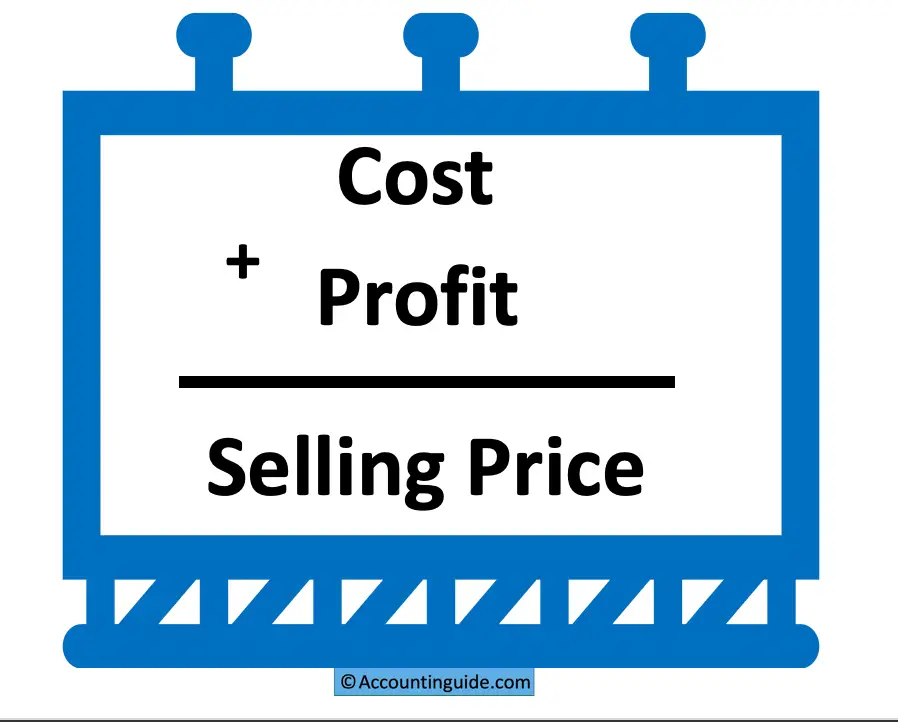
Profit is the difference between income and costs. The two ways to increase profit are to increase dollar sales and/or to decrease costs.This is all quite basic.
Pricing is constrained by costs, competitors, customers, and/or laws.
Costs generally set the lower boundary for pricing, as businesses only temporarily can allow costs to exceed total income.
The old joke, “We lose money on every sale, but make it up in volume” is just that. A joke, at least in the long term.
Competitors, customers, and/or laws set the upper boundary for pricing. Sellers set prices between the lower and upper boundaries by estimating where long-term profits are maximized.
Generally, sellers don’t cut costs just to be nice guys. Their sole purpose is to maximize long-term profits. If long-term profits were not a goal, sellers would have no motivation to cut costs.
This is all basic economics 101, yet economists seem to have forgotten that inflation is price increases and recession is economic growth decreases, and the two are unrelated. The opposite of inflation is not recession. The opposite of inflation is deflation.
You can have price increases with growth decreases, and that’s called “stagflation (stagnation and inflation).
And that is what the Fed and Congress are creating: Stagflation.
There are two ways to cut prices:
Cut business profits, which causes a recession, or
Cut business costs which encourages economic growth.
The best way to fight inflation, i.e. to cut prices, is to cut costs because higher costs lead to higher prices. An important component of most business costs is the cost of labor.
What if I told you there is a simple way to cut the cost of labor without cutting the number of employees or cutting pay scales?
Well, there is, and it is dead simple: Eliminate the FICA tax and provide free, comprehensive Medicare for All.
FICA costs employers 15,3% of all salaries under $143,000. This means, that for every salaried employee you, as the employer, pay as much as $22 thousand dollars per employee to the federal government. Those are dollars that come directly out of your profits.
They are non-productive dollars that must be made up with higher prices. They are inflation dollars.
And don’t think the employees pay any those dollars. If you, the employer, told your employees they no longer would have FICA deducted from their paychecks, you could lower gross salaries and still leave them with the same net salaries.
Employers pay the full 15.3% to the government.
As for health care, why has this become a financial burden for businesses? Why does your business pay for any part of health care insurance when the federal government can provide it? Those are lost, non-productive dollars.
And no, federal taxpayers do not fund federal spending. The government could provide Social Security and Medicare to every man, woman, and child in America without collecting a single dollar in taxes.
The federal government cannot run short of dollars. Not ever. Being Monetarily Sovereign, it has the unlimited ability to create U.S. dollars. It neither needs nor uses tax dollars.
The federal government’s trillions of tax dollars extracted from the economy are lost forever. Unlike state and local tax dollars, federal tax dollars are not recirculatedback into the economy. They are destroyed upon receipt.
The federal government always has infinite dollars, and adding tax dollars to that does not change how many dollars the federal government has.
IN SUMMARY
Inflation is a general increase in prices.
This increase always is caused by shortages of key goods and services, not by so-called “excessive government spending.”.
The Fed increases interest rates to ease those shortages by reducing demand, but reduced demand is the definition of recession. Thus, the Fed tries to cure higher prices by causing a recession.
The non-recession way to reduce higher prices is to reduce shortages and business costs.
Shortages can be reduced by more federal spending to acquire or encourage the production and distribution of scarce goods and services.
Business costs can be reduced by reducing employment and business taxes. When a business pays less in taxes, its prices can be lowered while generating the same desired long-term profits.
The instant solution to inflation is to eliminate FICA taxes and to provide free Medicare to every man, woman, and child. This will reduce business costs, allowing businesses to lower prices.
The long-term solution to inflation is for the federal government to address shortages by investing in the production and distribution of scarce items: Renewable and nuclear energy, shipping (roads, ships, railroads, airplanes), food, water, computer chips, lumber, and lower federal taxes on businesses and individuals below the upper-income group.
Federal taxes and interest rate increases are recessionary and do not prevent inflation.
Based on the Fed’s reliance on interest rate increases to combat inflation, I predict we will have a long period of stagflation until business profits increase sufficiently to cause business growth.
No problem. You haven’t hit the ground yet, so we won’t call it a “fall.” We’ll say it’s a step in the plan.
Today, Powell and his cronies debate whether to call where we are “a recession.” He’s worried about semantics as the economy tanks.
Please let me know if there is a more damaging, less effective way to fight inflation than what Powell now is doing.
Consider this: What action should the government take when there is a food shortage, causing food prices to rise?
Government price controls over food? Or,
Reduce federal benefits to the poor, so they will buy less food, thus curing the shortage. Also, reduce farm aid, so there will be even less food produced? Or,
Fund federal aid to farmers so they can produce more food and give people money so they can buy food?
Number 1 never works. It always leads to more shortages and a reduction in Research and Development, forcing even more shortages.
A classic example is rent controls, which reduce the number of new apartments and cause existing apartments to fall into neglect.
Yet politicians without knowledge of history or economics often turn to price controls.
Number 2 leads to recessions and depressions. Today, we have shortages of oil, food, housing, computer chips, and labor, and these shortages are causing prices to rise, what we call “inflation.” All those who are not rich starve.
Amazingly, the Federal Reserve has chosen solution #2. Raising interest rates makes many goods and services even less affordable, starving the poor and middle classes to cure inflation. Higher interest rates also make increased production more difficult, exacerbating shortages.
The federal government should provide aid to industries whose products are in short supply and to consumers so they can afford those products. Approach #3 is the only correct approach. Cure the shortages, and you cure the inflation.
Shortage of food: Federal aid to farmers. Education. Equipment. Insurance. Tax breaks.
Shortage of oil: Aid to drillers. Aid to electric car/truck makers. Support for R&D alternative energy
Shortage of labor: Eliminate FICA. Reduce tax rates on salaries. Provide Medicare for All.
Shortage of lumber: Aid growers. R&D for alternatives. Tax breaks for alternatives
Housing shortage: Aid home & apartment builders. Cut interest rates. Tax breaks for renters.
Powell: If she lives, I cured her. If she dies, I did everything I could.
Notice how curing inflation, i.e., fixing shortages, requires morefederal spending, not less.
Of course, the expenditures must be targeted toward eliminating the scarcities.
Powell’s interest rate increases only make reducing shortages more difficult.
Those higher rates impoverish consumers and hinder the ability of suppliers to produce.
Powell has found the ultimate way to increase shortages, worsen inflation, and cause a recession.
In effect, Powell is applying leeches to cure anemia.
Gap Psychology describes the common desire to distance oneself from those “below” in any socio-economic ranking, and to come nearer those “above.” The socio-economic distance is referred to as “The Gap.”
Wide Gaps negatively affect poverty, health and longevity, education, housing, law and crime, war, leadership, ownership, bigotry, supply and demand, taxation, GDP, international relations, scientific advancement, the environment, human motivation and well-being, and virtually every other issue in economics.Implementation of Monetary Sovereignty and The Ten Steps To Prosperity can grow the economy and narrow the Gaps: Ten Steps To Prosperity:
Ben Bernanke: “The U.S. government has a technology, called a printing press (or, today, its electronic equivalent), that allows it to produce as many U.S. dollars as it wishes at essentially no cost.“
Alan Greenspan: “A government cannot become insolvent with respect to obligations in its own currency.
Money is not a physical object. It is not a dollar bill or a coin, both of which are titles to money, not money itself.
Money is nothing more than numbers on a balance sheet. The federal government has absolute control over its balance sheets. It can change numbers at will, merely by passing laws, which is how it created the first U.S. dollars. It simply passed laws.
The federal government can add money to your checking account by instructing your bank to increase the account’s balance. It sends your bank a “Pay to the order of” document. New dollars are created and added to your account when your bank obeys those instructions.
Federal checks don’t bounce because Congress passes laws to prevent bouncing. Example: Every time we reach a “debt ceiling,” Congress raises it so that federal checks are honored.
That is how the federal government pays bills and creates dollars.
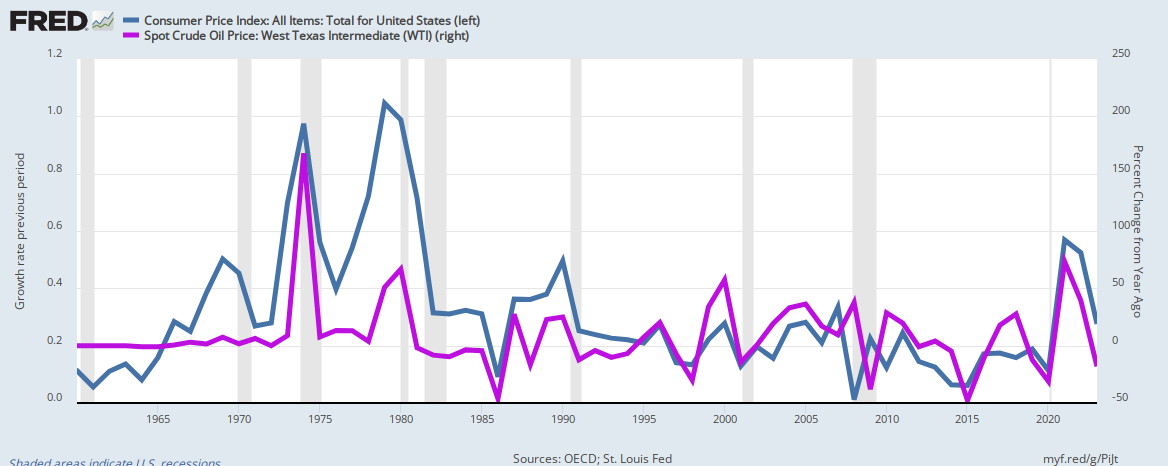
2. Federal spending never causes inflation. Shortages of critical goods and services cause inflation. The most common inflation-causing shortage is the shortage of oil.
The blue line is inflation. Purple is oil pricing. Vertical gray bars are recessions. Inflation tends to parallel oil pricing. The data show that oil shortages cause oil prices to rise, leading to inflation.
The best way to cure inflations is to remedy the shortages. Contrary to popular wisdom, federal spending does not cause the shortages that cause inflation.
Again, the blue line is inflation. The red line represents federal deficit spending. You’ll see no parallelism here. The data show that spending does not cause inflation.
The federal government cannot run short of dollars, and federal deficit spending does not cause inflation. Once you fix those two absolute truths in your mind, you will understand the rest of this post.
We cannot rely solely on a private sector, constrained by money supply and the profit motive, to finance what the world needs. The federal government is constrained neither by money supply nor profit motive.
Here is how I visualize paradise. No poverty. No hunger. No crime. No “bad” neighborhoods. Good healthcare for all. The Gaps between the richest and the rest are narrow. All who want a good education receive one. Children and the elderly receive good care.
There is plenty of good food, good water, suitable affordable housing, good air, and good weather.
How do youvisualize paradise?
Here are just a few of the things we could do:
1. Provide free, comprehensive, no-deductible healthcare and long-term care to everyone in America, regardless of age, income, or health history.
The government can pay for everything related to medical care: Doctors, nurses, hospitals, drugs, ambulances, equipment manufacturers, etc.
There would be no need for Medicare Part A, B, C, D, or Supplementary. The government would function as the insurance company.
It would not be “socialized medicine.” As with Medicare, the government only would pay, not administer. Doctors and nurses still would make all medical decisions.
2. Eliminate the Federal Insurance Contribution Act (FICA) tax on employees and employers. FICA is the ultimate regressive, anti-employment tax that is utterly useless.
Contrary to popular myth, FICA does not fund Social Security or Medicare. FICA dollars taken from employees and employers come from the economy. Those dollars are destroyed upon receipt by the U.S. Treasury.
3. Provide tax-free Social Security benefits to everyone in America. Each person would receive the same benefits. There would be no age, current employment, or previous employment history deductions.
This may be the most direct benefit to employ because it can be done at the stroke of a pen. President Obama did it temporarily in 2011. FICA should be cut permanently. Payroll-Tax Cut Measure Signed Into Law by Obama4. Provide free college for everyone who wants one. Education is so essential to America’s future that the founders of this nation made sure it was provided free to everyone — at least, for grades K-12, where monetarily non-sovereign (state & local) governments offer it.
Today, college is far more critical than it was back in the 1700s, so for the same reasons that grades k-12 generally are free, college should be free and accessible to all.
5. Pay a salary to all those attending school.Going to school is a job, like any other job. America needs an educated populace.
Many children, especially those of high school and college-age, don’t attend school because they and their families need income.
A school salary will help young people resist the temptation to quit school, commit crimes, or join gangs.
6. Federally funded school lunch for pre-school through grade 12. No means-testing, thus eliminating the stigma.
The National School Lunch Program (NSLP) is a federally assisted meal program operating in public and nonprofit private schools and residential child care institutions. It provides nutritionally balanced, low-cost lunches to children each school day.
About 7.1 million children participated in the NSLP in its first year. By 2016: 30.4 million children participated.
Like most federal programs, the NLSP is unnecessarily complex and means-tested.There is a lunch program (“high lunch” and “low lunch), a breakfast program (“severe-need” and “non-severe need), an after-school-snack program, a special milk program, a summer food service program, and a seamless summer program, each having various remuneration schedules.
Rather than having a government agency serve as America’s dietician, the entire breakfast/lunch program should be handled like Medicare, where the doctor makes the decisions and Medicare pays the bills.
For NLSP, the local dietician should schedule the meals and submit costs to the government. Not only would this be simpler, but it would encourage serving fuller, better, more nutritious meals.
7. Eliminate means-testing from all federal programs. Federal means-testing is complex and expensive. It arbitrarily defines who will receive benefits and eliminates the poor who almost, but not quite, are poor enough.
Means-testing stigmatizes those who receive benefits; it encourages cheating to qualify and discourages efforts to improve one’s means.
A classic means-testing example is the Supplemental Nutrition Assistance Program (SNAP, food stamps). It is a massively complex program with many requirements.
According to the Council on Aging:
*The Supplemental Nutrition Assistance Program, or SNAP, is the most extensive domestic hunger safety net program, helping low-income older adults achieve food security.
*Approximately three out of five seniors who qualify to receive SNAP are missing out on benefits—an estimated 5 million people.
*For older adults with low income, the $1,248 average annual benefits can mean the difference between having food and going without.
Federal means-testing has one purpose: To minimize the amount of money the federal government spends.
Yet, there is no reason the federal government ever needs to minimize spending. The federal government has infinite money; federal spending creates economic growth, and federal spending does not cause inflation.
Federal means-testing for benefit programs is all negatives with no positives. It is based on the false premise that the federal government’s finances are limited, like state and local government finances.
8. Financially support the research, development, and usage of renewable, low- or zero-carbon energy. We have begun to experience the terrible result of carbon-based fuels. Global warming is upon us, with even worse results coming.
The government must do much more to encourage zero-carbon energy: solar, wind, geothermal, hydrogen, hydro, and nuclear.
It must fund research on unknown or unproven energy sources, for instance, the massively expensive tokamak. Solar panel production should be supported, and installation should be free. Financial support should be given to companies offering existing forms of renewables and to people who use renewables.
That will help reduce climate change and take inflationary pressure off oil.
9. Financially support the research and development of low-carbon-fueled cars, trucks, buses, ships, trains, airplanes, homes, offices, andfactories. This includes funding research into more efficient batteries and electric infrastructure, transmission networks, superconductors, and charging stations.
10. Financially support the purchase and use of low-carbon-fueled cars, trucks, buses, ships, trains, airplanes, homes, offices, and factories. Often, the public is slow to adopt new technology, especially if it is not immediately and financially beneficial.
The federal government has the power to make adoption financially beneficial while R&D brings the technology into economic self-sufficiency.
11. Financially support water purification and desalination research, development, and distribution. The world is covered with water that isn’t good for drinking or growing crops. We need more efficient water purification, desalination, transportation, and usage.
America is losing its fresh water daily.
What is Water Scarcity?Water scarcity involves water crisis, water shortage, water deficit or water stress.
Water scarcity can be due to physical water scarcity and economic water scarcity. Physical water scarcity refers to a situation where natural water resources are unable to meet a region’s demand while economic water scarcity is a result of poor water management resources.
About 70% of the Earth’s surface is covered with water, and 3% of it is actually freshwater that is fit for human consumption. Around two-thirds of that is tucked in frozen glaciers and unavailable for our use.
“Water scarcity already affects every continent and around 2.8 billion people around the world. More than 1.2 billion people lack access to clean drinking water.””
Causes of Water Scarcity: Overuse, pollution, conflict, distance, drought, governmental access, global warming, illegal dumping, groundwater pollution, and natural disasters.
All of these can be moderated or eliminated by properly used government funding.12. Financially support farmers and advanced farming methods (for example, hydroponics, genetic engineering of more productive, healthful crops, reduced use of fertilizers, water, and pesticides).
The federal government financially should support the purchase of efficient farm equipment.
American farmers are nearing extinction. President Trump’s trade war hasn’t helped matters. After the United States slapped tariffs on Chinese goods, including steel and aluminum, last year, China retaliated with 25 percent tariffs on agricultural imports from the U.S.China then turned to other countries such as Brazil to replace American soybeans and corn.
Even large companies are facing unprecedented challenges; Dean Foods, a global dairy producer that buys milk from thousands of small farmers, filed for bankruptcy in 2019.
13. Give more financial support to pure scientific research. Unlike applied research, pure research is not designed to result in profits. Its purpose is to add to scientific knowledge. It is why we went to the moon and want to go to Mars, not for immediate gains but for learning.
Sometimes we learn much that is valuable today. Sometimes we find that much we may discover has value 100 years from now. We build a long-term knowledge base handed down through the generations. That is one of the qualities that differentiates humans from all other animals.
Even “failed” research has immediate value in showing what doesn’t or might work in the distant future. Failed research can be the beginning of serendipity.
The profit-motivated private sector cannot justify doing much pure research. For example, pharmaceutical companies are reluctant to spend money searching for the causes and cures of rare diseases. But that research is valuable, not only for curing rare diseases today, but it may lead to other purposes we hadn’t even imagined.
Consider such projects as weather prediction and control, meteor and comet protection, volcano prediction and control,
14. Support the states with a per-capita payment. Something like Social Security for the U.S. states.
State and local governments are monetarily non-sovereign.
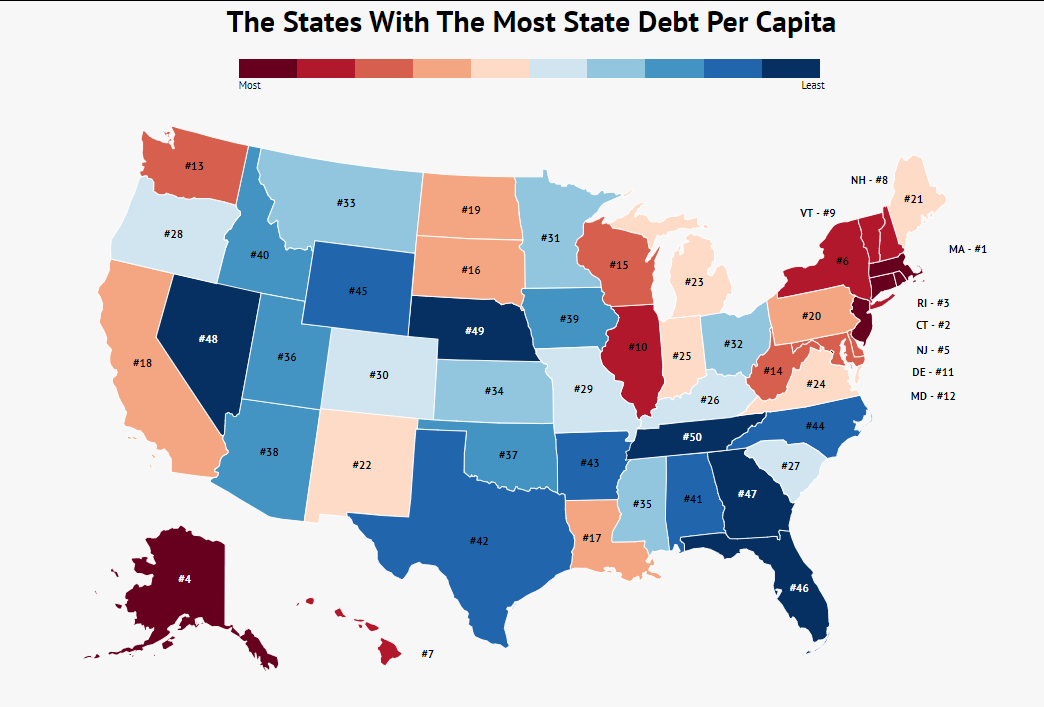
Unlike the Monetarily Sovereign U.S. government, states generally run short of the dollars they need to take care of local problems: Schools, streets, infrastructure, parks, garbage/recycling/water, police, fire departments, etc.
Most states borrow, which means they later will need to spend less (provide less to their residents), tax more (take more from their residents), or both.
The federal government should take those burdens from local taxpayers’ shoulders.
15. Federal support for the postal service. The mail is as vital to America as any other government service. There is no public benefit to requiring the postal service to pay its own way.
Although COVID-19 has choked off the USPS revenue in recent months, factors that arose well before coronavirus have contributed to the unsustainability of the Postal Service’s financial situation for years.
While the USPS generates enough revenue to cover its operating costs, its pension and retiree health care liabilities push its bottom line into the red. The USPS has operated at a loss since 2007.
Because of the rise of email and digital communication, USPS has seen the volume of First-Class Mail decline from a peak of 103.5 billion pieces in 2000 to just shy of 55 billion pieces in 2019.
USPS has tried to increase the delivery of marketing mail and has tried to compete with UPS and FedEx in the parcel delivery sector, including by forging a delivery deal with Amazon.
This has provoked criticism from (past) President Trump (Because of his personal animosity with Jeff Bezos.)
Can there be life without beauty?16. Increase support for the arts. The arts are the difference between seeing the world in color vs. drab shades of gray.
Science provides pronouns, nouns, and verbs, but the arts offer adjectives, adverbs, and interjections.
To live as humans, we need music, painting, architecture, poetry, and literature.
If you have visited or seen photos of Soviet-era architecture, you understand the cold, functional, inhumanity of a joyless world.
17. Eliminate income taxes on all but the top 1%. The Gap is too wide, and it is widening. In that regard, here is what FOXwrote:
In 2018, the top 1% of taxpayers – defined as those with adjusted gross income (AGI) (AGI) above $540,009 – earned 20.9% of all AGI and paid 40.1% of all federal income taxes, according to data from the Tax Foundation.
The group paid more in income taxes (at about $615 billion) than the bottom 90% of taxpayers combined ($440 billion).
Do you see what’s wrong with what the mouthpiece for the rich wrote? That 20.9% figure is bogus. Much of the income the top 1% receives isn’t counted in AGI (Adjusted Gross Income.)
Think of the fully paid, comprehensive health insurance, travel, meals, vacations, apartments, stock options, entertainment, clothing, taxis, and other expenses that companies spend on behalf of key employees.
You pay for those things using your AGI dollars, but the upper 1% doesn’t. The richest among us may not remember what it’s like to write a personal check. Do you think Donald Trump even carries a wallet?
Then there is real estate depreciation, which is how billionaire Donald Trump pays fewer tax dollars than you did.
And remember, FICA and other taxes paid by the “lowly” 99% are not paid by the 1% who don’t take salaries.
GOVERNMENT WASTE
Waste is bad. The word “waste” is a pejorative. State and local government waste comes out of your pocket.
But federal waste is another matter. The dollars cost you nothing. In fact, wasted federal spending adds stimulus dollars to the economy.
Of course, it would be far better for those dollars to have produced something of value, but the mere spending benefits us all.
So, don’t worry so much about wasted federal spending. Of course, we want federal dollars to be functional, but even the most outrageously wasted dollars — bridges to nowhere — still add to the nation’s economic growth.
SUMMARY
There is so much the wealthiest entity on the planet — the U.S. government — could do to benefit Americans and the world.
But, the government is restricted by the widespread false belief that federal finances are like state and local government finances.
That false belief seems logical to the private sector, which is monetarily non-sovereign and limited in what it can spend.
I have listed several areas where the populace would benefit from federal money input. You probably can think of many others.
None of these suggestions involves socialism, which is ownership and control. All the federal government would be asked to do is provide money.
The federal government already has the power to bring us closer to paradise. You only need to understand the two essential truths and convey them to the world:
The federal government cannot unintentionally run short of dollars.
Federal deficit spending does not cause inflation and often can cure inflation.
Scott Pelley: Is that tax money that the Fed is spending?
Ben Bernanke: It’s not tax money… We simply use the computer to mark up the size of the account. (Quote from Ben Bernanke when, as Fed chief, he was on 60 Minutes:)
Statement from the St. Louis Fed:“As the sole manufacturer of dollars, whose debt is denominated in dollars, the U.S. government can never become insolvent, i.e., unable to pay its bills. In this sense, the government is not dependent on credit markets to remain operational.”
Press Conference: Mario Draghi, President of the ECB, 9 January 2014Question: I am wondering: can the ECB ever run out of money?Mario Draghi: Technically, no. We cannot run out of money
Gap Psychology describes the common desire to distance oneself from those “below” in any socioeconomic ranking and to come nearer those “above.” The socioeconomic distance is referred to as “The Gap.”
Wide Gaps negatively affect poverty, health and longevity, education, housing, law and crime, war, leadership, ownership, bigotry, supply and demand, taxation, GDP, international relations, scientific advancement, the environment, human motivation and well-being, and virtually every other issue in economics.Implementation of Monetary Sovereignty and The Ten Steps To Prosperity can grow the economy and narrow the Gaps:
Ten Steps To Prosperity:
This paper comes at a significant moment in our history.
The purpose of government is to improve and protect the lives of a nation’s residents. But here is why the American government can’t do that job:
In his March 1, 2022, State of the Union speech, President Biden promised to reduce the federal deficit and debt.
The audience stood and cheered, not knowing or not caring that what he really told them was, “I’m going to cut the net amount of money the federal government will send into the economy, and if I succeed, we’ll have a recession or depression.”
“Reduce the federal debt” means “take dollars from you Americans and give them to the federal government.” Is that something to cheer about?
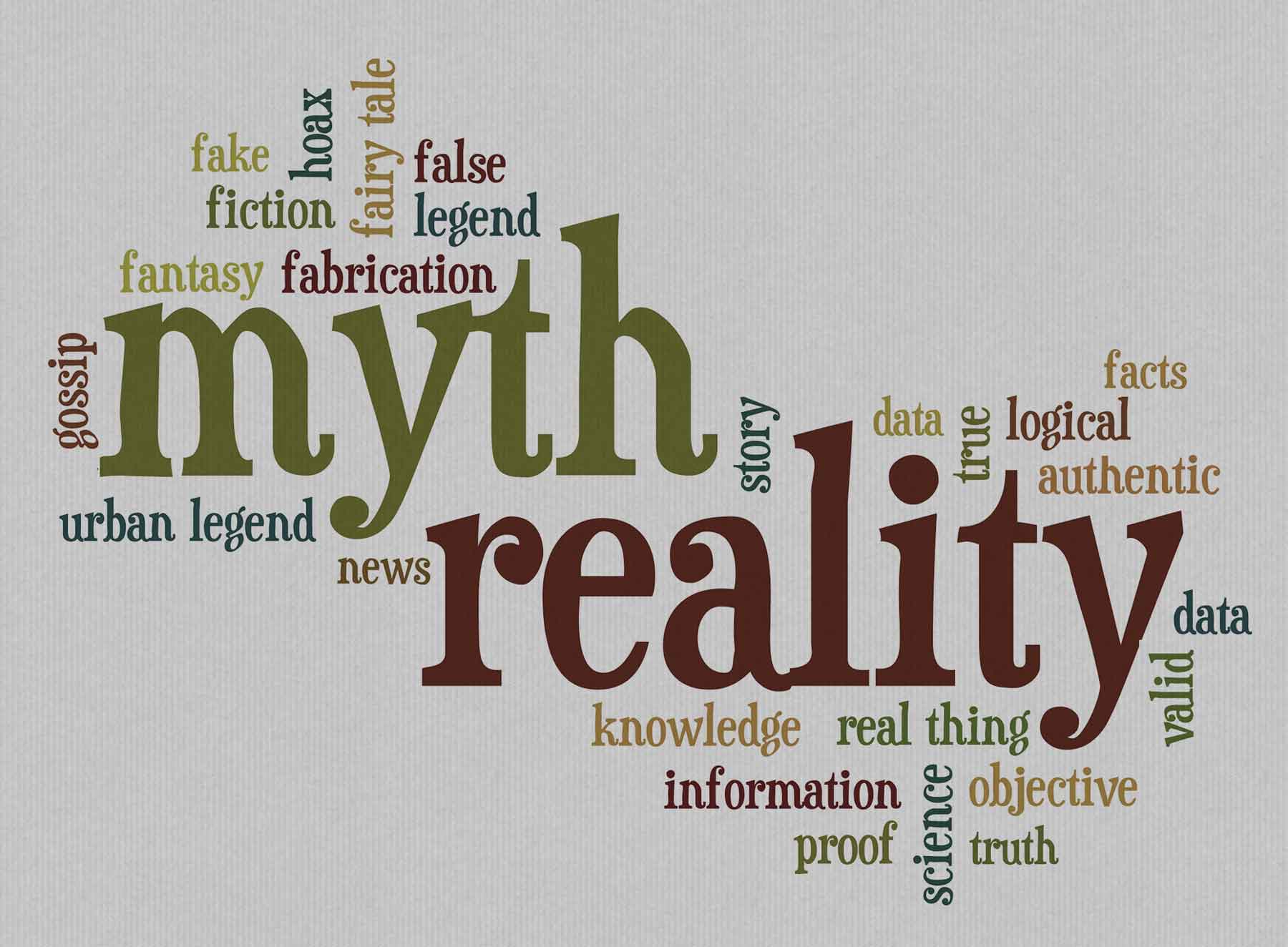
Or is the need to cut the federal debt just a Common Myth?
Economics is filled with Common Myths that have no basis in data. For example:
Common Myth: The federal government should handle its finances like you and me.
Reality: In the beginning of the U.S., the federal government created laws from thin air, and some of those laws created the U.S. dollar from thin air.
There was, and remains, no limit to the number of laws the government can create, just as there was, and remains, no limit to the number of dollars the government can create.
This fact is known as “Monetary Sovereignty.“
Unlike state and local governments, unlike businesses, and unlike you, and me, the federal government cannot unintentionally run short of its own sovereign currency, the U.S. dollar. The U.S. federal government has available to it, infinite dollars.
The government creates dollars ad hoc, by paying its bills. The more bills the government pays, the more dollars it creates.
To pay a creditor, the government sends instructions, in the form of checks or wires (“Pay to the order of”), to each creditor’s bank, instructing the bank to increase the balance in the creditor’s checking account.
The instant the creditor’s bank obeys those instructions, new dollars are created and added to the M1 money-supply measure.
Common Myth: The federal debt should be reduced.
Reality: The federal “debt” is not a debt of the federal government or of taxpayers. It is not even a debt. It is the total of deposits into Treasury security accounts.
These accounts resemble safe-deposit accounts, the contents of which our government, being Monetarily Sovereign and having the infinite ability to create its own sovereign currency, never needs or touches.
Just as the contents of your bank safe deposit box are not your bank’s debt, the contents of T-security accounts are not the government’s debts. They are dollars you own in your T-security account that eventually you will transfer to your checking account.
The notion of the government struggling to reduce the debt is ludicrous. Not only does the federal government have absolute control over the amount of deposits in T-security accounts, but there is no reason to reduce these deposits.
They are not a burden on the government or on future taxpayers.
Common Myth: Taxpayers or your grandchildren will be liable for paying off the debt.
Reality: When you invest in a T-bill, T-note, or T-bond, you take dollars from your checking account and deposit them into your Treasury Security account. There your dollars remain, accumulating interest until account maturity, at which time your dollars are returned to you.
The federal government does not remove those dollars for any purposes.
Returning your dollars is no burden on the government or on future taxpayers. No tax dollars are involved. Your grandchildren will not pay for the federal “debt.”
To pay off the “debt,” (which isn’t a debt) the dollars in your T-security accounts simply are returned to you. It is a simple money transfer from your T-security account to your checking account.
Common Myth: When federal taxes are not sufficient to pay for things, the federal government borrows dollars via T-bills, T-notes, and T-bonds.
Reality: The federal government never borrows. The purpose of T-securities is not to provide spending money. Rather, the sole purposes of T-security accounts are to:
1. Provide a safe, interest-paying place to store unused dollars. This helps stabilize the dollar.
2. Help the Fed control interest rates by setting the rates of interest the government pays into T-security accounts.
Common Myth: Reducing the debt would be fiscally prudent.
Reality: By law, the federal “debt” matches the net total of federal deficit spending. Because federal deficits add dollars to the economy, they are economically stimulative.
Every time the debt has been reduced, we have a depression or recession.
1804-1812: U. S. Federal Debt reduced 48%. Depression began 1807.
1817-1821: U. S. Federal Debt reduced 29%. Depression began 1819.
1823-1836: U. S. Federal Debt reduced 99%. Depression began 1837.
1852-1857: U. S. Federal Debt reduced 59%. Depression began 1857.
1867-1873: U. S. Federal Debt reduced 27%. Depression began 1873.
1880-1893: U. S. Federal Debt reduced 57%. Depression began 1893.
1920-1930: U. S. Federal Debt reduced 36%. Depression began 1929.
1997-2001: U. S. Federal Debt reduced 15%. Recession began 2001.
Even when the debt growth rate declines, we have recessions. Recessions are cured by increased deficit spending, i.e. debt growth increases.
Recessions (vertical gray bars) follow decreases in federal debt growth. Recessions are cured by increases in federal debt growth.Common Myth: Federal deficit spending can lead to inflation
Reality: No inflation in history has been caused by government adding dollars to the economy. All inflations have been caused by shortages of key goods and services.
Inflation (red) is not related to federal debt or deficit(blue).
Massive government spending had been going on for many years without inflation. Yet suddenly, today, we have inflation. Why?
The spending did not cause inflation yesterday, nor did spending cause today’s inflation. Today’s inflation, and all past inflations, are is caused by shortages — in today’s case, shortages of energy, computer ships, shipping, food, labor, etc.
Today’s inflation can be cured by government spending to encourage energy production, computer chip production, shipping, and farming.
Labor can be encouraged by the reduction of the FICA tax and income taxes, both of which make jobs less attractive by reducing net income.
We have recessions (gray bars) when federal debt declines. Recessions are cured by debt increases.
Debt/GDP has no relationship to inflation. There is no historical relationship between changes in federal debt and changes in inflation.
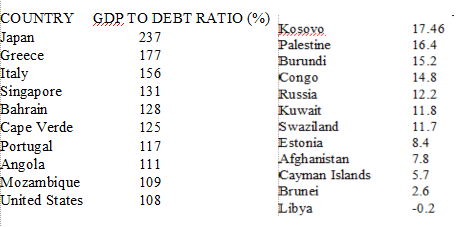
Common Myth: The Debt/Gross Domestic Product fraction is too high.
Reality: The Debt/GDP fraction is meaningless. It neither determines the current, nor the future health of a nation’s economy.
Today, Japan’s ratio is above 200%. The U.S. ratio is near 100%. By contrast, Russia’s, Chile’s, Libya’s, Qatar’s and others are below 10%, all of which tells you nothing about their economies but says a great deal about the meaningless Debt/GDP ratio.
There is no relationship between Debt/GDP and the health of an economy.
The Debt/GDP ratio does not indicate “the country’s ability to pay back its debt.”
Mathematically, the fraction makes no sense. “Debt” is the net total of all federal deficits for the past 250 years. GDP is a one-yearmeasure of all spending by both the public and private sectors.
A 250 year measure cannot be compared to a one-year measure. Further, the whole nation’s spending on goods and services, has no relationship to the federal government’s ability to transfer dollars from T-security accounts at the FRB to checking accounts at private banks.
The fraction also does not take into consideration Monetary Sovereignty. Some nations have it; others don’t. The fraction may have some meaning for monetarily non-sovereign entities, but for Monetarily Sovereign nations it is completely meaningless.
Common Myth: The Social Security and Medicare Trust Funds will run short of dollars unless taxes are increased or benefits are decreased.
Reality: These so-called “trust funds” are not real trust funds and federal taxes do not fund federal spending.
In fact, federal taxes (unlike state/local taxes, are destroyed upon receipt by the Treasury.
(Being Monetarily Sovereign, the government has infinite dollars. When you pay taxes, you take your dollars from your checking account, which is part of the M1 money supply. Because the government has infinite dollars, they are not counted as any part of any money supply, so your federal tax dollars cease to exist in any money measure. They effectively are destroyed. State/local tax dollars continue to exist, however, because those governments are not Monetarily Sovereign.
In summary, the false notion that the federal government must be “prudent” in its creation and distribution of dollars to the private sector has prevented Social Security for All, Medicare for All, Free College for All, repair of our infrastructure, support for science and exploration, and many other programs that would help narrow the Gap between the rich and the rest.
Common economic myths prevent the federal government from using its Monetary Sovereignty to improve and protect the lives of Americans.
The President of the United States lied about basic economics. It simply cannot be due to ignorance. He is surrounded by the most prominent economists in America.
Surely, he knows that what he said was myth. We only can assume:
He is afraid to tell the truth because he feels the American public will not believe the truth, or
He is lying to protect rich donors who do not want the public to know the government has the unlimited ability to provide Gap-narrowing benefits.
Take your pick.
[Why would any sane person take dollars from the economy and give them to a federal government that has the infinite ability to create dollars?]
Rodger Malcolm Mitchell
Monetary SovereigntyTwitter: @rodgermitchellSearch #monetarysovereigntyFacebook: Rodger Malcolm Mitchell
……………………………………………………………………..
THE SOLE PURPOSE OF GOVERNMENT IS TO IMPROVE AND PROTECT THE LIVES OF THE PEOPLE.
Gap Psychology describes the common desire to distance oneself from those “below” in any socio-economic ranking, and to come nearer those “above.” The socio-economic distance is referred to as “The Gap.”
Wide Gaps negatively affect poverty, health and longevity, education, housing, law and crime, war, leadership, ownership, bigotry, supply and demand, taxation, GDP, international relations, scientific advancement, the environment, human motivation and well-being, and virtually every other issue in economics.Implementation of Monetary Sovereignty and The Ten Steps To Prosperity can grow the economy and narrow the Gaps:
Ten Steps To Prosperity:


 Unlike the Monetarily Sovereign U.S. government, states generally run short of the dollars they need to take care of local problems: Schools, streets, infrastructure, parks, garbage/recycling/water, police, fire departments, etc.
Most states borrow, which means they later will need to spend less (provide less to their residents), tax more (take more from their residents), or both.
The federal government should take those burdens from local taxpayers’ shoulders.
15. Federal support for the postal service. The mail is as vital to America as any other government service. There is no public benefit to requiring the postal service to pay its own way.
Unlike the Monetarily Sovereign U.S. government, states generally run short of the dollars they need to take care of local problems: Schools, streets, infrastructure, parks, garbage/recycling/water, police, fire departments, etc.
Most states borrow, which means they later will need to spend less (provide less to their residents), tax more (take more from their residents), or both.
The federal government should take those burdens from local taxpayers’ shoulders.
15. Federal support for the postal service. The mail is as vital to America as any other government service. There is no public benefit to requiring the postal service to pay its own way.

 Or is the need to cut the federal debt just a Common Myth?
Economics is filled with Common Myths that have no basis in data. For example:
Common Myth: The federal government should handle its finances like you and me.
Reality: In the beginning of the U.S., the federal government created laws from thin air, and some of those laws created the U.S. dollar from thin air.
There was, and remains, no limit to the number of laws the government can create, just as there was, and remains, no limit to the number of dollars the government can create.
This fact is known as “
Or is the need to cut the federal debt just a Common Myth?
Economics is filled with Common Myths that have no basis in data. For example:
Common Myth: The federal government should handle its finances like you and me.
Reality: In the beginning of the U.S., the federal government created laws from thin air, and some of those laws created the U.S. dollar from thin air.
There was, and remains, no limit to the number of laws the government can create, just as there was, and remains, no limit to the number of dollars the government can create.
This fact is known as “

 #Monetary Sovereignty - Mitchell