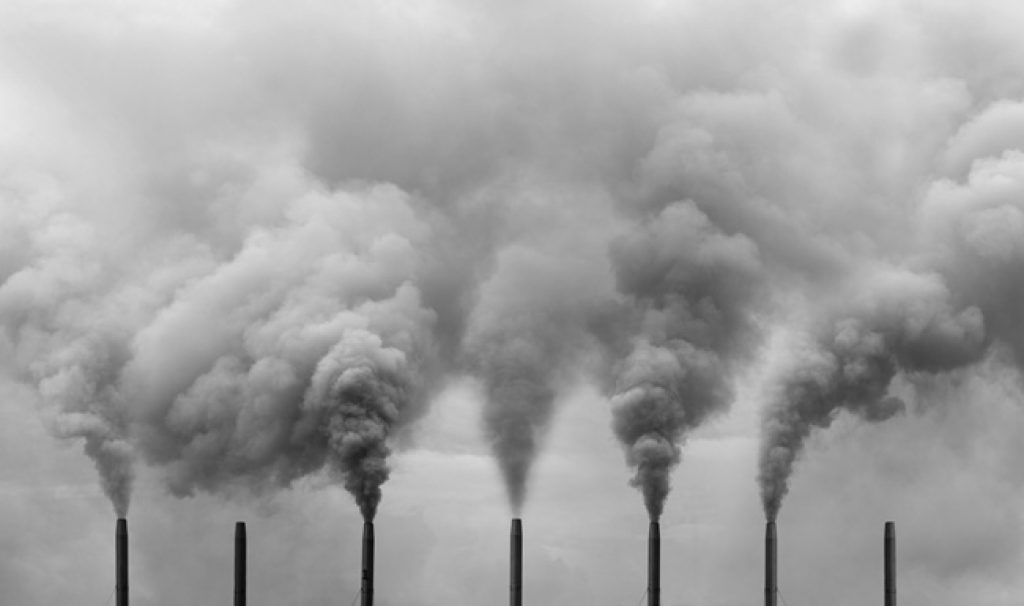
Air pollution kills 7 million people a year, worldwide. In the US, the figure is about 200,000. Most of us will die earlier from the toll it takes on our health.
Filthy air killed half a million people in Europe prematurely in 2014. So says a report on air quality from the European Environment Agency.
Reuters: Air pollution linked to asthma in children and teens
Nitrogen dioxide, mostly from vehicle exhausts, cut short an estimated 78,000 livesacross the same 41 countries.
“Heart disease and stroke are the most common reasons for premature death attributable to air pollution, and are responsible for 80 percent of cases,” the report says.
Air pollution also contributes to other respiratory diseases and cancer, and has non-lethal impacts on diabetes, Alzheimer’s disease, pregnancy and brain development in children.
The UK saw many premature deaths from exposure to nitrogen dioxide: about 14,000. This was compounded by widespread use of diesel fuel in vehicles.
Summary: Air pollution sickens and kills, adults and children.
For automakers, it could create years of uncertainty over which standards their cars must meet.
From 9/1/17, new cars must pass stricter emissions tests before they can be driven on European roads.
“These were issues that were resolved 9 years ago, and it’s almost like picking at a scab that healed long ago and reopening it, only to cause the automakers a lot of bleeding,” said Simon Mui, a senior scientist and clean vehicles specialist at the Natural Resources Defense Council, an environmental group.
The administration will propose stopping planned increases in fuel efficiency after 2020 and challenging California’s unique ability to set its own auto air pollution standards.
Thirteen other states and the District of Columbia also follow California’s emission standards.
Since 1970, California has had under the federal Clean Air Act the ability to set air pollution standards that are more stringent than the federal government’s. Although the state initially used that power to regulate smog-causing pollutants, it has become a key weapon in the state’s fight against climate change.
President Barack Obama took California’s standards nationwide. So California’s standards are now in sync with the federal government’s. Trump has made rolling back Obama’s environmental and climate programs a high priority.
An annual report issued this month by the California Air Resources Board found that California has already met its 2020 goal for cutting greenhouse gas emissions back to 1990 levels. State law now calls for slashing emissions another 40 percent by 2030.
“In California, transportation has been the only sector where emissions have been flat or even going up, so this is very important,” said Daniel Sperling, a member of the Air Resources Board and founding director of UC Davis’ Institute of Transportation Studies. “By simple math, if we don’t get the substantial reductions from vehicles, we’ll have to get them from industry or some other way.”
The administration’s actions could place automakers in a bind.
Shortly after President Trump’s election, an auto industry lobbying group sent him a letter asking for more flexibility in the fuel-mileage program. But the prospect of an across-the-board freeze — and another protracted fight between California and the federal government — appears to have unnerved the industry. Top executives of Ford, for example, spoke out this spring against a rollback.
And a long legal fight between the state and federal governments could make it difficult for the automakers to plan, since the process of designing, engineering and introducing a new car typically takes more than three years.
Summary: Trump wants to end anti-pollution effortsbecause they are an Obama initiative, supposedly they are a burden on automakers, and climate change isn’t happening.
But, the automakers don’t want Trump’s plan to end anti-pollution efforts.
Mr. Trump’s job approval rating rose to 45% in a new Wall Street Journal/NBC News poll, the highest mark of his presidency and up 1 percentage point from June.
The survey was taken over a four-day period that started July 15, a day before Mr. Trump’s news conference with Mr. Putin in which he questioned the conclusion of U.S. intelligence agencies that Russia meddled in the 2016 election.
Underpinning Mr. Trump’s job approval was support from 88% of Republican voters. Of the four previous White House occupants, only George W. Bush, in the aftermath of the Sept. 11, 2001, terrorist attacks, had a higher approval rating within his own party at the same point in his presidency.
Summary: Trump opposes efforts to cut the pollution that kills adults and children, and causes damaging climate change. Forty-five percent of Americans and 88% of Republicans, think he is doing a good job.
Mencken was right:
“No one in this world, so far as I know — and I have searched the records for years, and employed agents to help me — has ever lost money by underestimating the intelligence of the great masses of the plain people. Nor has anyone ever lost public office thereby.”
H. L. Mencken
The single most important problems in economics involve the excessive income/wealth/power Gaps between the have-mores and the have-less.
Wide Gaps negatively affect poverty, health and longevity, education, housing, law and crime, war, leadership, ownership, bigotry, supply and demand, taxation, GDP, international relations, scientific advancement, the environment, human motivation and well-being, and virtually every other issue in economics.
Implementation of The Ten Steps To Prosperity can narrow the Gaps:
Ten Steps To Prosperity: 1. ELIMINATE FICA (Ten Reasons to Eliminate FICA ) Although the article lists 10 reasons to eliminate FICA, there are two fundamental reasons: *FICA is the most regressive tax in American history, widening the Gap by punishing the low and middle-income groups, while leaving the rich untouched, and *The federal government, being Monetarily Sovereign, neither needs nor uses FICA to support Social Security and Medicare.
Economic growth should include the “bottom” 99.9%, not just the .1%, the only question being, how best to accomplish that. Modern Monetary Theory (MMT) favors giving everyone a job. Monetary Sovereignty (MS) favors giving everyone money. The five articles describe the pros and cons of each approach.
4. FREE EDUCATION (INCLUDING POST-GRAD) FOR EVERYONE Five reasons why we should eliminate school loans
Monetarily non-sovereign State and local governments, despite their limited finances, support grades K-12. That level of education may have been sufficient for a largely agrarian economy, but not for our currently more technical economy that demands greater numbers of highly educated workers.
Because state and local funding is so limited, grades K-12 receive short shrift, especially those schools whose populations come from the lowest economic groups. And college is too costly for most families.
An educated populace benefits a nation, and benefitting the nation is the purpose of the federal government, which has the unlimited ability to pay for K-16 and beyond.
5. SALARY FOR ATTENDING SCHOOL Salary for attending school. Even were schooling to be completely free, many young people cannot attend, because they and their families cannot afford to support non-workers. In a foundering boat, everyone needs to bail, and no one can take time off for study.
If a young person’s “job” is to learn and be productive, he/she should be paid to do that job, especially since that job is one of America’s most important.
6. ELIMINATE FEDERAL TAXES ON BUSINESS
Businesses are dollar-transferring machines. They transfer dollars from customers to employees, suppliers, shareholders and the federal government (the later having no use for those dollars). Any tax on businesses reduces the amount going to employees, suppliers and shareholders, which diminishes the economy. Ultimately, all business taxes reduce your personal income.
7. INCREASE THE STANDARD INCOME TAX DEDUCTION, ANNUALLY. (Refer to this.) Federal taxes punish taxpayers and harm the economy. The federal government has no need for those punishing and harmful tax dollars. There are several ways to reduce taxes, and we should evaluate and choose the most progressive approaches.
Cutting FICA and business taxes would be a good early step, as both dramatically affect the 99%. Annual increases in the standard income tax deduction, and a reverse income tax also would provide benefits from the bottom up. Both would narrow the Gap.
8. TAX THE VERY RICH (THE “.1%) MORE, WITH HIGHER PROGRESSIVE TAX RATES ON ALL FORMS OF INCOME. (TROPHIC CASCADE)
There was a time when I argued against increasing anyone’s federal taxes. After all, the federal government has no need for tax dollars, and all taxes reduce Gross Domestic Product, thereby negatively affecting the entire economy, including the 99.9%.
But I have come to realize that narrowing the Gap requires trimming the top. It simply would not be possible to provide the 99.9% with enough benefits to narrow the Gap in any meaningful way. Bill Gates reportedly owns $70 billion. To get to that level, he must have been earning $10 billion a year. Pick any acceptable Gap (1000 to 1?), and the lowest paid American would have to receive $10 million a year. Unreasonable.
9. FEDERAL OWNERSHIP OF ALL BANKS (Click The end of private banking and How should America decide “who-gets-money”?)
Banks have created all the dollars that exist. Even dollars created at the direction of the federal government, actually come into being when banks increase the numbers in checking accounts. This gives the banks enormous financial power, and as we all know, power corrupts — especially when multiplied by a profit motive.
Although the federal government also is powerful and corrupted, it does not suffer from a profit motive, the world’s most corrupting influence.
10. INCREASE FEDERAL SPENDING ON THE MYRIAD INITIATIVES THAT BENEFIT AMERICA’S 99.9% (Federal agencies)Browse the agencies. See how many agencies benefit the lower- and middle-income/wealth/ power groups, by adding dollars to the economy and/or by actions more beneficial to the 99.9% than to the .1%.
Save this reference as your primer to current economics. Sadly, much of the material is not being taught in American schools, which is all the more reason for you to use it.
The Ten Steps will grow the economy, and narrow the income/wealth/power Gap between the rich and you.
What is the greatest threat to America? The question revolves around the word, “greatest.”
A giant meteor or a supervolcano both are possible, and because either could completely obliterate America, the threat can be considered “great,” though unlikely.
A nuclear war with Russia, China, or even North Korea or Iran, could damage America severely, though it is unlikely that any national leader, even Donald Trump, is insane enough to begin one. particularly because the leader would die.
A new disease, or even an old one that has morphed into new virulence, could cause great damage, but America would survive.
I believe the greatest threat to America is staring us in the face. It will not come from without, but within. We will do it to ourselves.
Here are some excerpts from recent articles:
Trump looks to punish critics
WASHINGTON — President Donald Trump is considering revoking the security clearances of at least half a dozen well-known former national security officials, his spokeswoman said on Monday, in an apparent expression of his desire to punish increasingly vocal critics from past administrations.
Trump tweeted that Iran would suffer untold consequences if it continued to threaten the U.S., said in all caps: “WE ARE NO LONGER A COUNTRY THAT WILL STAND FOR YOUR DEMENTED WORDS OF VIOLENCE & DEATH. BE CAUTIOUS!”
Trump, top aides raise heat on Iran
Verbal attacks attempt to distract from Russia
Critics immediately branded the threats as Trump’s attempt to divert attention from his troubled dealings with Russia, which has only grown since last week’s Helsinki summit with President Vladimir Putin and amid attention to the upcoming trial of his former campaign chairman, Paul Manafort.
The Trump administration will seek to revoke California’s authority to regulate automobile greenhouse gas emissions in a proposed revision of Obama-era standards.
The proposal amounts to a frontal assault on regulatory programs to curb greenhouse gas emissions that contribute to climate change.
Facts don’t wrest FBI grievances from Trump He routinely assails “Crooked Hillary” Clinton, blasts NFL players for kneeling, and complains about other countries taking advantage of the United States even when facts argue otherwise.
The FBI’s surveillance of former campaign adviser Carter Page gives the president a tool to contend he’s been persecuted by the ongoing Russia investigation. Yet, new documents released by his administration over the weekend still don’t bear out Trump’s assertions about illegal spying.
Republican electoral victories are increasingly dependent on gaming the system, and especially its multitude of counter-majoritarian veto points, to bring about outcomes that would be unachievable using democratic means. In the House, Republicans won a majority of the seats despite winning 1.5 million fewer votes than the Democrats
The result is the transformation of the Republican Party into a blatantly anti-democratic force.
Congress Must Tell Trump The White House Cannot Be Bought
Where other presidents put their business interests into blind trusts, Trump has turned a blind eye. California Democratic Representative Eric Swalwell introduced a bill Monday that seeks to make it a criminal offense for President Donald Trump toaccept “anything of value from a foreign power.”
Prosecutors have 12 audio recordings seized from Trump lawyer Michael Cohen
Federal prosecutors have 12 audio recordings seized from the home, office, and hotel room of President Trump’s former personal attorney Michael Cohen
463 migrant parents may have been deported without their kids
The Trump administration said that 463 parents of migrant children are no longer in the U.S., even though their children are. More undocumented migrant parents might have been deported without their children than the government previously acknowledged.
A federal judge granted former Trump campaign manager Paul Manafort a delay. Manafort’s trial is the first in Special Counsel Robert Mueller’s investigation into Russian election interference as Trump faces scrutiny of his cozy relationship with Vladimir Putin.
President Donald Trump wants to fight a suit by adult film star Stormy Daniels in Los Angeles rather than in New York. Daniels sued Trump in April claiming the president defamed her when he said on Twitter that her claim of having been threatened in 2011 by a man in Las Vegas was a “total con job.”
John Brennan, former director of the Central Intelligence Agency, tweeted as follows:
“Donald Trump’s press conference performance in Helsinki rises to & exceeds the threshold of ‘high crimes & misdemeanors.’ It was nothing short of treasonous.”
Trump believes he has the right to pardon himself
Trump declared that he has “the absolute right” to pardon himself. Trump continued: “But why would I do that when I have done nothing wrong?” So is the president threatening to put himself beyond the reach of the law?
Trump appeared to acknowledge Russia’s efforts to interfere in U.S. elections — but claimed against evidence that Moscow would be “pushing very hard for the Democrats” in the midterms this fall. Therefore establishing a foundation for declaring that any future election favoring Democrats is illegal.
These excerpts, which easily could be supplemented by hundreds in a similar vein, describe a combative President under great pressure, who will break any law, ignore any custom, and reject any convention to battle those who dare to demean him or to threaten his power and his money.
With that in mind, consider this probable scenario:
Trump refuses to testify before Special Counsel Robert Mueller
Mueller obtains a grand jury subpoena to force Trump to talk.
Trump refuses to obey the subpoena.
The case goes to the Supreme Court.
Here we confront two outcomes:
The Supreme Court agrees with Trump’s position that he is above the law. In this case, Trump essentially becomes the King of America, who cannot be punished or even prosecuted for any crime. Thus America instantly changes from a democracy to a monarchy and/or a dictatorship.
Or the Supreme Court does as previous Supreme Courts have done to Richard Nixon and Bill Clinton, and rules that Trump must submit to an interview with Mueller.
But if, despite the Supreme Court ruling, Trump still refuses. Now what?
Trump, as the Commander-in-Chief of the U.S. military, has absolute power. He cannot be forced to do anything. In either scenario, America as we know it, ceases to exist.
Sadly, not only has Trump proved himself to be uncaring about law or precedent, but his followers like this about him. They see his lawbreaking and bullying as a sign of strength. His hatred for minorities matches theirs.
A substantial portion of our population approves of Trump’s disregard for people, for morals, and for the law. So they would support whatever he does.
Given that civilian support, plus his power over the military, Trump predictably would refuse to cooperate with anything that restricts him.
So the potential bottom line is: We would have an aggressive President, who thinks laws don’t apply to him, and who commands our military and has significant public backing and backing from a compliant GOP.
Further, Trump might not even accept the results of an election.
Given all that, who could guarantee that Trump would obey even a Supreme Court decision?
The likelihood is we would have a dictator, and America will have become his dictatorship.
And that is how easy it would be for the U.S. to slip back into third-world status. We already are teetering on the edge.
The single most important problems in economics involve the excessive income/wealth/power Gaps between the have-mores and the have-less.
Wide Gaps negatively affect poverty, health and longevity, education, housing, law and crime, war, leadership, ownership, bigotry, supply and demand, taxation, GDP, international relations, scientific advancement, the environment, human motivation and well-being, and virtually every other issue in economics.
Implementation of The Ten Steps To Prosperity can narrow the Gaps:
Ten Steps To Prosperity: 1. ELIMINATE FICA (Ten Reasons to Eliminate FICA ) Although the article lists 10 reasons to eliminate FICA, there are two fundamental reasons: *FICA is the most regressive tax in American history, widening the Gap by punishing the low and middle-income groups, while leaving the rich untouched, and *The federal government, being Monetarily Sovereign, neither needs nor uses FICA to support Social Security and Medicare.
Economic growth should include the “bottom” 99.9%, not just the .1%, the only question being, how best to accomplish that. Modern Monetary Theory (MMT) favors giving everyone a job. Monetary Sovereignty (MS) favors giving everyone money. The five articles describe the pros and cons of each approach.
4. FREE EDUCATION (INCLUDING POST-GRAD) FOR EVERYONE Five reasons why we should eliminate school loans
Monetarily non-sovereign State and local governments, despite their limited finances, support grades K-12. That level of education may have been sufficient for a largely agrarian economy, but not for our currently more technical economy that demands greater numbers of highly educated workers.
Because state and local funding is so limited, grades K-12 receive short shrift, especially those schools whose populations come from the lowest economic groups. And college is too costly for most families.
An educated populace benefits a nation, and benefitting the nation is the purpose of the federal government, which has the unlimited ability to pay for K-16 and beyond.
5. SALARY FOR ATTENDING SCHOOL Salary for attending school. Even were schooling to be completely free, many young people cannot attend, because they and their families cannot afford to support non-workers. In a foundering boat, everyone needs to bail, and no one can take time off for study.
If a young person’s “job” is to learn and be productive, he/she should be paid to do that job, especially since that job is one of America’s most important.
6. ELIMINATE FEDERAL TAXES ON BUSINESS
Businesses are dollar-transferring machines. They transfer dollars from customers to employees, suppliers, shareholders and the federal government (the later having no use for those dollars). Any tax on businesses reduces the amount going to employees, suppliers and shareholders, which diminishes the economy. Ultimately, all business taxes reduce your personal income.
7. INCREASE THE STANDARD INCOME TAX DEDUCTION, ANNUALLY. (Refer to this.) Federal taxes punish taxpayers and harm the economy. The federal government has no need for those punishing and harmful tax dollars. There are several ways to reduce taxes, and we should evaluate and choose the most progressive approaches.
Cutting FICA and business taxes would be a good early step, as both dramatically affect the 99%. Annual increases in the standard income tax deduction, and a reverse income tax also would provide benefits from the bottom up. Both would narrow the Gap.
8. TAX THE VERY RICH (THE “.1%) MORE, WITH HIGHER PROGRESSIVE TAX RATES ON ALL FORMS OF INCOME. (TROPHIC CASCADE)
There was a time when I argued against increasing anyone’s federal taxes. After all, the federal government has no need for tax dollars, and all taxes reduce Gross Domestic Product, thereby negatively affecting the entire economy, including the 99.9%.
But I have come to realize that narrowing the Gap requires trimming the top. It simply would not be possible to provide the 99.9% with enough benefits to narrow the Gap in any meaningful way. Bill Gates reportedly owns $70 billion. To get to that level, he must have been earning $10 billion a year. Pick any acceptable Gap (1000 to 1?), and the lowest paid American would have to receive $10 million a year. Unreasonable.
9. FEDERAL OWNERSHIP OF ALL BANKS (Click The end of private banking and How should America decide “who-gets-money”?)
Banks have created all the dollars that exist. Even dollars created at the direction of the federal government, actually come into being when banks increase the numbers in checking accounts. This gives the banks enormous financial power, and as we all know, power corrupts — especially when multiplied by a profit motive.
Although the federal government also is powerful and corrupted, it does not suffer from a profit motive, the world’s most corrupting influence.
10. INCREASE FEDERAL SPENDING ON THE MYRIAD INITIATIVES THAT BENEFIT AMERICA’S 99.9% (Federal agencies)Browse the agencies. See how many agencies benefit the lower- and middle-income/wealth/ power groups, by adding dollars to the economy and/or by actions more beneficial to the 99.9% than to the .1%.
Save this reference as your primer to current economics. Sadly, much of the material is not being taught in American schools, which is all the more reason for you to use it.
The Ten Steps will grow the economy, and narrow the income/wealth/power Gap between the rich and you.
There are many reasons why Putin might have put so much energy into electing Donald Trump as President.
Oh sure, Putin knew Trump is a vainglorious fool who would be no match for Putin in the competition between nations.
And sure, Putin was afraid of Hillary Clinton’s toughness, brains, and experience, a far more worthy opponent than the ignorant, inexperienced, feckless Trump.
But the real reason, the big one, is money, the same reason why Trump is so obsequious when in the company of Putin. It is why Trump, after promising to reveal his tax returns, as previous Presidents had done, he invented excuses (“I’m under audit.” “The people don’t care.” ) and finally refused altogether.
Trump and his family have borrowed billions, of dollars from Putin’s Russian oligarch pals.
The Trump Organization borrowed billions of dollars to finance its real estate operations but subsequently defaulted on many of its loans.
Nevertheless, the Trumps were inexplicably able to continue borrowing millions more from the very banks still owed money.
Around the same time, Russian entities linked to the Kremlin quietly moved $10 billion dollars from global locations into the United States using the same banks.
Government inspectors independently uncovered the suspicious Russian transactions, known as “mirror trades” (stock purchases in overseas branches and identical immediate sales in the United States).
Democratic legislators have demanded banking information for identifying links; Republicans controlling Congressional committees refuse to cooperate.
If Putin’s pals demand their money back, Trump could be in serious financial trouble — maybe broke.
In 2008, Donald Jr. told investors in Moscow that “Russians make up a pretty disproportionate cross-section of a lot of our assets,” while Eric reportedly said in 2014 that the Trump Organization was able to expand during the financial crisis because “We don’t rely on American banks. We have all the funding we need out of Russia.”
Trump has the slimy reputation of declaring bankruptcy every time the creditors close in, and that is the last thing Putin and his cronies want.
Trump can’t “rely” on American banks because they won’t lend to him.
Here is the gist of all conversations that may have happened, over time:
Putin: “Here’s the deal, Donald. We’ll help you to become President of the United States. You not only will become rich using the U.S. Treasury as your personal piggy bank, but we’ll let you build Trump Tower Moscow and get in on a bunch of other lucrative real estate deals here in Russia. We also will treat you to some beautiful hookers.”
Trump: “Money plus women. Sounds good to me.”
Putin: “In return, you will use the billions you’ll make to repay my friends for those loans, and never go bankrupt on us. And of course, you’ll see to it that those sanctions against Russia kind of fade away.”
Trump: “I’m in. But this has to be kept secret. I’ve done lots of sh*t in business, but being revealed as a traitor . . . on second thought hey, if the money is good and the women are beautiful . . . “
Putin: “We’ll open back channels for communication, and you and I can have meetings that no one else but interpreters attends. I’ll tell you just what to do. You can toss in a couple of stern comments and act, so it’s not too obvious that I own your butt. Just don’t release your tax returns. That would scatter the grain.”
Trump: “Huh?”
Putin: “Spill the beans.”
Trump: “I promise I won’t go bankrupt on you. Have I ever lied?”
Putin: “You better not. Remember what happened to Alexander Litvinenko, Yuri Shchekochikhin, Viktor Yushchenko, and Anna Politkovskaya. And of course, there’s Sergei Skripal and his daughter. You do like your daughter, don’t you, Donald?”
Trump: “Of course, as I’ve said, in public and on many occasions, ‘My daughter is hot. She’s voluptuous. It’s O.K. to call her a piece of ass. If she wasn’t my daughter, perhaps I’d be dating her.’ Don’t hurt my daughter. Just tell me what you want me to do.”
Putin: “And if necessary, you will send me your former ambassador to Russia, Michael McFaul, so I can grill him the Russian way.”
Trump: “I’ll try.”
Putin: “And accept our annexation of Crimea.”
Trump: “Sure, why not?
Putin: “And finally, I don’t like NATO. It keeps me from getting back all those Soviet nations we used to own.
Trump: “I’ll break up NATO. It might take some time, but I’ll do it.”
Putin: “Or you will find yourself to be the innermost of a Russian matryoshka nesting doll set.”
Trump: “Yes, Vlad. May I get up, now? My knees hurt.”
And the rest is history. In total, there are many reasons why Putin would want Trump to be President, there are none favoring Clinton.
And as for Trump, the big reason is money. The man is notorious for cheating creditors, cheating employees, not giving to charity, using his charitable foundation for private use, keeping conflict-of-interest ownership and control over his properties while President, and encouraging the usage of his properties by foreign dignitaries.
Trump is all about money, money, money. He would do anything for money, including sell out his own country. And that explains everything.
CYCLE: an interval of time during which a sequence of a recurring succession of events or phenomena is completed. (Merriam-Webster)
BUSINESS CYCLE: a cycle of economic activity usually consisting of recession, recovery, growth, and decline (Merriam-Webster)
The words “cycle” and “business cycle” have the appearance of inevitability about them.
We are led to believe a recession must automatically be followed by a recovery, which must lead to growth, and then the whole thing must crash down into decline and recession.
That is the cycle, and there’s nothing we can do to prevent it. All we can do is prepare for it.
Or so the theory goes:
By: John Detrixhe (John covers the future of finance for Quartz. He previously wrote about markets and trading for Bloomberg News in New York and London.)
Despite bumper earnings, bank shares have lagged the overall market this year. The likely reason is that investors think the US, and perhaps the global economy, is getting closer to its next downturn.
That’s the common belief. Because there is a business “cycle,” growth must lead us closer to a downturn. It’s as though, in baseball, winning brings the team closer to losing. Or happiness leads you closer to sadness.
There never is a specific reason given. The notion is, the business “cycle” itself demands that success brings us closer to failure.
It has been nine years since the last recession, almost double the average for the US economic cycle.
The bull market in US stocks is also nine years old, the second-longest run on record.
Unemployment is near historic lows following an unprecedented stretch of job gains.
One would think the good news would lead to more good news. After all, doesn’t low unemployment, together with more job growth, indicate a healthy economy?
Why should healthiness cause future sickness?
There’s an escalating trade war between the US and the rest of the world, or the fact the Federal Reserve is raising rates while other central banks keep them at historic lows.
The trade war has nothing to do with any sort of business “cycle.” It’s the arbitrary work of a fool, who believes cutting off your nose to spites China’s face.
And raising interest rates is merely an inflation preventative. Contrary to popular myth, raising interest rates does not bring on recessions.
Interest rate changes. Vertical bars are recessions
As you can see, lowering interest rates is associated with recessions, partly because reduced rates require the federal government to pump less T-security, interest money into the economy.
In a recent conference call with JPMorgan, a banking analyst said she’s getting a lot of pushback from investors because “we’re long in the tooth in the economic cycle.”
The bank’s CFO, Marianne Lake, countered that there are no signs of fragility so far, but noted that the biggest US bank by assets is preparing for the inevitable slowdown.
Indeed, finance execs have recently been citing the “credit cycle” more than at any time since the last downturn, according to a Sentieo analysis of earnings calls.
Remarkable, isn’t it. There are “no signs of fragility,” but the biggest bank is preparing, not for growth, but rather for a slowdown.
What do businesses do to “prepare for a slowdown.” They cut spending. They reduce “unnecessary” expenses like Research & Development, Advertising and Marketing. They defer expansion plans. They stop investing in plant and equipment. They cut employees. They become less aggressive and instead, retreat into a protective shell.
And those are the very actions that help bring on recessions. A recession becomes “inevitable,” because it is a self-fulfilling prophesy.
In addition to the abovementioned self-fulfilling prophesy, a prime inflation cause — perhaps the prime inflation cause — is a reduction in federal deficit spending.
Changes in federal deficit spending. Vertical bars are recessions.
Gross Domestic Product (GDP) = Federal Spending + Non-federal Spending + Net Exports.
Spending cuts reduce GDP.
If the private sector and the government believe that business growth, federal deficit spending, and raising interest rates all make a recession inevitable, they will cut spending and reduce rates.
And that indeed, will make a recession inevitable.
We often have claimed that economics comes closer to being a religion than a science. And the belief in business “cycles” — that success inevitably causes failure — is a perfect example.
According to the USC Digital Folklore Archives: “Kenahora” is a curse in Yinglish (bastardized english/yiddish) that comes from three words slurred together: the Yiddish word kein, meaning “no,” ayin, which is Hebrew for “eye,” and hara, Hebrew for “evil.”
“My mother would always say ‘don’t give a ‘kenahora’ to mean ‘don’t give us bad luck.’
“If you are driving cross country let’s say, and making great time – but stupidly decide to comment ‘Oh boy we are making great time’ – BANG – you will instantly hit traffic – bumper to bumper. It always happens!
“My mother also used to spit after saying ‘Kenahora, pu-pu-pu!’ It implied spitting on the demon to stop it.”
If phony business “cycles” concern you, especially those so-called, “inevitable” recessions, perhaps saying “Kenahora,” then spitting three times will help.
The single most important problems in economics involve the excessive income/wealth/power Gaps between the have-mores and the have-less.
Wide Gaps negatively affect poverty, health and longevity, education, housing, law and crime, war, leadership, ownership, bigotry, supply and demand, taxation, GDP, international relations, scientific advancement, the environment, human motivation and well-being, and virtually every other issue in economics.
Implementation of The Ten Steps To Prosperity can narrow the Gaps:
Ten Steps To Prosperity: 1. ELIMINATE FICA (Ten Reasons to Eliminate FICA ) Although the article lists 10 reasons to eliminate FICA, there are two fundamental reasons: *FICA is the most regressive tax in American history, widening the Gap by punishing the low and middle-income groups, while leaving the rich untouched, and *The federal government, being Monetarily Sovereign, neither needs nor uses FICA to support Social Security and Medicare.
Economic growth should include the “bottom” 99.9%, not just the .1%, the only question being, how best to accomplish that. Modern Monetary Theory (MMT) favors giving everyone a job. Monetary Sovereignty (MS) favors giving everyone money. The five articles describe the pros and cons of each approach.
4. FREE EDUCATION (INCLUDING POST-GRAD) FOR EVERYONE Five reasons why we should eliminate school loans
Monetarily non-sovereign State and local governments, despite their limited finances, support grades K-12. That level of education may have been sufficient for a largely agrarian economy, but not for our currently more technical economy that demands greater numbers of highly educated workers.
Because state and local funding is so limited, grades K-12 receive short shrift, especially those schools whose populations come from the lowest economic groups. And college is too costly for most families.
An educated populace benefits a nation, and benefitting the nation is the purpose of the federal government, which has the unlimited ability to pay for K-16 and beyond.
5. SALARY FOR ATTENDING SCHOOL Salary for attending school. Even were schooling to be completely free, many young people cannot attend, because they and their families cannot afford to support non-workers. In a foundering boat, everyone needs to bail, and no one can take time off for study.
If a young person’s “job” is to learn and be productive, he/she should be paid to do that job, especially since that job is one of America’s most important.
6. ELIMINATE FEDERAL TAXES ON BUSINESS
Businesses are dollar-transferring machines. They transfer dollars from customers to employees, suppliers, shareholders and the federal government (the later having no use for those dollars). Any tax on businesses reduces the amount going to employees, suppliers and shareholders, which diminishes the economy. Ultimately, all business taxes reduce your personal income.
7. INCREASE THE STANDARD INCOME TAX DEDUCTION, ANNUALLY. (Refer to this.) Federal taxes punish taxpayers and harm the economy. The federal government has no need for those punishing and harmful tax dollars. There are several ways to reduce taxes, and we should evaluate and choose the most progressive approaches.
Cutting FICA and business taxes would be a good early step, as both dramatically affect the 99%. Annual increases in the standard income tax deduction, and a reverse income tax also would provide benefits from the bottom up. Both would narrow the Gap.
8. TAX THE VERY RICH (THE “.1%) MORE, WITH HIGHER PROGRESSIVE TAX RATES ON ALL FORMS OF INCOME. (TROPHIC CASCADE)
There was a time when I argued against increasing anyone’s federal taxes. After all, the federal government has no need for tax dollars, and all taxes reduce Gross Domestic Product, thereby negatively affecting the entire economy, including the 99.9%.
But I have come to realize that narrowing the Gap requires trimming the top. It simply would not be possible to provide the 99.9% with enough benefits to narrow the Gap in any meaningful way. Bill Gates reportedly owns $70 billion. To get to that level, he must have been earning $10 billion a year. Pick any acceptable Gap (1000 to 1?), and the lowest paid American would have to receive $10 million a year. Unreasonable.
9. FEDERAL OWNERSHIP OF ALL BANKS (Click The end of private banking and How should America decide “who-gets-money”?)
Banks have created all the dollars that exist. Even dollars created at the direction of the federal government, actually come into being when banks increase the numbers in checking accounts. This gives the banks enormous financial power, and as we all know, power corrupts — especially when multiplied by a profit motive.
Although the federal government also is powerful and corrupted, it does not suffer from a profit motive, the world’s most corrupting influence.
10. INCREASE FEDERAL SPENDING ON THE MYRIAD INITIATIVES THAT BENEFIT AMERICA’S 99.9% (Federal agencies)Browse the agencies. See how many agencies benefit the lower- and middle-income/wealth/ power groups, by adding dollars to the economy and/or by actions more beneficial to the 99.9% than to the .1%.
Save this reference as your primer to current economics. Sadly, much of the material is not being taught in American schools, which is all the more reason for you to use it.
The Ten Steps will grow the economy, and narrow the income/wealth/power Gap between the rich and you.