The long, sad suicide of Donald J. Trump

That Donald J. Trump is a psychopath cannot be denied. He scores an astounding 29 out of 30 on the Hare Psychopathy Checklist-Revised which is used to diagnose the presence of psychopathy.

To Trump, the worst epithet is “Loser.” From his early years, he has feared being seen as a “loser,” and being unaccepted by the people he admires most: The rich whom he considers to be “winners.”

Yet as is so common in human psychology, the more one tries to assume a persona that is not natural or inbred, the further one drifts from it.

And so it has been for Trump, who craves acceptance like an infant craves a breast, yet sees it repeatedly taken away. With each perceived slight, he screams and stomps his feet.

Today, the intelligent wealthy, even in his home state are turned against him, and it is more than just symbolic that not one bank in America will lend him money. 

His repeatedly naming his properties, “Trump,” his overstatements about his health, wealth, and accomplishments, his admiration for dictators, his bigotry, his hiding of his school transcripts, his refusal ever to admit error or blame, along with his insistence on receiving undeserved credit for anything good, all bespeak massive feelings of inferiority and rejection, which may have begun in early childhood.

He even cheats at his favorite game, golf, — cheats to the extent that he will not allow his scores to be known.

In his long, sad, suicidal drive for acceptance, he first became a Republican, switched to the Reform Party, then to the Democratic Party, and most recently, in 2009, back to the Republican Party.

The irony is, he has the charisma and extemporaneous speaking ability to excite followers. Had he remained a Democrat, and used those assets to benefit the poor and middle classes, rather than the rich, he might have been viewed by history as among our great Presidents. 

American Presidents assume the title, “great” when they win a war and/or fight for the downtrodden. Trump could have used his communication ability to support equality and justice, yet he has done the opposite.

He has incorporated virtually every negative aspect of the human condition.

His fear of disappointment and rejection has become so profound that his reflex reaction to anything proposed by a perceived “enemy” is to argue against it, even when the proposal would help him.

“There is no urgency”.

Despite once arguing that Congress should “go big” with stimulus money,  Trump now argues against the one thing that could save his Presidency — a growing economy — only because the rescuing money was proposed by Nancy Pelosi.

Pelosi introduces $3T virus bill
House speaker warns inaction costs more
By Lisa Mascaro and Andrew Taylor Associated Press

WASHINGTON — House Speaker Nancy Pelosi unveiled a more than $3 trillion coronavirus aid package Tuesday, providing nearly $1 trillion for states and cities, “hazard pay” for essential workers and a new round of cash payments to individuals.

Senate Majority Leader Mitch McConnell has said there is no “urgency.” The Senate will wait until after Memorial Day to act.

In parroting Trump’s own words, Pelosi said, “We must think big, for the people now. Not acting is the most expensive course,” but even his own words are not sufficient for Trump. They come from “the enemy.”

The sooner money can be added to the economy, the sooner it will recover. The very formula for the measure of economic performance, Gross Domestic Product, shows Pelosi to be correct:

GDP = Federal Spending + Non-Federal Spending + Net Exports

Three more trillion will add to GDP and not cost taxpayers one cent. The economy dies daily. Yet Trump’s mouthpiece in the Senate, McConnell, claims there is “no urgency.”

The Heroes Act from Democrats is built around nearly $1 trillion for states, cities and tribal governments to avert layoffs, focused chiefly on $375 billion for smaller suburban and rural municipalities largely left out of earlier bills.

The bill will offer a fresh round of $1,200 direct cash aid to individuals, increased to up to $6,000 per household, and launches a $175 billion housing assistance fund to help pay rents and mortgages.

There is $75 billion more for virus testing.

It would prolong, through January, the $600-per-week boost to unemployment benefits. It adds a 15% increase for food stamps and new help for paying employer-backed health coverage.

For businesses, it provides an employee retention tax credit.

There’s $200 billion in “hazard pay” for essential workers on the front lines of the crisis.

There are other new resources, including $25 billion for the U.S. Postal Service. There is help for the 2020 Census.

For the November election, the bill provides $3.6 billion to help local officials prepare for the challenges of voting during the pandemic.

The popular Payroll Protection Program, which has been boosted in past bills, would see $10 billion more to ensure underserved businesses and nonprofit organizations have access to grants through a disaster loan program.

For hospitals and other health care providers, there’s an additional $100 billion infusion to help cover costs and additional help for hospitals serving low-income communities.

There’s $600 million more in funding to tackle the issue of rapid spread of the virus in state and federal prisons, along with $600 million in help to local police departments for salaries and equipment.

You might think the above would be welcomed by Trump and the GOP, who surely would take credit for the economic bounce that would ensue. The added money would help stave off a Depression and save Trump from himself.

Yet it probably will not be.


If history guides us, we will have the Depression, which Trump will blame on Pelosi — and on the Democrats, and on Hillary, and on Obama, and on China,  and on the Federal Reserve, and on the “Fake Media.” 

Trump will take no blame, whatsoever.

And he will fire some of his own people, who despite swallowing their pride while trying to adhere to some of his wavering, incomprehensible policies, will find themselves receiving his blistering tweets.

Some will lie for him and then disgraced, they will go to jail.

“There are those who said, ‘Let’s just pause,’ ” Pelosi added. “Hunger doesn’t take a pause. Rent doesn’t take a pause. Bills don’t take a pause.”

But the 1,800-page package is heading straight into a Senate roadblock. Senate Republicans are not planning to vote on any new relief until June, after a Memorial Day recess.

“I don’t think we have yet felt the urgency of acting immediately,” McConnell told reporters earlier this week at the Capitol.

Sen. John Cornyn, R-Texas, said, “I don’t think there’s a sense of urgency to do it now.”

At least a dozen Capitol police officers and other staff have tested positive for the virus, and at least one senator, Lamar Alexander of Tennessee, is in isolation at home after exposure from a staff member who tested positive.

Other lawmakers have cycled in and out of quarantine.

Senate Democratic Leader Chuck Schumer warned that if Trump and congressional Republicans “slow walk” more aid they will be repeating President Herbert Hoover’s “tepid” response to the Great Depression.

As the ship of state accelerates over the waterfall of depression, Trump rejects all scientific help while his cowardly acolytes claim there is no urgency.

Trump had the opportunity to be great, to be revered on a pedestal. Instead, we watch his long, sad emotional suicide.

He, I predict, will die a broken man, to the end blaming the mythical wraiths churning in his brain, accusing all but himself for his misfortune. And America will suffer for it.

Ah, what could have been. What could have been.

Rodger Malcolm Mitchell

Monetary Sovereignty

Twitter: @rodgermitchell Search #monetarysovereignty Facebook: Rodger Malcolm Mitchell …………………………………………………………………………………………………………………………………………………………………………………………………………………………………………………………………………………………..

THE SOLE PURPOSE OF GOVERNMENT IS TO IMPROVE AND PROTECT THE LIVES OF THE PEOPLE.

The most important problems in economics involve:

  1. Monetary Sovereignty describes money creation and destruction.
  2. Gap Psychology describes the common desire to distance oneself from those “below” in any socio-economic ranking, and to come nearer those “above.” The socio-economic distance is referred to as “The Gap.”

Wide Gaps negatively affect poverty, health and longevity, education, housing, law and crime, war, leadership, ownership, bigotry, supply and demand, taxation, GDP, international relations, scientific advancement, the environment, human motivation and well-being, and virtually every other issue in economics. Implementation of Monetary Sovereignty and The Ten Steps To Prosperity can grow the economy and narrow the Gaps:

Ten Steps To Prosperity:

1. Eliminate FICA

2. Federally funded Medicare — parts A, B & D, plus long-term care — for everyone

3. Provide a monthly economic bonus to every man, woman and child in America (similar to social security for all)

4. Free education (including post-grad) for everyone

5. Salary for attending school

6. Eliminate federal taxes on business 7. Increase the standard income tax deduction, annually. 

8. Tax the very rich (the “.1%”) more, with higher progressive tax rates on all forms of income.

9. Federal ownership of all banks

10. Increase federal spending on the myriad initiatives that benefit America’s 99.9% 

The Ten Steps will grow the economy and narrow the income/wealth/power Gap between the rich and the rest.

MONETARY SOVEREIGNTY

The Big Lie exhibited in all its glory

If you want a lovely picture of the economics version of  The Big Lie, in all its glory, here it is:

Michael Pramirez, the cartoonist, either doesn’t understand economics, or he doesn’t want you to understand.

The Big Lie in economics is: “Federal taxpayers fund federal spending.” It is 100% false.

Now, when the U.S. economy is in great danger of falling into a depression, the GOP and such cartoonists as Michael Pramirez, try to convince you that deficit spending to prevent a depression should not happen.

What Michael Pramirez and other GOP cartoonists don’t understand, or don’t want you to understand, is that you federal taxpayers do not fund federal spending.

State taxpayers do fund state spending. County taxpayers do fund county spending. City taxpayers do fund city spending.

States, counties, and cities are monetarily non-sovereign, meaning that they do not spend their own sovereign currency.

Image result for bernanke and greenspan
Alan Greenspan: “A government cannot become insolvent with respect to obligations in its own currency.”
Ben Bernanke: Right, “the U.S. government has a technology, called a printing press (or, today, its electronic equivalent), that allows it to produce as many U.S. dollars as it wishes at essentially no cost.”

They spend dollars, which are the sovereign currency of the United States federal government, a Monetarily Sovereign entity.

Monetarily non-sovereign entities require some form of income in order to spend.

This income can come in the form of earnings, taxes, and/or borrowing.

That is why states et al, spend taxpayer money.

Monetary Sovereign entities, like the U.S., Japanese, Canadian, and Australian governments have the unlimited ability to create their own sovereign currencies.

They never can run short of their sovereign currencies.

Even if the U.S. government collected $0 taxes, it could keep spending, forever.

Rep. Pelosi asks for an additional $3 trillion to prevent an oncoming depression. These funds will cost you nothing. They will cost your children and your grandchildren nothing.

They merely will be part of what erroneously is termed, “the federal debt,” which never needs to be paid down. Never.

Today’s federal “debt” (actually just deposits into Treasury Security accounts) is above $20 trillion. It has grown almost every year for 80 years.

It has had no adverse effect on the economy, nor will it ever have. It is just a number on a balance sheet, a number that the federal government could erase tomorrow if it chose.

By contrast, the depression Pelosi is trying to prevent, will cost you and your descendants greatly

In summary, pay no attention to those who claim that you and other taxpayers will have to pay for federal spending. It is nothing more than The Big Lie in economics.

Federal deficit spending is necessary to grow the economy and to prevent recessions and depressions.

U.S. depressions tend to come on the heels of federal surpluses.

1804-1812: U. S. Federal Debt reduced 48%. Depression began 1807.
1817-1821: U. S. Federal Debt reduced 29%. Depression began 1819.
1823-1836: U. S. Federal Debt reduced 99%. Depression began 1837.
1852-1857: U. S. Federal Debt reduced 59%. Depression began 1857.
1867-1873: U. S. Federal Debt reduced 27%. Depression began 1873.
1880-1893: U. S. Federal Debt reduced 57%. Depression began 1893.
1920-1930: U. S. Federal Debt reduced 36%. Depression began 1929.
1997-2001: U. S. Federal Debt reduced 15%. Recession began 2001.

It’s time to learn from history and from mathematical fact: By formula, adding dollars to the private economy increases GDP.

Rodger Malcolm Mitchell
Monetary Sovereignty
Twitter: @rodgermitchell
Search #monetarysovereignty Facebook: Rodger Malcolm Mitchell

…………………………………………………………………………………………………………………………………………………………………………………………………………………………………………………………………………………………..

THE SOLE PURPOSE OF GOVERNMENT IS TO IMPROVE AND PROTECT THE LIVES OF THE PEOPLE.

The most important problems in economics involve:

  1. Monetary Sovereignty describes money creation and destruction.
  2. Gap Psychology describes the common desire to distance oneself from those “below” in any socio-economic ranking, and to come nearer those “above.” The socio-economic distance is referred to as “The Gap.”

Wide Gaps negatively affect poverty, health and longevity, education, housing, law and crime, war, leadership, ownership, bigotry, supply and demand, taxation, GDP, international relations, scientific advancement, the environment, human motivation and well-being, and virtually every other issue in economics.

Implementation of Monetary Sovereignty and The Ten Steps To Prosperity can grow the economy and narrow the Gaps:

Ten Steps To Prosperity:

1. Eliminate FICA

2. Federally funded Medicare — parts A, B & D, plus long-term care — for everyone

3. Provide a monthly economic bonus to every man, woman and child in America (similar to social security for all)

4. Free education (including post-grad) for everyone

5. Salary for attending school

6. Eliminate federal taxes on business

7. Increase the standard income tax deduction, annually. 

8. Tax the very rich (the “.1%”) more, with higher progressive tax rates on all forms of income.

9. Federal ownership of all banks

10. Increase federal spending on the myriad initiatives that benefit America’s 99.9% 

The Ten Steps will grow the economy and narrow the income/wealth/power Gap between the rich and the rest.

MONETARY SOVEREIGNTY
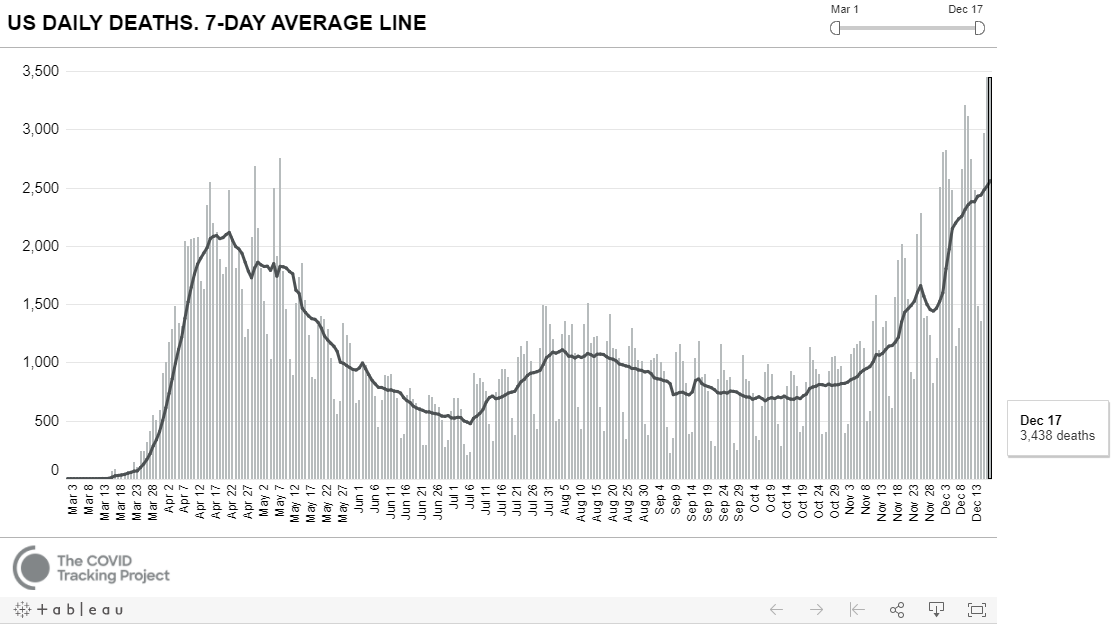
Read the single scariest thought of the year, maybe of the decade.

This isn’t a novel or a movie, so I won’t keep you in suspense. Here is the single scariest thought of the year, maybe of the decade.

Even if Trump loses the election, he still will be President for another two months.

That gives him plenty of time to deny he lost it and to have William Barr “prove” the election was rigged, and to have a right-wing Supreme Court agree.

Remember, this is the same President who has gone to great lengths to claim that he really didn’t lose the last election by 3 million votes, that all those votes were fake, and that with proper counting he would have won by 3 million.

Trump claims 3-5M illegal ballots cost him popular vote, cites no evidence
January 24, 2017 CBS NEWS

At a small reception for a bipartisan group of congressional leaders, President Trump claimed that 3 to 5 million illegal ballots cost him the popular vote, CBS News’ Nancy Cordes and Catherine Reynolds confirmed on Monday night. The claim is unproven.

Mr. Trump made a similar claim before. After the election, he tweeted that he “won the popular vote if you deduct the millions of people who voted illegally,” but he cited no evidence to back up his claim.

At the White House press briefing Tuesday, press secretary Sean Spicer was asked if Mr. Trump really believes that millions voted illegally in the election.

“The president does believe that. He has stated that before. I think he’s stated his concerns of voter fraud and people voting illegally during the campaign,” Spicer said. “He continues to maintain that belief based on studies and evidence that people have presented to him.”

Asked what evidence Mr. Trump has specifically, Spicer was unable to provide any information.

“As I said, I think the president has believed that for a while based on studies and information he has.”

Trump and Putin talked about Mueller report, Venezuela and North ...
Tell me how you got more than 70% of the vote. Can you fix mine, again?

Of course, Trump believes it. As a demonstrable psychopath, Trump probably believes all of his 18,000+ lies.

Crazy knows no bounds.

And when a psychopath has a compliant Senate, a compliant Attorney General, and a compliant Supreme Court to do his bidding, there may be no limit to what could happen to America.

As for the Senate, remember this was the same Senate Majority Leader who stated his proudest accomplishment was blocking Obama’s Supreme Court nomination because there was “only” a year to go before the Presidential election.

There was no precedent for such an action since the period around the Civil War and Reconstruction. No Democratic president had made an appointment while Republicans held the Senate since 1895.

In a speech in Kentucky, McConnell said: “One of my proudest moments was when I looked Barack Obama in the eye and I said, ‘Mr. President, you will not fill the Supreme Court vacancy.’ “

McConnell was not alone. The 11 Republican members of the Senate Judiciary Committee signed a letter saying they had no intention of consenting to any nominee from Obama.

No proceedings of any kind were held on Garland’s appointment.

Given Trump’s, Barr’s, McConnell’s, and the Supreme Court’s lack of honor and honesty, it is by no means a stretch to predict that a Trump loss would be followed by incredible maneuvering to overturn the results and eventually to make Trump President for life.

And remember also, that as President, Trump is Commander-In-Chief of America’s armed forces. Historically, all dictators have taken and remained in power by control over the military.

President Trump Joked That Maybe The US Should Have A “President For Life” Like China. “He’s now president for life,” Trump said of China’s Xi Jinping. “Maybe we’ll give that a shot some day.”
Salvador Hernandez, BuzzFeed News Reporter

He was just being “sarcastic.” Right?

Opinion | Trump to Dictators: Have a Nice Day - The New York Times
https://www.nytimes.com/2018/06/19/opinion/trump-to-dictators-have-a-nice-day.html

Rodger Malcolm Mitchell
Monetary Sovereignty
Twitter: @rodgermitchell
Search #monetarysovereignty Facebook: Rodger Malcolm Mitchell

…………………………………………………………………………………………………………………………………………………………………………………………………………………………………………………………………………………………..

THE SOLE PURPOSE OF GOVERNMENT IS TO IMPROVE AND PROTECT THE LIVES OF THE PEOPLE.

The most important problems in economics involve:

  1. Monetary Sovereignty describes money creation and destruction.
  2. Gap Psychology describes the common desire to distance oneself from those “below” in any socio-economic ranking, and to come nearer those “above.” The socio-economic distance is referred to as “The Gap.”

Wide Gaps negatively affect poverty, health and longevity, education, housing, law and crime, war, leadership, ownership, bigotry, supply and demand, taxation, GDP, international relations, scientific advancement, the environment, human motivation and well-being, and virtually every other issue in economics.

Implementation of Monetary Sovereignty and The Ten Steps To Prosperity can grow the economy and narrow the Gaps:

Ten Steps To Prosperity:

1. Eliminate FICA

2. Federally funded Medicare — parts A, B & D, plus long-term care — for everyone

3. Provide a monthly economic bonus to every man, woman and child in America (similar to social security for all)

4. Free education (including post-grad) for everyone

5. Salary for attending school

6. Eliminate federal taxes on business

7. Increase the standard income tax deduction, annually. 

8. Tax the very rich (the “.1%”) more, with higher progressive tax rates on all forms of income.

9. Federal ownership of all banks

10. Increase federal spending on the myriad initiatives that benefit America’s 99.9% 

The Ten Steps will grow the economy and narrow the income/wealth/power Gap between the rich and the rest.

MONETARY SOVEREIGNTY
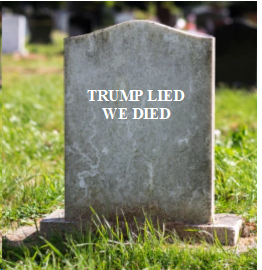
If only they were Monetarily Sovereign. They could have done so much more.

Informative article: How the European countries are doing a much better job than the GOP-dominated U.S.Unemployment benefits: Another 6.6 million Americans filed for ...

How Europe is bailing out its workers
The Week Staff May 9, 2020

European countries are paying workers who’ve been sent home by employers. Can they afford it? Here’s everything you need to know:

What is their plan?
Unlike the U.S., where some 30 million people have filed for unemployment and millions of gig workers are going without income, most European workers are still getting paid through their employers.

But instead of requiring workers to apply for unemployment and sending them a $1,200 bailout check, many European Union countries chose to begin paying part of their workers’ salaries, so companies would not have to fire them.

Germany, for example, is paying workers about 60 percent of their wages up to a cap of $7,575 a month, and France, Spain, Denmark, and the Netherlands have similar plans, although with lower caps.

The U.K. is paying up to 80 percent of wages, capped at $3,100 a month. Employers generally have to cover payroll up front and then get reimbursed by the government. For the self-employed, federal or local governments are providing direct cash assistance.

Despite being monetarily non-sovereign, and so, not having the unlimited ability to create euros, the euro nations are trying to live up to the fundamental purpose of any government: To protect and improve the lives of the people.

By contrast, the Monetarily Sovereign U.S. government, nominally led by Donald Trump, but actually led by Mitch McConnell and Fox News, has penny-pinched it’s way to massive unemployment and poverty. This, despite having the unlimited ability to create its own sovereign currency, the U.S. dollar.

Our right-wing-dominated government has amply demonstrated its disdain for the middle- and lower-income groups by trying to eliminate ACA with no plan to take its place, and by cutting taxes on the rich.

And let us not forget the pro-rich, anti-everyone-else tax cuts and reductions in poverty aids.

Today, the government continues its pro-rich, anti-everyone-else path by failing to support the unemployed and the impoverished, and by fighting against the meager ant-recession proposals of the left-wing.

To the right, federal money is tight when it doesn’t help the rich, but ample when it does.

Getting back to Europe, it is astounding that monetarily non-sovereign Germany has a higher cap on wage support ($3,100) than does Monetarily Sovereign England ($7,575), though with a lower percentage of wages.

Germany needs to get the money from taxpayers; England merely presses computer keys to create the money.

Yes, it is astounding , but not as astounding as the federal government’s intentional underpaying.

Why does the unlimited-ability-to-spend U.S. government intentionally underpay? Answer: To benefit business by creating a massive supply of desperate workers, who are willing to accept any jobs at low wages.

The most astounding aspect of this entire sham is that so many of those desperate lower- and middle-income people vote for the very politicians who made them desperate and lower income in the first place.

To avoid layoffs in times of slow production, Germany innovated a scheme called Kurzarbeit, or short-time work. When firms have fewer orders, they cut back on workers’ hours, and the government pays the salary difference.

When business picks up, companies simply increase workers’ hours. During the 2008 financial crisis, the number of unemployed workers went up just 9 percent in Germany, compared with 56 percent in the U.S.

“We have one of the strongest welfare states in the world,” says German Labor Minister Hubertus Heil, “and we have built up reserves for difficult times during good times.”

Other EU countries have modeled their payments on that system.

In most of the world, “welfare” is a good thing, meaning “benefit” or “well-being.” Governments are created to do things for the welfare of their people.

In America however, “welfare” has come to be a cruel epithet that translates to: “Support for the lazy good-for-nothing poor.” Thus have our hearts hardened.

How many people are covered?
As of mid-April, at least 18 million European workers were working less or not at all — and with each passing week, the numbers are growing. Management consulting firm McKinsey estimates that up to 59 million jobs in the EU and the U.K. are in jeopardy, a staggering 26 percent of total employment.

That compares with some 54 million at risk in the U.S.

In France alone, some 785,000 companies have applied for wage subsidies for about 9.6 million workers — half the private-sector workforce. In Ireland, some 40 percent of all workers are now on government aid.

In hard-hit Spain, which already had unemployment of 13 percent, the rate could soar to 20 percent. Germany, by contrast, predicts a bump from 5.2 percent unemployment to 5.9 percent.

The primary issue is not unemployment. Labor is not the primary goal for most people. The primary goal is income.

Sadly, the very rich, who incidentally, labor less than any other income group, have been able to make employment a necessity.

“Unemployment” is defined as wanting a job but not having one. If someone, for instance a spouse, does not have a job, and is not looking for one, that person is not unemployed.

But if the same spouse is looking for a job, and can’t find one, that same spouse is unemployed.

So what do unemployment figures tell us about the health of the economy? Missing from those figures is federal stimulus actions.

If the federal government were to, say, raise unemployment compensation to 100% of previous income, unemployment figures would have very little economic meaning (depending on whether there remained enough workers to produce what we need).

I foresee a time when machines will do so much that the vast majority of us will not be employed for wages, yet we still will have a healthy economy.

How much will this cost?
It depends on how long the crisis lasts.

In Britain, assuming one million people need assistance for three months, the tab will be about $51 billion, or 2 percent of the nation’s economic output.

In France, the bill will be $21 billion for the next three months, but in Germany, because its benefits are so substantial anyway, the extra cost should be just $11 billion.

Keep in mind that “cost” means something different for such Monetarily Sovereign nations as Britain and the U.S. vs. monetarily non-sovereign nations like France and Germany.

The former can afford anything just by creating money. The latter must tap taxpayers for the needed money.

If the lockdowns continue longer than three months, or if the global economy falls into a depression that drags on for years, the toll for Europe could be in the trillions.

And that is why trillions must be added to the various economies. The U.S. alone, having dilly-dallied for months, has arrived at the place where about $7 trillion to $9 trillion in stimulus dollars will be needed to fend off a depression.

How will they pay for that?
The poorer countries like Italy and Spain — which are also some of the hardest hit by the virus — wanted the EU to issue “coronabonds” that would be dispensed to those nations that needed cash the most.

But fiscally conservative Germany and the Netherlands balked, saying that would make them pay for profligate budgets they don’t control.

Instead, the European Commission plans to borrow $350 billion to provide a package of loans and grants to governments.

To pay the loan back — the EU is not allowed to run a budget deficit — it proposes raising taxes on carbon emissions, plastics, or financial transactions, or some combination of those.

Europe has a massive problem. It needs to add net money to its economies, but is required by its own laws to borrow the money, which must be paid back to lenders.

So there will not be the net money, unless the EU changes its own laws.

How does this compare with the U.S.?
Some economists say that the U.S. system will help the economy rebound faster than in Europe, because it will allow laid-off workers to go where they’re needed in the post–COVID-19 economy, rather than trapping them in industries that might not fully recover for years.

But the U.S. subsidies are far more expensive and complicated, and many workers and small businesses are falling through the cracks.

The U.S., with a population of 328 million to the EU’s 446 million, has already spent more than $2.6 trillion on coronavirus rescue loans and grants.

The U.S. budget deficit is expected to reach at least $3.8 trillion this year. Nobel Prize–winning economist Joseph Stiglitz says the cost of following Europe’s plan and paying workers directly would be “a fraction of what we’re now spending.”

What will help the U.S. economy’s rebound is the fact that the federal government has the unlimited ability to create dollars, without borrowing and without taxing — net dollars to replace the dollars lost to closed businesses.

The advantage is not just that paying workers directly might be “a fraction of what we’re now spending.” The real advantage is that to the U.S., cost doesn’t matter. The more the better.

And no, please don’t get into the phony “inflation” argument. See: “Only 450 words answer the question, ‘Does printing money cause inflation?’”

Contrary to popular myth, inflation is caused by shortages, usually shortages of food and/or energy, never by money “printing.” Scarcity always causes price increases.

In fact, money “printing” can cure inflations, if the money is used to access the scarce items and distribute them to the public.

Italy’s anger at the EU
Italy has the highest death toll from the virus in Europe, at more than 28,000 as of May 1.

But its rescue package of some $87 billion is smaller than that of other EU countries, because, (being monetarily non-sovereign) it simply can’t afford much.

The EU’s insistence on providing loans, rather than direct cash, to hard-hit governments of member states has frustrated Italy and raised fears of renewed years of punishing budget cuts.

As a result, simmering anti-EU sentiment is rising. An April survey found that 42 percent of Italians now favor leaving the bloc, up from 26 percent in November 2018.

Italian Prime Minister Giuseppe Conte warns that the pandemic poses a serious threat to the already strained bonds holding the EU together. “It’s a big challenge to the existence of Europe,” he said.

The Meteorology of Economics, Speech at the University of Missouri, KC by Rodger Malcolm Mitchell, June 5, 2005

[Because of the Euro, no euro nation can control its own money supply. The Euro is the worst economic idea since the recession-era, Smoot-Hawley Tariff. The economies of European nations are doomed by the euro.]

More true today than even in 2005.

Most of Europe really is doomed. Being monetarily non-sovereign forces a nation into financial helplessness during financial crises.

But, the U.S. will be doomed too, if Congress fails to take advantage of its Monetary Sovereignty and deficit spend adequately — a minimum of $7 trillion new dollars, perhaps more.

Rodger Malcolm Mitchell
Monetary Sovereignty
Twitter: @rodgermitchell
Search #monetarysovereignty Facebook: Rodger Malcolm Mitchell

…………………………………………………………………………………………………………………………………………………………………………………………………………………………………………………………………………………………..

THE SOLE PURPOSE OF GOVERNMENT IS TO IMPROVE AND PROTECT THE LIVES OF THE PEOPLE.

The most important problems in economics involve:

  1. Monetary Sovereignty describes money creation and destruction.
  2. Gap Psychology describes the common desire to distance oneself from those “below” in any socio-economic ranking, and to come nearer those “above.” The socio-economic distance is referred to as “The Gap.”

Wide Gaps negatively affect poverty, health and longevity, education, housing, law and crime, war, leadership, ownership, bigotry, supply and demand, taxation, GDP, international relations, scientific advancement, the environment, human motivation and well-being, and virtually every other issue in economics.

Implementation of Monetary Sovereignty and The Ten Steps To Prosperity can grow the economy and narrow the Gaps:

Ten Steps To Prosperity:

1. Eliminate FICA

2. Federally funded Medicare — parts A, B & D, plus long-term care — for everyone

3. Provide a monthly economic bonus to every man, woman and child in America (similar to social security for all)

4. Free education (including post-grad) for everyone

5. Salary for attending school

6. Eliminate federal taxes on business

7. Increase the standard income tax deduction, annually. 

8. Tax the very rich (the “.1%”) more, with higher progressive tax rates on all forms of income.

9. Federal ownership of all banks

10. Increase federal spending on the myriad initiatives that benefit America’s 99.9% 

The Ten Steps will grow the economy and narrow the income/wealth/power Gap between the rich and the rest.

MONETARY SOVEREIGNTY