You have heard that the Federal Reserve is trying to cure inflation by raising interest rates slowly.
And you may repeatedly have read on this site (here, and here, and here, and here) that the Fed does not have the best tools to stop inflation, and that despite their best efforts, inflation will continue and be joined by recession..
The Fed has two tools: Raising interest rates and to some degree, reducing money-supply growth.
Contrary to popular belief, neither can cure inflations, but both are very good at creating recessions.
Sadly, a recession is not the opposite of inflation. (Deflation is.) A recession is the opposite of growth and prosperity. The Fed is trying to cure inflation via recessionary means.
Today, as we predicted, the Fed is failing miserably in its assigned task.
The annual inflation rate for the United States is 9.1%for the 12 months ended June 2022, the largest annual increase since November 1981 and after rising 8.6% previously, according to U.S. Labor Department data published July 13.
Since the Fed doesn’t have the tools to cure inflations, who does? As you will see, Congress and the President have that power. But, out of ignorance, intent, or political chicanery, Congress and the President won’t use their power of the purse to prevent or end inflation.
To explain this, we first must discuss the myth that raising interest rates cures inflation.
It isn’t a secret that prices have risen over the past year. Americans have seen the highest inflation rates since 1982, based on the CPI (Consumer Price Index), which increased by 0.8 percent in February and 7.9 percent YoY.
Now, the Federal Reserve is about to raise interest rates.
The CPI measures the average change over time in the prices for urban consumers on typical consumer goods and services.
Although raising interest rates might seem harsh when prices are already high, it’s intended to eventually lead to a drop in inflation.
The primary reason the Federal Reserve (or the Fed) raises interest rates is to cause a slowdown in economic growth.
Interest rates determine how costly it is for consumers and businesses to borrow.
Economic growth is not the same as inflation. We can have fast economic growth without inflation, so slowing growth is not a cure for inflation.
Yet, the purpose of raising interest rates is to slow growth, and that is recessionary.
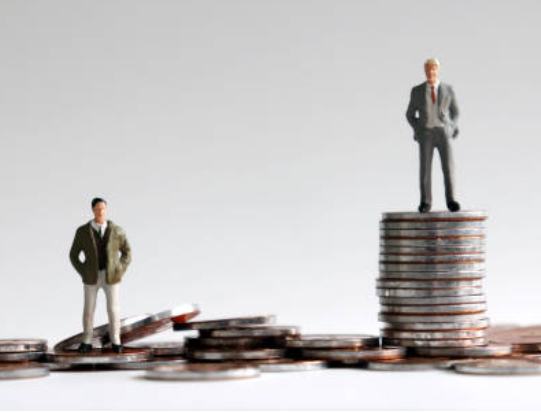
When no one is rich or poor.
A recession is “a period of temporary economic decline during which trade and industrial activity are reduced, generally identified by a fall in GDP in two successive quarters.”
The Fed does not want to cause a recession, so its interest rate increases must slow economic growth (i.e., GDP growth) while not causing GDP to fall.
The Fed hopes that by raising interest rates, consumers and businesses will delay new investments, which will help lower demand and temper prices.
The Gapbetween the rich and the rest is what makes them rich. Without the Gap, no one would be rich. We all would be the same. The wider the Gap, the richer they are.
Although that is what the Fed claims to hope, delaying new investments does not lower demand.
It likely willlower supply by discouraging investment in Research & Development and production.
Let’s examine the logic. Inflation exists when the demand for critical goods and services exceeds the supply of those goods and services, creating shortages.
Shortages cause all inflations. ALL.
Because reducing demand leads to recessions, the non-recessionary prevention/cure for inflation is to increase the supply of scarce, critical goods and services.
Here are some of the critical goods and services for which supply must be increased:
I. Oil. As we have shown in several previous posts (here, here, here, here, etc.), inflation is highly impacted by the price of oil. It is the most critical product affecting inflation.
Oil prices are determined by scarcity. Inflation (red) closely parallels oil scarcity (blue).
Every industry and virtually every product and service uses oil in some way. Any increase in oil prices will cause a general rise in product/service prices (aka inflation).
Oil prices are determined by scarcity.
It is essential to reduce the oil shortage to fight inflation.
The oil shortage could be cured by reducing demand, but that would be recessionary.
The non-recessionary method for reducing the oil shortage involves federal fundingfor oil research, exploration, drilling, refining, and distribution, plus federal funding for oil substitutes like solar, wind, geothermal, electrical, nuclear, etc. power.
More federal funding, not less, could cure inflation. Interest rate manipulation does nothing to increase the supply of oil.
Higher interest rates could exacerbate the oil scarcity situation by negatively affecting the oil supply.
Interest rate manipulation can affect the oil demandonly to the degree that it depresses the economy. Exchanging recession and depression for inflation is a bad tradeoff, yet that is the Fed’s solution.
II. Food. Second to oil, food is the next most crucial inflation-related product. Food shortages have caused many hyperinflations around the world.
The infamous Zimbabwe hyperinflation began when the government took farmland from experienced white farmers and gave it to inexperienced black farmers. The predictable result: A massive food shortage leading to an equally massive increase in food prices.
Raising interest rates will not help farmers grow more food.
An ongoing outbreak of highly pathogenic avian influenza (HPAI) reduced the U.S. egg-layer flock and drove a 5.0-percent increase in retail egg prices in May 2022 following a 10.3-percent increase in April.
Higher interest rates will not cure the meat and egg shortage.
The ongoing HPAI outbreak has also contributed to increasing poultry prices as over 40 million birds in 36 States have been affected.
The disease prevalence also impacts international demand for U.S. poultry. Price impacts of the outbreak will be monitored closely.
Poultry prices are now predicted to increase between 13.0 and 14.0 percent, and egg prices are predicted to increase between 19.5 and 20.5 percent in 2022.
Higher interest rates will not solve the poultry shortage.
Fish and seafood prices are now predicted to increase between 8.5 and 9.5 percent in 2022.
Higher interest rates will not cure the fish and seafood shortage.
Rapid increases in the consumption of dairy products have driven increases in retail prices in recent months.
This trend continued in May 2022 with a 2.6-percent increase in the prices for dairy products.
Dairy product prices are predicted to increase between 10.5 and 11.5 percent in 2022.
Higher interest rates will not cure the dairy shortage.
Following large price increases in January–May 2022, forecast ranges for fats and oils, processed fruits and vegetables, sugar and sweets, cereal and bakery products, and other foods have been adjusted upward.
In 2022 compared with 2021, fats and oils prices are predicted to increase between 14.0 and 15.0 percent, processed fruits and vegetables prices between 7.5 and 8.5 percent, sugar and sweets prices between 6.5 and 7.5 percent, cereal and bakery product prices between 10.0 and 11.0 percent, and other food prices between 10.0 and 11.0 percent.
Higher interest rates will not cure food shortages unless the plan is to force people to starve because of food scarcity and unaffordability.
A plan to solve inflation by forcing people to eat less food is repugnant to any but the most heartless demagogue. Yet that is exactly the Fed’s plan.
Interest rates are the Fed’s primary tool for impacting inflation. Borrowing is more expensive, but on the plus side, earnings on high yield savings accounts increase.
An increase in earnings on high-yield savings accounts cannot begin to offset the damage of inflation. It’s like using a sponge to offset the floods caused by global warming.
The food shortages can be moderated by additional federal deficit spending to support farming.
The government should pay farmers to grow rather than pay them not to grow, as was done when there were surpluses.
Additional federal fundingfor farmer education, the use of more efficient land use and crops, farm insurance, modern farm equipment, and shipping would reduce the shortage of farm products.
Strangely, the Fed focuses on “core inflation” which eliminates consideration of oil and food, the primary inflationary instigators. It’s like eliminating thoughts about hitting and pitching to arrive at “core” baseball wins.
III. Labor. COVID precipitated a labor shortage that has not abated. Federal deficit spending for the development and administration of vaccines and other healthcare helped moderate the shortage of labor.
Although the shortage, which manifested during COVID, and still continues, other factors were involved, notably compensation.
The salaries and benefits being offered were not tempting enough for many potential workers.
While the right-wing favors cutting benefits to force employees back to work, the more humanitarian approach is to increase remuneration.
Not only are employers forced to cut salaries to make room for FICA, but employer-provided healthcare insurance is an additional employment cost that must be considered when determining salaries.
These costs could be eliminated, salaries could be raised, and more people would come to work, if the federal government funded comprehensive, no-deductible Medicare for all, and took that burden from the salary consideration.
That reduction in labor scarcity would require additional federal deficit spending.
The Federal Reserve plans to raise interest rates several times in 2022.
The Fed’s main objectives are maximum employment, stable prices, and moderate long-term interest rates.
2 percent is the target interest rate, so 7.9 percent over the past year is nearly quadruple that rate.
Interest rate increases will do nothing to achieve maximum employment, nothing to stabilize prices, and of course, nothing to achieve 2% interest rates.
The Fed currently is doing nothing to achieve its three goals. Quite the opposite. The Fed is doing the exact opposite of its stated goals by hoping to “cool” the economy (Fedspeak for recessing the economy).
In short, the Fed is applying leeches to cure anemia.
To fight the economic impacts of the COVID-19 pandemic, the Fed dropped rates to zero.
The Fed has been talking about rate hikes for months. Increases were expected even before Russia invaded Ukraine and impacted oil and raw material costs.
Economists expect up to seven incremental rate increases, beginning with a likely quarter-point raise (25 basis points), according to CNBC. Some economists have suggested the Fed may add 50 basis points on some of these increases.
Why seven increases? How did the Fed arrive at that number? No one knows.
Consumers have already been hit with high prices on goods like groceries, furnishings, clothing, airline fares, and especially high fuel prices.
IV. Other shortages. Lumber, housing, computer chips, shipping, cars, clothing, airline seats, etc. all are in short supply, and each scarcity could be moderated by well-directed federal spending.
Think of any scarcity, and you will have no trouble imagining how the federal government could help cure that scarcity via additional federal spending.
The federal government’s greatest skill is to throw money at a problem. It costs taxpayers nothing; it stimulates the economy; and when properly planned, can help solve the problem.
The proposed interest rate hikes will not increase the supply of oil or food. Nor will they increase the supply of housing, lumber, computer chips, cars, clothing, airline fares, furnishings, shipping, or labor, all of which are in short supply.
Additional deficit spending, not reductions in deficit spending, can reduce the shortages of scarce goods and services. Inflations always are caused by shortages.
Interest rate hikes will exacerbate those shortages, thus exacerbating inflation. The only possible “benefit” of rate increases (if one can call it a “benefit”) is that it will cut Gross Domestic Product and recess the economy.
A recession isn’t expected due to promising labor markets, but low-income workers will likely suffer.
And there we have it. The usual government response to any emergency is to punish the poor and middle-income classes. When deficits (wrongly) are deemed too high, the first instinct is to cut Social Security, cut medicare, and cut all poverty aids.
So far, it appears that a recession is unlikely in 2022, largely due to the fact that the labor market is strong.
Diane Swonk, the chief economist at Grant Thornton, told CNBC the employment market continues to improve.
However, the Fed must be cautious to avoid raising rates too quickly, which could slow down the economic recovery and lead to higher unemployment.
The labor market is “strong” (i.e., low unemployment) because people must work to pay their high bills. But the labor market is “weak” because there is a shortage of labor.
Raising interest rates will not reduce the shortages that cause inflation. Cutting federal spending only will recess an economy already weakened by scarcity and previous interest rate increases.
The government could end the inflation with more, not less, government spending to eliminate shortages and with lower, not higher, interest rates.
But the government, ruled by the rich, prefers to pretend that inflation must be cured at the expense of the poor and middle classes.
The Gap makes them rich, and the wider the Gap, the richer they are. Everything the Fed does is in service of a wider Gap.
At the start of this post, we told you that Congress and the President could prevent and cure inflations. But they pretend federal spending causesinflation.
For many in Congress, this is sheer ignorance. For others it is politics. Neither side wants the other side to succeed, and because Congress now is evenly divided, no one can overcome the minority rule system.
America’s founders created the minority rule system to entice the low-population states to join the union, so between the two-Senators-per-state voting system and the filibuster, a minority can prevent any progress unless one party has a super majority.
Add in House gerrymandering and the Presidential electoral college, and you have a creaky, arthritic government designed for obstruction, not for progress.
If all that were not bad enough, we are burdened with a Supreme Court that claims money is free speech and should not be limited, so money in politics has reached outrageous levels.
Finally, we also have a Supreme Court that now does not want agencies making decisions that offend the right wing, when in reality, agencies are the only ones capable of making decisions, thus tossing so many wrenches into the gears of progress, we are frozen.
In short, the Fed doesn’t have the tools, Congress doesn’t have the will, and the President doesn’t have the Congress or agencies.
Inflation will charge along with no one solving the scarcity problem until the private sector does it.
Capitalism, with its focus on profits and competition, eventually will reduce scarcities, at which time the Fed, Congress, the President, and both political parties will claim credit for “getting us out of this mess.”
The rich will prosper and the rest will suffer, and life will return to its normal domination by the rich.
Gap Psychology describes the common desire to distance oneself from those “below” in any socio-economic ranking, and to come nearer those “above.” The socio-economic distance is referred to as “The Gap.”
Wide Gaps negatively affect poverty, health and longevity, education, housing, law and crime, war, leadership, ownership, bigotry, supply and demand, taxation, GDP, international relations, scientific advancement, the environment, human motivation and well-being, and virtually every other issue in economics.Implementation of Monetary Sovereignty and The Ten Steps To Prosperity can grow the economy and narrow the Gaps: Ten Steps To Prosperity:
THE PROBLEM: ECONOMIC MYTHS HINDER ECONOMIC GROWTH
Myth #1: The federal debt and deficits are too high. The fact:
Myth #2: Federal debt as a percentage of Gross Domestic Product is too high and unsustainable. The fact:
The fact: As the percentage of federal debt to GDP rises, real (inflation-adjusted) GDP per person rises. The conclusion: The more “debt” the federal government has, the wealthier are we Americans.
Myth #3: Inflation is too much money chasing too few goods and services. The fact:
Myth #4: Federal deficit spending causes inflation. The fact:
There is no relationship between federal government deficit spending (red) and inflation (blue).
Myth #5: Oil prices aren’t the primary cause of inflation. The fact:
Oil shortages are the primary cause of inflation. When oil prices go up, inflation goes up; when oil prices go down, inflation goes down.
While oil shortages cause oil price increases, which in turn cause price increases in most other goods and services, these price increases are exacerbated by scarcities in the other goods and services.
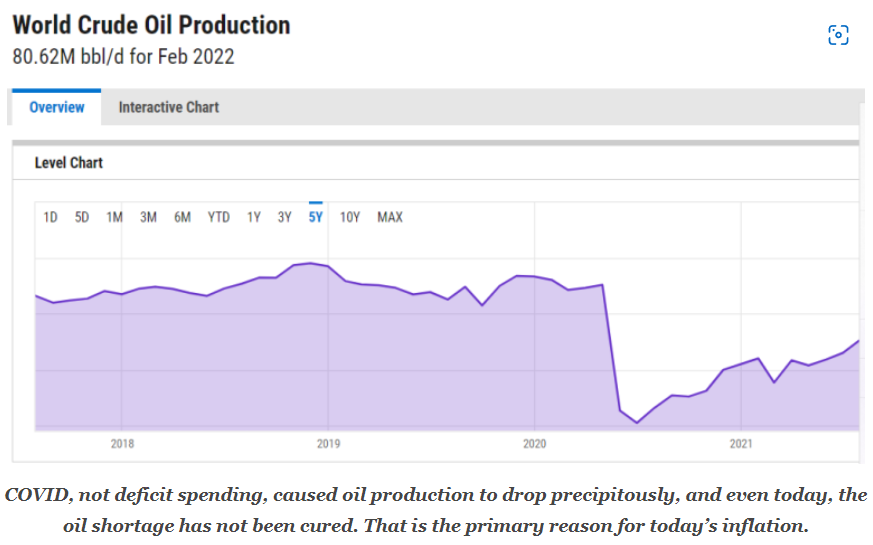
Myth #6: COVID was not an important cause of inflation. The fact:
Oil production dropped dramatically in 2020, at exactly the time when COVID came to be rampant throughout the world.
When oil production drops, the resultant shortage causes prices to rise, which causes virtually all other prices to rise.
COVID-caused scarcities such as computer chips, cars, lumber, homes, food, shipping resources, baby formula, and labor exacerbated these other price increases.
THE SOLUTION: FEDERAL DEFICIT SPENDING TARGETED AT GROWING THE ECONOMY AND CURING INFLATIONS BY ELIMINATING SHORTAGES.
Unlike state and local governments, the federal government is Monetary Sovereign. It has the unlimited ability to create its own sovereign currency, the U.S. dollar.
The federal government never unintentionally can run sort of dollars.
Alan Greenspan:“A government cannot become insolvent with respect to obligations in its own currency.”
Ben Bernanke:“The U.S. government has a technology, called a printing press (or, today, its electronic equivalent), that allows it to produce as many U.S. dollars as it wishes at essentially no cost.”
Even if all tax collections totaled $0, the federal government could continue spending forever.
The economy, as measured by GDP, is a spending number, a formula for which is:
Federal Spending + Non-federal Spending + Net Exports = GDP
Therefore, by formula, adding dollars to the economy via federal spending increases GDP.
This leads to the question, will this cause inflation?
As we have seen in Myths #4, 5, and 6, inflation is not caused by federal deficit spending but rather by shortages of critical goods and services, most often oil (energy)
To eliminate that shortage, increase federal support for the energy sector.
Oil drilling & refining in the short term
Electric cars, buses, and trains.
Electric homes, factories, farms, and cities
Solar energy
Nuclear energy
Geothermal energy
Wind energy
Hydrogen energy
Research & development of other non-carbon energy sources
Additionally, there should be financial support for other scarce products and services:
Food shortage: Farm aid to increase farm output and the development of more productive crops.
Shipping shortage: Aid for improved ports, workers, trucks, and driver training. Improved national railroad system.
Housing shortage: Aid for housing, the lumber industry, and training for carpenters, electricians, plumbers, etc.
Shortages of cars, trucks, planes, and electric/electronic machines: Support the production of improved computer chips.
Shortage of health providers: Aid for medical training, hospital building, pharmaceutical R&D
Labor shortage: Eliminate FICA, which would help businesses pay more for workers. Also, provide free, comprehensive Medicare for every man, woman, and child in America, thus removing that expense from companies.
Other shortages: Eliminate duties on scarce items.
In summary, all inflations are caused by shortages, and the prevention/cure of inflations is to cure those shortages. Raising interest rates, as the Fed now is doing, will attempt to fix inflation via recession, a poor cure.
Gap Psychology describes the common desire to distance oneself from those “below” in any socio-economic ranking, and to come nearer those “above.” The socio-economic distance is referred to as “The Gap.”
Wide Gaps negatively affect poverty, health and longevity, education, housing, law and crime, war, leadership, ownership, bigotry, supply and demand, taxation, GDP, international relations, scientific advancement, the environment, human motivation and well-being, and virtually every other issue in economics.Implementation of Monetary Sovereignty and The Ten Steps To Prosperity can grow the economy and narrow the Gaps: Ten Steps To Prosperity:
Do Donald Trump’s attempted coup and illegal efforts to stay in office remind you of how a dictatorship works?
PutinTrump loves and admires dictators.Remember his ongoing love affair with Vladimir Putin and his comments about Putin’s invasion of Ukraine.
He described the Russian president as “very savvy.” “‘This is genius.’ Putin declares a big portion of the Ukraine—of Ukraine—Putin declares it as an independent.”
And there was his love affair with North Korea’s brutal dictator, Kim, the guy who killed his uncle with a cannon.
Kim
Trump said, “He’s a strong guy. A great negotiator.” “He’s got a very good personality, he’s funny, and he’s very, very smart, and he’s a very strategic kind of a guy.” Trump said he and Kim “got along very well” from “the beginning.”
As for China’s dictator, Xi, Trump said, “He’s now president for life. President for life. No, he’s great, and look, he was able to do that. I think it’s great. Maybe we’ll have to give that a shot someday.”
Trump said Libya would be better off if (dictator) Gaddafi were in charge right now.”
Gaddafi
To ruthless Philippine dictator Rodrigo Duterte, Trump said, “I just wanted to congratulate you because I am hearing of the unbelievable job on the drug problem.”
Regarding Turkish dictator Erdogan, Trump said, “Frankly, he’s getting very high marks. He’s also been working with the United States.
“We have a great friendship, and the countries—I think we’re right now as close as we’ve ever been … a lot of that has to do with a personal relationship.”
Regarding Egyptian President Abdel, who instituted a coup (sound familiar?), “We agree on so many things.
I just want to let everybody know in case there was any doubt that we are very much behind President el-Sisi.
Duterte
He’s done a fantastic job in a very difficult situation.
We are very much behind Egypt and the people of Egypt.
The United States has, believe me, backing, and we have strong backing.”
In every case, Trump indicated his appreciation for a dictator’s approach to law and order, i.e., harsh, bloody crackdowns, which is why the attempted coup at Congress should be no surprise to anyone following him.
Erdogan
Then, there is Tucker Carlson, Fox’s #1 Trumper. He went to Hungary to suck up Victor Orban, the nation’s dictator, for life.
Carlson met with Orbán in Hungary for the interview and suggested that the US was less free than the European country, where Orbán has targeted his country’s media, judiciary, and political system.
Orbán has also implemented widely-condemned policies against migrants and the LGBTQ community.
Abdel
Then, Carlson continued his dictator appreciation tour:
Last year, Tucker Carlson traveled to Budapest to celebrate Viktor Orbán, Hungary’s aggressively illiberal and xenophobic prime minister, by filming a week of episodes that included “lessons” the United States could draw from his anti-democratic, immigration-restrictionist rule.
In a sit-down interview, Carlson nodded approvingly as Orbán railed against “post-Christian, post-national societies” and their “very risky” mixture of Muslim and Christian communities.
Orban
This week, Carlson visited another country undergoing an alarming democratic erosion and fawned over its far-right ruler: Brazil’s Jair Bolsonaro.
Broadcasting from both Rio de Janeiro and the capital, Brasília, Carlson has been urging his viewers to pay attention to what’s happening there.
Bolsonaro, who has been president of Brazil since 2019 and is an ally of former President Donald Trump, has weakened environmental protections, including the destruction of the Amazon rainforest and reallocating land pledged to indigenous tribes.
He has also spread conspiracies about COVID-19 vaccines.
Bolsonaro
Carlson’s goal with these field trips is to rehabilitate the images of reactionary leaders who have rightfully earned international scorn.
But by parachuting into Brazil without any apparent grasp of its politics and culture, Carlson ended up on a sort of confirmation-bias egg hunt: finding evidence everywhere that the real threats in global stability are coming from a liberal internationalist order.
Is it a coincidence that Trump engineered a coup attempt after praising dictators and Carlson is out there also praising dictators? Or is this just a normal outgrowth of Fox and the Republican party?
Think of a political party where almost none of the Senators and Representatives has the courage, political or physical, to say a bad word about the dear leader.
Does that sound like America or more like Russia, China, and North Korea?
Trump
And if the GOP has its way, that will be America. Already, the Republicans have installed six Supreme Court Justices who vote in tandem to restrict the poor’s voting and reproductive rights.
Already, the GOP has installed officials in each state who will do precisely as Trump tried to do in 2020: Create Presidential electors to the electoral college, who will vote for a Republican President, no matter what the popular vote may be in each state.
We are about three months away from a sudden awakening that voting doesn’t matter as much as loyalty to the GOP. We can see it already, where despite conclusive evidence to the contrary, a large segment of the population and virtually all Republicans claim that the election was stolen.
Each law was enacted by a Republican governor or by Republican-controlled legislatures voting to override Democratic governors’ vetoes.
These new laws include one that requires local election boards in Arkansas to refer election law violation complaints to the State Board of Election Commissioners — made up of five Republicans and just one Democrat— instead of their respective county clerks and local prosecutors
Another generally bars the executive and judicial branches in Kansas from modifying election law
Carlson
Arizona Democratic secretary of state, Katie Hobbs, can no longer represent the state in lawsuits defending its election code.That power now lies exclusively with the Republican attorney general — but only through Jan. 2, 2023, when Hobbs’ term ends.
In Kentucky, where the Republican secretary of state and Democratic Gov. Andy Beshear were heralded for their bipartisan collaboration to give electors absentee and early voting options they’d never had before, state law now explicitly opposes such coordination during a state of emergency.
Beshear vetoed this bill, which curtails his office’s emergency powers, but the Republican-majority legislature voted to override him.
Gov. Brian Kemp and other Republicans have defended the law as “making it easy to vote and hard to cheat,” but Democrats, including Kemp’s 2018 opponent, Stacey Abrams, described it as “Jim Crow 2.0.”
The bottom line to all of the above:
Trump admires dictators so much he attempted a dictatorial coup to avoid being thrown out of office
Rather than condemning the coup, Trump’s followers supported the proven-false narrative that the election was stolen from him.
The GOP, having lost all sense of morality, slavishly supports Trump.
Because of America’s “minority rule” election system, the Republicans, despite having a minority of votes, managed to place people in positions of control over electoralvotes.
The Republicans also have placed a super-majority of right-wing ideologues into the Supreme Court.
We are now on track to having a fascist government that will restrict women’s rights, and the rights of non-Christian, non-white, and non-wealthy people who were not born in America.
That is the GOP goal. That is the religious right’s goal.
That is Trump’s goal.
And that is about to happen, with or without Trump himself.
Rodger Malcolm Mitchell
Monetary SovereigntyTwitter: @rodgermitchellSearch #monetarysovereigntyFacebook: Rodger Malcolm Mitchell
……………………………………………………………………..
THE SOLE PURPOSE OF GOVERNMENT IS TO IMPROVE AND PROTECT THE LIVES OF THE PEOPLE.
Gap Psychology describes the common desire to distance oneself from those “below” in any socio-economic ranking, and to come nearer those “above.” The socio-economic distance is referred to as “The Gap.”
Wide Gaps negatively affect poverty, health and longevity, education, housing, law and crime, war, leadership, ownership, bigotry, supply and demand, taxation, GDP, international relations, scientific advancement, the environment, human motivation and well-being, and virtually every other issue in economics.Implementation of Monetary Sovereignty and The Ten Steps To Prosperity can grow the economy and narrow the Gaps: Ten Steps To Prosperity:
In the previous post, “That Big Lie just keeps on rollin’ along,” and in many earlier posts, we discussed how the media, economists, and your politicians have been telling you “The Big Lie” which is:
Would this make you angry?
Federal taxes fund federal spending.
In fact, federal taxes fund nothing, and knowing that, you either shrug your shoulders or you get angry and start phoning/writing your politicians.
I hope the latter.
Think of it this way. What if Amazon or some other retailer cheated you out of $1,000. Or someone picked your pocket.
How angry would you be? How many phone calls would you make and what letters would you write?
Then think of all those unnecessary tax dollars you send to the federal government. A lot more than $1,000 I assume.
Or what if your boss screwed you out of last month’s salary? Compare that to the screwing you are getting from Social Security, all because of The Big Lie.
The wage base is the amount of a worker’s earnings that are taxable for Social Security purposes.
The 6.2% Old Age, Survivors and Disability Insurance (OASDI) tax, which funds various Social Security programs, applies only to the first $147,000 of a worker’s earnings for 2022.
But this number is also tied to changes in inflation and is likely to go up significantly in 2023.
That 6,2% against $147,000 (if your salary is that high) comes to $9,114 taken from you that pays for nothing.
But it gets worse. When your company decides on salaries, it figures the total cost of employing you. Because your company also must pay $9,114, it deducts the money from what it is willing to pay you.
Trust me on this. I have owned several companies and that is exactly the way we decided how much we could afford to pay for employees.
So, immediately, you are paying up to $18 thousand for nothing to a government that has the infinite ability to create dollars and neither needs nor uses your dollars.
The wage base in 2021, for example, was $142,800, but the high rate of inflation in 2021 pushed that number 2.9% higher.
Workers should expect another bump up in 2023, meaning higher earners should expect to pay more in Social Security taxes.
The original and fundamental purpose of Social Security is to help people financially when they no longer work. So one would think that the less you have earned over the years, the more financial help you need.
But Social Security doesn’t work that way. It gives more help to the people who have been earning more all these years.
And, defying all logic, it pays more money to people who already have enough money to tide them past their “normal” retirement age.
Here is what the government says:“You can start receiving your Social Security retirement benefits as early as age 62. However, you are entitled to full benefits when you reach your full retirement age. If you delay taking your benefits from your full retirement age up to age 70, your benefit amount will increase.”
Get it? If you have enough money not to need Social Security help when you are 62, you’ll be paid more for every year you wait.
That might make sense if the federal government was like a private insurance company, and had only a limited number of dollars available.
But the federal government has infinite dollars, so it makes no sense to pay wealthier people more.
Although no one wants to pay more taxes, the increase in the wage base has a silver lining for high earners.
While more of their income will be taxed, more of their earnings also will be credited to their future Social Security benefit.
Again, the richer are given more than the poorer.
The amount you earn in your working career is one of the most important factors in determining your ultimate payout — along with when you file for benefits.
The people who most need financial help are given less, and the people who need less are given more.
Although all of these potential changes for 2023 are notable, probably the biggest question about Social Security is what it will look like by the mid-2030s.
At that point, the SSA anticipates that the Social Security Trust Fund will be exhausted.
The government wants you to believe that Social Security is like private insurance, where you pay premiums, and your premiums pay for benefits.
But, if premiums are insufficient to pay promised benefits, the insurance company goes broke and you get nothing.
Social Security is not like that. You pay “Social Security taxes,” but those taxes do not pay for benefits.
As we saw in the previous post, the so-called “Trust Fund” is not in any way like a real trust fund. The SS “trust fund” merely is a ledger balance that the federal government can change at will.
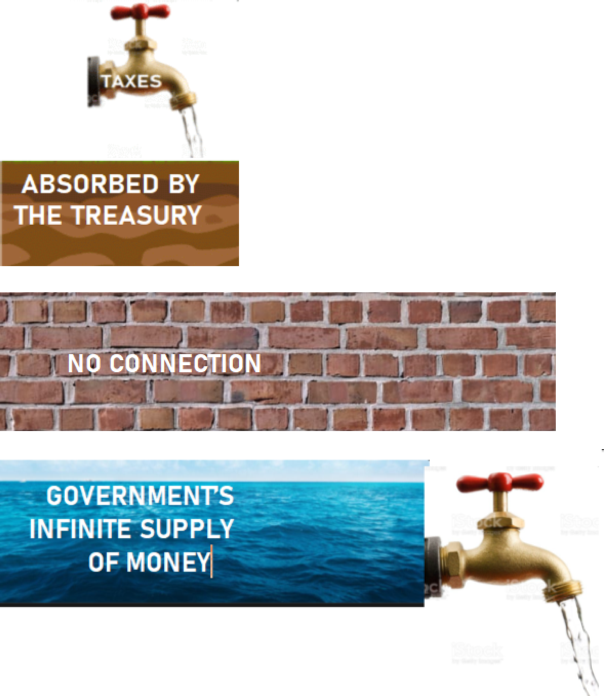
PRIVATE TRUST FUNDSOCIAL SECURITY METHODThe government wants you to visualize the process like this,<————– with your taxes going into the trust fund and the trust fund paying your benefits.In reality, the process looks like this——————>
Your taxes disappear into the Treasury, and the Monetarily Sovereign federal government pays you from its infinite supply of dollars.
There is no fiscal connection between your tax dollars and your benefits. Even if everyone paid $0 taxes, the federal government could pay your benefits, forever.
While Social Security will continue to pay benefits, thanks to payroll taxes on current workers, estimates see benefit levels dropping to 80% of current levels.
Social Security can pay any benefits Congress and the President wants it to pay, regardless of payroll taxes.
Although some type of legislative solution is likely to crop up over the next decade, both current workers and retirees should keep an eye on ongoing developments.
Here, the author of the article, perhaps unknowingly, may admit that the benefits are totally under Congress’s control when he uses the term “legislative solution,” rather than a fiscal solution.
The legislative solution would be to eliminate the fake connection between taxes and benefits and simply pay benefits. After all, benefits are paid to Congress, SCOTUS, POTUS and almost every other federal agency, without reference to tax collections.
In summary, thousands of dollars are being taken from you under the false pretense that federal taxes fund federal spending.
The only time this will stop is when you get angry at having your pocket picked and express your anger, loudly and clearly.
Gap Psychology describes the common desire to distance oneself from those “below” in any socio-economic ranking, and to come nearer those “above.” The socio-economic distance is referred to as “The Gap.”
Wide Gaps negatively affect poverty, health and longevity, education, housing, law and crime, war, leadership, ownership, bigotry, supply and demand, taxation, GDP, international relations, scientific advancement, the environment, human motivation and well-being, and virtually every other issue in economics.Implementation of Monetary Sovereignty and The Ten Steps To Prosperity can grow the economy and narrow the Gaps: Ten Steps To Prosperity:



/cloudfront-us-east-2.images.arcpublishing.com/reuters/5DPEXCOFLNLJ7LQ6WZLAUF2LXU.jpg)









 #Monetary Sovereignty - Mitchell