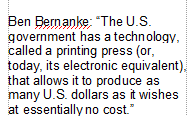
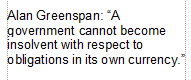
A note to those who sneer at Medicare for All

Some people sneer at Medicare for All because it is “unaffordable” or “unnecessary,” or some other non-reason. They sneer at Elizabeth Warren and Bernie Sanders for backing MfA.

For those people, here is an all-too-common situation:

Nextdoor Blog

Community Brings Hope to a Homeless Neighbor
November 19, 2019
Written by Shannon Toliver

When neighbors Melissa and Jenn were out shopping one day, they came across an elderly woman living in a car with two dogs. By reaching out and uniting their Pennsylvania community, they were able to change this woman’s life in a matter of hours.

Upon approaching the car to ask if she was okay, they discovered Lynn, a retired pharmacist and longtime member of their community who insisted she was fine despite spending the past two years living out of her car due to family losses and piling medical bills.

Although they did not know her, Melissa and Jenn were determined to hear Lynn’s story and help her get back on her feet.

Lynn’s life took a turn when her husband passed away suddenly at just 47-years-old, leaving her with no family beyond her two dogs.

Later, Lynn suffered a series of strokes along with breast cancer rendering her disabled and unable to work.

Lynn had to downsize to a small apartment in order to afford her medical expenses, but soon fell behind on payments and was left without a home.

While evaluating her options, Lynn found out that she did not qualify for additional assistance and could not find affordable housing. Homeless shelters were not an option as she could not bear to part with her dogs.

With no alternatives, Lynn and her two dogs moved into her car with a few remaining belongings. Once the dogs were fed and she had saved enough money, she would take a monthly shower at a local motel and drive around to avoid running into past neighbors and colleagues.

“I didn’t want to have to explain to people that I don’t have a home.

“You feel like somewhere you had to have failed. You accomplished all this but now here you are in the gutter and you don’t want people to know. You don’t want to ask for help,”

Despite her efforts to remain out of sight over the years, Lynn was running out of food and water and decided to accept Melissa and Jenn’s help. The neighbors posted her story on Nextdoor and called on their community to help.

The post gathered hundreds of supportive comments and some neighbors even shared that they, too, were once homeless. Kind neighbors brought Lynn homemade meals, pet food, and clean laundry while local businesses generously donated services such as car detailing, a haircut, and dog grooming.

Eventually, the community raised enough money to house Lynn and her dogs in a fully-furnished studio apartment that had been paid off for the next two years.

Melissa and Jenn surprised Lynn with the apartment in a heartwarming video sharing that, “It was unbelievable the way our community came together.”

Lynn was brought to tears as she thanked her neighbors.

She told ABC News, “It wouldn’t have happened without these angels. I just want people to realize that this can happen to anybody. I had a good job. I had good retirement but I got sick and health insurance only covers so much.

“I have no children. I have no family. I had nowhere to turn. Sometimes, just the kindness of strangers just makes all the difference in someone’s life.”

For the first time in years, Lynn now has a home for the holidays, supportive neighbors that stop by to drop off meals or walk the dogs, and loving friends to spend Thanksgiving with.

Stuff happens.

If this, or something like this, has not happened to you, count yourself as fortunate. Most of us live our lives in ignorant bliss, thankfully not having to contemplate a future with limited money and poor health.

In America, the richest nation in world history, this never needs to happen, but it does because the “haves” cannot empathize with the “have-nots.”

Blaming the poor for their circumstances is a convenient way to rationalize widening the income/power/wealth Gap below us.

No folks, Medicare for All is not “unaffordable.” And Social Security is not destined to be “insolvent.” And anti-poverty aids and free college are not “unsustainable.”

These are the lies, based on Gap Psychology, to justify widening the Gap. The people who spread those lies have no hearts, no compassion.

Kind neighbors helped one woman with their own money. The U.S. federal government could help millions of needy people, and use no one’s money.

The people who argue against this — the federal debt fear-mongers — should feel shame for their callous cruelty.

Rodger Malcolm Mitchell
Monetary Sovereignty
Twitter: @rodgermitchell
Search #monetarysovereignty Facebook: Rodger Malcolm Mitchell

…………………………………………………………………………………………………………………………………………………………………………………………………………………………………………………………………………………………..

The most important problems in economics involve:

  1. Monetary Sovereignty describes money creation and destruction.
  2. Gap Psychology describes the common desire to distance oneself from those “below” in any socio-economic ranking, and to come nearer those “above.” The socio-economic distance is referred to as “The Gap.”

Wide Gaps negatively affect poverty, health and longevity, education, housing, law and crime, war, leadership, ownership, bigotry, supply and demand, taxation, GDP, international relations, scientific advancement, the environment, human motivation and well-being, and virtually every other issue in economics.

Implementation of Monetary Sovereignty and The Ten Steps To Prosperity can grow the economy and narrow the Gaps:

Ten Steps To Prosperity:

1. Eliminate FICA

2. Federally funded Medicare — parts A, B & D, plus long-term care — for everyone

3. Provide a monthly economic bonus to every man, woman and child in America (similar to social security for all)

4. Free education (including post-grad) for everyone

5. Salary for attending school

6. Eliminate federal taxes on business

7. Increase the standard income tax deduction, annually. 

8. Tax the very rich (the “.1%”) more, with higher progressive tax rates on all forms of income.

9. Federal ownership of all banks

10. Increase federal spending on the myriad initiatives that benefit America’s 99.9% 

The Ten Steps will grow the economy and narrow the income/wealth/power Gap between the rich and the rest.

MONETARY SOVEREIGNTY

Why do the richer grow richer and the poorer stay poorer?

The November 2019 issue of Scientific American magazine included an article titled, “The Inescapable Casino,” by Bruce M. Boghosian a professor of mathematics at Tufts University, with research interests in applied dynamical systems and applied probability theory.

Professor Bruce M. Boghosian

The article purportedly reveals:

“A novel approach developed by physicists and mathematicians describing the distribution of wealth in modern economics with unprecedented accuracy.”

Economics is based mostly on psychology, which itself is a science only in the loosest application of the term. Thus, unlike most sciences, economics rarely is capable of creating reproducible tests that result in mathematical laws.

But, SA being a science magazine, Professor Boghosian’s article attempts to attach scientific credibility to economics by creating a casino-based mathematical explanation of why the rich get richer and the poor stay poorer.

His own summary of his findings is:

“1. Wealth inequality is escalating in many countries at an alarming rate, with the U.S. arguably having the highest inequality in the developed world.

“2. A remarkably simple model of wealth distribution developed by physicists and mathematicians can reproduce inequality in a range of countries with unprecedented accuracy.

“3. Surprisingly, several mathematical models of free-market economies display features of complex macroscopic physical systems such as ferromagnets, including phase transitions, symmetry breaking and duality.”

Here are a few more snippets from Professor Boghosian’s article:

Suppose you are invited to play a game. You must place some ante—say, $100—on a table, and a fair coin will be flipped. If the coin comes up heads, the casino will pay you 20 percent of what you have on the table, resulting in $120 on the table.

If the coin comes up tails, the house will take 17 percent of what you have on the table, resulting in $83 left on the table. You can keep your money on the table for as many flips of the coin as you would like.

Each time you play, you will win 20 percent of what is on the table if the coin comes up heads, and you will lose 17 percent of it if the coin comes up tails. Should you agree to play this game?

After five wins and five losses in any order, the amount of money remaining on the table will be:

1.2 x 1.2 x 1.2 x 1.2 x 1.2 x 0.83 x 0.83 x 0.83 x 0.83 x 0.83 x $100 = $98.02

so you will have lost about $2 of my original $100 ante.

The rest of the article describes the mathematics of why supposedly even exchanges between richer persons and poorer persons ultimately favor the richer persons. And mathematical examples are given of water boiling, the strength of a ferromagnet and phase transitions.

Aha. But, it’s mathematics, so it must be true — except not only does it have nothing to do with casino play, it has nothing to do with real-world economics.

First, the examples do not describe “wealth.” They seemingly describe net income, a different concept.

But far more important, although the examples are supposed to demonstrate why the richer grow richer and the poorer stay poor (or poorer), they do not.

The problem has long been known in the computer world as “GIGO,” Garbage In, Garbage Out. What is the basis for Boghosian’s 20% and 17% starting figures? There is none.  The professor arbitrarily chose numbers that “worked,” which “amazingly” multiplied to prove his point, whatever that may be.

Had he arbitrarily chosen even slightly different numbers, the results would have been vastly different. Try it yourself with ever-so-slightly different numbers.

Further, the whole concept of paying or receiving a percentage of what’s “on the table” has nothing to do with the way a casino operates, and even less to do with the way your personal finances operate.

You do not make or lose a percentage of what’s on the table. You make or lose a percentage of what you invest.

Finally, Boghosian proves his point by making predictions of the past. It’s a problem all we economists face. Unable to predict the future with any reasonable degree of accuracy, we predict the past.

We take any set of inputs and compare them to all past results, and if we can find some inputs that correspond with results, we claim to have discovered cause and effect.

It’s, for instance, the classic problem of chartists — the people who use graphs of past stock market movements to predict future stock market movements. The graphs provide perfect representations of the past — until they don’t, because the past does not perfectly create the future in psychology.

Not being an economist, Boghosian hasn’t encountered this flaw, so he is excited to have discovered this strange mathematical relationship among boiling water, ferromagnets, phase transitions, and wealth transfers.

(He also has no understanding of Monetary Sovereignty, so he speaks of taxes funding government activities, which is true only of monetarily non-sovereign governments. But that is a mere detail.)

That said, Boghosian is correct about money tending to flow upward from poorer to richer, and he is correct that it involves percentages, but not in the way he claims.

Here, in simple terms, are the three reasons why the richer grow richer and the poorer stay poorer.

  1. Richer people have higher incomes.
  2. Richer people spend a lower percentage of their higher incomes.
  3. Richer people save and invest a higher percentage of their higher incomes.

Put those three bits of mathematics together and you can see the rather obvious solution to the title question.

Consider three classic nuclear families of two parents and two children.

In nuclear family “A” the parents together earn $30,000 a year. To pay for food, housing, clothing, taxes, entertainment, school, etc. the nuclear family just scrapes by, spending $30,000 a year, and saving/investing $0. After 10 years, they have saved $0, and their children will receive nothing when the parents die.

In nuclear family “B” the parents together earn $50,000 a year. To pay for food, housing, clothing, taxes, entertainment, school, etc. the nuclear family spends $45,000 a year, and saves/invests $5,000, about 10% of their income. After 10 years, they have saved about $50,000, more or less, depending on how well they invested, and their children may, or may not, receive a minimal amount when the parents die.

In nuclear family “C” the parents together earn $1,000,000 a year. To pay for food, housing, clothing, taxes, entertainment, school, etc. this nuclear family spends $500,000 a year, and saves/invests $500,000, about 50% of their income. After ten years they have saved about $5 million, depending on how well they invested, and their children will receive millions when the parents die.

And there it is, in simplistic terms, the reason why the richer grow richer and the poorer stay poorer, and the Gap between them widens.

Choose any set of numbers you wish, and you will find that the richer are able to save and invest not just more of their incomes, but a higher percentage of their incomes, and they are able to pass down to their children substantially more.

The pseudo-mathematical formula is:

More x More = Increasingly more.

So mathematically, the Gap between the richer and the poorer not only must grow, but it must grow at an increasing rate.

But there’s even more.

The Gap is what make the rich rich and the poor poor. Without the Gap no one would be rich or poor. We all would be the same. So to feed their desire to become richer, the rich must widen the Gap, which can be accomplished by increasing their own wealth or by decreasing the wealth of the poorer.

This desire to widen the Gap is known as “Gap Psychology.”

The rich run the politics of America. To become richer, they pay politicians to provide favorable tax laws for the rich, and to resist giving benefits to the poor. They also pay the media and university economists to disseminate false statements about Social Security, Medicare, and other social benefits becoming “unsustainable” and  “insolvent.”

In summary, the Gap between the rich and the rest naturally widens, not because of a mathematical formula involving inter-class transactions, but rather because the rich are able to retain, invest, and pass to their children a higher percentage of their higher incomes.

And that is why a nation’s overall prosperity depends on such efforts as are described in the Ten Steps to Prosperity (below).

Rodger Malcolm Mitchell
Monetary Sovereignty
Twitter: @rodgermitchell
Search #monetarysovereignty Facebook: Rodger Malcolm Mitchell

…………………………………………………………………………………………………………………………………………………………………………………………………………………………………………………………………………………………..

The most important problems in economics involve:

  1. Monetary Sovereignty describes money creation and destruction.
  2. Gap Psychology describes the common desire to distance oneself from those “below” in any socio-economic ranking, and to come nearer those “above.” The socio-economic distance is referred to as “The Gap.”

Wide Gaps negatively affect poverty, health and longevity, education, housing, law and crime, war, leadership, ownership, bigotry, supply and demand, taxation, GDP, international relations, scientific advancement, the environment, human motivation and well-being, and virtually every other issue in economics.

Implementation of Monetary Sovereignty and The Ten Steps To Prosperity can grow the economy and narrow the Gaps:

Ten Steps To Prosperity:

1. Eliminate FICA

2. Federally funded Medicare — parts A, B & D, plus long-term care — for everyone

3. Provide a monthly economic bonus to every man, woman and child in America (similar to social security for all)

4. Free education (including post-grad) for everyone

5. Salary for attending school

6. Eliminate federal taxes on business

7. Increase the standard income tax deduction, annually. 

8. Tax the very rich (the “.1%”) more, with higher progressive tax rates on all forms of income.

9. Federal ownership of all banks

10. Increase federal spending on the myriad initiatives that benefit America’s 99.9% 

The Ten Steps will grow the economy and narrow the income/wealth/power Gap between the rich and the rest.

MONETARY SOVEREIGNTY
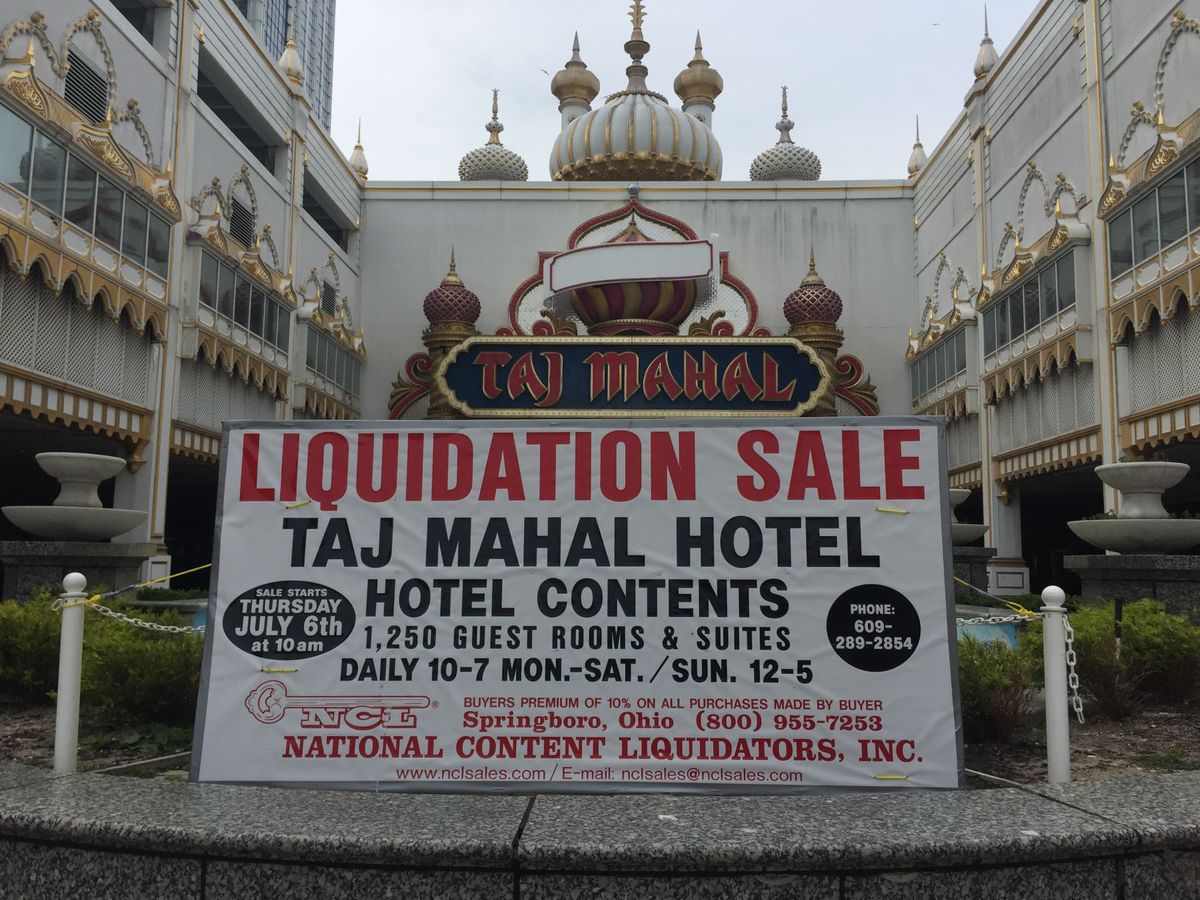
 

The Donald Trump, Rod Blagojevich parallels

Rod who?

OK, this post will be brief. Although the details are endless, the point can be made briefly, and adding evidence upon evidence will sway no one.

Illinois Governor Rod Blagojevich had been under a corrupt activity investigation by United States Attorney for the Northern District of Illinois, Patrick Fitzgerald.

Image result for rod blagojevich
Golden: How Rod Blagojevich Talked Himself out of the Governor’s Office and into Prison

Blagojevich ultimately was impeached and removed from office for wire fraud, attempted extortion, and conspiracy to solicit bribes.

He had attempted, though failed, to sell Barack Obama’s vacant U.S. Senate seat after Obama was elected president.

Blagojevich had also been charged with:

*Attempting to extort the owners of the Tribune Company to fire Chicago Tribune editors who criticized the governor’s handling of state affairs.
*Abuse of power concerning the release of $8 million of state funds to Children’s Memorial Hospital, as a quid pro quo for a $50,000 campaign contribution

Blagojevich’s defense was in part, that he never actually had received the bribe money, and that the accusations were politically motivated.

During the impeachment trial, Blagojevich requested the opportunity to deliver his own closing arguments, although he would not testify or submit himself to cross-examination.

Blagojevich’s said the process was tainted because it did not allow him to call witnesses or challenge the evidence (although, the process did allow the governor to call witnesses and challenge the evidence, but he did neither).

But perhaps the best witness was (inadvertently) Blagojevich himself, who was recorded saying, “I’ve got this thing and it’s fucking golden. I’m just not giving it up for fucking nothing. I’m, I’m not going to do it and I can use it and fuckin’ parachute me there.”

Sometimes, crooked leaders simply can’t keep their crooked mouths shut.

Blagojevich was convicted and sentenced to 14 years in federal prison.

==============================================================

Donald Trump had been under investigation for corrupt activity by Robert Mueller, the special counsel investigating allegations of Russian interference in the 2016 U.S. presidential election.

Mueller released a document that depicted a Trump campaign expecting to “benefit electorally” from information stolen and released by Russia and a president who saught the firing of various officials and who demanded a memo that would clear his name.Image result for zelensky trump

Mueller concluded that he could not clear the president of obstruction of justice, and in fact, listed ten incidents that could be considered obstruction.

Trump is now being impeached for abuse of power, extorting Ukraine, and conspiring — and temporarily succeeding — to delay $400 million Congress had allocated for Ukraine, in exchange for an investigation of Trump’s political opponent, Joseph Biden, and his son.

That was the “favor” Trump requested in exchange for the money Ukraine desperately needed.

The money finally was given to Ukraine two days after the scheme was discovered and reported by a whistleblower, who heard about a damning phone call (i.e. wire fraud).

Trump has complained that the investigation is politically motivated. Democrats claim that Trump’s prevention of testimony by administration officials amounts to obstruction of justice.

Excerpts from an article by Damon Linker:

Trump has flagrantly, almost flamboyantly, violated the Emoluments clause of the Constitution from his first day in office.

He regularly warps policy by placing his personal interest ahead of the public good — which is what the ongoing impeachment inquiry is all about.

The administration has responded to this inquiry by refusing to comply with congressional subpoenas or cooperate with routine efforts at congressional oversight.

And of course, the president has also asserted as a blanket claim that the Constitution gives him the “right to do whatever I want.”

This is reminiscent of President Nixon’s famous line, “When the president does it, that means it is not illegal.” 

The phrase is,  “Power corrupts, and absolute power corrupts absolutely.” But power, in itself, neither is good nor bad, neither corrupting nor purifying.  God is not corrupt.

Blagojavich, Trump, Nixon, Hitler, Putin, Kim, Stalin, Mao, et al were corrupt with negligible power long before they gained enormous power and enormous corruption.

Greed, immorality, and corruption do not spring forth, suddenly and unpredictably, when an otherwise compassionate person achieves power. Corruption grows within the corrupt, often quiescently, waiting to be energized by power.

Some people do wondrous things with power. But corrupt people absolutely corrupt power.

We are seeing that demonstrated every day.

Rodger Malcolm Mitchell
Monetary Sovereignty
Twitter: @rodgermitchell
Search #monetarysovereignty Facebook: Rodger Malcolm Mitchell

Labels: The misleading language you hear regarding economics

In science, language is important, partly because language draws a mental picture based on common experience. And if that common experience, aka intuition, is not appropriate to the science, the result can be bad science.

Consider the word “spin.” You can visualize a top spinning, or the earth spinning, or even a galaxy spinning, but did you know that electrons have “spin.”? They do, but they do not spin.

According to Scientific American Magazine:

It is misleading to conjure up an image of the electron as a small spinning object. Instead we have learned simply to accept the observed fact that the electron is deflected by magnetic fields.

If one insists on the image of a spinning object, then real paradoxes arise; unlike a tossed softball, for instance, the spin of an electron never changes, and it has only two possible orientations.

In addition, the very notion that electrons and protons are solid ‘objects’ that can ‘rotate’ in space is itself difficult to sustain, given what we know about the rules of quantum mechanics.

The term ‘spin,’ however, still remains.”

Image result for street shell game
Economics is a shell game, where what seems reasonable and obvious may be a Big Lie.

[Another nice article about how labels can be deceiving is: “Cells that ‘taste’ danger set off immune responses.“]

If you have been educated to believe that electrons have something termed “spin,” your understanding of electrons will be wrong if you think of a spinning object, at least according to the latest hypotheses.

The point is that many labels have common meanings that are inappropriate and confusing for certain situations in science.

Economics has such labels. Here is a short glossary of misleading words in economics:

1. Federal “debt” is not debt as you know it. More accurately it is net, all-time deposits into Treasury Security accounts, which are similar to interest-paying, bank savings accounts.

Because “debt” often has negative connotations, banks do not boast about the size of their debt, but they do boast about the size of their deposits, which has positive connotations.

In ordinary language, “debt” is a burden on the debtor. So, when you hear the federal debt is $20 trillion, you may visualize this as a huge burden on the federal government and/or on taxpayers. It is neither. Federal debt burdens no one.

2. “Paying off” federal debt is not like paying off a mortgage or a car loan. To pay off personal debt, one must have income or assets from which to draw dollars, then transfer those dollars to the creditor.

To pay off federal debt, the federal government needs neither income nor assets. It merely returns the dollars that reside in Treasury Security accounts. The dollars are returned to the account owners.

No tax dollars involved are involved. Dollars deposited in T-security accounts never leave the accounts. They are not used by the government. They merely stay in the accounts, accumulating interest until maturity, at which time they and the interest are returned.

The government pays interest into the accounts by creating new dollars, ad hoc.

Because the federal government never takes the dollars from the accounts, returning the dollars is no burden on the government or on taxpayers. It is a simple dollar transfer.

3. Debt/GDP ratio. This ratio is a classic “apples/oranges” ratio. It attempts to establish a mathematical relationship between two dissimilar things. While federal “debt” is the net total of deposits into T-security accounts, Gross Domestic Product (GDP) is a measure of spending in the U.S.

The formula is GDP = Federal Spending + Nonfederal Spending + Net Imports.

Those who decry the amount of total deposits into T-security accounts, often also decry some specific comparisons with total spending. In years past, warnings were issued that if the ratio ever were to reach 60%, then 80%, then 100% and other unsubstantiated and arbitrary figures, horror would befall the economy.

As each level is reached, a new, nearby level is claimed to be the line between fiscal prudence and fiscal disaster.

Today, the U.S. ratio has passed 100% and rising, and the economy is healthy by most measures. One can expect claims that if it ever reaches 110%, surely doom would ensue. The fact that the Debt/GDP ratio has no relationship to economic health, as THIS TABLE demonstrates, does not seem to restrain the debt hand-wringers.

4. The Federal “deficit” is the annual difference between federal spending and federal taxing. This does not imply that federal taxes pay for federal spending. They do not.

The federal government creates new dollars, ad hoc, every time it pays a creditor, which it does by sending instructions to the creditor’s bank. The instructions (in the form of checks or wires) tell the bank to increase the balance in the creditor’s checking account.

The instant the bank does as instructed, dollars are created and instantly added to the money supply measures.

The instructions then are routed to the Federal Reserve where, unlike your personal checks), they always are cleared (approved), because unlike you, your state and your business, the federal government is a large Monetarily Sovereign.

Even if the federal government collected $0 taxes, it still could continue spending, forever. Even with zero income, the federal government never unintentionally can run short of dollars.

5. ‘Unsustainable” is a term sometimes applied to the federal debt, to indicate that the debt is so high, it cannot be sustained. But specifically, what does it mean?

Does “unsustainable” mean the federal government somehow cannot “sustain” the increasing deposits into T-security accounts? No, that cannot be. Those deposits place no financial burden on the federal government, other than paying interest.  And being Monetarily Sovereign, the U.S. federal government has the unlimited ability to create the U.S. dollars used to pay interest.

Does it mean the economy somehow cannot sustain the deposits? No, that cannot be. Those deposits reflect the addition of growth dollars into the economy, which benefits the economy.

Does “unsustainable” mean the deposits, reflecting growth dollars, also portend hyperinflation? No, contrary to the popular myth, hyperinflation is not caused by an increase in dollars. Rather, hyperinflation (an extreme, general increase in prices) is caused by shortages, usually shortages of food and/or energy (currently, oil).

The myth persists because hyperinflations precipitate government currency printing, with its memorable “wheelbarrows-filled-with-currency” visuals. Ironically, hyperinflations are cured when shortages are cured, which generally requires the government to buy and pay for the scarce food and/or energy. Rather than causing hyperinflations, money creation is necessary to cure hyperinflations.

By contrast, small inflations, of the single-digit variety, can be caused by a decrease in the value of money. A large, Monetarily Sovereign government exerts total control over the value of its sovereign currency, by controlling the Supply/Demand relationship or by fiat.

The government controls the money Supply by taxing and spending. The government controls money Demand via interest rates. (Raising rates increases the Demand for money, also called “strengthening the currency.)

Finally, the government controls the value of its currency by fiat, that is by unilaterally lowering or raising the value (also known as “devaluation” and “revaluation”).

In short, no level of federal T-security deposits (“debt”) is unsustainable for a large, Monetarily Sovereign government.

6. “Balanced budget” has a pleasing ring, and many who are ignorant about federal finances often demand that the federal government run a balanced budget. These people claim the federal government should “live within its means” (i.e its income).

However, the federal government, being Monetarily Sovereign, needs no income, and when it receives income (taxes), that income is destroyed. The federal government has the unlimited ability to create dollars, at will.

People achieve personal balanced budgets by “living within their means,” which is considered “prudent.”

A federal balanced budget indicates that because federal taxes equal federal spending, the federal government pumps zero net growth dollars into the economy. Thus, a federal balanced budget yields economic stagnation, recessions, and depressions, which historically only are cured by federal budget deficits.

A federal balanced budget (aka “austerity”) is the least “prudent” financial activity a Monetarily Sovereign government can implement.

7. “Trust funds.” The federal government operates several bookkeeping accounts that wrongly are termed “trust funds,” among which are Social Security, Medicare Part A, the Highway “trust fund,” and federal pension “trust funds.”

Federal trust funds bear little resemblance to their private-sector counterparts, and therefore the name can be misleading. A “trust fund” implies a secure source of funding. However, a federal trust fund is simply a bookkeeping mechanism used to track inflows and outflows for specific programs.

In private-sector trust funds, receipts are deposited and assets are held and invested by trustees on behalf of the stated beneficiaries. In federal trust funds, the federal government does not set aside the receipts or invest them in private assets.

Rather, the receipts are recorded as accounting credits in the “trust funds.” The federal government owns the accounts and can, by changing the law, unilaterally alter the purposes of the accounts and raise or lower collections and expenditures.

More importantly, the Monetarily Sovereign federal government unilaterally can increase or decrease the balances of any federal trust funds at the tap of a computer key.

8. “Insolvent,” and “bankrupt,” and break the bank, are terms used for personal, business” and even state/local government accounts. Sadly, these terms also are misleadingly used to describe federal accounts, which cannot become unintentionally insolvent or bankrupt, and the federal “bank” cannot be broken.

Ever since August of 1971, when President Nixon took the U.S. off its last gold standard, the federal government has had the unlimited ability to fund anything — ANYTHING — merely by deciding to do so.

Organizations like the Committee for a Responsible Federal Budget (CRFB) are paid by wealthy donors to make Americans believe federal finances are like personal finances. The purpose is to prevent the middle- and lower-income groups from complaining about cuts to Medicare, Social Security, and other beneficial programs.

Most recently, Medicare for All has been proposed, but its future is uncertain because of false implanted concerns about federal insolvency.

9. “Costs taxpayers.” Among the most pernicious myths in all of economics is the oft-repeated notion that federal taxes fund federal spending.

While it is true that state and local taxes fund state and local spending, federal taxes do not fund federal spending. Even if all federal tax collections totaled $0, the federal government could continue to spend as much as it wished, forever.

The fundamental difference is that while the federal government is Monetarily Sovereign, state and local governments are monetarily non-sovereign. As the word “sovereign” indicates, the federal government is the issuer and absolute rule over all aspects of its sovereign currency, the U.S. dollar.

By contrast, state and local government are mere users of the dollar; they do not share the federal government’s unlimited ability to create, devalue or revalue the dollar.

Because the federal government has no need for taxes, federal spending does not cost federal taxpayers anything. All federal taxes are arbitrary penalties on the private sector.

Why then does the federal government collect taxes”

  1. To control the economy by taxing things it wishes to minimize and by offering tax reductions to things it wishes to encourage.
  2. To propagate the myth that federal taxes are necessary to fund the government so that the public willingly will pay taxes.
  3. To please the very rich political donors, who control the government, buy helping to widen the Gap between the rich and the rest.

What We “Know” Is What We Believe
And what we believe is heavily influenced by intuition, personal experience, and what we are told.

None of us has the time or ability to research everything, so we believe and even promulgate what “feels right,” without relying on strict proof.

For instance, President Obama said, “This is my vision for America: A vision where we live within our means while still investing in our future, where everyone makes sacrifices, but no one bears all the burden, where we provide a basic measure of security for our citizens and we provide rising opportunity for our children.”

To most of us, that sounded quite reasonable, even though he really was telling you:

“The federal government finances are limited just like your finances. So be prepared to make sacrifices and don’t complain if you have to bear a burden. 

“The government can give you basic security, but not much more, and don’t expect anything more than just an opportunity, but you’ll have to make sacrifices, work like hell, and still be lucky to escape things like student debt, unaffordable medical bills, inferior housing and transportation, and overall poverty.

“And don’t expect much from your government, except a tax bill.”

Obama, and many others, have told you the Big Lie based on the misleading language of economics. Labels count.

Rodger Malcolm Mitchell
Monetary Sovereignty
Twitter: @rodgermitchell
Search #monetarysovereignty Facebook: Rodger Malcolm Mitchell

…………………………………………………………………………………………………………………………………………………………………………………………………………………………………………………………………………………………..

The most important problems in economics involve:

  1. Monetary Sovereignty describes money creation and destruction.
  2. Gap Psychology describes the common desire to distance oneself from those “below” in any socio-economic ranking, and to come nearer those “above.” The socio-economic distance is referred to as “The Gap.”

Wide Gaps negatively affect poverty, health and longevity, education, housing, law and crime, war, leadership, ownership, bigotry, supply and demand, taxation, GDP, international relations, scientific advancement, the environment, human motivation and well-being, and virtually every other issue in economics.

Implementation of Monetary Sovereignty and The Ten Steps To Prosperity can grow the economy and narrow the Gaps:

Ten Steps To Prosperity:

1. Eliminate FICA

2. Federally funded Medicare — parts A, B & D, plus long-term care — for everyone

3. Provide a monthly economic bonus to every man, woman and child in America (similar to social security for all)

4. Free education (including post-grad) for everyone

5. Salary for attending school

6. Eliminate federal taxes on business

7. Increase the standard income tax deduction, annually. 

8. Tax the very rich (the “.1%”) more, with higher progressive tax rates on all forms of income.

9. Federal ownership of all banks

10. Increase federal spending on the myriad initiatives that benefit America’s 99.9% 

The Ten Steps will grow the economy and narrow the income/wealth/power Gap between the rich and the rest.

MONETARY SOVEREIGNTY