This isn’t a novel or a movie, so I won’t keep you in suspense. Here is the single scariest thought of the year, maybe of the decade.
Even if Trump loses the election, he still will be President for another two months.
That gives him plenty of time to deny he lost it and to have William Barr “prove” the election was rigged, and to have a right-wing Supreme Court agree.
Remember, this is the same President who has gone to great lengths to claim that he really didn’t lose the last election by 3 million votes, that all those votes were fake, and that with proper counting he would have won by 3 million.
At a small reception for a bipartisan group of congressional leaders, President Trump claimed that 3 to 5 million illegal ballots cost him the popular vote, CBS News’ Nancy Cordes and Catherine Reynolds confirmed on Monday night. The claim is unproven.
Mr. Trump made a similar claim before. After the election, he tweeted that he “won the popular vote if you deduct the millions of people who voted illegally,” but he cited no evidence to back up his claim.
At the White House press briefing Tuesday, press secretary Sean Spicer was asked if Mr. Trump really believes that millions voted illegally in the election.
“The president does believe that. He has stated that before. I think he’s stated his concerns of voter fraud and people voting illegally during the campaign,” Spicer said. “He continues to maintain that belief based on studies and evidence that people have presented to him.”
Asked what evidence Mr. Trump has specifically, Spicer was unable to provide any information.
“As I said, I think the president has believed that for a while based on studies and information he has.”
Tell me how you got more than 70% of the vote. Can you fix mine, again?
Of course, Trump believes it. As a demonstrable psychopath, Trump probably believes all of his 18,000+ lies.
Crazy knows no bounds.
And when a psychopath has a compliant Senate, a compliant Attorney General, and a compliant Supreme Court to do his bidding, there may be no limit to what could happen to America.
As for the Senate, remember this was the same Senate Majority Leader who stated his proudest accomplishment was blocking Obama’s Supreme Court nomination because there was “only” a year to go before the Presidential election.
There was no precedent for such an action since the period around the Civil War and Reconstruction. No Democratic president had made an appointment while Republicans held the Senate since 1895.
In a speech in Kentucky, McConnell said: “One of my proudest moments was when I looked Barack Obama in the eye and I said, ‘Mr. President, you will not fill the Supreme Court vacancy.’ “
McConnell was not alone. The 11 Republican members of the Senate Judiciary Committee signed a letter saying they had no intention of consenting to any nominee from Obama.
No proceedings of any kind were held on Garland’s appointment.
Given Trump’s, Barr’s, McConnell’s, and the Supreme Court’s lack of honor and honesty, it is by no means a stretch to predict that a Trump loss would be followed by incredible maneuvering to overturn the results and eventually to make Trump President for life.
And remember also, that as President, Trump is Commander-In-Chief of America’s armed forces. Historically, all dictators have taken and remained in power by control over the military.
Gap Psychology describes the common desire to distance oneself from those “below” in any socio-economic ranking, and to come nearer those “above.” The socio-economic distance is referred to as “The Gap.”
Wide Gaps negatively affect poverty, health and longevity, education, housing, law and crime, war, leadership, ownership, bigotry, supply and demand, taxation, GDP, international relations, scientific advancement, the environment, human motivation and well-being, and virtually every other issue in economics.
Implementation of Monetary Sovereignty and The Ten Steps To Prosperity can grow the economy and narrow the Gaps:
European countries are paying workers who’ve been sent home by employers. Can they afford it? Here’s everything you need to know:
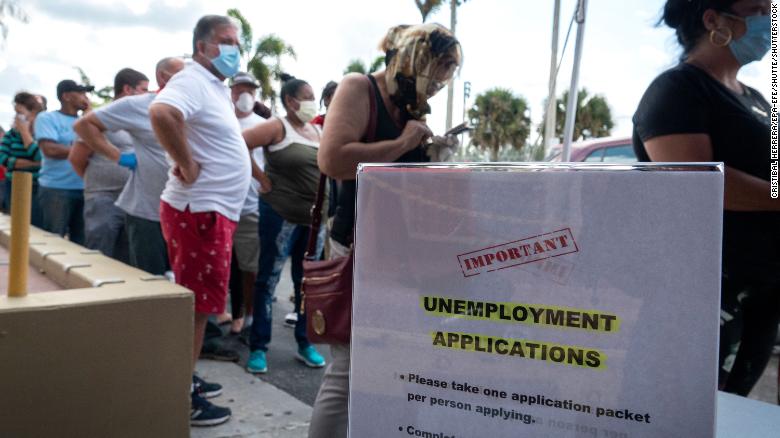
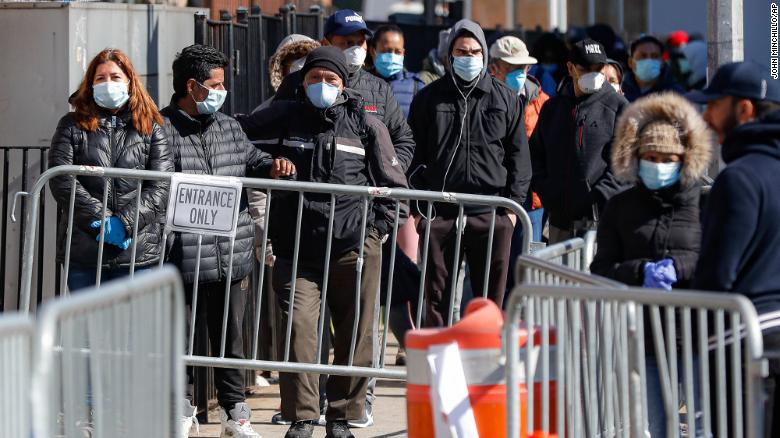
What is their plan? Unlike the U.S., where some 30 million people have filed for unemployment and millions of gig workers are going without income, most European workers are still getting paid through their employers.
But instead of requiring workers to apply for unemployment and sending them a $1,200 bailout check, many European Union countries chose to begin paying part of their workers’ salaries, so companies would not have to fire them.
Germany, for example, is paying workers about 60 percent of their wages up to a cap of $7,575 a month, and France, Spain, Denmark, and the Netherlands have similar plans, although with lower caps.
The U.K. is paying up to 80 percent of wages, capped at $3,100 a month. Employers generally have to cover payroll up front and then get reimbursed by the government. For the self-employed, federal or local governments are providing direct cash assistance.
Despite being monetarily non-sovereign, and so, not having the unlimited ability to create euros, the euro nations are trying to live up to the fundamental purpose of any government: To protect and improve the lives of the people.
By contrast, the Monetarily Sovereign U.S. government, nominally led by Donald Trump, but actually led by Mitch McConnell and Fox News, has penny-pinched it’s way to massive unemployment and poverty. This, despite having the unlimited ability to create its own sovereign currency, the U.S. dollar.
Our right-wing-dominated government has amply demonstrated its disdain for the middle- and lower-income groups by trying to eliminate ACA with no plan to take its place, and by cutting taxes on the rich.
And let us not forget the pro-rich, anti-everyone-else tax cuts and reductions in poverty aids.
Today, the government continues its pro-rich, anti-everyone-else path by failing to support the unemployed and the impoverished, and by fighting against the meager ant-recession proposals of the left-wing.
To the right, federal money is tight when it doesn’t help the rich, but ample when it does.
Getting back to Europe, it is astounding that monetarily non-sovereign Germany has a higher cap on wage support ($3,100) than does Monetarily Sovereign England ($7,575), though with a lower percentage of wages.
Germany needs to get the money from taxpayers; England merely presses computer keys to create the money.
Yes, it is astounding , but not as astounding as the federal government’s intentional underpaying.
Why does the unlimited-ability-to-spend U.S. government intentionally underpay? Answer: To benefit business by creating a massive supply of desperate workers, who are willing to accept any jobs at low wages.
The most astounding aspect of this entire sham is that so many of those desperate lower- and middle-income people vote for the very politicians who made them desperate and lower income in the first place.
To avoid layoffs in times of slow production, Germany innovated a scheme called Kurzarbeit, or short-time work. When firms have fewer orders, they cut back on workers’ hours, and the government pays the salary difference.
When business picks up, companies simply increase workers’ hours. During the 2008 financial crisis, the number of unemployed workers went up just 9 percent in Germany, compared with 56 percent in the U.S.
“We have one of the strongest welfare states in the world,” says German Labor Minister Hubertus Heil, “and we have built up reserves for difficult times during good times.”
Other EU countries have modeled their payments on that system.
In most of the world, “welfare” is a good thing, meaning “benefit” or “well-being.” Governments are created to do things for the welfare of their people.
In America however, “welfare” has come to be a cruel epithet that translates to: “Support for the lazy good-for-nothing poor.” Thus have our hearts hardened.
How many people are covered? As of mid-April, at least 18 million European workers were working less or not at all — and with each passing week, the numbers are growing. Management consulting firm McKinsey estimates that up to 59 million jobs in the EU and the U.K. are in jeopardy, a staggering 26 percent of total employment.
That compares with some 54 million at risk in the U.S.
In France alone, some 785,000 companies have applied for wage subsidies for about 9.6 million workers — half the private-sector workforce. In Ireland, some 40 percent of all workers are now on government aid.
In hard-hit Spain, which already had unemployment of 13 percent, the rate could soar to 20 percent. Germany, by contrast, predicts a bump from 5.2 percent unemployment to 5.9 percent.
The primary issue is not unemployment. Labor is not the primary goal for most people. The primary goal is income.
Sadly, the very rich, who incidentally, labor less than any other income group, have been able to make employment a necessity.
“Unemployment” is defined as wanting a job but not having one. If someone, for instance a spouse, does not have a job, and is not looking for one, that person is not unemployed.
But if the same spouse is looking for a job, and can’t find one, that same spouse is unemployed.
So what do unemployment figures tell us about the health of the economy? Missing from those figures is federal stimulus actions.
If the federal government were to, say, raise unemployment compensation to 100% of previous income, unemployment figures would have very little economic meaning (depending on whether there remained enough workers to produce what we need).
I foresee a time when machines will do so much that the vast majority of us will not be employed for wages, yet we still will have a healthy economy.
How much will this cost? It depends on how long the crisis lasts.
In Britain, assuming one million people need assistance for three months, the tab will be about $51 billion, or 2 percent of the nation’s economic output.
In France, the bill will be $21 billion for the next three months, but in Germany, because its benefits are so substantial anyway, the extra cost should be just $11 billion.
Keep in mind that “cost” means something different for such Monetarily Sovereign nations as Britain and the U.S. vs. monetarily non-sovereign nations like France and Germany.
The former can afford anything just by creating money. The latter must tap taxpayers for the needed money.
If the lockdowns continue longer than three months, or if the global economy falls into a depression that drags on for years, the toll for Europe could be in the trillions.
And that is why trillions must be added to the various economies. The U.S. alone, having dilly-dallied for months, has arrived at the place where about $7 trillion to $9 trillion in stimulus dollars will be neededto fend off a depression.
How will they pay for that? The poorer countries like Italy and Spain — which are also some of the hardest hit by the virus — wanted the EU to issue “coronabonds” that would be dispensed to those nations that needed cash the most.
But fiscally conservative Germany and the Netherlands balked, saying that would make them pay for profligate budgets they don’t control.
Instead, the European Commission plans to borrow $350 billion to provide a package of loans and grants to governments.
To pay the loan back — the EU is not allowed to run a budget deficit — it proposes raising taxes on carbon emissions, plastics, or financial transactions, or some combination of those.
Europe has a massive problem. It needs to add net money to its economies, but is required by its own laws to borrow the money, which must be paid back to lenders.
So there will not be the net money, unless the EU changes its own laws.
How does this compare with the U.S.? Some economists say that the U.S. system will help the economy rebound faster than in Europe, because it will allow laid-off workers to go where they’re needed in the post–COVID-19 economy, rather than trapping them in industries that might not fully recover for years.
But the U.S. subsidies are far more expensive and complicated, and many workers and small businesses are falling through the cracks.
The U.S., with a population of 328 million to the EU’s 446 million, has already spent more than $2.6 trillion on coronavirus rescue loans and grants.
The U.S. budget deficit is expected to reach at least $3.8 trillion this year. Nobel Prize–winning economistJoseph Stiglitzsays the cost of following Europe’s plan and paying workers directly would be “a fraction of what we’re now spending.”
What will help the U.S. economy’s rebound is the fact that the federal government has the unlimited ability to create dollars, without borrowing and without taxing — net dollars to replace the dollars lost to closed businesses.
The advantage is not just that paying workers directly might be “a fraction of what we’re now spending.” The real advantage is that to the U.S., cost doesn’t matter. The more the better.
Contrary to popular myth, inflation is caused by shortages, usually shortages of food and/or energy, never by money “printing.” Scarcity always causes price increases.
In fact, money “printing” can cure inflations, if the money is used to access the scarce items and distribute them to the public.
Italy’s anger at the EU Italy has the highest death toll from the virus in Europe, at more than 28,000 as of May 1.
But its rescue package of some $87 billion is smaller than that of other EU countries, because, (being monetarily non-sovereign) it simply can’t afford much.
The EU’s insistence on providing loans, rather than direct cash, to hard-hit governments of member states has frustrated Italy and raised fears of renewed years of punishing budget cuts.
As a result, simmering anti-EU sentiment is rising. An April survey found that 42 percent of Italians now favor leaving the bloc, up from 26 percent in November 2018.
Italian Prime Minister Giuseppe Conte warns that the pandemic poses a serious threat to the already strained bonds holding the EU together. “It’s a big challenge to the existence of Europe,” he said.
[Because of the Euro, no euro nation can control its own money supply. The Euro is the worst economic idea since the recession-era, Smoot-Hawley Tariff. The economies of European nations are doomed by the euro.]
More true today than even in 2005.
Most of Europe really is doomed. Being monetarily non-sovereign forces a nation into financial helplessness during financial crises.
But, the U.S. will be doomed too, if Congress fails to take advantage of its Monetary Sovereignty and deficit spend adequately — a minimum of $7 trillion new dollars, perhaps more.
Gap Psychology describes the common desire to distance oneself from those “below” in any socio-economic ranking, and to come nearer those “above.” The socio-economic distance is referred to as “The Gap.”
Wide Gaps negatively affect poverty, health and longevity, education, housing, law and crime, war, leadership, ownership, bigotry, supply and demand, taxation, GDP, international relations, scientific advancement, the environment, human motivation and well-being, and virtually every other issue in economics.
Implementation of Monetary Sovereignty and The Ten Steps To Prosperity can grow the economy and narrow the Gaps:
The current argument is about seemingly incompatible arguments: Should we “lockdown” society to help prevent the spread of COVID-19 while destroying the economy, or should we “open up”to reduce economic hardship while encouraging the spread of disease and death?
Eerily empty “COVID” streets are not necessary.
The belief seems to be that we can’t do both, that is, we can’t prevent the spread of COVID-19 and simultaneously reduce economic hardship.
We can’t have our cake and eat it, too.
I claim this belief not only is wrong, but it actually causes both the disease and economic hardship.
Currently, it seems we can’t have our cake, and we can’t eat it, either.
Who has the burden of proof regarding the economic lockdowns: Those who argue for continuing them or those who want to lift them?
In litigation, allocation of the burden of proof often determines the outcome of a case.
If the advocates of continued lockdown had that burden, they would have to answer the following questions, now kept off stage:
—What have the lockdowns accomplished so far and what will they accomplish in the future? —What are the public health consequences of a global depression? —Do the benefits of keeping people from working outweigh the costs in lost and stunted lives? —How will herd immunity be achieved under lockdown conditions?
Sweden has been as successful in controlling the virus as most other nations, though its businesses remain open; its death rate is lower than those of the most hard-hit U.S. states that locked down relatively early.
Laos and Cambodia practiced no social distancing but have had no outbreaks. An analysis published in The Wall Street Journal found no statistically significant connection between the rapidity with which a state in the U.S. shut down its economy and its subsequent death rates.
On Wednesday, Cuomo announced the “shocking” news that 84 percent of all hospital admissions were either people sheltering at home or nursing home residents.
He shouldn’t have been surprised. The risk of coronavirus infection occurs overwhelmingly indoors.
Researchers in China identified only one outdoor outbreak of infection among over a thousand cases studied. Most transmissions occurred at home, rendering the close-down-all-businesses-and-shelter-in-place rule contraindicated.
Reading the above argument might tempt one to believe that lockdowns not only are useless, but actually harmful, not only to the economy, but also harmful to human health — and that lockdowns actually cause COVID-19 to proliferate.
Brazil is facing an extreme surge in COVID-19 cases after the government left the virus to spread virtually uncontrolled for weeks, all while the country’s president mocked stay-at-home policies and pushed against directives from the World Health Organization.
As of Friday evening, Brazil, which has a population of 209 million, had 91,589 confirmed cases of COVID-19 and 6,329 deaths from the virus, according to Johns Hopkins data. That makes the country’s per-capita death rate 3.02 deaths per 100,000 people.
Experts told The Associated Press that the numbers of cases and deaths could be much higher because Brazil does not yet have widespread testing.
Skeptics of America’s (mostly) national lockdown say Sweden’s lighter-touch approach is far superior.
Unlike many other advanced economies, the Swedish government has not imposed a strict quarantine on its population.
As I write this, Sweden has reported 7,693 total cases and 591 deaths. Its fatality rate per capita is higher than in the United States or any other Scandinavian country.
And while Sweden’s total cases per million residents (762) are fewer than Nordic neighbors Norway (1089) and Denmark (875), they are more than Finland (417). Sweden has also conducted fewer tests per million than those other nations.
Switzerland, which is on a tight lockdown and so far has more than three times as many cases per million and nearly twice as many deaths (as Sweden).
(But), Switzerland’s population density is pretty much the same as neighbor Italy’s, also a high outbreak country, and 10 times as high as Sweden’s.
Moreover, Sweden has one of the highest shares of one-person households in the world (24 percent), far higher than Norway (19 percent), Denmark (17 percent), Finland (15 percent), and Switzerland (14 percent). Perhaps this helps prevent the virus from spreading.
The economic impact of the Swedish strategy is also unclear. The government certainly thinks it’s going to be pretty bad.
According to the National Institute of Economic Research, its baseline scenario has Swedish real GDP growth declining by 3.4 percent this year, worse than its 2.9 percent forecast for the United States.
I always caution against mindlessly extrapolating what works in Scandinavia to also be successful in the US.
So both Sweden’s lack of lockdown and America’s (mostly) lockdown fail to prevent death and disease and fail to protect their economies. By any reasonable measure, neither system can be considered a success.
If it’s not either/or with regard to lockdown, what is it?
Schools are funded by a combination of local, state, and federal dollars.
In an effort to decrease financial inequities across school districts of disparate means, state policymakers in the last decade substantially increased the share of school funding that comes from state income and sales taxes.
With unemployment clams at 22 million and rising, retail sales currently illegal, and a major recession on the horizon, school districts are going to take a shellacking.
Schools will have to get creative and aggressive in order to balance their books. Secretary of Education Betsy DeVos could look to perhaps the best speech given by her Obama-era predecessor, Arne Duncan.
He warned that the cushion of the stimulus act would soon be running out, and that states and districts were about to face a “funding cliff.”
Duncan urged school leaders to resist the temptation to lay off teachers and eliminate arts programs. Rather, he insisted that they look to reduce administrative costs.
He noted that school districts paid about $8 billion each year in bonuses for teachers with masters’ degrees, despite little evidence that they provide any benefit to students.
Unfortunately, despite his own advice against “reform by addition,” Duncan’s tenure was defined by his “Race to the Top” initiative, which foisted the Common Core and test-based teacher evaluationon the states.
From 1992 to 2009, teaching staff increased by 32 percent, whereas administrative staff increased by 46 percent.
During the great recession, teachers got the short end of the stick, with 3.7 percent losing their jobs compared to 2.2 percent of administrative staff.
Aside from favoring teachers over administrators, there is plenty of other school spending that is either unproductive or even counter-productive.
[“Restorative justice,” “professional development,” and “pre-k” programs are given as examples.]
Education in America is largely funded by the monetarily non-sovereign state and local governments, which do not have the federal government’s unlimited ability to create dollars and to fund everything.
Unquestionably, lockdowns injure the economy and today’s young generation, educationally, emotionally, and financially.
But do we want our children to sicken and die?
Finally, we have this article, which at first glance may not seem to be related to the “lockdown/no lockdown” argument, but in reality is central to it.
The Monthly Economic Crisis Support Act, introduced Friday by Sens. Kamala Harris (D-Calif.), Bernie Sanders (I-Vt.) and Ed Markey (D-Mass.), would provide a monthly $2,000 check to every person with an income below $120,000 throughout the public health crisis and for three months after it officially ends.
In late March, the Senate passed a $2 trillion package called the Coronavirus Aid, Relief, and Economic Security Act, but the trio of progressive senators believes it’s insufficient.
“The CARES Act gave Americans an important one-time payment, but it’s clear that wasn’t nearly enough to meet the needs of this historic crisis,” Harris said in a statement.
“Bills will continue to come in every single month during the pandemic and so should help from the government.”
The plan stands a poor chance of passage in the Republican-controlled Senate, which has soured on spending.
But with more than 30 million people unemployed over the last seven weeks and no end to the pandemic in sight, Democrats are aiming to up the pressure on congressional leaders as they begin discussions over another fiscal relief packagethat is expected sometime this month.
SUMMARY AND CONCLUSION
Much money, time, and effort is being expended to develop a cure and a human preventative(vaccination) for COVID-19.
Accomplishing either is felt to be many months off, and either or both may prove to be impossible.
And Congress is losing its desire to spend at just the moment when the economy needs more money, and a great deal of it.
Wear the mask; do the task.
Having neither the cure nor human preventative, the “lockdown” vs. “no lockdown” argument continues to rage.
With the President’s sole concern being his re-election, he is betting that the public is more concerned about money than lives, so he repeatedly urges the states to do what he tweets (in all caps), “LIBERATE.”
This argument really revolves around just two questions:
How best to prevent disease and death?
How best to preserve the economy and our way of life?
Rather, the primary goal is toprevent the transmission of thedisease.
This goal, when accomplished, ultimately destroys the disease, with minimal negative economic effects.
When people wear masks, virus transmission among them is inhibited. And the masks don’t necessarily need to be of the N-95 type. Even simple cloth masks will do, if everyone wears them.
National mask usage is:
–Affordable (Our Monetarily Sovereignfederal government can afford anything), –Physically possible (easily and quickly produced with easily available materials), and
—Psychologically possible (a combination of legal requirements, disease fear, and social non-conformance stigmatizing would have a powerful motivational effect.)
Businesses, where mask usage is possible, should be allowed to open. There would be no reason to destroy them and their employees by forcing them to close.
“Wear the mask; do the task.”
Additionally, for businesses where mask usage is not appropriate, i.e. restaurants, and entertainment activities where masks impede performance (sports, swimming, singing, some musical instruments, plays, and movies, etc.) the government should be prepared to focus full financial support to the business owners and the employees.
And, of course, there are some people who, for health reasons, cannot wear masks. They should be allowed special privileges, just as the physically impaired have parking privileges.
Rather than illogically dragging its feet about supporting everyone (which the federal government actually could do, but resists), the government should produce, mandate, and distribute the masks, while financially supporting those who cannot use them.
Thus, with universal mask rules, the U.S. government can accomplish everything it wishes — disease prevention and economic growth — even without ever finding a cure or a vaccine, and without closing the vast majority of American enterprises.
And of course, implementing the Ten Steps to Prosperity would assure economic growth and a more equitable distribution of wealth, income and power.
Gap Psychology describes the common desire to distance oneself from those “below” in any socio-economic ranking, and to come nearer those “above.” The socio-economic distance is referred to as “The Gap.”
Wide Gaps negatively affect poverty, health and longevity, education, housing, law and crime, war, leadership, ownership, bigotry, supply and demand, taxation, GDP, international relations, scientific advancement, the environment, human motivation and well-being, and virtually every other issue in economics.
Implementation of Monetary Sovereignty and The Ten Steps To Prosperity can grow the economy and narrow the Gaps:
Trump tours a mask factory, setting an example for his followers not to wear masks or to social distance. (“Hey, if Donald Trump doesn’t wear a mask or social distance, why should I?”)
Trump had said he would be willing to don a face mask if the factory was “a mask environment,” but in the end he wore only safety goggles during a tour of the facility. Nearly all Honeywell workers and members of the press as well as some White House staff and Secret Service agents wore masks, but not senior White House staff.
See, it’s like this. Trump is not concerned that he may be spreading the virus. He is positive he is not carrying the virus, though there is no test in existence that can provide that information.
Also, the senior White House staff is not concerned about spreading the virus or about setting an example for the nation.
Only you Trump-hating peons spread disease. Trump, Breitbart, and Fox and Friends do not.




 #Monetary Sovereignty - Mitchell