Evidence anti-poverty programs work. So why not?

Image result for federal reserve bank of St. Louis.

St. Louis Federal Reserve: “As the sole manufacturer of dollars, whose debt is denominated in dollars, the U.S. government can never become insolvent, i.e., unable to pay its bills.

======================================================================

I’ve been promulgating the Ten Steps to Prosperity (see the end of this post) for several years. It is a program designed to narrow the income/wealth/power Gaps between the rich and the rest of us.

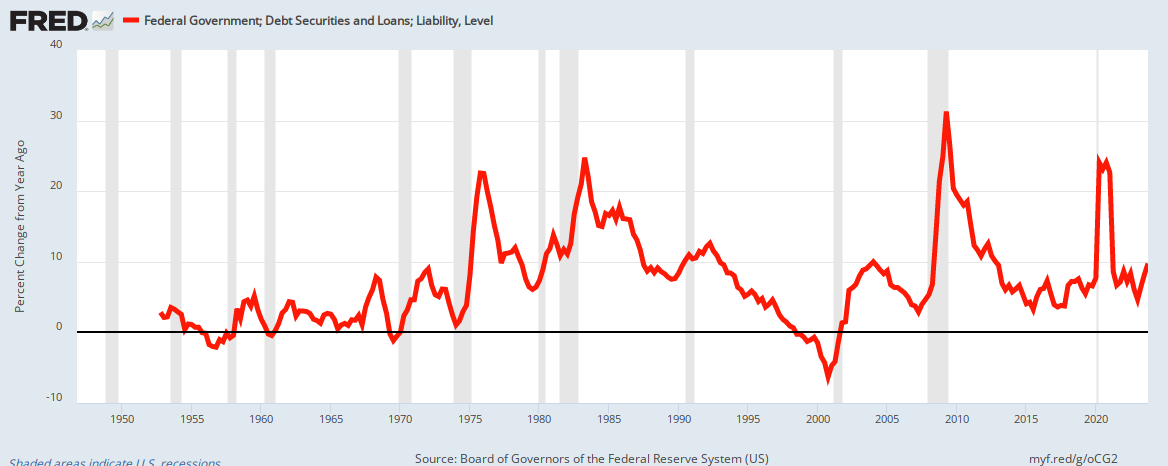
As the St. Louis Federal Reserve and many others say,  federal deficit spending is infinitely affordable for our Monetarily Sovereign government.

Now comes evidence that programs incorporating elements of the Ten Steps do work, though by themselves still are insufficient:

There’s now clear evidence that anti-poverty programs like welfare and Social Security work
By: Ethan Wolff-Mann, Senior Writer, Yahoo Finance, May 11, 2018

Poverty-alleviation programs like food stamps (SNAP), Social Security, and other “welfare” programs are broadly effective at reducing poverty, a new study from University of Chicago researchers found.

Researchers Bruce Meyer and Derek Wu, conducted a more comprehensive analysis than found in most studies, because it used administrative data from the programs’ payment records, not just survey data of recipients from the Census Bureau.

The effectiveness question is often at the crux of the dispute, and the study finally answers it in a more complete way for six major programs: SNAP, Supplemental Security Income (SSI), Temporary Assistance for Needy Families (TANF), Social Security, housing assistance, and the Earned Income Tax Credit (EITC).

Wu told Yahoo Finance. “Even though single-parent are still relatively underserved by the safety net, the effects of certain programs (like Social Security, SSI, and Public Assistance) on their poverty rate more than double when we bring in administrative data.”

Respondents in Census surveys often significantly under-reported the effects of these programs, failing to count 50% of public assistance dollars, 42% of SNAP dollars, and 16% for SSI.

The research found that all programs except for the EITC “sharply” reduces deep poverty, (50% below the poverty line — income of $12,140 for an individual and $20,780 for a family of three).

The EITC has a bigger impact on families around 150% of the poverty line, an income level often described as “working poor.” The researchers called the tax credit, along with SNAP, the “most effective” of the means-tested programs.

For the elderly, Social Security benefits slash poverty by 75%.” Social Security’s overall effect on all poverty is also enormous, responsible for by far the largest poverty reduction among all these programs, the study said.

When it comes to alleviating deep poverty “many of the means-tested transfers (like SSI, SNAP, and housing assistance) play a substantially larger role than Social Security, which pays out more for those who put more in.

The income/wealth/power Gaps constitute the single most important problem in economics.

Wide Gaps negatively affect poverty, health and longevity, education, housing, law and crime, war, leadership, ownership, bigotry, supply and demand, taxation, GDP, international relations, scientific advancement, the environment, human motivation and well-being, and virtually every other issue in economics.

Social benefit programs narrow the Gap between the rich and the rest. Such programs not only are easily affordable for our Monetarily Sovereign government, but they do not lead to an uncontrolled inflation (See: Deficit spending does not cause inflation).

So why have we not instituted the Ten Steps, which would focus on Gap reduction? Answer:

The rich do not want Gap reduction, and they have brainwashed the public into believing help for the poor is immoral and unnecessary.

Gap Psychology, the human desire to separate oneself from those below on economic scales, and to come closer to those above, aids the rich in their brainwashing efforts.

The populace is all-too-ready to believe that the poor are lazy takers, who could, if they wished, lift themselves by the bootstraps. Much of the populace falsely believe that aids to the poor encourage the poor to remain lazy and poor.

Further, the populace has been trained to believe that for the poor to receive benefits while not working is sinful (though perfectly fine for the idle rich).

The notion that the poor are so lazy they prefer poverty to work, has no basis in fact, and is beyond contemptible. But it provides a handy excuse for Gap Psychology.

In summary, there are no economic reasons not to institute the Ten Steps to Prosperity.  They would benefit not only the poor, but the entire economy.

We should begin without further delay.

Rodger Malcolm Mitchell
Monetary Sovereignty
Twitter: @rodgermitchell; Search #monetarysovereignty
Facebook: Rodger Malcolm Mitchell

………………………………………………………………………………………………………………………………………………………………………………………………………………………………………………………………………………………………………………………………………..

The single most important problems in economics involve the excessive income/wealth/power Gaps between the have-mores and the have-less.

Wide Gaps negatively affect poverty, health and longevity, education, housing, law and crime, war, leadership, ownership, bigotry, supply and demand, taxation, GDP, international relations, scientific advancement, the environment, human motivation and well-being, and virtually every other issue in economics.

Implementation of The Ten Steps To Prosperity can narrow the Gaps:

Ten Steps To Prosperity:
1. ELIMINATE FICA (Ten Reasons to Eliminate FICA )
Although the article lists 10 reasons to eliminate FICA, there are two fundamental reasons:
*FICA is the most regressive tax in American history, widening the Gap by punishing the low and middle-income groups, while leaving the rich untouched, and
*The federal government, being Monetarily Sovereign, neither needs nor uses FICA to support Social Security and Medicare.
2. FEDERALLY FUNDED MEDICARE — PARTS A, B & D, PLUS LONG TERM CARE — FOR EVERYONE (H.R. 676, Medicare for All )
This article addresses the questions:
*Does the economy benefit when the rich can afford better health care than can the rest of Americans?
*Aside from improved health care, what are the other economic effects of “Medicare for everyone?”
*How much would it cost taxpayers?
*Who opposes it?”
3. PROVIDE A MONTHLY ECONOMIC BONUS TO EVERY MAN, WOMAN AND CHILD IN AMERICA (similar to Social Security for All) (The JG (Jobs Guarantee) vs the GI (Guaranteed Income) vs the EB (Economic Bonus)) Or institute a reverse income tax.
This article is the fifth in a series about direct financial assistance to Americans:

Why Modern Monetary Theory’s Employer of Last Resort is a bad idea. Sunday, Jan 1 2012
MMT’s Job Guarantee (JG) — “Another crazy, rightwing, Austrian nutjob?” Thursday, Jan 12 2012
Why Modern Monetary Theory’s Jobs Guarantee is like the EU’s euro: A beloved solution to the wrong problem. Tuesday, May 29 2012
“You can’t fire me. I’m on JG” Saturday, Jun 2 2012

Economic growth should include the “bottom” 99.9%, not just the .1%, the only question being, how best to accomplish that. Modern Monetary Theory (MMT) favors giving everyone a job. Monetary Sovereignty (MS) favors giving everyone money. The five articles describe the pros and cons of each approach.
4. FREE EDUCATION (INCLUDING POST-GRAD) FOR EVERYONE Five reasons why we should eliminate school loans
Monetarily non-sovereign State and local governments, despite their limited finances, support grades K-12. That level of education may have been sufficient for a largely agrarian economy, but not for our currently more technical economy that demands greater numbers of highly educated workers.
Because state and local funding is so limited, grades K-12 receive short shrift, especially those schools whose populations come from the lowest economic groups. And college is too costly for most families.
An educated populace benefits a nation, and benefitting the nation is the purpose of the federal government, which has the unlimited ability to pay for K-16 and beyond.
5. SALARY FOR ATTENDING SCHOOL
Even were schooling to be completely free, many young people cannot attend, because they and their families cannot afford to support non-workers. In a foundering boat, everyone needs to bail, and no one can take time off for study.
If a young person’s “job” is to learn and be productive, he/she should be paid to do that job, especially since that job is one of America’s most important.
6. ELIMINATE CORPORATE TAXES
Corporations themselves exist only as legalities. They don’t pay taxes or pay for anything else. They are dollar-transferring machines. They transfer dollars from customers to employees, suppliers, shareholders and the government (the later having no use for those dollars).
Any tax on corporations reduces the amount going to employees, suppliers and shareholders, which diminishes the economy. Ultimately, all corporate taxes come around and reappear as deductions from your personal income.
7. INCREASE THE STANDARD INCOME TAX DEDUCTION, ANNUALLY. (Also refer to this.) Federal taxes punish taxpayers and harm the economy. The federal government has no need for those punishing and harmful tax dollars. There are several ways to reduce taxes, and we should evaluate and choose the most progressive approaches.
Cutting FICA and corporate taxes would be a good early step, as both dramatically affect the 99%. Annual increases in the standard income tax deduction, and a reverse income tax also would provide benefits from the bottom up. Both would narrow the Gap.
8. TAX THE VERY RICH (THE “.1%) MORE, WITH HIGHER PROGRESSIVE TAX RATES ON ALL FORMS OF INCOME. (TROPHIC CASCADE)
There was a time when I argued against increasing anyone’s federal taxes. After all, the federal government has no need for tax dollars, and all taxes reduce Gross Domestic Product, thereby negatively affecting the entire economy, including the 99.9%.
But I have come to realize that narrowing the Gap requires trimming the top. It simply would not be possible to provide the 99.9% with enough benefits to narrow the Gap in any meaningful way. Bill Gates reportedly owns $70 billion. To get to that level, he must have been earning $10 billion a year. Pick any acceptable Gap (1000 to 1?), and the lowest paid American would have to receive $10 million a year. Unreasonable.
9. FEDERAL OWNERSHIP OF ALL BANKS (Also, click: The end of private banking and How should America decide “who-gets-money”?)
Banks have created all the dollars that exist. Even dollars created at the direction of the federal government, actually come into being when banks increase the numbers in checking accounts. This gives the banks enormous financial power, and as we all know, power corrupts — especially when multiplied by a profit motive.
Although the federal government also is powerful and corrupted, it does not suffer from a profit motive, the world’s most corrupting influence.
10. INCREASE FEDERAL SPENDING ON THE MYRIAD INITIATIVES THAT BENEFIT AMERICA’S 99.9% (Federal agencies)Browse the agencies. See how many agencies benefit the lower- and middle-income/wealth/ power groups, by adding dollars to the economy and/or by actions more beneficial to the 99.9% than to the .1%.
Save this reference as your primer to current economics. Sadly, much of the material is not being taught in American schools, which is all the more reason for you to use it.

The Ten Steps will grow the economy, and narrow the income/wealth/power Gap between the rich and you.

MONETARY SOVEREIGNTY
frod

What is the real purpose of money? Gap Psychology and fairness. You may never have thought of it this way.

Image result for alan greenspan on computer
Alan Greenspan: “A government cannot become insolvent with respect to  obligations in its own currency.”

…………………………………………………………………………………………………………………………………………….

What is the purpose of money? You may never have thought of it this way.

Yes, money acts as a convenience. As opposed to a purely barter economy, in which you would need to carry and ship various items of value to trade for other items of value, transactions using money allow you simply to press a computer key.

Yes, money acts as a measure. It helps you determine and compare how the public values things.

Yes, money acts an incentive, to do what society wants to be done.

Yes, money helps you evaluate people’s trustworthiness. Depending on how people use their money, and how much money they own and owe, you can determine credit.

Yes, money helps you evaluate people from many perspectives. You think about rich people differently from the way you think about poor people. You may not like the shallow implications of this sort of evaluation, but it is reality. You do it all the time.

And yes, money acts as a reward, and this is a clue to the real function of money.

In fact, money is so pervasive in your life, you scarcely can imagine a society operating without money.

And yet . . .

. . . yet, termites don’t use money, and some of their societies can include several million individuals. Each termite simply does its job, without any exchange of money. The same is true of bees and other social insects.

Emporer penguins form large societies, and the males especially, work together to shelter one another from the cold and wind. But no money is exchanged.

Our nearest relatives, the chimpanzees, don’t use money, though they do use a back-scratch grooming system that is a vague cross between barter and money.

Now, consider human families. I have a wife, two children, and five grandchildren. We don’t use money for our family internal transactions. I do things for them, and they do things for me and for each other, and no money changes hands. In our little society, we do not use money.

But in our dealings with the rest of the world, we use money.

How is it possible for my family to operate internally without money, and for termites and penguins and chimpanzees to function without money, but nations and large human societies seem to demand money?

I propose that the primary purpose of money is to mediate the conflict between Gap Psychology and Fairness.

Gap Psychology is the common desire to narrow the income/wealth/power (IWP) Gaps above you and to widen the Gaps below you.

You wish to follow, mingle with, and know more about the rich and famous, while you wish to distance yourself from those poorer and less powerful than you.

Being nearer to the strong and farther from the weak is a human survival technique.

The following graph provides a demonstration of one of the many Gaps, the salary Gap:

The widening salary Gap between college grads (red) vs. high school (blue) and less than high school grads (violet).

Fairness opposes Gap Psychology. Gaps, by many measures, are unfair. Ironically, though we are strongly influenced by Gap Psychology, we also are strongly influenced by the desire for Fairness.

From an early age, you felt the urge for Fairness. Consider these excerpts from an article in Scientific American Magazine:

Do Kids Have a Fundamental Sense of Fairness?
Experiments show that this quality often emerges by the age of 12 months
By Katherine McAuliffe, Peter R. Blake, Felix Warneken on August 23, 2017

There is a commonly held belief that humans are fundamentally selfish agents and fairness is a construct designed to help us override our selfish instincts.

Not only this, but the idea really seems to be that fairness doesn’t come naturally, which is why we need institutions like the justice system to make sure that fairness prevails.

Psychologists and economists have begun to gradually chip away at this notion, showing that people are actually pretty fair even when they can get away with selfishness.

Recent studies with children suggests fairness is an integral part of how our social world operates.

Infants as young as 12 months expect resources to be divided equally between two characters in a scene. By preschool, children will protest getting less than peers, even paying to prevent the peer from getting more.

As children get older, they are willing to punish those who have been unfair both when they are the victims of unfairness as well as when they witness someone else being treated unfairly.

Older still, children would rather receive nothing than receive more than a peer.

The purpose of money is to deal with two conflicting desires: Your desire to gain relative to other IWP levels,  and your desire to achieve a fair distribution of IWP.

Paying money for goods and services justifies your receiving those goods and services (fairness). Receiving more money than others to buy goods and services, provides the Gap.

In my family, and probably in yours, there is no Gap Psychology and no concern about fairness. You do not wish to distance yourself from your children who have less IWP than you, nor do they wish to come closer to you just on the basis of your IWP.

Thus, there is no need for money in your family internal transactions. But you do need money in your exterior transactions to achieve fairness and the Gap.

Rodger Malcolm Mitchell
Monetary Sovereignty
Twitter: @rodgermitchell; Search #monetarysovereignty
Facebook: Rodger Malcolm Mitchell

………………………………………………………………………………………………………………………………………………………………………………………………………………………………………………………………………………………………………………………………………..

The most important problems in economics involve the excessive income/wealth/power Gaps between the have-mores and the have-lesses.

Wide Gaps negatively affect poverty, health and longevity, education, housing, law and crime, war, leadership, ownership, bigotry, supply and demand, taxation, GDP, international relations, scientific advancement, the environment, human motivation and well-being, and virtually every other issue in economics.

Implementation of The Ten Steps To Prosperity can narrow the Gaps:

Ten Steps To Prosperity:
1. ELIMINATE FICA (Ten Reasons to Eliminate FICA )
Although the article lists 10 reasons to eliminate FICA, there are two fundamental reasons:
*FICA is the most regressive tax in American history, widening the Gap by punishing the low and middle-income groups, while leaving the rich untouched, and
*The federal government, being Monetarily Sovereign, neither needs nor uses FICA to support Social Security and Medicare.
2. FEDERALLY FUNDED MEDICARE — PARTS A, B & D, PLUS LONG TERM CARE — FOR EVERYONE (H.R. 676, Medicare for All )
This article addresses the questions:
*Does the economy benefit when the rich can afford better health care than can the rest of Americans?
*Aside from improved health care, what are the other economic effects of “Medicare for everyone?”
*How much would it cost taxpayers?
*Who opposes it?”
3. PROVIDE A MONTHLY ECONOMIC BONUS TO EVERY MAN, WOMAN AND CHILD IN AMERICA (similar to Social Security for All) (The JG (Jobs Guarantee) vs the GI (Guaranteed Income) vs the EB (Economic Bonus)) Or institute a reverse income tax.
This article is the fifth in a series about direct financial assistance to Americans:

Why Modern Monetary Theory’s Employer of Last Resort is a bad idea. Sunday, Jan 1 2012
MMT’s Job Guarantee (JG) — “Another crazy, rightwing, Austrian nutjob?” Thursday, Jan 12 2012
Why Modern Monetary Theory’s Jobs Guarantee is like the EU’s euro: A beloved solution to the wrong problem. Tuesday, May 29 2012
“You can’t fire me. I’m on JG” Saturday, Jun 2 2012

Economic growth should include the “bottom” 99.9%, not just the .1%, the only question being, how best to accomplish that. Modern Monetary Theory (MMT) favors giving everyone a job. Monetary Sovereignty (MS) favors giving everyone money. The five articles describe the pros and cons of each approach.
4. FREE EDUCATION (INCLUDING POST-GRAD) FOR EVERYONE Five reasons why we should eliminate school loans
Monetarily non-sovereign State and local governments, despite their limited finances, support grades K-12. That level of education may have been sufficient for a largely agrarian economy, but not for our currently more technical economy that demands greater numbers of highly educated workers.
Because state and local funding is so limited, grades K-12 receive short shrift, especially those schools whose populations come from the lowest economic groups. And college is too costly for most families.
An educated populace benefits a nation, and benefitting the nation is the purpose of the federal government, which has the unlimited ability to pay for K-16 and beyond.
5. SALARY FOR ATTENDING SCHOOL
Even were schooling to be completely free, many young people cannot attend, because they and their families cannot afford to support non-workers. In a foundering boat, everyone needs to bail, and no one can take time off for study.
If a young person’s “job” is to learn and be productive, he/she should be paid to do that job, especially since that job is one of America’s most important.
6. ELIMINATE FEDERAL TAXES ON BUSINESS
Businesses are dollar-transferring machines. They transfer dollars from customers to employees, suppliers, shareholders and the federal government (the later having no use for those dollars). Any tax on businesses reduces the amount going to employees, suppliers and shareholders, which diminishes the economy. Ultimately, all business taxes reduce your personal income.
7. INCREASE THE STANDARD INCOME TAX DEDUCTION, ANNUALLY. (Refer to this.) Federal taxes punish taxpayers and harm the economy. The federal government has no need for those punishing and harmful tax dollars. There are several ways to reduce taxes, and we should evaluate and choose the most progressive approaches.
Cutting FICA and business taxes would be a good early step, as both dramatically affect the 99%. Annual increases in the standard income tax deduction, and a reverse income tax also would provide benefits from the bottom up. Both would narrow the Gap.
8. TAX THE VERY RICH (THE “.1%) MORE, WITH HIGHER PROGRESSIVE TAX RATES ON ALL FORMS OF INCOME. (TROPHIC CASCADE)
There was a time when I argued against increasing anyone’s federal taxes. After all, the federal government has no need for tax dollars, and all taxes reduce Gross Domestic Product, thereby negatively affecting the entire economy, including the 99.9%.
But I have come to realize that narrowing the Gap requires trimming the top. It simply would not be possible to provide the 99.9% with enough benefits to narrow the Gap in any meaningful way. Bill Gates reportedly owns $70 billion. To get to that level, he must have been earning $10 billion a year. Pick any acceptable Gap (1000 to 1?), and the lowest paid American would have to receive $10 million a year. Unreasonable.
9. FEDERAL OWNERSHIP OF ALL BANKS (Click The end of private banking and How should America decide “who-gets-money”?)
Banks have created all the dollars that exist. Even dollars created at the direction of the federal government, actually come into being when banks increase the numbers in checking accounts. This gives the banks enormous financial power, and as we all know, power corrupts — especially when multiplied by a profit motive.
Although the federal government also is powerful and corrupted, it does not suffer from a profit motive, the world’s most corrupting influence.
10. INCREASE FEDERAL SPENDING ON THE MYRIAD INITIATIVES THAT BENEFIT AMERICA’S 99.9% (Federal agencies)Browse the agencies. See how many agencies benefit the lower- and middle-income/wealth/ power groups, by adding dollars to the economy and/or by actions more beneficial to the 99.9% than to the .1%.
Save this reference as your primer to current economics. Sadly, much of the material is not being taught in American schools, which is all the more reason for you to use it.

The Ten Steps will grow the economy, and narrow the income/wealth/power Gap between the rich and you.

———————————————————————————————————————


MONETARY SOVEREIGNTY

One more reason why the MMT Jobs Guarantee is a con job

Image result for ben bernanke using a computerBen Bernanke: “The U.S. government has a technology, called a printing press (or, today, its electronic equivalent), that allows it to produce as many U.S. dollars as it wishes at essentially no cost.”

————————————————————————————————————————————————————–

The previous post, The MMT Jobs Guarantee con job gave several reasons why JG is unworkable, and in fact, will hinder employment. For example:

  1. Jobs are not hard to find. There are millions of jobs available.

    May 8, 2018: U.S. employers post record high 6.6 million open jobs
    By Christopher A. Rugaber Associated Press

    U.S. employers advertised 6.6 million open jobs in March, the most on records dating back to December 2000, suggesting businesses want to staff up to meet strong demand.

    Job openings rise to record high as employers battle for qualified workers
    The number of U.S. job openings increased by 472,000 to a seasonally adjusted 6.6 million in March, a record high, the Labor Department reported Tuesday. The latest statistics in the monthly Job Openings and Labor Turnover Survey suggested that as hiring has improved, employers have found it increasingly difficult to find qualified workers.

    A job is not hard to find. The right job is hard to find. The job in the right location — the job you want to do and are qualified to do — that job is hard to find.

    Image result for man holding a sign on a corner
    Congratulations on your JG job.


    JG will not find the right job for you. At best, it might find a job, take it or leave it.

  2. Most people do not work for the joy of labor. Most people work for money, or more accurately, for financial benefits.
    .
    Continuing the above article:
    .

    The unemployment rate is at a 17-year low, but stagnant wages, chronic underemployment and growing inequality are leading more Americans to take on so-called side hustles.

    Some want to supplement their incomes. Others are just trying to eke out a living. Nearly 1 in 4 Americans now earn money from the digital “platform economy,” according to the Pew Research Center.

    Most of that work is for domestic tasks, such as housecleaning and repairs, or driving for companies such as Uber.

    By moving into shops and cafes, on-demand work stands to reshape a broader slice of the U.S. economy. There are implications for low-wage workers, too, as a new class of employers fills its labor pool with on-call temp workers.

    Retail and hospitality — which accounts for 20 percent of U.S. positions, according to the Bureau of Labor Statistics — is the on-ramp for many employees to better jobs.

    But the sector is also pinched by rising minimum wages and health-care costs, and employers are seeking more flexible work arrangements that respond to the ebbs and flows of their businesses.

    But labor experts say companies such as Snag Work could set a dangerous precedent. Employers are already wary of hiring full-time employees because of overtime and health-care costs, they say, and having a pool of potential gig workers at the ready could make matters worse for those seeking the stability, benefits and protections that come with full-time work.

    Despite JG beliefs, laboring for money neither is inherently more moral or emotionally more satisfying than receiving money without labor.

    Many retired people and wealthy people tend to be quite satisfied with their lives, while not having a paying job.

You can see other reasons why JG is unworkable by visiting The MMT Jobs Guarantee con job, but there is one additional reason, not mentioned in the prior post.

What becomes of JG job searchers, creators, supervisors and trainers when jobs are plentiful vs. when jobs are scarce?

The reason relates to the current situation where unemployment is low, and available jobs are plentiful. This is not a permanent or even a long-term situation.

Unemployment and jobs availability change markedly through time.

But by any measure, implementing JG would require a large federal bureaucracy, and depending on the degree to which state and local governments are involved, large state and local bureaucracies.

These bureaucrats not only would require significant training themselves, but any private job searchers, job creators and job trainers would need to be hired and trained.

So the question becomes:

3. What would happen to the thousands of people hired to implement JG during those periods, like today, when JG scarcely is needed, if at all?

Would these thousands of people be retained during slack periods, to twiddle their thumbs? Or would they be fired, which later would require another round of hiring and training?

And if the latter, wouldn’t this new round of hiring and training always be behind the curve, so that many months or years pass before the program once again, is up and running?

If you have had occasion to debate with a JG adherent, you probably have discovered there are an infinite number of JG’s. For each objection, a new JG is invented, until the only common element is the words “Jobs Guarantee.”

In my personal experience discussing and debating JG, I’ve been told the program involves one or more of:

–federal jobs, local government jobs, and/or private jobs
–JG implementation government or private employees, or no program employees
–supplementary Basic Income payments
–minimum wage (about $7 hour) or enhanced minimum wage of $15 hour
–prior job training by program trainers, or on-the-job training by the employee’s supervisors
–Benefits like vacations, health insurance, prenatal programs, education, special clothing, IRAs
–Part time, temporary, or full-time jobs

I also have been told JG employees would not compete with or replace existing employees, though I cannot imagine how that would work.

4. Finally, the private sector already is doing JG, far better than the government would. Continuing with the article:

Snag Work and other new platforms are the go-betweens, allowing users to pick up open shifts from retailers, restaurants and hotels that have gaps in their schedules.

Wonolo, which bills itself as 40 percent cheaper than traditional temporary staffing companies, counts Coca-Cola, McDonald’s and Papa John’s Pizza among its clients. Other start-ups include AllWork and Coople.

Snag Work, which recently expanded to Washington, D.C., says the arrangements are mutually beneficial for cash-strapped workers and understaffed businesses. “Workers now have lots of options to pick up shifts — Instacart, TaskRabbit, Postmates, Lyft,” said Peter Harrison, chief executive of Snag, the parent company of Snag Work, which says it has 2.1 million active users.

“But for small businesses, there are not ways for them to participate in this revolution. They’re suffering for it because they’re losing workers to these other platforms.”

That’s where Snag Work comes in, he says. This is how it works: Interested workers sign up online and are vetted by Snag Work via Skype interviews and background checks. They can search for open shifts — which typically pay $10 to $15 an hour — on the company’s app and sign up for the ones they’re interested in.

They clock in and clock out and are paid through Snag Work’s online platform. A spokeswoman for Snag Work said the company provides workers’ compensation coverage to all workers.

The federal government should encourage and regulate businesses like Snag Work, rather than create a competitive, job-hunting/ job-creating business of its own:

Temporary workers also have fewer rights. They can’t unionize and don’t have the same legal protections against workplace harassment that other employees do, according to Erin Johansson, research director at Jobs With Justice, a nonprofit that advocates for workers’ rights.

State legislatures across the country are considering bills that would legally classify gig workers as independent contractors, stripping them of a number of workplace rights and protections.

Until now, the distinction between on-demand employee and contractor has been largely unclear, as evidenced by a number of lawsuits alleging that companies such as Uber, Grubhub and Handy are incorrectly classifying their workers as independent contractors.

Stallings, the full-time gig worker, said he regularly picks up dishwashing shifts at the Five Guys near Virginia Commonwealth University.

“The other workers get a little upset when they hear I’m making more than minimum wage,” Stallings said. “You’ll hear them talk about how they’re struggling to keep full-time hours, and then I come in to wash dishes, and at $10 an hour, am making almost as much as the cooks are.”

In summary, JG is a complex, convoluted, naive program created by people who seem not to understand the realities of job hunting. So they assume they simply can supply A JOB, and anyone unemployed will be delighted to have it.

Think of how much easier, faster and more beneficial it would be simply to:

Step #1. Eliminate FICA, then
Step #2. Expand Medicare to cover everyone, then
Step #3. Give Social Security to everyone, then
Step #4. Provide free education for everyone who wants it, then . . .

You get the idea. I’m suggesting the 10 Steps to Prosperity (below) — good at all times for all economic situations.

Rodger Malcolm Mitchell
Monetary Sovereignty
Twitter: @rodgermitchell; Search #monetarysovereignty
Facebook: Rodger Malcolm Mitchell

………………………………………………………………………………………………………………………………………………………………………………………………………………………………………………………………………………………………………………………………………..

The most important problems in economics involve the excessive income/wealth/power Gaps between the have-mores and the have-lesses.

Wide Gaps negatively affect poverty, health and longevity, education, housing, law and crime, war, leadership, ownership, bigotry, supply and demand, taxation, GDP, international relations, scientific advancement, the environment, human motivation and well-being, and virtually every other issue in economics.

Implementation of The Ten Steps To Prosperity can narrow the Gaps:

Ten Steps To Prosperity:
1. ELIMINATE FICA (Ten Reasons to Eliminate FICA )
Although the article lists 10 reasons to eliminate FICA, there are two fundamental reasons:
*FICA is the most regressive tax in American history, widening the Gap by punishing the low and middle-income groups, while leaving the rich untouched, and
*The federal government, being Monetarily Sovereign, neither needs nor uses FICA to support Social Security and Medicare.
2. FEDERALLY FUNDED MEDICARE — PARTS A, B & D, PLUS LONG TERM CARE — FOR EVERYONE (H.R. 676, Medicare for All )
This article addresses the questions:
*Does the economy benefit when the rich can afford better health care than can the rest of Americans?
*Aside from improved health care, what are the other economic effects of “Medicare for everyone?”
*How much would it cost taxpayers?
*Who opposes it?”
3. PROVIDE A MONTHLY ECONOMIC BONUS TO EVERY MAN, WOMAN AND CHILD IN AMERICA (similar to Social Security for All) (The JG (Jobs Guarantee) vs the GI (Guaranteed Income) vs the EB (Economic Bonus)) Or institute a reverse income tax.
This article is the fifth in a series about direct financial assistance to Americans:

Why Modern Monetary Theory’s Employer of Last Resort is a bad idea. Sunday, Jan 1 2012
MMT’s Job Guarantee (JG) — “Another crazy, rightwing, Austrian nutjob?” Thursday, Jan 12 2012
Why Modern Monetary Theory’s Jobs Guarantee is like the EU’s euro: A beloved solution to the wrong problem. Tuesday, May 29 2012
“You can’t fire me. I’m on JG” Saturday, Jun 2 2012

Economic growth should include the “bottom” 99.9%, not just the .1%, the only question being, how best to accomplish that. Modern Monetary Theory (MMT) favors giving everyone a job. Monetary Sovereignty (MS) favors giving everyone money. The five articles describe the pros and cons of each approach.
4. FREE EDUCATION (INCLUDING POST-GRAD) FOR EVERYONE Five reasons why we should eliminate school loans
Monetarily non-sovereign State and local governments, despite their limited finances, support grades K-12. That level of education may have been sufficient for a largely agrarian economy, but not for our currently more technical economy that demands greater numbers of highly educated workers.
Because state and local funding is so limited, grades K-12 receive short shrift, especially those schools whose populations come from the lowest economic groups. And college is too costly for most families.
An educated populace benefits a nation, and benefitting the nation is the purpose of the federal government, which has the unlimited ability to pay for K-16 and beyond.
5. SALARY FOR ATTENDING SCHOOL
Even were schooling to be completely free, many young people cannot attend, because they and their families cannot afford to support non-workers. In a foundering boat, everyone needs to bail, and no one can take time off for study.
If a young person’s “job” is to learn and be productive, he/she should be paid to do that job, especially since that job is one of America’s most important.
6. ELIMINATE FEDERAL TAXES ON BUSINESS
Businesses are dollar-transferring machines. They transfer dollars from customers to employees, suppliers, shareholders and the federal government (the later having no use for those dollars). Any tax on businesses reduces the amount going to employees, suppliers and shareholders, which diminishes the economy. Ultimately, all business taxes reduce your personal income.
7. INCREASE THE STANDARD INCOME TAX DEDUCTION, ANNUALLY. (Refer to this.) Federal taxes punish taxpayers and harm the economy. The federal government has no need for those punishing and harmful tax dollars. There are several ways to reduce taxes, and we should evaluate and choose the most progressive approaches.
Cutting FICA and business taxes would be a good early step, as both dramatically affect the 99%. Annual increases in the standard income tax deduction, and a reverse income tax also would provide benefits from the bottom up. Both would narrow the Gap.
8. TAX THE VERY RICH (THE “.1%) MORE, WITH HIGHER PROGRESSIVE TAX RATES ON ALL FORMS OF INCOME. (TROPHIC CASCADE)
There was a time when I argued against increasing anyone’s federal taxes. After all, the federal government has no need for tax dollars, and all taxes reduce Gross Domestic Product, thereby negatively affecting the entire economy, including the 99.9%.
But I have come to realize that narrowing the Gap requires trimming the top. It simply would not be possible to provide the 99.9% with enough benefits to narrow the Gap in any meaningful way. Bill Gates reportedly owns $70 billion. To get to that level, he must have been earning $10 billion a year. Pick any acceptable Gap (1000 to 1?), and the lowest paid American would have to receive $10 million a year. Unreasonable.
9. FEDERAL OWNERSHIP OF ALL BANKS (Click The end of private banking and How should America decide “who-gets-money”?)
Banks have created all the dollars that exist. Even dollars created at the direction of the federal government, actually come into being when banks increase the numbers in checking accounts. This gives the banks enormous financial power, and as we all know, power corrupts — especially when multiplied by a profit motive.
Although the federal government also is powerful and corrupted, it does not suffer from a profit motive, the world’s most corrupting influence.
10. INCREASE FEDERAL SPENDING ON THE MYRIAD INITIATIVES THAT BENEFIT AMERICA’S 99.9% (Federal agencies)Browse the agencies. See how many agencies benefit the lower- and middle-income/wealth/ power groups, by adding dollars to the economy and/or by actions more beneficial to the 99.9% than to the .1%.
Save this reference as your primer to current economics. Sadly, much of the material is not being taught in American schools, which is all the more reason for you to use it.

The Ten Steps will grow the economy, and narrow the income/wealth/power Gap between the rich and you.

———————————————————————————————————————


MONETARY SOVEREIGNTY


The MMT Jobs Guarantee con job

Ben Bernanke: “The U.S. government has a technology, called a printing press (or, today, its electronic equivalent), that allows it to produce as many U.S. dollars as it wishes at essentially no cost.”

…………………………………………………………………………………………………………………………………………….
We have written often about MMT’s “jobs guarantee” — the guarantee that the federal government either will give or find a job for everyone in America who wants a job.

The difference between “give” and “find,” is the difference between working for the federal government and working for private industry or local governments. In the former, the government is the employer of last resort. In the latter, the government is the employment agency of last resort.

There are two beliefs underlying the jobs-guarantee:

  • Jobs are hard to find, which is why people are unemployed
  • Working for money is morally superior to being given money

Both beliefs are wrong. The facts are:

Image result for wpa
Is this the guaranteed job you have been looking for?
  • Jobs are not hard to find. There a many millions of jobs available. Look in any newspaper and you will see hundreds of jobs. Go online and you will see many thousands of jobs.
    The problem is, they are the wrong jobs. Either they are in the wrong location, require the wrong skills, or simply are not something you want to do.
  • Working for money neither is moral nor immoral. It simply is working to obtain money.
    Someone who wins the lottery, or is born to wealthy parents, or who receives a multi-million dollar income because his stock options rose, is no more or less moral than a ditch digger.
    The rich simply want the non-rich to believe there is something morally wrong about the non-rich doing what the rich do, namely receive money from the government or other sources for doing little-to-nothing.

Sadly, the not-rich have been brainwashed into adopting the notion that when poor people receive money for which they haven’t worked, they are considered “sloths who are gaming the system,” or termed “food stamp mamas.”

Image result for i'd rather work than be rich
These guys do what you would call “work,” perhaps an hour a week. Money comes to them while they sleep. Are they moral or immoral for taking it?

But when the rich receive money, wealth, and power for essentially “being there,” that is their manifest destiny and moral right.

This is the moral nonsense that has been adopted by MMT with their “jobs guarantee.”

You don’t work for the love of work, nor do you work because it is morally right. You work to obtain money, so you can buy and do the things you really want to do.

Sure, you may like your job. But you do not prefer working to being on vacation, taking a free trip around the world and living in luxury.

Be honest. You look forward to weekends rather than to Mondays (unless you are paid on Mondays).

That said, the jobs guarantee is an idea only a politician or a university economist could love. It is completely, unworkable in the real world:

1. Exactly who in the government will find jobs for everyone — in NY city, in the empty reaches of North Dakota, in an island off the East Coast — jobs for each person who wants one?

I challenge anyone to describe the bureaucracy and the bureaucrats who can handle that assignment in every village and hamlet in America.

Or will millions of people be required to move away, to some other location from the one in which they wish to live?

2. Who exactly will:
–Find or create available jobs everywhere
–Interview everywhere
–Hire everywhere
–Supervise everywhere
–Promote, demote, and switch jobs everywhere
–Fire if need be, the millions of people who should be fired for the government’s firing criteria?

Geographically, where will all of the above be done?

3. Who exactly will find jobs for the people who are fired for each of the different causes? What are the criteria for being fired and how will those criteria be enforced?

4. What will workers of all levels be paid? Minimum wage (to lower America’s average wage) or above minimum wage (to compete with the private sector)? Will everyone be paid the same, or will workers be paid differently for different work?

5. What about healthcare, maternity leave, vacation days, IRAs and myriad other benefits? Where will those benefits come from?

6. And most important, will these be real jobs or “bullsh*t” make-work jobs (http://bit.ly/2JMFXjU)

If people are hired only because they need jobs, rather than because the job needs people, what prevents the jobs from being make-work?

Unfortunately, the public has not thought deeply about the jobs-guarantee plan. They just like the notion of a guaranteed job.

Already, a jobs-guarantee idea polls pretty well
Published: May 2, 2018
Sanders, other potential Democratic White House hopefuls back idea
By Robert Schroeder, Fiscal Policy Reporter. Reuters

Does the prospect of a government-guaranteed job appeal to you? You’ve got company: nearly half of U.S. voters like the idea, according to a recent poll.

The proposal has been getting some traction on the left lately, after being floated by think tanks and embraced by likely Democratic presidential candidates including Sens. Cory Booker, Kirsten Gillibrand and Bernie Sanders.

In a new Rasmussen Reports poll, 46% said they favored such a program. Sanders, according to the Washington Post, backs a version that would see local and state governments offer proposals for public works projects.

Workers would be hired for at least $15 an hour with paid family and medical leave.

Whoops! Now the plan has morphed onto “local and state governments” most of which are broke or overtaxing their residents.

And what is this about “public works projects”? Will these be ditch-digging jobs for former executives, women, the infirm and others who have no background or desire in this area.

Or are we in the “beggars can’t be choosers” area, where if you want money, you must labor, because for the poor, labor is moral?

There are numerous practical questions about a jobs-guarantee plan, including its cost. In one proposal, the Center on Budget and Policy Priorities estimated an annual cost of $543 billion for the creation of 9.7 million full-time jobs.

The above paragraph is nonsense for two reasons:

  1. Cost is irrelevant to a Monetarily Sovereign government that can create unlimited amounts of its own sovereign currency.
  2. No one on earth can come up with a $543 billion number for creating 9.7 million full-time jobs.  Those are numbers completely snatched out of the air.

So, the Center on Budget and Policy Priorities (who?) said it would cost $55,979.38 to create and implement and supervise each of various unknown jobs in unknown locations for an unknown length of time? That is beyond ridiculous.

A plan like Sanders’ is dead on arrival as long as Republicans control Congress.

It should be dead on arrival no matter which party is in control. It is ill-considered, uncontrollable nonsense.

It would be far simpler and far more beneficial to more people to institute the Ten Steps to Prosperity (http://bit.ly/2JLsg4E)

Let us begin with Step #1, straightaway.

Rodger Malcolm Mitchell
Monetary Sovereignty
Twitter: @rodgermitchell; Search #monetarysovereignty
Facebook: Rodger Malcolm Mitchell

………………………………………………………………………………………………………………………………………………………………………………………………………………………………………………………………………………………………………………………………………..

The most important problems in economics involve the excessive income/wealth/power Gaps between the have-mores and the have-lesses.

Wide Gaps negatively affect poverty, health and longevity, education, housing, law and crime, war, leadership, ownership, bigotry, supply and demand, taxation, GDP, international relations, scientific advancement, the environment, human motivation and well-being, and virtually every other issue in economics.

Implementation of The Ten Steps To Prosperity can narrow the Gaps:

Ten Steps To Prosperity:
1. ELIMINATE FICA (Ten Reasons to Eliminate FICA )
Although the article lists 10 reasons to eliminate FICA, there are two fundamental reasons:
*FICA is the most regressive tax in American history, widening the Gap by punishing the low and middle-income groups, while leaving the rich untouched, and
*The federal government, being Monetarily Sovereign, neither needs nor uses FICA to support Social Security and Medicare.
2. FEDERALLY FUNDED MEDICARE — PARTS A, B & D, PLUS LONG TERM CARE — FOR EVERYONE (H.R. 676, Medicare for All )
This article addresses the questions:
*Does the economy benefit when the rich can afford better health care than can the rest of Americans?
*Aside from improved health care, what are the other economic effects of “Medicare for everyone?”
*How much would it cost taxpayers?
*Who opposes it?”
3. PROVIDE A MONTHLY ECONOMIC BONUS TO EVERY MAN, WOMAN AND CHILD IN AMERICA (similar to Social Security for All) (The JG (Jobs Guarantee) vs the GI (Guaranteed Income) vs the EB (Economic Bonus)) Or institute a reverse income tax.
This article is the fifth in a series about direct financial assistance to Americans:

Why Modern Monetary Theory’s Employer of Last Resort is a bad idea. Sunday, Jan 1 2012
MMT’s Job Guarantee (JG) — “Another crazy, rightwing, Austrian nutjob?” Thursday, Jan 12 2012
Why Modern Monetary Theory’s Jobs Guarantee is like the EU’s euro: A beloved solution to the wrong problem. Tuesday, May 29 2012
“You can’t fire me. I’m on JG” Saturday, Jun 2 2012

Economic growth should include the “bottom” 99.9%, not just the .1%, the only question being, how best to accomplish that. Modern Monetary Theory (MMT) favors giving everyone a job. Monetary Sovereignty (MS) favors giving everyone money. The five articles describe the pros and cons of each approach.
4. FREE EDUCATION (INCLUDING POST-GRAD) FOR EVERYONE Five reasons why we should eliminate school loans
Monetarily non-sovereign State and local governments, despite their limited finances, support grades K-12. That level of education may have been sufficient for a largely agrarian economy, but not for our currently more technical economy that demands greater numbers of highly educated workers.
Because state and local funding is so limited, grades K-12 receive short shrift, especially those schools whose populations come from the lowest economic groups. And college is too costly for most families.
An educated populace benefits a nation, and benefitting the nation is the purpose of the federal government, which has the unlimited ability to pay for K-16 and beyond.
5. SALARY FOR ATTENDING SCHOOL
Even were schooling to be completely free, many young people cannot attend, because they and their families cannot afford to support non-workers. In a foundering boat, everyone needs to bail, and no one can take time off for study.
If a young person’s “job” is to learn and be productive, he/she should be paid to do that job, especially since that job is one of America’s most important.
6. ELIMINATE FEDERAL TAXES ON BUSINESS
Businesses are dollar-transferring machines. They transfer dollars from customers to employees, suppliers, shareholders and the federal government (the later having no use for those dollars). Any tax on businesses reduces the amount going to employees, suppliers and shareholders, which diminishes the economy. Ultimately, all business taxes reduce your personal income.
7. INCREASE THE STANDARD INCOME TAX DEDUCTION, ANNUALLY. (Refer to this.) Federal taxes punish taxpayers and harm the economy. The federal government has no need for those punishing and harmful tax dollars. There are several ways to reduce taxes, and we should evaluate and choose the most progressive approaches.
Cutting FICA and business taxes would be a good early step, as both dramatically affect the 99%. Annual increases in the standard income tax deduction, and a reverse income tax also would provide benefits from the bottom up. Both would narrow the Gap.
8. TAX THE VERY RICH (THE “.1%) MORE, WITH HIGHER PROGRESSIVE TAX RATES ON ALL FORMS OF INCOME. (TROPHIC CASCADE)
There was a time when I argued against increasing anyone’s federal taxes. After all, the federal government has no need for tax dollars, and all taxes reduce Gross Domestic Product, thereby negatively affecting the entire economy, including the 99.9%.
But I have come to realize that narrowing the Gap requires trimming the top. It simply would not be possible to provide the 99.9% with enough benefits to narrow the Gap in any meaningful way. Bill Gates reportedly owns $70 billion. To get to that level, he must have been earning $10 billion a year. Pick any acceptable Gap (1000 to 1?), and the lowest paid American would have to receive $10 million a year. Unreasonable.
9. FEDERAL OWNERSHIP OF ALL BANKS (Click The end of private banking and How should America decide “who-gets-money”?)
Banks have created all the dollars that exist. Even dollars created at the direction of the federal government, actually come into being when banks increase the numbers in checking accounts. This gives the banks enormous financial power, and as we all know, power corrupts — especially when multiplied by a profit motive.
Although the federal government also is powerful and corrupted, it does not suffer from a profit motive, the world’s most corrupting influence.
10. INCREASE FEDERAL SPENDING ON THE MYRIAD INITIATIVES THAT BENEFIT AMERICA’S 99.9% (Federal agencies)Browse the agencies. See how many agencies benefit the lower- and middle-income/wealth/ power groups, by adding dollars to the economy and/or by actions more beneficial to the 99.9% than to the .1%.
Save this reference as your primer to current economics. Sadly, much of the material is not being taught in American schools, which is all the more reason for you to use it.

The Ten Steps will grow the economy, and narrow the income/wealth/power Gap between the rich and you.

———————————————————————————————————————


MONETARY SOVEREIGNTY