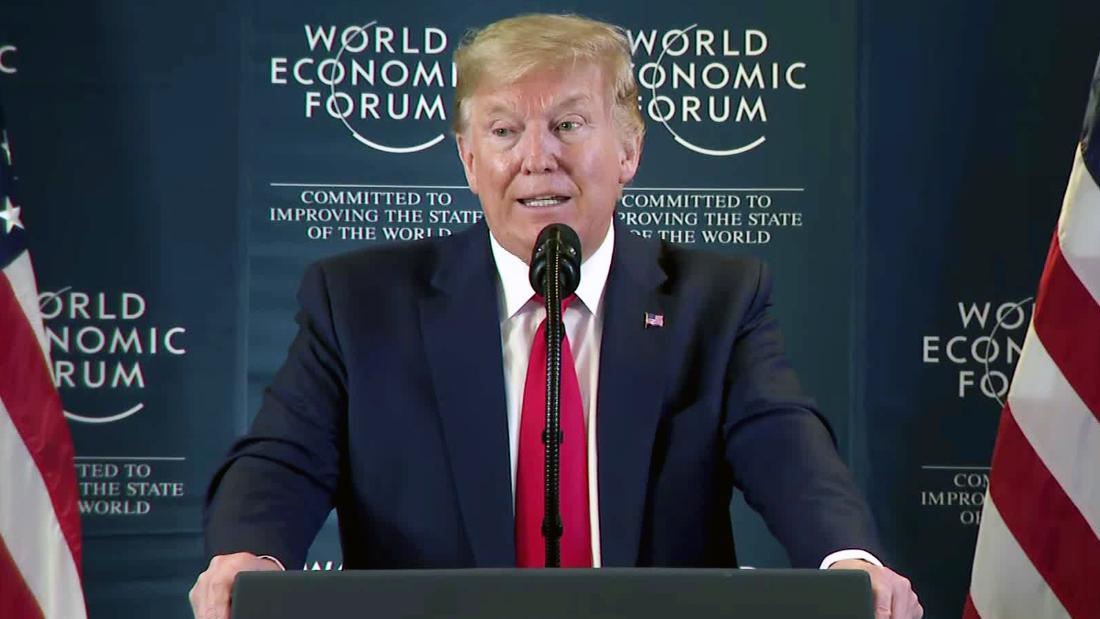
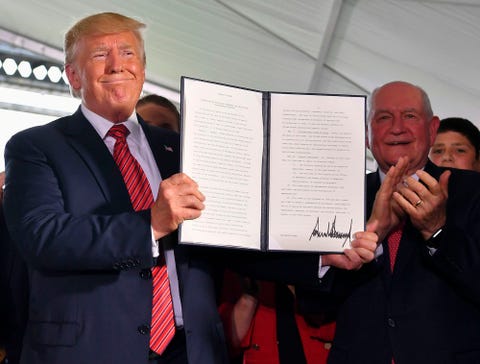
This is what I do when I’m about to tell a lie.

#Monetary Sovereignty – Mitchell
Economics, Money and Debt

Federal finances are different from your personal finances. They also are different from city, county, and state finances. And they are different from business finances.
How different?
Who says so?
Ben Bernanke: “The U.S. government has a technology, called a printing press (or, today, its electronic equivalent), that allows it to produce as many U.S. dollars as it wishes at essentially no cost.”
Alan Greenspan: “Central banks can issue currency, a non-interest-bearing claim on the government, effectively without limit. A government cannot become insolvent with respect to obligations in its own currency.”
St. Louis Federal Reserve: “As the sole manufacturer of dollars, whose debt is denominated in dollars, the U.S. government can never become insolvent, i.e.,unable to pay its bills. In this sense, the government is not dependent on credit markets to remain operational.
In short, even if all federal tax collections were $0, the federal government could continue paying its bills, forever.
Yet the AARP, repeatedly spreads the false idea that federal finances are like personal finances and so, Social Security can run short of dollars.
Here are excerpts from their latest “informational article” with regard to Social Security:
12 Top Things to Know About Social Security
Understanding the program that helps secure your future
by Kenneth Terrell, AARP Bulletin, November 20181. Social Security is not going bankrupt
At the moment, you could say the opposite; the Social Security trust funds are near an all-time high. “The program really is in good shape right now,” says David Certner, AARP’s legislative policy director. “But we know it has a long-term financial challenge.”
Here’s why: For decades, Social Security collected more money than it paid out in benefits. The surplus money collected from payroll taxes each year got invested in Treasury securities; today, the trust fund reserves are worth about $2.89 trillion.
But as the birth rate has fallen and more boomers retire, the ratio of workers to Social Security recipients is changing. This year is a tipping point: The program will need to dip into its reserves to pay full benefits from this point forward, absent any change to the program.
It’s now forecast that the trust fund reserves could be exhausted in 2034. “The longer we wait to fix Social Security funding, the more the cost will be paid by the younger generations, either on the tax side or the benefits side,” says Kathleen Romig, a Social Security analyst at the nonpartisan Center on Budget and Policy Priorities.
The above is the classic “Social Security finances are like your finances” myth. But, the federal government does not pay its bills out of “trust funds” as the term ordinarily is used:
From the Bureau of the Fiscal Service, U.S. Department of the Treasury: The Federal Government uses the term “trust fund” differently than the way in which it is commonly used.
In common usage, the term is used to refer to a private fund that has a beneficiary who owns the trust’s income and may also own the trust’s assets.
A custodian or trustee manages the assets on behalf of the beneficiary according to the terms of the trust agreement, as established by a trustor.
Neither the trustee nor the beneficiary can change the terms of the trust agreement; only the trustor can change the terms of the agreement.
In contrast, the Federal Government owns and manages the assets and the earnings of most Federal trust funds and can unilaterally change the law to raise or lower future trust fund collections and payments or change the purpose for which the collections are used.
Although AARP speaks about the Social Security “trust fund” having a “financial challenge” and reserves “could be exhausted,” the truth is that the federal government has 100% control over the “fund.”
It has the unlimited power to add dollars, deduct dollars, or do anything else it wishes. It could eliminate the “trust fund” and the FICA tax completely, and still continue to pay Social Security benefits.
2. Congress probably will not take up Social Security reform anytime soon
Several members of Congress have proposed legislation to address the program’s long-term funding issues.
But given the deep political divides on Capitol Hill, it’s unlikely that Congress will make any effort to reform Social Security until there’s the possibility of bipartisan support.
There are concerns that the tax-cut legislation passed in late 2017 could lead some lawmakers to look for places where they might cut spending. “The stage has been set by the tax bill to take another run at Social Security, Medicare and Medicaid,” says Max Richtman, CEO of the National Committee to Preserve Social Security and Medicare.
Here, the myth is that taxes, especially FICA, pay for Social Security benefits. Though state and local taxes do fund state and local spending, federal taxes pay for nothing.
In fact, federal taxes are destroyed upon receipt at the U.S. Treasury. and all payments are made with new dollars created ad hoc.
3. Some ideas to reform funding are starting to take shape
One proposal is to either raise or eliminate the wage cap on how much income is subject to the Social Security payroll tax. In 2019, that cap will be $132,900, which means that any amount a worker earns beyond that is not taxed.
Remove that cap, and higher-income earners would contribute far more to the system.
Other options lawmakers might consider include either raising the percentage rate of the payroll tax or raising the age for full retirement benefits.
All of the above options are completely unnecessary. None of them would add even one cent to the federal government’s ability to fund Social Security benefits.
4. Lawmakers do not raid the trust fund
Another common myth about Social Security is that Congress and the president use trust fund assets to pay for other federal expenses, such as education, defense or economic programs.
That’s not accurate. The money remaining after the Social Security Administration (SSA) has paid benefits and other expenses is invested directly into U.S. Treasury securities.
The government can use the money from those securities, but it has to pay the money back with interest.
Via fictional bookkeeping, the government arbitrarily increases and decreases balances in “trust fund” accounts and Treasury Security accounts.
None of this affects, even to the slightest, the federal government’s ability to fund Social Security benefits.
Then, we are treated to the following graph, which would apply to a personal trust fund, but is entirely fictional when describing federal finances.

The dollars “flowing in” are tax dollars destroyed upon receipt. The dollars flowing out are brand, new dollars, created ad hoc by the government. There is no connection between what “flows in” and what “flows out.”
The remainder of the “Twelve things to know” deal with specific rules, not the health of the “trust fund.”
In Summary, Social Security is a federal agency. Because the U.S. government is Monetarily Sovereign, and so cannot run short of its own sovereign currency, the U.S. dollar, no agency of the federal government can run short of dollars unless Congress and the President will it to.
The federal government does not need to “raise or eliminate the FICA wage cap.” Nor does it need to “raise the percentage rate of the payroll tax .” Nor does it need to “raise the age for full retirement benefits.”
None of these acts will improve Social Security’s solvency, which is infinite .
The federal government doesn’t want you to understand the above, lest you demand more benefits. Why doesn’t the government want you to have more benefits?
Because of Gap Psychology. You can read more about that, here.
Rodger Malcolm Mitchell
Monetary Sovereignty
Twitter: @rodgermitchell; Search #monetarysovereignty
Facebook: Rodger Malcolm Mitchell
…………………………………………………………………………………………………………………………………………………………………………………………………………………………………………………………………………………………..
The single most important problems in economics involve the excessive income/wealth/power Gaps between the have-mores and the have-less.
Wide Gaps negatively affect poverty, health and longevity, education, housing, law and crime, war, leadership, ownership, bigotry, supply and demand, taxation, GDP, international relations, scientific advancement, the environment, human motivation and well-being, and virtually every other issue in economics.
Implementation of The Ten Steps To Prosperity can narrow the Gaps:
Ten Steps To Prosperity:
1. Eliminate FICA2. Federally funded medicare — parts a, b & d, plus long-term care — for everyone
3. Provide a monthly economic bonus to every man, woman and child in America (similar to social security for all)
4. Free education (including post-grad) for everyone
5. Salary for attending school
6. Eliminate federal taxes on business
7. Increase the standard income tax deduction, annually.
8. Tax the very rich (the “.1%) more, with higher progressive tax rates on all forms of income.
9. Federal ownership of all banks
10. Increase federal spending on the myriad initiatives that benefit America’s 99.9%
The Ten Steps will grow the economy, and narrow the income/wealth/power Gap between the rich and you.
MONETARY SOVEREIGNTY
In the previous post, we answered the question, “Why does Trump get away with lying?”
The answer, in short, is: His followers want to be lied to.
But why does Trump get away with THIS:
In addition to his frequently repeated assertion that there was “no collusion” between his campaign and the Russian government during the 2016 presidential election, Donald Trump has also followed the lead of his lawyer Rudy Giuliani, claiming that even if Russian collusion did exist, “collusion is not a crime.”
Judge Dabney Friedrich ruled that merely collaborating with a foreign entity in a “conspiracy to defraud the United States” violates federal law — even if none of the acts by either party are themselves crimes.
And this:
Judge allows lawsuit against Trump Foundation to proceed, rejects Trump claim that he can’t be sued
The lawsuit accuses the president of misusing his charitable foundation for his own personal and political purposes.New York State Attorney General Barbara Underwood filed the action against the president, Donald Trump Jr., Ivanka Trump and Eric Trump earlier this year, charging that they had engaged in “extensive unlawful political coordination with the Trump presidential campaign, repeated and willful self-dealing transactions to benefit Mr. Trump’s personal and business interests, and violations of basic legal obligations for nonprofit foundations.”
Underwood said, “the Trump Foundation functioned as little more than a checkbook to serve Mr. Trump’s business and political interests.”
The suit charges that foundation funds were used to pay off Trump-owned companies’ legal obligations, including a $100,000 payment to a charity that was mandated in the settlement of a lawsuit.
Supreme Court Justice Saliann Scarpulla noted that a judge in a different case had already ruled earlier this year that Trump is not immune to civil actions “related purely to unofficial conduct because he is President of the the United States.”
Colluding with Russia to fix the federal Presidential election and stealing from your own charitable foundation. What next for Trump?
Major Trump administration climate report says damage is ‘intensifying across the country’
Scientists are more certain than ever that climate change is already affecting the United States — and that it is going to be very expensive.The effects of climate change, including deadly wildfires, increasingly debilitating hurricanes and heat waves, are already battering the United States, and the danger of more such catastrophes is worsening.
Numerous federal agencies say they are more certain than ever that climate change poses a severe threat to Americans’ health and pocketbooks, as well as to the country’s infrastructure and natural resources.
The report’s sense of urgency and alarm stands in stark contrast to the lack of any apparent plan from President Trump to tackle the problems, which, according to the government he runs, are increasingly dire.
The Trump administration has rolled back several Obama-era environmental regulations and incentivized the production of fossil fuels.
Trump also has said he plans to withdraw the nation from the Paris climate accord and questioned the science of climate change just last month, “I don’t know that it’s man-made” and that the warming trend “could very well go back.”
As the Northeast faced a cold spell this week, Trump tweted, “Whatever happened to Global Warming?”
This shows a misunderstanding that climate scientists have repeatedly tried to correct — a confusion between daily weather fluctuations and long-term climate trends.
The administration last year downplayed a separate government report calling human activity the dominant driver of global warming, saying in a statement that “the climate has changed and is always changing.”
And those who face the most suffering? Society’s most vulnerable, including “lower-income and other marginalized communities,”researchers found.
O.K.: Colluding with Russia to fix the federal Presidential election, and stealing from your own charitable foundation, and fiddling while the world burns. What next for Trump?
Trump suggests ‘vicious world’ should be blamed for Khashoggi murder while disputing Saudi responsibility
Donald Trump has suggested, “maybe the world” should be held accountable for the murder of Jamal Khashoggi, as he doubled down on his insistence the CIA had not concluded Saudi Arabia’s crown prince was responsible for the killing.
The president again denied the country’s pre-eminent intelligence agency believed the powerful Mohammed bin Salman was behind last month’s murder.
“They did not come to a conclusion. They have feelings, certain ways, but I have the report. They have not concluded. Nobody’s concluded. I don’t know if anyone could conclude that the crown prince did it.”
Mr Trump spoke after the Washington Postreported last week the CIA had concluded the crown prince ordered the assassination of journalist the 59-year-old journalist.
Of course, defending such murderous dictators as Putin, Kim, and Duterte is typical for Trump.
He reserves his criticisms for people like Admiral William McRaven, the former commander of U.S. Special Operations, who captured bin Laden, and for France’s Emmanuel Macron and for other allied leaders, and for any judge who disagrees with him.
(Chief Justice John Roberts who issued a rare rebuke Wednesday after President Donald Trump told reporters that he wanted to file a complaint against the “Obama judge” who ruled against his migrant asylum policy.after Trump criticizes ‘Obama judge.’)
So, we have the President of the United States accused of colluding with Russia to fix the federal Presidential election, stealing from his own charitable foundation, fiddling while the world burns, and defending a murderer (for personal, financial reasons) and criticizing an American war hero.
And that’s just in the past few days.
Now, he has topped it off with:
Trump says he is most thankful for himself on Thanksgiving after extraordinary call with US troops in Middle East
How does he get away with it all, day after day, week afte
r week? We are reminded of the quote often attributed to Abraham Lincoln: “You can fool all the people some of the time and some of the people all the time, but you cannot fool all the people all the time.”
Apparently, Trump’s followers fall into that “some of the people” category — people who can be fooled all the time.
Fortunately, they are in a declining minority. Now, let us pray we can limit the damage to America and the world for the next two years.
Rodger Malcolm Mitchell
Monetary Sovereignty
Twitter: @rodgermitchell; Search #monetarysovereignty
Facebook: Rodger Malcolm Mitchell
…………………………………………………………………………………………………………………………………………………………………………………………………………………………………………………………………………………………..
The single most important problems in economics involve the excessive income/wealth/power Gaps between the have-mores and the have-less.
Wide Gaps negatively affect poverty, health and longevity, education, housing, law and crime, war, leadership, ownership, bigotry, supply and demand, taxation, GDP, international relations, scientific advancement, the environment, human motivation and well-being, and virtually every other issue in economics.
Implementation of The Ten Steps To Prosperity can narrow the Gaps:
Ten Steps To Prosperity:
1. Eliminate FICA2. Federally funded medicare — parts a, b & d, plus long-term care — for everyone
3. Provide a monthly economic bonus to every man, woman and child in America (similar to social security for all)
4. Free education (including post-grad) for everyone
5. Salary for attending school
6. Eliminate federal taxes on business
7. Increase the standard income tax deduction, annually.
8. Tax the very rich (the “.1%) more, with higher progressive tax rates on all forms of income.
9. Federal ownership of all banks
10. Increase federal spending on the myriad initiatives that benefit America’s 99.9%
The Ten Steps will grow the economy, and narrow the income/wealth/power Gap between the rich and you.
MONETARY SOVEREIGNTY
An article titled, “Why does President Trump get away with lying?,” recently appeared in the November 20, 2018 Newsweek.
Written by Lee McIntyre, the article focused on Trump’s motivation. Some excerpts:
Most politicians lie. And if most politicians lie, then why are some Americans so hard on President Donald Trump?
According to The Washington Post, Trump has told 6,420 lies so far in his presidency. In the seven weeks leading up to the midterms, his rate increased to 30 per day.
That’s a lot, but isn’t this a difference in degree and not a difference in kind with other politicians?
Every human being on earth has told lies. The difference between Trump and normal human beings is both in degree and in kind.
Yet the difference in Trump’s prevarication seems to be found not in the quantity or enormity of his lies, but in the way that Trump uses his lies in service to a proto-authoritarian political ideology.
I recently wrote a book, titled Post-Truth, about what happens when “alternative facts” replace actual facts, and feelings have more weight than evidence. Looked at from this perspective, calling Trump a liar fails to capture his key strategic purpose.
Any amateur politician can engage in lying. Trump is engaging in “post-truth.”
Ideology, in other words, takes precedence over reality.
As Yale philosopher Jason Stanley argues, “The key thing is that fascist politics is about identifying enemies, appealing to the in-group (usually the majority group), and smashing truth and replacing it with power.”
Consider the example of Trump’s recent decision not to cancel two political rallies on the same day as the Pittsburgh massacre. He said that this was based on the fact that the New York Stock Exchange was open the day after 9/11.
This isn’t true. The stock exchange stayed closed for six days after 9/11.
So was this a mistake? A lie? Trump didn’t seem to treat it so. In fact, he repeated the falsehood later in the same day.
Why would he do this?
The point of a lie is to convince someone that a falsehood is true. But the point of post-truth is domination.
When Trump lies he does so not to get someone to accept what he’s saying as true, but to show that he is powerful enough to say it.
Just to remind you, the title of McIntyre’s article is, “Why does President Trump get away with lying.”
Unfortunately, the article does not address that question.
The words, “get away with,” do not ask why Trump lies. They ask why his lying goes unpunished.
Those who see Trump not only as a liar, but as a dangerous, incompetent, immoral psychopath — an obvious, and dangerous, incompetent, immoral psychopath — are mystified that millions of people willingly ignore and even defend his lies, the danger, his incompetence, and his psychotic behavior.
“How can they be oblivious to what he is?” some ask. “Are they stupid? Are they immoral, themselves?”
There is an answer.
Imagine you are married to a plain looking woman, but when she wakes up in the morning, her hair askew and her face creased by pillow wrinkles, you kiss her and tell her she is the most beautiful woman in the world.
She knows you are lying, but she enjoys your lie. She married you to protect her from the pain of reality, and from the danger of the truth. She is soothed by your lies.

If they are poor, they want to be told it is not their fault, but rather the fault lies with immigrants who steal jobs and change America from the beautiful place it once was.
If they are rich, they want someone to tell them he will distance them from life’s dangers by applying Gap Psychology, and keeping down the madding crowd.
If they have lost hope, they want someone to give them hope that “something will be done” about “aliens” — Muslims, Mexicans, gays, browns, yellows or blacks, who commit crimes, rape, pillage, and murder.
They don’t care that Trump boasts virtually every awful characteristic a human can have.
Trump doesn’t just “get away” with lying. His followers are not shocked by his lies. Like the “white” lies you told the plain-looking woman:
Trump’s lies are what his followers want.
If Trump stopped lying — if he opened his followers’ eyes to reality — they would abandon him. Reality is an anathema to Trump’s followers.
What’s important to Trump’s followers is that he hates the same people they hate. Like Hitler’s, Trump’s following is based on hatred.
It is no surprise that Trump, formerly a liberal, has been adopted by conservatives. They are the people who abhor progress. They want to conserve things as they were in some make-believe version of 1950s America.
Thus the slogan, “Make America Great Again.” The key word, is “again.”
A conservative wants to conserve the innocent past, when things were blissful, and “aliens” did not have so much power — when these people knew “their place.”
Conservatives do not dream. They do not send men to the moon, nor dream of Mars. They do not wish to learn of other cultures. They do not try to reduce poverty with a “Social Security” or “Medicare for all plan.” They do not open their arms to the “tired, the poor, the huddled masses yearning to breathe free.”
Conservatives abhor the liberal dream of equality and prosperity for all, not because the dream is unrealistic — the “Ten Steps to Prosperity” could take us there — but because the dream is a danger to the illusory past.
Trump and his lies protect them from that.
Ironically, Trump imprisons his followers in his cage of lies. He wants to build walls, to create fortress America, to lock up his followers, and make their lives worse, ever worse.
While he and his family and his minions gain power, the rest will lose it.
Today’s politicians have lost the ability to dream for America. For them, no progress is possible. Cut budgets for science, while abusing it. No help for education or the arts.
Trump:
“The federal government needs to get out of the education business and let the states, local districts and parents determine what is taught in our schools.”
Re. the National Endowment for the Arts: “The Congress, as representatives of the people, make the determination as to what the spending priorities ought to be.”
Now fifty years have passed since Americans have touched the moon, and we have no more dreams. We pull each other down, like lobsters in a bucket. Every dream is sneered at as being “unaffordable” and “unsustainable.”
Instead of free education for all people, we give tax cuts to the rich. We send troops to the border to protect us from foreigners who dream of creating a better world.
America was populated and built by dreamers, who came from other lands and other cultures. Together, they are what really made America great.
Together.
Now, instead of dreams, we settle for a despot’s lies to a stagnant old America. Rather than accepting the challenge to climb and grow, we want only to keep what we have, away from change and mythical invaders.
That is how Trump gets away with lying. Progressives imagine a better tomorrow. Conservatives imagine a better yesterday.
Rodger Malcolm Mitchell
Monetary SovereigntyTwitter: @rodgermitchell; Search #monetarysovereigntyFacebook: Rodger Malcolm Mitchell
…………………………………………………………………………………………………………………………………………………………………………………………………………………………………………………………………………………………..
The single most important problems in economics involve the excessive income/wealth/power Gaps between the have-mores and the have-less.
Wide Gaps negatively affect poverty, health and longevity, education, housing, law and crime, war, leadership, ownership, bigotry, supply and demand, taxation, GDP, international relations, scientific advancement, the environment, human motivation and well-being, and virtually every other issue in economics.
Implementation of The Ten Steps To Prosperity can narrow the Gaps:
Ten Steps To Prosperity:
1. Eliminate FICA2. Federally funded medicare — parts a, b & d, plus long-term care — for everyone
3. Provide a monthly economic bonus to every man, woman and child in America (similar to social security for all)
4. Free education (including post-grad) for everyone
5. Salary for attending school
6. Eliminate federal taxes on business
7. Increase the standard income tax deduction, annually.
8. Tax the very rich (the “.1%) more, with higher progressive tax rates on all forms of income.
9. Federal ownership of all banks
10.Increase federal spending on the myriad initiatives that benefit America’s 99.9%
The Ten Steps will grow the economy, and narrow the income/wealth/power Gap between the rich and you.
MONETARY SOVEREIGNTY