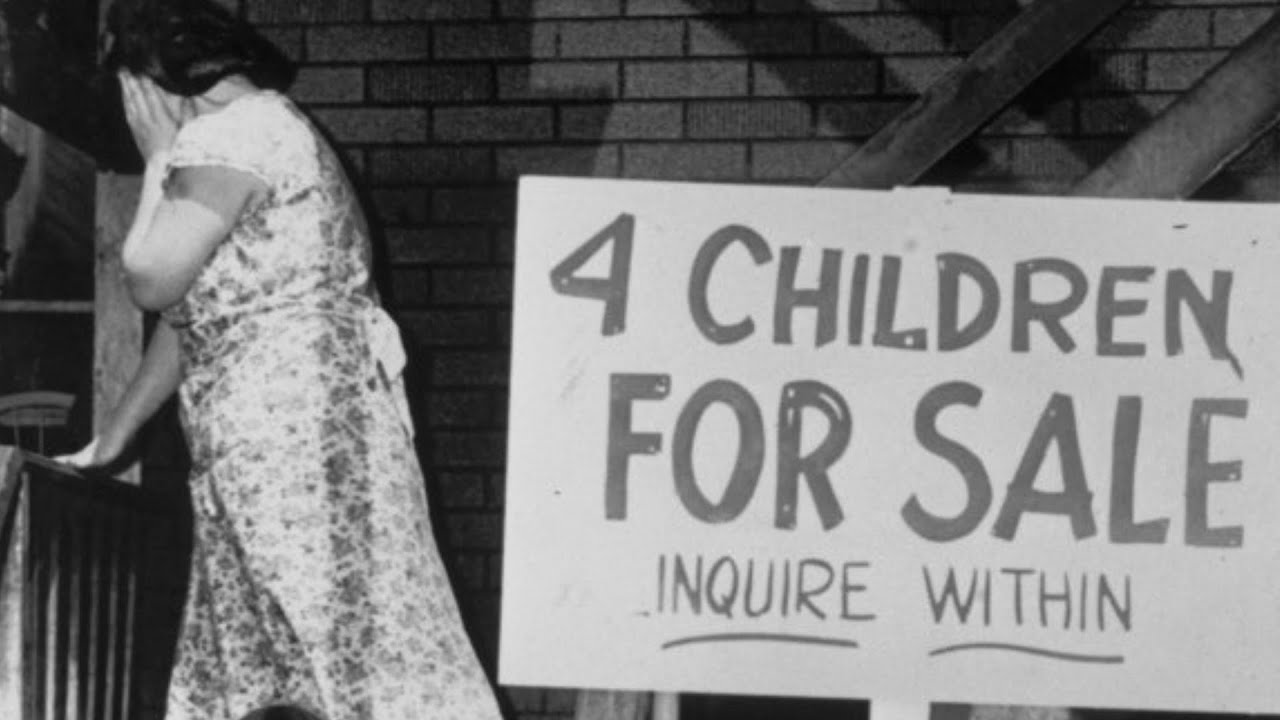
Does the word, “American,” mean, to you and to the world, “rich people, only?”

What does the word, “American,” mean to you and to the world?

The question has nagged at me several times recently. I have been an American for somewhat more than 84 years. I was an American during WWII, when the word “American” meant “heroic,” “righteous,” “happy,” “the land of opportunity.”Related image

I was an American when we instituted Medicare and other social programs, partly in response to the nightmare of poverty and racial and social bigotry, when America meant “compassion” and “justice.”

I was an American during Vietnam, when we were “arrogant” and “naive.”

The question returns now, during the Trump era, when I read the following article in the November 2, New York Times:

Judge Blocks Trump’s Plan to Bar Immigrants Who Can’t Pay for Health Care
The court ruling is the latest to derail administration initiatives to limit the admission of certain legal immigrants into the United States.

President Trump’s proclamation barred immigrants who could not prove they had health insurance or the ability to pay for medical costs once they became permanent residents of the United States.

A federal judge on Saturday blocked the Trump administration from implementing a policy that would require immigrants to prove they have insurance or the financial resources for medical costs in order to obtain a visa.

The ruling, by Judge Michael Simon of the Federal District Court in Portland, Ore., was the latest in a string of court decisions to derail administration initiatives that would limit the admission of certain legal immigrants into the United States.

Judge Simon issued a nationwide temporary restraining order preventing the government from carrying out a proclamation by President Trump that would have gone into effect on Sunday.

Mr. Trump’s Oct. 4 proclamation ordered consular officers to bar immigrants who could not prove they had health insurance or the ability to pay for medical costs once they become permanent residents of the United States.

The president had justified the policy on the grounds that immigrants were more likely to be uninsured, and that “costs associated with this care are passed on to the American people in the form of higher taxes, higher premiums, and higher fees for medical services,”the measure said.

Legal immigrants are three times as likely as American citizens to be uninsured, according to a Kaiser Family Foundation study.

Lawyers from Justice Action Center, Innovation Law Lab and the American Immigration Lawyers Association argued that the policy was “plainly illegal” and that it would cause immediate and irreparable harm.

The President’s “costs” justification for blocking immigration is bogus. Our Monetarily Sovereign federal government has the unlimited ability to create its own sovereign currency.

There would be no need whatsoever for “costs associated with this care (to be) passed on to the American people in the form of higher taxes, higher premiums, and higher fees for medical services.” This is part of the big lie that has been fed to the American people for decades.

It became wholly untrue in August of 1971, when President Nixon took us off the last gold standard, removing all blocks to money creation.

The fact is that medical services to immigrants — and indeed to everyone who lives in America — could and should be paid for via federal financing: No taxes, no premiums, no fees.

But, Trump’s base hates immigrants, so Trump appeases them with fraudulent claims, which they are all too ready to believe.

While “dislike” may stem from many causes, hatred always stems from fear. Trump’s followers fear that immigrants will work harder, achieve more, and close the income/wealth/power Gap above them. In short, they fear immigrants because of Gap Psychology.

So Trump gives his haters excuses for their hatred. He tells them immigrants are criminals, rapists, and lazy takers, wishing only to receive free government benefits — all lies. But these lies give his base a “reasonable” rationale for discrimination and for barring immigrants from entry.

Throughout history, many of America’s greatest citizens arrived on our shores penniless, but they were determined to work and make their lives better. In doing so, they made America better.

Here are just ten of the millions of immigrants who would not have been accepted by the Trump regime:

1) Do Won “Don” Chang. Chang grew up in South Korea and moved to California in 1981 with his wife, Jin Sook Chang. He never attended university and worked in coffee shops growing up.

He and his wife, Jin Sook opened a 900-square foot clothing store then named Fashion 21 in 1984 in Highland Park, Los Angeles with only $11,000 in savings.

The store took off, and as they expanded to other locations, the store’s name was changed to Forever 21 otherwise known as XXI. The number of stores grew to 600, with 30,000 employees by 2015.

2) Jordanian native Mufeed Haddad landed in America with only $700, half of which he gave to his brother to buy a car. He was turned down for every job he applied for, even a position flipping burgers at a fast food joint.

The only work he could get was as a paperboy, which meant getting up at 2 a.m. rolling newspapers, and delivering them house to house until dawn.  Ultimately, he founded Liberty Tax Franchise, gross revenue: $34.6 million

3) Andrew Ly Ly fled his native country after the U.S. pulled out of Vietnam in 1975. Ly lived for nine months in a Malaysian refugee camp before getting assistance from the United States Catholic Charity.

Coming to the U.S. in 1979 with just a dollar to his name, Ly settled in San Francisco. He lived for years with eight other family members in a two-bedroom apartment, learning to speak English as he attended classes.

In 1984, Ly and his four brothers pooled their savings to open the Sugar Bowl Bakery. The bakery saw great success and has expanded to a $400 million dollar business, and in 1993 the Ly Brothers Corporation was born. Ly has been recognized as the Bay Area’s “Most Admired CEO” and earned the “Immigrant Heritage Award.”

4) Vinod Dham came to the U.S. in 1975 with $8 in his pocket. He became the CEO of Silicon Spice, which sold for $1.2 billion in 2002.

5) Andrew Grove. During the Hungarian Revolution of 1956, when he was 20, he left his home and family and escaped across the border into Austria. Penniless and barely able to speak English, in 1957 he eventually made his way to the United States.

Grove became Intel’s president in 1979, its CEO in 1987 and its chairman and CEO in 1997. Grove oversaw a 4,500% increase in Intel’s market capitalization from $4 billion to $197 billion, making it the world’s 7th largest company, with 64,000 employees.

6) Jan Koum, co-founder of WhatsApp, arrived in the U.S. when he was just 16 years old, and his family lived on food stamps. In 2014, he entered the Forbes list of the 400 richest Americans at position 62, with an estimated worth of more than $7.5 billion.

7) Irving Berlin Born in Russian hut with a dirt floor, Berlin’s family fled the country after an anti-Jewish pogrom. He entered the country through Ellis Island and lived with his family in a Lower East Side tenement, where he became fascinated by ragtime and saloon music.

He wrote hundreds of songs, many becoming major hits, which made him famous before he turned thirty. During his 60-year career he wrote an estimated 1,500 songs, including the scores for 20 original Broadway shows and 15 original Hollywood films, with his songs nominated eight times for Academy Awards.

Many songs became popular themes and anthems, including “Alexander’s Ragtime Band”, “Easter Parade”, “Puttin’ on the Ritz”, “Cheek to Cheek”, “White Christmas”, “Happy Holiday”, “Anything You Can Do (I Can Do Better)”, and “There’s No Business Like Show Business”.

His Broadway musical and 1943 film This is the Army, with Ronald Reagan, had Kate Smith singing Berlin’s “God Bless America” which was first performed in 1938.[

8) Andrew Carnegie was born in Dunfermline, Scotland, and immigrated to the United States with his parents in 1848 at age 12. When Carnegie was thirteen, his father had fallen on very hard times as a handloom weaver; making matters worse, their country was in starvation.

His mother helped support the family by assisting her brother (a cobbler), and by selling potted meats at her “sweetie shop”, leaving her as the primary breadwinner.

Struggling to make ends meet, the Carnegies then decided to borrow money and move to the United States for the prospect of a better life.

Carnegie started work as a telegrapher, and by the 1860s had investments in railroads, railroad sleeping cars, bridges, and oil derricks. He accumulated further wealth as a bond salesman, raising money for American enterprise in Europe.

He built Pittsburgh’s Carnegie Steel Company, which he sold to J. P. Morgan in 1901 for $303,450,000. It became the U.S. Steel Corporation. After selling Carnegie Steel, he surpassed John D. Rockefeller as the richest American.

9) Artist Willem de Kooning born in the Netherlands, travelled to the United States as a stowaway on a British freighter bound for Argentina, and on August 15 landed at Newport News, Virginia. He stayed at the Dutch Seamen’s Home in Hoboken, New Jersey, and found work as a house-painter.

In 1927 he moved to Manhattan, where he supported himself with jobs in carpentry, house-painting and commercial art.

Some of de Kooning’s paintings have been sold in the 21st century for record prices. In November 2006, the American business magnate David Geffen sold his oil painting Woman III to hedge fund manager Steven A. Cohen for $137.5 million.

A month earlier Cohen had already paid Geffen $63.5 million for Police Gazette by de Kooning. In September 2015, Geffen sold de Kooning’s oil painting Interchange to hedge fund billionaire Ken Griffin for $300 million, the highest price paid for a painting at the time.

10) Thomas Peterffy was born in Hungary. When Hungary became a Russian satellite state, Peterffy and his family lost everything. He immigrated to the U.S. illegally. He had no money and spoke no English. He had a single suitcase, which contained a change of clothes.

By the late 1970s Peterffy had saved $200,000 and founded a company that pioneered electronic stock trades. In the 1990s he founded Interactive Brokers Group. Peterffy, 72, is now worth an estimated $12.6 billion.

Literally millions of people have immigrated to America illegally, and because of their strong urge to succeed, they are among those who have made America great.

None of them would have been able to “prove they had health insurance or the ability to pay for medical costs.” None of them would have made it here if a Trump administration had been in power.

Today, we have no idea how many potential artists, scientists, teachers, athletes, and civic leaders America has lost because of overly restrictive and cruel immigration policies.

How many have been turned away? How many have died in the attempt or been psychologically damaged by the trauma of being caught? How many have been deported? How many have been jailed or otherwise deprived of the ability to achieve greatness, all because of Trump’s appeal to xenophobia?

The danger and difficulty immigrants face shows them to be among the most ambitious, hardworking, and creative people — just the people who really make America great.

These potentially great people lost. America lost. You and I lost. And we never will know how much.

Rodger Malcolm Mitchell
Monetary Sovereignty
Twitter: @rodgermitchell
Search #monetarysovereignty Facebook: Rodger Malcolm Mitchell

…………………………………………………………………………………………………………………………………………………………………………………………………………………………………………………………………………………………..

The most important problems in economics involve:

  1. Monetary Sovereignty describes money creation and destruction.
  2. Gap Psychology describes the common desire to distance oneself from those “below” in any socio-economic ranking, and to come nearer those “above.” The socio-economic distance is referred to as “The Gap.”

Wide Gaps negatively affect poverty, health and longevity, education, housing, law and crime, war, leadership, ownership, bigotry, supply and demand, taxation, GDP, international relations, scientific advancement, the environment, human motivation and well-being, and virtually every other issue in economics.

Implementation of Monetary Sovereignty and The Ten Steps To Prosperity can grow the economy and narrow the Gaps:

Ten Steps To Prosperity:

1. Eliminate FICA

2. Federally funded Medicare — parts A, B & D, plus long-term care — for everyone

3. Provide a monthly economic bonus to every man, woman and child in America (similar to social security for all)

4. Free education (including post-grad) for everyone

5. Salary for attending school

6. Eliminate federal taxes on business

7. Increase the standard income tax deduction, annually. 

8. Tax the very rich (the “.1%”) more, with higher progressive tax rates on all forms of income.

9. Federal ownership of all banks

10. Increase federal spending on the myriad initiatives that benefit America’s 99.9% 

The Ten Steps will grow the economy and narrow the income/wealth/power Gap between the rich and the rest.

MONETARY SOVEREIGNTY

Do you have a REAL ID card?

Because you do not have enough hassle in your life:

If you fly domestically, effective Oct. 1 2020 the federal government will require you to use a valid U.S. passport or obtain a REAL ID.

Here’ what you need to do. This all is listed on: https://realid.ilsos.gov/home.html. [The “IL” in the address is for Illinois. Use your own state 2-letter identification]Image result for carrying a bunch of documents

Step 1: Visit a Secretary of State Driver Services facility and take your photo and any required exams.

Step 2: All applicants must provide proof of identity. (Examples are: a certified U.S. birth certificate, a U.S. passport, an employment authorization document, a permanent resident card or a foreign passport with an approved I-94 form.)

Name change documents, such as certified copies of a marriage certificate, etc., will be required if the applicant presents a certified birth certificate with a name different from his/her current name.

Please note: Multiple name change documents will be required if your name has changed multiple times.

Step 3: All applicants must provide proof of full Social Security number (SSN). (Examples are: an SSN card, a W-2 or a pay stub with full SSN.)

Step 4: All applicants must provide two current residency documents with the applicant’s name. (Examples are: a utility bill, rental agreement, deed/title or a bank statement.)Image result for standing in a long driver's license line

Step 5: All applicants must provide proof of signature. (Examples are: a credit/debit card, canceled check or current Illinois DL/ID.)

Step 6: Receive a temporary, secure paper DL/ID at the facility.

Please note that the TSA and federal agents will not accept the paper document.

Step 7: After review and verification of documents have been conducted, your new permanent REAL ID card will be mailed to you within 15 business days.

After you have spent hours of your time gathering all the necessary materials, and then waiting in endless lines at your Secretary of State drivers license office, ask yourself these two simple questions:

  1. How difficult would it be for a terrorist to gather the same materials and obtain a REAL ID?
  2. Are you safer now than when you were using your driver’s license for the past 15 years?

The whole process is an unnecessary waste of your time and your state tax money (Yes, many millions of your state tax dollars  — dollars that better could be used for schools, roads, upgraded voting systems, etc. — instead will be diverted to this useless exercise.

Here is what Eric Zorn of the Chicago Tribune says about REAL ID:

Real ID is a solution in search of a problem.

The federal Real ID Act of 2005 was part of a series of legislative moves aimed at fighting global terrorism in the wake of the 9/11 attacks in which the hijackers used fraudulent driver’s licenses to board the doomed airplanes.

The shift to a more comprehensive, secure identification system was supposed to take effect in 2008, but deadlines were extended and extended again in large part because of controversy over the idea.

In 2007, the Illinois General Assembly passed a joint resolution calling for the repeal of the Real ID Act on the grounds that it creates a de facto national identity card that threatens privacy interests, that it will be part of broadened efforts to crack down on illegal immigration and that it will burden the states with the costs of implementation.

Lawmakers in 25 other states ultimately registered similar or even stronger objections.

Barack Obama, who opposed the Real ID Act when he was a U.S. senator, did little to enforce it when he was president from early 2009 to early 2017. And why would he have? The post-9/11 enhanced airport security measures were working just fine.

From Sept. 11, 2001, until today, with domestic airline passengers being allowed to board with ordinary driver’s licenses, there have been zero hijackings.

So it was more than baffling when, in June 2017, President Donald Trump’s then-Homeland Security Director John Kelly announced that Real ID “is a critically important 9/11 Commission recommendation that others have been willing to ignore, but I will not.

I will ensure it is implemented on schedule — with no extension — for states that are not taking it seriously.”

Related imageIn short, Trump and his followers are paranoid about illegal immigrants (You know, those folks with a lower crime rate and a higher work ethic than U.S. citizens).

This paranoia extends beyond a useless wall (that Mexico won’t pay for, despite daily promises by Trump), and cruel raids and cruel deportations and cruelly ripping traumatized children from their decent, hard-working, valuable-to-America parents.

No, the Trumpist paranoia includes even you, good citizen.

Now you and everyone must carry a national identity card, the first key step in the Big Brother federal government’s ability to watch you and to track your every move.

And considering the cheek-to-cheek relationship between Trump and Putin and Kim and whoever that murderous Saudi prince is, and Israel, and Syria, and Britain, et al, you can look forward to the time when your name and face and where you go and what you do, every second of every day, are known to governments all over the world.

So for the convenience of our rulers, perhaps the next step will be to tattoo a bar code on your forehead, the day you are born.

Say, “Goodbye” to privacy. Say “Hello” to that big Trumpian eye in the sky.

But won’t it be nice to be known the world over? Thank you, Donald.

Rodger Malcolm Mitchell
Monetary Sovereignty
Twitter: @rodgermitchell
Search #monetarysovereignty Facebook: Rodger Malcolm Mitchell 

The relationship between federal deficit spending and GDP growth

Those who do not understand (or who pretend not to understand) economics, repeatedly confuse federal finances with personal finances.

Those people decry the size of the federal deficits and debt as being “unsustainable,” which these measures would be if they were personal deficits and debt.

The federal government, being uniquely Monetarily Sovereign, never can run short of its sovereign currency, the U.S. dollar, so the government can “sustain” any size deficit and debt.

  1. Gross Domestic Product is a common measure of the economy
  2. Federal deficit spending adds dollars to the economy.
  3. Economic growth, by formula, requires growing dollar supplies:

GDP = Federal Spending + Non-federal Spending + Net Exports

If the deficit critics were correct, you would expect to see:

  • GDP reduction caused by deficit growth
  • GDP increases caused by deficit reduction
  • Recessions caused by deficit growth
  • Recessions cured by deficit reduction

Yet that is exactly the opposite of what you see.

Image result for great depression
Every depression in U.S. history has been caused by federal debt reduction*


*Historically, reduced deficits have caused recessions and even depressions. Increased deficit spending is necessary to cure recessions and depressions.

.

.

.

.

1804-1812: U. S. Federal Debt reduced 48%. Depression began 1807.
1817-1821: U. S. Federal Debt reduced 29%. Depression began 1819.
1823-1836: U. S. Federal Debt reduced 99%. Depression began 1837.
1852-1857: U. S. Federal Debt reduced 59%. Depression began 1857.
1867-1873: U. S. Federal Debt reduced 27%. Depression began 1873.
1880-1893: U. S. Federal Debt reduced 57%. Depression began 1893.
1920-1930: U. S. Federal Debt reduced 36%. Depression began 1929.
1997-2001: U. S. Federal Debt reduced 15%. Recession began 2001.

The following graph compares the annual federal debt percentage changes (red line) which reflect deficits, vs. GDP percentage changes (blue line). The vertical bars are recessions.

What you do see is:

    • Reduced debt growth leads to recessions
    • Increased debt growth cures recessions
    • Increased debt growth leads to increased GDP growth

For clarity, let’s examine individual segments of the above graph:

Prior to 1974, federal deficits rose then fell, pulling GDP along with them. This reduced deficit spending precipitated the recession of 1974, which was cured by increased deficit growth through 1976.

The increased deficit growth precipitated increased GDP growth, with momentum carrying GDP through 1979, when it too began to fall.

……………………………………………………………………………………………………………………………………………………..

As a result of the long period of falling deficit growth, even the short upturn in the last quarter of 1979 could not save the economy, and the falling momentum of GDP resulted in the recession of 1980.

The increased deficit growth cured the recession, which ended in the 3rd quarter of 1980, when GDP turned up, and continued to be pulled up by more deficit growth.

……………………………………………………………………………………………………………………………………………………..

Continued, increasing deficit growth pulled GDP up, and even when deficit growth declined, in 1981, momentum pulled GDP upward.

……………………………………………………………………………………………………………………………………………………..

Yet again, you see that familiar pattern. Declining deficits lead to the recession of 1981, which growing deficits cure by the end of 1982.

Increasing deficits pull GDP upward, and even when deficit increases end in the 2nd Qtr of 1983, momentum continues to carry GDP upward.

……………………………………………………………………………………………………………………………………………………..

The enormous deficits of 1983 force powerful GDP growth momentum, which reverses as deficit growth continues to decline.

……………………………………………………………………………………………………………………………………………………..

And there again, the familiar pattern: Reduced deficit growth forcing down GDP growth, and even a short period of deficit growth increase cannot forestall the recession of 1990-1991.

And again, increased deficit growth cures the recession and turns GDP growth upward.

……………………………………………………………………………………………………………………………………………………..

As always, the predictable pattern:

  1. First, deficit growth pulls us out of a recession and forces GDP growth upward.
  2. Then, deficit growth tops out, but momentum carries GPD growth along for several years.
  3. Finally, GDP momentum yields to decreased deficit growth. (This time, we actually ran a federal surplus, which normally would cause a full-fledged depression. However, we were “fortunate,” and “only” suffered the recession of 2001.
  4. Then, as always, it took increased federal deficit spending to pull us out of the recession in 2002.

……………………………………………………………………………………………………………………………………………………..

And here we go again: Massive deficit spending pulls us out of a recession; after escaping that disaster we begin again to cut deficit growth, then (in mid-2007) we increase deficit growth; but it’s too late, and we enter yet another recession; this one is the “Great Recession” of 2008.

……………………………………………………………………………………………………………………………………………………..

Now here we are, today. Huge deficit growth, having cured the recession, we continue not only those big deficits, but even grow them, first at 30% annually, finally leveling off at about 5% annual deficit growth — a big number, considering the size of the deficit.

This has caused GDP to average a robust average of about 4% annual growth.

……………………………………………………………………………………………………………………………………………………..

Despite all the incontrovertible data, the next time you open your newspaper, or watch you local federal finance TV “expert,” you will be told that the federal debt and/or deficit are (oh, horrors) at record highs, and are “unsustainable,” or a “ticking time bomb.”

It’s no coincidence that GDP is at record highs, too. Federal deficit spending lifted it there.

Rodger Malcolm Mitchell
Monetary Sovereignty
Twitter: @rodgermitchell
Search #monetarysovereignty Facebook: Rodger Malcolm Mitchell

…………………………………………………………………………………………………………………………………………………………………………………………………………………………………………………………………………………………..

The most important problems in economics involve:

  1. Monetary Sovereignty describes money creation and destruction.
  2. Gap Psychology describes the common desire to distance oneself from those “below” in any socio-economic ranking, and to come nearer those “above.” The socio-economic distance is referred to as “The Gap.”

Wide Gaps negatively affect poverty, health and longevity, education, housing, law and crime, war, leadership, ownership, bigotry, supply and demand, taxation, GDP, international relations, scientific advancement, the environment, human motivation and well-being, and virtually every other issue in economics.

Implementation of Monetary Sovereignty and The Ten Steps To Prosperity can grow the economy and narrow the Gaps:

Ten Steps To Prosperity:

1. Eliminate FICA

2. Federally funded Medicare — parts A, B & D, plus long-term care — for everyone

3. Provide a monthly economic bonus to every man, woman and child in America (similar to social security for all)

4. Free education (including post-grad) for everyone

5. Salary for attending school

6. Eliminate federal taxes on business

7. Increase the standard income tax deduction, annually. 

8. Tax the very rich (the “.1%”) more, with higher progressive tax rates on all forms of income.

9. Federal ownership of all banks

10. Increase federal spending on the myriad initiatives that benefit America’s 99.9% 

The Ten Steps will grow the economy and narrow the income/wealth/power Gap between the rich and the rest.

MONETARY SOVEREIGNTY

Why are the Democrats so cowardly?

The Democrats have a great plan. They want to expand Medicare to cover everyone, which could be accomplished very simply by lowering the eligibility age of the current Medicare plan from 65 to 0.

The hard work already has been done. The process has been created. The government, the hospitals, and the doctors all know how to handle the paperwork. Everything is in place.

Just lower the eligibility age, cover everyone, and go.

No need for Medicaid, ACA, Medigap or Parts A, B, C, etc., etc. No deductibles. Just one simple plan for every man, woman, and child in America.

And certainly no need to tell everyone they will be forced to give up their current plans. Simply offer Medicare to everyone, and let nature take its course.

But no. The Democrats get all hung up trying to answer one simple question, “How will you pay for it?”

The correct answer, the honest answer, would be: “Federal deficit spending.”

1. Federal financing is not like state and local government financing. The federal government, unlike state and local governments, is Monetarily Sovereign. It has the unlimited ability to create its own sovereign currency, the U.S. dollar.

The federal government never can run short of dollars. It could fund any Medicare for All plan with the push of a computer key.

2. Unlike state and local government deficits, the federal deficit and federal debt are not a burden on anyone. They do not burden the federal government; they do not burden taxpayers.

Unlike state and local taxes, which fund state and local government spending, federal taxes do not fund federal spending.

3. Contrary to a popular myth, federal deficit spending does not, and never has, caused inflation. Inflation, a general increase in prices, is not caused by too much money. Inflation is caused by shortages of food and/or fuel.

Those historical photos showing people carrying paper money certificates in wheelbarrows, fail to show the actual cause of the inflation: Food and fuel shortages. The printing of those certificates was an ineffectual response to inflation, not the cause.

One of the surest cures for any inflation is government deficit spending to acquire and distribute the scarce food and fuel.

Sadly, those Democrats who know all this to be true, are too cowardly to explain it to the public. Instead, they go along with ridiculous articles like the following:

The Democratic plan for a 42% national sales tax
Rick Newman, Senior Columnist, Yahoo Finance — October 28, 2019

If you’re a Democrat who supports “Medicare for All,” pick your poison.

You can ruin your political career and immolate your party by imposing a ruinous new sales tax, a gargantuan income tax hike or a surtax on corporate income that would wreck thousands of businesses.

This is the cost of bold plans.

Or better yet, you can tell the truth about federal financing, and tell everyone who will listen that Medicare for All will be financed the same way as “Military for All,” as well as Congress, the Supreme Court, and the White House.

They all are funded by federal deficit spending.

There is no FICA tax supposedly paying for the Military, the Congress, the Supreme Court, or the White House. There is no tax supposedly paying for Congressional health care, Congressional travel, and Congressional lunches.

The reason why there is no FICA tax, or any other tax, dedicated to paying for these expenses is very simple. Federal taxes pay for nothing. Those dollars deducted from your paycheck, and those dollars you “voluntarily” send to the U.S. Treasury are not needed or used for anything.

They do not fund Medicare. They do not fund Social Security. They do not fund the military, or the Congress, or the Supreme Court, or the White House, or any other of the myriad federal initiatives.

Federal taxes are destroyed upon receipt.

Here is the A-Z Index of U.S. Government Departments and Agencies. You don’t pay for any of them. Even if all federal tax collections totaled $0, the federal government could fund all these activities.

Supporters of Medicare for All, the huge, single-payer government health plan backed by Bernie Sanders, Elizabeth Warren and several other Democratic presidential candidates, say it’s time to think big and move to a health plan that covers everyone.

Getting there is a bit tricky, however. A variety of analyses estimate that Medicare for All would require at least $3 trillion in new spending.

That’s about as much tax revenue as the government brings in now. So if paid for through new taxes, federal taxation would have to roughly double.

Right. IF (big “if”) Medicare for All was paid for through new taxes, federal taxation would have to double.

That is exactly why Medicare for All should not be paid for by taxing people.

It should be paid for via federal deficit spending, which would cost you nothing. Yes, for a Monetarily Sovereign government, lunch really can be free.

Oh, are you worried that the so-called federal “debt” would be an unsustainable “ticking time bomb”? If so, you’re in bad company, for that is exactly what phony “experts” said way back in 1940, and they’ve been saying it every year thereafter.

In 1940, the federal debt was only $40 Billion, and it was a “ticking time bomb,” according to Robert M. Hanes, president of the American Bankers Association.

Today, the federal debt exceeds $22 Trillion, a gigantic 55,000% increase, and that time bomb still is ticking. And the country still is here. And the government still is sustaining.

The Committee for a Responsible Federal Budget (CRFB) spelled out what kinds of new taxes it would take to come up with that much money.

A 42% national sales tax (known as a valued-added tax) would generate about $3 trillion in revenue. But it would destroy the consumer spending that’s the backbone of the U.S. economy.

A tax of that magnitude would be like 42% inflation, wrecking consumer budgets and the many companies that depend on them.

Other options include a 32% payroll tax split between employers and workers or a 25% income surtax on everybody.

Or, the government could cut 80% of spending on everything but health care, which would include highways, airports and the Pentagon.

Or here’s a good one: Just borrow the money and quadruple Washington’s annual deficits.

Or do none of the above, and simply create the money by federal spending, just as the federal government has been doing since 1940, the year Robert M. Hanes had his meltdown.

We’ve written about the CRFB several times before. They are mouthpieces for the very rich, who, because of Gap Psychology, do not want the middle class to receive federal benefits.

The CRFB comes up with all sorts of scare tactics to make you believe federal financing is like state and local financing or personal financing. So they print big deficit numbers and say, in effect, “Oooohh. Look at these big numbers. Aren’t they big?

The best idea might be charging every enrollee in the new program $7,500 per year, so they’d be paying directly for the coverage they’re getting.

Some people pay more than that now for health care, by purchasing insurance outright or sacrificing pay raises in exchange for employer coverage.

It would still be a nifty trick to propose that to voters.

If by “best idea,” Mr. Newman means “another bad idea,” I’d agree. So would the voters.

It’s possible that Medicare for All would cover health care for more people at a lower total cost than we spend now, meaning the average cost per person would go down.

Yes, the cost would be lower, especially if the people are asked to pay nothing for health care, and it all was provided free by the government — and especially if we eliminated the useless, harmful FICA tax, the single, worst, most regressive, pays-for-nothing tax in America.

The problem is transitioning from what we have now to whatever Medicare for all would be.

And it’s a giant problem, like crossing the Mississippi River without a bridge or a boat. The other side might look great but you’ll die before you get there.

The author, Mr. Newman, wants you to believe that having created the entire Medicare program, now simply cutting the eligibility age from 65 to 0 is an insurmountable problem.

That’s like saying that after having built from scratch, a 5,000 square foot house, changing the knob on the front door is ” . . . a giant problem, like crossing the Mississippi River without a bridge or a boat.” Pulleeze.

Warren, Sanders and others tout the virtues of this magical health care program without explaining what it would cost.

Sanders has at least suggested some possible ways to pay for it, including premiums paid by enrollees, a wealth tax on millionaires and income tax rates as high as 52%.

Warren has been cagier, saying only that under her plan “costs” would go down for middle-class families. Under pressure to explain, Warren has pledged to come up with a financing plan soon.

Now, maybe she doesn’t have to.

So again I ask, why are Warren, Sanders, and the rest of the Democrats so cowardly? When all other options lead to failure, why not simply tell the truth?

Rodger Malcolm Mitchell
Monetary Sovereignty
Twitter: @rodgermitchell
Search #monetarysovereignty Facebook: Rodger Malcolm Mitchell

…………………………………………………………………………………………………………………………………………………………………………………………………………………………………………………………………………………………..

The most important problems in economics involve:

  1. Monetary Sovereignty describes money creation and destruction.
  2. Gap Psychology describes the common desire to distance oneself from those “below” in any socio-economic ranking, and to come nearer those “above.” The socio-economic distance is referred to as “The Gap.”

Wide Gaps negatively affect poverty, health and longevity, education, housing, law and crime, war, leadership, ownership, bigotry, supply and demand, taxation, GDP, international relations, scientific advancement, the environment, human motivation and well-being, and virtually every other issue in economics.

Implementation of Monetary Sovereignty and The Ten Steps To Prosperity can grow the economy and narrow the Gaps:

Ten Steps To Prosperity:

1. Eliminate FICA

2. Federally funded Medicare — parts A, B & D, plus long-term care — for everyone

3. Provide a monthly economic bonus to every man, woman and child in America (similar to social security for all)

4. Free education (including post-grad) for everyone

5. Salary for attending school

6. Eliminate federal taxes on business

7. Increase the standard income tax deduction, annually. 

8. Tax the very rich (the “.1%”) more, with higher progressive tax rates on all forms of income.

9. Federal ownership of all banks

10. Increase federal spending on the myriad initiatives that benefit America’s 99.9% 

The Ten Steps will grow the economy and narrow the income/wealth/power Gap between the rich and the rest.