In our previous discussions, we’ve introduced you to Gap Psychology, a concept that fuels the desire to widen the income/wealth/power Gap below and to narrow the Gap above.
This psychological phenomenon not only perpetuates social disparities but also has dire implications for our environment.
The very rich want wide Gaps because, without Gaps, no one would be rich. We all would be the same. The wider the Gaps, the richer the rich, and the poorer the poor, i.e., “inequality.”
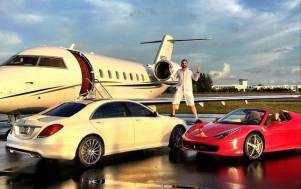
The rich are a major cause of global warming.
Wide Gaps negatively affect poverty, health and longevity, education, housing, law and crime, war, leadership, ownership, bigotry, supply and demand, taxation, GDP, international relations, scientific advancement, the environment, human motivation and well-being, and virtually every other issue in our lives.
The rich bribe our thought leaders to tell us wide Gaps are just and necessary, a result of innate superiority and hard work — that the rich and the poor have earned their places.
The rich bribe the media through ownership and advertising dollars.
They bribe economists through university endowments and jobs in think tanks. They bribe politicians through campaign contributions and promises of jobs in the industry.
The rich try to convince us that federal benefits are unaffordable and unsustainable, but we have the power to demand these benefits and make a significant change in narrowing the Gap and protecting the environment.
It’s part of the Big Lie that taxpayers fund such benefits as Medicare, Social Security, poverty aids, college loan forgiveness, and other benefits to the middle- and lower-income groups. (No mention is made of taxpayers funding tax breaks for the rich.)
But in a Monetarily Sovereign government like ours, taxpayers fund nothing. (Taxpayers do fund monetarily non-sovereign state and local government spending.)
All federal spending is funded by federal government money creation, ad hoc. Federal tax dollars, unlike state/local government tax dollars, are destroyed upon receipt.
The sole purposes of federal taxes are:
To control the economy by taxing what the government wishes to discourage and by giving tax breaks to what the government wishes to reward.
To assure demand for the U.S. dollar by requiring taxes be paid in dollars.
Here are excerpts from a NewScientist Magazine article describing another problem caused by the Gap, aka “inequality”:
Inequality is a major obstacle to sustainability. The super-rich are an environmental horror story that we can’t ignore. By Graham Lawton
According to the United Nations Environment Programme, the average greenhouse gas emissions of someone in the richest 10 per cent of global society are around 20 times the average of someone in the poorest 50 per cent.
Research by Oxfam and the Stockholm Environment Institute found the world’s richest 1 per cent collectively emit the same as the poorest two-thirds.
A new book by Ingrid Robeyns puts this in stark personal terms. In Limitarianism: The case against extreme wealth, she calculates that to get to net zero, the average per capita carbon footprint needs to be 2 tonnes a year. The European average is 8 tonnes.
The top 1 per cent emit over 100 tonnes, with billionaires emitting a mind-blowing 8000 tonnes, mostly through the use of private jets and superyachts.
There are very few billionaires, but their consumption is only part of the equation. Huge inequality is bad for everyone – and the planet.
In a recent webinar about the book, Pickett said: “What The Spirit Level showed was that economic inequality, specifically income inequality, was related to a whole range of different problems: health problems, issues to do with human capital development, such as educational attainment and social mobility, and everything to do with relationships.
The crucial point is that inequality seems to affect almost all of society.” In the years since 2009, the evidence for this has only grown stronger.
As for the environment, inequality isn’t just bad for the obvious reasons.
A recent paper in Nature Climate Change makes a compelling case that inequality is a major obstacle to sustainability, because people at the lower end of the income spectrum don’t have the resources – money and time – to make the necessary lifestyle changes.
Not only does inequality limit people’s opportunities to make sustainable choices, it also drives unsustainable consumption at lower income levels.
Humans are hardwired for “social evaluative threat” – anxiety about how we are seen by others.
This threat induces a type of stress called status anxiety. Subconsciously, we are all evaluating where we stand in the economic pecking order and trying to climb to the next rung, or at least not slide down.
One of the easiest ways to alleviate status anxiety is conspicuous consumption.
The cause for “status anxiety” is “Gap Psychology.” You can read more about Gap Psychology here, here, here, and many places elsewhere in this blog.
In any society, the poorest people have the highest levels of status anxiety and the richest the least. But here’s the rub: in more unequal societies, status anxiety is higher across the board.
One study found that in the most equal societies, the poorest have a status anxiety score of 2.2 out of 5, as judged by their degree of agreement with questions such as “others look down on me because of my job situation or income”.
The richest score about 1.8. In the most unequal societies, the scores are 2.7 and 2.1. In other words, the richest people in very unequal societies have roughly the same level of status anxiety as the poorest in more equal ones.
How do people respond to status anxiety? In part by consuming high-status goods.
Multiple research projects have found that people living in highly unequal parts of the US tend to spend more on swanky cars and designer clothes, which have a very large carbon footprint.
“Status competition driving consumerism upward is a huge obstacle to moving towards sustainability,” said Wilkinson in the webinar with Pickett.
Many Western societies are still tolerating, or even encouraging, eye-watering levels of inequality.
But they also underestimate the obscene wealth held by a few people who emit more than just greenhouse gases. It is a tough argument to make, but it has to be made.
Louboutin shoes: Affordable. Saving the world: Unaffordable.
As Wilkinson said: “We cannot solve the environmental crisis without solving the inequality crisis.”
Gap Psychology dictates that the last thing the rich want is to solve the inequality crisis. It’s what makes them rich.
That is why they bribe the media, politicians, and the economists to tell you various forms of the Big Lie in economics, including such lies as:
Social Security and Medicare will run short of money because fewer workers are supporting more older people.
To prevent Social Security and Medicare from running short of money, FICA must be increased and/or benefits must be reduced.
The federal deficit and debt are unaffordable and unsustainable.
Taxpayers pay for federal spending.
Comprehensive, no-deductible Medicare for All, Social Security for All, increased poverty aids, free college for all who want it, and other benefits for the middle- and lower-income groups are unaffordable.
All of the above are untrue. They could not exist without the active counter messaging by your information sources.
They want you to believe the Big Lie that the finances of our Monetarily Sovereign government are the same as your personal finances.
The federal government not only can afford to fund all of the benefits to you, while also funding the efforts to counter global warming.
The rich want you to believe that either global warming doesn’t exist, or if it exists, the costs to end it are too great for the government to fund, or for taxpayers to fund. All lies.
The government has the infinite ability to fund anything, without collecting a penny in taxes. To admit that, your information sources also would have to admit paying for your benefits also are affordable.
But that would narrow the Gap and make the rich less rich.
The sole benefits the rich allow are the tax breaks that only they can access. Those supposedly are “affordable” and “sustainable.”
Meanwhile, life on earth is threatened as the climate becomes less survivable. Eventually, the rich will discover that they need to support more equality for them to remain rich.
But that may be too late to save the world.
There’s still time to contact your Congressperson, tell them you are quite aware that the federal government can create infinite money without taxing or borrowing, and can provide far more benefits than it currently does.
Tell them the Gap is not sustainable, and the rich may have the money, but not the votes. Demand federal benefits for those who are not rich.
Rodger Malcolm Mitchell
Monetary SovereigntyTwitter: @rodgermitchellSearch #monetarysovereigntyFacebook: Rodger Malcolm Mitchell
……………………………………………………………………..
The Sole Purpose of Government Is to Improve and Protect the Lives of the People.
18 thoughts on “Another problem with the income/wealth/power Gap”
I think the “super” rich enjoy pissing pollution on the world. To them it is a symbol of what they really want to be doing, actually pissing on the homeless and destitute. I see no compassion there, for anything.
Also, I would like to change one one in a statement you made above that “might, maybe might” wake up the rich to the true predicament they are fighting against. They think with their money they can buy anything — survive anything.
“Eventually, the rich will discover that they need to support more equality for them to remain alive!”
They cannot buy what is not being grown or manufactured by the little people if there are no little people anymore. If they think they can use robots or other such machines, who will build the robots for them if there are no little people? Who will cook for them and entertain them and empty their garbage cans if there are no little people? The rich cannot survive without the little people to do the work they are not equipped to do! The sooner they understand the rich cannot survive in a world where only the rich are alive, the sooner they will take responsibility to save the world.
For their sake, I hope they learn this before it is too late. They need us! We do not need them.
BINGO. The very rich are literally the most dependent people there are. Utterly dependent on the labor of others (both paid and unpaid), and on the “natural capital” of Mother Nature. Even their very own “capital” is simply the result of the past labor of others. Only because they rig the game in their own favor do they get to proceed with their delusion of “independence” and being “self-made”.
You actually have touched on an important point I’ve been telling people for many years: Most corporate CEO don’t know how to DO anything. When they were just employees they had certain skills, but having reached the top, many wouldn’t even know how to call Uber, make a plane reservation, cook a meal, or order something online.
When their clothes get dirty, they call their assistants and tell them, “Take care of this.” They don’t know how the washing machine works.
Mitchell’s Law states: The higher you climb, the less you know how to do.
The Queen even has people who dress her. As a generalization, the rich are helpless slugs, who love to moan about the poor being “lazy takers.” That is how the rich justify limiting benefits for the poor. But it is the rich who are the lazy takers, living off the tax dodges they have bribed Congress to obtain.
I may write a post on this subject. It touches on the lie that if you give poor people money they won’t work, and then “Who will pick up the garbage?”
The notion that GDP is not the best measure of an economy, is not new. GDP is just a spending measure, and spending does not measure human wellbeing.
That said it’s a measure that does have measurable parameters, while regrowth is fuzzy. Here is what Wikipedia says:
“Degrowth theory’s main argument is that an infinite expansion of the economy is fundamentally contradictory to the finiteness of material resources on Earth.”
Expansion of the economy is not what GDP measures. It measures spending. But the words, “the economy.” can mean many things.
“It argues that economic growth measured by GDP should be abandoned as a policy objective. Policy should instead focus on economic and social metrics such as life expectancy, health, education, housing, and ecologically sustainable work as indicators of both eco-systems and human well-being.”
Sounds good, but the devil is in the details. How does one rate “health” and weigh it against “education,” to come up with a statistical measure? How would you rate “ecologically sustainable work” and “human well-being.” What exactly is human well being”?
“Degrowth theorists posit that this may increase human living standards and ecological preservation, even while GDP slows down or decreases.”
Again, what is the measure of “human living standard” and how would one weight it against “well-being.” It’s one thing to level well-deserved criticism of GDP, and quite another to weight the numerous measures that would go into an economic measure. Even something so simple as “health” requires weighing, lifespan by sex, age, disease subjectivity, hospitalizations, emergency room waiting time, pregnancy deaths, and a hundred other criteria one could develop.
There are all sorts of measure people use: Happiness, education, scientific advancement, freedom, free time, etc., etc., etc.
It’s easy to be “against,” but exactly what are they “for”?
I would welcome a better statistical measure of the economy than GDP. Do you know of one?
Yikes, another useless measure. Here is what Wikipedia says:
“Because GPI is loosely defined, practitioners developed their own parameters for which to measure economic welfare. The inconsistencies made it difficult to compare one economy to another and, therefore, rendered some minimally useful.
“Two GPI summits were held to address these inconsistencies, and, as a result, researchers and practitioners modified GPI—GPI 2.0—to streamline the accounting processes and replace antiquated methodologies that did not provide an accurate and complete picture of an economy. A pilot testing period occurred from 2012 to 2014 in the U.S. and Canada to test the efficacy of GPI 2.0.56
“The formula to calculate GPI is below, along with a brief explanation of what each component means.
“GPI = Cadj + G + W – D – S – E – N
Cadj = personal consumption with income distribution adjustments
G = capital growth
W = unconventional contributions to welfare, such as volunteerism
D = defensive private spending
S = activities that negatively impact social capital
E = costs associated with the deterioration of the environment
N = activities that negatively impact natural capital”
Total bullshit. How does one measure each of the terms in the formula, and why do they all have equal weight.
You can weigh bullshit, measure its length, its color, or its smell, but it still is bullshit.
Here’s a good article on the intersection of MMT and degrowth / ecological economics. It’s about MMT, but it could just as easily apply to it’s close cousin, Monetary Sovereignty.
Yikes, another useless measure. Here is what Wikipedia says:
“Because GPI is loosely defined, practitioners developed their own parameters for which to measure economic welfare. The inconsistencies made it difficult to compare one economy to another and, therefore, rendered some minimally useful.
“Two GPI summits were held to address these inconsistencies, and, as a result, researchers and practitioners modified GPI—GPI 2.0—to streamline the accounting processes and replace antiquated methodologies that did not provide an accurate and complete picture of an economy. A pilot testing period occurred from 2012 to 2014 in the U.S. and Canada to test the efficacy of GPI 2.0.56
“The formula to calculate GPI is below, along with a brief explanation of what each component means.
“GPI = Cadj + G + W – D – S – E – N
Cadj = personal consumption with income distribution adjustments
G = capital growth
W = unconventional contributions to welfare, such as volunteerism
D = defensive private spending
S = activities that negatively impact social capital
E = costs associated with the deterioration of the environment
N = activities that negatively impact natural capital”
Total bullshit. How does one measure each of the terms in the formula, and why do they all have equal weight.
You can weigh bullshit, measure its length, its color, or its smell, but it still is bullshit.
I agree with the idea of GPI in principle, but you are correct in that it has too many measurement difficulties and subjectivity built in. Ditto for similar ideas like “Gross National Happiness” and “Social Wealth Economic Indicators”.
Of course, GDP is NOT the end-all-be-all or the highest good. But at least it is readily measurable, and objectively so, as it is literally nothing more than a spending measure. Anything else is really just shoehorning disparate ideas into it.
During the first couple years of our marriage, my wife went to school and worked. I helped with housework. Then, for several years she cared for our babies and did housework. I did minimal housework, as we lived in an apartment.
After eight years of marriage, we bought our first house. My wife worked, cared for the house and the children. I became the gardener, plumber, electrician, snow shoveler, and roofer in chief. We also had “summer girls” (aka nannies) during the summers.
In later years, my wife and I both worked, and both did housework, though she was in charge of laundry and food shopping. I helped with other shopping and continued my gardener, plumber, electrician, snow shoveler, roofer gig.
Ultimately, she retired from all outside work, and we did everything together except for the gardening, which I did alone. I also drove to and from Illinois and Florida each six months, summer to winter, where I no longer had to shovel snow, and the gardening was minimal.
So now you tell me, how much of what my wife did and what I did should be in GDP?
Good point, Rodger. At least at the individual level, it is extremely difficult to quantify, only in the aggregate for the general population can one even estimate its value.
Good. Economics is a blend of money, psychology and philosophy, none of which have any physical existence. You cannot see, feel, smell or sense any of them, yet we have them and use them every day of our lives.


 #Monetary Sovereignty - Mitchell
I think the “super” rich enjoy pissing pollution on the world. To them it is a symbol of what they really want to be doing, actually pissing on the homeless and destitute. I see no compassion there, for anything.
LikeLike
Also, I would like to change one one in a statement you made above that “might, maybe might” wake up the rich to the true predicament they are fighting against. They think with their money they can buy anything — survive anything.
“Eventually, the rich will discover that they need to support more equality for them to remain alive!”
They cannot buy what is not being grown or manufactured by the little people if there are no little people anymore. If they think they can use robots or other such machines, who will build the robots for them if there are no little people? Who will cook for them and entertain them and empty their garbage cans if there are no little people? The rich cannot survive without the little people to do the work they are not equipped to do! The sooner they understand the rich cannot survive in a world where only the rich are alive, the sooner they will take responsibility to save the world.
For their sake, I hope they learn this before it is too late. They need us! We do not need them.
LikeLike
BINGO. The very rich are literally the most dependent people there are. Utterly dependent on the labor of others (both paid and unpaid), and on the “natural capital” of Mother Nature. Even their very own “capital” is simply the result of the past labor of others. Only because they rig the game in their own favor do they get to proceed with their delusion of “independence” and being “self-made”.
LikeLike
You actually have touched on an important point I’ve been telling people for many years: Most corporate CEO don’t know how to DO anything. When they were just employees they had certain skills, but having reached the top, many wouldn’t even know how to call Uber, make a plane reservation, cook a meal, or order something online.
When their clothes get dirty, they call their assistants and tell them, “Take care of this.” They don’t know how the washing machine works.
Mitchell’s Law states: The higher you climb, the less you know how to do.
The Queen even has people who dress her. As a generalization, the rich are helpless slugs, who love to moan about the poor being “lazy takers.” That is how the rich justify limiting benefits for the poor. But it is the rich who are the lazy takers, living off the tax dodges they have bribed Congress to obtain.
I may write a post on this subject. It touches on the lie that if you give poor people money they won’t work, and then “Who will pick up the garbage?”
LikeLike
Well-said, Rodger. With the current extreme inequality, any attempt at “Net Zero” will be more like NERO.
LikeLike
Rodger, what are your thoughts on the “degrowth” movement?
LikeLike
The notion that GDP is not the best measure of an economy, is not new. GDP is just a spending measure, and spending does not measure human wellbeing.
That said it’s a measure that does have measurable parameters, while regrowth is fuzzy. Here is what Wikipedia says:
“Degrowth theory’s main argument is that an infinite expansion of the economy is fundamentally contradictory to the finiteness of material resources on Earth.”
Expansion of the economy is not what GDP measures. It measures spending. But the words, “the economy.” can mean many things.
“It argues that economic growth measured by GDP should be abandoned as a policy objective. Policy should instead focus on economic and social metrics such as life expectancy, health, education, housing, and ecologically sustainable work as indicators of both eco-systems and human well-being.”
Sounds good, but the devil is in the details. How does one rate “health” and weigh it against “education,” to come up with a statistical measure? How would you rate “ecologically sustainable work” and “human well-being.” What exactly is human well being”?
“Degrowth theorists posit that this may increase human living standards and ecological preservation, even while GDP slows down or decreases.”
Again, what is the measure of “human living standard” and how would one weight it against “well-being.” It’s one thing to level well-deserved criticism of GDP, and quite another to weight the numerous measures that would go into an economic measure. Even something so simple as “health” requires weighing, lifespan by sex, age, disease subjectivity, hospitalizations, emergency room waiting time, pregnancy deaths, and a hundred other criteria one could develop.
There are all sorts of measure people use: Happiness, education, scientific advancement, freedom, free time, etc., etc., etc.
It’s easy to be “against,” but exactly what are they “for”?
I would welcome a better statistical measure of the economy than GDP. Do you know of one?
LikeLike
There is the Genuine Progress Indicator (GPI), for example:
https://en.m.wikipedia.org/wiki/Genuine_progress_indicator
LikeLike
Yikes, another useless measure. Here is what Wikipedia says:
“Because GPI is loosely defined, practitioners developed their own parameters for which to measure economic welfare. The inconsistencies made it difficult to compare one economy to another and, therefore, rendered some minimally useful.
“Two GPI summits were held to address these inconsistencies, and, as a result, researchers and practitioners modified GPI—GPI 2.0—to streamline the accounting processes and replace antiquated methodologies that did not provide an accurate and complete picture of an economy. A pilot testing period occurred from 2012 to 2014 in the U.S. and Canada to test the efficacy of GPI 2.0.56
“The formula to calculate GPI is below, along with a brief explanation of what each component means.
“GPI = Cadj + G + W – D – S – E – N
Cadj = personal consumption with income distribution adjustments
G = capital growth
W = unconventional contributions to welfare, such as volunteerism
D = defensive private spending
S = activities that negatively impact social capital
E = costs associated with the deterioration of the environment
N = activities that negatively impact natural capital”
Total bullshit. How does one measure each of the terms in the formula, and why do they all have equal weight.
You can weigh bullshit, measure its length, its color, or its smell, but it still is bullshit.
LikeLike
Here’s a good article on the intersection of MMT and degrowth / ecological economics. It’s about MMT, but it could just as easily apply to it’s close cousin, Monetary Sovereignty.
LikeLike
Sorry, forgot to include the link:
https://degrowth.org/2023/04/04/modern-monetary-theory-a-vehicle-to-for-change-2/
LikeLike
Yikes, another useless measure. Here is what Wikipedia says:
“Because GPI is loosely defined, practitioners developed their own parameters for which to measure economic welfare. The inconsistencies made it difficult to compare one economy to another and, therefore, rendered some minimally useful.
“Two GPI summits were held to address these inconsistencies, and, as a result, researchers and practitioners modified GPI—GPI 2.0—to streamline the accounting processes and replace antiquated methodologies that did not provide an accurate and complete picture of an economy. A pilot testing period occurred from 2012 to 2014 in the U.S. and Canada to test the efficacy of GPI 2.0.56
“The formula to calculate GPI is below, along with a brief explanation of what each component means.
“GPI = Cadj + G + W – D – S – E – N
Cadj = personal consumption with income distribution adjustments
G = capital growth
W = unconventional contributions to welfare, such as volunteerism
D = defensive private spending
S = activities that negatively impact social capital
E = costs associated with the deterioration of the environment
N = activities that negatively impact natural capital”
Total bullshit. How does one measure each of the terms in the formula, and why do they all have equal weight.
You can weigh bullshit, measure its length, its color, or its smell, but it still is bullshit.
LikeLike
I agree with the idea of GPI in principle, but you are correct in that it has too many measurement difficulties and subjectivity built in. Ditto for similar ideas like “Gross National Happiness” and “Social Wealth Economic Indicators”.
Of course, GDP is NOT the end-all-be-all or the highest good. But at least it is readily measurable, and objectively so, as it is literally nothing more than a spending measure. Anything else is really just shoehorning disparate ideas into it.
LikeLike
Rodger, while we are on the subject, what are your thoughts about the idea of including unpaid domestic and care labor in the GDP?
https://thenoosphere.substack.com/p/how-much-unpaid-domestic-labour-mostly
LikeLike
During the first couple years of our marriage, my wife went to school and worked. I helped with housework. Then, for several years she cared for our babies and did housework. I did minimal housework, as we lived in an apartment.
After eight years of marriage, we bought our first house. My wife worked, cared for the house and the children. I became the gardener, plumber, electrician, snow shoveler, and roofer in chief. We also had “summer girls” (aka nannies) during the summers.
In later years, my wife and I both worked, and both did housework, though she was in charge of laundry and food shopping. I helped with other shopping and continued my gardener, plumber, electrician, snow shoveler, roofer gig.
Ultimately, she retired from all outside work, and we did everything together except for the gardening, which I did alone. I also drove to and from Illinois and Florida each six months, summer to winter, where I no longer had to shovel snow, and the gardening was minimal.
So now you tell me, how much of what my wife did and what I did should be in GDP?
LikeLike
Good point, Rodger. At least at the individual level, it is extremely difficult to quantify, only in the aggregate for the general population can one even estimate its value.
LikeLike
Thoughts on this?
https://comment.org/the-intimacy-of-imbalance/
LikeLike
Good. Economics is a blend of money, psychology and philosophy, none of which have any physical existence. You cannot see, feel, smell or sense any of them, yet we have them and use them every day of our lives.
LikeLike