Should we have government drug-price controls? A good article exploring this subject is titled, “Government Regulated or Negotiated Drug Prices: Key Design Considerations.” This is from that article:
-
What process should HHS use to set the price for a drug?
-
Will the new system set prices only for a limited number of high-cost drugs that lack therapeutic alternatives or more broadly by including drugs that compete with other medicines?
-
Does the specified price represent the actual price for all sales of a drug, or is it a “ceiling” price, with payers retaining the ability to negotiate lower prices?
-
Will drug prices set by HHS apply to a narrow or broad population (e.g., only Medicare Part B or Part D beneficiaries or all patients, regardless of their insurance coverage)?
-
How would HHS assess and incorporate the value of a drug when establishing its acceptable price?

-
How should HHS select drugs for lowered prices?
The answers are complex, filled with “It depends” and “Maybes.”
The truth is we already have quite a bit of federal price controls, some helpful, some not. The question arises because many people now favor government negotiation of pharmaceutical prices.
Consider this brief video. It shows a woman weeping. She was suffering because the cost of a lifesaving drug was beyond her ability to pay.
In response to many thousands of similar, heart-rending stories:
U.S. Sens. Cory Booker (D-NJ) and Mark R. Warner (D-VA) reintroduced legislation to help lower the costs of needed medical care and prescription drugs for children.
The Fair Drug Prices for Kids Act would give states the ability to purchase prescription drugs at the lowest price possible, reducing the cost of prescription drugs for children who receive coverage through the Children’s Health Insurance Program (CHIP) and generatingimmediate savings for states and the federal government.
Actually, it’s not “the lowest price possible.” It’s the lowest price being offered, anywhere. And it’s state governments that would negotiate.
But that is a digression from our real question. Should the federal government determine prices for pharmaceuticals?
Senior living: Medicare could get to negotiate drug prices under Democratic bill By KAISER HEALTH NEWS | PUBLISHED: July 25, 2022 Democratic senators recently took a formal step toward reviving President Joe Biden’s economic agenda, starting with a measure to let Medicare negotiate prices with drugmakers and to curb rising drug costs more broadly.
A similar proposal died in December when Sen. Joe Manchin, D-W.Va., decided to oppose Biden’s $1.9 trillion Build Back Better bill, which also included provisions allowing for Medicare drug negotiations.
Reining in drug costs has long been wildly popular with the public, with more than 80% of Americans supporting steps such as allowing Medicare to negotiate and placing caps on drug price inflation.
The bill revealed in early July would do both. It would also limit annual out-of-pocket drug costs for Medicare beneficiaries to $2,000, make vaccines free for people on Medicare and provide additional help for lower-income seniors to afford their drugs.
The heart of the bill is the negotiation provisions.
Under the legislation, Medicare could start the new pricing procedures next year, with the secretary of Health and Human Services identifying up to 10 drugs subject to bargaining. The resulting prices would go into effect in 2026. As many as 10 additional drugs would follow by 2029.
The use of the word “negotiate,” when talking about the federal government, is ludicrous if one side has all the power.
The federal government arbitrarily can set an unprofitable price for any drug. But, that drug won’t be sold, which is unacceptable to the public or drug companies.
The populace, which has a limited amount of money available for any spending, always wants, often needs, feels it deserves, and usually will vote for, lower prices.
The federal government, being Monetarily Sovereign, has an unlimited amount of spending money.
With no more effort than to touch a computer key, it can pay the full, asking prices for any drugs, or it can set prices by law. Clearly, when people are made to suffer from high prices, market forces are not working.
So why not either:
- Have the federal government pay the asking price for all drugs and offer them free to the people or,
- Have the government set an “affordable” price for all drugs, despite what the drugmakers want.
Solution #1 has problems: Healthcare providers, including pharma makers, would jack up prices to astronomical levels, and simply feed off the government’s trough.
There would be no profit motive for the Research & Development of new drugs, because the current drugs would provide infinite profits.
Government price-setting is a risky business. It often has the opposite results from what one would hope. Rent controls are a perfect example.
Limit rents, and landlords will refuse to maintain or upgrade apartments.

Limit profits, and fewer people will become doctors; fewer hospitals will upgrade ; fewer new drugs will be created; fewer patients will be served.
Solution #2 also has problems. It too would not provide the profits needed for the Research & Development of new drugs, especially drugs for rare diseases and low-profit categories (anti-biotics, for example).
Since the Orphan Drug Act was signed into law in 1983, the FDA has approved hundreds of drugs for rare diseases, but most rare diseases do not have FDA-approved treatments.
The FDA works with many people and groups, such as patients, caregivers, and drug and device manufactures, to support rare disease product development.
In one sense, Medicare already does #2.
Without negotiation, it sets the healthcare prices it is willing to pay, on a take-it or leave-it basis with healthcare practitioners.
That policy has generated the “concierge doctor” system. For annual fees, primary care (usually) doctors can limit their practices to a manageable 600-800 patients, allowing plenty of time to devote to each patient.
This compares with the more typical 2500+ patient load, characterized by quick, robotic diagnoses, treatments, then on-to-the-next.
There is a commonality to the problem of all federal price setting. It doesn’t pay for improvements.
When rents are controlled, landlords don’t maintain or upgrade. When doctor’s fees are controlled, doctors are not rewarded for being better doctors. They are not rewarded for doing the daily “R&D” to keep themselves up to date with the latest procedures. Nor are they rewarded for taking more time with patients.
When the primary reward is numbers sold — how many apartments, how many patients, how many sales — hospitals, convalescent homes, pharmaceutical companies, etc. are rewarded for more, but not for better.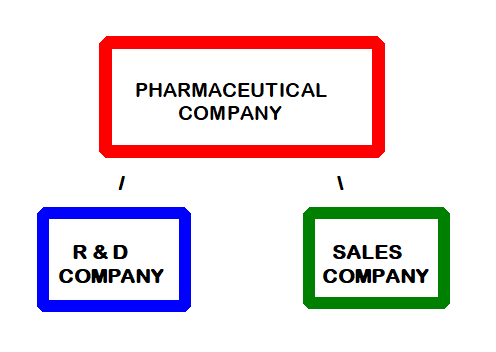
 #Monetary Sovereignty - Mitchell
No mention of Mark Cuban putting his money where his mouth is to do what any state could have done years ago: https://costplusdrugs.com/medications/ Cost plus 15%. Why people never had a grasp on the piddly low production costs of damn near every prescription med was always a mystery to me. By the time of FDA approval most of them only have like 5-7 years until the patent expires.
LikeLike
Yes, actual production costs are low. R&D + FDA approval + marketing account for the vast majority of expenses.
LikeLike
I dare say the R&D is quite low in the scheme of things too. A billion dollars could pay the salary and benefits of several thousand lab chemists for a year. https://www.bls.gov/oes/current/oes192031.htm To my knowledge not a one of these large pharmaceutical enterprises is any sort of worker cooperative with the gains allocated to each according to their effort or whatever.
Hillman could tell you a good story: https://www.newscientist.com/article/dn1941-gm-bacteria-may-banish-tooth-decay/amp/ about how the nimby paranoids of the world made his highly valuable for all [the least among us most especially] work all but impossible to see through.
LikeLike
“On a different line of research, Jeffrey Hillman from the University of Florida developed a genetically modified strain of Streptococcus mutans called BCS3-L1, that is incapable of producing lactic acid – the acid that dissolves tooth enamel – and aggressively replaces native flora. In laboratory tests, rats who were given BCS3-L1 were conferred with a lifetime of protection against S. mutans. BCS3-L1 colonizes the mouth and produces a small amount of a lantibiotic, called MU1140,[7] which allows it to out-compete S. mutans. Hillman suggested that treatment with BCS3-L1 in humans could also provide a lifetime of protection, or, at worst, require occasional re-applications. He stated that the treatment would be available in dentists’ offices and “will probably cost less than $100.” The product was being developed by Oragenics, but was shelved in 2014, citing regulatory concerns and patent issues.”
Those obscurantist NIMBY people paranoid about ‘genetically modified’ anything got the trial killed before it really even got started back around 2003 or 2004. They claimed it could possibly kill some tiny number of people through endocarditis (even though advanced tooth decay is what sets up the primary scenario for an endocarditis causing oral pathogen to enter the bloodstream and travel to the heart valves).
Upwards of 80% of all tooth decay is caused by a single organism Strep. mutans out of the hundreds present in the mouth. A close relative Strep. sobrinus is the culprit for nearly all rest not caused by Strep. mutans but that one really only shows up in young kids (like if you’ve seen a picture of a kid with horribly rotten baby teeth that is almost certainly Strep. sobrinus; Though if prominently present it almost always gets knocked out of action in puberty as the growth hormones drastically change the oral chemistry away from certain parameters it had been thriving in).
Very ethical of those whiny CAVE [citizens against virtually everything] losers to make sure hundreds of millions of people continue to suffer needlessly year after year from our most common infectious disease: tooth decay.
“Is tooth decay the most common disease in the world? It is estimated that oral diseases affect nearly 3.5 billion people. Untreated dental caries (tooth decay) in permanent teeth is the most common health condition according to the Global Burden of Disease 2019.”
“Dental caries, commonly known as tooth decay, is the single most common chronic childhood disease. In fact, it is an infectious disease. Mothers with cavities can transmit caries-producing oral bacteria to their babies when they clean pacifiers by sticking them in their own mouths or by sharing spoons”
LikeLike
This is a well-written post but I think you could add one example does the Chinese government help Chinese businesses in this way do they pay for things that help promote is this prosperity I don’t think they have the anti government attitude that we do and ironically their government invest in their infrastructure.
LikeLike
Good point
LikeLike