Answering two of the great philosophical questions

Being retired from the business world, I have time to just sit back and muse, especially about things of which I have zero knowledge. Do you ever do that? Just lay back, watch the clouds, and imagine things?

It’s both a relaxing and stimulating inactivity, both rewarding and yet unproductive.

In that vein, today, I saw the following article:Bacterial Nomenclature 101 and How to Describe a New Species ...
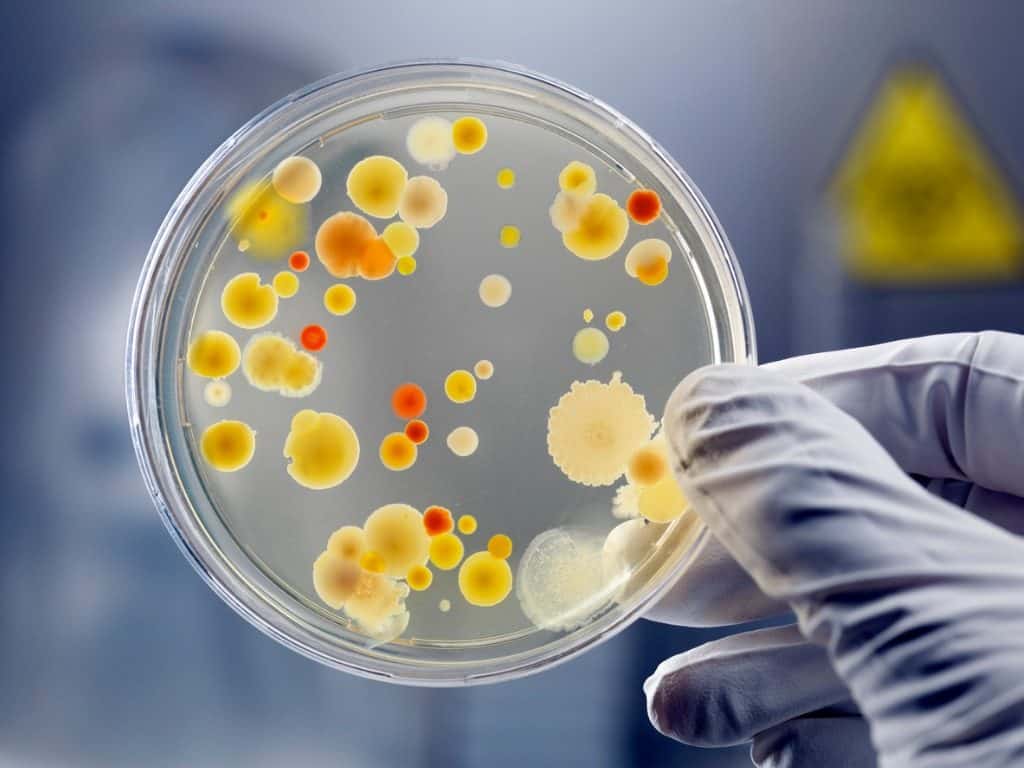
SCIENTISTS REVIVE 100-MILLION-YEAR-OLD LIFEFORMS

Researchers from the Japan Agency for Marine-Earth Science and Technology dug up chunks of clay from 70 meters beneath the ocean floor.

They injected it with sugar and ammonia and, to their surprise, Ars Technica reports that colonies of bacteria quickly chowed down on the meal.

It’s a bizarre discovery, and one that suggests that organisms can survive more inhospitable environments than scientists thought.

It reminded me of two great philosophical questions:

  1. What is consciousness?
  2. What is life?

They have been debated by philosophers and other scientists for centuries.

Usually, the answers are self-referential in that they assume some circular form of, “Consciousness is awareness.” Or, “Life is what life does.”

For example, here is a definition of “consciousness” from Wikipedia:

Consciousness at its simplest is “sentience or awareness of internal or external existence”.

Despite centuries of analyses, definitions, explanations and debates by philosophers and scientists, consciousness remains puzzling and controversial, being “at once the most familiar and most mysterious aspect of our lives”.

Perhaps the only widely agreed notion about the topic is the intuition that it exists.

Opinions differ about what exactly needs to be studied and explained as consciousness. Sometimes it is synonymous with ‘the mind’, other times just an aspect of mind.

In the past, it was one’s “inner life”, the world of introspection, of private thought, imagination, and volition.

Today, with modern research into the brain it often includes any kind of experience, cognition, feeling, or perception.

It may be ‘awareness’, or ‘awareness of awareness’, or self-awareness. There might be different levels or orders of consciousness, or different kinds of consciousness, or just one kind with different features.

In short, no one knows; everyone thinks they know; and there are no agreed-upon, revelatory answers.

So I thought there might be a route through this impossible maze, if one merely lists, in descending order, from most through least, conscious things.

Here is what I came up with. See if you agree:

CONSCIOUSNESS: 10 examples, in descending order of consciousness

    1. You
    2. Your dog
    3. A praying mantis
    4. A computer with Artificial Intelligence (AI) programming
    5. You sleeping
    6. You fainting, or under deep anesthesia, or being struck on the head
    7. A tree
    8. An amoeba or bacterium
    9. A virus
    10. A planet, a galaxy, and/or the universe

I’m quite sure you are smarter than your dog, but are you really more conscious than your dog?

I think so, because you understand more about your surroundings and their input to you, than does your dog.

Then, there is the praying mantis, that at some level must realize it needs to hide, evade predators, identify a victim, pounce, eat, and plan for the next. That requires at least some small level of consciousness.

Then the big one these days: At what point does an AI computer reach consciousness? Much fiction has explored that question: The robot, Hal, in “2001: A Space Odyssey,” and more recently,  the robot, Ava, in“Ex Machina” are two si-fi characters I especially enjoyed.

Were these two robots more conscious than you, sleeping? As presented, they were fully aware of their existence. They both could pass the “Turing test,” proposed by mathematician, Alan Turing.

Turing Test: A test for intelligence in a computer, requiring that a human being should be unable to distinguish the machine from another human being by using the replies to questions put to both.

The Turing test, however, is not specifically a test of consciousness. It is a test of intelligence or thinking ability. By that test’s standards, your dog might not be conscious.

But, even in sleep, you are conscious, or at least, semi-conscious. You can hear a loud sound. You can feel someone shake you to awaken you. On occasion, perhaps your dream will reflect the reality of outside stimuli, as when someone calls your name and you dream that is happening.

And what about being under deep anesthesia, or being hit on the head, where you are unconscious? The “un” seems to indicate you would have no consciousness, but that isn’t the case.

When you are unconscious, your brain might be less conscious, but much of your body still is conscious of external stimuli. Your heart beats in response to your oxygen needs. Your lungs too, inflate and deflate when oxygen is needed. Your kidneys still seek out and eliminate toxins.

Your immune system continues to remember your old enemies, identify new ones, and to select the right defenses. Your liver . . .

. . . “regulates a wide variety of high-volume biochemical reactions, including the synthesis and breakdown of small and complex molecules, many of which are necessary for normal vital functions. Estimates regarding the organ’s total number of functions vary, but textbooks generally cite it being around 500.”

Your consciousness does not seem to reside solely in your brain, but also throughout your body. Consciousness is a brain/body collaboration, with no bright-line separation between the two.

Brain in a jar.png
Conscious?

The sci-fi “brain-in-a-jar” trope would not be as conscious as a fully functional human being, unless it were hooked up to a functioning body.

Trees do not have central brains, but they respond to stimuli and they communicate via chemical emissions. (Good article: “Do trees talk to each other?”)

Trees apparently have “a kind of experience, cognition, feeling, or perception,” the definition of consciousness used by some researchers.

Consciousness requires some level of thought. We cannot be sure whether an amoeba can think because we cannot be sure what “thought” is.

As Wikipedia says, “Although thinking is an activity of an existential value for humans, there is still no consensus as to how it is adequately defined or understood.”

Amoebas “think” well enough to avoid “bad” and to approach “good,” and to divide when the time is “right.” At what level does that involve consciousness?

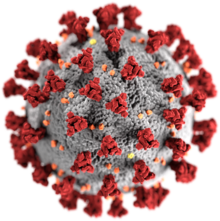
Even a virus does what it must do to survive and to procreate under varying conditions and attacks by immune systems. But does a virus “know” what it is doing? Is “knowing” required for consciousness?

Or is the dividing line where consciousness begins and ends more accurately called: Purposeful actions? Are The Galaxies In Our Universe More Right-Handed... Or Left ...
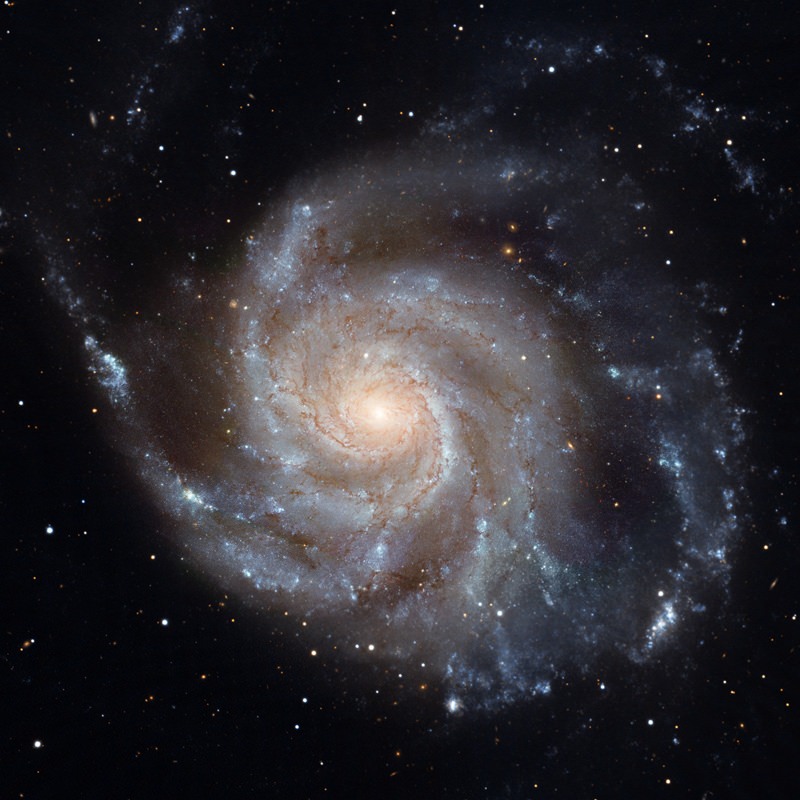
Then we come to “the galaxy” and “the universe.” The universe created the galaxy; the galaxy created you.

Some say this reflects a massive, random accident of physics and chemistry. Others claim the universe is conscious, and that purposeful action is involved because you are a part of the universe.

Purposeful actions are a feature of life. And just like that, you arrive at question #2, “What is life?”

If we were to produce an 10-example, descending list of life, it could be identical to the consciousness 10-example list, we already have discussed.  And every example, by some measure, includes purposeful action.

The two questions, “What is consciousness?” and “What is life?” seem to meet at that point: Purposeful action.

In mathematics, if A=C, and B=C, then A=B. Consciousness = life, and life = consciousness. They are the same.

That said, you might resist the equivalence with regard to AI computers.

One feature of life is the ability to procreate. Yet viruses are considered, by many, to be alive. They do not have the ability to procreate without the aid of some other organism — and that is the situation for AI computers. In their case, the “other organism” would be their human creators.

(Parasites are living organisms that cannot procreate, or even live, without the aid of another organism. A virus can be considered merely to be a simple form of a parasite.)

Of course, a sufficiently advanced AI computer could be created to build additional AI computers. Procreation problem solved.

In summary: Consciousness and life are words given to the same process.

They are not absolute. Rather, the two words describe a process that can exist in varying degrees.

The process is like a long river that is crystal clear at one end and moving down, takes on one atom of mud, then another atom, then gradually more atoms as it becomes muddier and muddier toward the other end.

Standing beside the river and looking down, at what point would you say it is “muddy”?

Like the word “muddy” and for instance, the word “beautiful,” the words “life” and “consciousness” are not objective. They are in the eye of the beholder.

They are words that are defined arbitrarily by each observer. Your definition differs from mine, and their definition differs from ours.

So, it is a fool’s mission to attempt to find the “correct” definition.

The philosophers who have spent centuries debating “What is life,” and “What is consciousness,” may not have realized they were engaged in a semantic debate, not a debate about some form of reality.

Consciousness is life; life is consciousness.

Feel free to set your own parameters.

Rodger Malcolm Mitchell

Monetary Sovereignty Twitter: @rodgermitchell Search #monetarysovereignty Facebook: Rodger Malcolm Mitchell …………………………………………………………………………………………………………………………………………………………………………………………………………………………………………………………………………………………..

THE SOLE PURPOSE OF GOVERNMENT IS TO IMPROVE AND PROTECT THE LIVES OF THE PEOPLE.

The most important problems in economics involve:

  1. Monetary Sovereignty describes money creation and destruction.
  2. Gap Psychology describes the common desire to distance oneself from those “below” in any socio-economic ranking, and to come nearer those “above.” The socio-economic distance is referred to as “The Gap.”

Wide Gaps negatively affect poverty, health and longevity, education, housing, law and crime, war, leadership, ownership, bigotry, supply and demand, taxation, GDP, international relations, scientific advancement, the environment, human motivation and well-being, and virtually every other issue in economics. Implementation of Monetary Sovereignty and The Ten Steps To Prosperity can grow the economy and narrow the Gaps:

Ten Steps To Prosperity:

1. Eliminate FICA

2. Federally funded Medicare — parts A, B & D, plus long-term care — for everyone

3. Social Security for all or a reverse income tax

4. Free education (including post-grad) for everyone

5. Salary for attending school

6. Eliminate federal taxes on business

7. Increase the standard income tax deduction, annually. 

8. Tax the very rich (the “.1%”) more, with higher progressive tax rates on all forms of income.

9. Federal ownership of all banks

10.Increase federal spending on the myriad initiatives that benefit America’s 99.9% 

The Ten Steps will grow the economy and narrow the income/wealth/power Gap between the rich and the rest.

MONETARY SOVEREIGNTY
 

Questions you cannot answer

Pardon a bit of philosophy, here.

What are the hardest questions in science, questions you cannot answer?

Now that should stimulate debate. Perhaps it itself is the most difficult question. Perhaps you have your own answers.

Tomorrow I may feel different, but today I’ll cast my vote for these:

–What is “life”?
–What is “awareness”?

Scientists from many disciplines have debated those questions for many years, and surely there are more years of debate to come.

Recently, I read the following article; it asks a related question, “What is an individual?”

What Is an Individual?
Biology Seeks Clues in Information Theory.
To recognize strange extraterrestrial life and solve biological mysteries on this planet, scientists are searching for an objective definition for life’s basic units.
Quanta Magazine, Jordana Cepelewicz, Staff Writer, July 16, 2020Ediacaran biota - Wikipedia

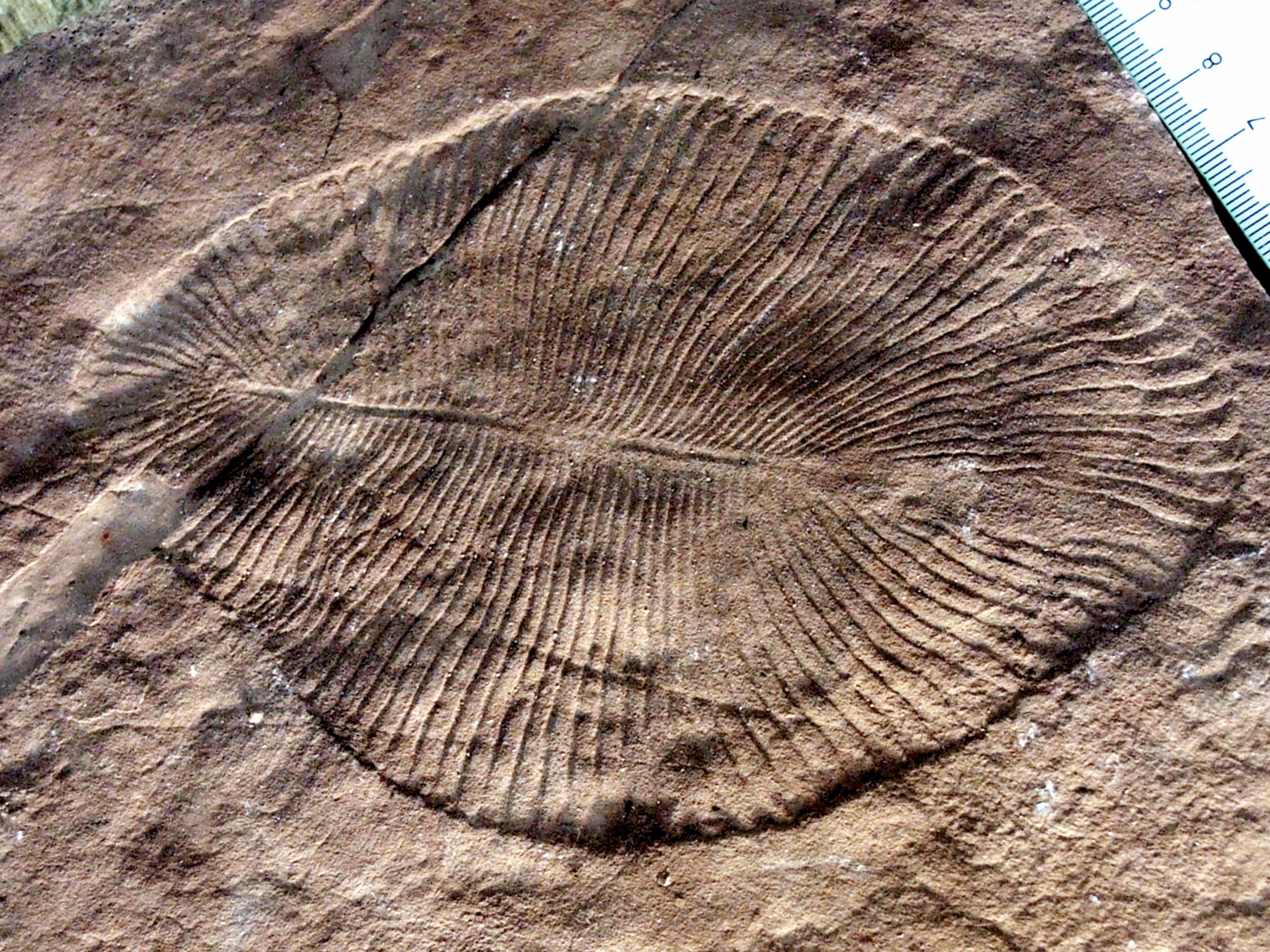
More than half a billion years ago, during the Ediacaran Period, a surreal world of life overran the ocean floor.

Its bizarre, soft-bodied animals had physical forms that defy the imagination: quilted blobs and ribbed discs, segmented tubes and upturned bells, tapered spindles and slender cones.

They were perhaps the planet’s first large multicellular organisms — but they soon went extinct without leaving behind any modern descendants; trace fossils in ancient slabs of sandstone and quartzite are all that remain of those utterly weird and fantastical creatures.

Because of that weirdness, paleontologists still debate even the most basic questions about them: how they developed, how they ate and reproduced, even where one fossilized individual leaves off and another begins.

Were those animals single organisms or colonies of smaller individuals, akin to the Portuguese man-of-war?

Where did their jellylike bodies end and their environment begin?

Perhaps clues to answers may be found in these two phrases: “ . . . they soon went extinct” and “Where did their jellylike bodies end and their environment begin?

“Extinct” means: No longer in existence.

Does anything ever go extinct? The laws of thermodynamics tell us there is no extinction; there only is change.

Consider a forest fire. It is composed of many individual fires, which taken all the way down to the quantum level, are composed of individual chemical reactions.

When a chemical reacts with another chemical, nothing has gone extinct. Matter and energy have changed.

The many small fires each live for a while, first adding to their population, then one by one they are “extinguished.” More correctly, we should say they have been changed.

Eventually, we say the entire thing we called a forest fire goes out. It becomes “extinct,” though it has been changed into another form. It’s just a chemical reaction that has changed to other chemical reactions.

Consider a population of people. Each person lives for a while, adding to their population, and with each addition, the result of chemical reactions, being unique.

We classify these populations in infinite ways, by sex, color, nationality, species, genetically, but these are classifications are of our own making, not nature’s.

Each thing we call a “person” is just a bag of unique chemicals doing what chemicals do when brought into proximity under specific conditions.

One by one, we say these “persons” die. But all that has happened is their chemicals have reacted in certain ways.

What will happen when you die? There is no specific moment of “death.” Some chemical reactions begin to take place and others begin to cease, but it is not instantaneous.

I know someone who has had three kidney transplants.

–Were those transplanted kidneys alive or dead?
–If dead, did they later become alive?
–What if the kidneys came from deceased donors. Were those kidneys alive or dead at the moment they were transplanted?
–When the recipient dies, at what moment will the kidneys be dead?

You can debate endlessly.Virus - Wikipedia

You can invent definitions of “life” and criteria for “death.”

You can say that life has DNA or that life reproduces, but those will be your arbitrary definitions and criteria, not nature’s.

One day, we will encounter life that is basednot on DNA, but on RNA or some other chemical combination, like some viruses, and then you would have to change your definition.

To nature, you are just a bag of chemicals, doing what chemicals do.

There is no objective answer to the question, “What is life?”

Each Planck unit, chemical reactions are taking place, and over time, these chemical reactions will produce something we call “dead.”

But that is our arbitrary classification, not nature’s.

Nature doesn’t classify “live” vs. “dead.”  After you do what we classify as “dying,” the chemical reactions still continue, forever.

In the distant future, when the sun expands to engulf the earth, your atoms will become part of the sun, later to become part of something else, just as your atoms were part of some long-lost suns.

Will you come back to life?

Nature also does not classify species. We recently have invented those classifications, and there is not agreement about what a species is.

The DNA sequence that can be directly compared between the two genomes (human and chimpanzee) is almost 99 percent identical.

Two bags of chemicals are 99% identical, yet we arbitrarily define them one “human” and the other as “chimpanzee.”

Those are not nature’s definitions. They are our arbitrary definition.

Our DNA is 99.9% the same as the person next to us — and we’re surprisingly similar to a lot of other living things.

Yet, in our desire to classify, we not only create differences between humans and chimpanzees, but between humans and other humans.

Eventually, the thing we call “humanity” may go extinct, but all that really will have happened is a series of chemical reactions. Nothing in the universe goes extinct. Everything just changes.

In that sense, we are little different from a box of gravel, each stone of which undergoes individual chemical reactions, affected by the environment, and each affected by the chemical reactions of neighboring stones.

So when we argue the question, “What is life,” we only are arguing about our own, artificial, arbitrary classification. It is a question that does not and cannot have a universal answer.

It would be like arguing about beauty or humor. Philosophers have spent eons arguing questions that can have no answer.

Nature has a sloppy disregard for boundaries: Viruses rely on host cells to make copies of themselves.

Bacteria share and swap genes, while higher-order species hybridize.

Thousands of slime mold amoebas cooperatively assemble into towers to spread their spores. Worker ants and bees can be nonreproductive members of social-colony “superorganisms.”

Lichens are symbiotic composites of fungi and algae or cyanobacteria.

Even humans contain at least as many bacterial cells as “self” cells, the microbes in our gut inextricably linked with our development, physiology and survival.

How many transplants would be required to change an individual into something not individual?

What if every part a person’s body came from another person, or even another animal, or was mechanically created. At what point, if ever would that amalgum no longer be an individual?

Hook up a human’s brain to a robot. Is that an individual? Is a brain in a jar an individual? Are two brains, meshed together, an individual? Is a Siamese twin an individual?

Ms. Cepelewicz’s article goes on to describe the many attempts to answer the question, “What is an individual,” for instance:

“An individual should not be considered in spatial terms but in temporal ones: as something that persists stably but dynamically through time.”

Or, “an aggregate that ‘preserved a measure of temporal integrity,’ propagating a close-to-maximal amount of information forward in time.

Or, “an entity that is shaped by environmental factors but is strongly self-organizing.” 

Or, “a colonial form, which involves a more complicated relationship between internal and external factors. Individuals in this category might include an ant colony or a spiderweb — distributed systems that are ‘partially scaffolded’ by their environment but still maintain some structure on their own.

Or, something “driven almost entirely by the environment. ‘If you remove the scaffolding, the [entity] would fall apart, like a tornado, which dissipates under the wrong temperature and moisture conditions.”

Or, “individuals can be cells, tissues, organisms, colonies, companies, political institutions, online groups, artificial intelligence or cities — even ideas or theories.”

Or, “any self-organizing system that generates predictions about its environment and seeks to minimize the error of those predictions.”

Why do we try to answer the questions, “What is an individual?” “What is life?” “What is awareness?”

There is a reason.

All learning is classification. It is the way we visualize. “A is a B, and is not a C.”

We assume that things of a class have certain characteristics in common, that allow us to know something about each them,  without literally examining each of them.

The periodic table of elements is a classification that helps understand elements.

Classifications help us understand mammals vs. reptiles. Fermions vs. bosons. Books vs. magazines.  Cars vs. motorcycles. Red giant vs. blue giant stars. Men vs. women. Schizophrenia vs. depression. 

By creating a name for each classification, we allow ourselves not only to visualize the classification but to communicate it to others.

If I say the word, “bird.” You immediately know I am talking about an animal having legs, wings, and feathers, in addition to other classifications (head, eyes, beak, etc.)

Although birds come in many shapes and sizes, you don’t need to examine every animal to know whether it is a bird. If it has wings, it most likely is a bird, and if it has feathers it definitely is a bird.

But, what if there were birds that didn’t have feathers, wings, legs, beaks, etc? If I had told you something is a bird, you will have learned nothing.

And that is what happens when we create names for such classifications as “individual, life, awareness, and others” without agreement about the characteristics of the classifications.

Rather than being a scientific exercise in identification, the questions only are an exercise in semantics.

Asking you “What is life?”,  “What is an individual,” “What is awareness,” etc, is no different from asking you, “What is a fajedfqwa?” It is a nonspecific question using a nonspecific word to describe a nonspecific thing.

“What is life?” Either life is pure chemistry, doing exactly what chemicals do under given circumstances, or is life something other than pure chemistry.

But what could that “other” be? Are we to drift into mysticism to answer that question?

I personally lean toward the “pure chemistry” answer. I suggest that certain atoms will react in certain ways to outside stimuli, and in select instances, what we call life will appear. In other instances, what we call “non-life” will appear.

This all is a continuum of chemistry, in which “life” becomes “non-life,” and “non-life” becomes “life,” and though we like to differentiate, they all are just chemistry, doing what chemistry does.

This also addresses the subject of “awareness.” Is awareness something unique to life, or is it just chemical reactions to stimuli? Are you aware and a stone is not, or are we all reacting to our environment in exactly the way chemicals react?

We cannot now, probably never will be able to define life in a way that will satisfy all circumstances, yet here we are, searching for “life” on other planets. How will we know it when we see it?

Even more difficult, we are searching for “intelligent” life, though “intelligent” is another word for a vague concept. Intelligence describes the ability to react to one’s surroundings.

Everything, from an electron, to an atom, to a fire, to a pebble, to a tree, to a cow, to a human being, to the earth itself, to the solar system, to the milky way galaxy, all continuously react to their surroundings, and so, have some degree of intelligence.

Consider a fire. Is it “aware” of its fuel?

An English dictionary contains thousands of words, each with a definition. In using those words, we recognize that each has more than one definition. That is why we have the English thesaurus.

Black to white.png
Where are the boundaries of gray?

Imagine a ribbon a mile long.  One end is black. The other end is white. What is the definition of “gray”?

Every word has a blurred boundary, where the common meanings end and cease being valid.

The purpose of words is to communicate, not to create. By using the words, “life,” or “individual,”  we will not create anything.

We merely will communicate that something may be in our mind, but we can’t say exactly what it is.

The question, “What is an individual?” really means, “What is the boundary where the word ‘individual’ ends and ‘non-individual’ begins?”

It is a semantic question, not a biological or a physical one. All semantic questions are answered by authority.

From a physical standpoint, “individual” has no boundary. It is what you think it is, and therefore communicates nothing. The same is true of “life” and “awareness” (and many other concepts like “beauty” and “love” and “humor.”)

So give it up. For centuries, brilliant people have tried to quantify life and awareness. They have failed, though that hasn’t stopped them from publishing their results.

You will be more productive searching for a cure for cancer.

Rodger Malcolm Mitchell

Monetary Sovereignty Twitter: @rodgermitchell Search #monetarysovereignty Facebook: Rodger Malcolm Mitchell …………………………………………………………………………………………………………………………………………………………………………………………………………………………………………………………………………………………..

THE SOLE PURPOSE OF GOVERNMENT IS TO IMPROVE AND PROTECT THE LIVES OF THE PEOPLE.

The most important problems in economics involve:

  1. Monetary Sovereignty describes money creation and destruction.
  2. Gap Psychology describes the common desire to distance oneself from those “below” in any socio-economic ranking, and to come nearer those “above.” The socio-economic distance is referred to as “The Gap.”

Wide Gaps negatively affect poverty, health and longevity, education, housing, law and crime, war, leadership, ownership, bigotry, supply and demand, taxation, GDP, international relations, scientific advancement, the environment, human motivation and well-being, and virtually every other issue in economics. Implementation of Monetary Sovereignty and The Ten Steps To Prosperity can grow the economy and narrow the Gaps:

Ten Steps To Prosperity:

1. Eliminate FICA

2. Federally funded Medicare — parts A, B & D, plus long-term care — for everyone

3. Social Security for all or a reverse income tax

4. Free education (including post-grad) for everyone

5. Salary for attending school

6. Eliminate federal taxes on business

7. Increase the standard income tax deduction, annually. 

8. Tax the very rich (the “.1%”) more, with higher progressive tax rates on all forms of income.

9. Federal ownership of all banks

10.Increase federal spending on the myriad initiatives that benefit America’s 99.9% 

The Ten Steps will grow the economy and narrow the income/wealth/power Gap between the rich and the rest.

MONETARY SOVEREIGNTY