The single most misunderstood and misused word in economics

The word is “debt.”

Virtually everyone believes they know what it means—I assume you do—but virtually everyone, including economists, is confused by the term.

Here is a dictionary definition:

Debt is an obligation that requires one party, the debtor, to pay money or otherwise withheld from another party, the creditor. Debt may be owed by a sovereign state , country, local government, company, or individual.

Loans, bonds, notes, and mortgages are all types of debt.

Here is what an AI (Artificial Intelligence) says about federal debt. Read it, keeping in mind that the Monetarily Sovereign U.S. government has the infinite ability to create its own sovereign currency.

As we will discuss, the so-called federal debt isn’t debt and it isn’t federal.

The U.S. government never, unintentionally, can run short of U.S. dollars:

The federal debt of the United States is the total national debt owed by the federal government to Treasury security holders. 

It encompasses the accumulated borrowing and the associated interest owed to investors who purchased these securities.

Federal debt is the same as national debt?? Immediately we arrive at confusion because “national” debt can include the debt of the non-federal (private) sector, i.e., the total of mortgages, car loans, business loans, etc., and state/county/city debt. 

Because the federal government is Monetarily Sovereign and the other entities are monetarily non-sovereign, one rightly should assume that federal debt should be treated differently. 

Let’s break it down further:

    1. Federal Deficits:

      • Federal deficits occur when the government spends more money than it collects in revenue during a fiscal year. To cover these deficits, the government borrows money by issuing Treasury bonds, bills, and other securities.
      • These deficits contribute to the overall national debt because they represent the accumulated borrowing over time.
    2. Treasury Securities:

      • Treasury securities are financial instruments issued by the U.S. Department of the Treasury to raise funds for government operations.
      • There are several types of Treasury securities:
        • Treasury bills, Treasury notes, Treasury bonds, Treasury inflation-protected securities (TIPS), Floating rate notes (FRN)
      • These securities are issued to the public and other entities, including individuals, corporations, state or local governments, foreign governments, and other non-federal entities.
    3. Federal Debt Held by the Public:

      • The federal debt held by the public consists of securities held outside the government. It includes:
        • Interest-bearing marketable securities: These are marketable Treasury securities (bills, notes, bonds, TIPS, and FRN) held by various entities.
        • Interest-bearing nonmarketable securities: These include Government Account Series held by fiduciary and certain deposit funds, foreign series, state and local government series, domestic series, and savings bonds.
        • Non-interest-bearing marketable and nonmarketable securities: These include matured and other types of securities.
      • The total federal debt held by the public is calculated based on face value less net unamortized premiums and discounts, including accrued interest.

The federal debt represents the total outstanding obligations owed by the U.S. government, including both deficits and the issuance of Treasury securities. It reflects the financial position of the government and its ability to meet its obligations

That is generally what most people believe. It is wrong on several counts.

First, the federal debt does not “reflect the financial position of the government and its ability to meet its obligations.  The federal government has the infinite ability to meet its obligations. 

Deficit reductions (red line) result in recessions (vertical gray bars), which are cured by deficit increases.
Even the COVID recession of 2020 was cured by the increase in federal spending — the so-called “debt” — that year.

Read it again while again keeping in mind the Monetarily Sovereign U.S. government has the infinite ability to create its own sovereign currency. It never, unintentionally, can run short of U.S. dollars.

Now ask yourself: Why would the federal government borrow dollars? The answer: It doesn’t. 

Notice the definitions of federal debt encompass two completely different things:

  1. The total of federal deficits, i.e. the net total difference between what the government has spent and what it has received in taxes.
  2. The total of Treasury Security accounts.

1. Total Federal of Deficits: In most years, the federal government spends more than it receives in taxes. This is called a “deficit.” Over the years these deficits total to what is called the “federal debt.”

All forms of debt require at least one debtor and at least one creditor. But with regard to federal deficits, who is the debtor and who is the creditor, and what is owed?

A quick response might be that the government is the debtor, and those supplying the government with goods and services would be the creditors. But that quick response would be wrong.

Although the federal “debt” is upwards of $30 trillion, the federal government does not owe its suppliers $30 trillion. They all have been paid.

Clearly, the total of deficits is not federal debt. There are no creditors, no debtor, and nothing is owed.

2. The Total of Treasury Security Accounts: Are they “federal debt”? If so, how and why did the “debt” occur. 

Look back at the definitions: The Treasury Securities are bills, notes, and bonds, issued by the federal government to raise funds for government operations.

A “bill” is a request for payment of money owed, or the piece of paper on which it is written. In the private sector, a bill is created by a creditor and sent to a debtor as a demand for payment. The way most people understand it.

But federal terminology is diametrically different. Here, the “debtor” (the government) creates and issues the T-bill and the creditor buys it, as though it were a bond. 

Consider a dollar bill. It is not a request for payment by a creditor, but rather a document created by the debtor — the federal government, which owes the holder one dollar. The dollar bill itself is not the dollar. It is an IOU for a dollar.

The dollar is just a number in the federal government’s financial books.

You cannot see, feel, smell, or taste a dollar. It has no form or substance. If someone asked you what does the number “five” look like would your answer be: “5,” or “V,” or “(2+3);” or the binary “101,” or “√25.”

Although you can describe a five dollar bill, you cannot say what five dollars look like. Dollars result from laws, and again, no one can say what a law looks like. Like dollars, laws are just concepts, not physical entities.

That fact that dollars are not physical gives the federal government the infinite ability to create them just by pressing computer keys.

But that’s a minor, though confusing, semantic issue. The major, and even more confusing, semantic question: Why does a Monetarily Sovereign entity, having the infinite ability to create dollars, ever borrow dollars?

As two former Chairmen of the Federal Reserve have said:

Alan Greenspan: “A government cannot become insolvent with respect to obligations in its own currency. There is nothing to prevent the federal government from creating as much money as it wants and paying it to somebody. The United States can pay any debt it has because we can always print the money to do that.”

Ben Bernanke: “The U.S. government has a technology, called a printing press (or, today, its electronic equivalent), that allows it to produce as many U.S. dollars as it wishes at essentially no cost.”

Question: If the U.S. government cannot become insolvent, can create as much money as it wants, and can pay any debt, why does it borrow dollars? Why does it pay interest when it can produce as many dollars as it wishes at essentially no cost?

Answer: It doesn’t borrow, and the interest is produced at no cost.

Because of words like “bill,” “note.” and “bond,” many people, including even economists, believe these represent federal borrowing and debt.

They do not. The federal government never borrows dollars. It creates all the dollars it needs by spending dollars. Spending is how the government creates new dollars. The process is:

When an agency of the federal government pays an invoice (a bill) from a creditor, it sends instructions (not dollars) to the creditor’s bank. The instructions may be in the form of a check or a wire (“Pay to the order of ____”)

The bank obeys the instructions by increasing the balance in the creditor’s checking account. At that instant, new dollars are created and added to the M2 money supply measure.

The bank balances its books by informing the Federal Reserve of the instructions, which debits the government’s account. 

At no time are any physical dollars exchanged because there are no physical dollars. It’s all numbers in bookkeeping accounts.

But what is the purpose of those T-security accounts? They have two purposes, neither of which is to provide spending money for the government:

A. To provide a safe place to store unused dollars, which stabilizes the dollar. Because dollars have no physical existence, they can’t be stored in a box and watched. So, it is especially important that large, unused sums be kept on trusted books

No books are more trusted with dollars than the U.S. government’s.

B. To help the Fed control interest rates. Because T-securities are known to be safe, the interest paid by federal storage sets a floor for all private sector interest rates. 

T-security accounts resemble bank safe deposit boxes in that the contents are not owed to the depositors and not used by the bank. They are not federal in that the contents of the accounts are wholly owned by the depostors. The federal government never touches those dollars.

Just as they are not debts, they also are not federal. To close an account, the bank and the government simply return the contents to their owners, the depositors. The government does not owe the money because it never takes ownership of the money.

Why then, does the federal government need to lend rather than give money (for instance, student loans) or need to collect taxes.

It doesn’t. 

The federal government could forgive all student loans and continue spending forever, all without collecting a single penny in taxes. It could accomplish this simply by creating dollars.

Some claim that “excessive” federal deficit spending would cause inflation. That claim is false; the reasons are described here. While a government response to inflation may be to print currency, the cause of all inflations has been shortages of critical goods and services.

The most recent inflation was caused not by federal spending, which had been go on for  many years, but by new, COVID-relaed shortages of oil, food, computer chips, lumber, paper, shipping, steel, and many other products, and labor.

While state/local taxes and borrowing help monetarily non-sovereign government pay for things, the purpose of federal taxes is not to pay for things but rather:

  1. To control the economy by taxing what the government wishes to discourage and by giving tax breaks to what the government wishes to reward.
  2. To support demand for the U.S. dollar by requiring taxes be paid in dollars.

But the biggest, unofficial reason for taxes is to support the myth that federal debt is paid by taxes, and that taxes are necessary to fund spending. It’s a myth promulgated by the people who really run America, the rich.

They are rich because of the income/wealth/power Gap between the rich and the rest. The wider the Gap, the richer they are.

The debt/taxation myth limits the federal spending that supports the middle- and the lower-income groups, but allows for the federal tax breaks that are given to the rich. Contrary to popular belief, federal taxation widens the Gap between the rich and the rest, making the rich richer.

Without the debt/taxation myth we could fund free, comprehensive, no-deductible Medicare for every man, woman, and child in America, no-FICA Social Security for everyone, an end to poverty in America, free college for everyone who wants it, and many other benefits (free public transportation, housing support, local infrastructure improvements, lower local taxes, etc.) all of which are of no interest to the rich.

Donald Trump didn’t pay less taxes than you paid the past ten years, not just because he cheated, but also because, being rich, he took advantage of the tax breaks that you can’t.

Tax breaks are financially the same to the federal government as such benefits as Social Security and Medicare, the difference being there is no financial limit put on tax breaks while the benefits are limited by tax collections.

SUMMARY

Unlike state/local governments, businesses, you and me, the federal government is Monetarily Sovereign. It cannot unintentionally run short of dollars. It can pay any financial obligation immediately. 

The federal government and its taxpayers are not burdened by federal debt. The federal government does not borrow dollars. It creates dollars ad hoc, by spending.

People have complained about the fictional “federal debt” since 1940, calling it a “ticking time bomb.” yet after all these years the ticking time bomb hasn’t exploded. In that time, the “federal debt” rose from $40 billion to $30 trillion, the economy is healthy, the government is paying its bills, and all the scare stories have proved to be false.

The federal debt, whether it be the total of deficits or the total of T-securities, neither is federal nor debt. It is not a burden on taxpayers nor on the federal government. It doesn’t cause inflation or recession.

Deficit spending is necessary to grow the economy and attempts to reduce deficit spending have caused causes recessions and depressions.

Accepting deposits into T-bill, note, and bond accounts does not constitute borrowing or debt, for a Monetarily Sovereign entity never borrows its own sovereign currency. 

It’s not debt if there is nothing owed, nothing borrowed, no creditors, no debtors, an no payment burden.


Rodger Malcolm Mitchell
Monetary Sovereignty

Twitter: @rodgermitchell Search #monetarysovereignty
Facebook: Rodger Malcolm Mitchell

……………………………………………………………………..

The Sole Purpose of Government Is to Improve and Protect the Lives of the People.

MONETARY SOVEREIGNTY

Are you planning to vote for the end of Medicare and Social Security? These people are.

The Libertarians (also known as the Republican Party) want to cancel Medicare and Social Security under the guise of fiscal prudence and courage. The right wing has created a fake “debt crisis” and then invented a non-solution that requires exactly what they deny they want: The end of Medicare and Social Security. (See: Congressional Republicans Want Big Cuts to Social Security) Although Congress is accustomed to misleading statements and outright lies, nowhere are the lies piled deeper than the discussions of Medicare’s and Social Security’s impending “insolvency.” Let’s get something straight. The US government, being Monetarily Sovereign, cannot become insolvent. It has the infinite ability to create U.S. dollars. This means no agency of the U.S. government can become insolvent unless Congress and the President vote for insolvency. Look at this list of federal departments and agencies that cannot run short of money unless Congress and the President vote for insolvency. The list runs alphabetically from the U.S. AbilityOne Commission to the Woodrow Wilson International Center for Scholars. There are 15 executive departments in the United States federal government, each of which is headed by a Cabinet member appointed by the President. The following is a list of the 15 executive departments:

Department of Agriculture Department of Commerce Department of Defense Department of Education Department of Energy Department of Health and Human Services Department of Homeland Security Department of Housing and Urban Development Department of the Interior Department of Justice Department of Labor Department of State Department of Transportation Department of the Treasury Department of Veterans Affairs

In addition to these departments, there are over 430 federal agencies in the United States, including 9 executive offices, 259 executive department sub-agencies and bureaus, 66 independent agencies, 42 boards, commissions, and committees, and 11 quasi-official agencies. Not one of the departments, agencies, executive offices, sub-agencies, bureaus, boards, commissions, committees, and quasi-official agencies can or will run short of dollars unless that is what Congress and the President want. Who says so? How about:

Former Federal Reserve Chairman Alan Greenspan said: “A government cannot become insolvent with respect to obligations in its own currency. There is nothing to prevent the federal government from creating as much money as it wants and paying it to somebody. The United States can pay any debt it has because we can always print the money to do that.”

Ben Bernanke: “The U.S. government has a technology, called a printing press (or, today, its electronic equivalent), that allows it to produce as many U.S. dollars as it wishes at essentially no cost.” Scott Pelley: Is that tax money that the Fed is spending? Ben Bernanke: It’s not tax money… We simply use the computer to mark up the size of the account.

Not many people realize that while state/local taxes pay for state/local spending, federal taxes pay for nothing. Rather than funding federal spending, the sole purposes of federal taxes are:
  1. To control the economy by taxing what the federal government wishes to discourage and by giving tax breaks to what the federal government wishes to reward,
  2. To assure demand for the U.S. dollar by requiring dollars to be used in paying taxes and
  3. To fool the public into believing some benefits are unsustainable unless taxes are raised, which reduces benefits.

Statement from the St. Louis Fed: “As the sole manufacturer of dollars, whose debt is denominated in dollars, the U.S. government can never become insolvent, i.e., unable to pay its bills. In this sense, the government is not dependent on credit markets to remain operational.”

Anyone who claims a federal “debt crisis” is ignorant about, or lying about, federal finances. There is no federal debt crisis. The Libertarians and their alter egos, the Republicans, are doing their best to provide you with false information. Here is a Libertarian article that could have been written by the Republicans:

Congress Is Trying To Avoid Taking Responsibility for the Debt Crisis It Created A fiscal commission might be a good idea, but it’s also the ultimate expression of Congress’ irresponsibility. ERIC BOEHM | 11.29.2023 2:30 PM

It’s inaccurate to say that no one in Congress wants to talk about the national debt and the federal government’s deteriorating fiscal condition.

How can the federal government, which as you’ve just read, has the infinite ability to create dollars, have a deteriorating fiscal condition”? It can’t. It’s like claiming the world’s oceans have a deteriorating liquid condition, or the universe has a deteriorating atomic condition. The lie about “deteriorating fiscal condition” forms the basis for the rest of the lies.

Indeed, during Wednesday morning’s meeting of the House Budget Committee, there was a lot of talk about exactly that.

“Runaway deficit-spending and our unsustainable national debt threatens not only our economy, but our national security, our way of life, our leadership in the world, and everything good about America’s influence,” said Rep. Jodey Arrington (R–Texas), the committee’s chairman.

Rep. Jodey Arrington either is stupendously ignorant or stupendously lying. The phrase “unsustainable national debt” consists of three words, all three of which are lies.
  1. “Unsustainable”: Interestingly, this word never is explained by those who use it incessantly. I suspect it means something like this: Federal finances are like personal finances. If your expenses are larger than your income, eventually, you won’t be able to pay your bills, so your debt will be “unsustainable.”The problem is that the federal government is Monetarily Sovereign while you are monetarily non-sovereign, which is totally different. You can run short of money. The federal government cannot.
  2. “National” This has to do with Treasury Securities, which indeed are national or federal. The federal government is the sole authority to issue T-bills, T-notes, and T-bonds. However, the owner of those T-bills, T-notes, and T-bonds is not the federal government. When someone or some nation buys a T-security, their dollars go into their T-security account. Those dollars remain the property of the buyer.They never are owned by the federal government. When the T-security reaches maturity, the dollars are returned to their owner. Think of a bank safe-deposit box. The bank never owns the contents. It holds them for safekeeping and returns the contents to the owner. The government’s storage of unused dollars for safekeeping, stabilizes the dollar.
  3. “Debt” relates to the mistaken claim that T-securities represent borrowing. But our Monetarily Sovereign government, with its infinite ability to create dollars, never borrows dollars. The only dollars the federal government ever owes are the dollars it uses to pay for things. Those dollars are paid in a timely fashion by a government that has the infinite ability to create dollars. There is no long-term buildup of federal “debt.”

He pointed to the Congressional Budget Office (CBO) projections showing that America’s debt, as a share of the size of the nation’s economy, is now as large as it was at the end of the Second World War—and that interest payments on the debt will soon cost more than the entire military budget.

The above paragraph refers to the infamous and much-misunderstood Debt/GDP ratio. It is a meaningless ratio that tells nothing and predicts nothing about a Monetarily Sovereign nation’s finances. A high or low ratio does not indicate solvency, growth, or any other financial factor. It is entirely useless. The so-called “Debt” (that isn’t a real debt) is the net total of all T-securities purchased and still outstanding for the past 10 years. They are not a burden on the federal government, which merely returns the dollars it holds for the owners when the security matures. By contrast, GDP is a one-year (or less) total of America’s (not just the federal government’s) spending. The formula for GDP is:

GDP = Federal Spending + Non-federal Spending + Net Exports

Comparing federal “Debt” to GDP is worse than comparing your 10-year income to the federal government’s spending this week: It is meaningless. The sole purpose of this comparison is to fool you into believing the federal government is running short of the dollars it has the infinite ability to create.

What’s missing, however, is any sense that Congress is willing to turn those words into action. Just look at the premise of Wednesday’s hearing: “Examining the need for a fiscal commission.”

Yes, it was a meeting about possibly forming a committee to discuss perhaps doing something to address the problem. In fact, it was the second such committee hearing in front of the House Budget Committee within the past few weeks.

It seems like there ought to be a more direct way to address this. , say, if a committee already existed within Congress was charged with handling budgetary issues. A House Budget Committee, perhaps.

But instead of using Wednesday’s meeting to seek consensus on how to solve the federal government’s budgetary problems, lawmakers debated a series of bills that aim to let Congress offload that responsibility to a special commission.

Unlike you, me, local governments, and businesses, the federal government’s only true “budgetary problem” is to decide where it wishes to spend its infinite hoard of dollars. While you et al. must worry about the availability of dollars, the federal government has no such constraints. It creates dollars by spending dollars. This is the process:
  1. When the federal government buys something and receives an invoice, it sends to the seller’s bank instructions (not dollars), instructing the bank to increase the balance in the seller’s checking account.
  2. When the bank does as instructed, new dollars are created and added to the M2 money supply measure.
  3. The instructions then are approved by the Federal Reserve, an agency of the federal government.
In short, the federal government creates dollars by spending dollars, and this creation is approved by the Federal Reserve, an agency of the federal government. The federal government creates the laws that approve its money-creation process. Being Monetarily Sovereign, the federal government can create any money-related laws it wishes, which is why no federal agency can run short of dollars unless the federal government wants it to run short. Federal agencies are not supported by federal taxes; they are supported by federal money creation. Medicare and Social Security can run short of dollars only if that is what Congress and the President want.

What that commission would look like and how its recommendations would be handled will depend on which proposal (if any of them) eventually becomes law—and even that seems somewhat unlikely, with Democrats voicing their opposition to the idea throughout Wednesday’s hearing.

To be fair, there are plenty of good arguments for why a fiscal commission might be the best way for Congress to fix the mess that it has made. It is an idea that’s certainly worthy of being considered, even if the whole exercise seems a little bit over-engineered.

All this blah, blah, blah is meant to disguise one simple fact: The rich, who run the U.S.  government, want to cut benefits for the middle and lower-income groups. Here is why:
  1. “Rich” is a comparative. A man owning a million dollars is rich if everyone else has a thousand dollars. But a man owning a million dollars is poor if everyone else has a hundred million dollars. During the Great Depression, anyone earning $20,000 a year was rich. Today, that salary would mark him as poor.
  2. To become richer requires widening the income/wealth/power Gap below you and narrowing the Gap above you.
  3. The rich always want to be richer, i.e.,  to widen the Gap below them.
  4. Because Social Security, Medicare, Obamacare, and all aid to the poor help narrow the Gap between the rich and the rest, the rich repeatedly try to eliminate all such benefits (while giving tax loopholes to the rich).
  5. Under the guise of fiscal responsibility, the right-wing makes unending efforts to cut the federal deficit spending that benefits those who are not rich (while continuing to run deficits that benefit the rich).

Romina Boccia, director of budget and entitlement policy at the Cato Institute, argues persuasively in her Substack that a fiscal commission is the best way to overcome the political hurdles that prevent Congress from taking meaningful action on borrowing and entitlement costs (which are driving a sizable portion of future deficits).

And there it is, the true purpose of a “fiscal commission” is to cut spending on so-called “entitlements” (i.e. Medicare and Social Security.) All the lies about Social Security and Medicare “trust funds” running short of dollars are to make you compliant with the Republican effort to make you poorer and the rich, richer. What you may not realize, these so called “trust funds” aren’t even trust funds.  To quote from the Peter G. Peterson Foundation web site:
A federal trust fund is an accounting mechanism used by the federal government to track earmarked receipts (money designated for a specific purpose or program) and corresponding expenditures. The largest and best-known trust funds finance Social Security, portions of Medicarehighways and mass transit, and pensions for government employees. Federal trust funds bear little resemblance to their private-sector counterparts, and therefore the name can be misleading. A “trust fund” implies a secure source of funding. However, a federal trust fund is simply an accounting mechanism used to track inflows and outflows for specific programs. In private-sector trust funds, receipts are deposited and assets are held and invested by trustees on behalf of the stated beneficiaries. In federal trust funds, the federal government does not set aside the receipts or invest them in private assets. Rather, the receipts are recorded as accounting credits in the trust funds, and then combined with other receipts that the Treasury collects and spends. Further, the federal government owns the accounts and can, by changing the law, unilaterally alter the purposes of the accounts and raise or lower collections and expenditures.
Thus, the federal government can do whatever it wishes with the “trust funds.” It can add to them, subtract from them, or change them from the wrongly presumed mission of supporting federal expenditures. At the click of a computer key or the passage of a law, the balance in the federal “trust funds” could be changed to $100 trillion or $0, and neither would affect taxpayers. Thus, the notion that any federal “trust funds” are, as the right wing claims, “in trouble,” is a lie, unless “trouble” comes from those who don’t wish you to understand the differences between the private sector’s real trust funds vs. the federal government’s phony “trust funds.”

Boccia’s preferred solution would allow the commission’s proposals to be “self-executing unless Congress objects,” meaning that legislators would have the “political cover to vocally object to reforms that will create inevitable winners and losers, without re-election concerns undermining an outcome that’s in the best interest of the nation.”

This would be the Republican’s way of saying, “Don’t blame us for cutting your Social Security. It was the commission that did it.”

It’s probably true that Congress itself is the biggest hurdle to managing the federal government’s fiscal situation. Unfortunately, that’s also the biggest reason to be skeptical: any decisions made by a fiscal commission will only be as good as Congress’ willingness to abide by them.

President Obama, of all people, tried this with the notorious Simpson/Bowles Commission, which made exactly the recommendations expected of it. Fortunately, America learned the plot, and the commission’s recommendations never were implemented. The commission’s recommendations included increasing the Social Security retirement age, cuts to military, benefit, and domestic spending, restricting or eliminating certain tax credits and deductions, and increasing the federal gasoline tax. The Simpson-Bowles proposal would have cut entitlement and social safety net programs, including Social Security and Medicare, which was opposed by critics on the left, such as Democratic Representative Jan Schakowsky (a Commission member) and economist Paul Krugman.

There’s no secret knowledge about reducing deficits that will only be unlocked by bringing together a collection of legislators and private sector experts, which is what most of the bills to create a commission propose doing.

Federal deficit spending is necessary for economic growth. Deficit reduction leads to recessions, which then are cured by deficit increases.
When federal deficits decline (red line). We have recessions (vertical gray bars), which are cured by increases in federal deficits.
One would think that repeatedly seeing the same effect — nine consecutive recessions caused by deficit reduction, 9 successive recessions cured by deficit increases — our leaders eventually would realize that far from being a bad thing, federal deficits are necessary. The ignorant have been claiming for more than 80 years that the federal budget is “unsustainable” and a “ticking time bomb.” Read a list of some such claims here. In all those years, much to the consternation of the ignorant, the ticking time bomb never has exploded.

Congress should hold hearings, invite experts to share their views, draft proposals, vet those ideas through the committee process, and then put the resulting bills on the House floor for a full vote.

Shielding Congress from the electoral consequences of making poor fiscal decisions doesn’t seem to improve budget-making quality. We need Congress to be held more accountable for this mess.

No, we need our leaders to be held accountable for disseminating the lie that federal deficits are harmful. Here is what happens when we ignore the fundamental truth that federal deficits are a blessing, not a curse: Every depression in U.S. history began with a reversal of federal deficit creation:

1804-1812: U. S. Federal Debt reduced 48%. Depression began 1807. 1817-1821: U. S. Federal Debt reduced 29%. Depression began 1819. 1823-1836: U. S. Federal Debt reduced 99%. Depression began 1837. 1852-1857: U. S. Federal Debt reduced 59%. Depression began 1857. 1867-1873: U. S. Federal Debt reduced 27%. Depression began 1873. 1880-1893: U. S. Federal Debt reduced 57%. Depression began 1893. 1920-1930: U. S. Federal Debt reduced 36%. Depression began 1929. 1997-2001: U. S. Federal Debt reduced 15%. Recession began 2001.

Here is what should be done: Step 1. Call it what it really is. Rather than talking about a federal “debt,” we should talk about the economy’s income. The misnamed “debt” is income for the economy. It’s money flowing from the infinitely wealthy federal government into the economy that needs and uses the money for growth. Step 2. Rather than instituting a commission to cut private sector income, thus causing recessions and depressions, America should create a plan to improve the lives of our people. Use the infinite money-creation power of the federal government to:
  • Fund public education about the benefits of Monetary Sovereignty
  • Fund a comprehensive, no-deductible Medicare for every man, woman, and child in America.
  •  for the homeless
  • Fund college for everyone in America who wants an advanced degree.
  • Fund Social Security benefits for every man, woman, and child in America.
  • Eliminate FICA, which funds nothing but is America’s most regressive tax.
  • Fund various research projects, including medical, physical, psychological, and environmental.
  • Fund long-term care
  • Fund housing
  • Fund childcare for working families.
And fund all the other projects that would benefit the public and narrow the Gap between the rich and the rest.

A $33 trillion national debt didn’t come crashing out of the sky like an asteroid that couldn’t be avoided.

“No responsible leader can look at the rapid deterioration of our balance sheet, the CBO projection of these unsustainable deficits, and the long-term unfunded liabilities of our nation and not feel compelled to intervene and change course,” Arrington said Wednesday.

He’s right, but that only draws a line under the contradiction. A responsible Congress would be working on a serious plan to get the deficit under control. Instead, the Budget Committee is working on proposals to avoid doing that.

The article ends with ignorance and lies. Contrary to the above statements, the facts are:
  1. The federal government’s balance sheet is not “deteriorating.”
  2. Deficits are necessary, not “unsustainable.”
  3. All federal liabilities are funded by the federal government’s infinite ability to create sovereign currency.
Finally, if you vote for the right-wing here is a letter you may wish to send to your children and grandchildren:

Dear Loved Ones

I sincerely apologize for electing people who fouled your water, your earth, and your air, cut Social Security, cut Medicare, cut Obamacare, increased your taxes, lied about COVID and vaccinations, and did nothing to improve the lives of all (except the rich, who were well rewarded).

I also apologize for electing a Hitler clone who admitted he would arrest everyone disagreeing with him and give all the nation’s wealth to those who already are wealthy.

I could claim ignorance, but to be honest, I was warned about what would happen. I guess I yielded to my hatred of blacks, browns, yellows, reds, Jews, Muslims, women, the poor, immigrants, and gays. 

I should have learned about Monetary Sovereignty, but I was so busy denying the danger of guns and the attempted coup I had neither the time nor the inclination to learn anything.

Perhaps you will be wiser.

I hope you will forgive me for the miserable, ignorant, hate-filled world I have left for you.

But at least the very rich are very happy.

  Rodger Malcolm Mitchell Monetary Sovereignty Twitter: @rodgermitchell Search #monetarysovereignty Facebook: Rodger Malcolm Mitchell

……………………………………………………………………..

The Sole Purpose of Government Is to Improve and Protect the Lives of the People.

MONETARY SOVEREIGNTY

Remember that “ticking time bomb”? After 83 years it’s still ticking, and still a scam

The “ticking time bomb” is the federal debt that supposedly is so big as to be “unsustainable.” You remember. It’s the “bomb” that has been sustained for 84 years.

If someone is wrong every year for 84 years, would you believe them? Unfortunately, some still believe the federal debt is “unsustainable,” a “ticking time bomb,” and should be combated with a debt limit.

I have no polite words to describe those people. Sadly, I now must tell you about “the world’s largest Ponzi scheme,” which, by no coincidence, also is the federal debt.

RegInnovate – Regulatory Innovation through Technology | Peter Schiff ...
Peter Schiff

“Ponzi” is the latest term used by people who either don’t understand Monetary Sovereignty or don’t want you to understand Monetary Sovereignty.

‘The world’s largest Ponzi scheme’: Peter Schiff just blasted the US debt ceiling drama. Here are 3 assets he trusts amid major market uncertainty Story by Bethan Moorcraft A ticking time bomb in the U.S. economy is running perilously close to detonation.

With the U.S. reaching its debt limit of $31.4 trillion on Jan. 19, Treasury Secretary Janet Yellen urged lawmakers to increase or suspend the debt ceiling.

Janet Yellen reveals that she knows the debt ceiling is unnecessary, useless, and harmful. Otherwise, she would ask that the debt be paid off.

She knows, however, that federal finance makes that not just unnecessary but impossible simply because the federal government is not the debtor.

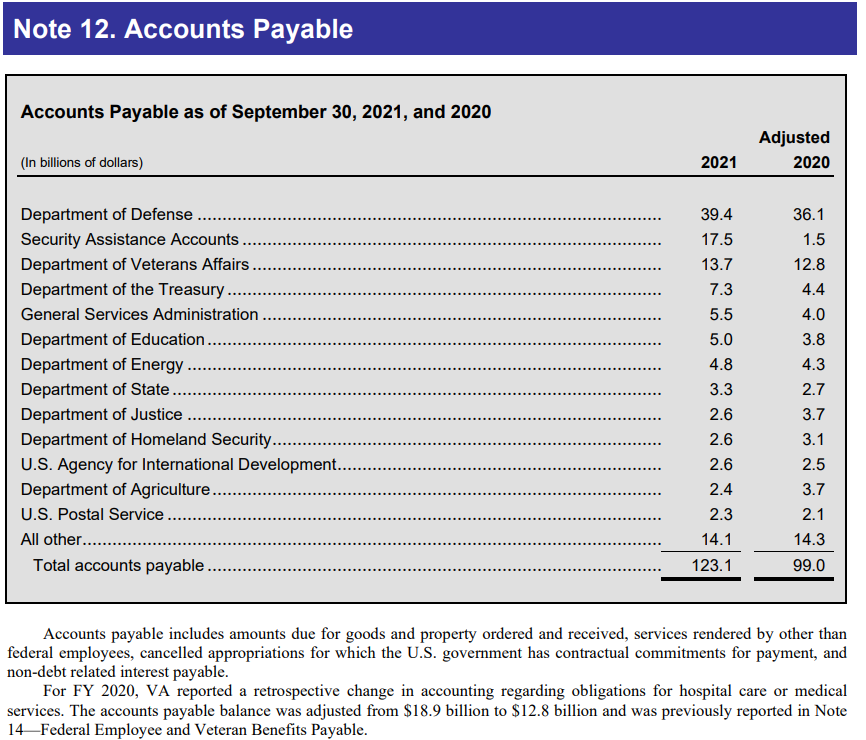
That thing called “federal debt” isn’t federal debt. The actual federal debt is the amount the federal government owes to vendors of goods and services purchased by the federal government but not yet paid for.

In short, the real federal debt also is known as “Accounts Payable” plus Interest Payable.

The actual federal debt is in the billions, not the trillions, and it is paid reliably every day.

Treasury securities, T-bills, T-notes, and T-bonds are deposit accounts, similar to bank safe deposit accounts that the government never touches.

When you invest in a T-security, you put dollars into your account from which only you can withdraw. Just as the contents of your bank safe deposit box are not the debt of your bank, the contents of your T-security account are not the debt of your federal government.

The government didn’t borrow those dollars. It merely holds them separately for safekeeping until you take them back.

Her plea was taken by Peter Schiff, famed investor, and market commentator, as an “official admission that the U.S. is running the world’s largest Ponzi scheme.”

Sadly, Schiff doesn’t seem to know what a “Ponzi scheme is. Quoting from Wikipedia:

Ponzi scheme is a form of fraud that lures investors and pays profits to earlier investors with funds from more recent investors.

The scheme leads victims to believe that profits come from legitimate business activity (e.g., product sales or successful investments), and they remain unaware that other investors are the source of funds.

A Ponzi scheme can maintain the illusion of a sustainable business if new investors contribute new funds. Most investors do not demand full repayment and still believe in the non-existent assets they purported to own.

Federal T-securities have none of these characteristics.

  1. They are not fraud.
  2. Payment does not come from more recent investors but rather from each depositor’s own deposits and the federal government’s infinite ability to create its sovereign currency.
  3. There is no claim that funds come from any business activity, legitimate or otherwise.
  4. The government does not rely on new investors, nor does it rely on new depositors. The government does not have to accept deposits. Even if every T-security owner demanded payment, the government could comply today.

Peter Schiff merely is using a scare tactic to fool the public. Rather than being a Ponzi scheme, U.S. T-securities are the safest investments known to the world and will continue to be safe so long as no political party is foolish enough to enforce the ridiculous debt limit (aka the “screw-depositors-to-make-political-points” action).

A political stand-off over the debt ceiling has been raging since Republicans regained control of the House of Representatives in the 2022 midterm elections.

President Joe Biden beseeched Congress not to hold the item hostage, suggesting a default could be “calamitous.”

His warnings hit deaf ears in the case of opposing Republicans who used their votes on an extension as leverage to seek spending cuts.

The debt limit has nothing to do with spending cuts because it deals with past spending, not future spending.

The Republican extortion attempt just as easily could be directed at any federal laws, even those having nothing to do with federal finances.

How about enforcing the debt limit unless women Senators wear long dresses, Trump’s rioters are released from prison, or the Capital is painted purple.

All of those have as much relevance to a debt limit as demanding cuts to future spending. The debt limit is a child’s game of, “I’ll hold my breath until I get my way.”

The Treasury can use “extraordinary measures” in the coming months to cover its many financial obligations, including Social Security and Medicare disbursements, but these emergency funds are limited.

At the end of the day, the U.S. simply must borrow more money, as it has done many times before.

The notion that the creator of the U.S. dollar needs to borrow dollars from the people who use the dollar is obviously ridiculous. Where would the so-called “lenders” get the dollars to “lend” if the creator is precluded from creating dollars?

Congress has set the limit for federal borrowing since 1917, raising it over time as government spending and borrowing needs have increased.

Notice the arbitrariness of the above sentence. It correctly assumes Congress can, at its discretion, increase the “debt limit” without regard to the wishes of so-called lenders.” If it were a real debt, the “borrower” could not, at whim, decide to borrow unlimited amounts.

“The U.S. Treas. Sec. has admitted the only way to avoid a default on the National Debt is to raise the #DebtCeiling so the Govt. can borrow from new lenders to repay existing lenders,” Schiff, CEO and chief global strategist at Euro Pacific Capital tweeted on Jan. 16.

“This is an official admission that the U.S. is running the world’s largest Ponzi scheme.”

Oh, the ignorance! Oh, the lies. The “U.S. Treas. Sec.” admitted no such thing. The real way to avoid default is to eliminate the useless debt ceiling. We didn’t always have a debt ceiling. Why do we have one now? Taken from Wikipedia:

In 1979, noting the potential problems of hitting a default, Dick Gephardt imposed the “Gephardt Rule,” a parliamentary rule that deemed the debt ceiling raised when a budget was passed.

This resolved the contradiction in voting for appropriations but not voting to fund them. The rule stood until it was repealed by Congress in 1995.

Get it? When Congress voted for an appropriation, it also voted to fund them.

So, if Congress said, “We authorize spending a billion dollars on a dam,” that meant a billion dollars immediately became available to build a dam.

Makes sense to any normal person. Apparently, though, it was too logical for Congress.

In 1995, Congress said, “When we authorize spending a billion dollars to build a dam, we really don’t authorize paying a billion dollars to build the dam.”

And if that makes sense to you, you should run for Congress. Since that convulsion of childish illogic, Congress has plagued the nation with repeated debt limit crises.

The US raised its debt ceiling (in some form or other) at least 90 times in the 20th century.

The debt ceiling was raised 74 times from March 1962 to May 2011, including 18 times under Ronald Reagan, eight times under Bill Clinton, seven times under George W. Bush, and five times under Barack Obama.

In practice, the debt ceiling has never been reduced, even though the public debt itself may have been reduced.

It should be noted that never has the arbitrary increase of the debt ceiling caused any sort of financial difficulty. There has been no time bomb explosion, fraud, or Ponzi scheme.

In his podcast, Schiff claimed the U.S. government is in a doom spiral where it cannot pay its current lenders back, so it borrows from new lenders repeatedly.

And, oh yes, no “doom spiral.” Though the so-called “debt” has risen from $40 billion to $26 trillion, a 65,000% increase, the federal government still has no difficulty paying its bills.

“Why do people willingly participate? It’s because they don’t realize it’s a Ponzi scheme,” Schiff says.

It’s not.

“They think they’re going to get paid back. When they realize they’re going to be paid back in monopoly money, they’re not going to want to lend.

“Monopoly money”? Is that a scare term like “Ponzi scheme” and “ticking time bomb”?

“In fact, they’re not going to want to hold on to these Treasuries, and the only buyer is going to be the Federal Reserve. And that’s when the printing press is going to overdrive, and the dollar is going to fall through the floor.”

Gee, Schiff, exactly when is that going to happen. It didn’t happen while the printing press was running every day, every week, every month, and every year for the past 84 years. Why are things different now?

As Congress fights over the debt ceiling extension, U.S. credit rating and financial markets are at risk – but here are three assets that Schiff likes as hedges against economic volatility.

And here it comes, the real reason Schiff is serving up bushels of BS:

Wealthy young Americans have lost confidence in the stock market — and are betting on these assets instead. Get in now for strong long-term tailwinds.

Gold. Schiff has long been a fan of the yellow metal.

“The problem with the dollar is it has no intrinsic value,” he once said. “Gold will store its value, and you’ll always be able to buy more food with your gold.”

Except, Schiff neglects to tell you that gold has very little intrinsic value. Gold has less intrinsic value than aluminum, iron, copper, or paper. Gold isn’t used for much other than decoration.

A few teeth fillings, some electronics, that’s about it. Rather than intrinsic value, gold has demand value. People want the stuff mainly because it’s pretty.

As always, he’s putting his money where his mouth is.

Euro Pacific Asset Management’s latest 13F filing shows that as of Sept. 30, Schiff’s company held 1.655 million shares of Barrick Gold (GOLD), 431,952 shares of Agnico Eagle Mines (AEM), and 317,495 shares of Newmont (NEM).

In fact, Barrick was the firm’s top holding, representing 6.8% of its portfolio. Agnico and Newmont were the third and sixth-largest holdings, respectively.

Right. He’s promoting his holdings, trying to get suckers to buy gold.

Gold can’t be printed out of thin air like fiat money, and its safe-haven status means demand typically increases during times of uncertainty.

Except, we always are in times of uncertainty, and gold can be mined out of thin air.

The biggest problem with gold is it costs money to ship, costs more money to store, and costs even more money to insure. And the stuff pays no interest or dividends.

Gold is the classic “bigger fool” investment. Fools buy it hoping to sell it to bigger fools. If you are looking for absolute safety, with no shipping, storage, or insurance costs, plus income, buy T-securities.

Other than that, your best bet is one of the big stock funds. based on the S&P index or similar. And stop worrying about the misnamed federal “debt.” It’s not federal, and it’s not debt, and it’s not a ticking time bomb.

It’s just privately owned, federally guaranteed depositories of U.S. dollars. The only way the “ticking time bomb” can explode is if the debt nuts push the “debt limit” button.

The cure for the “debt limit crisis:” Simply return to the Gephardt Rule.  Simple.

Rodger Malcolm Mitchell Monetary Sovereignty Twitter: @rodgermitchell Search #monetarysovereignty Facebook: Rodger Malcolm Mitchell

……………………………………………………………………..

The Sole Purpose of Government Is to Improve and Protect the Lives of the People.

MONETARY SOVEREIGNTY
New York Post tells it like it isn’t — ticking time bomb version

Readers of this blog are familiar with the “ticking time bomb” series; examples are here, here, here and elsewhere. The point of this endless series is that since 1939, the media, politicians, and economists have been wringing their hands about the so-called federal debt, explicitly claiming it is a “ticking time bomb.” That’s 84 years of “the-world-is-about-to-end” predictions that demonstrably have been wrong, and the predictors have learned nothing from their ongoing failures. In 1939, the gross federal debt was $39 billion. Last year it was $27 TRILLION. If my math is correct, that’s a 30,000% increase, not even a firecracker. Are the doomsday shouters embarrassed by failure? Nah. The New York Post just keeps vomiting up the garbage. Worse yet, they combine that turd of ignorance by conflating the fake federal debt-that-isn’t-debt with real, private-sector debt.
Overview image
Stephen Moore

America’s ticking time bomb: $66 trillion in debt that could crash the economy By Stephen Moore December 4, 2022, 6:29pm Updated

The national debt is $31 trillion when including Social Security’s and Medicare’s unfunded liabilities.

Wake up, America.

That ticking sound you’re hearing is the American debt time bomb that with each passing day is getting precariously close to detonating and crashing the US economy.

The “national debt” is not the “federal debt.” It is Moore’s strange amalgam of all sorts of things he lumped under the word “debt,” perhaps to make them look huge. Federal debt is deposits into Treasury Security accounts, similar to safe deposit boxes. The federal government never touches those dollars. It merely safeguards them. And when the accounts mature, and depositors want their money, the government merely sends them the dollars from their accounts. This return of dollars is not a burden on the government or taxpayers. It’s significantly different from the federal government’s paying for goods and services. In that case, the federal government creates new dollars ad hoc, which it has the infinite ability to do. The federal government is Monetarily Sovereign, meaning it made (and still creates) the laws that create U.S. dollars. Because it has the infinite ability to create rules, it has the endless ability to create dollars. You can’t do it. I can’t do it. Businesses and local governments can’t do it. That is why it makes no sense to lump federal finances with non-federal finances. The two bear no relationship. But that fact doesn’t stop the NY Post writers.

Businesses, consumers, and especially the federal and state governments have become hooked on red ink as if it were crack cocaine.

The federal government has scant red ink. It pays all its bills by creating new dollars. It cannot run short of dollars unless some damn fool politician decides not to allow the federal government to pay its bills (i.e., the so-called “debt limit).

Two factors have fueled this borrowing binge: an era of low-interest rates (that’s coming to an end) and falling real wages thanks to the 15% rise in prices of Bidenflation.

In addition to merging two different situations into one make-believe situation, the Post writer falsely claims the federal government’s non-existent “debt” comes from borrowing. The federal government never borrows dollars. Given the infinite ability to create dollars, why would it borrow dollars? The writer, a senior advisor to Donald Trump (of course), thinks T-bills, T-notes, and T-bonds, are like personal notes and bonds. They aren’t. You, your business, and your local government borrow when you need dollars. Not only does the Monetarily Sovereign federal government never need dollars – – it creates them at will — but it never touches the dollars invested in T-securities. As Fed Chair famously said, “The U.S. government has a technology, called a printing press (or, today, its electronic equivalent), that allows it to produce as many U.S. dollars as it wishes at essentially no cost.”  Why would such a government need to borrow dollars?

Let’s review the borrowing up-escalator that accelerated during COVID but hasn’t subsided.

The King Kong of borrowing is Uncle Sam. The national debt is $31 trillion when including Social Security’s and Medicare’s unfunded liabilities.

No federal obligations are “unfunded.” All are funded by the U.S. federal government’s full faith and credit, which includes the infinite power to create dollars.

That’s getting close to 150% of our national gross domestic product of $22 trillion.

The “debt”/GDP ratio is meaningless. It has neither predictive nor evaluative worth. It tells you nothing about the financial health of a Monetarily Sovereign government. “Debt” is a many years measure of deposits. GDP is a one-year measure of spending. The two comprise the ultimate in an apples/anvils comparison.

Some $5 trillion has been added in just the past three years. Balancing the budget seems like a pipe dream these days.

More confusion from the Trump writer. First, he talked about state governments. Now it’s unclear what he is talking about- federal or national finances? In any event, balancing the federal budget would be a disaster for the U.S. economy. A growing economy (as measured by GDP) requires an increasing money supply. But “balancing the budget” implies no growth. No growth is “recession,” and the word for no growth with population growth plus inflation is “depression.”

Next, add state and local government debt and unfunded liabilities. The American Legislative Exchange Council estimates that at just under $6 trillion.

State and local governments are part of the private sector, including businesses and people. When state and local governments levy taxes, one segment of the private sector ships dollars to another segment of the private sector. There is no net money growth for economic growth. The sole source of net money growth is the federal government, which has the infinite ability to create dollars.

Now, what about American households? The latest estimate for consumer debt is $16.5 trillion, per the New York Federal Reserve. Most of that debt is mortgages, but increasingly Americans are taking on debt for routine expenses to pay monthly bills like groceries and gas at the pump. Thanks, President Biden.

The federal government easily could ameliorate private debt by enacting Social Security for All, Medicare for All, and other social benefits. Of course, Mr. Stephen Moore would hate that because . . . well, just because.

Then we have corporate America and small businesses. Their debt burden, according to the Federal Reserve Board, just surpassed $10 trillion for the first time. Business borrowing can be a good thing — indicating economic optimism. But we have to wonder how many more FTX-type bubbles are out there inflated by low-interest rates and all that helicopter money from Washington.

Then we have the National Enquireresque’s “we have to wonder” phrasing. He doesn’t know, so he wonders.

So add it all up, and American society now owes $66,000,000,000,000 of debt! That’s roughly three times our annual GDP.

You have just read perhaps the most misleading piece of nonsense you ever will encounter. Moore adds Treasury deposits to personal and business debt, most of which comprises the private sector owing the private sector. What does he recommend? No mortgages? No business borrowing? If less, how much less? If that phony “$66,000,000,000,000” is too much, what is the right amount? $0? Moore never says because he is clueless about federal financing.

Another danger sign: With wages (5% growth) falling behind consumer price inflation (7.5% growth), American families are borrowing more just to maintain their current living standard. Americans on average have lost $4,000 in purchasing power and some $30,000 in 401(k) plans in the Biden era.

It’s not “the Biden era.” It’s the COVID era. Inflation is caused by COVID-related shortages. Prices go up when goods and services become scarce. COVID, which Trump denied, caused scarcities of oil, food, transpiration, computer chips, and many other products. Staying home with COVID caused service shortages.

By far the biggest debtor has been Uncle Sam — which has created a national culture of living beyond our means.

An entity with infinite ability to create dollars has no “means” to live beyond. That national culture has existed for over 80 years, during good times and bad.

During COVID, President Donald Trump pumped $2 trillion of “stimulus” red ink into the country when the private economy was shut down. But then, in an act of near-criminal financial negligence, Biden entered office and shoveled out $4 trillion more in green-energy giveaways, state bailout funds, student loan bailouts and welfare handouts to families with no one working.

First, Moore complains about people having lost $4,000 in purchasing power and $30,000 in 401(k) plans. Then, incredibly, he complains about the government giving these people money to help with their finances. That is the kind of idiocy one expects from a Trumpist graduate of the Heritage Foundation. And now we come to Moore’s virtual admission that he knows nothing about economics.

A new-wave economic strategy called Modern Monetary Theory facilitated this borrowing blowout.

The loony idea is predicated on the notion that because the US dollar is the world reserve currency, we can run up the federal credit card by trillions and still feel good about ourselves in the morning.

Until that is, interest rates start to rise.

OMG! Modern Monetary Theory has nothing to do with the U.S. dollar being the most popular reserve currency. A reserve currency is a currency banks hold in reserve to facilitate trade among nations. It has nothing to do with U.S. borrowing. While the dollar is the most commonly held reserve currency, other currencies also are held in reserve. The euro, the yen, the lira, and others are reserve currencies. Moore is clueless about this. Further, using a credit card implies borrowing, which the federal government doesn’t do. Finally, rising interest rates have nothing to do with the federal government’s ability to pay its bills. It has the infinite ability to pay bills, no matter how high interest rates go.

Consumers are now engaged in the same reckless monkey-see, monkey-do behavior. The latest Federal Reserve Bank of New York report says credit card debt has skyrocketed by 16% this year to above $1 trillion.

The Christmas season is witnessing even more debt to buy Yuletide gifts. Low-income Americans are taking on debt at the fastest pace of all. Come January, don’t be surprised if Americans look at their credit card debt and suffer severe buyers’ remorse.

People may be borrowing more, which could bite them, but it has nothing to do with the federal government spending more. Moore is just lashing in all directions at anything involving more money.

For now, defaults and delinquencies are low, but we should have learned financial seas can shift on a dime. Meanwhile, the feds keep feeding the debt surge by increasing taxpayer mortgage insurance for million-dollar homes.

There is no such thing as “taxpayer mortgage insurance.” Federal taxpayers do not fund anything. All federal tax dollars are destroyed upon receipt by the U.S. Treasury. The purpose of taxes is not to fund federal spending. Taxes help the government control the economy by punishing what the government doesn’t like and rewarding (tax breaks) what the government wishes to encourage. You pay your taxes with dollars in the M2 money supply, and when they hit the Treasury, they cease to be part of any money supply measure. They effectively cease to exist.

Debt isn’t necessarily a bad thing. It depends on what we’re getting for it. When we borrow for roads or factories or homes or to finance our military to win wars, borrowing can be necessary and appropriate.

If you know what this last paragraph is supposed to mean, please feel free to let me know.

Stephen Moore is a senior fellow at the Heritage Foundation. He served as a senior economic adviser to Donald Trump. His latest book is “Govzilla: How the Relentless Growth of Government Is Devouring Our Economy.”

Quite a combination: Heritage Foundation + Donald Trump. That says it all. Rodger Malcolm Mitchell Monetary Sovereignty Twitter: @rodgermitchell Search #monetarysovereignty Facebook: Rodger Malcolm Mitchell

……………………………………………………………………..

The Sole Purpose of Government Is to Improve and Protect the Lives of the People.

MONETARY SOVEREIGNTY