Sanders and Warren: Still great ideas; still afraid speak the truth.

Image result for cowardly lion“Ignorance is the parent of fear.” Herman Melville
“Instead of worrying about what people say of you, why not spend time trying to accomplish something they will admire.” Dale Carnegie
“The only thing we have to fear is fear itself.” Franklin D. Roosevelt
“Avoiding danger is no safer in the long run than outright exposure. The fearful are caught as often as the bold.” Helen Keller
“Fear is the lengthened shadow of ignorance.” Arnold Glasow
“Fear defeats more people than any other one thing in the world.” Ralph Waldo Emerson
“The cave you fear to enter holds the treasure you seek.” Joseph Campbell
“Everything you want is on the other side of fear.” Jack Canfield
“Don’t fear failure so much that you refuse to try new things. The saddest summary of a life contains three descriptions: could have, might have, and should have.” Louis E. Boone

………………………………………………………………………………………………………………………………………….

The U.S. government is Monetarily Sovereign. It never can run short of its own sovereign currency, the U.S. dollar.

Even if all federal tax collections totaled $0, the federal government could spend unlimited amounts, forever, and without causing inflation.

Elizabeth Warren and Bernie Sanders and the rest of the Democrats know this. They have had expert advice.

Yet they are afraid to say it. They cower at the notion that voters will not believe them. They fear even to hint at the truth.

So despite offering great ideas, they won’t tell you exactly how these ideas will be paid for. And that, more than any other thing, will destroy what they propose.

Majority in US Back Free College Tuition and Student Debt Cancellation, New Poll Finds
Posted on September 14, 2019 by Yves Smith,  [By Judy Conley, staff writer at Common Dreams. Originally published at Common Dreams]

A majority of voters support the bold proposals for free college tuition and the wiping out of student debt put forward by Sens. Bernie Sanders and Elizabeth Warren, according to a new Hill-HarrisX poll out Friday.

The survey found that out of more than 1,000 respondents, 58 percent of people said they support government-funded public college tuition and the cancellation of student debt for the more than 44 million Americans who currently hold it.

“We will make public colleges and universities and HBCUs debt-free. And what we will always also do, because this is an incredible burden on millions and millions of young people who did nothing wrong except try to get the education they need, we are going to cancel all student debt in this country.” —Sen. Bernie Sanders (I-Vt.)

The student debt crisis has left young Americans as a group owing more than 1.5 trillion for their college and graduate educations, and is largely blamed for keeping millennials from being able to buy homes and start families.

“What we will also do is not only have universal pre-K, we will make public colleges and universities and HBCUs debt-free,” the Vermont independent senator said. “And what we will always also do, because this is an incredible burden on millions and millions of young people who did nothing wrong except try to get the education they need, we are going to cancel all student debt in this country.”

According to the Hill-HarrisX poll, 72 percent of Democrats and 58 percent of independent voters support free college tuition and student debt cancellation, while 40 percent of Republicans back the plans.

Free college. Eliminate student debt. They are excellent ideas.  But . . .Related image

While both Sanders and Warren have proposed offering free public college to all Americans, Warren’s debt cancellation program would only be offered to families who earn under $250,000 per year—the bottom 95 percent of earners. Sanders has proposed wiping out student debt for all those who carry it.

Sanders would fund his plan by imposing a speculation tax on stock trades, raising an estimated $2.4 trillion over 10 years, while Warren’s Ultra-Millionaires Tax would fund her proposal.

Question: Why $250K? Why not offer it to everyone?

Answer: It’s an unnecessary attempt to reduce the cost.

More importantly, why propose a “speculation tax” and why propose an “Ultra-Millionaires tax”? Elizabeth, Bernie, and the rest of the Democrats (and the Republicans, too) know full well that:

Federal taxes do not fund federal spending.

There is plenty of evidence that this is true. The U.S. government never has failed to pay its debts.  It creates all the dollars it needs, when it needs them.

A politician who offers brave ideas, should not fear to tell how these ideas will be paid for.

At the Democratic debate, Sen. Amy Klobuchar (D-Minn.) suggested progressive candidates are “extreme” and have made “promises [they] can’t keep,” while South Bend, Indiana Mayor Pete Buttigieg said in an earlier debate only that he supports “reducing” student debt and addressing college “affordability.”

Promises they can’t keep”? Oh, the trepidation. Why can’t those promises be kept? Only fear stands in the way.

On MSNBC Thursday, Sanders campaign co-chair Nina Turner said that while poll numbers have fluctuated slightly for the top candidates in recent weeks, surveys have consistently shown that Americans support free college tuition and student debt forgiveness.

The ideas are good. The voters are in favor. Why the fear by the politicians?

Turner told Katy Tur, Sanders “understands the cries, the fears, the needs, and the dreams of the American people in this country. Hello Green New Deal, hello college for all, canceling student debt, standing up for the working people of this country.”
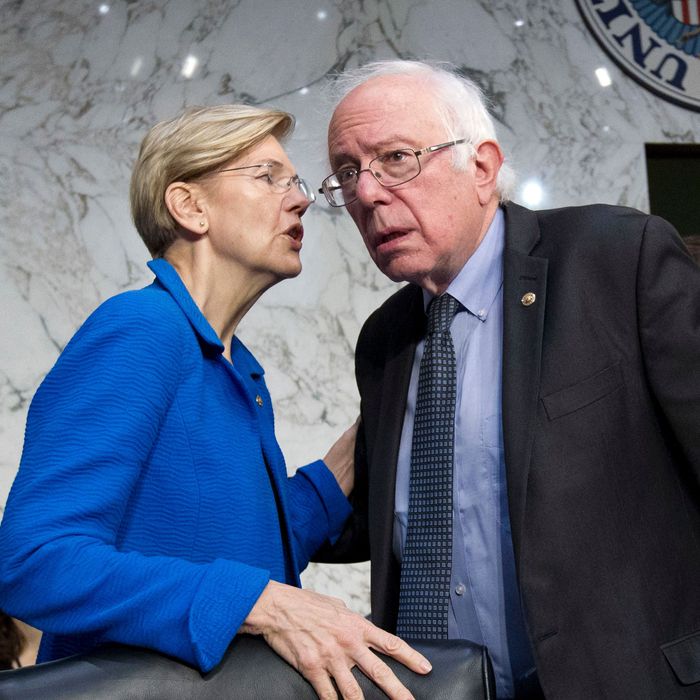
Image result for warren and sanders
We don’t dare tell them the truth about paying for our ideas.

Yes, he understands the needs full well. He also understands how the proposed solutions easily could be funded.

Finally, he knows how to explain Monetary Sovereignty.

If only he and Warren and the rest of the Democrats had the courage.

Rodger Malcolm Mitchell
Monetary Sovereignty
Twitter: @rodgermitchell
Search #monetarysovereignty Facebook: Rodger Malcolm Mitchell

…………………………………………………………………………………………………………………………………………………………………………………………………………………………………………………………………………………………..

The most important problems in economics involve the excessive income/wealth/power Gaps between the richer and the poorer.

Wide Gaps negatively affect poverty, health and longevity, education, housing, law and crime, war, leadership, ownership, bigotry, supply and demand, taxation, GDP, international relations, scientific advancement, the environment, human motivation and well-being, and virtually every other issue in economics.

Implementation of The Ten Steps To Prosperity can narrow the Gaps:

Ten Steps To Prosperity:

1. Eliminate FICA

2. Federally funded Medicare — parts a, b & d, plus long-term care — for everyone

3. Provide a monthly economic bonus to every man, woman and child in America (similar to social security for all)

4. Free education (including post-grad) for everyone

5. Salary for attending school

6. Eliminate federal taxes on business

7. Increase the standard income tax deduction, annually. 

8. Tax the very rich (the “.1%”) more, with higher progressive tax rates on all forms of income.

9. Federal ownership of all banks

10. Increase federal spending on the myriad initiatives that benefit America’s 99.9% 

The Ten Steps will grow the economy, and narrow the income/wealth/power Gap between the rich and you.

MONETARY SOVEREIGNTY
More evidence that the federal government should own all banks

The description of Step #9 of the Ten Steps to Properity (below), “Federal Ownership of All Banks,” begins this way:

Banks are involved in most U.S. dollar creation. Even the dollars created at the direction of the federal government originate with banks.

The two primary dollar-creation methods in the U.S. are bank lending and federal spending:

Each time a bank lends, it simply increases the numbers in the borrower’s checking account. That instantly adds dollars to the money supply.

When the federal government spends, it sends instructions to a creditor’s bank, instructing the bank to increase the numbers in the creditor’s checking account. When the bank does as instructed, dollars are added to the money supply.

This participation in the vast majority of all dollar creation gives banks enormous financial power, and as we all know — and the “Great Recession of 2008” reminds us — power corrupts banks, especially when multiplied by a profit motive and government complicity.

Although the federal government also is powerful and corrupted, it does not suffer from a profit motive, and that makes all the difference. The government neither needs nor uses profits, and unlike bank employees, federal government employees do not receive remunerations based on federal agency profits.

Because the vast majority of banks are not federally owned, and so are monetarily non-sovereign and directed by the profit motive, America’s money supply is subject to criminality and insolvency.

Now, the Trump administration wishes to make an extremely dangerous situation even worse:

Officials Spar With Senators Over Plan For Mortgage Giants
THE ASSOCIATED PRESS — BY MARCY GORDON – AP BUSINESS WRITER

WASHINGTON (AP) — Trump administration officials on Tuesday defended their plan to Congress for ending federal government control of mortgage finance giants Fannie Mae and Freddie Mac, clashing with Democratic senators on whether the change would raise home borrowing costs and neglect lower-income homeowners.

The two finance companies nearly collapsed in the financial crisis 11 years ago and were bailed out at a cost to taxpayers of nearly $190 billion.

Bailing out Fannie and Freddie would have been unnecessary had they been owned by the federal government. The government, being Monetarily Sovereign, cannot unintentionally be insolvent.

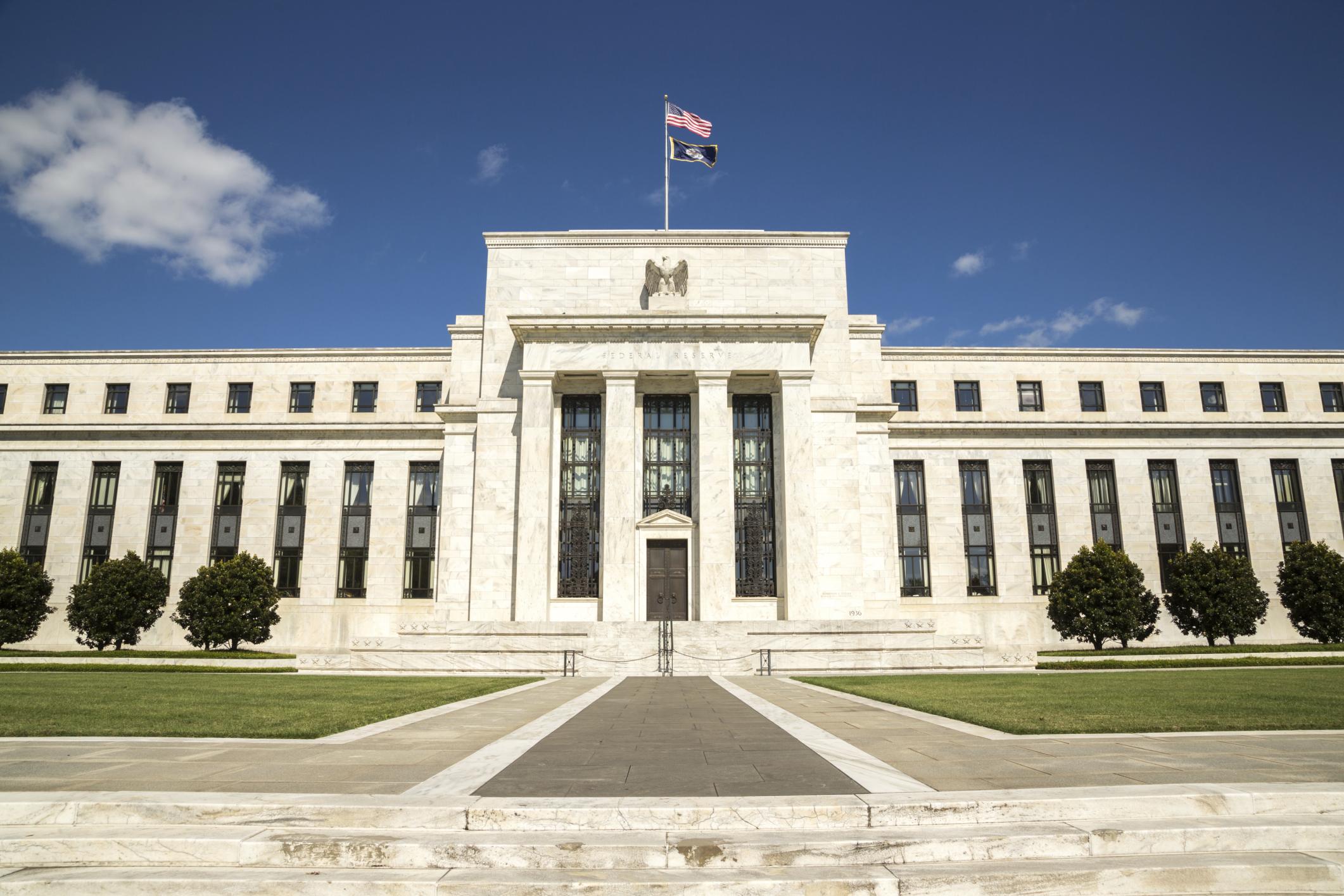
Image result for federal reserve bank
Former Federal Reserve Chairman, Ben Bernanke: “The U.S. government has a technology, called a printing press (or, today, its electronic equivalent), that allows it to produce as many U.S. dollars as it wishes at essentially no cost.”

Because the federal government cannot run short of dollars, no agency of the federal government can run short of dollars, unless Congress and the President will it.

As agencies of the federal government, Fannie and Freddie and all of America’s banks, never unintentionally would run short of dollars.

The “Great Recession” of 2008 was exacerbated by privately-owned banks running short of dollars, requiring “bailouts” by the federal government.

Though these bailouts cost taxpayers nothing (no tax was levied as a result and federal taxes do not fund federal spending), the need for bailouts did inject fear and uncertainty into the economy, which acted accordingly. The fear and uncertainty were nearly as harmful as the actuality.

Treasury Secretary Steven Mnuchin and Housing and Urban Development Secretary Ben Carson, along with regulator Mark Calabria, director of the Federal Housing Finance Agency, testified before the Senate Banking Committee on the plan for returning Fannie and Freddie to private ownership.

The companies have become profitable again and have fully repaid their bailouts. Under the plan, their profits would no longer go to the Treasury but would be used to build up their capital bases as a cushion against possible future losses.

If Freddie and Fannie were owned by the federal government, there would be no need to “build up their capital bases as a cushion against possible future losses.” Having an unlimited supply of money, the federal government creates money, ad hoc.

Image result for federal reserve bank
Former Federal Reserve Chairman, Alan Greenspan: “A government cannot become insolvent with respect to obligations in its own currency.”

Fannie and Freddie together guarantee roughly half of the $10 trillion U.S. home loan market. They don’t make home loans.

They buy them from banks and other lenders, and bundle them into securities, guarantee them against default and sell them to Wall Street investors.

Calabria said Fannie and Freddie’s capital must be bulked up “to match their risk profiles” and avoid another bailout. “In their current financial condition, the (companies) are not equipped to withstand a downturn in the housing market,” he testified, adding, “It keeps me up at night.”

Mr. Cabria would not need to “stay up at night” if Fannie and Freddie were owned by the federal government.

The federal government would not have to “bulk up to match and risk profile” and never would need a bailout.

The administration promises in the plan to preserve homebuyers’ access to 30-year, fixed-rate mortgages, which are the pillar of housing finance.

The plan “would preserve the longstanding government support of the 30-year, fixed-rate mortgage loan,” Mnuchin said. “That support, however, should be explicitly defined, tailored and paid for.”

The administration’s “30-year” promises are humorous at best and deceptive at worst. Not only does this administration have zero credibility (the President lies incessantly), but at worst he will be in office for only five more years. What happens when a new administration takes over?

(Would you buy life insurance from a company that doesn’t pay its policyholders, and is guaranteed to go out of business in five years?)

Mnuchin acknowledged that for prices of 30-year mortgages to remain close to current market levels, some level of government support would be needed.

The most secure “level of support” would be ownership.

The administration initially looked to Congress for legislation to overhaul the housing finance system and return the companies to private shareholders.

But Congress hasn’t acted, and now officials say they will take administrative action for the core change, ending the Fannie and Freddie conservatorships. They haven’t given a timeline for the administrative action.

“Administrative action is even less secure than a law. It easily could be changed, without Congressional action, by the next administration. IF (big “IF”) legal, it still would be a silly step, even for the feckless Trump administration.

“The Trump plan will make mortgages more expensive and harder to get,” said Sen. Sherrod Brown of Ohio, the committee’s senior Democrat.

A flashpoint came over the issue of affordable housing. Fannie and Freddie currently have mandated targets for helping low-income and minority borrowers to buy homes.

A change outlined in the plan, which would have to be approved by Congress, would replace Fannie and Freddie’s affordable housing goals with more “tailored support” for first-time homebuyers and low- and moderate-income borrowers. “We want to do it in the most effective way,” Mnuchin said.

For a Trump appointee, “the most effective way” means a way that will most benefit rich investors.

And then we come to the always dependable Trump toady, Ben Carson:

Under Carson, HUD proposed last month to make it harder for people to prove unintentional discrimination, known as “disparate impact,” against mortgage lenders and landlords.

And finally, we come to the single most humorous comment in the article:

Sen. John Kennedy, R-La., implored the officials to put a proposal before Congress. “This whole thing is a car wreck; it’s a dumpster fire,” Kennedy said. Put it before the committee, “and let senators be senators.”

Letting senators be senators is something that has not happened under the leadership of Sen. Mitch McConnell, who frequently has vowed not to bring any legislation to the floor unless Donald Trump approves of it.

So in what way will senators be senators?

As we said in Step #9:

Allowing private ownership of banks and expecting honesty is like putting meat on a dog’s tongue, and expecting him not to swallow.

In Summary: No public purpose is served when the banking industry is in private hands. For many of the same reasons the U.S. Treasury is owned by the federal government, the federal government also should nationalize and run all banks.

Privatization is favored by the very rich because it almost always puts dollars into their pockets, while seldom working for the public. That is the Trump administration’s reason for wanting to privatize Fannie and Freddie.

All bank problems boil down to the profit motive.

We should eliminate those fundamental problems, and there is no better way to eliminate the profit motive than to put all banks under total federal government control, i.e. ownership.

Contact your Senators and tell them not to allow Trump and his cronies to steal at your expense.

Rodger Malcolm Mitchell
Monetary Sovereignty
Twitter: @rodgermitchell
Search #monetarysovereignty Facebook: Rodger Malcolm Mitchell

…………………………………………………………………………………………………………………………………………………………………………………………………………………………………………………………………………………………..

The most important problems in economics involve the excessive income/wealth/power Gaps between the richer and the poorer.

Wide Gaps negatively affect poverty, health and longevity, education, housing, law and crime, war, leadership, ownership, bigotry, supply and demand, taxation, GDP, international relations, scientific advancement, the environment, human motivation and well-being, and virtually every other issue in economics.

Implementation of The Ten Steps To Prosperity can narrow the Gaps:

TEN STEPS TO PROSPERITY:

1. Eliminate FICA

2. Federally funded Medicare — parts a, b & d, plus long-term care — for everyone

3. Provide a monthly economic bonus to every man, woman and child in America (similar to social security for all)

4. Free education (including post-grad) for everyone

5. Salary for attending school

6. Eliminate federal taxes on business

7. Increase the standard income tax deduction, annually. 

8. Tax the very rich (the “.1%”) more, with higher progressive tax rates on all forms of income.

9. Federal ownership of all banks

10. Increase federal spending on the myriad initiatives that benefit America’s 99.9% 

The Ten Steps will grow the economy, and will narrow the income/wealth/power Gap between the rich and you.

MONETARY SOVEREIGNTY


Why does the federal government resist education?

Intelligent Americans long have recognized that our future national success rests on the shoulders of our educated populace. They are the ones who will lead us.

That is why today, every municipality offers free education for grades K-12.

On April 23, 1635, the first public school in what would become the United States was established in Boston, Massachusetts. Known as the Boston Latin School..

After the U.S. Revolution, northern states especially emphasized education and rapidly established public schools.

By the year 1870, all states had tax-subsidized elementary schools. The US population had one of the highest literacy rates in the world at the time.

Private academies also flourished in the towns across the country, but rural areas (where most people lived) had few schools before the 1880s.

By the close of the 19th century, public secondary schools began to outnumber private ones.

We live in the 21st century, when a widespread college education is as important to America’s success as a high school education was in the 19th century. Yet still, we cling to the archaic notion that while elementary school and high school are paid for by governments, college and beyond must be paid for by individuals.

The time has come to realize that American leadership always has required universal education, the only difference being that in the 1800’s an elementary school, and then later a high school education were sufficient, while here in the 2000’s, advanced education has becomes necessary.

Sadly, we have not yet learned that lesson. We insist on making it difficult for American students to receive the best possible education:

Bloomberg: U.S. Student Loan Debt Sets Record, Doubling Since Recession
By Alexandre Tanzi, December 17, 2018, 4:00 AM CST
Student debt outstanding reaches a record $1.465 trillion
Borrowers over age 50 debt rises by $28.8 billion in one year

U.S. student loan debt outstanding reached a record $1.465 trillion last month.

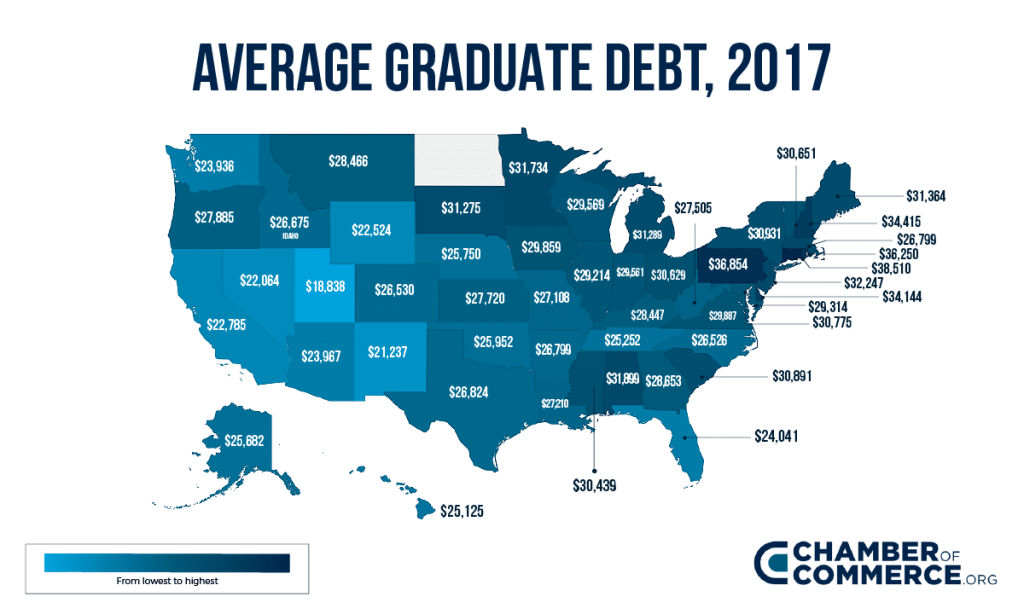
Image result for student debt 2019
American college students are drowning in debt.

“Over 90% of student loans are guaranteed by the U.S. Department of Education, meaning that if a recession causes a rise in youth unemployment and triggers mass defaults, this contingent liability could prove burdensome for the U.S. government budget,” said Paul Della Guardia, economist at the Institute of International Finance in emailed comments.

Get it? Mr. Della Guardia is more concerned about a non-existent burden on the U.S. government than on the real problems of youth unemployment and mass defaults.

The so-called “burden” on the U.S. government is non-existent because the U.S. government is Monetarily Sovereign. It never can run short of its own sovereign currency, the U.S. dollar. It can pay any size debt denominated in dollars. Federal debt, no matter how large, never can be a burden on the federal government.

Federal Reserve Chairman, Alan Greenspan: “A government cannot become insolvent with respect to obligations in its own currency.”

By contrast, indebted students are monetarily non-sovereign. They can and often do, run short of dollars and become insolvent.Related image

A Bloomberg analysis found that students who took a loan in 2012 have had a much more difficult time making their monthly payments compared to students who received loans shortly before and after — students who have had a similar amount of time to pay them down.

A large percentage of those who took out loans in 2012 are currently 24-33 years old, an age where many are generally establishing themselves in their careers.

Borrowers in this group entered the labor force when the unemployment rate was twice as high as today and may have found it difficult to find a career track in their desired field.

Further adding to the difficulties faced by this group was that finding a position in 2012 took almost three times longer than today, according to data from the Bureau of Labor Statistics.

The interest rate for a direct student loan disbursed on or after July 1, 2018, and before July 1, 2019, is more than 100 basis point higher than those issued in 2012 adding to the concern about the size of student loan debt outstanding.

Many student loan borrowers face significant debt burdens. Over 2.7 million borrowers owe in excess of $100,000, of which, about 700,000 owe $200,000 or more, according to data from the U.S. Department of Education. One year earlier, 2.5 million owed in excess of $100,000.

The single largest asset on the Federal government’s balance sheet is Student Loans— the amount students owe to the federal government, which neither needs nor uses the money.

By not recognizing the national importance of advanced education, we have doomed an entire generation to failure — a failure that significantly will reduce America’s competitive and strategic successes.

This is more than shortsighted. It is part of the same plan that attempted to eliminate ACA (“Obamacare”), cut Medicare, cut food stamps, cut Social Security, and cut consumers’ protections against business fraud.

It is a reflection of the Gap Psychology of the rich who run America.

Gap Psychology is the desire to distance oneself from lower-income/wealth/power people, while coming closer to the higher income/wealth/power people.

There were times in America, when Gap Psychology ruled:

When it was a crime to teach slaves how to read and write.

When women were not allowed to vote.

When immigration from Ireland was blocked: “The refugees seeking haven in America were poor and disease-ridden. They threatened to take jobs away from Americans and strain welfare budgets. They practiced an alien religion and pledged allegiance to a foreign leader. They were bringing with them crime. They were accused of being rapists. And, worst of all, these undesirables were Irish.” (Does this sound familiar?)

As is usual with the very rich, Gap Psychology is far more important than compassion for the less fortunate or concern for America’s future. Thus anything that would benefit the middle- and lower-income groups, i.e. narrow the Gap, is strenuously resisted.

Even some in the middle-classes are complicit, when they adopt the shortsighted, “If I had to pay, they should pay” position.

It’s the old question,  “Why can’t crabs escape a bucket? Answer: When some try to climb out, the others pull them back down.” That is a version of Gap Psychology in which a man doesn’t want former peers to succeed, opening a new Gap between him and them (aka, “envy.”)

And that is why today, we do not have a national system of free advanced education. It’s urgently needed, but the rich don’t want it.

Most parents can’t afford to place their children in exclusive, private or preparatory schools.

For the majority of U.S. families, public education is the only option. Public elementary and secondary education money usually flows from three sources: the federal, state and local governments. According to the U.S. Department of Education, states contribute nearly as much as local governments, while the federal government supplies the smallest share.

Yet, it is the federal government that is best able financially to pay for education.

We’ll close with excerpts from the following article:

The former student loan ombudsman for the Consumer Financial Protection Bureau (CFPB) believes that agency has been a “complete failure” over the last year and has “completely walked away from its mission” regarding student loan borrowers.

Seth Frotman, who resigned in protest in August 2018, expressing outrage at the then-leadership’s treatment of the nearly $1.5 trillion student loan industry, asserted that things have gotten even worse since his departure.

“I honestly don’t say this lightly, but I don’t know how you could look at the things that have happened over the last year … [and] under the new leadership of the bureau and not say that it is a complete failure in doing its job on behalf of student loan borrowers,” Frotman said. “The current political leadership at the CFPB has prioritized the interests of the student loan industry over the very real plight of the 44 million Americans who have student loan debt.”

We have suggested as part of the Ten Steps to Prosperity, Steps #:

See: 4. Free education (including post-grad) for everyone (Tuition, supplies, transportation, meals, etc. all should be funded by the federal government.)
See: 5. Salary for attending school (Many students drop out of high school to enter the employment world early because they and their families need the money. Even with scholarships, many families cannot afford to send their children to high school, let alone to college and beyond.)

In summary
Millions of our best and brightest young people are hamstrung by lack of money. Not only do finances force children to leave high school or college early, but those who are able to attend college face onerous loan repayments to a government that has unlimited money and does not need to collect money from students.

These loan repayments prevent many young people, who are in the usually most productive growth years of their lives, from investing time, money, and talent into businesses and scientific pursuits that would have benefitted America. Lack of finances turns productive years into lost years.

America is forgoing the national benefits that these young brains could provide.

As a result, America no longer is a world educational leader.

Excerpts from 11 FACTS ABOUT EDUCATION IN AMERICA

–30 years ago, America was the leader in quantity and quality of high school diplomas. Today, our nation is ranked 36th in the world.
–1.3 million high school students don’t graduate on time yearly. States with highest rates (80-89%) are Wisconsin, Iowa, Vermont, Pennsylvania and New Jersey. States with lowest (less than 60%) are Nevada, New Mexico, Louisiana, Georgia and S. Carolina.
–A student living in poverty is 13 times less likely to graduate high school on time.
–In the workplace, 85% of current jobs and 90% of new jobs require some or more college or post-secondary education.
–Only half of the students who enter a 4-year school will receive a bachelor’s degree within 6 years.

Advanced education is as important a protector of America’s future as is the military. The government should be doing everything possible to fulfill this need.

The federal government should stop resisting education, and pay off all student loans, then eliminate the need for student borrowing and student indebtedness. America needs an educated populace.

Rodger Malcolm Mitchell
Monetary Sovereignty
Twitter: @rodgermitchell
Search #monetarysovereignty Facebook: Rodger Malcolm Mitchell

…………………………………………………………………………………………………………………………………………………………………………………………………………………………………………………………………………………………..

The most important problems in economics involve the excessive income/wealth/power Gaps between the richer and the poorer.

Wide Gaps negatively affect poverty, health and longevity, education, housing, law and crime, war, leadership, ownership, bigotry, supply and demand, taxation, GDP, international relations, scientific advancement, the environment, human motivation and well-being, and virtually every other issue in economics.

Implementation of The Ten Steps To Prosperity can narrow the Gaps:

Ten Steps To Prosperity:

1. Eliminate FICA

2. Federally funded Medicare — parts a, b & d, plus long-term care — for everyone

3. Provide a monthly economic bonus to every man, woman and child in America (similar to social security for all)

4. Free education (including post-grad) for everyone

5. Salary for attending school

6. Eliminate federal taxes on business

7. Increase the standard income tax deduction, annually. 

8. Tax the very rich (the “.1%”) more, with higher progressive tax rates on all forms of income.

9. Federal ownership of all banks

10. Increase federal spending on the myriad initiatives that benefit America’s 99.9% 

The Ten Steps will grow the economy, and narrow the income/wealth/power Gap between the rich and you.

MONETARY SOVEREIGNTY
Another pro-rich, anti-you scam by Trump: Privatize Fannie Mae & Freddie Mac

The description of “The Ten Steps to Prosperity”, Step #9, “Federal Ownership of all Banks, “ (below) begins this way:

Banks are involved in most U.S. dollar creation. Even the dollars created at the direction of the federal government originate with banks.

The two primary dollar-creation methods in the U.S. are bank lending and federal spending:

Each time a bank lends, it simply increases the numbers in the borrower’s checking account. That instantly adds dollars to the money supply.

When the federal government spends, it sends instructions to a creditor’s bank, instructing the bank to increase the numbers in the creditor’s checking account. When the bank does as instructed, dollars are added to the money supply.

This participation in the vast majority of all dollar creation gives banks enormous financial power, and as we all know — and as the “Great Recession of 2008” reminds us —  power corrupts banks, especially when multiplied by a profit motive and government complicity.

Although the federal government also is powerful and corrupted, it does not suffer from a profit motive, and that makes all the difference.

The government neither needs nor uses profits, and unlike bank employees, federal government employees do not receive outlandish remunerations based on federal agency profits.

There is zero public purpose or benefit to be gained from private ownership of the primary money-creation sources in America. Creating and controlling the U.S. sovereign currency, the U.S. dollar, should be the province of the federal government.

And now, as usual, Donald Trump and his rich backers wish to take a giant step further in their desire for private (read, “rich”) ownership of America’s money supply.

Let us parse a brief article describing the latest scheme to make the rich richer:

Trump administration plan aims to privatize Fannie Mae and Freddie Mac
By Catherine Garcia, THE WEEK, September 5, 2019

The Treasury Department released a plan Thursday aimed at overhauling the U.S. housing market.

A key component of the plan has the government relinquishing control over Fannie Mae and Freddie Mac in order to privatize the mortgage buyers.

Privatization is a favorite ploy of the very rich, to cut services or benefits to the public and stuff dollars into the pockets of the wealthy. (See: “Here we go again: More privatization scam”, and “I smell the meat a’cookin’, The new privatization scam”

“Government relinquishing control” is a euphemism for “Lock up the police and let the crooks run wild.”

Fannie Mae and Freddie Mac, which back half of the country’s mortgages, have been under government conservatorship since the 2008 financial crisis.

The reason for the government conservatorship: Private bankers, whipped to an frenzy by the profit motive, proved they could not be trusted when their reckless greed plunged the nation into the worst recession since the Great Depression.

Under the Trump administration plan, Freddie Mac and Fannie Mae would be privatized again and required to pay a fee for government protection.

This approach does not require any approval from Congress, and the plan doesn’t detail what will happen to the government’s stakes in the firms or how they will build their capital up enough so they can go private again, The Washington Post reports.

“Government protection” is not “government supervision,” and much, much less secure than “government ownership.” 

“Government protection” merely means: Lie, cheat, and steal all you want, and if you get caught, or the markets go against you, the government will bail you out, again — and no (rich) one will go to jail (though a couple of low-paid flunkees might).

There is not a single, public purpose that would be served by privatizing Freddie Mac and Fannie Mae.

Quite the opposite, it would free the profit-insatiable, salivating dogs of the banking industry, to do exactly what they did to cause the Great Recession: Lie, cheat, and steal.

The Trump administration hopes you have forgotten the Great Recession or at least will vote against your own best interests, because of loyalty to the Republican party.

Housing prices continue to rise across the country, and Treasury Secretary Steven Mnuchin said the proposal “will protect taxpayers and help Americans who want to buy a home.”

How will privatization “protect taxpayers” and “help Americans buy a home“? Trump’s Mnuchin never says, because there is no way. Instead, it will protect the rich and help them buy mansions (and yachts and other expensive toys).

  1. Privatizing Freddie and Fannie will not reduce housing prices. Quite the opposite, as the profit motive will increase mortgage costs.
  2. Taxpayers will not be protected. Federal taxpayers do not pay for federal spending. The only protection for federal taxpayers is cutting federal tax rates.
  3. The GOP, historically and especially under Trump, has shown no penchant to “protect” anyone but the very rich. Trump’s cuts to regulations related to global warming, gas mileage, oil drilling, and bank security have benefitted the rich at the expense of the non-rich and our children.

Sen. Sherrod Brown (D-Ohio) disagrees, telling the Post that the plan “will make mortgages more expensive and harder to get.

I’m urging the president: Make it easier for working people to buy or rent their homes, not harder.”

The Monetary Sovereignty of the United States government helps make America great. Nations that have surrendered their Monetary Sovereignty (i.e. the euro nations) continue to struggle financially, while the U.S. has prospered.

The foundation of Monetary Sovereignty is the federal government’s control over its sovereign currency, the U.S. dollar. Anything that reduces federal control over the dollar makes America financially weaker.

Bankers cannot be trusted with America’s future. This President (who has taken his own companies into bankruptcies six times [!]) and his toadies do not wish to create consumer-friendly financial laws. (Who ever heard of a casino owner — a casino owner!! — repeatedly going bankrupt, just to cheat creditors?)

In fact, the Republicans have destroyed, wherever they could, the laws protecting the middle- and lower-income groups. 

[See also here and here and here.]

The profit motive has many benefits for Americans, but allowing the very rich to create and rule America’s sovereign currency is not one of them.

Ownership of the U.S. dollar always has been the long-held dream of the GOP and its very rich membership; it will be a nightmare for America.

Rodger Malcolm Mitchell
Monetary Sovereignty
Twitter: @rodgermitchell
Search #monetarysovereignty Facebook: Rodger Malcolm Mitchell

…………………………………………………………………………………………………………………………………………………………………………………………………………………………………………………………………………………………..

The most important problems in economics involve the excessive income/wealth/power Gaps between the richer and the poorer.

Wide Gaps negatively affect poverty, health and longevity, education, housing, law and crime, war, leadership, ownership, bigotry, supply and demand, taxation, GDP, international relations, scientific advancement, the environment, human motivation and well-being, and virtually every other issue in economics.

Implementation of The Ten Steps To Prosperity can narrow the Gaps:

Ten Steps To Prosperity:

1. Eliminate FICA

2. Federally funded Medicare — parts a, b & d, plus long-term care — for everyone

3. Provide a monthly economic bonus to every man, woman and child in America (similar to social security for all)

4. Free education (including post-grad) for everyone

5. Salary for attending school

6. Eliminate federal taxes on business

7. Increase the standard income tax deduction, annually. 

8. Tax the very rich (the “.1%”) more, with higher progressive tax rates on all forms of income.

9. Federal ownership of all banks

10. Increase federal spending on the myriad initiatives that benefit America’s 99.9% 

The Ten Steps will grow the economy, and narrow the income/wealth/power Gap between the rich and you.

MONETARY SOVEREIGNTY