Introducing The Chicago Tribune’s Department of The Big Lie

The Chicago Tribune has a very special department. It should be called “The Department of the Big Lie,” but strangely it is called “The Editorial Page.”

This department is populated by such luminaries as:

Par Ridder, General Manager
Colin McMahon, Editor-in-Chief
John P. McCormick, Editorial Page Editor
Margaret Holt, Standards Editor
Christine W. Taylor, Managing Editor
along with directors of Content:
Jonathon Berlin, Amy Carr, Phil Jurik, Amanda Kaschube, Todd Pamagopoulos, George Papajohn, and Mary Ellen Podmolik

Considering that the Tribune Department of the Big Lie employs these twelve experts, and perhaps many others, who devote their lives and expertise in crafting their Big Lies, the Department should have honed its skills to a fine point.

And so it has, for some of their “best” editorials are replete with Big Lies — direct statements, hints, and untrue inferences — as today’s post will demonstrate.

Before we begin the demonstration, we should tell you exactly what the Big Lie is:

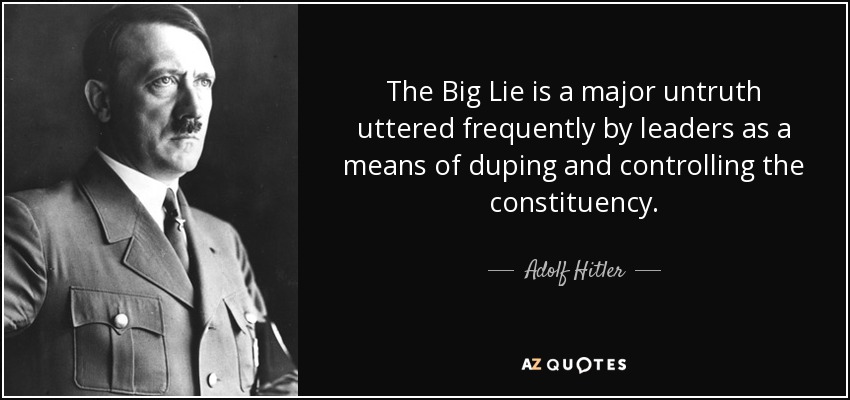
The Big Lie is the false claim that federal taxpayers fund federal government spending.

While state and local taxpayers do fund state and local government spending, federal taxpayers dollars do not fund federal spending.

Image result for firefighter
“Use as little water as possible.”

The difference comes from the fact that the federal government is Monetarily Sovereign, while state and local governments are not.

Way back in the 1780s, the U.S. federal government created the U.S. dollar from thin air. It did it by passing arbitrary laws from thin air.

These laws arbitrarily provided for the number of dollars and for the value of each dollar.

While the details of these laws have arbitrarily (note the repeated use of the word, “arbitrary”) been changed over the years, the fundamentals remain the same.

The federal government still arbitrarily creates dollars and their value.

As distinguished financial leaders have told us:

Fed Chairman Alan Greenspan: “A government cannot become insolvent with respect to obligations in its own currency.”
Fed Chairman Ben Bernanke: “The U.S. government has a technology, called a printing press (or, today, its electronic equivalent), that allows it to produce as many U.S. dollars as it wishes at essentially no cost.
Famous Wealth Manager Warren Buffet: “Those who regularly preach doom because of government budget deficits (as I regularly did myself for many years) might note that our country’s national debt has increased roughly 400 fold during the last of my 77-year periods. That’s 40,000%!” [Today it’s over 50,000%]

By contrast, your state and local governments are monetarily non-sovereign. They did not create the U.S. dollar. They only use it. They cannot, as Federal Reserve Chairman said, “produce as many dollars as (they) wish at essentially no cost.”

Now think about this very closely: If the federal government cannot become insolvent, and can produce as many dollars as it wishes, what is the purpose of federal taxes? Obviously, not to pay for spending.

The primary purposes are:

1. To control the economy by rewarding activities the federal government wishes to encourage and by punishing the activities the government wishes to discourage, and
2. To make the populace believe the government’s ability to spend is limited by taxes, so that the people will not ask for more benefits.

Image result for franklin d roosevelt
President Franklin D. Roosevelt

This has been well-known for many years. As President Franklin D. Roosevelt said, with regard to Social Security (FICA) taxes,

“With those taxes in there, no damn politician can ever scrap my social security program. Those taxes aren’t a matter of economics, they’re straight politics.”

And it is in political Purpose #2 that the Tribune’s Department of the Big Lie plies its trade. Here are the promised examples from the editorial of 3/33/2020. We begin with the title:

Washington’s coronavirus reflex: Spend, spend, spend

Immediately, we see the disdain for federal spending exhibited by the Department of The Big Lie. The clear inference of the word “reflex” and the repetition of the word “spend” is that this is spending profligate and somehow foolish.

The facts are that federal spending is necessary to grow the economy, and massive federal spending is necessary to prevent today’s economy from falling into a depression.

Further, to date, Congress has not shown the proclivity to spend enough. In these perilous times, the deficit spending for the Ten Steps to Prosperity, which would stop a depression before it starts, requires at least $7 trillion, probably more.

The article says:

The federal government has the power to commit near limitless amounts of taxpayer money to replace every missing paycheck, protect every nervous employer and save every buckling business.

To go big, as President Donald Trump vows. To spread cash around. To make payrolls. To save airlines.

And there’s the first outright statement of The Big Lie, for while the state and local governments do spend taxpayer money, the federal government does not.

You will be saddened (outraged?) to learn that those federal tax dollars you sweat and strain to earn, then sweat and strain to calculate, then are obliged to pay under penalty of law — those dollars are destroyed upon receipt by the U.S. Treasury.

Instead, the government creates brand new dollars, every time it pays a bill. The process: When your dollars reach the Treasury, they disappear from all measures of the U.S. money supply. In that sense, dollars held by the government cease to exist.

It thus, is nonsensical to ask, “How many dollars does the federal government have?” It “has” infinite dollars.

To pay a creditor, the federal government sends instructions (in the form of a check or bank wire) to the creditor’s bank, instructing the bank to increase the balance in the creditor’s checking account. The moment the bank follows those instructions, new dollars are created and added to the money supply (M1).

The federal government can issue such instructions endlessly, whereas the state and local governments are limited by the dollars held in their own bank accounts.

There’s panic selling on Wall Street and panic promising in Washington, where Congress is compiling a $1 trillion-plus emergency fiscal stimulus package.

How much exactly and to benefit whom? As The Associated Press notes ominously: All the pressure is for the package to keep growing.

The growth of the “package” is “ominous” only for those who wish to convey the false notion that federal debts, i.e. debts of a government that has the unlimited ability to pay its debts, are “ominous.”

The caution we express is about the secondary coronavirus effect: the rush by politicians to throw money at this crisis in hopes of making all negative and unanticipated consequences go away.

It’s business as usual for government to spend other people’s money aggressively. When in doubt, spend. When not in doubt, spend. When in crisis, spend more.

That’s the only way to look at the White House plan to fight the virus by, yes, writing checks to most Americans.

Note the load of pejorative words: “Rush,” “throw money at,” and “business as usual.” Finally, we are treated to a sentence that contains the word “spend” three times.

If the crisis were a fire, and the politicians were firefighters, would the Tribune’s Department of The Big Lie criticize them for rushing to throw water on the fire, as “business as usual”?

How much of your money, taxpayers, is Washington willing to hand out? Treasury Secretary Steve Mnuchin suggests a family of four would receive $3,000 a month, as both assistance and stimulus for the stagnating economy. Senate Majority Leader Mitch McConnell likes the sound of $1,200 per person.

Again, it’s not taxpayer money. Even if all federal tax collections totaled $0, the government could give that family of four $3,000 — or $13,000, or more. Federal spending is not limited by taxes.e

And then the little jab at McConnell, who is to blithely to “like the sound of” $1,200.

But people still working don’t need the cash. It will arrive as a gift (remember, a gift you are paying for). This is profligacy. Past exercises in government largesse suggest many recipients will save the money instead of spend it.

More lies from the Department of The Big Lie.  First, all federal government spending can be considered a “gift” to someone; no one pays for it.

And if some recipients save money instead of spending it, is that supposed to be a bad thing? Having some money saved gives the populace the confidence to spend money.

If you want the people to spend, you must allow them to save, and this is especially true of big-ticket items.

Bailouts also create a moral hazard, establishing the notion that business owners and investors can take aggressive risks — such as running up enormous debt during good times — because they believe the government will save them.

This creates a destructive cycle: Companies act recklessly, get bailed out, then go forward (even the weaker ones) while still being reckless. Remember that the airlines got bailouts after 9/11.

Ah, “moral hazard.” Apparently, the Tribune’s ever-so-moral Department of The Big Lie has forgotten the following, from Wikipedia:

On December 8, 2008, the Tribune filed for Chapter 11 bankruptcy protection. Company plans originally called for it to emerge from bankruptcy by May 31, 2010, but the company would end up in protracted bankruptcy proceedings for another four years. With the company’s overall debt totaling $13 billion, it was the largest bankruptcy in the history of the American media industry. 

Oops.

During the Great Recession, General Motors and Chrysler received government help. Ford didn’t ask — because it was in better shape. It had prepared.

That’s why we didn’t like those bailouts. If Americans weren’t willing to save automakers by buying their vehicles, they shouldn’t have had to save them with their tax dollars.

The same principle should apply to United Airlines, Boeing and other companies.

The previous paragraphs are not just misleading; They are childish. They make the tacit assumption that allowing General Motors, Chrystler, United Airlines, Boeing and other companies to go out of business doesn’t harm the American public.

While true that this unforeseen epidemic caused passenger airline traffic to virtually disappear, it’s also true airlines failed to prepare for a few months’ disruption.

Few companies operate as though customers will disappear for months. In fact, that is an inefficient way to run a business.

There are ways for struggling companies to survive, such as enticing new investors to provide loans.

(Like the Tribune didn’t do??)

The scariness of this moment is balanced by a certainty: Chicago’s empty streets, closed dining establishments and reduced business activity represent part of a temporary freeze.

The pandemic will lift, and then the economy will roar back to life. Many analysts expect a deep recession with high unemployment followed by recovery within a year.

The above is typical Trump-like “Ho hum, no problem. It’s temporary.” And as for that high unemployment, that will recover in a year — except for the millions of people who cannot sustain a year without income.

This is The Department of The Big Lie’s clueless version of “Let them eat cake.”

Government should be there to provide appropriate assistance. “Appropriate,” we’d add, isn’t a synonym for “unnecessary” or “unlimited.”

And, we would further add, “Editor,” “Manager,” and “director” are not synonyms for “intelligent,” “truthful,” or “compassionate.”

Rodger Malcolm Mitchell
Monetary Sovereignty
Twitter: @rodgermitchell
Search #monetarysovereignty Facebook: Rodger Malcolm Mitchell

…………………………………………………………………………………………………………………………………………………………………………………………………………………………………………………………………………………………..

THE SOLE PURPOSE OF GOVERNMENT IS TO IMPROVE AND PROTECT THE LIVES OF THE PEOPLE.

The most important problems in economics involve:

  1. Monetary Sovereignty describes money creation and destruction.
  2. Gap Psychology describes the common desire to distance oneself from those “below” in any socio-economic ranking, and to come nearer those “above.” The socio-economic distance is referred to as “The Gap.”

Wide Gaps negatively affect poverty, health and longevity, education, housing, law and crime, war, leadership, ownership, bigotry, supply and demand, taxation, GDP, international relations, scientific advancement, the environment, human motivation and well-being, and virtually every other issue in economics.

Implementation of Monetary Sovereignty and The Ten Steps To Prosperity can grow the economy and narrow the Gaps:

Ten Steps To Prosperity:

1. Eliminate FICA

2. Federally funded Medicare — parts A, B & D, plus long-term care — for everyone

3. Provide a monthly economic bonus to every man, woman and child in America (similar to social security for all)

4. Free education (including post-grad) for everyone

5. Salary for attending school

6. Eliminate federal taxes on business

7. Increase the standard income tax deduction, annually. 

8. Tax the very rich (the “.1%”) more, with higher progressive tax rates on all forms of income.

9. Federal ownership of all banks

10. Increase federal spending on the myriad initiatives that benefit America’s 99.9% 

The Ten Steps will grow the economy and narrow the income/wealth/power Gap between the rich and the rest.

MONETARY SOVEREIGNTY
How Trump reacts to the first crisis of his administration by “Making America Great Again”

And here you thought that a frequently bankrupt TV actor, surrounded by incompetent and crooked friends, who has a serious allergy to the truth, would not be up to the task, when a crisis arrived.

Well, the crisis has arrived, and weren’t you the surprised one.

Here is what Ryan Cooper of THE WEEK said:

The United States has faceplanted on every single aspect of the response.

Our health care system is a bitter joke. We do not even have universal coverage, and what coverage we have is a usurious, fragmented, Kafkaesque nightmare that routinely bankrupts people who get sick.Image result for big lie

Part of the problem is that the conservatives have been promulgating the Big Lie that Medicare, and especially Medicare for All, is some sort of socialist plot.

And the populace which, understandably is clueless about federal financing, believe the lie, so they vote against their own best interests.

Heaven forbid that a Monetarily Sovereign government, having unlimited access to money without levying taxes, should fund health care for all the men, women, and children in America.

Better to build a useless Wall against much-needed Mexican immigrants (See: Mulvaney says US ‘desperate’ for legal immigrants to boost economy) than to fight a deadly disease, according to Donald “We’re not a shipping clerk” Trump.

By making legal immigration so difficult, Trump has set the economy up for failure.

Continuing with excerpts from Cooper’s article:

President Trump’s direct response has also been horrifically bungled.

We still do not have enough tests at least two months after we should have had them. He has not secured supplies of vital equipment like masks and ventilators, and hospitals are already running short.

He did not even start activating the Army Corps of Engineers until a couple days ago.

Hospital ships that Trump boasted were on their way turned out to be docked for maintenance and will take days to get moving.

An economic support measure (which contains some emergency paid leave and unemployment insurance provisions that are worse than what most European countries have in normal times) is bogged down in Congress.

And keep in mind that most of the European governments are monetarily non-sovereign, meaning they do not have unlimited access to money, and so must pay for everything out of taxes.

Yet somehow, they manage to spend more to benefit their citizens than does the U.S. government.

Perhaps worst of all, Trump, Republican politicians, and right-wing media consistently downplayed the epidemic for weeks as it gathered strength.

As the virus quietly spread through the population, Trump was still claiming “The coronavirus is very much under control in the USA,” and conservative media was claiming it was no worse than the flu.

Just in the last few days, Republican hack propagandists like Sean Hannity have pivoted on a dime from “I see it, again, as like, let’s bludgeon Trump with this new hoax,” to “this program has always taken the coronavirus seriously. We’ve never called the virus a hoax.”

The only people surprised by Donald (18,000 lies) Trump’s repeated misstatements are the Fox News addicts, who also believe what truly evil men like Sean (forked tongue) Hannity, and Russ “the coronavirus is the common cold” Limbaugh tell them.

At any rate, this all suggests the sketch of a broad policy agenda to fix this outbreak and head off future ones.

First, the wretched American health care system needs to be sharply augmented on an emergency basis and eventually replaced with something that actually works, like Medicare-for-all.

This is Step 2. of the Ten Steps to Prosperity: Federally funded Medicare — parts A, B & D, plus long-term care — for everyone

There are zero reasons for not doing this. The four false reasons are:

–It would increase the federal deficit and debt, which as readers of this blog know, are false reasons because the federal government can support any size deficit and debt, even without collecting taxes.

-Federal spending would cause inflation, which is false because federal spending never causes inflation (not even in Zimbabwe or in the Weimar Republic). Inflation always is caused by shortages, usually shortages of food and/or oil.

–It’s socialist. This one may be the most ignorant of all. It’s the same objection that was leveled at the original Medicare. First, socialism is federal ownership and control over resources. Medicare for all would be funding, not ownership and control. And if you don’t like federal funding, then close down the government, for that is all the government does: Fund things. That’s the whole purpose of government.

–There would be long waits for medical services. The people who say this are merely saying that they want poor people to do without medical services. If the money is available, the services will be created.

Medicare for All should be implemented now, today, simply by lowering the age requirement. That is how to “make America great again,” not by wall-building.

Second, the federal government is in shambles and needs a total overhaul. To start with, we should copy Taiwan’s pandemic systems so that response teams and supplies are always ready to go on a moment’s notice.

More broadly, state capacity, which has been gutted by decades of conservative austerity, anti-science, and anti-expertise dogmatism, must be rebuilt across the board.

Conservatives have insisted for decades that the government is all but useless, and today we are all paying the price.

Third, Trump should be turned out of office and the conservative movement should be comprehensively defeated politically.

It turns out there are some serious downsides to having a narcissistic reality TV host in charge of the country.

Oh, he’s not just a narcissistic reality TV host. He’s much less than that. Here is what he really is.

In summary, rather than MAGA, our Hitler wanna-be is doing everything he can to turn America into a backward banana republic, ruled by incompetent criminals and family members, and led by a ruthless, lying psychopath (Yes, Trump really is a psychopath. He flunks the Hare Psychopathy Checklist-Revised, which is used to diagnose the presence of psychopathy).

But the people most at fault are not the criminals, incompetents, and family members. The people most at fault are Trump’s followers, who despite all the evidence smacking them in the face, continually excuse his every act of evil.

As Trump himself bragged, they even would excuse him if he shot someone on 5th Ave.

Why?

In Hitler’s case, the Germans had been beaten during WWI, and were being punished financially by the allies. Germans, angrily licking their wounds, desperately needed two things: Scapegoats and a leader who would punish the scapegoats.

So along came Hilter who appealed to their fear, anger, and bigotry by promising to punish the scapegoats (Jews), and to make Germany great, again.

In America, the adult white population was resentful of the Mexicans, other people of color, foreigners, and the poor, who were “being given preference for everything” and who were going to be “running the country.”

So along came Trump, who promised to punish those minorities and aliens, who were being “given preference.”

He appealed to the pent-up bigotry of the “religious” whites, and now, despite his obvious failings, hatred has overcome reason, which has led to this incredible statistic:

An ABC News/Ipsos poll released Friday reports that 55 percent of respondents approve of Trump’s management of the public health crisis, while 43 percent disapprove.

The latest figures represent a boost in the president’s rating from the previous iteration of the survey, published one week ago, which showed only 43 percent approval for Trump and 54 percent disapproval.

And this brings us to the famous quote by H.L Mencken:

“No one in this world, so far as I know — and I have searched the records for years, and employed agents to help me — has ever lost money by underestimating the intelligence of the great masses of the plain people.

“Nor has anyone ever lost public office thereby.”Image result for trump as pied piper

And now, the great masses of plain people, will suffer and suffer and suffer, because they have allowed their fears and hatreds to overcome their eyes, and ears, and common sense, and ignorantly follow the Pied Piper to their doom.

Ignorance has its penalties

Rodger Malcolm Mitchell
Monetary Sovereignty
Twitter: @rodgermitchell
Search #monetarysovereignty Facebook: Rodger Malcolm Mitchell

…………………………………………………………………………………………………………………………………………………………………………………………………………………………………………………………………………………………..

THE SOLE PURPOSE OF GOVERNMENT IS TO IMPROVE AND PROTECT THE LIVES OF THE PEOPLE.

The most important problems in economics involve:

  1. Monetary Sovereignty describes money creation and destruction.
  2. Gap Psychology describes the common desire to distance oneself from those “below” in any socio-economic ranking, and to come nearer those “above.” The socio-economic distance is referred to as “The Gap.”

Wide Gaps negatively affect poverty, health and longevity, education, housing, law and crime, war, leadership, ownership, bigotry, supply and demand, taxation, GDP, international relations, scientific advancement, the environment, human motivation and well-being, and virtually every other issue in economics.

Implementation of Monetary Sovereignty and The Ten Steps To Prosperity can grow the economy and narrow the Gaps:

Ten Steps To Prosperity:

1. Eliminate FICA

2. Federally funded Medicare — parts A, B & D, plus long-term care — for everyone

3. Provide a monthly economic bonus to every man, woman and child in America (similar to social security for all)

4. Free education (including post-grad) for everyone

5. Salary for attending school

6. Eliminate federal taxes on business

7. Increase the standard income tax deduction, annually. 

8. Tax the very rich (the “.1%”) more, with higher progressive tax rates on all forms of income.

9. Federal ownership of all banks

10. Increase federal spending on the myriad initiatives that benefit America’s 99.9% 

The Ten Steps will grow the economy and narrow the income/wealth/power Gap between the rich and the rest.

MONETARY SOVEREIGNTY

Which party will be remembered as “the party of too-little, too-late”?

Before the virus crisis, the 2020 federal budget looked like this:

BUDGET PROJECTIONS FOR FY 2020

(As of  )

OUTLAYS

$4.6 Trillion

REVENUES

$3.6 Trillion

DEFICIT

$1.0 Trillion

DEBT HELD BY THE PUBLIC (End of Fiscal Year)

$17.9 Trillion

We were here:

Trump says coronavirus is ‘under control’ despite warnings from health officials of ‘severe’ disruptions
Courtney Subramanian, John Fritze USA TODAY 2/25/2020

NEW DELHI – President Donald Trump and White House officials downplayed coronavirus concerns Tuesday, describing the epidemic as “very well under control in our country” despite a sharp increase in cases globally and warnings of “severe” disruptions.

Speaking to reporters in India, where he was taking part in a state visit, Trump noted that few people have been diagnosed with the virus in the U.S. and claimed that the “whole situation will start working out.”

But markets tumbled hours later as health officials warned of a more extensive impact in the United States.

“Disruption to everyday life may be severe,” said Nancy Messonnier, director of the Centers for Disease Control and Prevention’s National Center for Immunization and Respiratory Diseases. Schools could be closed, public gatherings suspended and employees forced to work remotely, she said.

And here:

Schumer counters Trump, announces $8.5-billion proposal for emergency coronavirus funding
Nicholas Wu, 2/26/20 USA TODAY
WASHINGTON — Senate Minority Leader Chuck Schumer, D-N.Y., released an $8.5 billion counter-proposal to the Trump administration’s request for emergency coronavirus funding.

“This proposal brings desperately-needed resources to the global fight against coronavirus,” Schumer said in a statement. “Americans need to know that their government is prepared to handle the situation before coronavirus spreads to our communities. I urge the Congress to move quickly on this proposal. Time is of the essence.”

The Trump administration requested $2.5 billion Monday to tackle the virus, an amount Democrats deemed insufficient. According to Schumer’s office, Congress appropriated $6 billion for the 2006 avian flu, and $7 billion for the H1N1 flu in 2009.

Testifying before a subcommittee of the House Appropriations Committee on Wednesday, Health and Human Services Secretary Alex Azar defended the administration’s request, saying the amount was “appropriate, and if not, if it doesn’t fund it enough, we’ll come back to you and work with you.”

Now, we are here:

Trump’s coronavirus rescue package could approach a trillion dollars
PA Media: World News
By Lisa Mascaro and Zeke Miller, Associated Press
PA Media: World News, 18 March 2020

Donald Trump has asked Congress to speed emergency cheques to Americans, enlisted the military for hospitals and implored ordinary people to do their part by staying home to stop the spread of the coronavirus.

In a massive federal effort, the president’s proposed economic package alone could approach a trillion dollars, a rescue initiative not seen since the Great Recession.

He wants cheques sent to the public within two weeks and is urging Congress to pass the stimulus package in a matter of days.

As analysts warn the country is entering a recession, the government is grappling with an enormous political undertaking with echoes of the 2008 financial crisis.

At the Capitol on Tuesday, Senate majority leader Mitch McConnell vowed the Senate would not adjourn until the work was done.

“Obviously, we need to act,” he said. “We’re not leaving town until we have constructed and passed another bill.”

He said the Senate will vote on a House-passed package of sick pay, emergency food and free testing, putting it back on track for Mr Trump’s signature — despite Republican objections.

Overnight, the White House sent legislators a 46 billion dollar emergency funding request to boost medical care for military service members and veterans, fund production of vaccines and medicines, build 13 quarantine centres at the southern border for migrants and make federal buildings safer, among other measures.

The Trump request also reverses cuts to the Centres for Disease Control and National Institutes of Health that Trump proposed in his February budget for next year and would create a 3 billion dollar fund for unanticipated needs.

Bigger than the 700 billion dollar 2008 bank bailout or the nearly 800 billion dollar 2009 recovery act, the White House proposal aims to provide a massive tax cut for wage-earners, 50 billion dollars for the airline industry and 250 billion dollars for small businesses.

“This is a very unique situation,” said Treasury secretary Steve Mnuchin, exiting a private briefing of Senate Republicans. “We’ve put a proposal on that table that would attract a trillion dollars into the economy.”

And it still is nowhere near enough.

Consider just Steps 2. and 3. of the Ten Steps to Prosperity.

Step 2. Federally funded Medicare — parts A, B & D, plus long-term care — for everyone. Sanders’ “Medicare for all” proposal has been estimated to cost $1.38 trillion per year. Other health policy experts have put the single-payer health plan price tag much higher, with price tags ranging from $2.4 trillion a year to $2.8 trillion a year.

Step 3. The cost of Social Security for all would depend on how many people receive it, and how much each person receives. Current SS costs about $1 trillion which is doled out to about 61 million people. There are about 212 million people over 21 in the U.S., so giving all of them the same SS amount would require about $3.5 trillion.

Then add in the remaining Steps and the total easily could exceed $7 trillion. Yet, the 10 Steps are needed to prevent/cure recessions and depressions while improving the lives of Americans. In “Trumpese,” the 10 Steps can “make America great, again.”

Two questions:

  1. Can the federal government afford the Ten Steps?
  2. Would implementation cause inflation?

1. Can the Monetarily Sovereign federal government afford $3 trillion – $7 trillion to give Americans prosperity?

Alan Greenspan: “A government cannot become insolvent with respect to obligations in its own currency.”
Ben Bernanke: “The U.S. government has a technology, called a printing press (or, today, its electronic equivalent), that allows it to produce as many U.S. dollars as it wishes at essentially no cost.”
St. Louis Federal Reserve: “As the sole manufacturer of dollars, whose debt is denominated in dollars, the U.S. government can never become insolvent, i.e., unable to pay its bills. In this sense, the government is not dependent on credit markets to remain operational.”

Perhaps, the real question should be: Can the private sector (you and me) afford to continue paying trillions, and still not receive what the Ten Steps could offer?

Today, the private sector pays or does without. That is how these services are funded. The federal government, being Monetarily Sovereign, has unlimited financial resources. The private sector does not. Question answered.

2. Would it cause inflation? Contrary to popular wisdom, federal deficit spending does not, and has not, caused inflation. Inflation is caused by shortages, usually shortages of food and/or energy. See: Only 450 words answer the question, “Does printing money cause inflation?”

Why then doesn’t Congress budget spending the money?

I suspect the primary answer is: They want to add just enough dollars to prevent a depression, which would tempt voters to throw them out of their cushy jobs — but still stick the public with a mild recession. In short, Gap Psychology rules.

(Gap Psychology is the desire to distance oneself from those considered “below” you in any socioeconomic ranking, and to come closer to those above.)

The richer do not want the less rich to prosper. They resent aid to poorer people who are felt to be “lazy takers.” It is Gap Psychology that demands those receiving aid to seek employment, though there is no financial reason for this.

In Summary: We are in a perilous situation that can lead to many deaths and a financial disaster, perhaps a full-fledged, long-lasting depression.

Both the health and the financial problems can be cured with ample inputs of money, which the federal government can provide at no cost to anyone.

Which political party will be remembered as the “too-little, too-late party”?

For no good reasons, the government drags its feet. With every passing day of inaction or inadequate action, more people will suffer. Who is at fault?

Only the rich will thrive. And that seems to be the point.

Rodger Malcolm Mitchell
Monetary Sovereignty
Twitter: @rodgermitchell
Search #monetarysovereignty Facebook: Rodger Malcolm Mitchell

…………………………………………………………………………………………………………………………………………………………………………………………………………………………………………………………………………………………..

THE SOLE PURPOSE OF GOVERNMENT IS TO IMPROVE AND PROTECT THE LIVES OF THE PEOPLE.

The most important problems in economics involve:

  1. Monetary Sovereignty describes money creation and destruction.
  2. Gap Psychology describes the common desire to distance oneself from those “below” in any socio-economic ranking, and to come nearer those “above.” The socio-economic distance is referred to as “The Gap.”

Wide Gaps negatively affect poverty, health and longevity, education, housing, law and crime, war, leadership, ownership, bigotry, supply and demand, taxation, GDP, international relations, scientific advancement, the environment, human motivation and well-being, and virtually every other issue in economics.

Implementation of Monetary Sovereignty and The Ten Steps To Prosperity can grow the economy and narrow the Gaps:

Ten Steps To Prosperity:

1. Eliminate FICA

2. Federally funded Medicare — parts A, B & D, plus long-term care — for everyone

3. Provide a monthly economic bonus to every man, woman and child in America (similar to social security for all)

4. Free education (including post-grad) for everyone

5. Salary for attending school

6. Eliminate federal taxes on business

7. Increase the standard income tax deduction, annually. 

8. Tax the very rich (the “.1%”) more, with higher progressive tax rates on all forms of income.

9. Federal ownership of all banks

10. Increase federal spending on the myriad initiatives that benefit America’s 99.9% 

The Ten Steps will grow the economy and narrow the income/wealth/power Gap between the rich and the rest.

MONETARY SOVEREIGNTY

Somethings you should know about how Donald Trump is making America great, again. Health focus.

Here are just a few of articles that are emblematic of how Donald Trump is “making America great, again” re. your health.

Trump budget seeks huge cuts to science and medical research, disease prevention
By Joel Achenbach and Lena H. Sun
May 23, 2017 at 4:15 p.m. EDT
President Trump’s 2018 budget request, delivered to Congress on Tuesday with the title “A New Foundation for American Greatness,” has roiled the medical and science community with a call for massive cuts in spending on scientific research, medical research, disease prevention programs and health insurance for children of the working poor.

The National Cancer Institute would be hit with a $1 billion cut compared to its 2017 budget. The National Heart, Lung and Blood Institute would see a $575 million cut, and the National Institute of Allergy and Infectious Diseases would see a reduction of $838 million. The administration would cut the overall National Institutes of Health budget from $31.8 billion to $26 billion.

The National Science Foundation, which dispenses grants to a variety of scientific research endeavors, would be trimmed $776 million, an 11 percent cut. NSF had not been mentioned in the administration’s earlier budget outline, the so-called “skinny budget,” which was released in March.

—————————————————————————————————————————————————————-

Trump is targeting Obamacare again.
PUBLISHED MON, APR 8 2019, Ashley Turner

President Donald Trump reignited the fight over Obamacare last month when his administration decided to support a lawsuit challenging the Affordable Care Act’s constitutionality.

The move puts the ACA in jeopardy once again as it faces potential repeal.

Trump tried to go further, pledging to replace the law with a new Republican plan before the 2020 election but beat a hasty retreat after his own party rebuked the idea.

———————————————————————————————————————————————————————————————————————————————————————————-

White House Reportedly Ordered Infectious Disease Chief ‘Not to Say Anything’ About Coronavirus Without Clearance
By Colby Hall Feb 27th, 2020, 2:35 pm

Perhaps most troubling in the NY Times reporting, however, is news that “one of the country’s leading experts on viruses” has been effectively muzzled by a White House that appears to be putting a higher priority on an effective political narrative than a better-informed public. To wit:

Dr. Anthony S. Fauci, one of the country’s leading experts on viruses and the director of the National Institute of Allergy and Infections Diseases, told associates that the White House had instructed him not to say anything else without clearance.

The new White House approach came as the Centers for Disease Control and Prevention acknowledged Thursday that a California woman with coronavirus was made to wait days before she was tested for the disease because of the agency’s restrictive criteria about who may get tested.

========================================================================================================================================================

Trump struggles to explain why he disbanded his global health team
March 9, 2020, 11:20 AM EDT, By Steve Benen

According to Trump, “you can never really think is going to happen,” but the NSC’s team existed precisely because officials recognized the possible threat.

One of Donald Trump’s most important missteps in dealing with the coronavirus outbreak happened before anyone had even heard of COVID-19. In fact, the president’s first error came back in 2018.

It was two years ago when Trump ordered the shutdown of the White House National Security Council’s entire global health security unit. NBC News had a good report on this recently, noting that the president’s decision “to downsize the White House national security staff — and eliminate jobs addressing global pandemics — is likely to hamper the U.S. government’s response to the coronavirus.”

It was against this backdrop that a reporter asked Trump late last week about whether he was prepared to “rethink having an Office of Pandemic Preparation in the White House.” The president replied:

I just think this is something, Peter, that you can never really think is going to happen. You know, who — I’ve heard all about, ‘This could be…’ — you know, ‘This could be a big deal,’ from before it happened. You know, this — something like this could happen…. Who would have thought? Look, how long ago is it? Six, seven, eight weeks ago — who would have thought we would even be having the subject? … You never really know when something like this is going to strike and what it’s going to be.”

It’s worth emphasizing that this is Trump’s second explanation related to his decision to disband his global health security team. “I’m a business person,” he explained two weeks ago in response to a similar question.

“I don’t like having thousands of people around when you don’t need them. When we need them, we can get them back very quickly.”

========================================================================================================================================================

After a Brief Burst of Sanity, Trump Is Back to Abnormal on the Coronavirus Response
At a press conference Monday, the president seemed to finally acknowledge reality. Then came Tuesday.
BY JACK HOLMES, MAR 17, 2020

After a brief brush with sanity, the President of the United States has returned to form.

Gone is the fleeting sober analysis from a White House press conference on Monday, in which Donald Trump acknowledged that the novel coronavirus will disrupt our lives for months, that there will be many, many more cases, and that the health of the stock market—pretty much his only concern up to this point—will now have to take a back seat.

By Tuesday morning, he was back to screaming at Democratic state governors on Twitter about “the Chinese Virus,” because all things are destined to become a nationalist drum to beat in the hopes it will drown out reality.

The reality is that the United States has screwed this up so far, but there is still time to avoid Italy’s fate.

One of our main failures has been our botched testing program. Put simply, the U.S. has scarcely tested anyone.

It’s hard for anyone to get a test, including frontline healthcare workers, some of whom have to be pulled out of service as a precaution, which in turn puts more strain on the system.

The proof that we could have done better is that South Korea, which experienced its first case one day before the United States did on January 21, has played things very differently.

What will go down as the biggest breakdown in the US response to #COVID19 is the lack of test kits.

South Korea and the US had their 1st patients on Jan 20 and Jan 21, respectively. Around the time that the United States had tested 11,000 people total, South Korea was testing 10,000 a day.

By March 4, according to Eric Topol, the South Koreans were testing 18,000 people a day. The population over there is around 51 million. In the United States, it’s 327 million.

We’re now at 125 tests for every million Americans, which places the U.S. behind Greece and the Czech Republic. Again: the U.S. and South Korea ran into this problem at almost exactly the same time.

This is not a pretty picture for the administration run by one Donald J. Trump, who spent the lion’s share of that eight-week period downplaying the threat, musing the virus could disappear miraculously, suggesting people were going to work after contracting the virus and it was no big deal, and continually declaring we were on the cusp of having a vaccine available to the public.

None of this was true, and none of it was helpful, and none of it was the kind of thing coming out of governments—like South Korea’s, or Hong Kong’s, or Singapore’s—that have managed this crisis well.

Do you feel safer now, with Donald Trump looking after your family’s health?

As for the economy, the overall solution is to pump trillions (not just billions) of dollars into the private sector, as more specifically described in: The Ten Steps to Prosperity. How we can recover and grow from here. Monday,  Mar 16, 2020

Rodger Malcolm Mitchell
Monetary Sovereignty
Twitter: @rodgermitchell
Search #monetarysovereignty Facebook: Rodger Malcolm Mitchell