Sometimes, you just need to take a break. Done to the tune, “Three Blind Mice”
DUMB DONALD TRUMP
Dumb Donald Trump
Dumb Donald Trump
See how he runs
See how he runs
He lied as a kid, and he still is the same.
His response to the COVID was belated and lame.
He’s looking for people to fire and to blame.
Dumb Donald Trump.
Dumb Donald Trump
Dumb Donald Trump
See how he runs.
See how he runs.
He demands that the governors open their states.
While our leader hides safely behind White House gates,
As thousands of Americans go meet their sad fates.
Dumb Donald Trump
Dumb Donald Trump
Dumb Donald Trump
See how he runs
See how he runs
He panders to bigots that make up his base.
He hides under orange gunk he sprays on his face.
He cheated three wives with the hookers he chased.
Dumb Donald Trump
Dumb Donald Trump
Dumb Donald Trump
See how he runs.
See how he runs.
Because he can’t read, his ideas are strange
He denies coal pollution; he denies climate change
While butterflies disappear back home on the range.
Dumb Donald Trump
Dumb Donald Trump
Dumb Donald Trump
See how he runs.
See how he runs.
The scientists tell him he’s misinforming
His gullible base when he denies global warming.
He tells them, “No rain,” when outside it’s storming.
Dumb Donald Trump
Dumb Donald Trump
Dumb Donald Trump
See how he runs
See how he runs
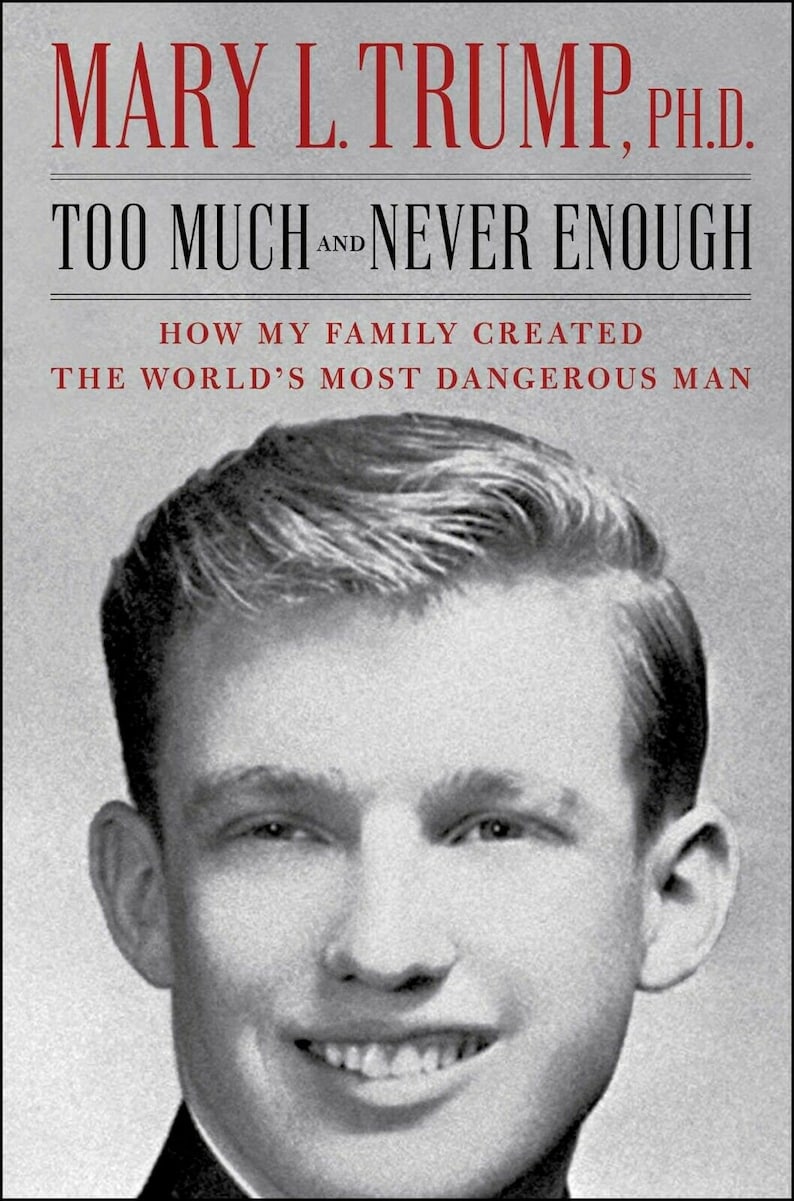
His niece said he’s nuts, a real psychopath.
He paid Joe Shapiro ’cause he doesn’t know math.
Puts brown kids in cages and says they’re riffraff.
Dumb Donald Trump
Dumb Donald Trump
Dumb Donald Trump
See how he runs.
See how he runs.
Though Putin pays terrorists for killing our troops
Our President attacks only BLM groups
Commutations go to his criminal nincompoops.
Dumb Donald Trump
Dumb Donald Trump
Dumb Donald Trump
See how he runs
See how he runs
He commuted the sentence of liar Roger Stone
He dodged from the draft with his spurs made of bone
He’s never had friends, so he tweets all alone
Dumb Donald Trump
Dumb Donald Trump
Dumb Donald Trump
See how he runs
See how he runs
Psychologists tell us that Donald is daft.
He swindled his workers and gave lenders the shaft
With crooks and incompetents his White House is staffed.
Dumb Donald Trump
Dumb Donald Trump
Dumb Donald Trump
See how he runs
See how he runs
There’s Pruitt, and Collins, and Manafort, and Gates,
And Flynn, and Slater, and Cohen who he hates,
And Epstein who supplied him with little-girl dates.
Dumb Donald Trump
Dumb Donald Trump
Dumb Donald Trump
See how he runs
See how he runs
With Kilimnik, and Hunter, there were criminals galore.
And Price, and Salerno, and Testa, and more,
and van der Zwaan, Shorty, and yes, he had more.
Dumb Donald Trump
Dumb Donald Trump
Dumb Donald Trump
See how he runs
See how he runs
Papadopoulos and Nolan, who Trump hoped to keep.
There’s Ross and Ben Carson who are both fast asleep.
And Acosta who let that slime Epstein off cheap.
Dumb Donald Trump
Dumb Donald Trump
Dumb Donald Trump
See how he runs
See how he runs
An airline and casinos, what was he thinking?
A magazine, then vodka that no one was drinking.
Trump Mortgage, Trump Steaks, his fortune kept shrinking.
Dumb Donald Trump
Dumb Donald Trump
Dumb Donald Trump
See how he runs
See how he runs
His Trump University was mirrors and smoke
If not for his father he’d now be flat broke,
He says stupid things, then claims it’s a joke
Dumb Donald Trump
Dumb Donald Trump
Dumb Donald Trump
See how he runs
See how he runs
He phones his pal Putin for tyrant advice.
Trump Tower in Moscow would really be nice.
To burn those pee tapes he’d pay any price.
Dumb Donald Trump
Dumb Donald Trump
Dumb Donald Trump
See how he runs
See how he runs
He managed to ruin the Republican party.
Their respect for the law and order was hearty
Now they follow a crook whom they know isn’t a smarty.
Dumb Donald Trump
Dumb Donald Trump
Dumb Donald Trump
See how he runs
See how he runs
As soon as his fraudulent term is all done, he
Will go to the slammer and be someone’s honey.
His cellmates won’t even ask him to pay them hush money.
He acts like a clown but he sure isn’t funny.
And daddy won’t be there to bail out his sonny.
And daddy won’t be there to bail out his sonny.
Dumb Donald Trump
Gap Psychology describes the common desire to distance oneself from those “below” in any socio-economic ranking, and to come nearer those “above.” The socio-economic distance is referred to as “The Gap.”
Wide Gaps negatively affect poverty, health and longevity, education, housing, law and crime, war, leadership, ownership, bigotry, supply and demand, taxation, GDP, international relations, scientific advancement, the environment, human motivation and well-being, and virtually every other issue in economics.Implementation of Monetary Sovereignty and The Ten Steps To Prosperity can grow the economy and narrow the Gaps:
There are better ways to support those unemployed at the hands of COVID-19 than extending the $600 unemployment top up, Democratic Connecticut Governor Ned Lamont says.
“Look, I think we’ve got to extend the unemployment [benefits],” Lamont said on Yahoo Finance’s The First Trade. “We still have a double-digit unemployment rate here [Connecticut].
And I would be generous when it comes to those companiesthat are still not open.
Translation:
“We should be generous to business owners because they all want to work.”
Our event planners, for example, our bars. There we have got to be generous.
But for those companies that are open, which is most of our economy, I want to do everything I can to encourage them to get back to work.
We can get them back to work safely. So I was sort of more inclined towards giving people the incentive to get back to work and not doing a big $600 increase for everybody else who are still unemployed.”
Translation:
“As I said, business owners all want to get back to work. So give them the money they need to re-open,
“But employees, by contrast, are lazy, and if you give them a few dollars, they will just stay home or go golfing.
“In order to get them back to work we have to whip them by denying them money. When they don’t have enough to feed themselves, they will be motivated to look for jobs.”
Lamont’s position is a rare one right now inside the Democratic party.
Democrats in the House signed off on a $3 trillion COVID-19 relief bill several months ago.
It would extend the $600 weekly payments originally passed in the Coronavirus Aid, Relief, and Economic Security (CARES) Act through January.
The bill would also provide for another round of direct payments of up to $1,200 for individuals and $6,000 with families that have children.
While House Speaker Nancy Pelosi has signaled recently a willingness to compromise with Republicans (who are against them) on the $600 unemployment checks, the decision on any form of extension is likely to come down to the wire.
Translation:
“Lamont and of course the Republicans, wish to do nothing more for people who are out of work, and nothing more to prevent a recession.
“The Democrats want to help the unemployed as well as to stimulate economic growth.”
Without an extension, the extra unemployment relief will expire on July 31 and possibly send households into fresh financial chaos.
Proponents of the top up such as Lamont and most Republicans have argued it gives people more money to sit at home than to actively look for work.
Translation:
“Give those lazy bums $600 a week and that’s all they’ll want. They won’t want to save for college, pay for better homes, pay off debts, buy things for their families, own a 2nd car, or lead better lives.
“They are unmotivated to do anything to improve themselves. “They will be happy just to sit at home, drink beer, and nap on the couch, while the rich people work themselves to the bone.”
“The single most important thing we have to do going forward is stop the $600 a week [unemployment] payments,” Heritage Foundation economist Stephen Moore said on The First Trade this week.
Moore estimates the U.S. economy has lost 1 million to 2 million jobs because of the extra unemployment payments.
Translation:
“The worst thing we ever did was to provide unemployment compensation to those lethargic derelicts.
“Unemployment compensation cost businesses the services millions of low-paid workers, and as you know, we don’t want to cost rich businesspeople money if we don’t have to.
“If we simply cut outall the benefits to the poor and middle-income people — the Social Security, Medicare, Medicaid, food stamps, education aids, etc., — then those good-for-nothing bums would have to look for work, at whatever business people are willing to pay them.”
Hey, who can argue with that logic? Certainly not Lamont or the GOP.
And by the way, I suggest eliminating Lamont’s and the rest of the GOP’s pay until the COVID-19 crisis ends.
That way, they will be motivated to do something to help their constituents, rather than sitting back and trying to figure out how to screw them on behalf of the rich.
Gap Psychology describes the common desire to distance oneself from those “below” in any socio-economic ranking, and to come nearer those “above.” The socio-economic distance is referred to as “The Gap.”
Wide Gaps negatively affect poverty, health and longevity, education, housing, law and crime, war, leadership, ownership, bigotry, supply and demand, taxation, GDP, international relations, scientific advancement, the environment, human motivation and well-being, and virtually every other issue in economics.Implementation of Monetary Sovereignty and The Ten Steps To Prosperity can grow the economy and narrow the Gaps:
What are the hardest questions in science, questions you cannot answer?
Now that should stimulate debate. Perhaps it itself is the most difficult question. Perhaps you have your own answers.
Tomorrow I may feel different, but today I’ll cast my vote for these:
–What is “life”?
–What is “awareness”?
Scientists from many disciplines have debated those questions for many years, and surely there are more years of debate to come.
Recently, I read the following article; it asks a related question, “What is an individual?”
What Is an Individual? Biology Seeks Clues in Information Theory. To recognize strange extraterrestrial life and solve biological mysteries on this planet, scientists are searching for an objective definition for life’s basic units. Quanta Magazine, Jordana Cepelewicz, Staff Writer, July 16, 2020
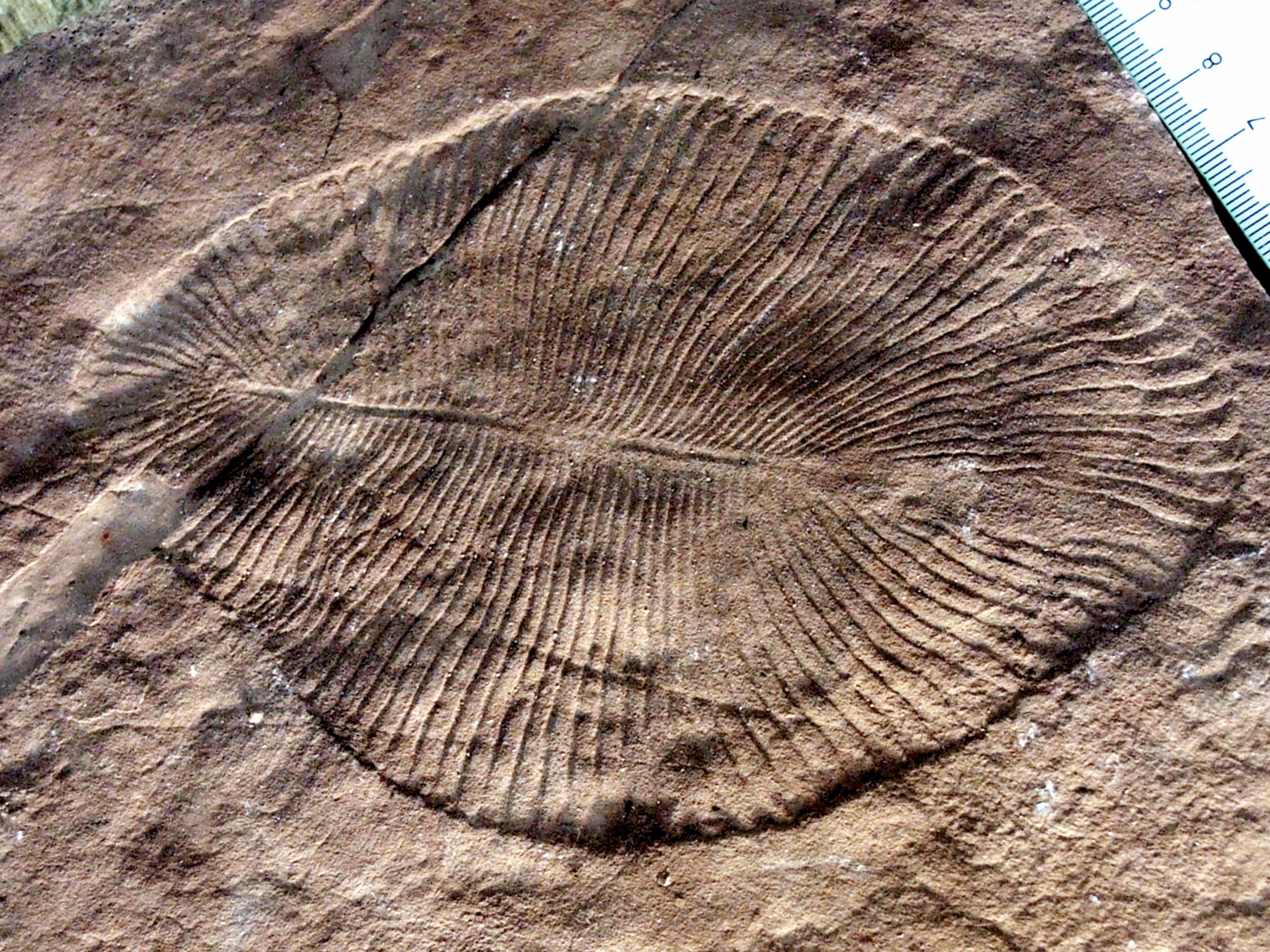
More than half a billion years ago, during the Ediacaran Period, a surreal world of life overran the ocean floor.
Its bizarre, soft-bodied animals had physical forms that defy the imagination: quilted blobs and ribbed discs, segmented tubes and upturned bells, tapered spindles and slender cones.
They were perhaps the planet’s first large multicellular organisms — but they soon went extinct without leaving behind any modern descendants; trace fossils in ancient slabs of sandstone and quartzite are all that remain of those utterly weird and fantastical creatures.
Because of that weirdness, paleontologists still debate even the most basic questions about them: how they developed, how they ate and reproduced, even where one fossilized individual leaves off and another begins.
Were those animals single organisms or colonies of smaller individuals, akin to the Portuguese man-of-war?
Where did their jellylike bodies end and their environment begin?
Perhaps clues to answers may be found in these two phrases: “ . . . they soon went extinct” and “Where did their jellylike bodies end and their environment begin?“
“Extinct” means: No longer in existence.
Does anything ever go extinct? Thelaws of thermodynamicstell us there is no extinction; there only is change.
Consider a forest fire. It is composed of many individual fires, which taken all the way down to the quantum level, are composed of individual chemical reactions.
When a chemical reacts with another chemical, nothing has gone extinct. Matter and energy have changed.
The many small fires each live for a while, first adding to their population, then one by one they are “extinguished.” More correctly, we should say they have been changed.
Eventually, we say the entire thing we called a forest fire goes out. It becomes “extinct,” though it has been changed into another form. It’s just a chemical reaction that has changed to other chemical reactions.
Consider a population of people. Each person lives for a while, adding to their population, and with each addition, the result of chemical reactions, being unique.
We classify these populations in infinite ways, by sex, color, nationality, species, genetically, but these are classifications are of our own making, not nature’s.
Each thing we call a “person” is just a bag of unique chemicals doing what chemicals do when brought into proximity under specific conditions.
One by one, we say these “persons” die. But all that has happened is their chemicals have reacted in certain ways.
What will happen when you die? There is no specific moment of “death.”Some chemical reactions begin to take place and others begin to cease, but it is not instantaneous.
I know someone who has had three kidney transplants.
–Were those transplanted kidneys alive or dead?
–If dead, did they later become alive? –What if the kidneys came from deceased donors. Were those kidneys alive or dead at the moment they were transplanted?
–When the recipient dies, at what moment will the kidneys be dead?
You can debate endlessly.
You can invent definitions of “life” and criteria for “death.”
You can say that life has DNA or that life reproduces, but those will be your arbitrary definitions and criteria, not nature’s.
One day, we will encounter life that is basednot on DNA, but on RNA or some other chemical combination, like some viruses, and then you would have to change your definition.
To nature, you are just a bag of chemicals, doing what chemicals do.
There is no objective answer to the question, “What is life?”
Each Planck unit, chemical reactions are taking place, and over time, these chemical reactions will produce something we call “dead.”
But that is our arbitrary classification, not nature’s.
Nature doesn’t classify “live” vs. “dead.” After you do what we classify as “dying,” the chemical reactions still continue, forever.
In the distant future, when the sun expands to engulf the earth, your atoms will become part of the sun, later to become part of something else, just as your atoms were part of some long-lost suns.
Will you come back to life?
Nature also does not classify species. We recently have invented those classifications, and there is not agreement about what a species is.
The DNA sequence that can be directly compared between the two genomes (human and chimpanzee) is almost 99 percent identical.
Two bags of chemicals are 99% identical, yet we arbitrarily define them one “human” and the other as “chimpanzee.”
Those are not nature’s definitions. They are our arbitrary definition.
Yet, in our desire to classify, we not only create differences between humans and chimpanzees, but between humans and other humans.
Eventually, the thing we call “humanity” may go extinct, but all that really will have happened is a series of chemical reactions. Nothing in the universe goes extinct. Everything just changes.
In that sense, we are little different from a box of gravel, each stone of which undergoes individual chemical reactions, affected by the environment, and each affected by the chemical reactions of neighboring stones.
So when we argue the question, “What is life,” we only are arguing about our own, artificial, arbitrary classification. It is a question that does not and cannot have a universal answer.
It would be like arguing about beauty or humor. Philosophers have spent eons arguing questions that can have no answer.
Nature has a sloppy disregard for boundaries: Viruses rely on host cells to make copies of themselves.
Bacteria share and swap genes, while higher-order species hybridize.
Thousands of slime mold amoebas cooperatively assemble into towers to spread their spores. Worker ants and bees can be nonreproductive members of social-colony “superorganisms.”
Lichens are symbiotic composites of fungi and algae or cyanobacteria.
Even humans contain at least as many bacterial cells as “self” cells, the microbes in our gut inextricably linked with our development, physiology and survival.
How many transplants would be required to change an individual into something not individual?
What if every part a person’s body came from another person, or even another animal, or was mechanically created. At what point, if ever would that amalgum no longer be an individual?
Hook up a human’s brain to a robot. Is that an individual? Is a brain in a jar an individual? Are two brains, meshed together, an individual? Is a Siamese twin an individual?
Ms. Cepelewicz’s article goes on to describe the many attempts to answer the question, “What is an individual,” for instance:
“An individual should not be considered in spatial terms but in temporal ones: as something that persists stably but dynamically through time.”
Or, “an aggregate that ‘preserved a measure of temporal integrity,’ propagating a close-to-maximal amount of information forward in time.
Or, “an entity that is shaped by environmental factors but is strongly self-organizing.”
Or, “a colonial form, which involves a more complicated relationship between internal and external factors. Individuals in this category might include an ant colony or a spiderweb — distributed systems that are ‘partially scaffolded’ by their environment but still maintain some structure on their own.
Or, something “driven almost entirely by the environment. ‘If you remove the scaffolding, the [entity] would fall apart, like a tornado, which dissipates under the wrong temperature and moisture conditions.”
Or, “individuals can be cells, tissues, organisms, colonies, companies, political institutions, online groups, artificial intelligence or cities — even ideas or theories.”
Or, “any self-organizing system that generates predictions about its environment and seeks to minimize the error of those predictions.”
Why do we try to answer the questions, “What is an individual?” “What is life?” “What is awareness?”
There is a reason.
All learning is classification. It is the way we visualize. “A is a B, and is not a C.”
We assume that things of a class have certain characteristics in common, that allow us to know something about each them, without literally examining each of them.
The periodic table of elements is a classification that helps understand elements.
Classifications help us understand mammals vs. reptiles. Fermions vs. bosons. Books vs. magazines. Cars vs. motorcycles. Red giant vs. blue giant stars. Men vs. women. Schizophrenia vs. depression.
By creating a name for each classification, we allow ourselves not only to visualize the classification but to communicate it to others.
If I say the word, “bird.” You immediately know I am talking about an animal having legs, wings, and feathers, in addition to other classifications (head, eyes, beak, etc.)
Although birds come in many shapes and sizes, you don’t need to examine every animal to know whether it is a bird. If it has wings, it most likely is a bird, and if it has feathers it definitely is a bird.
But, what if there were birds that didn’t have feathers, wings, legs, beaks, etc? If I had told you something is a bird, you will have learned nothing.
And that is what happens when we create names for such classifications as “individual, life, awareness, and others” without agreement about the characteristics of the classifications.
Rather than being a scientific exercise in identification, the questions only are an exercise in semantics.
Asking you “What is life?”, “What is an individual,” “What is awareness,” etc, is no different from asking you, “What is a fajedfqwa?” It is a nonspecific question using a nonspecific word to describe a nonspecific thing.
“What is life?” Either life is pure chemistry, doing exactly what chemicals do under given circumstances, or is life something other than pure chemistry.
But what could that “other” be? Are we to drift into mysticism to answer that question?
I personally lean toward the “pure chemistry” answer. I suggest that certain atoms will react in certain ways to outside stimuli, and in select instances, what we call life will appear. In other instances, what we call “non-life” will appear.
This all is a continuum of chemistry, in which “life” becomes “non-life,” and “non-life” becomes “life,” and though we like to differentiate, they all are just chemistry, doing what chemistry does.
This also addresses the subject of “awareness.” Is awareness something unique to life, or is it just chemical reactions to stimuli? Are you aware and a stone is not, or are we all reacting to our environment in exactly the way chemicals react?
We cannot now, probably never will be able to define life in a way that will satisfy all circumstances, yet here we are, searching for “life” on other planets. How will we know it when we see it?
Even more difficult, we are searching for “intelligent” life, though “intelligent” is another word for a vague concept. Intelligence describes the ability to react to one’s surroundings.
Everything, from an electron, to an atom, to a fire, to a pebble, to a tree, to a cow, to a human being, to the earth itself, to the solar system, to the milky way galaxy, all continuously react to their surroundings, and so, have some degree of intelligence.
Consider a fire. Is it “aware” of its fuel?
An English dictionary contains thousands of words, each with a definition. In using those words, we recognize that each has more than one definition. That is why we have the English thesaurus.
Where are the boundaries of gray?
Imagine a ribbon a mile long. One end is black. The other end is white. What is the definition of “gray”?
Every word has a blurred boundary, where the common meanings end and cease being valid.
The purpose of words is to communicate, not to create. By using the words, “life,” or “individual,” we will not create anything.
We merely will communicate that something may be in our mind, but we can’t say exactly what it is.
The question, “What is an individual?” really means, “What is the boundary where the word‘individual’ ends and ‘non-individual’ begins?”
It is a semantic question, not a biological or a physical one. All semantic questions are answered by authority.
From a physical standpoint, “individual” has no boundary. It is what you think it is, and therefore communicates nothing. The same is true of “life” and “awareness” (and many other concepts like “beauty” and “love” and “humor.”)
So give it up. For centuries, brilliant people have tried to quantify life and awareness. They have failed, though that hasn’t stopped them from publishing their results.
You will be more productive searching for a cure for cancer.
Gap Psychology describes the common desire to distance oneself from those “below” in any socio-economic ranking, and to come nearer those “above.” The socio-economic distance is referred to as “The Gap.”
Wide Gaps negatively affect poverty, health and longevity, education, housing, law and crime, war, leadership, ownership, bigotry, supply and demand, taxation, GDP, international relations, scientific advancement, the environment, human motivation and well-being, and virtually every other issue in economics.Implementation of Monetary Sovereignty and The Ten Steps To Prosperity can grow the economy and narrow the Gaps:
You may believe that the U.S. government is doing everything in its power to prevent recessions and depressions.
If you believe it, you would be wrong.
While COVID-19 can cause businesses to fail, massive unemployment, poverty, and a recession or a depression, the U.S. government has the unlimited power to prevent businesses from failing, unemployment, poverty, and a recession or depression.
Consider that you own a small restaurant employing 20 people. Along comes the virus. No one can eat in your restaurant because you don’t have enough room for social distancing, and you don’t have an outdoor space.
So you have to close your doors, and let your employees go. In your little world, that means instant depression.
Now multiply your little business by millions, and you have millions of businesses in America suffering, and that would be a national depression.
There is no reason for you to be poor.
But wait.
Your rich Uncle Sam comes to you and says, “I will give you all the money you need to keep paying your employees (including tips) and yourself the same amount you would have received had you been able to stay open.”
Now suddenly, your little world has no depression at all.
And if your rich Uncle Sam does the same for every business and person in America, suddenly the economy is thriving.
Recessions and depressions are caused by the lack of money; they are cured by infusions of money.
Companies do not close because they lack sales. Companies close because they lack income.
People do not stop spending because they lack jobs. People stop spending because they lack income.
The U.S. federal government has the absolute and unlimited power to provide income to every business and every person in America.
So why doesn’t the government do that, especially now, when so many businesses and people are suffering?
The government already has allocated (though not yet spent all) 3 trillion dollars to stimulate the economy, but that $3 trillion is much too little and far too late.
Since the government has not indicated it will raise taxes, clearly Congress and the President understand the basic truth of federal (Monetarily Sovereign) financing:
The U.S. government never can run short of dollars. It can spend endlessly, even without taxing.
So why do we see Democrats begging for money and Republicans resisting, especially when the coming election will greatly be affected by the health of the economy?
One would think President Trump, especially, would want to stimulate the economy before November, and it would be the Democrats resisting.
So, why do we repeatedly see articles like these:
Democrats seek to increase supplemental funding bill to $450 billion
By Alexander Bolton – 03/22/20
Senate Democrats are calling for a $450 billion emergency spending package to be added to the stimulus bill, nearly twice the amount Republicans have appropriated and nearly ten times what the White House has requested.
House passes Democrats’ $3T coronavirus ‘HEROES’ aid: Stimulus checks, money for states, rent assistance President Donald Trump called it “DOA,” and Sen. Mitch McConnell said the bill was little more than an unrealistic wish list.
WASHINGTON — The House on Friday narrowly passed a $3 trillion coronavirus relief package crafted by Democrats that would include another round of stimulus payments of up to $1,200 per person.
President Donald Trump this week declared the Democrats’ proposal “DOA.” May 15, 2020, By Rebecca Shabad
Republicans And Democrats Are Trillions Apart On The Next Stimulus Bill
July 10, 2020
House Speaker Nancy Pelosi said the next bill ― which would be Congress’ fifth coronavirus response measure ― needed $1 trillion for state and local funding, $1 trillion for expanded unemployment benefits and direct payments, and “something like that, probably not as much” for COVID-19 testing, contact tracing, and treatment.
A senior GOP aide said Senate Republicans are pushing for $1 trillion overall.
The Republicans, who would benefit in November from any economic stimulus, amazingly reject stimulus bills. What is going on, here?
We easily could write this off as abject stupidity by Trump and his clownish group of sycophants. But it’s even more than that.
The GOP as a party, and Trump as President, are so anti-poor and pro-rich they have a knee-jerk, negative reaction to anything that helps the poor and middle classes. They incorrectly call aid to the non-rich, “socialism.” (Aid to the rich is fine, however.)
The Democrats want funding for state and local governments, and for expanded unemployment, nearly all of which aid the poor and middle classes.
McConnell’s “unrealistic wish list” comment was a reflection of the GOP’s anti-poor/middle proclivities.
Despite GOP foot-dragging, the $3 trillion stimulus, though much too little, has had some beneficial effect.
The uptick in retail sales demonstrates that a continued recovery is in Congress’s hands.
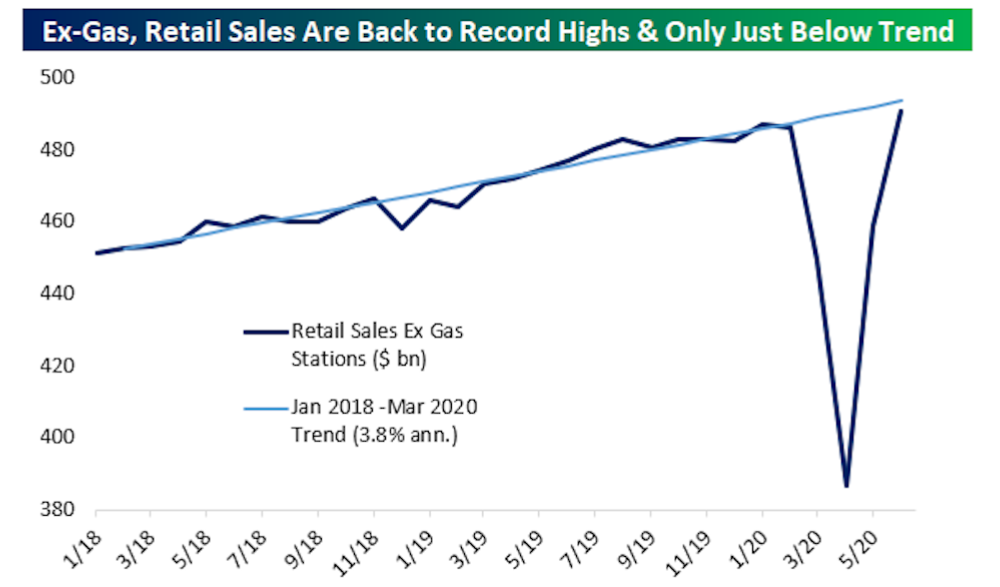
By Myles Udland, reporter and co-anchor of The Final Round. Follow him at @MylesUdland, Friday, Jul 17 Retail sales are all the way back.
Sales in June jumped 7.5% over the prior month and 1.1% over the prior year, topping expectations for a 5% rise.
And as the chart from Bespoke Investment Group shows, excluding gas retail sales have come all the way back to pre-pandemic trendline growth.
And this report serves as more evidence that stimulus through the CARES Act sent to consumers has been enough to keep spending afloat and keep the gears economic growth turning.
More importantly, it serves as evidence that:
Deficit spending by our Monetarily Sovereign government is not constrained by tax receipts or by any other form of receipts. The federal government needs no income.
The spending by our Monetarily Sovereign is not constrained by inflation. Inflation is caused by scarcities, usually scarcities of food and/or energy, not by federal spending.
Recessions and depressions and depressions can be prevented and cured by federal deficit spending.
There are zero financial reasons to limit federal deficit spending.
The economic implications are enormous.
Since there are zero reasons to limit federal deficit spending, all the financial excuses for not eliminating payroll taxes (Step #1 of the Ten Steps to Prosperity, below), not providing health care for all (Step#2), not providing Social Security for All (Step #3), and not providing the rest of the Ten Steps — all those financial excuses disappear.
We are left with two false excuses:
False excuse #1: Federal spending is socialism, and socialism doesn’t work.
The reason “socialism” doesn’t work is because it involves public ownership and control of all means of production.
Despite what you repeatedly are told, mere government spending is not socialism.
False excuse #2: The poor and middle-income groups are fundamentally lazy, and if everything is given to them they won’t work.
First, the poor and middle-income groups are not fundamentally lazy. In fact, on average they work harder than do the rich
Second, the Ten Steps do not propose that “everything” be given to the poor and middle-income people. There are many levels of benefit and luxury above what the Ten Steps provide.
Third, the total of human desires is infinite. Pay for a person’s education, healthcare, housing, and food, and that person still will work to improve his life, further.
This is the lesson of Gap Psychology, the human desire to distance oneself from those below on any socioeconomic measure and to join those above.
For example, people already owning a home and a car, will work to have an even better home and two cars. It is in the nature of people.
The GOP’s, and to a much lesser extent, the Democrat’s reluctance to spend enough to prevent and cure the coming recessions, not only is unnecessary, but cruel and insulting to those who are less wealthy.
”Several indicators suggest that May and June were the easy months, and that the resurgence of COVID-19 cases is leading to slower activity gains in July.” JPMorgan estimates that real consumer spending was 7.2% below January’s level in June.
As we’ve written in recent weeks, the pending expiration of these benefits is a looming fiscal cliff that could short circuit the still-fragile economic recovery.
Benefits for businesses and consumers should not end nor should they be inhibited. They should be increased, massively, to prevent the human suffering recessions cause.
The sole purpose of a government is to improve and protect the lives of the people, not to force them to dance on the edge of a precipice.
It is imperative that lawmakers continue offering support to consumers facing a historically weak labor market while small businesses continue to buckle under the pressure of the recessionary environment.
Including pandemic unemployment assistance claims, 2.4 million workers filed for unemployment last week.
Nancy Vanden Houten, lead economist at Oxford Economics, said Thursday that this data “[underscores] that layoffs remain widespread. And the risk may be for additional layoffs going forward as some states reimpose more restrictive measures to combat surging Covid-19 cases.”
In a separate note on Thursday, Oxford’s chief U.S. economist Greg Daco noted that the firm’s real-time activity tracker has flattened out in recent weeks, calling this a sign that we’re witnessing a “premature plateauing of the recovery.”
“Policymakers across the country have an active role to play in containing the virus and ensuring the nation avoids looming fiscal cliffs from the expiry of unemployment benefits, PPP funds running low, and state and local budgets being cut to the bone.”
This is how the federal government creates dollars.
The money exists. It is available at the touch of a computer key. It is free to the government. It costs no one, anything.
When people are drowning, you don’t throw them a ping-pong ball and yell, “Use that as your floatation device,” especially when you are standing next to a huge pile of life preservers.
There is no penalty for spending “too much,” but a huge penalty for spending too little.
And so while it may be an inelegant and imperfect short-term solution for the economy, there is more than enough evidence to support a continuation of enhanced unemployment benefits and another round of stimulus checks for households making less than $100,000.
Deficit spending neither is an “inelegant” nor an “imperfect” solution. It is the solution, the elegant and perfect solution to, and prevention of, recessions.
It is the elegant and perfect solution to homelessness, hunger, business failure, and the terror of impending poverty.
Don’t tell the drowning man to swim harder. And don’t limit federal aid to any household income level. That $100,000 is a trap, for it requires making such questionable determinations as:
–Should a household consisting of one person receive the same support as a household of ten people?
–Should a household averaging 80 years old receive the same as a household averaging 15 years old?
–Should a household earning $99,000 be supported, while a household earning $101,000 receives nothing?
–Should people living in an expensive big city receive the same as people living in an inexpensive rural area?
Money going to people should be on a per-capita basis, with the same amount going to rich old men and to poor infants.
Money going to states also should be on a per-capita basis, with the states distributing some of the receipts to counties and cities, also on a per-capita basis.
Money going to businesses should be based on the previous year’s gross sales, with special rules for new businesses.
Consumer spending accounts for just about 70% of GDP growth.
And with such a clear path forward for Congress to help support an economy likely to suffer its largest drop in growth since World War II, there is little to no justification for letting these benefits lapse.
There is no justification, financial or moral, for not implementing the Ten Steps, and for not dramatically increasing federal deficit spending to prevent a recession, grow the economy, and narrow the Gaps between the richer and the poorer.
Gap Psychology describes the common desire to distance oneself from those “below” in any socio-economic ranking, and to come nearer those “above.” The socio-economic distance is referred to as “The Gap.”
Wide Gaps negatively affect poverty, health and longevity, education, housing, law and crime, war, leadership, ownership, bigotry, supply and demand, taxation, GDP, international relations, scientific advancement, the environment, human motivation and well-being, and virtually every other issue in economics.Implementation of Monetary Sovereignty and The Ten Steps To Prosperity can grow the economy and narrow the Gaps:






 #Monetary Sovereignty - Mitchell