Would you say these lines move together? That is, when one goes up, does the other also go up?
Or, do they move randomly, so that when one goes up, the other sometimes goes up and sometimes goes down?
Or do they move in opposition, so that when one goes up, the other goes down? What is your opinion?
I ask because these two lines demonstrate one of the beliefs-vs.-facts arguments we seem to endure all too often in economics. Perhaps because economics is intertwined with psychology, a science notable for guesses trumping facts — or lack of facts — that economics is so filled with myths.
Contrary to popular belief, which is taught in our schools by educated economists, here are some of the facts that are not taught:
Federal “debt” is not real debt. The federal government does not owe it.
The federal debt is infinitely sustainable. Federal “deficits” are economic gains.
The federal government neither needs, keeps, nor uses federal tax dollars or any other form of income.
The federal government cannot run short of dollars. The federal government creates new dollars, ad hoc, by spending.
The federal government does not borrow. T-bills, et al, do not provide the government with dollars. “How will you pay for it” never is a legitimate question regarding federal spending initiatives.
Gold is not, and never has been money. It is, and always has been, nothing but an ore. Federal government spending grows the economy. State/local government spending does not.
The debt ceiling does not put a ceiling on federal debt. Federal “trust funds” are not trust funds and they do not pay for federal spending.
Lately, because of massive spending by the federal government, you have begun to hear about the menace of inflation. The wrong belief is that federal spending causes inflation by increasing the money supply. It’s what you have been told thousands of times.
And it makes intuitive sense. After all, when you increase the supply of something without increasing the demand, the relative value declines. And you surely have seen photos of people, in hyperinflation-ravaged nations, carrying loads of currency in wheelbarrows.
But, in this case, intuition is misleading. Increasing the supply of money does not decrease its value. In the above graph, I do not see any sort of “together” movement. I do not see a cause/effect relationship.
Here is the same graph, except with labels attached. The blue line shows changes in prices. The red line shows changes in federal debt. I see peaks in one corresponding to valleys in the other.
Blue = price annual % increases. Red = federal debt annual % increases.
From the above graph, it would be very difficult to deduce that increases in federal debt cause increases in prices. In fact, a better case could be made that increases in federal debt cause a decrease in prices, and that decreases in debt caused an increase in prices.
How is that even logical? I can visualize one possibility. Federal debt, which results from federal deficit spending, stimulates the economy, i.e. it stimulates business’s anticipation of demand.
Even today, businesses are ramping up production in anticipation of increased sales due to projected federal stimulus spending. Is it possible that this anticipation causes businesses to overshoot their production, leading to excess supply and reduced prices?
Perhaps, but for whatever reasons, federal deficit spending has not caused inflation, at least, not inflation above the Fed’s arbitrary, 2% goal.
Over the long term, prices have increased. There has been some inflation. And we know that federal debt has increased. Is this the cause/effect we have been told about?
Here are the same data viewed from another perspective, and with the addition of Gross Domestic Product (green). Since 1970, prices (blue line) have risen slowly, GDP (green) has risen faster, while federal debt (red) has risen massively. This indicates three things you will not hear from the media, the politicians or the expert economists:
Even during massive debt increases, prices have moved up moderately, actually below the Fed’s target.
As federal debt increases, GDP grows faster than inflation.
The growing debt is not a burden on the government, on taxpayers, or on the economy.
Sadly, these facts will not sway those whose motive clearly is to widen the Gap between the rich and the rest.
By claiming that federal spending to support the poor and middle-income groups is unsustainable, the purveyors of the “Big Lie” help enrich the rich and impoverish the rest.
That is what the “Big Liars” are being paid to do. Rodger Malcolm Mitchell [ Monetary Sovereignty, Twitter: @rodgermitchell, Search: #monetarysovereignty Facebook: Rodger Malcolm Mitchell ]
Gap Psychology describes the common desire to distance oneself from those “below” in any socio-economic ranking, and to come nearer those “above.” The socio-economic distance is referred to as “The Gap.”
Wide Gaps negatively affect poverty, health and longevity, education, housing, law and crime, war, leadership, ownership, bigotry, supply and demand, taxation, GDP, international relations, scientific advancement, the environment, human motivation and well-being, and virtually every other issue in economics. Implementation of Monetary Sovereignty and The Ten Steps To Prosperity can grow the economy and narrow the Gaps: Ten Steps To Prosperity:
If the Washington Post and the other major media were honest, this is what tomorrow’s front pages would look like
For those who wish to see a classic example of the Big Lie (that federal deficits cause inflation and are a burden on taxpayers) read this article from the Washington Post.
Translation: “. . . the third-largest monthly economicgain on record.” (When the government pumps more money into the economy than it takes out in taxes, that is an economicgain for the economy.)
Stimulus plan and $1,400 checks drove spending much higher as the White House and Republicans clash over where to spend money next. By Jeff Stein, April 12, 2021 at 2:00 p.m. EDT
The federal government spent $660 billion more than it collected in tax revenue this March, the Department of Treasury said Monday, as the Biden administration’s stimulus package pushed the U.S. monthly deficit near record highs.
Translation: ” . . . pushed the U.S. monthly economicgain near record highs.” (That’s the purpose of a stimulus — adding money grows the economy.)
The U.S. spent $927 billion in March alone — more than double the level from March 2020 — a jump due primarily to the disbursal of tens of millions of $1,400 stimulus payments under the American Rescue Plan. Meanwhile, tax revenues stayed largely flat, with the government only collecting slightly more than last March.
The resulting deficit is the third largest ever in American history, Treasury officials said, eclipsed only by April and June of last year — when the U.S. authorized larger levels of emergency spending to head off the economic crisis caused by the pandemic.
The monthly deficit had contracted relative to the summer months as federal spending expired and the U.S. economy began to heal.
Translation: “The resulting economicgain is the third highest in American history . . . to head off the economic crisis caused by the pandemic.” (Neither you, nor your children, nor your children’s children will ever pay for the so-called “deficit.” Our Monetarily Sovereign federal government funds its payments by creating new dollars, ad hoc.)
The U.S. budget deficit breached $3.1 trillion in 2020 as the pandemic slammed economy
Over the first six months of the current fiscal year, the government’s budget deficit has reached $1.7 trillion, a massive sum.
America’s annual deficit hit $3.1 trillion in 2020, an all-time high that far surpassed the previous record of $1.4 trillion, which came in 2009 during the depths of the Great Recession.
Translation: “The U.S. economicgain breached $3.1 trillion as the pandemic slammed the economy.”
“. . . the economic gain has reached $1.7 trillion, a massive sum.”
“America’s annual economic gain hit $3.1 trillion in 2020, an all-time high . . . ” (And despite all the handwringing by pundits, there is no inflation.)
Democrats and Republicans authorized much of the emergency spending last year as a way to try and stop an economic collapse. They are at odds, though, over spending levels in 2021.
The government has to borrow money to cover deficits, and it does this by issuing debt.
Interest rates are relatively low, which has made it cheaper to borrow, but the federal debt has grown markedly in the past year.
Translation: “The federal government, being Monetarily Sovereign, does not need to borrow money to fund an economicgain, nor does it issue debt.
In an unrelated process, the government accepts deposits into T-security accounts, which are like interest-paying safe-deposit boxes. Unlike “borrowing,” the federal government never touches the dollars in T-security accounts.”
” . . . relatively low, and interest rates have no effect on the federal government’s ability to increase the economic gain.“
Most of the new stimulus payments have already been sent out and are reflected in the March data. Still, budget experts say higher-than-usual deficit totals are likely to continue for the rest of the year.
On a call with reporters, Treasury officials noted that all the funding from last year’s Cares Act and the rescue plan had not yet been allocated.
Translation: “Fortunately, budget experts say higher-than-usual economic gain totals are likely to continue for the rest of the year.”
“This is going to be a big deficityear because we were already running substantial deficits and passed a $1.9 trillion bill,” said Marc Goldwein, a budget expert at the Committee for a Responsible Federal Budget, which advocates for lowering the deficit.
“This is not higher than expected. It’s what you’d expect with a $1.9 trillion stimulus on top of a structural deficit.”
Translation: “This is going to be a big economic gain year, because the economy already was running substantial gains . . . “
“It’s what you would expect with a $1.9 trillion stimulus on top of a structural gain.”
Jeff Stein is the White House economics reporter for The Washington Post.
Translation: Jeff Stein is a White House economics reporter who is paid to promulgate the Big Lie that economic gains are a burden on the federal government and on taxpayers.
Because the federal government is Monetarily Sovereign, it pays for its spending by creating new dollars, ad hoc.
The federal government has the infinite ability to create dollars, so no tax dollars are used for federal spending.
(The sole economic purpose of federal taxes is to allow the government to control the economy. It taxes things it wishes to discourage, and it give tax breaks to what it wishes to encourage.)
Thus, the whole reason for calling it a federal “deficit” is to mislead. The purpose of the misrepresentation is to dissuade you, the public, from demanding more benefits from the government.
Because those benefits tend to narrow the income/wealth/power Gap between the rich and the rest, the rich pay the politicians, the media, and many economists to promulgate the Big Lie.
Shame on Mr. Stein, and shame on the Washington Post, and shame on all the other media, the politicians, and the economists who disseminate the Big Lie. Shame, for doing the dirty work of the very rich.
…………………………………………………………………………
Wide Gaps negatively affect poverty, health and longevity, education, housing, law and crime, war, leadership, ownership, bigotry, supply and demand, taxation, GDP, international relations, scientific advancement, the environment, human motivation and well-being, and virtually every other issue in economics. Implementation of Monetary Sovereignty and The Ten Steps To Prosperity can grow the economy and narrow the Gaps: Ten Steps To Prosperity:
It is impossible to hate someone or something without feeling fear. Fear is the baseline emotion, the protective emotion, and hate is the response. Hate/fear is the evolutionary reaction to threat.
The “witches” of Salem were hated because they were feared. We have evolved to hate as a way to attack our fears.
Evolution has one goal: Survival.
But that goal is not the survival of you, an individual creature. It is not even the survival of your, the creature’s, family or species. It is survival of the life code — the DNA or RNA.
We merely are vessels for our life code, which is our real ruler. We are the fur-lined, armor-plated raincoat our DNA wears to protect it from the universe. It is not we who adapt to the life-threatening changes the universe throws at us; it is our DNA that creates the new, improved raincoat.
The universe is antithetical to life. What with the universe’s cold and heat, and its radiation-filled, explosive tendencies, the existence of life is rare and amazing. Yet, here we are.
And while life may lurk in other places than eath, we’ve yet to find it, despite all our efforts.
We have not even agreed on the definition of “life.” I suspect that if a definition is possible it will involve some sort of creation code, like the aforementioned DNA or RNA.
Fear is the essence of survival, but we hold it in low esteem. No one is admired for being a coward, though the fearful merely follow nature’s survival instructions. The dead hero has less chance to pass along his genetic code than does the live coward.
Seemingly then, one might think evolution points us toward being cowards. But the brave have one evolutionary advantage. They have the courage to experiment.
Evolution is a trial and error process, with trillions of trials, trillions of errors, and only a few successes. But those successes are the ones that survive against difficult and changing environments to sire the next generations of adaptations.
And if anything is admired less than the fearful it is the hater, though they are the same. A hater isa sheep in wolf’s clothing.
We do not fear the fearful — “disgust” comes closer — but we do fear the hater, thus returning his hatred.
It can be said that the most fearful, indeed most cowardly, people on earth are the hate-mongers: The Nazis, the “Proud Boys,” the white supremacists, QAnon, the boogaloo bois, et al.
Their mien is designed to intimidate, with tattoos, flags of hatred, fierce beards, military garb, guns, helmets — these are the shields behind which the cowards hide. And they never allow themselves to be alone.
They feel less fearful hiding in crowds of like-minded cowards.
As cowards always do, their leader cozies up to bullies: Putin, Kim, Duterte, and of course, the very rich. He wishes to be one of them, though they laugh at his efforts.
Their leader, so cowardly he invented “bone spurs” to stay out of the military, has been, of late, America’s leading hate/fear monger. He promulgates hate/fear everywhere: Immigrants, Mexicans, Muslims, gays, the Chinese, blacks, the “deep state,” left-wingers, the “swamp,” and all those who reveal the truths about him.
He specializes in hating the poor and powerless. He wasted the influence of his office trying to take the ACA healthcare program from the poor, and had to settle instead for a tax program that widens the income/wealth/power Gap between the very rich and the rest.
His politicians reliably oppose aid to the poor, falsely characterizing them as lazy takers who, if given even a pittance, will not wish to work or to improve themselves, but instead will loll about or commit crimes.
And that leads us to excerpts from the following article.
Poorer children struggled to access higher levels of education, even when their primary school results were high
Wealthier children with low test scores, conversely, were able to catch up to the rest of their classmates
The research incorporates information about education levels attained by the poorest 25% and the wealthiest 25% of participants at ages 8, 12, 15, 19 and 23.
The attainment gap between “high-promise” children from the top and bottom wealth quartiles widened during school, even with similar early test scores.
Wealthier children were far more likely to embark on all forms of tertiary studies, including university, technical colleges, and teacher training.
Even among students who finished secondary school with comparable levels of learning, the attainment gap between the rich and poor students remained significant, with wealthier students more likely to progress to higher education.
“What is clear is that these inequalities in higher education access have nothing to do with ability: This is about systems which are consistently failing poorer children,” says Dr Sonia Ilie, lead author and senior researcher at the Faculty of Education at Cambridge.
The reasons for poorer learning outcomes among poorer children include limited educational resources, limited support at home, and practical difficulties with school attendance.
The fear/hate mongers spread the lie that there are basic human differences between the poor and the rich. They falsely characterize the poor as lazy and lacking ambition.
The mantra is, “If you give them unemployment compensation or food or anything else characterized as ‘welfare,’ they won’t work.”
But your daily experience shows that the poor generally are forced to labor harder, at more difficult jobs than do the rich. And compared to the rich, for whom all doors open, the poor face constant barriers to improvement.
It’s not lack of character or ability that stymies the poor; it’s lack of opportunity.
In addition to spreading the BIG LIE that federal taxpayers pay for federal spending, the haters of the poor promulogate the notion that money is wasted on the poor.
The BIG LIE is the quasi-logical support for the fear/hatred that keeps the poor down.
And that is the connection between our two stories.
A lie cannot long survive without willing believers.
Fear-created hatred provides nourishment for the Big Lie that federal taxpayers pay for benefits to the poor.
Fear/hatred supports the belief that the poor deserve their poverty, and that belief provides justification to deny them support. It destroys our compassion. It justifies our cruelty. It is the basis for Gap Psychology, the desire to distance oneself from those below, and to near those above.
Fear/hatred is how, through the centuries, no much evil has been done in the name of Jesus Christ, who did not fear and did not hate, but preached only love. His most ardent followers have been, and remain, his most ardent deniers.
Your DNA does not care about your hate, fear, love, compassion, morals or beliefs. In the universe, there is no “care.” Your DNA is coldly and chemically practical. It creates your fear/hatred. You have no choice.
You are a dispensible fur-lined, armor-plated raincoat, to be tossed away when the weather changes.
Gap Psychology describes the common desire to distance oneself from those “below” in any socio-economic ranking, and to come nearer those “above.” The socio-economic distance is referred to as “The Gap.”
Wide Gaps negatively affect poverty, health and longevity, education, housing, law and crime, war, leadership, ownership, bigotry, supply and demand, taxation, GDP, international relations, scientific advancement, the environment, human motivation and well-being, and virtually every other issue in economics. Implementation of Monetary Sovereignty and The Ten Steps To Prosperity can grow the economy and narrow the Gaps: Ten Steps To Prosperity:
After the hatred and the bigotry, after the pro-rich and the anti-middle and poor, after the anti-science and pro-lies, after QAnon, the boogaloo bois, and the white supremacist, fascist Proud Boys, now comes the fresh air of the Biden administration, except . . .
. . . except President Biden is determined to squander it.
After the traitors attacked our Congress and an election that could have sent America into a dictatorship, but by the grace of God prevented the vilest criminal President in American history from continuing his march down America-the-Hate-Monger Road, now we are beginning again to remember American morality and compassion, except . . .
. . . except Biden is aching to blow it.
We still teeter on the fence.
Here are excerpts from an article in today’s Chicago Tribune:
Biden ties tax plan, economy goals By Alan Rappeport The New York Times
The Biden administration unveiled its plan to overhaul the corporate tax code Wednesday, offering an array of proposals that would require large companies to pay higher taxes to help fund the White House’s economic agenda, including a $2.3 trillion infrastructure package.
The “logic” works like this:
The federal government will pump trillions of dollars into the economy. All those added dollars will fund myriad business programs that benefit America and together will add the jobs improving Americans’ lives.
Now, President Biden says he will increase taxes on business. These taxes will remove dollars from the very businesses that Biden expects to do the work and add the jobs that improve Americans’ lives.
Each dollar of Biden’s proposed taxes will undo each stimulus dollar.
If you asked, “What is the best way to negate the positive effects of the trillion-dollar stimuli?”, the answer would be: “Increase taxes on business.”
There is no hidden magic to all this. Adding dollars to the economy grows the economy. Taking dollars out of the economy shrinks the economy.
Why is that so hard for Biden and the Democrats to understand?
This all would be forgivable if the dollars were coming from the rich, and thus closing the Gap between the very rich and the rest.
But taking dollars from businesses doesn’t do that. It takes away jobs and productive power. Taxing businesses punishes workers. It punishes the very organizations that would accomplish all the changes Biden claims he wants accomplished
The plan, if enacted, would usher in major changes for U.S. companies, which have long embraced quirks in the tax code that allowed them to lower or eliminate their tax liability, often by shifting profits overseas.
Translation: “Quirks” in the tax code have allowed U.S. companies to be more profitable, and presumably, profitable business is a bad thing for America. ???
The plan also includes efforts to help combat climate change, proposing to replace fossil fuel subsidies with tax incentives that promote clean energy production.
The sole economic purpose of federal taxes is not to provide spending dollars to the federal government, but rather to discourage what the government doesn’t like and to encourage what the government likes.
The only questions Biden must answer are:
“Which businesses do you wish to discourage and which do you wish to encourage?”
Then levy your taxes only on businesses you wish to discourage.
Biden doesn’t understand this. He falsely believes the purpose of federal taxes is to “pay for” federal spending. He has no comprehension of Monetary Sovereignty.
So he will charge ahead with tax programs that hamstring the drivers of the American economy: American business. He does not understand that:
Just as federal spending is a stimulus, federal taxing is an anti-stimulus.
Why he doesn’t see that, I cannot say but clearly, he believes that removing dollars from the economy is a good idea for economic growth.
In a Wednesday afternoon speech, President Joe Biden noted that he was open to compromise on how to pay for the infrastructure package, but turned fiery in insisting that inaction is unacceptable, saying that the United States is failing to build, invest and research for the future and that failure to do so amounts to giving up on “leading the world.”
He’s right about “failing to build, invest and research for the future,” but that is not accomplished by taking money from America’s prime instruments for building, investing, and research: American business.
Is it possible that the President of the United States does not understand that the U.S. government pays for everything in the same way: It creates new dollars, ad hoc, every time it pays a supplier.
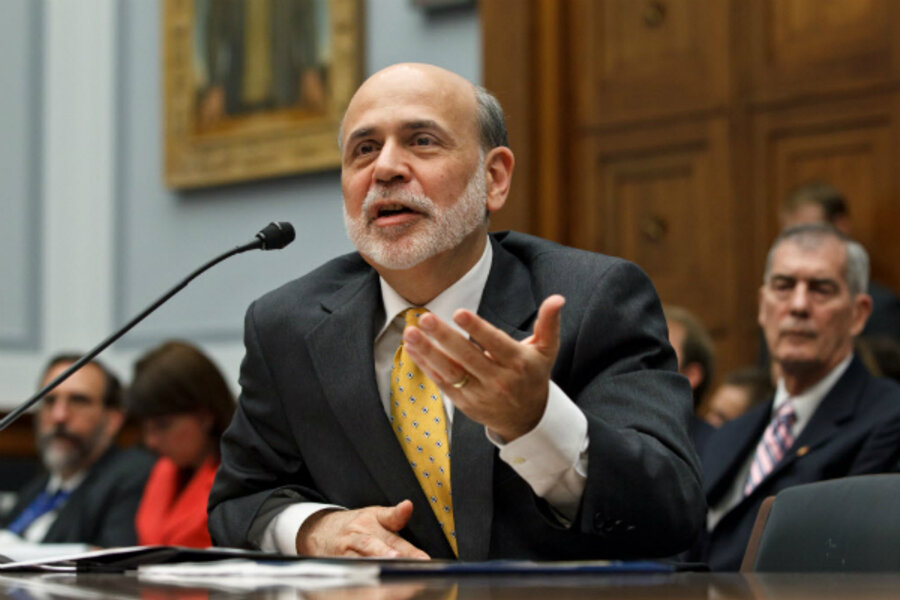
Former Fed Chairman Ben Bernanke: “The U.S. government has a technology called a printing press (or today, its electronic equivalent) that allows it to produce as many U.S. dollars as it wishes at essentially no cost.”
It should be obvious that if tax dollars paid for federal spending, the government could not have spent $25 trillion more dollars than it received in taxes.
“Compromise is inevitable,” Biden said. “We’ll be open to good ideas in good faith negotiations. But here’s what we won’t be open to: We will not be open to doing nothing. Inaction, simply, is not an option.”
Message to President Biden: Compromise is possible only if you are willing to listen and learn, in this instance, learn the facts of Monetary Sovereignty, which briefly are:
The U.S. government uniquely is sovereign over the U.S. dollar. It created the very first dollars from thin air, and it continues to exercise that power, today.
The government has the unlimited ability to create U.S. dollars. It never can run short of dollars.
Federal taxes do not fund federal spending. Even if the government collected $0 in taxes, it could continue spending, forever.
Federal taxes take dollars from the economy, and they are destroyed upon receipt by the U.S. Treasury. Federal tax dollars cease to exist as a part of any money measure. That is why no one can answer the question, “Exactly how much money does the federal government have?” It has infinite money.
The federal government does not borrow. Federal “debt” is not real debt. It is the total of deposits into Treasury Security accounts, which are similar to safe-deposit boxes. The federal government does not touch the dollars in those accounts. Upon maturity, the government merely returns the dollars, plus interest, to the account owners. No tax dollars are involved.
Biden challenged the idea that low tax rates would do more for growth than investing in care workers, roads, bridges, clean water, broadband, school buildings, the power grid, electric vehicles and veterans hospitals.
Low tax rates allow fewer dollars to be taken from the economy. Investing in care workers, bridges, etc. adds dollars to the economy.
Thus, the result is the same, with the only difference being one of targeting. If for instance, the government wants bridges built, it can reduce taxes on bridge-builders and/or it can pay bridge-builders to build.
Former Fed Chair Alan Greenspan: “A government cannot become insolvent with respect to obligations in its own currency.“
But for Biden to pay for bridges, and then to tax the bridge-builders, is to work at cross purposes with himself.
Biden wants to pour water into a bucket while knocking a hole in the bottom.
“What the president proposed this week is not an infrastructure bill,” Sen. Roger Wicker, R-Miss., said on NBC’s “Meet the Press.
“It’s a huge tax increase, for one thing. And it’s a tax increase on small businesses, on job creators in the United States.”
Some corporations have expressed a willingness to pay more in taxes, but the overall scope of the proposal is likely to draw backlash from the business community, which has benefited for years from loopholes in the tax code and a relaxed approach to enforcement.
The federal government has no use for tax money. The federal government does not spend tax dollars.
Federal taxes do not grow the economy. Federal taxes shrink the economy.
Businesses do have use for the money. Businesses do grow the economy.
It’s that simple.
Then Biden admits that federal taxes are a burden on American business:
The Biden administration’s plan, announced by the Treasury Department, would raise the corporate tax rate to 28% from 21%.
The administration said the increase would bring the U.S. corporate tax rate more closely in line with other advanced economies and reduce inequality.
It would also remain lower than it was before the 2017 Trump tax cuts, when the rate stood at 35%.
But Biden said he was willing to accept a rate below 28% so long as the economic projects he envisions are financed and taxes are not increased on people making less than $400,000.
Translation: “I want to pump trillions into the economy because that will grow the economy. Then I want to take trillions back out of the economy because . . . well, because I have no idea how a Monetarily Sovereign government pays for things.”
“I’m willing to listen to that,” Biden said. “But we gotta pay for this. We gotta pay for this. There’s many other ways we can do it.
But I am willing to negotiate. I’ve come forward with the best, most rational way, in my view the fairest way, to pay for it, but there are many other ways as well.”
Yes, there is one other way to pay for it, and that is the way a Monetarily Sovereign government pays for everything. It simply creates the needed money.
No sensible person would pump money into the economy, then pull money out of the economy, and still believe he was helping the economy grow.
Why does the American economy grow? Federal spending exceeds federal taxing.
A growing economy requires a growing money supply. This is demonstrated by the basic formula for economic growth:
GDP=Federal Spending + Non-federal Spending + Net Exports.
The president added that America’s position in the world was incumbent on taking aggressive action on modern infrastructure that serves a computerized age. Otherwise, the county would lose out to China in what he believes is a fundamental test of democracy.
Biden is right that America needs to upgrade its infrastructure.
Republican lawmakers counter that higher taxes would make the country less competitive globally.
The Republicans are right that federal taxes, which take dollars out of the economy, are recessive.
State and local taxes are recycled back into the economy, by monetarily non-sovereign state and local governments.
In a related vein, monetarily non-sovereign state and local spending does not add dollars to the economy, but Monetarily Sovereign federal spending does.
That is one important difference between Monetarily Sovereign federal finance vs. monetarily non-sovereign state/local government finance.
“You think China is waiting around to invest in this digital infrastructure or on research and development? I promise you. They are not waiting.
But they’re counting on American democracy, to be too slow, too limited and too divided to keep pace.”
No, they’re counting on American politicians not to understand Monetary Sovereignty, and thus tax their engines of economic growth.
Biden’s former boss, Barack Obama, made the same mistake. He too believed that federal taxes funded federal spending. The result was a much slower recovery from the Great Recession what was possible.
The plan also tries to crack down on large, profitable companies that pay little or no income taxes yet signal large profits to companies with their “book value.”
To cut down on that disparity, companies would have to pay a minimum tax of 15% on book income, which businesses report to investors and which are often used to judge shareholder and executive payouts.
Associated Press contributed.
Someone please enlighten me. How would taxing businesses help America grow?
Better yet, please enlighten Biden.
Taking money from business and giving it to the government, does not make America richer.
Gap Psychology describes the common desire to distance oneself from those “below” in any socio-economic ranking, and to come nearer those “above.” The socio-economic distance is referred to as “The Gap.”
Wide Gaps negatively affect poverty, health and longevity, education, housing, law and crime, war, leadership, ownership, bigotry, supply and demand, taxation, GDP, international relations, scientific advancement, the environment, human motivation and well-being, and virtually every other issue in economics. Implementation of Monetary Sovereignty and The Ten Steps To Prosperity can grow the economy and narrow the Gaps: Ten Steps To Prosperity:
 That is, when one goes up, does the other also go up?
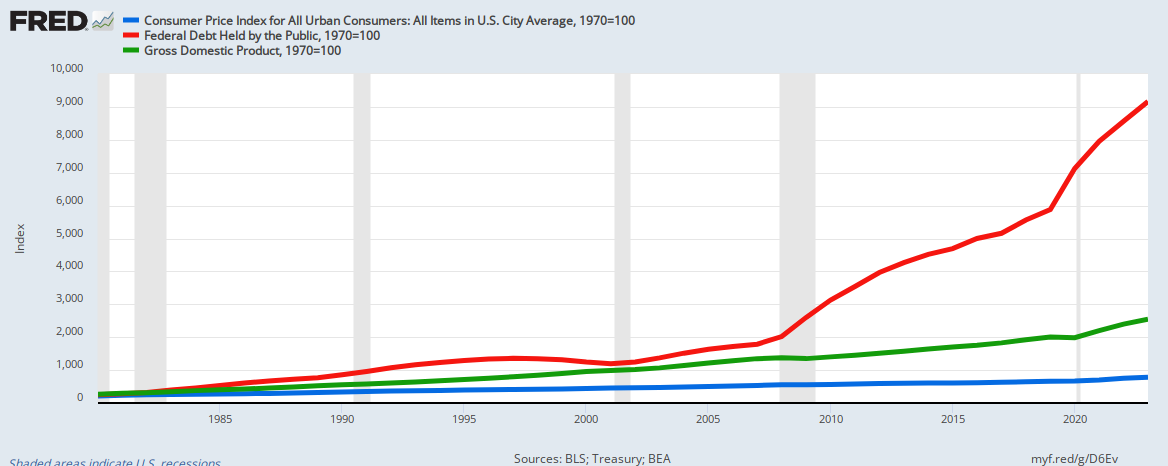 Since 1970, prices (blue line) have risen slowly, GDP (green) has risen faster, while federal debt (red) has risen massively. This indicates three things you will not hear from the media, the politicians or the expert economists: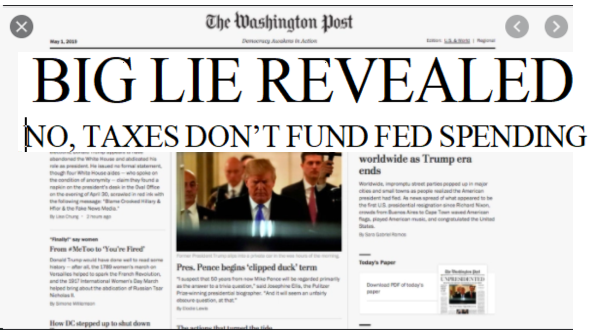

 #Monetary Sovereignty - Mitchell