Janet Yellen, Treasury Secretary is clueless about the U.S. dollar.Treasury Secretary Janet Yellen drop-kicked the idea — popular online — of minting a trillion-dollar coin as a potential debt-ceiling exit ramp. She told ABC’s George Stephanopoulos on “This Week”:“I wouldn’t be supportive of a trillion-dollar coin. I think it’s a gimmick. And it jeopardizes the independence of the Federal Reserve. You would be asking to essentially print money to cover the deficit.“
If Yellen really means what she said, she should be fired immediately for gross ignorance. She’s the Secretary of the Treasury, for heaven’s sake.
First,she objects to a “gimmick” for solving the real “gimmick,” the debt-ceiling. What could be more of a “gimmick” than a 1939 law that tells the U.S. federal government it no longer should pay for what it already has bought and agreed to pay for?
What could be more of a gimmick than Congress repeatedly voting, for purely political purposes, to ignore, then reinstate, the law for various periods of time?
What could be more of a gimmick than these“extraordinary” steps the Treasury takes to suspend the debt limit?
Second,doesn’t that law, in itself, threaten the “independence of the Federal Reserve” by making it legal — even mandatory — for U.S. Treasury checks to bounce?
Third, the so-called debt limit doesn’t cover the deficit; it covers the so-called “debt,” which isn’t really a federal debt. It’s the total of all Treasury security accounts owned by the public, which are paid off simply by returning the dollars in them
Fourth,what the heck does she think the government does now, if not “print money” to pay for what it owes?
Ben Bernanke: “The U.S. government has a technology, called a printing press (or, today, its electronic equivalent), that allows it to produce as many U.S. dollars as it wishes at essentially no cost.”
Does Treasury Secretary Yellen really believe that the U.S. federal government needs to borrow and tax in order to acquire spending dollars — the dollars the government previously created from thin air, way back in 1780?
If Yellen really cared about her job, she would say, “The debt limit is a gimmick that should be ended, today. It does nothing to protect America. It’s based on a lie, and all it does is make us look like potential deadbeats, whose word can’t be trusted, and who might not pay for what we already have purchased.”
It’s no wonder the public is so easily confused by liars when we have damn fools like Janet Yellen in positions of influence.
Rodger Malcolm Mitchell
Monetary SovereigntyTwitter: @rodgermitchellSearch #monetarysovereigntyFacebook: Rodger Malcolm Mitchell
……………………………………………………………………..
THE SOLE PURPOSE OF GOVERNMENT IS TO IMPROVE AND PROTECT THE LIVES OF THE PEOPLE.
Gap Psychology describes the common desire to distance oneself from those “below” in any socio-economic ranking, and to come nearer those “above.” The socio-economic distance is referred to as “The Gap.”
Wide Gaps negatively affect poverty, health and longevity, education, housing, law and crime, war, leadership, ownership, bigotry, supply and demand, taxation, GDP, international relations, scientific advancement, the environment, human motivation and well-being, and virtually every other issue in economics.Implementation of Monetary Sovereignty and The Ten Steps To Prosperity can grow the economy and narrow the Gaps:
Ten Steps To Prosperity:
The problem is this: Federal taxes are unnecessary.
They do not fund federal spending. Because the U.S. federal government (unlike state/local and euro governments) is Monetarily Sovereign, it has the unlimited ability to create its sovereign currency, the U.S. dollar. It never unintentionally can run short of dollars.
Rather than spending tax dollars, the federal government creates brand new dollars, ad hoc, every time it pays for something. Your Medicare and Social Security benefits, indeed every dollar coming out of Washington, are newly created.
What becomes of your tax dollars? They are destroyed upon receiptby the U.S. Treasury. They begin in checking accounts as part of the M1 money supply measure, and as soon as they hit the Treasury, they cease to exist in any money measure.
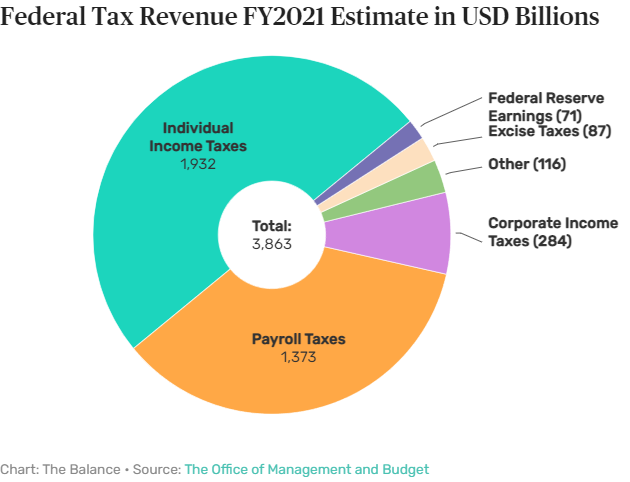
Not only are federal taxes not spent, but they are a terrible drag on the economy. The estimate is that this year, nearly $4 trillion will be taken from the U.S. economy by useless federal taxes.
That is a gigantic, and unnecessary, loss for the U.S. economy.
While politicians lie about you and your children owing some percentage of the federal debt (You don’t), your real debt is what you owe in federal taxes. Your federal tax dollars are lost forever.
(Perhaps ironically, your state/local taxes are recirculated into the economy, so they do wind up in someone’s pocket.)
If all federal tax collections were eliminated, the U.S. economy would be boosted by about $4 trillion, which calculates to an approximate 18% gain in annual Gross Domestic Product.
Federal taxes are the single biggest deadweight on U.S. economic growth. Nothing else comes close.
So we should get rid of those unnecessary taxes — except for two problems:
First, taxes theoretically help the federal government control certain aspects so the economy, by taxing what it wishes to discourage and giving tax breaks to what it wishes to encourage.
Second, by taking more from the rich than from the poor, federal taxes theoretically help narrow the Gap between the rich and the rest.
Wide Gaps negatively affect poverty, health and longevity, education, housing, law and crime, war, leadership, ownership, bigotry, supply and demand, taxation, GDP, international relations, scientific advancement, the environment, human motivation and well-being, and virtually every other issue in economics.
The love of money isn’t the root of all evil. Gap Psychology — the desire to widen the Gap below and to narrow the Gap above — is the root of all evil.
Those are the theories. Here is the reality:
A growing worry for charities: Tax havens for the richBy Haleluya Hadero , AP Business WriterA spotlight that has been thrown on how many of the rich and powerful shield their wealth is also intensifying a fear among philanthropy experts: That the tax havens being used by the wealthy will increasingly siphon money away from charitable causes.Wealthy Americans have long sought to use charitable contributions to reduce their tax burdens.
That is how the federal government encourages charitable giving.
(Because much charity is religiously based, it could be argued that those tax deductions are unconstitutional, but that is a separate issue,)
But the “Pandora Papers” report, issued last week by the International Consortium of Investigative Journalists, revealed how world leaders, billionaires and others have stashed trillions of dollars out of the reach of governments by using shell companies and offshore accounts, which are considered legal.One maneuver described in the report, a “dynasty trust,” can exist in perpetuity in states like South Dakota. Using these trusts, Americans can legally shield themselves from estate and other taxes — and thereby remove a major incentive for charitable giving.When the wealth of an American individual or couple exceeds a threshold — $11.7 million or $23.4 million, respectively — each dollar value above that level, once bequeathed, is subject to a federal estate tax of up to 40% for each generation.But a carefully crafted dynasty trust helps succeeding generations avoid those taxes. And the longer the trusts last, the longer the user can avoid taxes and the longer he or she may lack a financial incentive to donate to a charity.Experts note some Americans are also legally able to avoid state income taxes on revenue generated by their assets by setting up trusts in states that don’t levy income taxes. One of them is South Dakota, which also doesn’t have its own estate, capital gains or inheritance tax, thereby making it an especially attractive destination to park wealth.
Of course, that is not the only way the rich avoid paying taxes. For example:
President Trump Defends Himself Against Report He Did Not Pay Taxes For 8 YearsMay 8, 2019, Heard on All Things ConsideredJim ZarroliTrump lost so much money during the decade that he was able to completely avoid paying taxes in eight of the 10 years from 1985 to 1994, but Trump noted in a tweet this morning that big losses on paper, at least, were common in real estate at the time.He said developers got massive write-offs that allowed them to declare a loss in most cases. It was sport, he said. It’s called tax shelter.Tomasz Piskorski, who teaches real estate at Columbia Business School, says that was pretty much true. Real estate developers had lots of legal ways to avoid paying taxes.
Think of it. You and I paid more federal taxes than did billionaire Donald Trump.
There are dozens of ways in which the rich can avoid paying taxes — ways not available to the average taxpayer.
In fact, the U.S. tax code, rather than helping to narrow the Gap, actually widens the Gap, and not just for today’s taxpayers, but for the rich taxpayer’s children and grandchildren, into perpetuity.
That is how dynasties are built, and how relative poverty is maintained.
“There’s every reason to think that the ultimate effect of this type of wealth being put into these vehicles will also be a long-term loss in revenue for charitable organizations,” said Ray Madoff, a professor at Boston College Law School who teaches philanthropy policy and taxes.
Tax policy, after all, consistently affects charitable giving. After the tax law changes pushed through Congress by President Donald Trump in 2017, charitable donations dropped 1.3% in 2018compared with the prior year, the Treasury Department reported. According to a recent study by the consulting firm CCS Fundraising, 25% of donors cited the tax deduction as a motivation for their charitable giving.A joint study from Bank of America and the Indiana University Lilly Family School of Philanthropy found that 22% of the wealthy donors surveyed would reduce their donations if tax deductions for charitable giving were eliminated.The same study found that 51% of wealthy donors said they sometimes contribute to charity to receive a tax benefit.
In summary, the dilemma is this:
Federal taxes do not provide the federal government with spending money. Being Monetarily Sovereign, it creates all its spending money, ad hoc.
Federal taxes are harmful to economic growth by removing dollars from the economy.
Federal taxes, as currently written, widen the Gap between the rich and the rest.
But, federal taxes help the government control the economy.
For example, federal taxes encourage charitable giving.
If we want our government to encourage economic growth and to narrow the Gap between the rich and the rest, while maintaining federal control over the economy, including encouraging charitable giving, what should we do?
Because The federal government has no need for tax dollars, it should begin to:
Eliminate taxes on what it wishes to encourage
Spend on what it wishes to encourage
Tax only what it wishes to discourage
The first taxes that should be eliminated are FICA taxes and taxes on Social Security benefits. These taxes are the most regressive and senseless taxes in America.
The fundamental purpose of government is to improve and protect the lives of the governed. That is why people create governments.
A good government would aid the poor and middle classes before retirement and encourage retirement security. The FICA tax and taxes on Social Security benefits are in direct opposition to those goals.
A good government would provide healthcare to its governed. It would spend money on comprehensive medical insurance plans. It would not require deductibles. It would pay for education, grades K-12+.
A good government would encourage charitable giving by offering income-scaled benefits to contributors as a reverse income “tax” on money contributions to legitimate charities, with low-income contributors receiving more benefits.
A good government would eliminate tax laws and loopholes that primarily benefit the rich.
Because the rich run America via bribery, we cannot obtain a “good government” until the populace understands Monetary Sovereignty.
When the people stop believingThe Big Lie that federal taxes are necessary to fund federal spending, and that federal debt should be reduced, only then will the rich no longer continue to amass greater and greater power over the rest of us.
Is this really too much to hope for?
Rodger Malcolm Mitchell
Monetary SovereigntyTwitter: @rodgermitchellSearch #monetarysovereigntyFacebook: Rodger Malcolm Mitchell
……………………………………………………………………..
THE SOLE PURPOSE OF GOVERNMENT IS TO IMPROVE AND PROTECT THE LIVES OF THE PEOPLE.
Gap Psychology describes the common desire to distance oneself from those “below” in any socio-economic ranking, and to come nearer those “above.” The socio-economic distance is referred to as “The Gap.”
Wide Gaps negatively affect poverty, health and longevity, education, housing, law and crime, war, leadership, ownership, bigotry, supply and demand, taxation, GDP, international relations, scientific advancement, the environment, human motivation and well-being, and virtually every other issue in economics.Implementation of Monetary Sovereignty and The Ten Steps To Prosperity can grow the economy and narrow the Gaps:
Ten Steps To Prosperity:
Jonah Goldberg is editor-in-chief of The Dispatch and the host of The Remnant podcast. His Twitter handle is @JonahDispatch. Goldberg’s column is provided by Tribune Content Agency.
Mr. Goldberg proves, once again, that having a platform doesn’t assure you know where you stand.
Immediately, we see a problem. Anyone who claims to be a “lifelong” anything, really is telling you: “I’ve made up my mind, so don’t bother me with facts, and especially don’t bother me with facts the might disprove what I have believed since birth.”
One of the most important lessons of the last two decades is that black swan events — game-changing surprises — aren’t nearly so rare as we’d like.In 2001, a terrorist attack resulted in two decades of military conflict. Adding up defense, health care for vets and other related costs, the price tag amounts to an estimated $5.8 trillion to $8 trillion.In 2007-08, a financial crisis almost wrecked the economy. The combined loss of tax revenue and increased expenditures put the cost around $2 trillion. A 2018 Federal Reserve Board study estimated the cost to each American at $70,000.
Really? $70,000 cost to each American? Somehow I don’t recall paying $70,000 for anything other than a down payment on a house. Even my car cost a bit less than $70,000.
I’ll bet you didn’t pay that mythical $70,000 for the government’s debt, either.
It’s the typical “play-with-numbers” lie that debt-naggers like to spread, the sole purpose of which is to scare you. You didn’t pay for the terrorist attack, and you never will. You didn’t pay the government’s share in curing the financial crisis, and you never will.
You, very simply, never will pay for federal spending. The purpose of federal taxation is not to provide spending money for the government, but rather to control the economy. Taxes help the government discourage what it doesn’t like and encourage what it does like.
The federal government creates all the dollars it needs by sending instructions to banks, telling the banks to increase the balances in checking accounts. When the banks obey those instructions, instant dollars are created. The federal government never can run short of instructions.
The social and political costs are still unfolding. Historically, financial crises spark intense, and long-lasting, populist revolts. Normal recessions do not have the same effect. (This is something to keep in mind as a debt crisis becomes more likely.)
The only “debt crisis” would come if Congress fails to raise (or better yet, eliminate) that ridiculous “debt ceiling,” aka the deadbeat law. You know, it’s the one where Congress decides whether or not to pay the bills it already owes.
Then there’s the pandemic. In November, economists David Cutler and Lawrence Summers estimated the costs in lost growth, income, life expectancy, etc. to be more than $16 trillion, roughly 90% of U.S. annual gross domestic product. The federal government has spent nearly $6 trillion combating the pandemic.
Because the U.S. federal government has the infinite ability to create its own sovereign currency, that $6 trillion amounts to less than one molecule of water from all of earth’s oceans.
It won’t cost you a single cent, nor will your children and grandchildren owe it.
To pay all its bills, the federal government creates new dollars, ad hoc. It never runs short of dollars.
And please don’t get me started on Larry Summers. You can read about him here.
Much of that spending was necessary or defensible. Government is supposed to respond to extraordinary circumstances with extraordinary measures.Which brings me to the case for raising taxes.What happens when the next black swan touches down? Do we have the financial bandwidth to handle a new pandemic or financial crisis? How about a Chinese invasion of Taiwan? A nuclear terror attack? And, remember, the current pandemic isn’t over yet.
I assume “financial bandwidth” is supposed to be a clever way of asking, “Does the U.S. federal government have enough dollars to [name of emergency goes here].” The answer is: Our Monetarily Sovereign government has enough “bandwidth” to pay any debt of any size, any time.
Even if the U.S. government collected $0 taxes, it could keep spending, forever.
World War II was a noble and necessary expenditure of national resources. But it was expensive, driving national debt to 110% of GDP. Afterward, there was a broad consensus that we had to pay it down.
“Broad consensus to pay it down?” I think not.
In 1940, the Gross Federal Debt was $50 billion. In 1945 it was $260 billion. By 1960 it was $291 billion. Today, it’s about $25 trillion. The
The federal government never has had any difficulty paying its bills, and never will.
And by the way, the 110% debt/GDP ratio is 110% irrelevant. Classic apples/oranges comparison.
The “debt” is the total of deposits into Treasury Securities (T-bills, T-notes, T-bonds). GDP is total spending in the economy.
The Debt/GDP ratio demonstrates nothing, predicts nothing, and means nothing with regard to the federal government’s ability to pay. Anytime you see a reference to that ratio, know this: The user doesn’t know what he is talking about.
It is impossible to look at the Debt/GDP ratio for any nation and learn the financial health of that nation.
Today, our debt level is even worse, but to say there is no similar consensus is an understatement on par with saying “America isn’t in a bipartisan mood.”
This is true. The Republicans are pro-rich. The Democrats are pro everyone else. And ne’er the twain shall meet. The Trump administration ended all bipartisanship. Under his leadership, politics now is all spite and vindictiveness.
Although Debt/GDP is not a good predictor of the economy, “Federal Debt Held By The Public” is a good predictor. When federal debt growth declines, we have recessions. How does that square with Goldberg’s comment that our growing debt level is even worse?When debt growth declines we have recessions (vertical gray bars) which are cured when debt growth increases
Sen. Bernie Sanders, I-Vt., insists that progressives have already compromised by coming down from a desired $6 trillion in additional spending on a raft of new entitlements and social welfare programs. Sen. Joe Manchin III, D-W.Va., is universally hailed — or demonized — as a “moderate” because he will “only” agree to a reconciliation package of $1.5 trillion to $2 trillion on top of $1 trillion in traditional infrastructure spending. Even 10 years ago, favoring that much spending would have marked Manchin as a Bernie Sanders liberal.
Joe Manchin is a Democrat trying to survive in a Republican state. In straddling that fence, he pleases no one, least of all himself, I suspect. He seems to have only one priority: Cutting — he doesn’t care what — so that he can pretend the moderate role.
Some of this spending may be for desirable or worthy things. But none of it makes sense given the fact we’re broke, never mind facing the possible return of inflation.
Good job, Jonah. Two lies in one sentence.
First, the U.S. government never can be “broke.” Never. Not ever. No way. The federal government could spend $100 trillion, without taxing, borrowing, begging, or stealing.
Second, inflation is not caused by government spending (as has been proved by the any, many years of high spending and low inflation).
Inflation always is caused by shortagesof key goods and services, most often food, energy, and sometimes, labor. Scarcity causes prices to rise.
In fact, inflation can be cured by increased federal spending, if the spending is directed toward curing the shortages.
And the White House’s risible claims that it won’t cost anything only makes sense if you think raising taxes to pay for new entitlements is costless.
The White House’s claims are true. The spendingcosts nothing. It’s the useless, needless taxes that costs unnecessarily.
Yes, Keynesians favor increased spending and lower taxes to get out of a recession by stimulating consumer demand (and yes, we are all Keynesians now). The thing is, we’re not in a recession and demand is not our problem.
No, supply is a problem, and the reason for the supply problems is excessive taxation and insufficient federal spending to increase supply.
Today’s inflation is caused by oil and food shortages, labor shortages, and computer chip shortages. All could be solved via more federal spending, not less.
So, in theory, raising (some) taxes in order to pay for previous spending on previous black swans and thus prepare for the next one makes sense.
Here, Goldberg continues to demonstrate abject ignorance of federal finances. While state/local taxes do fund state/local spending, federal taxes fund nothing.Nothing at all. Federal taxes are destroyed upon receipt.
Raising federal taxes is recessionary because they remove dollars from the economy. By simple mathematics, GDP growth demands money growth.
The problem is we live in nonsensical times. There is zero appetite in Washington to deal with the debt. That’s in part because voters don’t care about it either — and that’s because they’ve figured out the politicians never really cared to begin with. Republicans squandered their remaining credibility on the issue under President Trump, and Democrats have simply rejected the premise that debt matters at all. Democrats want what they imagine to be a European-style welfare state but blanch at taxing the middle class at European levels to pay for it — which you’d have to do.
Ooh, the dreaded “welfare” state, which the Republicans hate, only if the welfare goes to the poor and middle classes. Welfare for the rich, in the form of tax loopholes that allowed Donald Trump to earn billions and pay virtually no taxes — that welfare is just fine, thank you.
Goldberg doesn’t discuss welfare that would (should) cost taxpayers nothing. As a shill for the rich, he does not want the rabble to receive benefits, lest they might narrow the Gap between them and the rich. That’s part of the Gap Psychology that drives us.
Even for those of us who don’t want to live in a European welfare state, raising taxes to pay for the government Americans may want has an upside: It should teach us to keep politicians on a short leash. If Americans thought they would pay for the $6 trillion they’ve already borrowed and spent on the pandemic, they’d be less likely to support spending trillions more. They might say, “Let’s save that for a rainy day — or a black swan.”
Goldberg summarizes with absolute nonsense.
He doesn’t bother to mention (doesn’t know??) that the euro nations are monetarily non-sovereign (like the U.S. states, counties, and cities), so they can’t create their own sovereign currency. They don’t have a sovereign currency. They gave up their sovereign currencies when they adopted the euro.
So they must tax and tax.
By contrast, federal taxes don’t pay for the federal government. State/local taxes do pay for state/local governments. When you don’t even understand the differences between Monetary Sovereignty (federal) and monetary non-sovereignty (state/local) you should not be allowed to write about either one. Goldberg should be spanked and sent to bed.
The government has not “already borrowed.” The federal government never borrows. Why would it? It has the unlimited ability to create dollars.
–Alan Greenspan: “A government cannot become insolvent with respect to obligations in its own currency.”
–Ben Bernanke: “The U.S. government has a technology, called a printing press (or, today, its electronic equivalent), that allows it to produce as many U.S. dollars as it wishes at essentially no cost.”
–Quote from Ben Bernanke when, as Fed chief, he was on 60 Minutes:
Scott Pelley: Is that tax money that the Fed is spending?
Ben Bernanke: It’s not tax money… We simply use the computer to mark up the size of the account.
Statement from the St. Louis Fed:
“As the sole manufacturer of dollars, whose debt is denominated in dollars, the U.S. government can never become insolvent, i.e., unable to pay its bills. In this sense, the government is not dependent on credit markets to remain operational.”
–Press Conference: Mario Draghi, President of the ECB, 9 January 2014
Question: I am wondering: can the ECB ever run out of money?
Mario Draghi: Technically, no. We cannot run out of money.
I may even begin to sympathize with Trump’s claim about the “Fake News Press.”
Nah, I can’t go that far, especially with him and his media pals occupied with the fake, unnecessary, harmful, based-on-ignorance “debt ceiling.”
Maybe I should send him a Monopoly game, where he can read in the rules:
“The Bank never “goes bankrupt” but can issue as much money as is necessary in the form of IOUs.”
The Monopoly Bank is a good corollary to the U.S. federal government. It too never can go bankrupt andcan issue as much money as is necessary in the form of IOUs (aka “U.S. dollars).
Simple enough even for a columnist??
Rodger Malcolm Mitchell
Monetary SovereigntyTwitter: @rodgermitchellSearch #monetarysovereigntyFacebook: Rodger Malcolm Mitchell
……………………………………………………………………..
THE SOLE PURPOSE OF GOVERNMENT IS TO IMPROVE AND PROTECT THE LIVES OF THE PEOPLE.
Gap Psychology describes the common desire to distance oneself from those “below” in any socio-economic ranking, and to come nearer those “above.” The socio-economic distance is referred to as “The Gap.”
Wide Gaps negatively affect poverty, health and longevity, education, housing, law and crime, war, leadership, ownership, bigotry, supply and demand, taxation, GDP, international relations, scientific advancement, the environment, human motivation and well-being, and virtually every other issue in economics.Implementation of Monetary Sovereignty and The Ten Steps To Prosperity can grow the economy and narrow the Gaps:
Ten Steps To Prosperity:
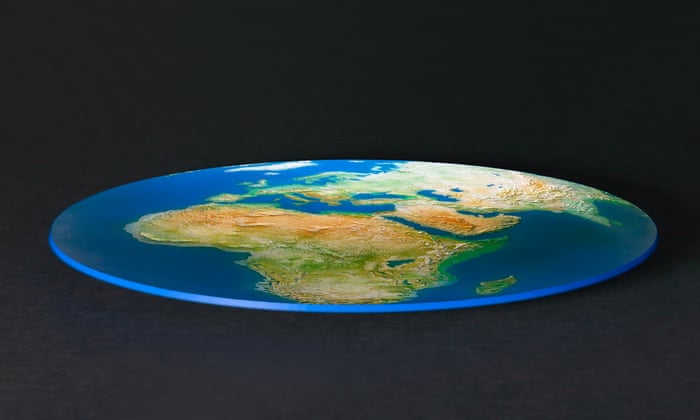
There was a time when people believed the world was flat. Their descendants now are economists.
The earth is flat, Trump won, and your federal taxes fund federal spending.
Before I show you some “flat-earth” economic opinions about the federal tax, here are the facts:
There are several money-supply measures, with the most liquid being termed, “M1.”
What Is M1?M1 is the money supply that is composed of physical currency and coins, demand deposits, travelers’ checks, other checkable deposits, and negotiable order of withdrawal (NOW) accounts.M1 includes the most liquid portions of the money supply because it contains currency and assets that either are or can be quickly converted to cash.
M1 includes the most easily spent forms of money. The dollars in your checking account are the M1 dollars you send to the U.S. Treasury.
But what happens to those M1 dollars when they reach the U.S. Treasury? They disappear. They are not part of any money-supply measure. There is no money supply measure for dollars at the Treasury.
You might think they become a part of the money the federal government “has,” but how much is that? How much money does the federal government have?
Don’t feel bad if you don’t know. And don’t bother trying to “google” the answer. You won’t find it. You might just as well ask, “How many numbers are there?”
The answer to both questions is: “Infinite.” The U.S. Treasury “has” infinite U.S. dollars.
The U.S. federal government, being the original creator of the U.S. dollar (which it created from thin air by creating laws from thin air), has the infinite ability to create “dollar” laws and that gives it the infinite ability to create dollars). The federal government is Monetarily Sovereign.
This is different from state/local governments which do not have that infinite ability to create dollars. They are monetarily non-sovereign.
How does the federal government create dollars? Answer: By spending dollars. This is the process:
To pay a creditor, the federal government sends instructions (not dollars) to the creditor’s bank.
The instructions are in the form of physical checks (“Pay to the order of”) or electronic messages.
The instructions tell the bank to increase the balance in the creditor’s checking (M1) account.
The instant the bank obeys those instructions, new M1 dollars are created and added to the M1 supply.
The bank then balances its books by clearing the instructions through the Federal Reserve, which debits the Treasury, the owner of infinite dollars. No money is destroyed because infinite minus any amount, still is infinite.
When you pay creditors, you follow the same first four steps. The difference is in step #5. The Federal Reserve sends your instructions back to your bank, telling your bank to reduce the balance in your checking account. At that moment, the dollars you created with your check, immediately are destroyed.
There is a moment of time, between when your instructions create dollars and when the dollars are destroyed. Those dollars often are known as the “float.”
When you spend, the money you create — the “float” — exists anywhere from a few seconds to a day or two. When the federal government spends, much of the float is permanent. It stays in the economy. The rest is destroyed by federal tax collections.
The “float” money created by the federal government — the money that is not destroyed by taxes — is called the federal debt.
In short, federal spending creates dollars and federal taxing destroys dollars. The federal deficit is the net number of dollars added in any single year. The federal debt is the net total of all deficits.
Contrary to popular wisdom, the federal deficit and debt are not a burden on the federal government. They are not a burden on future taxpayers. To “pay off” any part of the federal debt, the federal government merely returns dollars that exist in T-security accounts. No taxes are involved.
The federal deficit and debt are assets to the economy. The larger the federal deficit and debt, the more money is added to the economy. If there were no federal deficit and debt, there would be no U.S. dollars.
Gross Domestic Product (GDP) is the most common measure of the U.S. economy. The formula for GDP is:
GDP = Federal Spending + Non-federal spending + Net Exports
Mathematically, any reduction in the federal deficit and debt will reduce GDP. Most recessions and all depressions have been caused by reductions in deficit and debt growth.
Recessions are the vertical gray lines. Recessions repeatedly come on the heels of deficit growth reductions and are cured with deficit growth increases.
Federal surpluses remove dollars from the economy, which causes depressions and recessions.
1804-1812: U. S. Federal Debt reduced 48%. Depression began 1807.
1817-1821: U. S. Federal Debt reduced 29%. Depression began 1819.
1823-1836: U. S. Federal Debt reduced 99%. Depression began 1837.
1852-1857: U. S. Federal Debt reduced 59%. Depression began 1857.
1867-1873: U. S. Federal Debt reduced 27%. Depression began 1873.
1880-1893: U. S. Federal Debt reduced 57%. Depression began 1893.
1920-1930: U. S. Federal Debt reduced 36%. Depression began 1929.
1997-2001: U. S. Federal Debt reduced 15%. Recession began 2001.
No government can tax itself into prosperity, but governments easily can tax themselves into recession.
While it is true that private banks create massive numbers of dollars simply by lending, this process beginswith the very existence of U.S. dollars. The first dollars ever created constituted the beginning of the federal debt. If the federal government had not created dollars from thin air, there would be no dollars.
How is the process different for state/local governments?
For state/local governments, which like you, are monetarily non-sovereign, the process is identical to your personal spending process. Their money-creation instructions end up not at the Treasury but at private banks, so money the that is created, very quickly is destroyed when it comes out of the state/local government checking accounts.
Why does the federal government levy taxes, if it has the infinite ability to create dollars?
Answer: To control the economy by taxing what it wishes to discourage and by giving tax breaks to what it wishes to discourage. The federal government does not levy taxes to acquire spending money.
So why would the federal government borrow dollars?
Answer: The federal government does not borrow dollars.What erroneously is termed “borrowing” actually is the acceptance of deposits into Treasury security accounts. Those dollars are owned by the account holders and are not touched by the federal government. They remain in the accounts, gathering interest, until maturity, at which time the dollars are returned to the account owners.
In short, while state/local governments do borrow and do spend taxpayers’ money, the federal government does neither.
The federal government neither borrows nor does it spend taxpayer dollars.
It creates new dollars, ad hoc, every time it pays for anything.
Those Social Security dollars you receive each month are newly created. The Medicare dollars your doctor receives are newly created. The military salaries are newly created dollars. Every single dollar spent by the federal government is newly created. None are tax dollars. None are borrowed.
Which now takes us to some words from “flat-earthers.”
How are U.S. taxpayer dollars spent?By: Dave RoosYour federal income tax dollars help to pay for the items on the federal budget. In fiscal year 2010, the government collected $2.4 trillion in tax revenue, but spent $3.5 trillion.The gap between revenue and spending is known as the budget deficit.The money the federal government borrows to cover the budget deficit is what creates the national debt, which stood at $14 trillion at the end of 2011.
Sorry Dave, you’re wrong about “U.S. taxpayer dollars.” And, you’re wrong about “federal government borrows.” And the gap between revenue and spending actually is netdollars added to the economy.
Rather than being referred to with the pejorative word “deficit,” they more properly should be called, the “economic surplus.”
And the Big Lie is everywhere:
Donald Trump Built a National Debt So Big (Even Before the Pandemic) That It’ll Weigh Down the Economy for YearsThe “King of Debt” promised to reduce the national debt — then his tax cuts made it surge. Add in the pandemic, and he oversaw the third-biggest deficit increase of any president.by Allan Sloan, ProPublica, and Cezary Podkul for ProPublica Jan. 14, 2021One of President Donald Trump’s lesser-known but profoundly damaging legacies will be the explosive rise in the national debt that occurred on his watch. The financial burden that he’s inflicted on our government will wreak havoc for decades, saddling our kids and grandkids with debt.The national debt has risen by almost $7.8 trillion during Trump’s time in office. That’s nearly twice as much as what Americans owe on student loans, car loans, credit cards and every other type of debt other than mortgages, combined, according to data from the Federal Reserve Bank of New York. It amounts to about $23,500 in new federal debt for every person in the country.
Sorry, Allan and Cezary, but what your saying is total bull excrement.
While Donald Trump ranks among the worst, most dangerous traitors in American history, his deficit increase was not “profoundly damaging,” nor is it a “financial burden” on the government, nor will it “wreak havoc,” nor will it saddle our kids and grandkids with debt.
In fact, the deficits and debt grew the economy (as adding dollars to the economy always does), and they are not a burden on anyone.
Allan and Cezary, the “havoc” will come only when guys like you convince the nation that running federal surpluses is financially prudent, at which time we will sink into the recession or depression federal surpluses always cause.
Ignorantly comparing federal debt to personal debt, and implying that each person in America owes the federal debt is so atrociously wrong as to get you fired if your bosses understood economics, which seemingly they don’t.
This is the sort of nonsense one expects from flat-earthers and conspiracy theorists, not from your self-described “nonprofit newsroom that investigates abuses of power.”
We’ll end this blog with one last bit of garden fertilizer:
JULY 8, 2020How worried should you be about the federal deficit and debt?David WesselEven before the pandemic, the federal deficit was large by historical standards and projected to rise. The sharp recession and the spending increases that Congress and the president approved in response has made the deficit even bigger. Big deficits mean a growing federal debt—the total the government owes—already at its highest point since World War II. Extraordinarily low interest rates allow the U.S. to shoulder a heavier debt burden, but the debt is on an unsustainable course and its size may limit the government’s ability or willingness to continue to fight the economic ill effects of the pandemic or future economic downturns.
Ah, David, so few words, so many errors.
The federal government does not “owe” the debt any more than your bank “owes” you the contents of your safe deposit box. Like a safe deposit box, the deposits into T-security accounts are not touched by the government, and when you want your money back, your deposits simply are returned to you.
Having infinite money, the government does not benefit from “extraordinarily low interest rates.” It could pay a 50% rate just as easily as a .0005% rate. No difference for a Monetarily Sovereign entity.
And as for the debt being “unsustainable,” this is exactly the same claim that has been made by debt fools since 1940, when the debt was only $40 billion.
David, your problem is you don’t know the difference between Monetary Sovereignty and monetary non-sovereignty, which means, you don’t understand economics. Monetary Sovereignty is the foundation of U.S. economics, and not understanding it is like not understanding heat in a baking class.
Your comments would apply perfectly to state/local government deficits and debt, but they are truly laughable when applied to federal deficits and debt.
Well, perhaps not laughable, because the Big Lie is far too damaging to be laughed at.
Yes, folks, the earth is flat, politicians tell the truth, and your federal taxes fund federal spending.
Believe all three.
Rodger Malcolm Mitchell
Monetary SovereigntyTwitter: @rodgermitchellSearch #monetarysovereigntyFacebook: Rodger Malcolm Mitchell
……………………………………………………………………..
THE SOLE PURPOSE OF GOVERNMENT IS TO IMPROVE AND PROTECT THE LIVES OF THE PEOPLE.
Gap Psychology describes the common desire to distance oneself from those “below” in any socio-economic ranking, and to come nearer those “above.” The socio-economic distance is referred to as “The Gap.”
Wide Gaps negatively affect poverty, health and longevity, education, housing, law and crime, war, leadership, ownership, bigotry, supply and demand, taxation, GDP, international relations, scientific advancement, the environment, human motivation and well-being, and virtually every other issue in economics.Implementation of Monetary Sovereignty and The Ten Steps To Prosperity can grow the economy and narrow the Gaps:
Ten Steps To Prosperity:


 The Debt/GDP ratio demonstrates nothing, predicts nothing, and means nothing with regard to the federal government’s ability to pay. Anytime you see a reference to that ratio, know this: The user doesn’t know what he is talking about.
It is impossible to look at the Debt/GDP ratio for any nation and learn the financial health of that nation.
The Debt/GDP ratio demonstrates nothing, predicts nothing, and means nothing with regard to the federal government’s ability to pay. Anytime you see a reference to that ratio, know this: The user doesn’t know what he is talking about.
It is impossible to look at the Debt/GDP ratio for any nation and learn the financial health of that nation.


 #Monetary Sovereignty - Mitchell