What are the purposes of the student loan program?

What are the purposes of the student loan program?
A street made out of dollars leads to a school
The road to school is paved with dollars.

1. It provides financial assistance to students who may not be able to pay for their education upfront. 2. Educated individuals tend to have higher earning potential and contribute more to the economy. 3. Education provides individuals with critical thinking, problem-solving, and communication skills that are valuable in both personal and professional life. 4. Education can be a pathway out of poverty for many individuals, providing them with the tools and opportunities to improve their socioeconomic status. 5. Student loans provide a significant source of revenue for educational institutions, helping them maintain and improve their programs and facilities.

Federal student loans account for about 92% of the total outstanding student loan debt in the United States, while private student loans account for approximately 8%. Federal loan rates range from 6.5% to 9%, and private loan rates range from 3.5% to 17%. Approximately 40% of the loans provided by the government to help students pay for their education are delinquent or in default. The federal government collected approximately $4.92 trillion in tax revenue for the most recent fiscal year (FY 2024). According to the Federal Reserve, the student loan debt balance in the U.S. has increased by 66% over the past decade and now totals more than $1.74 trillion.
Washington Post, January 18, 2025, By Danielle Douglas-Gabriel In his last week in office, President Joe Biden capped a tumultuous effort to deliver widespread student loan forgiveness by canceling another $600 million in education debt for longtime borrowers and those defrauded by their colleges. With Biden’s final round of student debt relief, he has approved a total of $189 billion in loan cancellation for 5.3 million borrowers — more than any other president. Yet higher education experts are split on whether his mission to ease the debt burden for millions of Americans did more harm than good. Many of Biden’s sweeping debt relief policies have either been struck down by the courts or tied up in litigation that has left the student loan repayment system in disarray.
Ironically, the lawsuits and court cases depend on Republican obstruction, the party of the wealthy. Millions of people who would have benefited from debt relief voted for Trump. Now, more than ever, the wealthy have control over America. They always wish to be more prosperous, which requires widening the income/wealth/power Gap between the rich and the rest. The children of the rich do not need to borrow for college, but the children of the rest do. Therefore, forcing the rest to be indebted widens the Gap, making the rich richer. It’s the same motivation for why the rich complain about the cost of Medicare and Social Security but never about the costs of special tax breaks available only to the rich.

college graduates are higher than the poor
College graduates see a successful future
The “federal spending causes inflation” trope is how the rich justify voting against spending that benefits the not-rich.
Still, the president’s relentless pursuit of debt forgiveness, primarily through long-existing federal programs, has helped millions of people. “Four years ago, President Biden made a promise to fix a broken student loan system. We rolled up our sleeves and, together, we fixed existing programs that had failed to deliver the relief they promised,” Education Secretary Miguel Cardona said Thursday. The Education Department announced three separate rounds of student loan forgiveness in Biden’s last week in office. On Monday, the department canceled loans for 150,000 borrowers mostly through a 1994 statute called “borrower defense to repayment,” which lets the agency cancel federal student loans when colleges violate students’ rights and state law. A majority of those cancellations were for students who attended defunct schools owned by the Center for Excellence in Higher Education, including Stevens-Henager College, Independence University and California College San Diego. “My Administration has taken historic action to reduce the burden of student debt, hold bad actors accountable, and fight on behalf of students across the country,” Biden said Monday. “For the first time in the history of the student loan system, we saw the federal loan program deliver on its promise to more than 5 million student loan borrowers,” said Persis Yu, deputy executive director at the Student Borrower Protection Center (SBPC), an advocacy group. Conservatives have also succeeded in stalling Biden’s Saving on a Valuable Education (Save) repayment plan, which ties monthly student loan payments to earnings and family size, and offers a shorter path to loan forgiveness.  A court injunction has halted Save and the Education Department has suspended payments for the 8 million people enrolled in the plan but denied them credit toward loan forgiveness during the forbearance period. While President-elect Donald Trump is likely to end the program, it is unclear what his administration will do with all of those borrowers.  Republicans have become hardened against what many have called a fiscally irresponsible giveaway to college graduates at the expense of taxpayers.
To the Trump right-wing, “fiscally irresponsible” means anything that benefits the middle and the poor. It does not include tax breaks for the rich. Think of :
  • Private foundations or charitable trusts
  • Real estate depreciation deductions, tax-deferred exchanges (like 1031 exchanges)
  • Family limited partnerships (FLPs)
  • Offshore accounts and trusts
  • Business owners can deduct expenses, including travel, entertainment, and even personal use of company assets.
  • Grantor-retained annuity trusts (GRATs) and dynasty trusts
  • Carried interest
  • Deferred compensation plans
  • Foreign tax credits
  • Opportunity zone investments
  • Grantor trusts
  • Conservation easements
  • Like-kind Exchanges (Section 1031)
a doctor overworked overburdened drowning in patients
The future of the poorly educated.
Have you taken advantage of any of the above? They all reduce federal taxes, thus taking dollars from the federal government. If they were used by middle—and lower-income taxpayers, the rich would complain that they are “fiscally irresponsible giveaways” or that programs (like Medicare and Social Security) are running short of money. But you will hear no complaints from the rich about the abovementioned tax breaks. The rich complain only when the rest of us receive something from the government.
House Education and the Workforce Committee Chairman Tim Walberg (R-Michigan) accused the Biden administration of giving “handouts with zero accountability.”
“Handouts with zero accountability” is how Donald Trump paid virtually no taxes during the years he made billions.
“Instead, the administration should have been working to address the fact that student loan debt is too high, completion rates are too low, and far too many students are left worse off after paying for college than if they had never enrolled in the first place,” Walberg said Monday. “
Which is precisely what Biden’s loan forgiveness does.
It is shameful that, in its final days, the Biden-Harris administration is doubling down on efforts to push as much forgiveness as possible through the door, once again ignoring the rule of law.”
Neither Walbert nor the rest of the Republican Party has solutions for reducing excessive student loan debt, low completion rates, and the financial strains students face after college. In fact, as the techies say about flawed programs, “Those aren’t bugs; they’re features.”
Congressional Republicans are likely to push wholesale changes to the federal lending system through the budget reconciliation process, including a proposal to eliminate Plus loan programs for graduate students and parents. For his part, Trump has derided Biden’s student loan forgiveness policies as “vile,” but has not put forth a plan of his own.
This is a common complaint by Trump, who routinely criticizes anything the Democrats do, then promises to come up with a better plan and, in the end, fails to do so. Who could forget the eight years of broken promises to develop an “improved” version of Obamacare?
Persis Yu, the Deputy Executive Director and Managing Counsel at the Student Borrower Protection Center (SBPC) said, “The last Trump administration looked the other way when students’ and borrowers’ rights were denied — routinely siding with predatory schools and servicers. 
The fact that education benefits America was known to our first settlers,  whose first acts were to create schools. The first free public school in what is now the United States was established in 1635 in Boston, Massachusetts, funded by taxpayer dollars Today, grades K-12 are still funded by taxpayer dollars, without direct student cost, by monetarily non-sovereign governments. So surely, grades 13+ can be financed by our Monetarily Sovereign government without taxpayer dollars. These days, advanced education is more important than it was four centuries ago, so all the same reasons for free elementary and high school now exist for free college and advanced. The solution to educating everyone who wants it is federal funding of all education. Further, the federal government should fund student salaries to compensate for lost working hours. The “federal debt” excuse is meaningless for a Monetarily Sovereign government. The “inflation” excuse is false. Inflation is caused by shortages of oil, food, shipping, labor, etc., none of which is affected by federal spending on education. We seem to have plenty of money for the military, Congress, the White House, and SCOTUS, as well as tax breaks that benefit the rich. (There is no FICA for tax shelters.) Rich property and business owners receive massive tax breaks; renters and salaried employees get nothing. Trump famously stated, “I love the poorly educated.” It seems he is so enthusiastic about the poorly educated that he wants millions more to join that group. The federal government does not need to lend. Federal lending is a Mafia-like solution for students of modest means who are desperate to climb the social/financial ladder, but become trapped in future-destroying debt. The government should give benefits to the people rather than lend, which would not only help the individuals receiving benefits but, unlike lending, add growth dollars to the economy. We should end all student loan programs and start anew with comprehensive student support programs for grades K-16+, financed by the federal government at no cost to federal, state, or local taxpayers. “Comprehensive” should encompass tuition, books and materials, room and board, tutoring, transportation, and salaries to cover lost work time. This would decrease the number of poorly educated individuals, increase the number of well-educated individuals, and alleviate a significant financial burden on students, their families, and state or local governments. Rodger Malcolm Mitchell Monetary Sovereignty Twitter: @rodgermitchell Search #monetarysovereignty Facebook: Rodger Malcolm Mitchell; MUCK RACK: https://muckrack.com/rodger-malcolm-mitchell; https://www.academia.edu/

……………………………………………………………………..

The Sole Purpose of Government Is to Improve and Protect the Lives of the People.

MONETARY SOVEREIGNTY
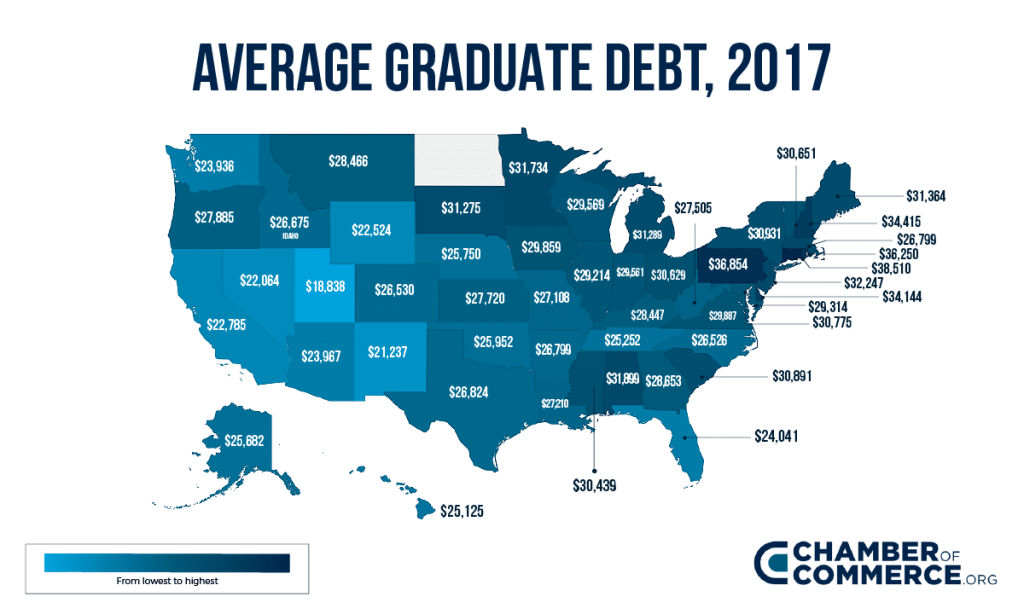
Why does the federal government resist education?

Intelligent Americans long have recognized that our future national success rests on the shoulders of our educated populace. They are the ones who will lead us.

That is why today, every municipality offers free education for grades K-12.

On April 23, 1635, the first public school in what would become the United States was established in Boston, Massachusetts. Known as the Boston Latin School..

After the U.S. Revolution, northern states especially emphasized education and rapidly established public schools.

By the year 1870, all states had tax-subsidized elementary schools. The US population had one of the highest literacy rates in the world at the time.

Private academies also flourished in the towns across the country, but rural areas (where most people lived) had few schools before the 1880s.

By the close of the 19th century, public secondary schools began to outnumber private ones.

We live in the 21st century, when a widespread college education is as important to America’s success as a high school education was in the 19th century. Yet still, we cling to the archaic notion that while elementary school and high school are paid for by governments, college and beyond must be paid for by individuals.

The time has come to realize that American leadership always has required universal education, the only difference being that in the 1800’s an elementary school, and then later a high school education were sufficient, while here in the 2000’s, advanced education has becomes necessary.

Sadly, we have not yet learned that lesson. We insist on making it difficult for American students to receive the best possible education:

Bloomberg: U.S. Student Loan Debt Sets Record, Doubling Since Recession
By Alexandre Tanzi, December 17, 2018, 4:00 AM CST
Student debt outstanding reaches a record $1.465 trillion
Borrowers over age 50 debt rises by $28.8 billion in one year

U.S. student loan debt outstanding reached a record $1.465 trillion last month.

Image result for student debt 2019
American college students are drowning in debt.

“Over 90% of student loans are guaranteed by the U.S. Department of Education, meaning that if a recession causes a rise in youth unemployment and triggers mass defaults, this contingent liability could prove burdensome for the U.S. government budget,” said Paul Della Guardia, economist at the Institute of International Finance in emailed comments.

Get it? Mr. Della Guardia is more concerned about a non-existent burden on the U.S. government than on the real problems of youth unemployment and mass defaults.

The so-called “burden” on the U.S. government is non-existent because the U.S. government is Monetarily Sovereign. It never can run short of its own sovereign currency, the U.S. dollar. It can pay any size debt denominated in dollars. Federal debt, no matter how large, never can be a burden on the federal government.

Federal Reserve Chairman, Alan Greenspan: “A government cannot become insolvent with respect to obligations in its own currency.”

By contrast, indebted students are monetarily non-sovereign. They can and often do, run short of dollars and become insolvent.Related image

A Bloomberg analysis found that students who took a loan in 2012 have had a much more difficult time making their monthly payments compared to students who received loans shortly before and after — students who have had a similar amount of time to pay them down.

A large percentage of those who took out loans in 2012 are currently 24-33 years old, an age where many are generally establishing themselves in their careers.

Borrowers in this group entered the labor force when the unemployment rate was twice as high as today and may have found it difficult to find a career track in their desired field.

Further adding to the difficulties faced by this group was that finding a position in 2012 took almost three times longer than today, according to data from the Bureau of Labor Statistics.

The interest rate for a direct student loan disbursed on or after July 1, 2018, and before July 1, 2019, is more than 100 basis point higher than those issued in 2012 adding to the concern about the size of student loan debt outstanding.

Many student loan borrowers face significant debt burdens. Over 2.7 million borrowers owe in excess of $100,000, of which, about 700,000 owe $200,000 or more, according to data from the U.S. Department of Education. One year earlier, 2.5 million owed in excess of $100,000.

The single largest asset on the Federal government’s balance sheet is Student Loans— the amount students owe to the federal government, which neither needs nor uses the money.

By not recognizing the national importance of advanced education, we have doomed an entire generation to failure — a failure that significantly will reduce America’s competitive and strategic successes.

This is more than shortsighted. It is part of the same plan that attempted to eliminate ACA (“Obamacare”), cut Medicare, cut food stamps, cut Social Security, and cut consumers’ protections against business fraud.

It is a reflection of the Gap Psychology of the rich who run America.

Gap Psychology is the desire to distance oneself from lower-income/wealth/power people, while coming closer to the higher income/wealth/power people.

There were times in America, when Gap Psychology ruled:

When it was a crime to teach slaves how to read and write.

When women were not allowed to vote.

When immigration from Ireland was blocked: “The refugees seeking haven in America were poor and disease-ridden. They threatened to take jobs away from Americans and strain welfare budgets. They practiced an alien religion and pledged allegiance to a foreign leader. They were bringing with them crime. They were accused of being rapists. And, worst of all, these undesirables were Irish.” (Does this sound familiar?)

As is usual with the very rich, Gap Psychology is far more important than compassion for the less fortunate or concern for America’s future. Thus anything that would benefit the middle- and lower-income groups, i.e. narrow the Gap, is strenuously resisted.

Even some in the middle-classes are complicit, when they adopt the shortsighted, “If I had to pay, they should pay” position.

It’s the old question,  “Why can’t crabs escape a bucket? Answer: When some try to climb out, the others pull them back down.” That is a version of Gap Psychology in which a man doesn’t want former peers to succeed, opening a new Gap between him and them (aka, “envy.”)

And that is why today, we do not have a national system of free advanced education. It’s urgently needed, but the rich don’t want it.

Most parents can’t afford to place their children in exclusive, private or preparatory schools.

For the majority of U.S. families, public education is the only option. Public elementary and secondary education money usually flows from three sources: the federal, state and local governments. According to the U.S. Department of Education, states contribute nearly as much as local governments, while the federal government supplies the smallest share.

Yet, it is the federal government that is best able financially to pay for education.

We’ll close with excerpts from the following article:

The former student loan ombudsman for the Consumer Financial Protection Bureau (CFPB) believes that agency has been a “complete failure” over the last year and has “completely walked away from its mission” regarding student loan borrowers.

Seth Frotman, who resigned in protest in August 2018, expressing outrage at the then-leadership’s treatment of the nearly $1.5 trillion student loan industry, asserted that things have gotten even worse since his departure.

“I honestly don’t say this lightly, but I don’t know how you could look at the things that have happened over the last year … [and] under the new leadership of the bureau and not say that it is a complete failure in doing its job on behalf of student loan borrowers,” Frotman said. “The current political leadership at the CFPB has prioritized the interests of the student loan industry over the very real plight of the 44 million Americans who have student loan debt.”

We have suggested as part of the Ten Steps to Prosperity, Steps #:

See: 4. Free education (including post-grad) for everyone (Tuition, supplies, transportation, meals, etc. all should be funded by the federal government.)
See: 5. Salary for attending school (Many students drop out of high school to enter the employment world early because they and their families need the money. Even with scholarships, many families cannot afford to send their children to high school, let alone to college and beyond.)

In summary
Millions of our best and brightest young people are hamstrung by lack of money. Not only do finances force children to leave high school or college early, but those who are able to attend college face onerous loan repayments to a government that has unlimited money and does not need to collect money from students.

These loan repayments prevent many young people, who are in the usually most productive growth years of their lives, from investing time, money, and talent into businesses and scientific pursuits that would have benefitted America. Lack of finances turns productive years into lost years.

America is forgoing the national benefits that these young brains could provide.

As a result, America no longer is a world educational leader.

Excerpts from 11 FACTS ABOUT EDUCATION IN AMERICA

–30 years ago, America was the leader in quantity and quality of high school diplomas. Today, our nation is ranked 36th in the world.
–1.3 million high school students don’t graduate on time yearly. States with highest rates (80-89%) are Wisconsin, Iowa, Vermont, Pennsylvania and New Jersey. States with lowest (less than 60%) are Nevada, New Mexico, Louisiana, Georgia and S. Carolina.
–A student living in poverty is 13 times less likely to graduate high school on time.
–In the workplace, 85% of current jobs and 90% of new jobs require some or more college or post-secondary education.
–Only half of the students who enter a 4-year school will receive a bachelor’s degree within 6 years.

Advanced education is as important a protector of America’s future as is the military. The government should be doing everything possible to fulfill this need.

The federal government should stop resisting education, and pay off all student loans, then eliminate the need for student borrowing and student indebtedness. America needs an educated populace.

Rodger Malcolm Mitchell
Monetary Sovereignty
Twitter: @rodgermitchell
Search #monetarysovereignty Facebook: Rodger Malcolm Mitchell

…………………………………………………………………………………………………………………………………………………………………………………………………………………………………………………………………………………………..

The most important problems in economics involve the excessive income/wealth/power Gaps between the richer and the poorer.

Wide Gaps negatively affect poverty, health and longevity, education, housing, law and crime, war, leadership, ownership, bigotry, supply and demand, taxation, GDP, international relations, scientific advancement, the environment, human motivation and well-being, and virtually every other issue in economics.

Implementation of The Ten Steps To Prosperity can narrow the Gaps:

Ten Steps To Prosperity:

1. Eliminate FICA

2. Federally funded Medicare — parts a, b & d, plus long-term care — for everyone

3. Provide a monthly economic bonus to every man, woman and child in America (similar to social security for all)

4. Free education (including post-grad) for everyone

5. Salary for attending school

6. Eliminate federal taxes on business

7. Increase the standard income tax deduction, annually. 

8. Tax the very rich (the “.1%”) more, with higher progressive tax rates on all forms of income.

9. Federal ownership of all banks

10. Increase federal spending on the myriad initiatives that benefit America’s 99.9% 

The Ten Steps will grow the economy, and narrow the income/wealth/power Gap between the rich and you.

MONETARY SOVEREIGNTY

The student loan debacle

Twitter: @rodgermitchell; Search #monetarysovereignty
Facebook: Rodger Malcolm Mitchell

…………………………………………………………………………………………………………………………………………………………………………………………………………………………….

Last May, we posted: The Money Trap: Student loans.  You should read it.

It compared the student loan debacle to: Indentured servitude, the “numbers game,” and loan sharking, all illegal in America, but apparently legal for the federal government.

Today, I saw these data on a site called, Student Loan Hero:

It’s 2016 and Americans are more burdened by student loan debt than ever.

You’ve probably heard the statistics: Americans owe nearly $1.3 trillion in student loan debt, spread out among about 44 million borrowers.

In fact, the average Class of 2016 graduate has $37,172 in student loan debt, up six percent from last year.

General student loan debt facts

First, let’s start with a general picture of the student loan debt landscape. The most recent reports indicate there is:

  • $1.26 trillion in total U.S. student loan debt
  • 44.2 million Americans with student loan debt
  • Student loan delinquency rate of 11.1%
  • Average monthly student loan payment (for borrower aged 20 to 30 years): $351

If those numbers weren’t stunning enough, here’s a closer look at how students accumulate debt based on the type of school they attend.

In 2012, 71 percent of students graduating from four-year colleges had student loan debt:

  • Represents 1.3 million students graduating with debt, increase from 1.1 million in 2008
  • 66 percent of graduates from public colleges had loans (average debt of $25,550)
  • 75 percent of graduates from private nonprofit colleges had loans (average debt of $32,300)
  • 88 percent of graduates from for-profit colleges had loans (average debt of $39,950)

Graduate student loan debt

About 40 percent of the $1 trillion student loan debt was used to finance graduate and professional degrees.

Combined undergraduate and graduate debt by degree:

  • MBA = $42,000 (11% of graduate degrees)
  • Master of Education = $50,879 (16%)
  • Master of Science = $50,400 (18%)
  • Master of Arts = $58,539 (8%)
  • Law = $140,616 (4%)
  • Medicine and health sciences = $161,772 (5%)

……………………………………………………………………………………………………………

Here are the top 6 lenders of 2016 — (the businesses making billions from student loans):

earnest@2x /> citizens@2x logo_sofi_2016 lendkey@2x

……………………………………………………………………………………………………………

“I started Student Loan Hero in 2012 because you shouldn’t need a finance degree to understand your student loans. Since then, we’ve been lucky enough to help over 100,000 people better understand and eliminate over $2 billion dollars of student loan debt!”

Andy Josuweit · Co-Founder & CEO Student Loan Hero

Andy, I’m sure you do good work, but if the truth about federal financing were known, you wouldn’t have a business.  There would be no student loans and no need for thousands of students and their families to pay you to “eliminate over $2 billion dollars of student loan debt.”

JUST A FEW QUESTIONS:

Why does the federal government pay for our military?

Why does the federal government pay for our roads, bridges, and other infrastructure?

Why does the federal government pay to inspect our food and our pharmaceuticals?

Why does the federal government pay for a federal court system?

Why does the federal government do all the things it does for us?

Because the purpose of the federal government is to advance the best interests of America.

Does education advance the best interests of America? Of course. That is why the states and cities pay billions to educate children from grades K through12 and has for many years.

The states and cities pay for schooling, while the federal government provides loans. LOANS!

Here we have the cash-strapped, monetarily non-sovereign states and cities paying outright for K-12, while our  Monetarily Sovereign government, which never can run short of dollars, is providing LOANS.

These loans force students, who don’t come from wealthy families, into debt — debt that can last for years — debt that can travel through the generations — debt that hurts credit ratings, discourages college attendance and harms America.

The whole thing is nuts. 

Check out the 10 Steps to Prosperity, (See below) Step #4:  Our Monetarily Sovereign government, which never can run short of its own sovereign currency, should provide: FREE EDUCATION (INCLUDING POST-GRAD) FOR EVERYONE.

No taxes needed. No loans needed. No burden on anyone or any thing.

Of course, the lenders, who are raking in billions from their guaranteed, not-dischargeable-in-bankruptcy loans wouldn’t like losing all those easy dollars rolling in.

But should that be America’s primary concern?

It takes only two things to keep people in chains: The ignorance of the oppressed and the treachery of their leaders.

Every day, the American public is pummeled with the Big Lie, that federal taxes pay for federal spending, and student loans is the result.

WANTED: ONE POLITICIAN WHO WILL TELL THE TRUTH ABOUT OUR MONETARY SOVEREIGNTY. HELLO? ANYONE?

If you, dear reader, do not understand MONETARY SOVEREIGNTY, and the reasons why the federal government should support education, I urge you to click the links. Don’t allow yourself to be one of the ignorant oppressed.

Then contact your Senators and your Representative

Rodger Malcolm Mitchell
Monetary Sovereignty

………………………………………………………………………………………………………………………………………………………………….

The single most important problems in economics involve the excessive income/wealth/power Gaps between the rich and the rest.

Wide Gaps negatively affect poverty, health and longevity, education, housing, law and crime, war, leadership, ownership, bigotry, supply and demand, taxation, GDP, international relations, scientific advancement, the environment, human motivation and well-being, and virtually every other issue in economics.

Implementation of The Ten Steps To Prosperity can narrow the Gaps:

Ten Steps To Prosperity:
1. ELIMINATE FICA (Ten Reasons to Eliminate FICA )
Although the article lists 10 reasons to eliminate FICA, there are two fundamental reasons:
*FICA is the most regressive tax in American history, widening the Gap by punishing the low and middle-income groups, while leaving the rich untouched, and
*The federal government, being Monetarily Sovereign, neither needs nor uses FICA to support Social Security and Medicare.
2. FEDERALLY FUNDED MEDICARE — PARTS A, B & D, PLUS LONG TERM CARE — FOR EVERYONE (H.R. 676, Medicare for All )
This article addresses the questions:
*Does the economy benefit when the rich can afford better health care than can the rest of Americans?
*Aside from improved health care, what are the other economic effects of “Medicare for everyone?”
*How much would it cost taxpayers?
*Who opposes it?”
3. PROVIDE AN ANNUAL ECONOMIC BONUS TO EVERY MAN, WOMAN AND CHILD IN AMERICA, AND/OR EVERY STATE, A PER CAPITA ECONOMIC BONUS (The JG (Jobs Guarantee) vs the GI (Guaranteed Income) vs the EB) Or institute a reverse income tax.
This article is the fifth in a series about direct financial assistance to Americans:

Why Modern Monetary Theory’s Employer of Last Resort is a bad idea. Sunday, Jan 1 2012
MMT’s Job Guarantee (JG) — “Another crazy, rightwing, Austrian nutjob?” Thursday, Jan 12 2012
Why Modern Monetary Theory’s Jobs Guarantee is like the EU’s euro: A beloved solution to the wrong problem. Tuesday, May 29 2012
“You can’t fire me. I’m on JG” Saturday, Jun 2 2012

Economic growth should include the “bottom” 99.9%, not just the .1%, the only question being, how best to accomplish that. Modern Monetary Theory (MMT) favors giving everyone a job. Monetary Sovereignty (MS) favors giving everyone money. The five articles describe the pros and cons of each approach.
4. FREE EDUCATION (INCLUDING POST-GRAD) FOR EVERYONEFive reasons why we should eliminate school loans
Monetarily non-sovereign State and local governments, despite their limited finances, support grades K-12. That level of education may have been sufficient for a largely agrarian economy, but not for our currently more technical economy that demands greater numbers of highly educated workers.
Because state and local funding is so limited, grades K-12 receive short shrift, especially those schools whose populations come from the lowest economic groups. And college is too costly for most families.
An educated populace benefits a nation, and benefitting the nation is the purpose of the federal government, which has the unlimited ability to pay for K-16 and beyond.
5. SALARY FOR ATTENDING SCHOOL
Even were schooling to be completely free, many young people cannot attend, because they and their families cannot afford to support non-workers. In a foundering boat, everyone needs to bail, and no one can take time off for study.
If a young person’s “job” is to learn and be productive, he/she should be paid to do that job, especially since that job is one of America’s most important.
6. ELIMINATE CORPORATE TAXES
Corporations themselves exist only as legalities. They don’t pay taxes or pay for anything else. They are dollar-transferring machines. They transfer dollars from customers to employees, suppliers, shareholders and the government (the later having no use for those dollars).
Any tax on corporations reduces the amount going to employees, suppliers and shareholders, which diminishes the economy. Ultimately, all corporate taxes come around and reappear as deductions from your personal income.
7. INCREASE THE STANDARD INCOME TAX DEDUCTION, ANNUALLY. (Refer to this.) Federal taxes punish taxpayers and harm the economy. The federal government has no need for those punishing and harmful tax dollars. There are several ways to reduce taxes, and we should evaluate and choose the most progressive approaches.
Cutting FICA and corporate taxes would be a good early step, as both dramatically affect the 99%. Annual increases in the standard income tax deduction, and a reverse income tax also would provide benefits from the bottom up. Both would narrow the Gap.
8. TAX THE VERY RICH (THE “.1%) MORE, WITH HIGHER PROGRESSIVE TAX RATES ON ALL FORMS OF INCOME. (TROPHIC CASCADE)
There was a time when I argued against increasing anyone’s federal taxes. After all, the federal government has no need for tax dollars, and all taxes reduce Gross Domestic Product, thereby negatively affecting the entire economy, including the 99.9%.
But I have come to realize that narrowing the Gap requires trimming the top. It simply would not be possible to provide the 99.9% with enough benefits to narrow the Gap in any meaningful way. Bill Gates reportedly owns $70 billion. To get to that level, he must have been earning $10 billion a year. Pick any acceptable Gap (1000 to 1?), and the lowest paid American would have to receive $10 million a year. Unreasonable.
9. FEDERAL OWNERSHIP OF ALL BANKS (Click The end of private banking and How should America decide “who-gets-money”?)
Banks have created all the dollars that exist. Even dollars created at the direction of the federal government, actually come into being when banks increase the numbers in checking accounts. This gives the banks enormous financial power, and as we all know, power corrupts — especially when multiplied by a profit motive.
Although the federal government also is powerful and corrupted, it does not suffer from a profit motive, the world’s most corrupting influence.
10. INCREASE FEDERAL SPENDING ON THE MYRIAD INITIATIVES THAT BENEFIT AMERICA’S 99.9% (Federal agencies)Browse the agencies. See how many agencies benefit the lower- and middle-income/wealth/ power groups, by adding dollars to the economy and/or by actions more beneficial to the 99.9% than to the .1%.
Save this reference as your primer to current economics. Sadly, much of the material is not being taught in American schools, which is all the more reason for you to use it.

The Ten Steps will grow the economy, and narrow the income/wealth/power Gap between the rich and you.

A shameful graph

Education is important to America.

Of the many investments the federal government could make, few would have a greater positive impact on the American economy than education.

When you visualize the things that make America special compared to other large nations, like China and India, advanced education is one of the first things that comes to mind.

So it is sad that Americans believe making advanced education difficult to afford, somehow is normal or acceptable.

Steps #4 and #5 of the Ten Steps to Prosperity (below) tell why the federal government can and should fund college educations for all those who want them.

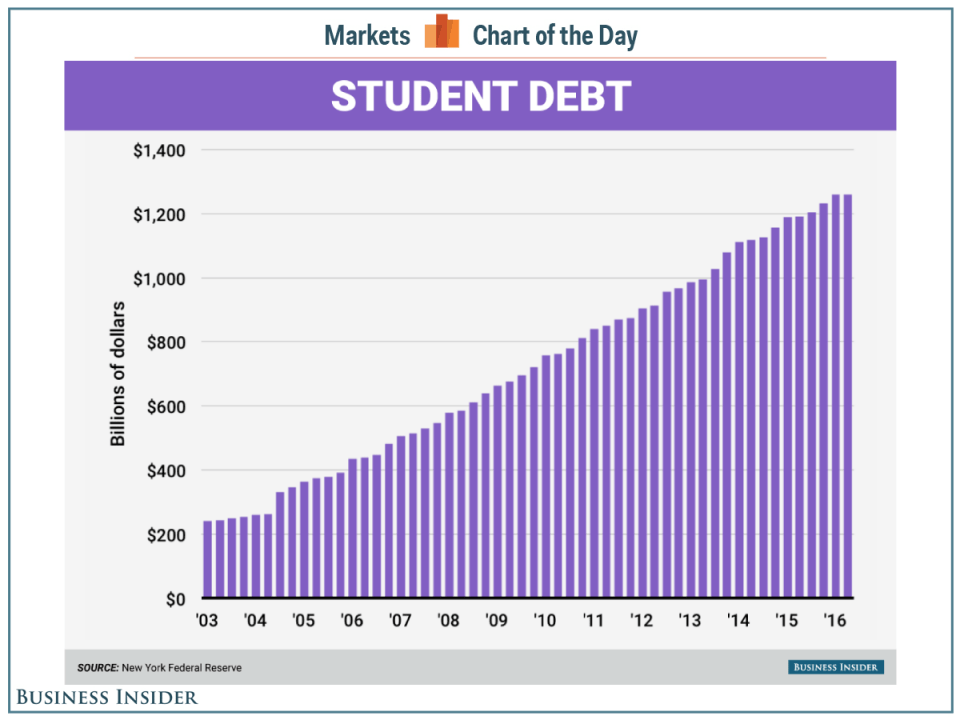
Instead, we have the following shameful graph.

STUDENT DEBT

In case you wonder why we intentionally put our students into debt, the answer is quite simple: Student loans widen the Gap between the rich and the rest.

Gap widening, rather than mere income, is the primary motivation of the rich. It is the Gap, not just their own incomes, that makes them rich (Without the Gap, no one would be rich; we all would be the same). The wider the Gap, the richer they are.

Thus, keeping the non-wealthy down is just as important to the rich as lifting their own incomes up. Either way, the Gap is widened.

Every wealth stratum wants the Gap between them and those lower, to be widened. That is why so many lower-to-middle-income people resent aid to the poor. Such aid narrows the Gap, bringing the poor uncomfortably closer to those in the middle.

When the federal government lends to students, interest payments remove stimulus dollars from the economy,  and all loan repayments punish borrowers, who primarily are middle-income (The rich don’t use student loans).

The federal government, being Monetarily Sovereign, neither needs nor uses any form of income. To pay its bills, the government creates dollars ad hoc. There is no economic purpose for student loan payments to a government that has no use for the money.

When the lender is a private bank, the bank is enriched by a loan that is difficult to discharge in bankruptcy.  It is a “forever” loan, passed down through the generations — perfect for Gap widening:

Business Insider: America’s crushing surge of student debt, now at $1.2 trillion, has bred a disturbing new phenomenon: School loans that span multiple generations within families.

Weighed down by their own loans, many parents lack the means to fund their children’s educations without sinking even deeper into debt.

  • School loans increasingly belong to Americans over 40. This group accounts for 35 percent of education debt, up from 25 percent in 2004
  • Student loan balances average $20,000 for Generation X adults — those from 35 to 50 years old.
  • Gen-X parents who carry student debt and have teenage children have struggled to save for their children’s educations. Many of their children will need to borrow heavily for college, thereby perpetuating a cycle of family debt.
  • Student debt is surpassing groceries as a primary expense, with the gap widening most for younger families.

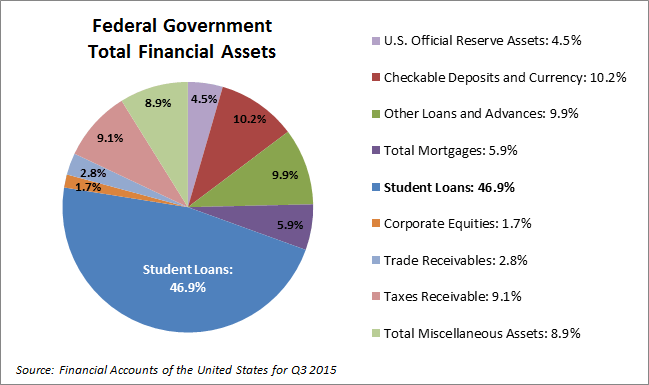
And if the above weren’t shameful enough, consider this graph, also supplied by Business Insider:

w704

Student loans are listed on the government’s books as its largest financial asset. Millions of American families are in debt to the federal government for educating children.

In reality, this is all just record-keeping. The federal government has no need for financial assets, because as mentioned earlier, it creates all the dollars it needs, ad hoc, when it pays its bills.

Thus, the government has discovered yet another, powerful Gap-widening device, designed to keep millions of families in financial bondage for many years, even for generations.

(Among such Gap-widening devices are federal sales taxes, FICA, and high-end income taxes on 401k mandatory distributions.) 

State and local governments are monetarily non-sovereign. They need income in order to pay for K-12 education.

The federal government is Monetarily Sovereign. It needs no taxes or loan repayments to fund a college education for every American who wanted one.

All those additional educated minds would greatly benefit America. No one knows how many potential Nobel winners America has lost lack for of the finances to attend college.

Even the time away from work is too expensive for many people. The federal government should pay for that, too.(Step #5)

But the rich don’t want federal funding for college; it would narrow the Gap. Despite what Presidential and Congressional campaigning may indicate, the rich, not the politicians, run America.

College debt is another destgructive result of The Big Lie, the lie that federal taxes fund federal spending.

Rodger Malcolm Mitchell
===================================================================================
Ten Steps to Prosperity:
1. ELIMINATE FICA (Ten Reasons to Eliminate FICA )
Although the article lists 10 reasons to eliminate FICA, there are two fundamental reasons:
*FICA is the most regressive tax in American history, widening the Gap by punishing the low and middle-income groups, while leaving the rich untouched, and
*The federal government, being Monetarily Sovereign, neither needs nor uses FICA to support Social Security and Medicare.
2. FEDERALLY FUNDED MEDICARE — PARTS A, B & D, PLUS LONG TERM CARE — FOR EVERYONE (H.R. 676, Medicare for All )
This article addresses the questions:
*Does the economy benefit when the rich afford better health care than the rest of Americans?
*Aside from improved health care, what are the other economic effects of “Medicare for everyone?”
*How much would it cost taxpayers?
*Who opposes it?”
3. PROVIDE AN ECONOMIC BONUS TO EVERY MAN, WOMAN AND CHILD IN AMERICA, AND/OR EVERY STATE, A PER CAPITA ECONOMIC BONUS (The JG (Jobs Guarantee) vs the GI (Guaranteed Income) vs the EB) Or institute a reverse income tax.
This article is the fifth in a series about direct financial assistance to Americans:

Why Modern Monetary Theory’s Employer of Last Resort is a bad idea. Sunday, Jan 1 2012
MMT’s Job Guarantee (JG) — “Another crazy, rightwing, Austrian nutjob?” Thursday, Jan 12 2012
Why Modern Monetary Theory’s Jobs Guarantee is like the EU’s euro: A beloved solution to the wrong problem. Tuesday, May 29 2012
“You can’t fire me. I’m on JG” Saturday, Jun 2 2012

Economic growth should include the “bottom” 99.9%, not just the .1%, the only question being, how best to accomplish that. Modern Monetary Theory (MMT) favors giving everyone a job. Monetary Sovereignty (MS) favors giving everyone money. The five articles describe the pros and cons of each approach.
4. FREE EDUCATION (INCLUDING POST-GRAD) FOR EVERYONEFive reasons why we should eliminate school loans
Monetarily non-sovereign State and local governments, despite their limited finances, support grades K-12. That level of education may have been sufficient for a largely agrarian economy, but not for our currently more technical economy that demands greater numbers of highly educated workers.
Because state and local funding is so limited, grades K-12 receive short shrift, especially those schools whose populations come from the lowest economic groups. And college is too costly for most families.
An educated populace benefits a nation, and benefiting the nation is the purpose of the federal government, which has the unlimited ability to pay for K-16 and beyond.
5. SALARY FOR ATTENDING SCHOOL
Even were schooling to be completely free, many young people cannot attend, because they and their families cannot afford to support non-workers. In a foundering boat, everyone needs to bail, and no one can take time off for study.
If a young person’s “job” is to learn and be productive, he/she should be paid to do that job, especially since that job is one of America’s most important.
6. ELIMINATE CORPORATE TAXES
Corporations themselves exist only as legalities. They don’t pay taxes or pay for anything else. They are dollar-tranferring machines. They transfer dollars from customers to employees, suppliers, shareholders and the government (the later having no use for those dollars).
Any tax on corporations reduces the amount going to employees, suppliers and shareholders, which diminishes the economy. Ultimately, all corporate taxes come around and reappear as deductions from your personal income.
7. INCREASE THE STANDARD INCOME TAX DEDUCTION, ANNUALLY. (Refer to this.) Federal taxes punish taxpayers and harm the economy. The federal government has no need for those punishing and harmful tax dollars. There are several ways to reduce taxes, and we should evaluate and choose the most progressive approaches.
Cutting FICA and corporate taxes would be an good early step, as both dramatically affect the 99%. Annual increases in the standard income tax deduction, and a reverse income tax also would provide benefits from the bottom up. Both would narrow the Gap.
8. TAX THE VERY RICH (THE “.1%) MORE, WITH HIGHER PROGRESSIVE TAX RATES ON ALL FORMS OF INCOME. (TROPHIC CASCADE)
There was a time when I argued against increasing anyone’s federal taxes. After all, the federal government has no need for tax dollars, and all taxes reduce Gross Domestic Product, thereby negatively affecting the entire economy, including the 99.9%.
But I have come to realize that narrowing the Gap requires trimming the top. It simply would not be possible to provide the 99.9% with enough benefits to narrow the Gap in any meaningful way. Bill Gates reportedly owns $70 billion. To get to that level, he must have been earning $10 billion a year. Pick any acceptable Gap (1000 to 1?), and the lowest paid American would have to receive $10 million a year. Unreasonable.
9. FEDERAL OWNERSHIP OF ALL BANKS (Click The end of private banking and How should America decide “who-gets-money”?)
Banks have created all the dollars that exist. Even dollars created at the direction of the federal government, actually come into being when banks increase the numbers in checking accounts. This gives the banks enormous financial power, and as we all know, power corrupts — especially when multiplied by a profit motive.
Although the federal government also is powerful and corrupted, it does not suffer from a profit motive, the world’s most corrupting influence.
10. INCREASE FEDERAL SPENDING ON THE MYRIAD INITIATIVES THAT BENEFIT AMERICA’S 99.9% (Federal agencies)Browse the agencies. See how many agencies benefit the lower- and middle-income/wealth/ power groups, by adding dollars to the economy and/or by actions more beneficial to the 99.9% than to the .1%.
Save this reference as your primer to current economics. Sadly, much of the material is not being taught in American schools, which is all the more reason for you to use it.

The Ten Steps will grow the economy, and narrow the income/wealth/power Gap between the rich and you.

MONETARY SOVEREIGNTY