The one step that immediately would cure inflation (and no, it isn’t raising interest rates).

Inflation is a general increase in the prices of goods and services. But what factors determine prices?
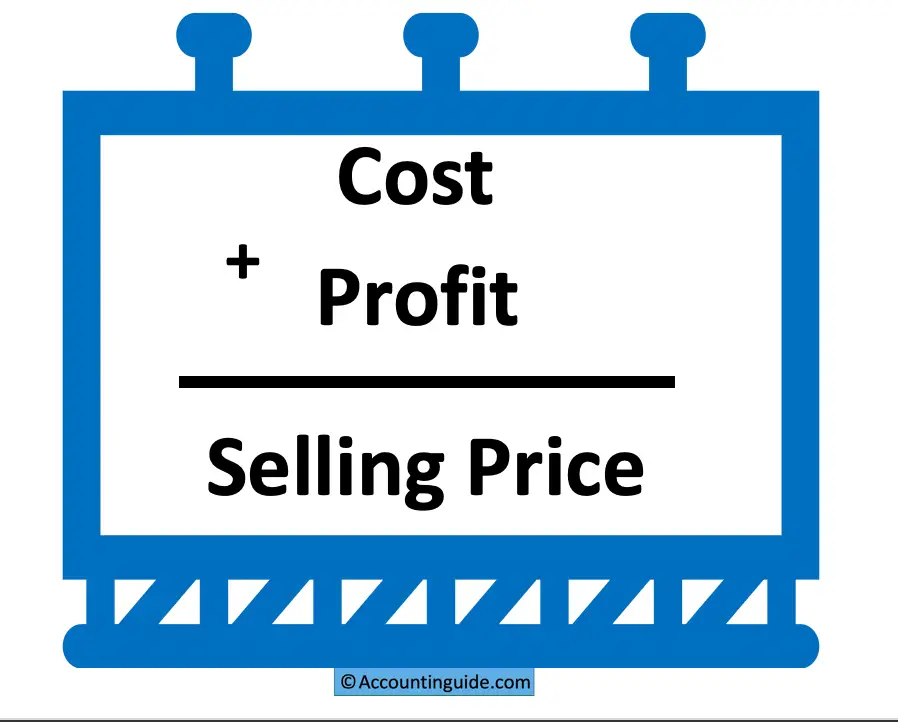
Cost-plus Pricing | Definition | Example | Advantage - Accountinguide
Economic growth: To lower prices, cut business costs. Recession: To lower prices cut business profits.

Sellers determine prices by answering the question, “What price would provide the most long-term profit?”

If pricing aims to maximize long-term profit, how is profit determined?

Profit is the difference between income and costs. The two ways to increase profit are to increase dollar sales and/or to decrease costs. This is all quite basic.

Pricing is constrained by costs, competitors, customers, and/or laws. 

Costs generally set the lower boundary for pricing, as businesses only temporarily can allow costs to exceed total income.

The old joke, “We lose money on every sale, but make it up in volume” is just that. A joke, at least in the long term.

Competitors, customers, and/or laws set the upper boundary for pricing. Sellers set prices between the lower and upper boundaries by estimating where long-term profits are maximized.

Generally, sellers don’t cut costs just to be nice guys. Their sole purpose is to maximize long-term profits. If long-term profits were not a goal, sellers would have no motivation to cut costs.

This is all basic economics 101, yet economists seem to have forgotten that inflation is price increases and recession is economic growth decreases, and the two are unrelated. The opposite of inflation is not recession. The opposite of inflation is deflation.

You can have price increases with growth decreases, and that’s called “stagflation (stagnation and inflation).

And that is what the Fed and Congress are creating: Stagflation.

There are two ways to cut prices:

  1. Cut business profits, which causes a recession, or
  2. Cut business costs which encourages economic growth.

The best way to fight inflation, i.e. to cut prices, is to cut costs because higher costs lead to higher prices. An important component of most business costs is the cost of labor.

What if I told you there is a simple way to cut the cost of labor without cutting the number of employees or cutting pay scales? 

Well, there is, and it is dead simple: Eliminate the FICA tax and provide free, comprehensive Medicare for All.

FICA costs employers 15,3% of all salaries under $143,000. This means, that for every salaried employee you, as the employer, pay as much as $22 thousand dollars per employee to the federal government. Those are dollars that come directly out of your profits.

They are non-productive dollars that must be made up with higher prices. They are inflation dollars.

And don’t think the employees pay any those dollars. If you, the employer, told your employees they no longer would have FICA deducted from their paychecks, you could lower gross salaries and still leave them with the same net salaries. 

Employers pay the full 15.3% to the government.

As for health care, why has this become a financial burden for businesses? Why does your business pay for any part of health care insurance when the federal government can provide it? Those are lost, non-productive dollars.

And no, federal taxpayers do not fund federal spending. The government could provide Social Security and Medicare to every man, woman, and child in America without collecting a single dollar in taxes.

The federal government cannot run short of dollars. Not ever. Being Monetarily Sovereign, it has the unlimited ability to create U.S. dollars. It neither needs nor uses tax dollars.

The federal government’s trillions of tax dollars extracted from the economy are lost forever. Unlike state and local tax dollars, federal tax dollars are not recirculated back into the economy. They are destroyed upon receipt.

The federal government always has infinite dollars, and adding tax dollars to that does not change how many dollars the federal government has.

IN SUMMARY

  1. Inflation is a general increase in prices.
  2. This increase always is caused by shortages of key goods and services, not by so-called “excessive government spending.”.
  3. The Fed increases interest rates to ease those shortages by reducing demand, but reduced demand is the definition of recession. Thus, the Fed tries to cure higher prices by causing a recession.
  4. The non-recession way to reduce higher prices is to reduce shortages and business costs.
  5. Shortages can be reduced by more federal spending to acquire or encourage the production and distribution of scarce goods and services.
  6. Business costs can be reduced by reducing employment and business taxes. When a business pays less in taxes, its prices can be lowered while generating the same desired long-term profits.
  7. The instant solution to inflation is to eliminate FICA taxes and to provide free Medicare to every man, woman, and child. This will reduce business costs, allowing businesses to lower prices.
  8. The long-term solution to inflation is for the federal government to address shortages by investing in the production and distribution of scarce items: Renewable and nuclear energy, shipping (roads, ships, railroads, airplanes), food, water, computer chips, lumber, and lower federal taxes on businesses and individuals below the upper-income group.

Federal taxes and interest rate increases are recessionary and do not prevent inflation.

Based on the Fed’s reliance on interest rate increases to combat inflation, I predict we will have a long period of stagflation until business profits increase sufficiently to cause business growth.

Tell this to your Congresspeople.

Rodger Malcolm Mitchell
Monetary Sovereignty

Twitter: @rodgermitchell Search #monetarysovereignty
Facebook: Rodger Malcolm Mitchell

MONETARY SOVEREIGNTY

Ludicrous. The Fed Chair is clueless or lying. Stagflation, here we come.

This is what happens when the Fed Chair is clueless or lying:

It took only a 10-minute speech from Federal Reserve Chairman Jerome Powell on Friday to clarify that monetary policy would be relentlessly tightened in the months ahead. Investors dumped stocks, sending the S&P 500 Index down 3.4% following two days of gains.

And it all was based on two Big Lies that the federal government can run short of dollars, and that federal deficits cause inflation.

Both Big Lies are so obvious, so easily debunked, that it’s hard to believe they are accidental or based on ignorance. Lies that big and easily seen simply must be intentional.

Powell: Fed’s inflation fight could bring ‘pain,’ job losses
By CHRISTOPHER RUGABER
August 26, 2022

JACKSON HOLE, Wyoming (AP) — Federal Reserve Chair Jerome Powell delivered a stark warning Friday about the Fed’s determination to fight inflation with more sharp interest rate hikes:It will likely cause pain for Americans in the form of a weaker economy and job losses.

Powell believes the way to fight inflation is to cause a recession (aka a weaker economy and job losses).

But inflation is not the opposite of recession. The opposite of inflation is deflation. We can have inflation and recession at the same time. It’s called “stagflation,” a problem for which the Fed knows no cure (though there is one).

The message landed with a thud on Wall Street, sending the Dow Jones Industrial Average down more than 1,000 points for the day.

“These are the unfortunate costs of reducing inflation,” Powell said in a high-profile speech at the Fed’s annual economic symposium in Jackson Hole. “But a failure to restore price stability would mean far greater pain.”

The pain is wholly unnecessary. Inflation is not a problem. It is the symptom of a problem, the shortage of crucial goods and services.

Today’s inflation is caused by shortages of oil, food, shipping, lumber, paper, computer chips, many chemicals, labor and a long list of other goods and services. Most of those shortages resulted from COVID.

To cure a problem one must cure the causes. Low interest rates did not cause inflation, so raising interest rates will not cure inflation.

GRAPH I:

There is no relationship between low interest rates (red) and inflation (blue). Raising rates leads to recessions (vertical gray bars).

The U.S. had extremely low interest rates for more than a decade, beginning 2009, and inflation remained low. Clearly, low rates were no a cause of inflation, so raising rates will not cure inflation.

As the above graph shows, however, raising interest rates leads to recessions.

Further, there is no relationship between inflation and federal deficit spending, so increasing federal spending will not cause inflation:

GRAPH II:

There is no relationship between federal deficit spending (green) and inflation (blue). Reduced spending growth leads to recessions (vertical gray bars).

Therefore, the Fed is promoting two activities — raising interes rates and reduced federal deficit spending — neither of which willconomy, even as the unemployment rate has fallen to a half-century low of 3.5%.

It has also created political risks for President Joe Biden and congressional Democrats in this fall’s elections, with Republicans denouncing Biden’s $1.9 trillion financial support package, approved last year, as having fueled inflation.

The $1.9 trillion financial package did not fuel inflation, but it did help hold off a recession. For political purposes, the GOP wants to see inflation and recession come during the Biden administration, so they denounce federal deficit spending.

And here comes the ridiculous part:

Some on Wall Street expect the economy to fall into recession later this year or early next year, after which they expect the Fed to reverse itself and reduce rates.

Wall Street is correct. That is exactly what will happen. If the Fed continues it interest rate increases, and the federal government doesn’t increase its deficit spending, we will have a recession.

Then the Fed will cut interest rates, which again will accomplish nothing. But the Fed will picture itself as struggling mightily and bravely against inflation and recession.

Any failures will be “beyond their control,” and any successes will “result from their actions.” They can’t lose.

Powell reminds me of a child sitting in the back seat with a toy steering wheel. Whenever the car turns, he turns his wheel. He thinks he is driving the car but he is only going through motions.

A number of Fed officials, though, have pushed back against that notion. Powell’s remarks suggested that the Fed is aiming to raise its benchmark rate — to about 3.75% to 4% by next year — yet not so high as to tank the economy, in hopes of slowing growth long enough to conquer high inflation.

Graph I showed that interest rate increases lead to recessions. Graph III shows that raising interest rates will will have an adverse effect on real Gross Domestic Product growth. (GDP is shown as negative growth).

GRAPH III:

GDP (purple) is shown as negative growth which matches the peaks and valleys of interest rates (red).

After raising its key short-term rate by a steep three-quarters of a point at each of its past two meetings — part of the Fed’s fastest series of hikes since the early 1980s — Powell said the Fed might ease up on that pace “at some point,” suggesting that any such slowing isn’t near.

Powell said the size of the Fed’s rate increase at its next meeting in late September — whether one-half or three-quarters of a percentage point — will depend on inflation and jobs data.

An increase of either size, though, would exceed the Fed’s traditional quarter-point hike, a reflection of how severe inflation has become.

The Fed chair said that while lower inflation readings that have been reported for July have been “welcome,” he added that, “a single month’s improvement falls far short of what (Fed policymakers) will need to see before we are confident that inflation is moving down.”

Nothing the Fed has done, to date, has reduced inflation. Any inflation reductions have come from reduced shortages of oil and other commodities. The car turned, and Powell sitting in the back seat thinks he turned it.

“The historical record cautions strongly against prematurely” lowering interest rates, he said. “We must keep at it until the job is done.”

Yes, Chairman Powell, you keep turning your toy steering wheel, and after we go through a stagflation, which will end with increased federal deficit spending to cure shortages, you can claim credit.

(The Fed’s interest rate) hikes have led to higher costs for mortgages, car loans and other consumer and business borrowing.

Home sales have been plunging since the Fed first signaled it would raise borrowing costs.

Translation: The Fed already has begun to cause a painful recession while inflation continues.

Powell is betting that he can engineer a high-risk outcome: Slow the economy enough to ease inflation pressures yet not so much as to trigger a recession.

The little boy in the back seat furiously spins his steering wheel.

At last year’s Jackson Hole symposium, Powell listed five reasons why he thought inflation would be “transitory.” Yet instead it has persisted, and many economists have noted that those remarks haven’t aged well.

America asked the man who said inflation was “transitory,” now asks the same man to cure inflation. Powell neither has the know-how nor the tools.

He doesn’t understand was causes inflation (shortages) nor how to cure it (spend to cure the shortages). He is applying leeches to cure anemia, hoping that won’t make the anemia worse.

Stagflation, here we come. Ludicrous.

In summary:

  1. Raising interest rates does not cure the causes of inflation, which are shortages of key goods and services.
  2. Reducing federal deficit spending does not cure the causes of inflation, but does lead to recessions.
  3. Increasing interest rates does not cure the causes of inflation, but does lead to recessions.

Conclusion: The Fed actions will not cure inflation but will cause a recession. Increased federal deficit spending to cure shortages will prevent a recession, and will not cause inflation.

–Does this report from the Committee for a Responsible Federal Budget make you angry? Does it make you afraid? It should.

The debt hawks are to economics as the creationists are to biology. Those, who do not understand Monetary Sovereignty, do not understand economics. If you understand the following, simple statement, you are ahead of most economists, politicians and media writers in America: Our government, being Monetarily Sovereign, has the unlimited ability to create the dollars to pay its bills.

Does this report from the Committee for a Responsible Federal Budget make you angry? Does it make you afraid? It should.

Analysis of the 2011 Social Security Trustees Report, May 13, 2011

Today, the Social Security Trustees released their 2011 report on the financial status of both Social Security and Medicare. The reports make clear that both programs are on unsustainable paths, and reforms will be necessary to make them solvent. This analysis focuses on the financial status of Social Security.

The latest Trustees report shows Social Security’s position has deteriorated since last year. The Trustees estimate that the 75-year actuarial imbalance has now increased to 0.8 percent of GDP (2.22 percent of taxable payroll) compared to 0.7 percent of GDP (1.92 percent of taxable payroll) in last year’s report. Over the coming decade, the Trustees project cash-flow deficits of about $490 billion (including $131 billion in 2021 alone), compared to about $380 billion in last year’s report.

The Trustees now estimate that the program will exhaust its dedicated trust funds (one for old-age and the other for disability) in 2036, a year earlier than the 2037 date projected in last year’s report. At that time, absent changes in law, all current and future beneficiaries would experience an immediate 23 percent cut in benefits.

Even more pressing is the state of the Disability Insurance trust fund, which (if not allowed to borrow from the rest of Social Security) will run out of money by 2018, only seven years from now.

According to the Trustees, making Social Security sustainably solvent would take savings equal to 0.8 percent of GDP (2.22 percent of payroll) over 75 years and 1.5 percent (4.24 percent of payroll) in the 75th year.

Well, did that make you angry or afraid? It should have, because it is based on a lie – a government lie – and having the federal government lie makes all of us especially angry and afraid.

The lie, very simply is the implication federal spending relies on federal taxes. Social Security and Medicare are federal programs. FICA taxes paid to the government are less than benefits paid. Based on this, the Trustees say these federal programs will “run out of money.” A lie.

Were it true, the entire federal government already has “run out of money,” because federal taxes, with very few exceptions, have been less than federal spending, every year in our nation’s history. So beginning in 1776, America has been on what the Committee for a Responsible Federal Budget would call an “unsustainable” path and insolvent. Yet here we are, 235 years later, still “unsustainable,” still “insolvent” and still the most powerful nation on earth. Amazing, isn’t it?

Well, it would be amazing if you didn’t understand the federal government creates the dollars you use. It would be amazing if you believed federal taxes pay for federal spending and FICA pays for Social Security and Medicare. They don’t.

The U.S. is Monetarily Sovereign. If all federal taxes, including FICA, were reduced to $0 or increased to $100 trillion, neither event would affect by even one dollar, the solvency of any federal agency, including Social Security and Medicare. There is no functional relationship between federal taxes and federal spending. The federal government always pays its bills, regardless of taxes collected.

(The situation is different for states, counties and cities, which are not Monetarily Sovereignty, , so they do use tax money to pay their bills. The situation also is different for Greece, Ireland et al, which also are not Monetarily Sovereign. And the situation is different for you and me. We too, are not Monetarily Sovereign. For reasons I cannot explain, the federal government, the media, and even most economists, do not know the difference between Monetarily Sovereign and monetarily non-sovereign, and therein lies the problem.)

So yes, be afraid. Be very, very afraid, especially with both the Democrats and the Tea (formerly Republican) Parties believing our federal social programs must be cut. Your future and the futures of your children and grandchildren are in the hands of people who do not know what they are doing.

Rodger Malcolm Mitchell
http://www.rodgermitchell.com


==========================================================================================================================================
No nation can tax itself into prosperity, nor grow without money growth. It’s been 40 years since the U.S. became Monetary Sovereign, , and neither Congress, nor the President, nor the Fed, nor the vast majority of economists and economics bloggers, nor the preponderance of the media, nor the most famous educational institutions, nor the Nobel committee, nor the International Monetary Fund have yet acquired even the slightest notion of what that means.

Remember that the next time you’re tempted to ask a dopey teenager, “What were you thinking?” He’s liable to respond, “Pretty much what your generation was thinking when it screwed up my future.”

MONETARY SOVEREIGNTY

–Psychologist wanted.

The debt hawks are to economics as the creationists are to biology. Those, who do not understand Monetary Sovereignty, do not understand economics. If you understand the following, simple statement, you are ahead of most economists, politicians and media writers in America: Our government, being Monetarily Sovereign, has the unlimited ability to create the dollars to pay its bills.
==============================================================================================================================

Although economics can be mind-spinningly complex, the essence of economics is rather simple, in that it boils down to a few facts, about which there can be no argument:

Fact 1. The U.S. federal government is different from you and me. It alone has the unlimited ability to create (“print”) dollars. If it wished to do so, the government could create a billion trillion dollars tomorrow, merely by pressing a computer key. It has had that power since 1971, the end of the gold standard, and that power is called Monetary Sovereignty.

Fact 2. Given such power, the federal government has the unlimited ability to spend dollars, and does not need to tax or borrow in order to spend. Were taxes and borrowing to fall to $0 or rise to $100 trillion, neither would affect by even one penny, the federal government’s ability to create and spend dollars and to “sustain” any size debt. In federal terms, taxes and borrowing do not fund spending.

Fact 3. Therefore, the only limitation on federal spending is not taxes or borrowing, but uncontrollable inflation.

I know of no economist, no columnist, no politician who disagrees with the above. Yet virtually all of them seem to agree that the federal debt and deficits are “unsustainable,” and should be reduced, despite the fact our massive deficits have brought us nowhere near uncontrollable inflation. (Only recently, we were worried about deflation.)

Logically, that makes no sense. How can a debt or deficit be a problem, if the government can create unlimited money and inflation is not a threat? It’s as though one part of the brain was not communicating with the other part. The psychologists call it “cognitive dissonance,” and since they have a name for it, perhaps they have an explanation, too.

So if you are a psychologist, and/or understand cognitive dissonance, I ask you; Why do otherwise intelligent people hold two, mutually exclusive ideas about our economy?

Some have speculated it’s merely the confusion between personal finances (which are not Monetarily Sovereign) and federal finances. But economists should not be confused about so simple a concept. Even the dullest economist should understand the difference between a personal bank account and the federal government’s money creation. There must be something more than mere confusion.

Perhaps, we hard-wired to believe the “no-free-lunch” idea that you can’t get something for noting. But can it really be so difficult to see that the federal government can “print” dollars?

I just don’t understand it. No one debates the underlying facts, which seem obvious and straightforward. The federal government can create infinite dollars, limited only by inflation, which we are nowhere near. Everyone agrees. Yet, after that there is a huge disconnect, leading to notions about needing tax increases and debt ceilings and the deficit being unsustainable. It’s beyond logic.

So because it is beyond logic, I am asking for assistance from psychologists to explain why the logical and obvious are invisible to people, who acknowledge the facts while simultaneously being blind to them.

Rodger Malcolm Mitchell
http://www.rodgermitchell.com


==========================================================================================================================================
No nation can tax itself into prosperity, nor grow without money growth. It’s been 40 years since the U.S. became Monetary Sovereign, , and neither Congress, nor the President, nor the Fed, nor the vast majority of economists and economics bloggers, nor the preponderance of the media, nor the most famous educational institutions, nor the Nobel committee, nor the International Monetary Fund have yet acquired even the slightest notion of what that means.

Remember that the next time you’re tempted to ask a dopey teenager, “What were you thinking?” He’s liable to respond, “Pretty much what your generation was thinking when it screwed up my future.”

MONETARY SOVEREIGNTY