The Federal Government cannot run short of dollars. Your taxes do not fund federal spending. The federal government pays all its bills with newly created dollars.
Because the federal government is Monetarily Sovereign, it is not like you and me. It does not need to “save money.”
Who says so?
Former Fed Chairman Alan Greenspan: “A government cannot become insolvent with respect to obligations in its own currency. There is nothing to prevent the federal government from creating as much money as it wants and paying it to somebody. The United States can pay any debt it has because we can always print the money to do that.”
Former Fed Chairman Ben Bernanke: “The U.S. government has a technology, called a printing press (or, today, its electronic equivalent), that allows it to produce as many U.S. dollars as it wishes at essentially no cost. It’s not tax money… We simply use the computer to mark up the size of the account.”
Fed Chairman Jerome Powell: “As a central bank, we have the ability to create money digitally.
Statement from the St. Louis Fed: “As the sole manufacturer of dollars, whose debt is denominated in dollars, the U.S. government can never become insolvent, i.e., unable to pay its bills. In this sense, the government is not dependent on credit markets to remain operational.”
The Boss and his underling.
So if the government isn’t running out of money, why is Musk/Trump (MT) firing so many federal employees?
Why gut these agencies? Because making the rich even richer requires making everyone else poorer.
The Game of Wealth: How the Rich Stay Richer
Wealth is relative. If you have $100,000, you’re rich when all others have $20,000—but poor when all others have $1 million.
For the ultra-wealthy, getting richer isn’t just about making more money. It’s also about ensuring the rest of us have less—widening the income, wealth, and power gap.
How do they do it? ✅ Tax cuts for the rich ✅ Cutting healthcare and social services ✅ Making basic necessities like housing and vaccines unaffordable
This isn’t about “saving money.” The government creates money at will.
Here is the Republican solution to student debt, as brought to you by the Libertarian Reason.com
Can Republicans Fix Student Debt?Unlike Democrats, Senate and House Republicans have released proposals that would actually tackle the root causes of increasing student loan debt.Emma Camp | 6.16.2023
As a long-awaited Supreme Court decision on President Joe Biden’s massive student loan forgiveness plan looms, Senate Republicans have unveiled a plan of their own to address the nation’s climbing student loan debt burden.
However, instead of promising blanket forgiveness, the Senate Republicans’ plan aims to reform how student loans are given out in the first place—seeking to direct students toward high-quality programs and limit access to schools that provide a poor return on students’ investment.
As you will see later in this “plan,” the Republicans believe the only purpose of attending college is to make more money. They measure “return on students’ investment” solely by the salaries students will receive after graduation.
The plan is composed of five separate bills. Three of the bills focus on ensuring that prospective borrowers are aware of the financial tradeoffs of taking out student loans and the financial outcomes for alumni of specific institutions.
The last two tackle the federal student loan system itself, cutting down the number of repayment plans and limiting the circumstances in which federal student loans can be given out.
The first bill in the package focuses on increasing transparency from colleges.
The bill seeks to require colleges and universities to provide a wide range of data on student outcomes and enrollment trends to the National Center for Education Statistics, which would create a database of this information aimed at helping prospective students make informed educational decisions.
Transparency is a good thing.
“Student outcomes” might have to do with graduation rates, dropout rates, advanced degrees, and employment after graduation. But they wouldn’t measure what students learn.
And most importantly, it doesn’t address the student loan indebtedness problem.
Can anyone tell me why a nation whose competitiveness relies on its young people to being educated wants to “limit the circumstances in which federal student loans can be given out?”
If the Republicans ran a company, would they want to limit the circumstances in which the company could profit?
It’s absolutely nuts, especially since the U.S. federal government has infinite dollars.
The proposal’s second bill would require colleges and universities to use a standardized financial aid offer form to maximize transparency around the true cost of attending a given institution.
The third bill in the proposal has similar aims, requiring that students applying for federal student loans receive information detailing sample payments for their loans, as well as how long they would expect to be paying off their student loans and what income they can expect to make after graduating from a given school.
These two “solutions” are reasonable in that they provide borrowing information. But they still fall far short of solving the student loan indebtedness problem.
They merely say, “Here’s what it will cost you, and if you can’t afford it, don’t go to college or take out a loan.”
But the purpose of the student loan program is to enable more children to attend college, not to winnow down the number that can afford it.
The fourth bill cuts down on the number of repayment plans available to borrowers.
The bill would consolidate the host of current repayment options down to two—a standard 10-year repayment plan and a Revised Pay As You Earn (REPAYE) repayment plan with minor changes.
The REPAYE plan is an income-driven repayment (IDR) plan, which currently allows borrowers to pay a monthly amount fixed to their income, achieving forgiveness after at least 20 years of payments.
Importantly, the fourth bill also cuts off access to federal student loans for students attending programs that do not result in median earnings higher than those of adults who only have a high school diploma—or a bachelor’s degree, in the case of a graduate program.
To Republican minds, the purpose of attending college is to make more money. Otherwise, it supposedly is a waste of time and money.
The right-wing mentality says that the arts — music, dance, painting, theater, writing, sculpture, etc., — should be measured by how much money you can make from them.
History and philosophy also should be measured by the money you can make, not by their contributions to human culture. Mathematics, too. And teaching. And physics.
To the right-wingers, if your education doesn’t pay you more money, the government shouldn’t help you, no matter how valuable to America it might be. WHY?
Most importantly, the Republicans assume college has no social benefits. But, the 18 through 24 age period is a maturation time, a time to go from childhood to adulthood.
College provides the non-financial benefits of learning about the world along with other young people of like age.
Again, the Republicans measure everything by dollars, while falsely claiming the government doesn’t have enough dollars.
The final bill in the package would eliminate Graduate PLUS Loans—a type of federal student loan whose borrowing cap was removed in 2006.
The removal of this cap has been directly connected to a rapid increase in graduate school tuition, as—unlike for undergraduate programs—graduate students were able to borrow an unlimited amount from the federal government, incentivizing universities to jack up prices.
The function of the student loan program is to help more students afford college. So, of course, colleges have more room to “jack up” prices with more students able to pay. That is a fundamental result of affordability.
The government must pump more growth dollars into the economy when colleges increase prices. That benefits the economy.
Capping loans merely means that fewer students will be able to afford advanced degrees.How does that benefit America? It doesn’t. It simply reduces the number of highly educated Americans and widens the income/wealth/power Gap between the rich and the rest.
Notably, House Republicans have also introduced their own legislation aiming to reform federal student loans.
Their proposal would provide “targeted” student debt relief to those who have consistently made payments but have seen their debt increase anyway.
The GOP (aka, “the party of the rich”) wants to give “targeted” relief to those who were able to afford debt payments, conveniently leaving out those who were financially weaker and unable to make payments.
The proposal would also reform existing income-driven repayment plans and mandate considerable warnings for borrowers before student loan payments resume in October.
“Colleges and universities using the availability of federal loans to increase their tuitions have left too many students drowning in debt without a path for success,” said Sen. Bill Cassidy (R–La.) in a Wednesday statement.
No, Sen. Cassidy, the government has left students drowning in debt by lending them money that should have been given.
Grades K-12 have been government supported for centuries. Grades 13+ also should be government-funded, not just at community schools, but top schools, too.
The more kids who decide to go for advanced degrees, the better off America will be.
“Unlike President Biden’s student loan schemes, this plan addresses the root causes of the student debt crisis. It puts downward pressure on tuition and empowers students to make the educational decisions that put them on track to academically and financially succeed.”
No, it cleverly disempowers poorer students and widens the education gap between the rich and the rest. It does nothing about the “root causes of the student debt crisis.”
The Republicans’ plans offer a constructive solution to the problems that plague the federal student loan system. Rather than focusing on short-term solutions—like Biden’s $400 billion student loan forgiveness boondoggle—Republicans’ plans target the sloppy government policies which directly cause rising student debt.
In particular, the Senate’s attempt to eliminate Graduate PLUS Loans and both plans’ proposals to reform income-driven repayment plans take direct aim at some of the most fiscally irresponsible federal student loan policies.
To Republicans, “fiscally irresponsible” means money going to the poor and middle classes. Notably, it does not mean the tax loopholes given to the rich.
While both bills face an unlikely path toward actually becoming law, they provide a clear template for what a sensible response to the student loan crisis looks like—and policies that are actually likely to lower the cost of college, not raise it.
Except, the bills ignore the fundamental purpose of education in America: To improve America.
The original Colonists understood that. Sadly, today’s inferior crop of politicians is so taken with what’s in it for them that they completely ignore the question, “What’s in it for America.”
THE ROOT CAUSES OF THE STUDENT DEBT CRISIS
Educating young people benefits America. That is why the American colonies mandated free education for our children.
And that came when reading, writing, and arithmetic were much less important to our agrarian society than they are today.
Yet, taxpayers willingly bore the cost of education.
Today, primary education and especially advanced education are far more critical. The world has advanced, and to remain competitive, America must rely on its educated young people.
There are three root causes of the student debt crisis:
Attending college is expensive. Many families find tuition, food and lodging, books, and materials unaffordable.
Not having a job is expensive. Many children can’t afford college because their families need them to stay home and work full-time. Even with a free ride that includes everything in point #1, some kids can’t afford not to work full time.
The federal government, which has infinite dollars, lends rather than giving money to the students.
The latter point is an extension of the false belief that our Monetarily Sovereign government’s finances are like personal finances.
The ignorant idea that the federal government spends too much contradicts the simple formula: Gross Domestic Product (GDP) = Federal Spending + Nonfederal Spending + Net Exports.
GDP is the measure of our economy, so by formula, increased Federal Spending grows our economy, and decreased Federal Spending shrinks our economy. Simple algebra.
Thus, the Federal Government never should lend to Americans; it only should give to Americans.
The student debt crisis results from requiring students to borrow from the government rather than receiving dollars with no payback requirement.
The government neither needs nor even uses the dollars that are paid back. The solution to the student debt crisis is straightforward. Just as local governments fund local schools, the federal government should fund colleges and universities.
In fact, the federal government can do it more easily than can local governments because the federal government uniquely is Monetarily Sovereign; it cannot run short of dollars.
The federal government even should pay students a salary for attending college, so the students’ college attendance does not penalize the student’s family monetarily.
It is beyond stupid for the U.S. government to take dollars from students when America’s competitive position depends on our young people being educated, and the government has infinite money to pay for their education.
Of course, a government that refuses to recognize Monetary Sovereignty and the formula GDP = Federal Spending + Nonfederal Spending + Net Exportsis already beyond stupid, so the extra stupidity is to be expected.
[Why would any sane person take dollars from the economy and give them to a federal government that has the infinite ability to create dollars?]
The Committee for a Responsible Federal Budget (CRFB) is a fountain of misinformation, or should we say, “disinformation”?
Clearly, they are providing misinformation, i.e. wrong information, but the real question is, do they know it’s wrong, i.e disinformation?
Because they do extensive data analysis, I believe they simply must know their information is wrong. So why do they promulgate so much nonsense?
Before we answer that question, let’s see what they get wrong. Here are some excerpts from their website.
Gas Tax Holiday Would Take A Wrong TurnFEB 15, 2022 | TAXESThe White House and some in Congress are reportedly considering suspending the 18.3 cent federal gas tax for the remainder of 2022. The Committee for a Responsible Federal Budget recently estimated that such a proposal would reduce gas tax revenues by $20 billion and, without the general revenue transfer proposed in recent legislation, would advance the Highway Trust Fund insolvency date from 2027 to 2026.
Assuming their numbers are correct, what they really are saying is: “The proposal would reduce the amount of money taken out of the private sector (also known as ‘the economy’) by $20 billion.”
Adding dollars to the private sector is stimulative: taking dollars out of the private sector is recessive. In short, the reduced gas tax revenues would be a $20 Billion economic stimulus.
The CRFB seems to hate anything that stimulates the economy, especially if it directly benefits the middle- and lower-income groups as a reduced gas tax would do.
Further, the so-called Highway Trust Fund is not a real trust fund (see “The Phony Trust Fund Controversy”) and it cannot become insolvent unless Congress and the President want it to become insolvent.
The U.S. government, the creator of the U.S. dollar, cannot run short of dollars. Thus, no agency of the U.S. governmentcan become insolvent, unless that is what Congress wants.
(Former Fed Chairman, Alan Greenspan:“A government cannot become insolvent with respect to obligations in its own currency.”)
To prevent the insolvency of any agency, Congress merely passes a law that provides the agency with more dollars. Congress has the infinite ability to pass such laws.
The following is a statement from Maya MacGuineas, president of the Committee for a Responsible Federal Budget:With inflation at a 40-year high, policymakers are appropriately focused on how to bring prices under control. But new tax cuts aren’t going to stop this inflation; after all, excessive tax cuts and spending are part of what caused high inflation.
Contrary to popular wisdom, no inflation in history ever has been caused by excessive tax cuts or spending. All inflations are caused by shortages of key goods and/or services.
Interest rates (blue) and inflation (green) have trended down, while federal debt (red) has increased.
For the past 10 years, federal deficit spending has increased massively, with minimal inflation. Now, suddenly, inflation has increased. Why?
Clearly, the cause is not deficit spending, otherwise it would have happened sooner.
Inflations are caused by shortages of key goods and services..
Today’s inflation is caused by the sudden confluence of several factors, all shortages: Labor, food, gasoline, computer chips, transportation, sand, among others.
(Yes, I said “sand.” U.S. Shale Production Hindered By Sand Supply Crunch.)
While massive federal spending has been with us for at least a decade, what has changed recently to cause the sudden change in inflation from low to high?
The answer: COVID.
The worldwide impact of the disease has caused the shortages that lead to inflation.
The only thing that will cure the inflation is to cure the shortages. And that can be accomplished by more federal spending to obtain the needed goods and services:
More federal spending to encourage oil drilling and/or renewable energy.
More federal spending to support farming
More federal spending to support chip manufacture
More federal spending to support transportation
More federal spending to support hiring (i.e. the elimination of FICA taxes and the reduction of income taxes at the lower end)
Reduced federal deficit spending will lead only to recessions, as it always has.
When federal deficit spending (blue) is reduced, we have recessions (vertical gray bars), which are cured by increases in federal deficit spending.
While a gas tax holiday might provide some temporary relief, much of the benefit may flow through to oil producers or lead to higher prices in other sectors of the economy.
It makes no sense for low gas prices to cause price increases elsewhere. While low gas prices may cause an increase in demand for cars, every industry would see lower production costs, which will ease inflation.
Benefitting oil producers is not something to be avoided. Financially encouraging them to pump more oil will ease the scarcity of oil.
By boosting demand in an already over-stimulated economy, the holiday would likely boost inflation in 2023 once it ends. The holiday will also undercut the Administration’s efforts to address climate change.
The CFRB would like you to believe the economy is “overstimulated.” No one knows what an “overstimulated” economy means, but it sure sounds terrible, doesn’t it?
Presumably, it means companies are making more profits so that they will hire more people and pay more salaries to the lower- and middle income people, thereby narrowing the income/wealth/power Gap between the rich and the rest.
Presumably, it means unemployment is low, so there are fewer impoverished children and their parents, again narrowing the Gap between the rich and the rest.
“Gap Psychology” is the desire to widen the Gap below and to narrow the Gap above. All groups are subject to Gap Psychology, but the very rich are the most expert at effecting it.
As for climate change, yes, encouraging more oil production will increase climate change, in the short term. But financially encouraging more use of renewables will have long-term climate benefits.
Meanwhile, the federal government would be out $20 billion this year alone – and much more if the holiday were extended.
The federal government has infinite money. Infinite minus $20 billion, still is infinite. The federal government always will have the infinite ability to write laws, and those laws have the unlimited ability to create dollars.
The CRFB cries crocodile tears for the infinitely rich U.S. government, but no tears for you. They want you to pay the infinitely rich government more of your scarce dollars.
The Highway Trust Fund is just five years from insolvency, and the last thing we need is to cut its primary revenue source or paper over shortfalls with yet another general revenue transfer.
No, the last thing we need is liars telling us that the federal government is running short of its own sovereign currency, so you poor folks need to pony up more dollars, or receive fewer, benefits.
“Insolvency” is the big, fake bogeyman with which the rich try to scare you.
The Big Lie in economics is: “Federal taxes fund federal spending.” While state and local taxes do fund state and local spending, the federal government, being Monetarily Sovereign, does not rely on, or even use, tax dollars.
In fact, the U.S. Treasury destroys all tax dollars upon receipt. It creates new dollars, ad hoc, every time it pays a creditor.
(How does the Treasuy destroy tax dollars? The dollars in your checking account are part of the M1 money supply. When the Treasury receives those dollars, they disappear. They no longer are part of any money supply measure.They effectively are destroyed.)
Statement from the St. Louis Fed:“As the sole manufacturer of dollars, whose debt is denominated in dollars, the U.S. government can never become insolvent, i.e., unable to pay its bills.
In this sense, the government is not dependent on credit markets to remain operational.”
Thus, the federal government has infinite dollars; it can’t run short; and telling people to give the government more and to accept less is just an example of how the Big Lie works.
As it stands, the gas tax will only cover half of highway and transit spending by the time the trust fund runs out.
In fact, the gas tax covers none of transit spending. Those tax dollars are destroyed. All federal spending, including federal transit spending, is funded by ad hoc, federal money creation.
As inflation subsides, we should either raise that tax or find a new funding source to supplement or replace it.
We don’t need to find a new funding source. And we certainly don’t need to raise taxes. The federal government is the best funding source:
Former Fed Chairman Ben Bernanke: “The U.S. government has a technology, called a printing press (or, today, its electronic equivalent), that allows it to produce as many U.S. dollars as it wishes at essentially no cost.”
As we’ve stated, the CRFB, acts repelled by the fact that federal spending helps narrow the income/wealth/power Gap between the rich and the rest.
A well-designed carbon tax could generate ample tax revenue while substantially reducing carbon emissions and tempering excessive demand.
A well designed carbon tax might be a good idea from an ecological standpoint. But it’s a silly idea if the purpose is to give private sector dollars to a government that has the infinite ability to create dollars.
The pain Americans are feeling at the gas pump – and with rising costs throughout the economy – should be taken seriously and addressed thoughtfully.
The gas price pain will be eased by raising gas taxes??? That’s the utter nonsense the CRFB wants you to believe.
While cutting the gas tax may have political appeal, it would move in exactly the wrong direction, worsening rather than improving our nation’s economic challenges.
The rising costs should be taken seriously, which is why the cost of gasoline should be reduced — by cutting the gas tax.
Inflation takes dollars out of your pocket. The CRFB’s method of taking inflation seriously” is by taking even more dollars out of your pockets via tax increases.
Why does the CRFB act this way?
Because the rich, who run America, also run the CRFB, and support it with donations. The rich and the CRFB want to widen the income/wealth/power Gap between the rich and the rest.
The rich always wish to be richer. The only way to be richer is to widen the Gap. There are two ways the rich can widen the Gap: Obtain more money for themselves and/or make sure you have less money by paying more taxes.
Either one will make the rich richer, and the CRFB seems to be doing everything it can to reach that goal.
In that vein, I just received this Email from CRFB:
Trust Fund SolutionsFeaturing Senators Angus King (I-ME) and Mitt Romney (R-UT)
Maya MacGuineas:Paid by the rich to tell you that the federal government’s trust funds soon will be insolvent.The major government trust funds for Social Security, Medicare, and Highway spending face insolvency in the next decade-and-a-half.Policymakers need to act sooner rather than later to prevent abrupt across-the-board benefit cuts, assure a more sustainable debt path, promote faster economic growth, and achieve a number of important policy goals.
How raising taxes will help “promote faster economic growth” is a mystery the CRFB never really explains.
Trust Fund Solutions will feature opening remarks from Senator Angus King (I-ME) and a discussion between Senator Mitt Romney (R-UT) and Committee for a Responsible Federal Budget president Maya MacGuineas.The event will also feature a panel of experts, one focused on each trust fund. The Committee for a Responsible Federal Budget will also debut its new Trust Fund Solutions website and educational tools.
You can bet that the “solutions” for the mythical “Trust Funds” will involve tax increases (for which the rich will given loopholes) plus benefit decreases, both of which will widen the Gap between the rich and the rest.
Widening the Gap is what the rich pay the CRFB to do.SUMMARY
1. The Big Lie in economics is that the U.S. federal government can run short of its own sovereign currency, the U.S. dollar. Not only does the govarnment itself have access to infinite dollars, but no agency of the government can run short of dollars unless Congress and the President want that.
2. The government neither needs nor uses tax dollars, which are destroyed by the Treasury upon receipt.
3. Federal deficit spending never causes inflations (scarcities are what cause inflations). Federal deficit spending can cure inflations by curing scarcities. Reductions in federal deficit spending lead to recessions or depressions.
4. The rich grow richer by widening the Gap between the rich and the rest. Gap widening has two paths: Gaining more for the rich and/or forcing the rest to accept less.
5. The CRFB is paid to aid the rich by convincing the populace to accept Gap widening.
Rodger Malcolm Mitchell
Monetary SovereigntyTwitter: @rodgermitchellSearch #monetarysovereigntyFacebook: Rodger Malcolm Mitchell
……………………………………………………………………..
THE SOLE PURPOSE OF GOVERNMENT IS TO IMPROVE AND PROTECT THE LIVES OF THE PEOPLE.
Gap Psychology describes the common desire to distance oneself from those “below” in any socio-economic ranking, and to come nearer those “above.” The socio-economic distance is referred to as “The Gap.”
Wide Gaps negatively affect poverty, health and longevity, education, housing, law and crime, war, leadership, ownership, bigotry, supply and demand, taxation, GDP, international relations, scientific advancement, the environment, human motivation and well-being, and virtually every other issue in economics.Implementation of Monetary Sovereignty and The Ten Steps To Prosperity can grow the economy and narrow the Gaps:
Ten Steps To Prosperity:


 If the Republicans ran a company, would they want to limit the circumstances in which the company could profit?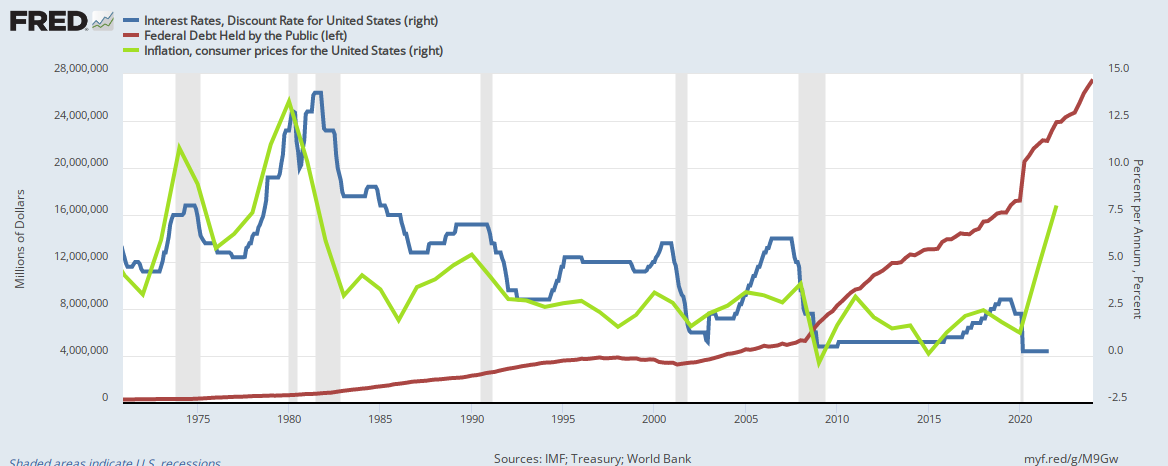

 #Monetary Sovereignty - Mitchell