Ben Bernanke: “The U.S. government has a technology, called a printing press (or, today, its electronic equivalent), that allows it to produce as many U.S. dollars as it wishes at essentially no cost.“
Alan Greenspan: “A government cannot become insolvent with respect to obligations in its own currency.
Money is not a physical object. It is not a dollar bill or a coin, both of which are titles to money, not money itself. Money is nothing more than numbers on a balance sheet. The federal government has absolute control over its balance sheets. It can change numbers at will, merely by passing laws, which is how it created the first U.S. dollars. It simply passed laws. The federal government can add money to your checking account by instructing your bank to increase the account’s balance. It sends your bank a “Pay to the order of” document. New dollars are created and added to your account when your bank obeys those instructions. Federal checks don’t bounce because Congress passes laws to prevent bouncing. Example: Every time we reach a “debt ceiling,” Congress raises it so that federal checks are honored. That is how the federal government pays bills and creates dollars. 2. Federal spending never causes inflation. Shortages of critical goods and services cause inflation. The most common inflation-causing shortage is the shortage of oil.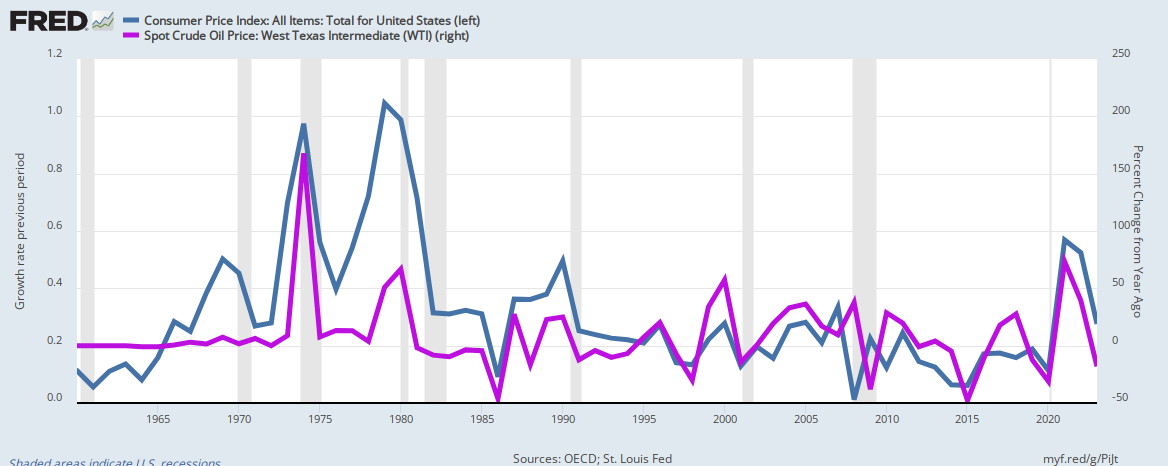
The National School Lunch Program (NSLP) is a federally assisted meal program operating in public and nonprofit private schools and residential child care institutions. It provides nutritionally balanced, low-cost lunches to children each school day.
About 7.1 million children participated in the NSLP in its first year. By 2016: 30.4 million children participated.
Like most federal programs, the NLSP is unnecessarily complex and means-tested. There is a lunch program (“high lunch” and “low lunch), a breakfast program (“severe-need” and “non-severe need), an after-school-snack program, a special milk program, a summer food service program, and a seamless summer program, each having various remuneration schedules. Rather than having a government agency serve as America’s dietician, the entire breakfast/lunch program should be handled like Medicare, where the doctor makes the decisions and Medicare pays the bills. For NLSP, the local dietician should schedule the meals and submit costs to the government. Not only would this be simpler, but it would encourage serving fuller, better, more nutritious meals. 7. Eliminate means-testing from all federal programs. Federal means-testing is complex and expensive. It arbitrarily defines who will receive benefits and eliminates the poor who almost, but not quite, are poor enough. Means-testing stigmatizes those who receive benefits; it encourages cheating to qualify and discourages efforts to improve one’s means. A classic means-testing example is the Supplemental Nutrition Assistance Program (SNAP, food stamps). It is a massively complex program with many requirements. According to the Council on Aging:*The Supplemental Nutrition Assistance Program, or SNAP, is the most extensive domestic hunger safety net program, helping low-income older adults achieve food security.
*Approximately three out of five seniors who qualify to receive SNAP are missing out on benefits—an estimated 5 million people.
*For older adults with low income, the $1,248 average annual benefits can mean the difference between having food and going without.
Federal means-testing has one purpose: To minimize the amount of money the federal government spends. Yet, there is no reason the federal government ever needs to minimize spending. The federal government has infinite money; federal spending creates economic growth, and federal spending does not cause inflation. Federal means-testing for benefit programs is all negatives with no positives. It is based on the false premise that the federal government’s finances are limited, like state and local government finances. 8. Financially support the research, development, and usage of renewable, low- or zero-carbon energy. We have begun to experience the terrible result of carbon-based fuels. Global warming is upon us, with even worse results coming. The government must do much more to encourage zero-carbon energy: solar, wind, geothermal, hydrogen, hydro, and nuclear. It must fund research on unknown or unproven energy sources, for instance, the massively expensive tokamak. Solar panel production should be supported, and installation should be free. Financial support should be given to companies offering existing forms of renewables and to people who use renewables. That will help reduce climate change and take inflationary pressure off oil. 9. Financially support the research and development of low-carbon-fueled cars, trucks, buses, ships, trains, airplanes, homes, offices, and factories. This includes funding research into more efficient batteries and electric infrastructure, transmission networks, superconductors, and charging stations. 10. Financially support the purchase and use of low-carbon-fueled cars, trucks, buses, ships, trains, airplanes, homes, offices, and factories. Often, the public is slow to adopt new technology, especially if it is not immediately and financially beneficial. The federal government has the power to make adoption financially beneficial while R&D brings the technology into economic self-sufficiency. 11. Financially support water purification and desalination research, development, and distribution. The world is covered with water that isn’t good for drinking or growing crops. We need more efficient water purification, desalination, transportation, and usage. America is losing its fresh water daily.All of these can be moderated or eliminated by properly used government funding. 12. Financially support farmers and advanced farming methods (for example, hydroponics, genetic engineering of more productive, healthful crops, reduced use of fertilizers, water, and pesticides). The federal government financially should support the purchase of efficient farm equipment. American farmers are nearing extinction. President Trump’s trade war hasn’t helped matters. After the United States slapped tariffs on Chinese goods, including steel and aluminum, last year, China retaliated with 25 percent tariffs on agricultural imports from the U.S.China then turned to other countries such as Brazil to replace American soybeans and corn. Even large companies are facing unprecedented challenges; Dean Foods, a global dairy producer that buys milk from thousands of small farmers, filed for bankruptcy in 2019. 13. Give more financial support to pure scientific research. Unlike applied research, pure research is not designed to result in profits. Its purpose is to add to scientific knowledge. It is why we went to the moon and want to go to Mars, not for immediate gains but for learning. Sometimes we learn much that is valuable today. Sometimes we find that much we may discover has value 100 years from now. We build a long-term knowledge base handed down through the generations. That is one of the qualities that differentiates humans from all other animals. Even “failed” research has immediate value in showing what doesn’t or might work in the distant future. Failed research can be the beginning of serendipity. The profit-motivated private sector cannot justify doing much pure research. For example, pharmaceutical companies are reluctant to spend money searching for the causes and cures of rare diseases. But that research is valuable, not only for curing rare diseases today, but it may lead to other purposes we hadn’t even imagined. Consider such projects as weather prediction and control, meteor and comet protection, volcano prediction and control, 14. Support the states with a per-capita payment. Something like Social Security for the U.S. states. State and local governments are monetarily non-sovereign.An ‘environmental nuclear bomb’ as Utah’s Great Salt Lake dries up.
What is Water Scarcity? Water scarcity involves water crisis, water shortage, water deficit or water stress.
Water scarcity can be due to physical water scarcity and economic water scarcity. Physical water scarcity refers to a situation where natural water resources are unable to meet a region’s demand while economic water scarcity is a result of poor water management resources.
About 70% of the Earth’s surface is covered with water, and 3% of it is actually freshwater that is fit for human consumption. Around two-thirds of that is tucked in frozen glaciers and unavailable for our use.
“Water scarcity already affects every continent and around 2.8 billion people around the world. More than 1.2 billion people lack access to clean drinking water.””
Causes of Water Scarcity: Overuse, pollution, conflict, distance, drought, governmental access, global warming, illegal dumping, groundwater pollution, and natural disasters.
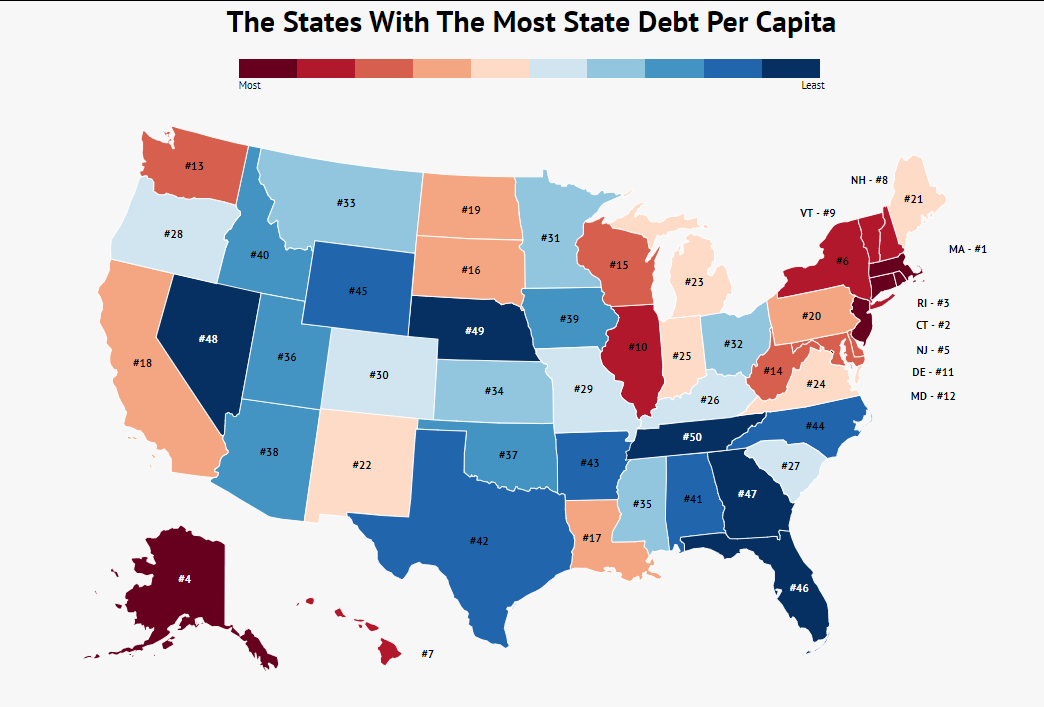 Unlike the Monetarily Sovereign U.S. government, states generally run short of the dollars they need to take care of local problems: Schools, streets, infrastructure, parks, garbage/recycling/water, police, fire departments, etc.
Most states borrow, which means they later will need to spend less (provide less to their residents), tax more (take more from their residents), or both.
The federal government should take those burdens from local taxpayers’ shoulders.
15. Federal support for the postal service. The mail is as vital to America as any other government service. There is no public benefit to requiring the postal service to pay its own way.
Unlike the Monetarily Sovereign U.S. government, states generally run short of the dollars they need to take care of local problems: Schools, streets, infrastructure, parks, garbage/recycling/water, police, fire departments, etc.
Most states borrow, which means they later will need to spend less (provide less to their residents), tax more (take more from their residents), or both.
The federal government should take those burdens from local taxpayers’ shoulders.
15. Federal support for the postal service. The mail is as vital to America as any other government service. There is no public benefit to requiring the postal service to pay its own way.
The Postal Service receives no direct taxpayer funds. It relies on revenues from stamps and other service fees.
Although COVID-19 has choked off the USPS revenue in recent months, factors that arose well before coronavirus have contributed to the unsustainability of the Postal Service’s financial situation for years.
While the USPS generates enough revenue to cover its operating costs, its pension and retiree health care liabilities push its bottom line into the red. The USPS has operated at a loss since 2007. Because of the rise of email and digital communication, USPS has seen the volume of First-Class Mail decline from a peak of 103.5 billion pieces in 2000 to just shy of 55 billion pieces in 2019. USPS has tried to increase the delivery of marketing mail and has tried to compete with UPS and FedEx in the parcel delivery sector, including by forging a delivery deal with Amazon. This has provoked criticism from (past) President Trump (Because of his personal animosity with Jeff Bezos.)

Do you see what’s wrong with what the mouthpiece for the rich wrote? That 20.9% figure is bogus. Much of the income the top 1% receives isn’t counted in AGI (Adjusted Gross Income.) Think of the fully paid, comprehensive health insurance, travel, meals, vacations, apartments, stock options, entertainment, clothing, taxis, and other expenses that companies spend on behalf of key employees. You pay for those things using your AGI dollars, but the upper 1% doesn’t. The richest among us may not remember what it’s like to write a personal check. Do you think Donald Trump even carries a wallet? Then there is real estate depreciation, which is how billionaire Donald Trump pays fewer tax dollars than you did. And remember, FICA and other taxes paid by the “lowly” 99% are not paid by the 1% who don’t take salaries. GOVERNMENT WASTE Waste is bad. The word “waste” is a pejorative. State and local government waste comes out of your pocket. But federal waste is another matter. The dollars cost you nothing. In fact, wasted federal spending adds stimulus dollars to the economy. Of course, it would be far better for those dollars to have produced something of value, but the mere spending benefits us all. So, don’t worry so much about wasted federal spending. Of course, we want federal dollars to be functional, but even the most outrageously wasted dollars — bridges to nowhere — still add to the nation’s economic growth. SUMMARY There is so much the wealthiest entity on the planet — the U.S. government — could do to benefit Americans and the world. But, the government is restricted by the widespread false belief that federal finances are like state and local government finances. That false belief seems logical to the private sector, which is monetarily non-sovereign and limited in what it can spend. I have listed several areas where the populace would benefit from federal money input. You probably can think of many others. None of these suggestions involves socialism, which is ownership and control. All the federal government would be asked to do is provide money. The federal government already has the power to bring us closer to paradise. You only need to understand the two essential truths and convey them to the world:In 2018, the top 1% of taxpayers – defined as those with adjusted gross income (AGI) (AGI) above $540,009 – earned 20.9% of all AGI and paid 40.1% of all federal income taxes, according to data from the Tax Foundation.
The group paid more in income taxes (at about $615 billion) than the bottom 90% of taxpayers combined ($440 billion).
- The federal government cannot unintentionally run short of dollars.
- Federal deficit spending does not cause inflation and often can cure inflation.
Scott Pelley: Is that tax money that the Fed is spending? Ben Bernanke: It’s not tax money… We simply use the computer to mark up the size of the account. (Quote from Ben Bernanke when, as Fed chief, he was on 60 Minutes:)
Statement from the St. Louis Fed: “As the sole manufacturer of dollars, whose debt is denominated in dollars, the U.S. government can never become insolvent, i.e., unable to pay its bills. In this sense, the government is not dependent on credit markets to remain operational.”
Press Conference: Mario Draghi, President of the ECB, 9 January 2014 Question: I am wondering: can the ECB ever run out of money? Mario Draghi: Technically, no. We cannot run out of money
Rodger Malcolm Mitchell Monetary Sovereignty Twitter: @rodgermitchell Search #monetarysovereignty Facebook: Rodger Malcolm Mitchell……………………………………………………………………..
THE SOLE PURPOSE OF GOVERNMENT IS TO IMPROVE AND PROTECT THE LIVES OF THE PEOPLE.
The most critical problems in economics involve:- Monetary Sovereignty describes money creation and destruction.
- Gap Psychology describes the common desire to distance oneself from those “below” in any socioeconomic ranking and to come nearer those “above.” The socioeconomic distance is referred to as “The Gap.”
- Eliminate FICA
- Federally funded Medicare — parts A, B & D, plus long-term care — for everyone
- Social Security for all
- Free education (including post-grad) for everyone
- Salary for attending school
- Eliminate federal taxes on business
- Increase the standard income tax deduction annually.
- Tax the very rich (the “.1%”) more, with higher progressive tax rates on all forms of income.
- Federal ownership of all banks
- Increase federal spending on the myriad initiatives that benefit America’s 99.9%
MONETARY SOVEREIGNTY
 #Monetary Sovereignty - Mitchell