How pandemic insurance can strengthen America and the world.

Recently I read, We can protect the economy from pandemics. Why didn’t we?”, an article by Evan Ratliff, in the June 16, 2020 edition of Wired Magazine.

The essence of the article concerns insurance, or rather the lack of it, to protect businesses and individuals from the disastrous effects of pandemics.

Most of us pay for all sorts of insurance: Life, fire, auto, liability, flood, windstorm, theft, healthcare, the list is long. But there is no private pandemic insurance.Businesses Warned There Will Be No “Back to Normal” Following ...
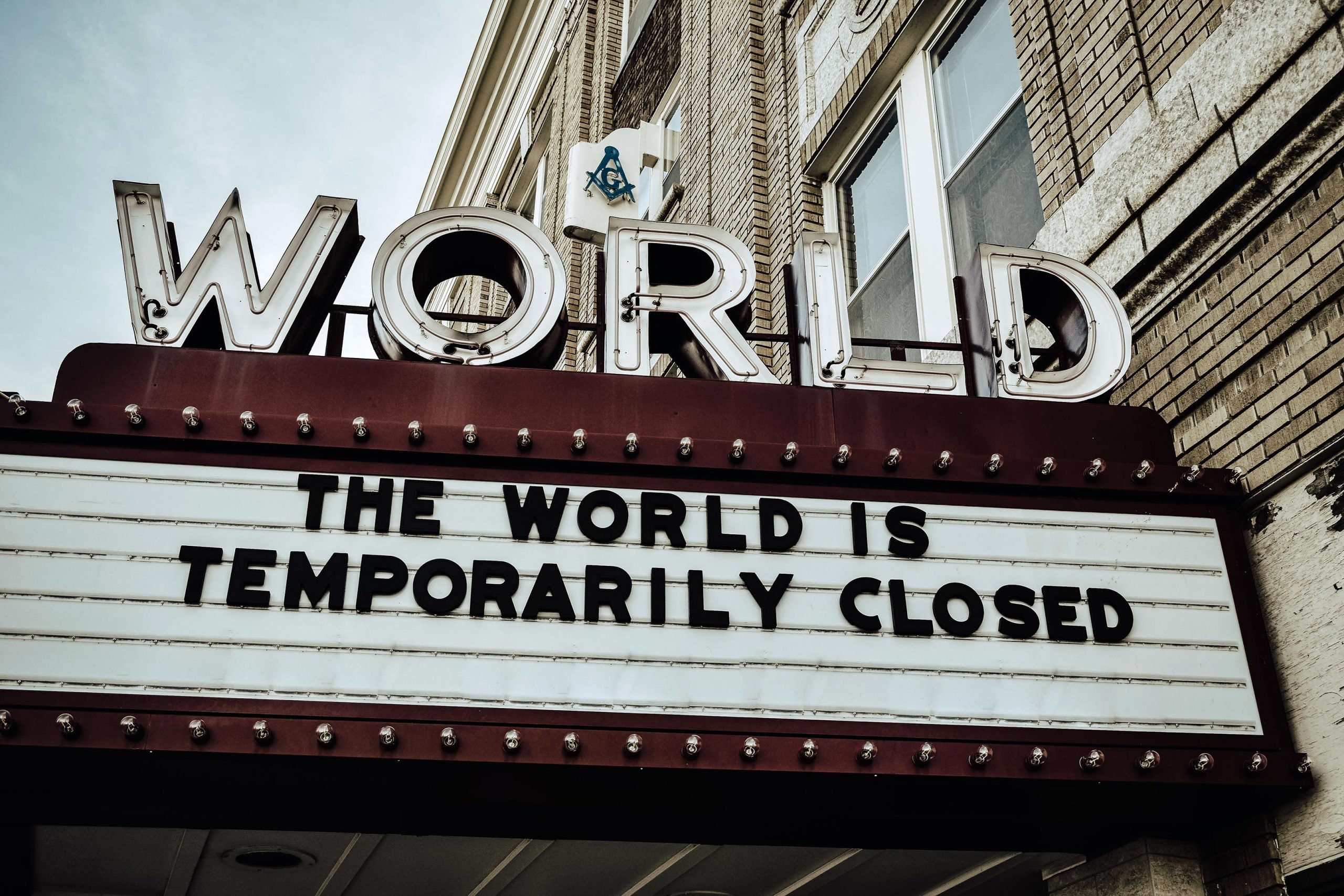
In fact, pandemic coverages specifically are omitted from most insurance policies.

The foundation of any insurance coverage is statistics — the probability that a covered event will occur and how soon, and the cost to the insurer of that event.

Life insurance, for instance, is based on time. The death event is 100% certain to happen, and the amount of coverage is known.

But the variable, time until death, tells the insurance company how much it needs to earn on premiums, before paying the death benefit.

Fire insurance is based not only on time but on the likelihood of the event ever occurring. The ultimate cost limit is specified by the policy.

Pandemic insurance has not existed because:

  1. The payout could be so enormous as to bankrupt carriers
  2. Premiums would have to be enormous, thus discouraging purchase
  3. The event itself is so rare it would discourage purchasers, further.

A few excerpts from the Wired article:

Gunther Kraut, a mathematician by training, was working at Munich Re, one of the world’s largest reinsurers.

Reinsurance is the business of insuring insurers. The local and national insurance companies that you and I buy life or auto coverage from—the Geicos and Allstates of the world—need their own protection against rare but catastrophic events that might create enough claims to bankrupt them.

Reinsurance companies provide that backstop on insurance for everything from homes and infrastructure projects to business losses and individual lives. 

Munich Re had a risk problem of its own: namely, the possibility of a global pandemic. I

“Let’s take the example of car insurance,” Kraut told me. “That’s a very, very stable business.” A local company might insure tens of thousands of cars, each with a certain probability of having a small accident.

“You can predict very well how much money you will have to pay on the claim settlements, and hence how much premium you will need to collect,” he said.

But let’s say that one year there is a freakishly large hailstorm in Bavaria, damaging half the cars in the portfolio. The resulting claims could be an extinction-level event for an insurance company.

Such storms may occur statistically only once every three decades—a one-in-30-year event, in risk parlance—but every car insurance company would have to keep enough cash on hand to pay out on claims on half its cars, just in case. “That’s a lot of money you need to put aside for something that happens very rarely,” Kraut said.

The more car insurers that Munich Re adds to its portfolio, in more geographical regions, the more it can convert a rare and expensive risk into a predictable and cheaper one for itself.

Kraut said. “That’s why reinsurance companies are global companies.”

“Insurance is sold, not bought,” the industry saying goes, and pandemic insurance would be both novel and quite expensive—potentially millions of dollars on top of what the company was paying for insurance.

No CFO was eager to be the first among their competitors to take on a significant new cost.

Potential insurance clients will say, ‘OK, we understand why this could potentially be such an impact. But we haven’t seen an event like this in 100 years. Why do we need to care about it now?’”

The statistics of insurance all merge on payout cost and premium income. A policy must be predicted statistically to payout less than premiums, in order to provide a profit to the insurance carrier.

Yet here is the COVID-19 virus, costing many trillions of dollars. How many insurance companies — or even group of companies — would be willing and able to absorb that risk? And, how many potential insureds would pay premiums that exceed that risk?

The answer to both questions probably is “zero.”

But what if there were an insurance company with the financial ability to absorb infinite financial risk?

And what if the premiums were $0.

Could such a combination make for viable insurance coverage?

As impossible as it may sound, such a combination does exist. The potential insurance company is the U.S. government.

Being Monetarily Sovereign, it has the infinite ability to create dollars and it needs no premiums. It could, at the touch of a computer key, pay out $1 trillion, $10 trillion, $100 trillion, any amount instantly.

And because these dollars would replace lost dollars, any discussions about inflation would be moot.

The U.S. government has the unlimited ability to cover the entire world’s losses, and using this ability would confer several benefits on the U.S.

  1. It would prevent worldwide recessions and depressions that otherwise result from pandemics. (See: How America Can Save The Entire World.“)
  2. It would help solidify the U.S. dollar as the world’s currency.
  3. It would strengthen U.S. financial influence, worldwide.

The problem is not the inability to foretell the next pandemic. The problem is not an inability to fund payment.

The real problem is to determine exactly to whom and how much payment should be made. Look at any fire insurance policy and you will see paragraph after paragraph detailing all the various eventualities.

Insurance underwriting experts devote their business lives to describing circumstances under which loss payments will be made. 

That is the kind of information the U.S. Congress could use in writing the laws describing pandemic insurance coverage for the people and businesses in America.

While private insurance policies are based on income and outgo, i.e profits, a U.S. government program would be simpler in that it needs not consider income.

It needs only to consider outgo, the money paid to businesses and individuals for specific losses.

In one sense, the U.S. government could use “helicopter money,” just drop dollars anywhere under the assumption that eventually it will flow throughout the economy. And, in fact, the federal government’s efforts so far, have been quite similar to “helicopter money.”

The problem is that “helicopter money” tends to accumulate in the hands of the rich and powerful, rather than going to the people who need it most.

By enlisting the services of insurance underwriting experts, Congress and the President would receive guidance (if they would take it), about where the new dollars would more accurately replace lost dollars.

Replacing every lost dollar with a new dollar would help prevent a recession or a depression.

Additionally, we would need to do more than replace the old. We would need to implement the new: New methods of agriculture, manufacture, education, transportation, and entertainment that would not shut down because of a future pandemic or other similar events.

Here, specialized organizations such as the MacArthur Foundation and Future Science Group could be enlisted to help identify areas of investment.

In Summary
The world has faced, and always will face, various catastrophes.  Whether a huge,  meteor, or a coronal mass ejection, global warming, global flooding, super-volcano eruption, or of course, a pandemic.

Any of these events can kill millions of people and destroy the world’s economies.

If governments, particularly the U.S. government, remain intact, the financial losses can be “insured,” and human disaster ameliorated.

The U.S. government has the unlimited ability to replace lost money with U.S. dollars, and by using those dollars, fund reconstruction.

Congress should make use of insurance underwiters, experts in determining circumstances under which benefits will be paid, to create appropriate underwriting laws for global catastrophes.

These laws could involve not only U.S. territory, but other participating nations.

Rodger Malcolm Mitchell

Monetary Sovereignty Twitter: @rodgermitchell Search #monetarysovereignty Facebook: Rodger Malcolm Mitchell …………………………………………………………………………………………………………………………………………………………………………………………………………………………………………………………………………………………..

THE SOLE PURPOSE OF GOVERNMENT IS TO IMPROVE AND PROTECT THE LIVES OF THE PEOPLE.

The most important problems in economics involve:

  1. Monetary Sovereignty describes money creation and destruction.
  2. Gap Psychology describes the common desire to distance oneself from those “below” in any socio-economic ranking, and to come nearer those “above.” The socio-economic distance is referred to as “The Gap.”

Wide Gaps negatively affect poverty, health and longevity, education, housing, law and crime, war, leadership, ownership, bigotry, supply and demand, taxation, GDP, international relations, scientific advancement, the environment, human motivation and well-being, and virtually every other issue in economics. Implementation of Monetary Sovereignty and The Ten Steps To Prosperity can grow the economy and narrow the Gaps:

Ten Steps To Prosperity:

1. Eliminate FICA

2. Federally funded Medicare — parts A, B & D, plus long-term care — for everyone

3. Social Security for all or a reverse income tax

4. Free education (including post-grad) for everyone

5. Salary for attending school

6. Eliminate federal taxes on business

7. Increase the standard income tax deduction, annually. 

8. Tax the very rich (the “.1%”) more, with higher progressive tax rates on all forms of income.

9. Federal ownership of all banks

10.Increase federal spending on the myriad initiatives that benefit America’s 99.9% 

The Ten Steps will grow the economy and narrow the income/wealth/power Gap between the rich and the rest.

MONETARY SOVEREIGNTY

The impossible COVID schooling problem and its “think big” solution.

There is a giant problem the U.S. cities, counties, and states absolutely cannot solve: Going to work while caring for and educating our children.

It’s a giant problem that requires a giant solution.Rosie the Riveter

The grades 1-12 schools in America are both educational facilities and vital childcare facilities.

Working parents fund child care for under-age children.

The Trumpian “solution” is to send all the kids to school and all the parents to work, and don’t worry about people dying from the virus.

It’s the usual Trumpian, “Let’s get business going so the stock market and I can look good in time for the election.”

(Remember, “Eliminate Obamacare with no replacement,” which was a similar Trumpian “plan.”)

 Big New Obstacle for Economic Recovery: Child Care Crisis
The New York Times, Eliza Shapiro and Patrick McGeehan, July 11, 2020

NEW YORK — When New York City decided to reopen its school system, the nation’s largest, on a part-time basis in September, it set off a new child care crisis that could seriously threaten its ability to restart the local economy and recover from the coronavirus outbreak.

President Donald Trump and his aides are putting pressure on state and local officials to bring children back to classrooms full time this fall, saying the fate of the economy depends on it.

Business and union leaders said the city needed to mount a kind of Marshall Plan-like effort to find child care for many of the system’s 1.1 million students when they are not in classrooms.

They said there was no way the economy — from conglomerates in midtown Manhattan to small businesses in Queens — could fully return to normal if parents had no choice but to stay at home to watch their children.

Under a plan announced by Mayor Bill de Blasio this week, classroom attendance would be limited to only one to three days a week in an effort to protect public health.

The city’s approach is similar to that being followed by many school districts, which are concerned that crowded schools might intensify the outbreak.

The decisions on school reopenings are also fueling a contentious political debate over whether elected officials, educators, and public health experts are moving forward too cautiously, even as the number of virus cases soars in the United States.

The problem is so huge and seemingly so intractable that it can boggle thinking. No matter what solution is presented, a dozen “but, what if” problems present themselves.

To solve the huge and seemingly intractable problem we need big new thinking.

We can break this huge problem into individual, though related problems, each with separate solutions.

  1. Parents need money
  2. Local school districts need money
  3. Teachers need money
  4. Businesses need money
  5. Businesses need workers
  6. Children need teachers
  7. Children need protection from the virus
  8. Teachers need protection from the virus
  9. Families need protection from the virus
  10. Children need supervision.

Since schooling of grades 1-12 is both a national and a local problem, every government — federal, state, and local — must have a role in solving the problem.

Here is the Trumpian “solution:”

“Parents have to get back to the factory,” Alex Azar, the federal health and human services secretary, said this week.

“They’ve got to get back to the job site. They have to get back to the office. And part of that is their kids, knowing their kids are taken care of.”

In short, it’s no solution at all. It a statement of wishes.

To find a solution, let’s consider the governments’ roles.

I. The federal government, being Monetarily Sovereign, has and can provide, infinite money. It can provide a solution to every money-related problem.

The key is not to worry that some people will receive too much money, but rather to worry that some will receive too little.

Thus, the federal government can solve all money-related problems merely by providing sufficient money to the local governments.

II. Each state government and school district in America has its own unique problems that the federal government cannot solve with national laws.

Given sufficient money, each state and school district is best equipped to understand and to solve its own local educational problems.

The solution for the federal government is to pass the buck by telling all 50 states:

Help your local school districts develop plans to educate and protect your children, your families, your businesses, and your schools in the best way you can.

“The federal government will finance your efforts. Think big.

“Money is no object.

Stop reading now, to visualize that if your own local school districts had infinite money to solve problems 1 – 10, what would they do?

And remember, the solutions should not be constrained by concerns that some people or businesses will receive too much money.

Given infinite money, how would your local school district provide every stakeholder — every child, every parent, every teacher, and every business — with what they need?

Keeping that in mind, see if solutions appear for you:

Some educators and public health experts said they were worried that fully reopening the schools before the outbreak is contained could recklessly lead to the spread of the virus.

The fundamental problem has to do with schools that can’t themselves maintain adequate social distancing and masking to protect students and teachers.

So think big. Given infinite money:

Could your area provide spaces — private homes, auditoriums, movie theaters, gymnasiums, sports arenas, etc. — that given sufficient money, could be converted into additional classrooms and safe, child-care areas that would allow for social distancing?

Could you provide effective masks to everyone?

Depending on your area’s climate, could temporary structures, with heating, air conditioning, bathrooms, and lunchrooms be erected?

And, given sufficient money, could your area’s children and teachers be transported, by car and bus, to and from these spaces?

And, given sufficient money, could teachers, guardians, and teaching equipment be provided to these spaces?

While employees who have been working from home during the pandemic might have some flexibility, that is not the case for many low-income families and essential workers.

Unions that represent essential workers say many members face child care difficulties in normal times and now are being forced into an even worse predicament.

Consider your area. Given infinite money, how would you arrange to care for children who are not old enough to go to school?

Public school parents will not learn what days their children can attend school until August, so it will be difficult for working families to let their employers know before late summer when they can show up in person.

Working parents have expressed confusion and anxiety about the prospect of a part-time return to schools without a child care plan.

“I’m not sure how we will pay the bills,” (one parent) said, adding that a private day care could cost more than his wife’s annual income. “It’s insane that no political leaders have any answers for working-class parents.”

Jose Maldonado, secretary-treasurer of UNITE HERE Local 100, said 15,000 employees in his 18,000-member union were laid off because of the coronavirus and were eager to get back to work.

Many of those members had jobs serving food in cafeterias, delis and airports. Those who have kept working have had laid-off workers care for their children, Maldonado said.

Few of you are old enough to remember World War II, when the U.S. solved similar problems.

Millions of men and women went off to war, yet back home, children still needed to be cared for and schooled, and families still needed money.

Back then, the “greatest generation,” led by Rosie the Riveter, funded by federal dollars, did the impossible.

Missing millions of American workers, America continued life and even prospered. Back then, people pulled together. That’s why they were known as the “greatest generation.”

“Every way that you look at it, it feels impossible” to plan for fall, said Emily James, a mother of two who teaches high school English in Brooklyn.

“The city has to come up with some way to provide child care instead of trying to make everything work through the schools,” she said, adding that she was nervous about whether teachers would be safe returning to buildings.

Some experts say they worry that the flexibility some companies offered on child care in the spring will wane come fall.

This week, a woman in California sued her former employer, claiming she was fired because her young children made noise during calls while she was working at home.

“As we start talking about reopening, there’s almost this compassion fatigue, that I’ve put up with you and your lack of child care long enough,” said Brigid Schulte, who runs the Better Life Lab at New America, a research group.

The city’s employers are also desperate for clarity on school reopening and child care.

Miriam Milord, owner of BCakeNy, a bakery in the Prospect Heights section of Brooklyn, said, “It would be great for employees to have child care.”

This summer, a teenage girl from the neighborhood has been supervising Milord’s 12-year-old son and a few of her employees’ children at her house while the parents bake and sell cakes.

Milord said she laid off 10 of her 16 workers but had brought four of them back. Some are single mothers who would need child care on the days their children are not in the classroom.

“We definitely would like to hire back one or more of them,” Milord said. “But what’s the plan?”

Wylde said she had heard suggestions about how the private sector could pitch in to provide space for students when they are not in school, including using empty hotel ballrooms and auditoriums and even vacant storefronts.

But she said those ideas seemed unrealistic given the huge number of students involved and the potential liabilities. Finding enough space would require a sweeping plan — one, she said, that would rival the Marshall Plan, which provided aid to Western Europe after World War II. Such an endeavor would also dwarf the largely successful effort in 2014 to create space for universal pre-K.

City officials have not yet formally proposed any of these ideas to the business community, she said.

And therein lies the problem.

Local communities, which do not have sufficient money, are being left to come up with solutions that require sufficient money.

The federal government, which has infinite money, has not offered any money or a plan.

Small-thinking politicians are paralyzed by concerns that some people and businesses will cheat or otherwise receive too much money.

So all solutions are met with objections.

The solution is for everyone to work together, just like we did during WWII.

It requires the federal government to tell the states (and the states to tell the local school districts), “You do it; I’ll pay for it. And I’ll give you logistical help if you need it.”

Will it take a trillion dollars? Five trillion? Ten trillion. It doesn’t matter. The federal government, being Monetarily Sovereign, has infinite dollars.

But, we have to think big to solve this big problem, and we have to work together and we have to start, today.

Rodger Malcolm Mitchell

Monetary Sovereignty Twitter: @rodgermitchell Search #monetarysovereignty Facebook: Rodger Malcolm Mitchell …………………………………………………………………………………………………………………………………………………………………………………………………………………………………………………………………………………………..

THE SOLE PURPOSE OF GOVERNMENT IS TO IMPROVE AND PROTECT THE LIVES OF THE PEOPLE.

The most important problems in economics involve:

  1. Monetary Sovereignty describes money creation and destruction.
  2. Gap Psychology describes the common desire to distance oneself from those “below” in any socio-economic ranking, and to come nearer those “above.” The socio-economic distance is referred to as “The Gap.”

Wide Gaps negatively affect poverty, health and longevity, education, housing, law and crime, war, leadership, ownership, bigotry, supply and demand, taxation, GDP, international relations, scientific advancement, the environment, human motivation and well-being, and virtually every other issue in economics. Implementation of Monetary Sovereignty and The Ten Steps To Prosperity can grow the economy and narrow the Gaps:

Ten Steps To Prosperity:

1. Eliminate FICA

2. Federally funded Medicare — parts A, B & D, plus long-term care — for everyone

3. Social Security for all or a reverse income tax

4. Free education (including post-grad) for everyone

5. Salary for attending school

6. Eliminate federal taxes on business

7. Increase the standard income tax deduction, annually. 

8. Tax the very rich (the “.1%”) more, with higher progressive tax rates on all forms of income.

9. Federal ownership of all banks

10.Increase federal spending on the myriad initiatives that benefit America’s 99.9% 

The Ten Steps will grow the economy and narrow the income/wealth/power Gap between the rich and the rest.

MONETARY SOVEREIGNTY

A funny thing happens to some right-wing judges when they reach the Supreme Court

A funny thing happens to some right-wing judges when they reach the Supreme Court. They begin to turn left.

The purpose of government is to benefit the public. To accomplish this, governments create laws can punish or reward.

The Republicans and Democrats tend to take opposite approaches, with Republicans most often opting for punishment and Democrats most often opting for reward.

Today’s conservatives derogate anyone displaying compassion for the powerless to be a “snowflake.”

Annotation 2020-07-10 143428.png
Conservative brand of “law and order”

Trump and his GOP are especially cold of heart, relying almost exclusively on punishment when dealing with the general public, though the rich are rewarded.

When judged by the  Robert Hare Checklist of Psychopathy SymptomsTrump is a proven psychopath.

Look at Trump’s many thousands of tweets, and you will be hard-pressed to find any that are compassionate, except when directed at himself.

Virtually all Trump’s tweets are cruel, hateful, or self-congratulatory. There is not an ounce of empathy, compassion, or kindness in the man.

The sheep-like GOP follows his lead almost 100%.

Some examples:

I. The White House and congressional Republicans are considering restricting the next round of coronavirus relief checks to hold down the cost of the stimulus package.

Congress in March approved $1,200 payments to individuals, with the benefit shrinking or disappearing for those who made more than $75,000 in 2019.

Some conservatives have argued against sending out the second round of checks at all.

And,

II. California is suing the Trump administration over its decision to send home international students enrolled in colleges that decide to offer only online classes this fall due to the coronavirus crisis.

The lawsuit asks the Court to block the administration from enforcing the new visa policy.

Immigration and Customs Enforcement said earlier in the week that students on F-1 and M-1 visas at schools that don’t offer in-person classes have to leave or transfer to a school that does, because technically, the visas are not intended for students attending online classes only.

Becerra called the policy “morally reprehensible,” saying it forced students to choose between infection and deportation.

And,

III. Let the Predation Begin! CFPB Rolls Back Obama-Era Payday Loan Protections
The Consumer Financial Protection Bureau freed itself of an Obama-era reform, that of requiring the lenders to verify whether presumably-desperate borrowers had any capacity to pay these loans back.

Does having someone take a loan at what is often a 400% interest rate not constitute taking “unreasonable advantage” of the borrower’s lack of mathematical savvy and/or desperation?

The now-dead rule had required lenders to verify monthly net income, debt payments, and housing costs plus basic living expenses to determine a debt-to-income ratio.

That would seem to be Prudent Lending 101 but the industry would have none of it.

Remember, the GOP is the party that for years has tried to eliminate Obamacare, yet during all those years, never has been willing to create a replacement for the poor and for those with pre-existing conditions.

The liberals wish to protect the populace by helping each person to receive food, healthcare, housing, and education. It was the left that created Social Security, Medicare, Medicaid, poverty aids, the current food stamp program, and the equal rights laws.

The conservatives wish to protect the populace by helping each person to create a wall of unlimited guns and bullets.

When the GOP can appoint a Justice to the Supreme Court, they look for a punitive type who neither understands, nor wishes to understand, that laws affect real human beings, often disastrously.

They appoint someone like an Antonin Scalia or a Clarence Thomas.

Scalia coldly viewed the law as mere words on paper, to be judged solely on technical criteria.  He kept the law and the people it affected in separate mental compartments, the latter not to be considered at all.

His belief was that the law says what it says, and it was not in his province to evaluate its human effects. That was left to the original Constitution’s framers, Congress, and the President.

Thomas is a mini, less capable, version of Scalia. He entered the Supreme Court on a lie, and he has since devoted his career to proving he is neither black nor has any compassion for blacks or those less fortunate.

He is a robotic judge, lacking feelings or humanity, while taking pride in his dispassionate deliverance of icy law.

Surprisingly often, however, upon reaching the SCOTUS, formerly hard-hearted conservative judges discover two things:

  1. Laws have a profound effect on the lives of human beings
  2. History remembers far more favorably, those judges who had compassion, as opposed to callous deliverers of judicial interpretations.

Earl Warren, appointed by GOP President Dwight Eisenhower, exercised powerful liberal leadership on civil rights and civil liberties. He widely is considered to have been one of the all-time best Chief Justices.

Another Eisenhower appointee, William Brennan distinguished himself as a great liberal supporter of the common folk and women’s rights.

GOP President Richard Nixon appointed Harry Blackmun who wrote the majority opinion for the liberal-supported Roe V. Wade.

GOP President Ronald Reagan appointed Sandra Day O’Connor, supposedly a conservative, but quite often voting with the liberals.

GOP President Gerald Ford appointed Justice John Paul Stevens, who became liberal during his long term on the Court.

GOP President George H. W. Bush chose David Souter, who turned out consistently to support liberal opinions.

On balance, those justices who began as liberals, or who became liberal during their tenure, are among the most highly regarded by history. They are the ones who understood the purpose of law is to protect those human beings who most need protection, a feeling not shared by conservatives.

All of the above brings us to the current Court. Chief Justice Roberts, appointed by GOP President George W. Bush,  clearly was looking toward his legacy when he saved Obamacare from the lockstep Trump conservatives who pitilessly would have destroyed healthcare for those who would otherwise be unable to obtain it.

He voted against an abortion law that would have made abortion almost impossible for the millions of women in Louisiana.

Roberts’s vote prevented Trump from cruelly and needlessly deporting thousands of innocent DACA children, most of whom have known no country other than America.

Roberts supported federal civil rights protections for lesbian, gay, bisexual, transgender, and queer Americans.

And most recently he, along with GOP appointees Brett Kavanaugh and Neil Gorsuch opined that even a right-wing President, Donald Trump, is not above the law, and must respond to subpoenas for his tax returns.

The legacies of cold, automaton Justices diminishes over time, while the memories of compassionate arbiters brighten.

And it is possible that Justices, being human and having families and friends, begin over time, to empathize with those afflicted by adverse legal decisions, and carry that empathy with them in their decisions.

Age often brings with it a softening of the heath and a clearing of the head.

History tends to reward love more than hatred.


Focus: What “Black Lives Matter” lacks

If you wish to succeed at something, find a niche and focus on that thing. 

Seems pretty obvious, but you would be amazed at how often that advice is ignored.

Before I retired, my livelihood for 30 years was based on bringing small, sick companies back to life. In those years I saw many sick companies, and I found that the primary reason why these companies were failing was lack of focus.

Company founders usually had a special skill they used to create their companies, but at some point these owners decided that growth or profits would be enhanced if they could add side businesses.

They lost faith in their own visions.

Example: A profitable lawbook company became unprofitable when the owner decided to open a store that sold desk novelties to lawyers. So this owner, who was a great lawbook, telephone salesman, diverted his attention to the complications of running a store.

His lawbook business crashed.

Example: A software company sold a profitable piece of educational software to college students. But the owner, who was an excellent programmer, decided to spend his time creating on-demand, one-of-a-kind software for companies.

He lost focus in his own profitable business.

In both cases, I saved their companies. I added by subtraction. I refocused their businesses on their prime targets, products, and methods.

And in each instance, laser focus on a goal allowed these companies to recover and to dominate their niche.

I believe Black Lives Matter suffers from the same lack of focus I found in failing companies.

Yes, I get it. Who am I, an old white man, to lecture young black men and women about Black Lives Matter?

Obviously, I cannot completely understand their histories, their knowledge, and their motives, but some things are universal, and message focus is one of them.

Focus begins with a goal. What is the goal of Black Lives Matter?

According to BlackLivesMatter.com, “(The) mission is to eradicate white supremacy and build local power to intervene in violence inflicted on Black communities by the state and vigilantes.”

According to Wikipedia, “Black Lives Matter (BLM) is an organized movement in the United States advocating for non-violent civil disobedience in protest against incidents of police brutality against African American people.

So it would seem that the original focus of BLM has to do with state-sponsored or state-permitted violence against blacks. 

There are numerous other organizations designed to protect blacks against unfair hiring, unfair pay, unfair working conditions, unfair living conditions, unfair educational opportunities, crime, incarceration, biased history taught in schools, drugs, guns, bigotry in the armed services, etc.

The American Civil Liberties Union (ACLU), the National Association for the Advancement of Colored People (NAACP), the Anti-Defamation League (ADL), The Southern Poverty Law Center, and numerous other organizations work against all sorts of bigotry against blacks.

They all feel that indeed, black lives do matter.

What makes BLM special? It focuses, or should focus, on government permitted violence against blacks. That is its mission.

Anything other than that diffuses the message, and a diffuse message is not as effective as a focused message.

Free Burn Clip Art with No Background , Page 4 - ClipartKey
A FOCUSED LENS LIGHTS A FIRE.

Have you ever heard of a “burning glass.”

It is a convex lens that can focus the sun’s diffuse rays into a narrow area of heat, that can burn combustibles.

For BLM, focus does not include toppling civil war monuments, changing street names, changing sports team names, erasing Mount Rushmore faces, ridiculing articles of clothing, eliminating university courses, burning books, preventing speeches by bigots, demonstrating against Washington, Jefferson, Columbus, or the 4th of July — and not even eliminating police funding.

Yes, all of these have tangential relationships to violence against blacks, just as selling desk novelties has a tangential relationship to selling lawbooks.

But, they are not focused.

They not only are digressions, but are easy targets for accusations of communism, socialism, fascism, or any other unpopular “ism.”

Focus should mean, “Stop police violence against blacks,” not a generalized, anti-bigotry message.

There are enough instances of police violence against blacks to occupy an organization. There is no need to search out other examples of racism, as onerous as they may be.

For instance, trying to reduce police budgets, or to abolish police departments altogether, may seem to some, as noble endeavors, but they are off-target, off-focus, and merely an invitation to opposition for the entire anti-police-violence message.

Those reasonable people, who believe the police are necessary, can be swayed to discount the entire BLM organization when they are told the police should be defunded.

My advice to BLM: Stay on message. Don’t stray into other messages, no matter how worthy they may seem to be.

Keep your eye on the ball. Stay with the program.

Focus.

Rodger Malcolm Mitchell

Monetary Sovereignty Twitter: @rodgermitchell Search #monetarysovereignty Facebook: Rodger Malcolm Mitchell …………………………………………………………………………………………………………………………………………………………………………………………………………………………………………………………………………………………..

THE SOLE PURPOSE OF GOVERNMENT IS TO IMPROVE AND PROTECT THE LIVES OF THE PEOPLE.

The most important problems in economics involve:

  1. Monetary Sovereignty describes money creation and destruction.
  2. Gap Psychology describes the common desire to distance oneself from those “below” in any socio-economic ranking, and to come nearer those “above.” The socio-economic distance is referred to as “The Gap.”

Wide Gaps negatively affect poverty, health and longevity, education, housing, law and crime, war, leadership, ownership, bigotry, supply and demand, taxation, GDP, international relations, scientific advancement, the environment, human motivation and well-being, and virtually every other issue in economics. Implementation of Monetary Sovereignty and The Ten Steps To Prosperity can grow the economy and narrow the Gaps:

Ten Steps To Prosperity:

1. Eliminate FICA

2. Federally funded Medicare — parts A, B & D, plus long-term care — for everyone

3. Social Security for all or a reverse income tax

4. Free education (including post-grad) for everyone

5. Salary for attending school

6. Eliminate federal taxes on business

7. Increase the standard income tax deduction, annually. 

8. Tax the very rich (the “.1%”) more, with higher progressive tax rates on all forms of income.

9. Federal ownership of all banks

10.Increase federal spending on the myriad initiatives that benefit America’s 99.9% 

The Ten Steps will grow the economy and narrow the income/wealth/power Gap between the rich and the rest.

MONETARY SOVEREIGNTY