The “Medicare for All” controversy

Because I have Medicare coverage, I received in the mail, my copy of “Medicare & You, 2021.”   Feel free to read it by clicking the link.

Though it is a huge book, about 140 pages long, describing many Medicare rules and coverages, it is not comprehensive. Medicare rules are complex, and there is much more a person needs to know.

For instance, individual states have separate rules, so many questions need to be answered by individual state representatives. And all the costs must be found elsewhere.

There may be three people on earth who have read and understand all the Medicare laws — or maybe not even three.

Here is Medicare’s brief summary:

To Qualify For Medicare:
If you’re already getting benefits from Social Security or the Railroad Retirement Board (RRB), you’ll automatically get Part A and Part B starting
the first day of the month you turn 65.

If you’re under 65 and have a disability, you’ll automatically get Part A and Part B after you get disability benefits from Social Security or certain disability benefits from the RRB for 24 months.

If you live in Puerto Rico, you don’t automatically get Part B. You must sign up for it.

If you have ALS (amyotrophic lateral sclerosis, also called Lou Gehrig’s disease), you’ll get Part A and Part B automatically the month your Social
Security disability benefits begin.

If you don’t want Part B, let us know before the coverage start date on your Medicare card. If you do nothing, you’ll keep Part B and will have to pay Part B premiums through your Social Security benefits. If you choose not to keep Part B but decide you want it later, you may have to wait to enroll and pay a penalty for as long as you have Part B

Summaries of benefits:

And this doesn’t even touch on the ten (!) different “Medigap” plans that cover some of what original Medicare doesn’t. The descriptions of these ten plans begin on page 71.

And then there are the numerous Medicare Part D (prescription drugs) plans.  We won’t even get into the convoluted, complex rules, and various coverage alternatives described on pp 75-85.

Another of the big problems with the Medicare, Medicare Advantage, Medigap, and Part D program is: You cannot know which plan is best for you.

The reason: You don’t know what your health situation will be in the coming months and years. You are forced to guess. So if you choose a plan that doesn’t cover your future misfortune, you’re out of luck.

Further, if you have a serious condition, and wish to change Medigap plans, you may not be able to find one that will accept you.

There are a great many limitations on who and what the various Medicare plans will cover, and none of it is free. You supposedly pay for it as part of your payroll taxes. We say “supposedly,” because every penny you pay in any federal taxes — payroll, income, etc. — every penny is destroyed upon receipt.

So you pay needlessly for incomplete, complex plans. Additionally, Medigap and Part D require separate, out-of-pocket premiums.

In short, unless you are a rocket scientist who also can see the future, you probably can’t have the plan that’s best for you.

There is a better way. In addition to eliminating the useless and regressive payroll tax, Medicare itself can and should be improved.

Here is a suggested summary of a Medicare for All plan:

To Qualify for Medicare for All:
You are a citizen of the United States, or you have lived in the United States and its territories, for at least 6 months in the previous calendar year.

Summary of the benefits:
1. You can go to any doctor or hospital that is accepted by Medicare for All, anywhere in the world.
2. You do not need a referral to see a specialist.
3. All medical services, including doctor, hospital, medically necessary services, and pharmaceutical costs (including dental, vision, and periodical examinations and treatments are covered by Medicare for All. There are no co-pays, deductibles, or out-of-pocket costs.
4. No pre-approvals are necessary.
5. There are no cost-limits.

That’s it. There is no need to determine which plan is best for you. The one plan is comprehensive. The federal government will pay for everything.

And lest you think such a plan will be too costly, remember this: The U.S. federal government is Monetarily Sovereign. That means it has the unlimited ability to pay for anything. It never can run short of dollars.

Proof of that is occurring right now, as this year the federal government has pumped an additional $4 trillion+ into the economy to help America survive the economic costs of the COVID-19 virus.

The more the federal government spends, the more economic stimulus the economy receives.

And no, federal spending never causes inflation, which always is caused by shortages, usually shortages of food or energy. Those notorious Zimbabwe and Weimar hyperinflations were caused by scarcities, not the resultant money-printing.

Then, we come to Congressional fear of insurance companies. These companies are nothing but middlemen between you and your healthcare providers.

They bribe your Congressional representatives to maintain the status quo. They add nothing; they merely pass your money along, while extracting a piece for themselves.

Original Medicare eliminated some of the insurance middlemen. It now is time to eliminate the rest.

Finally, we come to the dreaded word, “socialism.” Although the vast majority of Americans favor Medicare and its benefits, any expansion and simplification of these benefits is immediately and wrongly attacked as “socialism.”

It isn’t socialism. Socialism is government ownership and control over resources, not government spending. Medicare and Social Security are not socialism. The biggest example of socialism in America is the U.S.
military. Shall we do away with the military?

The VA hospitals, the federal highway system, NASA, the FBI and CIA are socialism. Shall we do away with them?

The “socialism” epithet is a lie when applied to Medicare for All. It is a lie designed to keep you from having the same healthcare the rich have.

Bottom Line
The United States has one of the worst medical programs of any major nation. The reason solely is due to debt fear-mongers who falsely proclaim that federal spending is “unsustainable.”

Given the federal government’s unlimited access to dollars, a simpler, more comprehensive health-care plan, totally funded by the federal government, can and should be instituted.

The fact that America doesn’t have one is a disgrace. We have a whole suite of expensive, yet inferior, incomplete plans, foisted on us by Congressional and Presidential cowardice and ignorance.

You deserve better.

Rodger Malcolm Mitchell

Monetary Sovereignty Twitter: @rodgermitchell Search #monetarysovereignty Facebook: Rodger Malcolm Mitchell …………………………………………………………………………………………………………………………………………………………………………………………………………………………………………………………………………………………..

THE SOLE PURPOSE OF GOVERNMENT IS TO IMPROVE AND PROTECT THE LIVES OF THE PEOPLE.

The most important problems in economics involve:

Ten Steps To Prosperity:

  1. Eliminate FICA
  2. Federally funded Medicare — parts A, B & D, plus long-term care — for everyone
  3. Social Security for all or a reverse income tax
  4. Free education (including post-grad) for everyone
  5. Salary for attending school
  6. Eliminate federal taxes on business
  7. Increase the standard income tax deduction, annually. 
  8. Tax the very rich (the “.1%”) more, with higher progressive tax rates on all forms of income.
  9. Federal ownership of all banks
  10. Increase federal spending on the myriad initiatives that benefit America’s 99.9% 

The Ten Steps will grow the economy and narrow the income/wealth/power Gap between the rich and the rest.

MONETARY SOVEREIGNTY

A serious healthcare problem. The simple healthcare solution.

Here are excerpts from a September 24, 2020 Email written by Sen. Dick Durbin, in which he eloquently expresses today’s most serious healthcare problem:

On November 10, just one week after Election Day, the Supreme Court will hear arguments in a case in which the Trump Administration and Republicans are arguing that the Affordable Care Act should be struck down in its entirety. 

If the Supreme Court does what the Trump Administration and Republicans are asking it to do, an estimated 20 million Americans would lose their health care coverage. 

Millions of Americans with pre-existing conditions would lose protections that the Affordable Care Act grants them against discrimination by insurance companies. 

Young adults up to age 26 would no longer be able to stay on their parents’ health insurance. 

Medicare would face insolvency sooner, and seniors could be charged more for prescription drugs.

And hospitals, especially in rural areas, would see significant revenue and job losses.

At this moment, in the middle of a global health pandemic, it is almost unimaginable that Republicans are trying to wipe out the critical health care protections in the ACA.  But that’s what they are fighting for in this case.  

You can’t afford my treatment because you voted Republican?

President Trump and Senator McConnell are ignoring the voice of the American people and are trying to rush a nominee onto the Supreme Court before this critical case that will decide the future of Americans’ healthcare. 

Considering all that is at stake, the American people’s voices should be heard and Justice Ginsburg’s last wish should be honored – no confirmation before inauguration.

In short, the healthcare problem is that a conservative Supreme Court, a Republican Congress, and a Republican President want to damage America’s already-shaky, expensive healthcare system.

The GOP’s purpose — their sole purpose — is to satisfy Trump’s maniacal urge to erase anything associated with Barack Obama.

Although Trump repeatedly has promised you a “better” program that will insure all Americans, in almost four years of his administration, no such plan even has been formulated or proposed, much less enacted. It’s all a Trump lie.

This is yet another example of how the GOP, the “party-of-the-rich,” attempts to make the rich richer by widening the wealth Gap between the rich and you.

The rich easily can afford to pay for their known and their unexpected healthcare costs, even without federal support.

Can you?

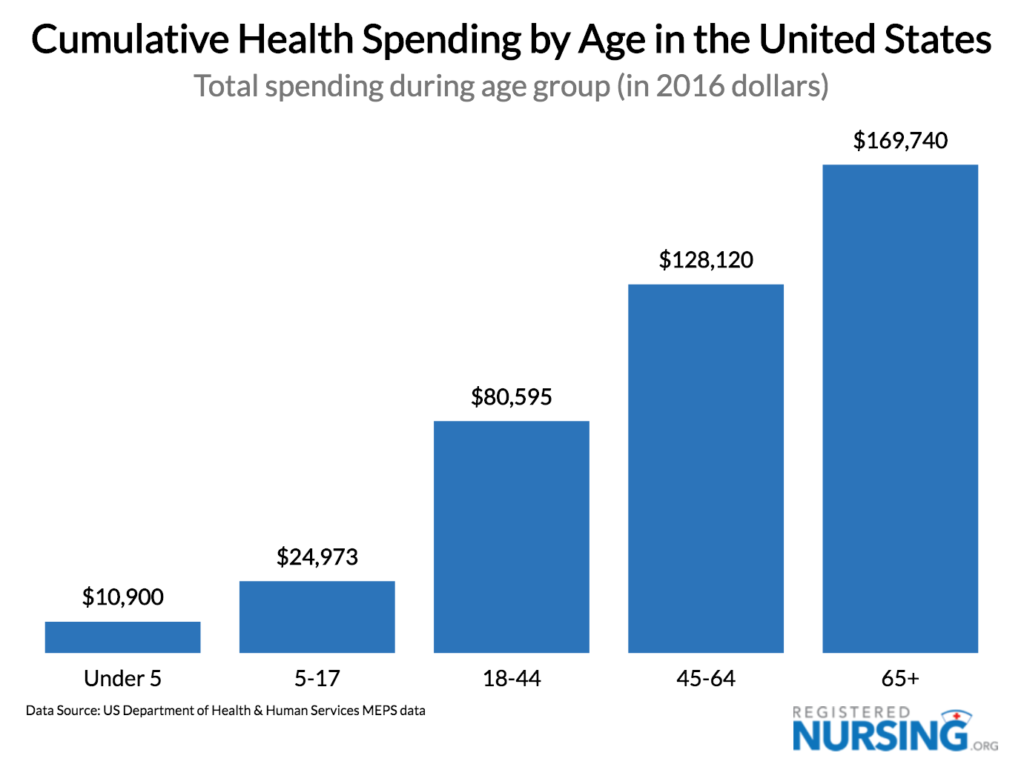
These are costs for the “average” person. If you have an impossible-to-predict health catastrophe, your healthcare spending may be far higher. Second, the above figures assume that healthcare costs in the future increase at the same rate as inflation. But in the last two decades, healthcare costs have increased twice as fast as inflation

You have, however, a solution: Vote Trump and the GOP Congress out. Their Democratic replacements will vote to provide healthcare insurance for every man, woman, and child in America.

No longer will you have to worry about the potentially disastrous costs of healthcare. No longer will you have to worry about whether you will receive care at all.

Your doctor will be paid. Your hospital will be paid. And you will receive the same care as the rich receive.

The cost can be borne entirely by the U.S. federal government, which being Monetarily Sovereign, has the unlimited financial ability to pay for anything, without levying taxes.

If you have logical concerns about your ability to qualify for, and fund, affordable healthcare, today and in the future, you now can do something about it: Vote the GOP out.

There was a time when the GOP cared about the poor and middle-income people. Today’s GOP is different. It has been taken over by the uncaring rich.

Even if your family and your friends always have voted Republican, even if, for whatever reason you hate Biden and the Democrats, there is a simple, smart financial choice available to you.

Make the wrong choice and you’ll be slapping your forehead for the rest of your life. You never will forgive yourself, and your kids never will forgive you.

Make the smart choice and you’ll be able to relax in confidence, knowing that all your, and your family’s known or unexpected healthcare costs will be paid for.

Vote. Vote smart.

It’s that simple.

Rodger Malcolm Mitchell

Monetary Sovereignty Twitter: @rodgermitchell Search #monetarysovereignty Facebook: Rodger Malcolm Mitchell …………………………………………………………………………………………………………………………………………………………………………………………………………………………………………………………………………………………..

THE SOLE PURPOSE OF GOVERNMENT IS TO IMPROVE AND PROTECT THE LIVES OF THE PEOPLE.

The most important problems in economics involve:

  1. Monetary Sovereignty describes money creation and destruction.
  2. Gap Psychology describes the common desire to distance oneself from those “below” in any socio-economic ranking, and to come nearer those “above.” The socio-economic distance is referred to as “The Gap.”

Wide Gaps negatively affect poverty, health and longevity, education, housing, law and crime, war, leadership, ownership, bigotry, supply and demand, taxation, GDP, international relations, scientific advancement, the environment, human motivation and well-being, and virtually every other issue in economics. Implementation of Monetary Sovereignty and The Ten Steps To Prosperity can grow the economy and narrow the Gaps:
Ten Steps To Prosperity:

  1. Eliminate FICA
  2. Federally funded Medicare — parts A, B & D, plus long-term care — for everyone
  3. Social Security for all or a reverse income tax
  4. Free education (including post-grad) for everyone
  5. Salary for attending school
  6. Eliminate federal taxes on business
  7. Increase the standard income tax deduction, annually. 
  8. Tax the very rich (the “.1%”) more, with higher progressive tax rates on all forms of income.
  9. Federal ownership of all banks
  10. Increase federal spending on the myriad initiatives that benefit America’s 99.9% 

The Ten Steps will grow the economy and narrow the income/wealth/power Gap between the rich and the rest.

MONETARY SOVEREIGNTY
Affordable housing laws are not a solution. They are a symptom.

Affordable housing laws are not a solution. They are not even a partial solution. They are, at best, tokenism. They are a symptom.

Some people want the federal government to treat symptoms rather than problems. So:

  1. Local governments try to reduce street crime by hiring more police
  2. Some economists want the government to reduce unemployment by creating make-work, WPA-style jobs
  3. Some politicians try to increase affordable housing by passing Affordable Housing laws.

But street crime, unemployment, and lack of affordable housing are symptoms of a more fundamental problem. It is a problem that easily is cured, not with complex, convoluted laws and more government agencies.

The problem is: Lack of money.

We have discussed why street crime is merely a symptom of poverty. Areas with low, or non-existent poverty rates also have low or non-existent incidents of street crime. We have discussed why unemployment is not in itself a problem., Rather, unemployment is the face of a more fundamental problem: Lack of money.

Similarly, lack of affordable housing is a symptom of lack of money. (Those who have money never lack for affordable housing.)

On August 10, 1965, President Lyndon B. Johnson signed the Housing and Urban Development Act. The Act expanded funding for existing federal housing programs, provided rent subsidies for the elderly and disabled, assisted in the construction of more low-income housing, and provided funds for public works projects.

Four weeks later on September 9, 1965, President Johnson would go on to sign legislation that would establish the U.S. Department of Housing and Urban Development (HUD), a cabinet-level agency, to oversee the newly funded housing programs.

New York City Bans Smoking In Public Housing - Gothamist
“Improving quality of life.” Public housing projects: Crime, drugs, gangs, misery.

President Johnson thought he was solving a problem — unaffordable housing — but since that wasn’t the real problem, his “solutions” accomplished very little, for very few, and had strong, negative implications.

Although Johnson didn’t create the first public housing projects, that basic philosophy has led to drugs, crime, gangs, and misery.

In essence, Johnson had prescribed aspirin for a brain tumor.

Public housing is a form of housing tenure in which the property is usually owned by a government authority, either central or local.

Social housing is any rental housing that may be owned and managed by the state, by non-profit organizations, or by a combination of the two, usually with the aim of providing affordable housing. Social housing is generally rationed through some form of means-testing or through administrative measures of housing need.

One can regard social housing as a potential remedy for housing inequality.

That is the common, though false, belief, that public or social housing is a potential remedy for housing inequality.

Here is the brief mission statement of the federal Department of Housing and Urban Development:

“HUD’s mission is to create strong, sustainable, inclusive communities and quality affordable homes for all.

“HUD is working to strengthen the housing market to bolster the economy and protect consumers; meet the need for quality affordable rental homes; utilize housing as a platform for improving quality of life; build inclusive and sustainable communities free from discrimination, and transform the way HUD does business.”

Today, local affordable-housing laws generally are left to state and local governments. Here, for example, is what Illinois law says:

Sec. 1. This Act may be cited as the Affordable Housing Planning and Appeal Act.
Sec. 5. Findings. The legislature finds and declares that:
(1) there exists a shortage of affordable, accessible, safe, and sanitary housing in the State;
(2) it is imperative that action be taken to assure the availability of workforce and retirement housing; and
(3) local governments in the State that do not have sufficient affordable housing are encouraged to assist in providing affordable housing opportunities to assure the health, safety, and welfare of all citizens of the State.
Sec. 10. Purpose. The purpose of this Act is to encourage counties and municipalities to incorporate affordable housing within their housing stock sufficient to meet the needs of their county or community.
Sec. 15. Definitions. As used in this Act:
“Affordable housing” means housing that has a value or cost or rental amount that is within the means of a household that may occupy moderate-income or low-income housing.
In the case of owner-occupied dwelling units, housing that is affordable means housing in which mortgage, amortization, taxes, insurance, and condominium or association fees, if any, constitute no more than 30% of the gross annual household income for a household of the size that may occupy the unit.
In the case of dwelling units for rent, housing that is affordable means housing for which the rent and utilities constitute no more than 30% of the gross annual household income for a household of the size that may occupy the unit.

As laws are wont to do, this one goes on and on, in excruciating detail, about who, what, why, when, and how, all invented by politicians who are clueless about the needs of poor people

Worse yet, all laws are generalities, that do not take into consideration the massively different needs of massively different families. It is the ultimate expression of paternalism by uninformed leaders.

My village of Wilmette, IL provides one of many examples of how difficult (impossible?) it is to provide affordable housing through legislation.

Wilmette, IL. Population: 27,087 people, 9,742 households.
Median household income in Wilmette, IL is $148,678 (compared to about $62,000 for the U.S.)
The median home price in Wilmette is $702,660, Zillow)

(There are 2 Low-Income Apartment Communities In all of Wilmette)
Gates Manor Apartments, 51 bedroom units. (Section 8 Project-Based Rental Assistance)
Shore Line Place, 44 bedroom units. (Section 202 Supportive Housing for the Elderly)

Out of 27 thousand people and nearly 10 thousand households, Wilmette has created 95 “affordable” apartments, of which half are for the elderly. Would anyone consider this a “solution to unaffordable housing”? A better description would be “tokenism.”

Wilmette primarily is composed of upscale, single-family housing. Yet, the political leaders of Wilmette felt a moral (legal?) obligation to provide affordable housing for poor people.

Clearly, the Wilmette government would not pay hundreds of thousands of dollars to purchase a decent Wilmette home to shelter a poor family.

Additionally, merely residing in Wilmette is costly. The school system is costly. Taxes are costly. Upkeep is costly. Even water is costly. So if poor families even were given free houses, they couldn’t support the ongoing costs.

The solution to housing unaffordability, indeed the solution to all unaffordability by the poor, is for the federal government to give people money. The Ten Steps to Prosperity (below) provides one set of solutions.

Rather than having politicians decide what universal percentage of household income counts as “affordable housing,” let each individual and each family make that decision. A 35-year-old man, with three children, surely will have different needs and make a different decision than a 55-year-old widow living alone.

Laws are expensive. At the local level, money spent to create and enforce laws does not benefit the populace. By contrast, federal spending costs people nothing, and it can solve the real problems facing the poor.

They are poor. They are short of money. The federal government has infinite money. The solution is clear. Help people improve their own lives by simply giving them money.

We should replace “affordable housing” laws with the Ten Steps to Prosperity.

Rodger Malcolm Mitchell

Monetary Sovereignty Twitter: @rodgermitchell Search #monetarysovereignty Facebook: Rodger Malcolm Mitchell …………………………………………………………………………………………………………………………………………………………………………………………………………………………………………………………………………………………..

THE SOLE PURPOSE OF GOVERNMENT IS TO IMPROVE AND PROTECT THE LIVES OF THE PEOPLE.

The most important problems in economics involve:

  1. Monetary Sovereignty describes money creation and destruction.
  2. Gap Psychology describes the common desire to distance oneself from those “below” in any socio-economic ranking, and to come nearer those “above.” The socio-economic distance is referred to as “The Gap.”

Wide Gaps negatively affect poverty, health and longevity, education, housing, law and crime, war, leadership, ownership, bigotry, supply and demand, taxation, GDP, international relations, scientific advancement, the environment, human motivation and well-being, and virtually every other issue in economics. Implementation of Monetary Sovereignty and The Ten Steps To Prosperity can grow the economy and narrow the Gaps:
Ten Steps To Prosperity:

  1. Eliminate FICA
  2. Federally funded Medicare — parts A, B & D, plus long-term care — for everyone
  3. Social Security for all or a reverse income tax
  4. Free education (including post-grad) for everyone
  5. Salary for attending school
  6. Eliminate federal taxes on business
  7. Increase the standard income tax deduction, annually. 
  8. Tax the very rich (the “.1%”) more, with higher progressive tax rates on all forms of income.
  9. Federal ownership of all banks
  10. Increase federal spending on the myriad initiatives that benefit America’s 99.9% 

The Ten Steps will grow the economy and narrow the income/wealth/power Gap between the rich and the rest.

MONETARY SOVEREIGNTY

Who is Donald Trump?

“Tell me who your friends are, and I will tell you who you are.”Do you agree with the saying “Show me who your friends are, and I'll tell you who you are”? - Quora

It is said in many languages and by many cultures.

In answer to the question, “Who is Donald Trump”?, here are a few of Trump’s friends and associates:

Alexander Acosta: Resigned as U.S. Attorney amid scandal of non-prosecution deal for Jeffrey Epstein.

Steve Bannon: Charged with fraud against Republican donors

Rod Blagojevich: Found guilty of soliciting bribes to occupy a U.S. Senate seat

Michael Cohen: Pleaded guilty to making “hush money” payments to women Trump cheated with. Also, pleaded guilty to lying to Congress.

Chris Collins: Pleaded guilty to securities fraudMexican Proverb: Tell me who your friends are and I'll tell you who you are. | Mexican quotes, Mexican proverb, Proverbs

Jeffrey Epstein: Accused of sex trafficking of underage girls

Michael Flynn: Pleaded guilty of lying to the FBI.

Rick Gates: Pleaded guilty of lying to Congress and conspiracy against the United States.

Duncan Hunter: Pleaded guilty to using campaign funds to pay personal expenses.

Bob Kraft: Soliciting for prostitution

Paul Manafort: Found guilty by a jury for bank and tax fraud. Pleaded guilty to conspiracy, money laundering, witness tampering, and illegal lobbying.Tell me who your friends are and I'll tell you who you are... | Character quotes, Words quotes, Quotable quotes

George Nader: Found guilty of money laundering, lobbying violations and witness tampering. Found guilty of child pornography and transporting a minor for sex.

Timothy Nolan: Pleaded guilty to 19 counts of child sex trafficking and human trafficking;

George Papadopoulos: Pleaded guilty to lying to Congress

Sam Patten: Pleaded guilty to paying foreign money Trump’s inaugural committee

Tom Price: Resigned as head of HHS amid scandals over personal use of military planes

Scott Pruitt: Resigned as administrator of EPA amid scandals regarding excessive spending and conflicts of interest

Tony Salerno: Mobster frontmanShow me your friends...an... | Quotes & Writings by ÄrìTrå ChãKråbörty |  YourQuote

Ralph Shortey: Convicted of solicitation of prostitution with a minor male.

Felix Slater: Russian American mobster, convicted of assault, fraud

Roger Stone: Convicted by jury trial of seven criminal counts of obstruction of a congressional investigation, five counts of lying to Congress, plus witness tampering.

Salvatore Testa: Mobster hitman murdered by the mob

Alex van der Zwaan: Pleaded guilty of lying to investigators, violating foreign lobbying laws and evading taxes

In addition, there was:Hazrat Ali Quotes: Tell me who your friends are, and I'll tell you who are you. -Imam Ali (AS)

Trump Foundation:  Trump paid $2 million to settle charges of misusing foundation funds for his business/political purposes.

Trump University: Trump paid $25 million to settle two class actions alleging fraud.

Finally, there is ongoing nepotism and too many violations of the Hatch Act (outlaws political activity by civil service employees) to list.

================================================================================================================================================================================================

Rodger Malcolm Mitchell

Monetary Sovereignty Twitter: @rodgermitchell Search #monetarysovereignty Facebook: Rodger Malcolm Mitchell …………………………………………………………………………………………………………………………………………………………………………………………………………………………………………………………………………………………..

THE SOLE PURPOSE OF GOVERNMENT IS TO IMPROVE AND PROTECT THE LIVES OF THE PEOPLE.

The most important problems in economics involve:

Ten Steps To Prosperity:

  1. Eliminate FICA
  2. Federally funded Medicare — parts A, B & D, plus long-term care — for everyone
  3. Social Security for all or a reverse income tax
  4. Free education (including post-grad) for everyone
  5. Salary for attending school
  6. Eliminate federal taxes on business
  7. Increase the standard income tax deduction, annually. 
  8. Tax the very rich (the “.1%”) more, with higher progressive tax rates on all forms of income.
  9. Federal ownership of all banks
  10. Increase federal spending on the myriad initiatives that benefit America’s 99.9% 

The Ten Steps will grow the economy and narrow the income/wealth/power Gap between the rich and the rest.

MONETARY SOVEREIGNTY