Here is a letter from a doctor, a cardiologist, who begs the U.S. government to understand Monetary Sovereignty. But, he may not know it.
He may not know that the U.S. federal government is Monetarily Sovereign, so it never can run short of its sovereign currency, the U.S. dollar.
He may not know that despite the common but mistaken, bleating about the federal debt and deficits, the U.S. has, and always will have, plenty of money to pay any bills, foreseeable and unforeseeable.
Present the federal government with a billion-dollar invoice, and it could pay it in full today. Make that invoice a trillion dollars or a hundred trillion.
Same thing.
He may not know that even if the federal government also stopped collecting income tax dollars, FICA tax dollars, tariff dollars, student loan dollars, and all the other dollars it now receives, the government still could spend forever.
Even without collecting any money, the Monetarily Sovereign U.S. government could pay any obligation denominated in dollars. Creating massive deficits does not affect the federal government’s ability to pay its creditors.
The doctor may not know thatfederal deficits don’t cause inflation (Inflation is caused by shortages of crucial goods and services, most often oil and food.)
In short, the doctor may not know that the U.S. government is infinitely wealthy, and that federal spending is necessary to grow the economy.
And no, this has nothing to do with government ownership of the Mississippi River, the Rocky Mountains, the 200-mile Exclusive Economic Zone (EEZ), Lake Michigan, or the Statue of Liberty.
It has to do with the fact that a Monetarily Sovereign nation has the infinite ability to create its own sovereign currency.
This truth has been recognized by at least two respected Chairmen of the Federal Reserve, by a spokesperson for the St. Louis Federal Bank, by the head of the European Union, and by those of us who recognize the power of Monetary Sovereignty:
Alan Greenspan: “A government cannot become insolvent with respect to obligations in its own currency. There is nothing to prevent the federal government from creating as much money as it wantsand paying it to somebody. The United States can pay any debt it has because we can always print the money to do that.”
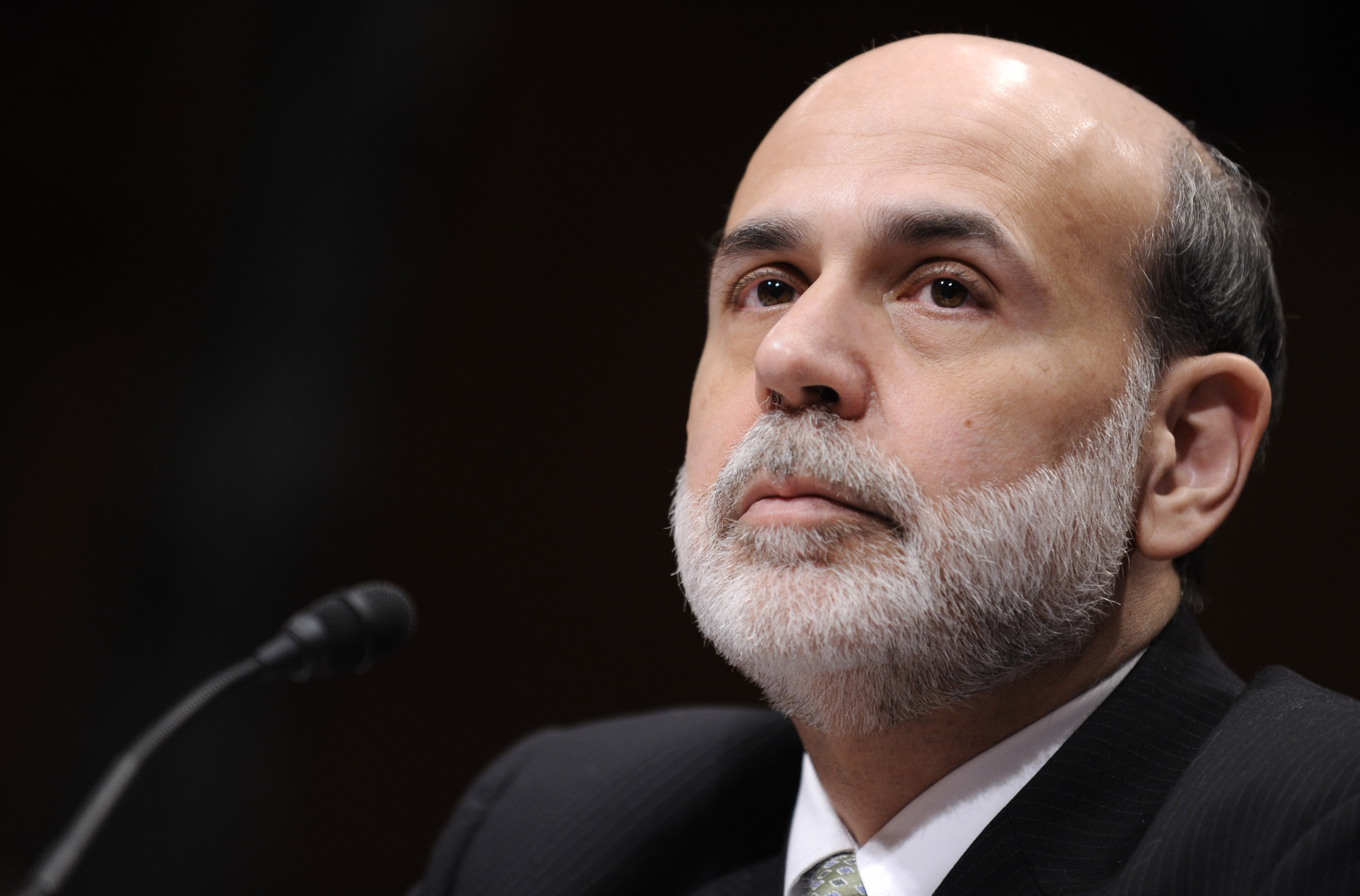
Ben Bernanke: “The U.S. government has a technology, called a printing press (or, today, its electronic equivalent), that allows it to produce as many U.S. dollars as it wishesat essentially no cost.”
Scott Pelley: Is that tax money that the Fed is spending?Ben Bernanke: It’s not tax money… We simply use the computer to mark up the size of the account.
Statement from the St. Louis Fed:“As the sole manufacturer of dollars, whose debt is denominated in dollars, the U.S. government can never become insolvent, i.e., unable to pay its bills. In this sense, the government is not dependent on credit markets to remain operational.”
Question: I am wondering: can the ECB ever run out of money?Mario Draghi, President of the Monetarily Sovereign ECB: “Technically, no. We cannot run out of money.”
Mentally juxtapose the above facts about Monetarily Sovereign money issuers with these facts:
By 2025, the firm forecasts a shortage of more than 400,000 home health aides and 29,400 nurse practitioners.
Sick, and waiting for a doctor.
A major factor is demographics: People are living longer, requiring more medical attention as they do, while members of the aging healthcare workforce are starting to retire faster than they can be replaced.
Other reasons include burnout(overworked employees are leaving the profession at an accelerating rate); the rise in chronic conditions such as diabetes, heart disease, cancer, and Alzheimer’s disease (leading to overextended staff at hospitals and long-term care facilities); and the nation’s inability to produce enough doctors and nurses to meet growing demand (partly because of faculty shortages at nursing and medical schools).
Shortages of certain kinds of healthcare practitioners, such as nurses and certified nursing assistants, are also due to the relatively low compensation levels, relatively high job demands, and education requirements in those fields.
In summary:
Our Monetarily Sovereign federal government has infinite dollars and infinite control over the value of its sovereign currency.
There is an increasingly severe shortage of doctors, nurses, other healthcare workers, and hospitals.
Does putting # numbers 1 and 2 together give you any ideas?
Now read the doctor’s letter:
The Broken Medicare System Is Forcing Physicians Out— Yet another physician pay cut will prevent timely access to careby Rick W. Snyder II, a cardiologist. November 20, 2023In any career, 25 years of dedicated work is much to let go of. In medicine, it amounts to hundreds of patient relationships and the blood, sweat, and tears that go into starting and maintaining a practice.
Yet, after all that time, one of my physician colleagues recently had to let go of her beloved private practice — not by choice and not without tears for her dear, elderly Medicare patients who now face fewer options for care.
Her story is, unfortunately not unique.
Physicians and their patients have suffered through more than 2 decades of uncertainty caused by precarious Medicare funding.
We’ve seen how these cuts have forced unwanted changes in medical practices. While their practices stay open, the Medicare system underpays our nation’s physicians to the point that some are forced to make difficult decisions about which patients they can care for.
Eventually, when these practices barely have their heads above water, that “next round of cuts” proves to be the last straw.
Like clockwork, another Medicare physician payment cut is on the horizon for January.
Why does an infinitely wealthy government cut payments to doctors, particularly when there is a growing shortage of doctors?
Who is at fault for this ridiculous situation?
I’m afraid the day is near — if not already here — that there will not be enough physiciansto care for Medicare patients.
Physicians who participate in the program are forced to do more with less, which leaves no good choices. The situation hinders our ability as physiciansto provide the complex, quality care these elderly and sometimes disabled patients need and prevents us from seeing as many Medicare patients as we would like.
Furthermore, it contributes to burnout and moral distress because we can’t do what we swore an oath to do: to put our patients first.
As president of the Texas Medical Association (TMA), I hear concerns from our physician members as they face ongoing practice viability challenges.
“If this additional [Medicare] payment cut goes through, in the midst of inflation and COVID causing rising costs for staff salaries and benefits, I would have no choice but to stop caring for these patients,” a worried physician shared with TMA.
“We are dying,” said another. “I can’t even keep a full staff. All the doctors I have referred patients to are leaving or gone.”
“I’m terrified for what this will mean for my elderly patients and their access to care,” yet another concerned doctor said.
“The mental stress of making ends meet is not good for patient care,” another colleague warned.
Not only is this system unsustainable for our nation’s physicians, but it’s also unfairly stacked against them.
It’s the same system that concurrently pays hospital-based clinics more for some of the same services an independent community physician provides. On top of that, Medicare helps hospitals cover uncompensated care.
I’m not saying hospitals don’t deserve to be paid for what they do. But when independent physician practices get swallowed up by a hospital or bought out by another entity just to survive, the cost of care can increase, creating ripple effects on our economy.
This kind of rapid consolidation is rampant in our healthcare system, partly because of payment incentives like those in Medicare.
“Our practice is already shutting its clinic doors as we instead focus on being a purely hospital-based practice due to already meager reimbursement,” another worried Texas physician shared with TMA.
“We simply cannot afford the overhead. Ongoing cuts to [Medicare] physician reimbursement not only hurt us — the physicians trying to provide the best quality care to our patients — but it ultimately hurts the patients and their loved ones suffering from life-altering conditions.”
“I barely scrape through making payrolls every pay period. Any more [Medicare] reimbursement [cuts are] going to put me and thousands of physicians like me underwater and force us to shut down or join [a private] equity company or [insurer-owned] clinics who put their wallets ahead of patient care,” said another frustrated physician.
We should be preserving independent medicine and patient choice — not undermining it. It’s time for Congress to address the root of the problem.
Solutions
The first simple step physicians and other healthcare professionals can take is to advocate for Congress to enact laws directed at paying physicians fairly for services provided to Medicare patients.
At a minimum, that entails pay that keeps pace with inflation. Like other industries’ labor costs are tied to the Consumer Price Index (CPI).
But even a tie to the CPI won’t cure the growing shortage of doctors. America needs more doctors, not just the same number.
Medicare physician payments should at least be tied to a similar physician practice cost inflation measure, the Medicare Economic Index (MEI).
Several physician members of Congress are leading the charge on such a reform with a bipartisan House bill that behooves support: H.R. 2474, the Strengthening Medicare for Patients and Providers Act.
The legislation’s centerpiece is an annual, inflation-based Medicare physician payment update based on the full MEI.
Our current predicament is tied to the fact that Medicare physician payments haven’t even come close to keeping up with inflation over more than 20 years.
Since 2001, Medicare physician payments have lagged 26% behind inflation while hospital and other health industry payments have kept pace, according to the American Medical Association. Over the same period, the CPI for physician services in U.S. cities increased by 65%.
Just think about that: What would you say if you worked more than 20 years with no raise and pay cuts to boot? I know what my colleagues across Texas are saying:
“If [another cut is] enacted, our [Medicare] reimbursement rate will be lower than what we received in 2012,” one physician calculated.
Another said, “My Medicare reimbursement, factoring for inflation, is less than half of what it was in 1998.”
The frustration and the effect of Medicare payment cuts on physician practice viability are real. Likewise, access to care concerns for Medicare patients is therefore very real, too.
Don’t let a broken Medicare system break the backbone of the healthcare system for our most vulnerable patients.
Rick W. Snyder II, MD, opens in a new tab or window is a cardiologist and president of the Texas Medical Association.
Who is at fault for the cuts to doctor’s reimbursement, when funding should be increased dramatically to support the need for more doctors?
Congress and the President, particularly the Libertarians and the Republicans, both of which care more about federal government money than the health of Americans.
The American people have not questioned why the finances of the Monetarily Sovereign government take precedence over the finances of the monetarily non-sovereign public.
For more than 30 years, those few who understand Monetary Sovereignty have been explaining why an infinitely wealthy, Monetarily Sovereign government has the infinite ability and the moral obligation to fund certain services to the public, including:
Education
Health
Shelter
The environment
Science
Energy
Elderly support
This does not imply government ownership (aka “socialism”) but rather, government fundingof the private sector.
The federal government already provides some funding for all these services, just not enough. The shortfall in funding results from the wrongheaded belief that federal funding is “unsustainable.”
This is despite all the evidence that the federal government can “sustain” any level of spending.
The government could provide a generous, comprehensive, no-deductible Medicarefor every man, woman, and child in America.
There should be no need for people to guess about whether they should buy a Medicare supplement policy, “A” through “N”, or whether to buy one of a dozen different Part D plans. All medical contingencies should and could be covered for everyone.
And there should be no need for doctors and other healthcare workers to struggle financially, a struggle that leads to shortages in all areas of medical care. These people (along with teachers) should be among the best compensated of all Americans. The federal government has the wherewithal to assure that happens.
The federal government could fund all education K through 16+ without collecting a penny in taxes.
Homelessness never should become a financial necessity. Clean air, water, and land should be available to all. Scientists, who make the discoveries that improve our lives, should not be forced to beg universities for funding. The elderly should not need to struggle, financially.
Dr. Snyder was forced by circumstance to write his letter. That is a disgrace to America. It is a disgrace that Libertarians and Republicans, and to a lesser degree Democrats, allow America’s rich to dictate impoverishing terms.
If it were up to right-leaning politicians and the right-leaning public, we would have no Medicare, no “Obamacare,” no public schools, and no renewable energy. Poverty, homelessness, and starvation would be even more rampant than now. Our air, water, and land would be dirtier. Climate change will become unbearable.
We would return to the times of royalty, where a handful of people lived utopian lives and the rest of use wallowed in misery.
All who claim federal deficit spending is “unsustainable” or that “government is the problem,” fall into just two categories.
The Liars, who do the bidding of the very rich and/or
The Economically Ignorant, who were taught that federal finances are like personal finances and who haven’t been shown the facts.
There are no other alternatives. I suspect Dr. Snyder falls into category # 2.
Shame on the liars of category #1 for destroying the American dream.
Rodger Malcolm Mitchell
Monetary SovereigntyTwitter: @rodgermitchellSearch #monetarysovereigntyFacebook: Rodger Malcolm Mitchell
……………………………………………………………………..
The Sole Purpose of Government Is to Improve and Protect the Lives of the People.
Self-evaluation corresponds with intelligence. If you are smart, being smart lets you understand that you are smart. If you are stupid, being stupid keeps you from knowing you are stupid. Thus, everyone thinks they are smart.In related issues, everyone thinks they are above-average drivers and that the federal government can run short of dollars.
==============/////=================
A rose by any other name may smell as sweet, but what if they called it “stinkwort”? Labels do matter. Visualize this scenario:
The boater must take more water from the ocean than he receives from the ocean. That is, the ocean must run a water deficit for the boater to survive, just as the federal government must run a dollar deficit for the economy to survive.
A man sits in a rowboat in the Pacific Ocean.
Using his desalinization kit he fills his canteen with one pint of water, which he later drinks and excretes as urine,
But, because of perspiration evaporation and breathing, he excretes only 9/10th pint of urine.
So, for boater the Pacific Ocean runs a deficitof 1/10th pint of water.
Does anyone care?
No, the Pacific Ocean running a 1/10th pint of water deficit is meaningless, because for all intents, the ocean has infinite water.
Infinite water minus 1/10th pint still equals infinite. No change.
Now imagine the same scenario, except instead of viewing it from the ocean’s standpoint, view it from the boater’s standpoint.
The man has drunk a pint of water, 9/10th of which he has excreted as urine into the ocean, and used the rest for perspiration, and other bodily functions.
That pint of water has allowed him to live for a certain time. Without the pint of water, he would have died.
That’s important.
In both scenarios we gave you the same information, but in one case we labeled it as a water measure from the standpoint of the ocean, and in the other case we labeled it as a water measure from the standpoint of the boater.
The following graph comes from https://www.chartr.co/newsletters/2023-02-08/. It labels money flow from the standpoint of the U.S. government:This graph shows the nation’s money flow from the standpoint of the U.S. government, not from the standpoint of the economy.
Here are excerpts from the accompanying article:
State of the union’s walletLast night, President Biden held the annual State of the Union. A big theme was the economy. He threatened to veto any proposal that would cut spending on Social Security and Medicare while also imploring Congress to raise the debt ceiling.
I O U $1.4 trillion: In fiscal year 2022, the federal government collected nearly $5tn in revenue, with more than 50% of that coming from individual income taxes.
However, the US government spent even more, leading to a nearly $1.4tndeficit.
To make up for the difference the US government does what everyone who overspends their budget does — they borrow.
This then adds to its already enormous tab (AKA the national debt), which currently sits at the $31.4tn debt ceiling limit.
With a debt pile that big, the interest payments aren’t small. Indeed, last year the US government spent ~$480bn on net interest payments, just shy of Ireland, Norway or Nigeria’s annual GDP.
There are three major problems with the above scenario.
It draws a false parallel between the finances of our Monetarily Sovereign governmentand the finances of monetarily non-sovereign “everyone.” The former has infinite money and the latter does not.
It falsely states that the federal government must borrow in order to “make up the difference.” The federal government, having the infinite ability to create its sovereign currency, never borrows dollars, and never needs to “make up the difference.” To pay all its obligations, the federal government creates new dollars, ad hoc. It destroys all the tax dollars it receives.
It labels the money movement from the standpoint of the federal government rather than from the standpoint of the economy.
Think of the Pacific Ocean as analogous to the U.S. federal government, and the boater as analogous to the economy.
Like the Pacific Ocean’s water, the federal government has infinite dollars. And like the boater’s limited water supply, the economy has limited dollars.
Alan Greenspan: “A government cannot become insolvent with respect to obligations in its own currency. There is nothing to prevent the federal government from creating as much money as it wants and paying it to somebody. The United States can pay any debt it has because we can always print the money to do that.”
Ben Bernanke: “The U.S. government has a technology, called a printing press (or, today, its electronic equivalent), that allows it to produce as many U.S. dollars as it wishes at essentially no cost.”
Quote from from 60 Minutes:Scott Pelley: Is that tax money that the Fed is spending?Ben Bernanke: It’s not tax money… We simply use the computer to mark up the size of the account.
Statement from the St. Louis Fed: “As the sole manufacturer of dollars, whose debt is denominated in dollars, the U.S. government can never become insolvent, i.e., unable to pay its bills. In this sense, the government is not dependent on credit markets to remain operational.”
(The final sentence, above, is Fed-speak for, “The government does not borrow to pay its bills.”)
The U.S. government is not the only Monetarily Sovereign government. The European Central Bank also is Monetarily Sovereign (and like the U.S. economy, individual euro nations are monetarily non-sovereign.)
Press Conference: Mario Draghi, President of the ECB, 9 January 2014Question: I am wondering: can the ECB ever run out of money?Mario Draghi: Technically, no. We cannot run out of money.
To survive, the boater needs the Pacific Ocean to run a water deficit. Similarly, to survive, the economy needs the federal government to run a dollar deficit.
The Pacific Ocean does not need to receive any water from the boater nor does the Ocean “owe” the boater any water. Similarly, the economy should not be asked to give the federal government any money, nor does the government “owe” the economy any money.
Finally, the Pacific Ocean does not borrow water to give water to the boater.
Think of the Pacific Ocean and the boater the next time you hear about federal debt limits and taxes.
Labels matter.
Rodger Malcolm Mitchell
Monetary SovereigntyTwitter: @rodgermitchellSearch #monetarysovereigntyFacebook: Rodger Malcolm Mitchell
……………………………………………………………………..
The Sole Purpose of Government Is to Improve and Protect the Lives of the People.
Our federal government and the European Central Bank are Monetarily Sovereign. The implications are:
Former Fed Chairman Alan Greenspan: “A government cannot become insolvent with respect to obligations in its own currency.”
Former Fed Chairman Ben Bernanke: “The U.S. government has a technology, called a printing press (or, today, its electronic equivalent), that allows it to produce as many U.S. dollars as it wishes at essentially no cost.”
Ben Bernanke when, as Fed chief, he was on 60 Minutes:
Scott Pelley: Is that tax money that the Fed is spending?
Ben Bernanke: It’s not tax money… We simply use the computer to mark up the size of the account.
Statement from the St. Louis Fed:
“As the sole manufacturer of dollars, whose debt is denominated in dollars, the U.S. government can never become insolvent, i.e., unable to pay its bills. In this sense, the government is not dependent on credit markets to remain operational.”
Press Conference: Mario Draghi, President of the ECB, 9 January 2014
Question: I am wondering: can the ECB ever run out of money?
Mario Draghi: Technically, no. We cannot run out of money.
[Why would any sane person take dollars from the economy and give them to a federal government that has the infinite ability to create dollars?]
————————————————————————————————————–
Step #4 of the Ten Steps to Prosperity (below) is:Free education for everyone
That post begins with the following facts:
Educating our young people is important to the future of America.
For that reason, free elementary education has been provided by every state and every town in America.
Since WWII, America’s need for college-educated young people has grown, in a more sophisticated, more competitive world. College-educated students no longer are a luxury for America; they are a necessity.
Many of America’s bright students are unable to afford a college education, especially not in better colleges.
The U.S. federal government is Monetarily Sovereign, meaning it creates dollars at will. It never can run short of dollars. The federal government has the unlimited ability to pay for anything priced in dollars.
The federal government’s responsibility is to advance the interests of the United States and its people.
Putting America’s young people into debt, a debt so suffocating it cannot even be discharged in bankruptcy, does not advance the interests of the United States and its people.

A literate nation is a better nation in every aspect of human life, emotionally, socially, and economically. Our founders knew it, which is why free education was offered to settler’s children, and today is offered everywhere in America. The famous “one-room schoolhouse” was ubiquous in the new America.
It would be utter folly for our government, or any government, not to expend every effort to educate its young people, especially true in our more advanced world, where a high school education no longer is the gold standard.
Yet, here we are:
After a White House official confirmed this week that President Joe Biden is considering further extending a pandemic-related pause on student loan payments, lawmakers and activists renewed calls for debt cancellation.
“We have reached a student debt crisis of epic proportions.”
While payments are due to resume on May 1, White House Chief of Staff Ronald Klain suggested on a popular podcast that the president may extend the pause and is still sorting out whether he will take further action on the student debt crisis.
“This is a GOOD idea!” the group Bold Progressives tweeted with a video of Klain on “Pod Save America.”
Senate Majority Leader Chuck Schumer (D-N.Y.), a key advocate of student debt cancellation in Congress, agreed, also tweeting Klain’s comments.
In response to HuffPost‘s reporting on Klain’s remarks, Congresswoman Marie Newman (D-Ill.) said Saturday that “pausing student loan payments during Covid has allowed Americans to get by.”
“We need immediate student debt relief, and deferring payments again is a great step, but we need to do more,” she added.
Noting that “education is a pathway to greater opportunity and economic security, yet many Americans simply can’t afford it or become crushed by student loans,” Rep. Ilhan Omar (D-Minn.) told Biden on Saturday that “we must cancel student debt.”
Rep. Jesús “Chuy” García (D-Ill.) and Rep. Ayanna Pressley (D-Mass.) also pressured the president to take action on the issue Saturday:
Pressley and Sen. Elizabeth Warren (D-Mass.), who have been leading the fight in Congress with Schumer, participated in a Friday roundtable about how student loan debt impacts Black communities, particularly business owners, entrepreneurs, and other professionals.
Advocates of debt cancellation often argue that it is necessary to help address the racial wealth gap in the United States.
Eliminating student debt would help narrow every income/wealth/power Gap in America. There is not a single benefit to our nation that emanates from charging American students to attend college.
Given all you know, you might think student debt cancellation is an obvious solution to many problems facing all of America, not just those students who already are in debt.
But America has two parties. The more aggressive and united GOP party is “The Party of the Rich.” It wants to widen, not narrow, the Gaps between the “haves” and the “have-nots.” It believes in harsh punishments for misdeeds by those below, and rewards only for those above. The wider the Gap, the richer are the rich, and that is what the GOP wants.
The more timid and disunited Democratic party advocates narrowing the Gaps, with rewards for those below and punishments for those above, but it is riven with strife among partisans, whose blinders restrict each view to specific needs at the exclusion of all others.
Not being able to present a united front, the Dems’ messages become muddled, so the general public rightfully views it and its programs as weak and ineffectual.
Also on Friday, the Debt Collective announced a nationally coordinated refusal to make payments if Biden refuses to step in before they resume in May.
“If President Biden resumes illegitimate student debt payments in May, we will facilitate as many student debtors as possible to safely pay $0 a month to the Department of Education,” declared Debt Collective co-founder Astra Taylor.
“Whether it’s filing a borrower defense or enrolling in an income-driven repayment plan, we are politicizing our refusal to pay as part of our escalation on President Biden,” Taylor said. “He has the authority to cancel all federal student debt with the flick of a pen. He can end this manufactured crisis today.”
Debt Collective spokesperson Braxton Brewington emphasized that “we want to be clear—a student debt strike is not intentionally defaulting on your loans but politicizing and collectivizing your refusal to pay by using the tools the Department of Education already provides to student borrowers.”
America does not need an “income-driven repayment plan.” America needs a no-repayment plan. More than that, America needs a no payment (i.e. no payment for college) plan.The U.S. government neither needs nor uses any dollars sent to it. In fact, every dollar sent to the U.S. federal government is destroyed upon receipt by the Treasury
(When you pay taxes, for instance, those dollars in your checking account are part of the M1 money supply measure. When they hit the Treasury, they instantly disappear from any money supply measure. They effectively are destroyed. The federal government creates new dollars ad hoc each time it pays creditors.)
And for those students who received dollars from private sources, the federal government has the unlimited ability to pay off those loans, and no cost to taxpayers.
“The federal government doesn’t need our student debt payments to function, and the last two years have proved that,” Brewington added, “but they do need our cooperation—and they certainly won’t have that.”
The federal government not only doesn’t need student debt payments, it doesn’t need any payments of any kind.
Congresswoman Rashida Tlaib (D-Mich.) expressed support for the planned strike, noting that “the road to student debt cancellation is long and hard, and a key aspect is building solidarity amongst students and graduates with debt.”
It’s only “long and hard,” because the “haves” don’t want it (Widening Gap makes the rich richer), and the “have-nots” don’t understand it (They erroneously believe, because they repeatedly have been told, federal deficits should be reduced.)
“The Debt Collective’s Student Debt Strike is an important campaign to help build the mass movement we need to resist and abolish student debt, and there are so many ways to support it without putting yourself in financial jeopardy,” she said. “I stand with Student Debt Strikers and encourage everyone—whether you have debt or not—to join us.”
As Common Dreams reported last month, polling shows student debt cancellation is popular with the American public, even among people who don’t have higher education loans to repay.
Student debt cancellation may be popular with the public as a whole, but there may be some who find it less appetizing. The rich, of course, want to keep the rest of us down, because that makes them richer.
Those who already have paid for college by scrimping, saving, and borrowing, may feel it’s “unfair” for others to have the benefits without the suffering.
Those who don’t want college educations may feel it’s unfair or even unnecessary, for others to receive free college.
Even those who recognize the massive benefits to America of universal, free college may object to student debt reduction or elimination.
And there is another problem:
Let us say that the Dems suddenly and miraculously acquire courage and cohesion, and they manage to pass a bill eliminating all student debt, what happens tomorrow? Who pays for tomorrow’s college?
Do we begin the same process anew, with future students building future debt, and future arguments about paying it? How will colleges and teachers be supported?
We already have a model for that. It is called “Medicare” and it answers the question, “How can hospitals and doctors be supported?”
Just as America needs a Medicare available to everyone, (aka “Medicare for All,”) not just for the elderly, America needs a “Collecare” plan that funds grades 13+, not just grades K-12.
The first 13 years of education in America are funded by local, monetarily non-sovereign governments, using taxpayer dollars. Why, in heaven’s name, are college years not funded by our Monetarily Sovereign government, that does not use taxpayer dollars, but instead can create infinite dollars from thin air?
Just as Medicare does not treat patients — it merely funds private sector treatment — Collecare would not educate students — it merely would fund private sector education.
And just as Medicare doesn’t pay the “better” hospitals more, Collecare would not pay the “better” universities more. Harvard would receive no more than would Podunk U.
Today, Virtually all colleges and universities provide scholarships to students based on wealth, income, athleticism, skin color, religion, country of origin, and a long, often secret list of student attributes.
With Collecare, that expense no longer would be necessary for any college. Your tuition payments no longer would be used to pay for other students’ educations.
And, there yet is another problem: Those whose income is so low that even free college is unaffordable: They need their young people to work full time just to support themselves and their families. (For this latter group, we recommend (Ten Steps to Prosperity: Step 5: Salary for attending school, and Salary for attending school, III and Salary for attending school: 2nd paper.)
Just as healthcare insurance should cover rehab costs, Collecare would be incomplete without a supplement that pays students’ living expenses.
And then, there is one final problem. In general, the education in America’s K-12 schools is not worthy of this wealthy nation. We have good teachers in bad schools; we have bad teachers in good schools; and commonly, we have bad teachers in bad schools.
Much of what is “bad” can be attributed to income.
Low income begets crime, illness, and hopelessness, which beget bad K-12 schools, which in turn beget more crime, illness, and hopelessness. We cannot solve America’s income, education, and health problems separately without solving them together.America needs Medicare for All. America needs College for All. America needs Social Security for All.
The U.S. government should do everything it can to support America’s people. That is the fundamental purpose of government — not to run people’s lives but to support people’s lives.
The sainted President John Kennedy famously said, “Ask not what your country can do for you; ask what you can do for your country.” If by “your country” he had meant the federal government, it would have been among the most stupid, misleading statements of all time.
I suspect however, that it was a general call to do right for everyone, not just yourself — a sort of golden rule appeal. It means, in part, when voting, vote for what is best for America, not just what is best for you.
The rich hate federal funding for the have-nots. They will try to talk you out of it, with phony claims that inflation is caused by federal spending on your benefits.
Quoting the voice of the rich, the Committee for a Responsible Federal Budget:
Full debt cancellation would cost the federal government roughly $1.6 trillion, while improving household balance sheets by a similar amount.
Consistent with our prior analysis, we estimate this would translate to an $80 billion reduction in repayments in the first year, which would in turn increase household consumption by $70 to $95 billion once the effect of higher wealth is considered.
For the rich, “cost federal government” is bad only if the money goes to you, not to the rich. The rich hate “improving household balance sheets,” and “higher wealth” for you and me.
Don’t listen to them. The government, being Monetarily Sovereign, can bring to bear unlimited funding,without taxpayer support.
It should devote that funding to making our lives healthier, safer, and better.
Rodger Malcolm Mitchell
Monetary SovereigntyTwitter: @rodgermitchellSearch #monetarysovereigntyFacebook: Rodger Malcolm Mitchell
……………………………………………………………………..
THE SOLE PURPOSE OF GOVERNMENT IS TO IMPROVE AND PROTECT THE LIVES OF THE PEOPLE.
Gap Psychology describes the common desire to distance oneself from those “below” in any socio-economic ranking, and to come nearer those “above.” The socio-economic distance is referred to as “The Gap.”
Wide Gaps negatively affect poverty, health and longevity, education, housing, law and crime, war, leadership, ownership, bigotry, supply and demand, taxation, GDP, international relations, scientific advancement, the environment, human motivation and well-being, and virtually every other issue in economics.Implementation of Monetary Sovereignty and The Ten Steps To Prosperity can grow the economy and narrow the Gaps:
Ten Steps To Prosperity: