1. The U.S. federal government is not like state/local governments. It is uniquely Monetarily Sovereign, meaning it cannot unintentionally run short of its sovereign currency, the U.S. dollar.
Unlike state/local governments, the federal government never spends “taxpayer money.” It creates new dollars ad hoc when it pays any bills. Even if the government collected $0 in taxes, it could continue spending forever.
Because federal taxes do not fund federal spending, what is their purpose? The first purpose of federal taxes is to control the economy by taxing what the government wishes to discourage and giving tax breaks to what the government wishes to reward.
The second purpose is to assure demand for the dollar by requiring taxes to be paid in dollars.
2. Federal deficit spending does not, has not, and will not cause inflation. All inflations in history have been caused by scarcities of key goods and services, most notably oil and food, but more recently, transportation, computer chips, metals, lumber, labor, and other goods.
Today’s inflation was COVID-induced by all of the above scarcities. The scarcities and inflation could be cured by more federal spending to acquire and distribute the scarce goods and services.
Recently, I read an article in THE WEEK Magazine that reflects Congress’s cruelty, ignorance, and or greed, primarily those of the right. Here are excerpts and comments: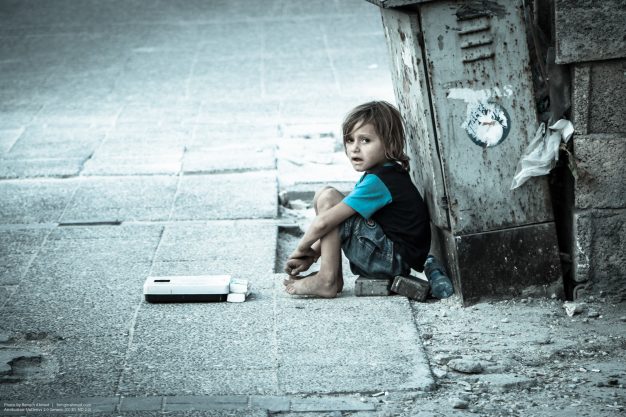
Why was the program discontinued if the child tax credit was proven to work and no taxpayer dollars were involved? We’ll discuss that later in this post.The child poverty rate in the United States more than doubled between 2021 and 2022, according to new data on poverty, income, and health insurance from the U.S. Census Bureau on Sept. 12.
A year after the rate hit a historic low of 5.2 percent, the percentage of impoverished children jumped to 12.4 percent.
The bureau pointed to the end of the pandemic-era expansion of child tax credits in late 2021 as a critical factor in the dramatic increases.
“This represents a return to child poverty levels before the pandemic,” Liana Fox, assistant division chief at the Census Bureau, said during a news conference, per the Associated Press. “We did see the child tax credit substantially decreased child poverty.”
The federal government can cure inflation by using its infinite money-creation power to acquire scarce items and/or reduce business expenses.The increase was “part of a wider rise in poverty recorded by the Census,” Time noted, “some of which can be attributed to inflation.” However, child advocates said, “the leap was particularly stark for kids — and was avoidable,” the outlet added.
Why did Congress favor giving more to the rich and less to the poor? Logically, it should be the other way around. But the rich make bigger campaign contributions. It’s that simple.How did the rate go from a record low to more than doubling in one year? During the pandemic, Congress expanded the child tax credit as a part of the American Rescue Plan, which helped families stay afloat alongside stimulus checks.
Families received up to $3,600 for kids under 6 and $3,000 for children aged 6 to seventeen.
Officials also made the tax credit refundable, meaning families who did not make enough money to owe income tax could still be eligible for the monthly payments. This allowed millions of low-income families to be qualified and helped drive the child poverty rate to its lowest level in years.
That progress was reversed when the pandemic relief lapsed, and Congress did not vote to extend the expanded child tax credit at the end of 2021. With the program ending, millions of families lost eligibility for the credit.
The child tax credit can sometimes be considered “an upside-down policy,” Sharon Parrott, president of the Center on Budget and Policy Priorities, told NPR. “That’s because the children who need it the most get the least, while higher income children get more.”
That means when the pandemic relief ended, many families no longer reached the income requirement to qualify for the credit.
In contrast, families making six-figure incomes still get the full tax credit, Parrott explained. The child credit is income-based, so the more money you make, the more you earn per child.
The rich have convinced the voting public that the poor are lazy takers whose poverty results from their sloth. “If only they worked harder like I do,” goes the mantra, “they wouldn’t be poor.” It’s all a convenient lie to excuse cruelty and lack of compassion. If anything, the poor work harder than the rich. They are tasked with the most menial, least pleasant, most demeaning, least rewarding, back-breaking jobs our society offers. More than any other fact, luck separates the poor from the rich. “There, but for the grace of God, go I.”The data highlights “that poverty in our country isn’t a personal failing, but rather a policy choice,” said Melissa Boteach, vice president of income security at the National Women’s Law Center, per Time.
Legislators could “lift millions of women and children out of poverty” if they “prioritize families over their wealthy donors,” Boteach added.
That’s the WSJ expression of the “lazy takers” poverty theory. If someone doesn’t have a job, that “proves” they don’t deserve help. It’s a disgusting lie promulgated to support cruelty and indifference. “I am a good person, but I don’t give to charity because (fill in the blank).If the expanded tax credit was working, why wasn’t it extended? President Biden blamed congressional Republicans for not extending the expanded child tax credit, arguing that the rise reported by the Census was “no accident.”
But the push to expand the child tax credit reached a stalemate in Congress, with opposition from Democrats and Republicans. “One flash point was an insistence by some lawmakers that it should go only to families with working parents,” wrote The Washington Post editorial board.
Think about it. Some 0f the financially fortunate in Congress felt that people receiving $3,600 to support a child for a year would not look for work. Only the clueless would believe such nonsense. Others falsely claimed that increasing the federal deficit would exacerbate inflation. (They had no objections to the gigantic tax loopholes enjoyed by the rich, which further increased the deficit.) When Donald Trump paid only $500 in total annual taxes for income that otherwise would have resulted in many millions of tax dollars, he alone increased the deficit by more than several thousand poor people receiving child tax credits.Others objected because they felt the money would discourage people from working and fuel inflation, which was already at a record high.
Manchin’s disturbing suggestions were:. If you give anything to the poor, they’ll blow it on booze, cigarettes, and drugs rather than feeding their children. If you’re one of the (mostly) right-wingers who like to make that claim, I genuinely feel sorry for the terrible job your parents did on you. They made you into a small, mean-spirited excuse for a person.Sen. Joe Manchin (D-W.Va.) reportedly suggested that parents would use the extra money on drugs, per Intelligencer, and he later opposed his party’s Build Back Better budget proposal, which included an extension to the child tax credit program.
The irony is that when states spend money, their taxpayers fund the dollars, unlike federal taxpayers, who fund nothing. And here’s a cute switch by the increasingly right-wing extremist Wall Street Journal:On a smaller scale, it’s “encouraging that 13 states have a version of the tax credit in place,” the Post editorial board reported. Most are blue states, but “there are also programs in conservative states such as Idaho and Oklahoma, where lawmakers understand how effectively it works,” the board noted.
Get it? The Wall Street Journal tells its gullible readers that helping the poor is bad for the economy and even bad for the poor! (As though that right-wing paper gives a fig about the well-being of the poor.) In the lying words of the hate-mongers, giving to the poor encourages unemployment, drugs, inflation, and amazingly, even makes the poor and their children poorer. (Never mind that the child poverty rate more than doubled when the child tax credit ended.) Perhaps the death of the WSJ’s owner, Rupert Murdoch, will help this paper come to some semblance of accuracy, though it has not yet improved the equally extremist Fox News. SUMMARY Giving money to the poor makes them less poor, doesn’t cause inflation, doesn’t increase illegal drug use, doesn’t increase unemployment, doesn’t threaten America’s solvency, and doesn’t cost taxpayers a thing. In answer to the title question, “Is the problem cruelty, ignorance, or greed”? The answer, of course, is: All three. And it applies to Washington and the voting public. Rodger Malcolm Mitchell Monetary Sovereignty Twitter: @rodgermitchell Search #monetarysovereignty Facebook: Rodger Malcolm MitchellThe temporary infusion of cash provided by the child tax credits and other pandemic stimulus programs contributed to “an inflation surge that gutted real incomes.”
Manchin was right to oppose a program that would have cost $1.2 trillion over the next decade.
The U.S. doesn’t need more inflationary spending that disproportionately “punishes lower-income Americans.”
……………………………………………………………………..
The Sole Purpose of Government Is to Improve and Protect the Lives of the People.
MONETARY SOVEREIGNTY

 #Monetary Sovereignty - Mitchell