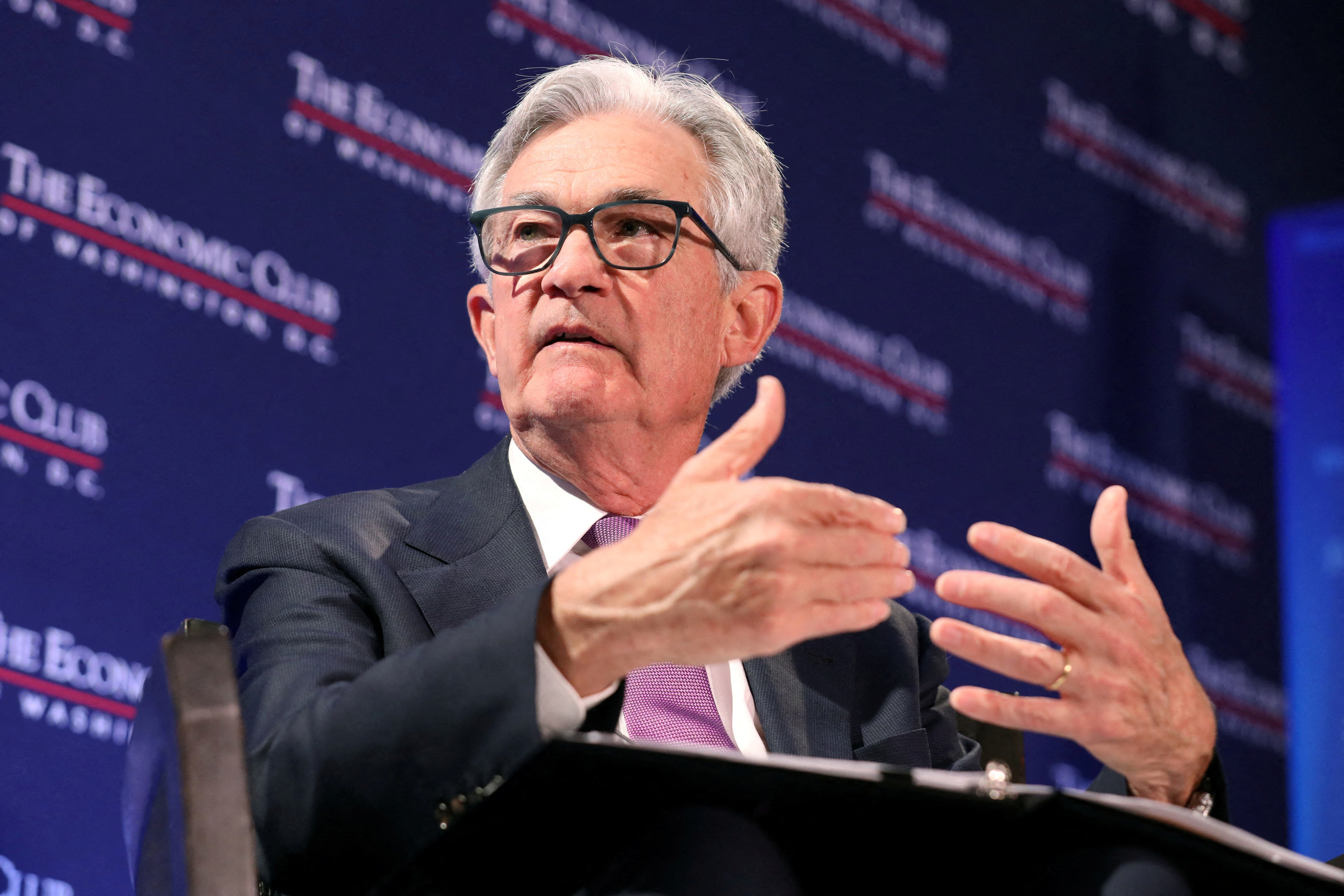
In the previous post, “Truly pitiful: Federal false helplessness in the face of inflation,” we discussed Federal Reserve Chairman Jerome Powell’s strange attempt to fight inflation by, of all things, raising prices!
Yes, that is precisely what he does when he raises interest rates, his sole inflation-fighting tool. Those higher interest rates increase the prices of virtually every product and service.
When businesses borrow, which most companies do, the higher interest increases their costs, which they must recoup by raising prices.
When farmers borrow, which most farmers do to pay for planting, they include interest costs in their selling prices when they harvest.
When you rent an apartment or house, the owner’s higher mortgage interest cost is reflected in your rental payment.
You may wonder, as I do, how the Fed (and many economists) concluded that raising interest rates reduced the prices of goods and services.
I suspect it comes from the belief that inflation comes from too much buying (Powell’s “overheated” economy). No one knows what an “overheated” economy is, but the phrase makes it sound like Powell knows what he’s talking about.
Since raising interest rates discourages people from borrowing, that seemingly would fight inflation. Of course, inflation itself discourages people from buying, so Powell intentionally causes inflation to cure inflation.
And if that weren’t nonsensical enough, discouraging people from buying is, by definition, causing a recession.
In short, Powell wants to cure inflation by causing it; to do so, he tries to cause a recession without actually causing one. If you understand it, please let me know.
Powell wants us to believe he is a baton-wielding maestro, using interest rates to masterfully conduct our economy as if it were a symphony orchestra, and he expertly navigates between inflation and recession.
In reality, he’s more like a carpenter with onlyone tool, a hammer, using it to remove scratches from furniture.
Here is an article that attempts to describe what I believe is the primary confusion he and his fellow economists suffer.
Inflation occurs when the prices of goods and services increase over a long period of time, causing your purchasing power to decrease.
High inflation can occur as the result of a variety of factors. However, economists often divide the root causes into two categories: demand-pull inflation and cost-push inflation.
And there it is. The common, perhaps universal, belief is that inflation either is demand-pull or cost-push.
I guess you’ve heard those terms. Most economics texts contain them. But what exactly do they mean? A few paragraphs later, the article will explain. But first, a bit of misinformation:
Soaring prices are not caused by “excessive” federal spending or by low interest rates. So, inflation cannot be cured by reduced federal spending or by raising interest rates.
Inflation is a normal part of the world’s economic cycles.
The concept that inflation is “normal” and is part of the world’s “economic cycles” is designed to make you believe it’s inevitable. It isn’t.
Inflation is not “normal.” It’s abnormal. Nothing is “normal” about inflations, hyperinflations, stagflations, recessions, or depressions. To call them “normal” is to call smallpox and broken legs, “normal.”
And it’s not part of any economic “cycle.” The definition of “cycle” is: “A round of years or a recurring period, especially when certain events or phenomena repeat themselves in the same order and at the same intervals.
To call inflations regular “cycles” is to say, “It’s no one’s fault. They just happen and are to be expected.” Inflations don’t just happen. They are caused by mismanagement and/or extraordinary events and certainly do not repeat at the same intervals.
Inflation occurs when the prices of goods and services increase over a long period of time, causing your purchasing power, or the amount of goods and services you can buy with a single unit of currency, to decrease.
In short, inflation means that your money may not be able to buy as much today as it could in the past.
That sounds exactly like what Powell’s raising interest rates does.
But why does inflation happen in the first place?
It often comes down to an imbalance between two different economic forces: supply and demand. Supply describes how much of a good or service is made and sold, and is driven by the businesses that are selling the good or service.
Demand, on the other hand, refers to how much of a good or service is purchased at a specific price, and is driven by consumers. If demand outpaces supply, inflation tends to follow.
Economists often divide the root causes into two categories: demand-pull inflation and cost-push inflation.
Demand-pull inflation is driven by an increase in total consumer demand. If consumers suddenly start spending more money than usual, businesses may find themselves selling more goods and services than they anticipated.
If these businesses are unable to keep up with the increased consumer demand, their remaining stock becomes more valuable, and prices may rise.
This kind of inflation tends to happen during periods of high consumer confidence, such as when unemployment rates are low and wages are high.
Cost-push inflation occurs when production costs rise. Unrelated to consumer demand, these increased production costs may lead to a decrease in total supply and a subsequent increase in prices to compensate.
These definitions exhibit some of the usual confusion about inflation. Inflation occurs when production costs rise (as was caused by Powell’s interest rate increases — to fight inflation).
Scarcity causes prices to rise. To cure inflation, the federal government should fund increased production of scarce goods.
However, increased production costs don’t lead to a decrease in total supply. It’s the reverse. A shortageof raw materials, parts, and labor leads to increased production costs.
This kind of inflation is commonly observed when the price of oil increases, making manufacturing operations more expensive. For example, the 1970s energy crisis was largely responsible for the cost-push inflation that occurred during that time period.
The energy crisis of the 1970s was very simply an oil shortage causing prices to increase—period. In fact, all inflations in history have been caused by shortages, most recently shortages of oil and/or food.
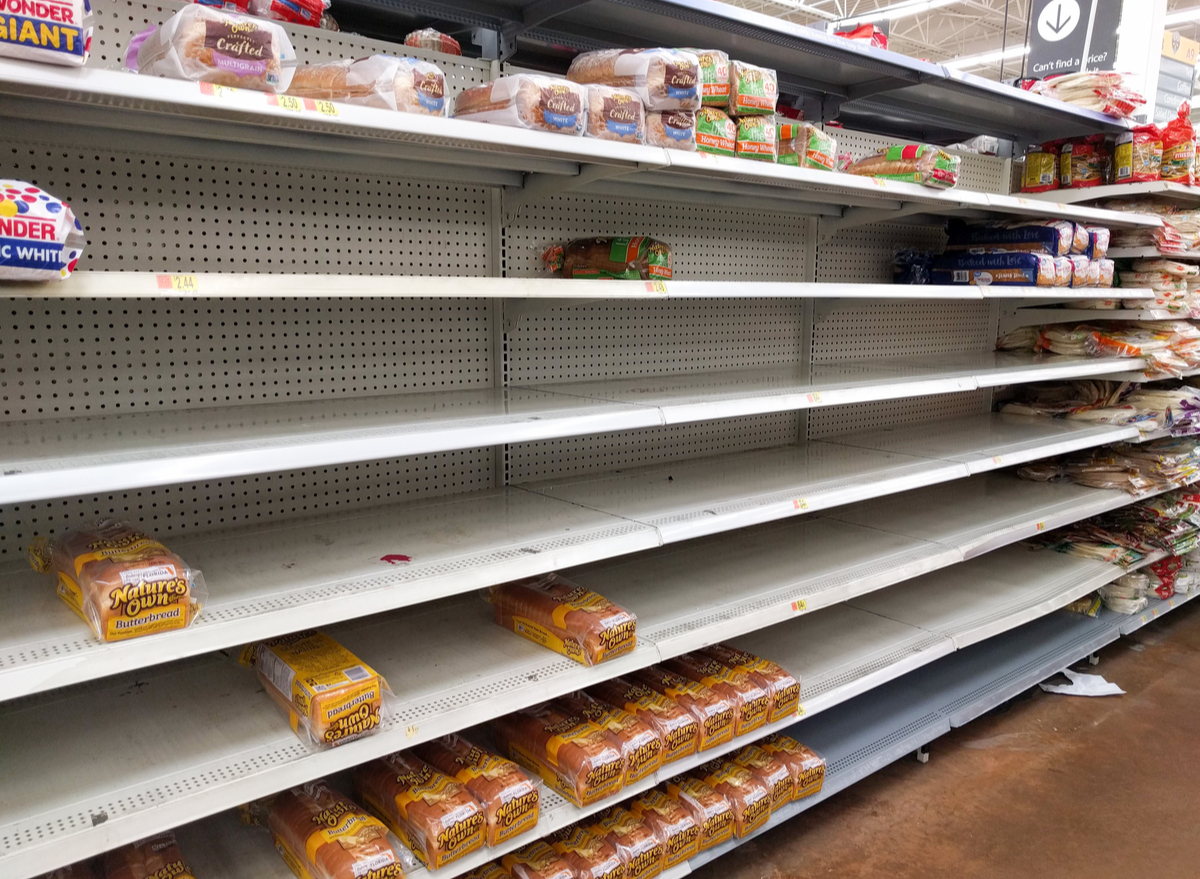
The still-current inflation was caused by COVID-19, which led to shortages of oil, food, lumber, steel, paper, computer chips, labor, and almost any other product or service.
It was not “cost-push.” It was not “demand-pull.” COVID-19 kept people home. We had a shortage of labor, which led to other shortages.
There is no “demand-pull inflation.” Consumers did not “suddenly start spending more money than usual.” They never do.
Consumers might suddenly start buying Furby dolls, Taylor Swift albums, or Ozempic® for weight loss, but consumers never suddenly start spending more money.
As for “cost-push” inflation, this is akin to saying, “The cause of inflation is inflation.” Cost-push is a meaningless definition.
Every inflation in world history has been caused by a shortage of critical goods and services, notably oil and/or food, which then causes other products and services to suffer shortages.
It’s also possible for inflation to result from factors unrelated to the economy. Natural disasters or major world events can disrupt supply chains and reduce theamount of goods available, driving up prices on the stock that remains.It’s also possible for a combination of these factors to occur simultaneously or for one to occur as the result of another.
In other words, all inflations are caused by shortages and not by excessive government spending, as so many economists claim.
How does inflation affect interest rates? Inflation is a complex issue, but one way to control it is through federal monetary policy.
When the Federal Reserve — America’s central banking system, also known as the Fed — detects rising inflation rates, it responds by raising the federal funds rate. This is a special interest rate related to lending between commercial banks.
An increase in the federal funds rate causes a corresponding rise in interest rates on auto loans, mortgages and other types of credit, making it more expensive to borrow money.
Increases in the cost of borrowing money can help to slow down consumer and business spending, allowing supply chains to catch up to the production of goods and services, which can in turn lead to a drop in prices.
Jerome Powell seems to say: “I cure inflation by raising the prices of everything you buy. If I were a doctor, I would cure anemia by applying leeches. Do you understand?”
Said simply, “The increased cost of borrowing increases the cost of goods and services, aka ‘inflation.’ The Fed fights inflation by causing more inflation.”
Ideally, this curbs inflation and stabilizes supply and demand without longer-term consequences such as a recession. When inflation is low once again, the Fed may decide to decrease interest rates, making it easier to borrow money and encouraging spending.
Wait! If high interest rates cure inflation, one should expect low rates to cause inflation.
But that hasn’t happened. For much of a decade, interest rates approached zero, and inflation was low. Only when the COVID-caused shortages hit did we have inflation.
The cause of inflation is scarcities of critical goods and services, mostly oil and food; how should we cure inflation? Cure the scarcity of oil and food.
Although Congress assigned the cure-inflation assignment to the Fed, Congress and the President have the tools to cure inflation, while the Fed does not.
The federal government has the infinite power to create stimulus dollars that would help the producers of scarce products to produce more.
Are we short of oil, food, computer chips, lumber, steel, paper, and shipping? Then, the federal government should give money and tax breaks to domestic producers and importers to alleviate the shortages.
Don’t try to cut federal spending, as many economists advise. Contrary to popular wisdom, federal spending has never caused inflation. If directed appropriately, it can cure inflation.
Those vivid photos of people pushing wheelbarrows full of currency are misleading. Printing higher currency paper didn’t cause hyperinflation; it was a harmful response to existing shortages.
Rodger Malcolm Mitchell
Monetary SovereigntyTwitter: @rodgermitchellSearch #monetarysovereigntyFacebook: Rodger Malcolm Mitchell
……………………………………………………………………..
The Sole Purpose of Government Is to Improve and Protect the Lives of the People.
Powell: I know that inflation hurts, but I’m going to try to reduce inflation without causing a recession.
Alice: Our landlord said he has to raise our rent because his costs have increased. I can’t afford that. What can you do about it?
P: I’m going to raise interest rates.
Alice: But that will increase my landlord’s costs. Won’t that make the situation worse?
P: Raising interest rates is what I always do to fight inflation. It may not really work, but the politicians think it does, so it’s what I do
A: There’s a food shortage, so our food costs have gone up. I can’t afford to feed my children. What can you do about that?
P: I’m going to raise interest rates.
A: But that won’t help the food shortage. It only will make it harder for farmers to borrow., which will increase farmers’ costs? How will that lower food prices?
P: It won’t, but I also plan to sell off my T-bonds.
A: I don’t know much about T-bonds, but won’t that take money out of the economy? How does taking money out of the economy help the food shortage?
P: Beats me.
A. And the price of gas has gone up due to a shortage of oil. What are you doing about that?
P: I’m going to raise interest rates and sell off my T-bonds.
A: How does raising interest rates and selling off bonds increase gas supply?
P: It doesn’t, but it’s what I do. I think it’s supposed to cool the economy, which by definition, is a recession.
A: You want to cause a recession — a reduction in trade and industrial activity?
P: Yes, but please don’t call it a recession. Let’s call it “a cooling process.”
A: I’m unemployed. I easily could get a job, but when I pay FICA taxes and income taxes, and my employer pays his share of FICA and our healthcare insurance policy, my net take-home pay won’t cover inflation. What are you doing about that?
P: I’m going to raise interest rates and sell off my T-bonds.
A: Will that increase my net take-home pay?
P: Of course not. I can’t eliminate FICA, provide Medicare for All, or increase the Standard Deduction, all of which would increase your net pay.
I also can’t stop taxing Social Security benefits and IRA distributions to provide you with more long term net pay.
But, raising interest rates and selling off my bonds is what I do. It doesn’t work, but it makes me look prudent.
A: I understand there’s a shortage of computer chips, which causes a shortage of everything that uses computer chips, and those shortages cause the prices of almost everything electric to increase. What can you do about that?
P: The usual. I’m going to raise interest rates and sell off my T-bonds.
A: Again, how will that cure the shortage of computer chips?
P: It won’t. It only will make borrowing more expensive, and there’ll be less money in the economy, so people like you will have less money to spend. Fundamentally, I’m going to impoverish you to fight the shortage of goods and services that is causing inflation.
A. That’s crazy. Why make borrowing more expensive, which is recessive, and take money out of the economy, which also is recessive?
Recession isn’t the opposite of inflation. Deflation is the opposite of inflation. Your policies could cause stagflation, which is even worse.
The only way to reduce prices without a recession is to cure the causes of inflation: Shortages of key goods and services.
P: Sure, you know that, but the public doesn’t. They think I know what I’m doing.
A: While we’re talking about inflation, and everything being more expensive, the cost of medical insurance has gone up. There’s a shortage of doctors, nurses, and hospital beds, along with a shortage of medical equipment. What can you do about all those shortages that are causing medical inflation?
P: Don’t you get it? I can’t cure shortages of anything — not shortages of food, nor oil, nor houses, nor computer chips, nor shipping, nor doctors, nor nurses, nor hospital beds — nothing. I have no control over the shortages that are causing inflation.
All I can do is cause a shortage of money, and that, together with all those other shortages will cause the economy to cool, in other words, a . . . .
A: Recession.
P: Or maybe, that stagflation thing. In short, I actually will cause a recession to cure inflation, but I won’t call it a recession. Let’s call it “prudent management.”
A: So if you can’t cure the inflation without causing a recession or, God forbid, a depression, who can?
P: Congress and the President have the power to cure the shortages that cause inflation, and not cause a recession or depression.
To cure the shortages of food, Congress can pay farmers to grow. Previously we’ve paid them not to grow, so prices would be higher.
Now we can reverse that.
A: And oil shortages, computer chip shortages, shipping shortages, and labor shortages?
P: Yes, I’ll let you in on a little secret. Congress and the President could pay to solve all those shortages, which would bring down prices. They have the power.
All I can do is fiddle with interest rates.
A: So why . . . ?
P: Today’s Congress is hopeless.
The Republicans don’t care about the economy. All they want to do is win elections.
So they act outraged about everything, but they don’t have actual plans to do anything about the economy.
Let’s face it, white supremacists, bigots, anti-vaxers, anti-gay, anti-immigrant, anti-Mulsim, and anti-black dummies storming Congress are not the kind of people likely to have created coherent plans to improve the economy.
The Dems want to grow the economy, but they think federal spending to cure shortages would cause, not cure, inflation.
Frankly, I don’t understand how curing the shortages of food, oil, computer chips, labor, etc., etc., etc,. could cause inflation, but the Dems are terrorized by the word “debt.”
A: But isn’t debt bad?
P: Nah, debt is bad only if you can’t afford to pay for it. But the federal government never can run short of its own sovereign currency, the U.S. dollar. It can pay off any size of debt instantly, without levying a penny in taxes.
A: So why don’t you just tell the American people all this? Why do you pretend you can cure inflation without causing a recession or depression when you know you can’t.
P: There’s an old story that comes to mind:
The King sentenced a man to death. The man pleaded, “If you spare me, I promise that in one year, I will teach this pig to fly.”
The King laughed and said, “I will give you one year. If the pig doesn’t fly, I will kill you myself.”
When the man’s friends asked him how he could make such a ridiculous promise, the man replied, “Much can happen in a year. The pig might die; the King might die, or I might die.
“Or who knows, I might teach the pig to fly.”
So much could happen in a year. We could go to war with Russia or China, and everyone would forget about inflation. A meteor could fall on Washington. COVID could act up again. The Supreme Court could outlaw gays.
Many things could divert our concerns from inflation.
And maybe pigs will fly.
In any event, Powell’s claims have bought him some lucrative time as Chair of the Fed (over $200K per year, plus many great benefits), and who knows, inflation might just go away, and he’d get accolades, whether or not we had a recession.
It worked for Paul Volcker.
Rodger Malcolm Mitchell
Monetary SovereigntyTwitter: @rodgermitchellSearch #monetarysovereigntyFacebook: Rodger Malcolm Mitchell
……………………………………………………………………..
THE SOLE PURPOSE OF GOVERNMENT IS TO IMPROVE AND PROTECT THE LIVES OF THE PEOPLE.
Gap Psychology describes the common desire to distance oneself from those “below” in any socio-economic ranking, and to come nearer those “above.” The socio-economic distance is referred to as “The Gap.”
Wide Gaps negatively affect poverty, health and longevity, education, housing, law and crime, war, leadership, ownership, bigotry, supply and demand, taxation, GDP, international relations, scientific advancement, the environment, human motivation and well-being, and virtually every other issue in economics.Implementation of Monetary Sovereignty and The Ten Steps To Prosperity can grow the economy and narrow the Gaps:
Ten Steps To Prosperity:

 Powell: I know that inflation hurts, but I’m going to try to reduce inflation without causing a recession.
 Alice: Our landlord said he has to raise our rent because his costs have increased. I can’t afford that. What can you do about it?
P: I’m going to raise interest rates.
Alice: But that will increase my landlord’s costs. Won’t that make the situation worse?
P: Raising interest rates is what I always do to fight inflation. It may not really work, but the politicians think it does, so it’s what I do
A: There’s a food shortage, so our food costs have gone up. I can’t afford to feed my children. What can you do about that?
P: I’m going to raise interest rates.
A: But that won’t help the food shortage. It only will make it harder for farmers to borrow., which will increase farmers’ costs? How will that lower food prices?
P: It won’t, but I also plan to sell off my T-bonds.
A: I don’t know much about T-bonds, but won’t that take money out of the economy? How does taking money out of the economy help the food shortage?
P: Beats me.
A. And the price of gas has gone up due to a shortage of oil. What are you doing about that?
P: I’m going to raise interest rates and sell off my T-bonds.
A: How does raising interest rates and selling off bonds increase gas supply?
P: It doesn’t, but it’s what I do. I think it’s supposed to cool the economy, which by definition, is a recession.
A: You want to cause a recession — a reduction in trade and industrial activity?
Alice: Our landlord said he has to raise our rent because his costs have increased. I can’t afford that. What can you do about it?
P: I’m going to raise interest rates.
Alice: But that will increase my landlord’s costs. Won’t that make the situation worse?
P: Raising interest rates is what I always do to fight inflation. It may not really work, but the politicians think it does, so it’s what I do
A: There’s a food shortage, so our food costs have gone up. I can’t afford to feed my children. What can you do about that?
P: I’m going to raise interest rates.
A: But that won’t help the food shortage. It only will make it harder for farmers to borrow., which will increase farmers’ costs? How will that lower food prices?
P: It won’t, but I also plan to sell off my T-bonds.
A: I don’t know much about T-bonds, but won’t that take money out of the economy? How does taking money out of the economy help the food shortage?
P: Beats me.
A. And the price of gas has gone up due to a shortage of oil. What are you doing about that?
P: I’m going to raise interest rates and sell off my T-bonds.
A: How does raising interest rates and selling off bonds increase gas supply?
P: It doesn’t, but it’s what I do. I think it’s supposed to cool the economy, which by definition, is a recession.
A: You want to cause a recession — a reduction in trade and industrial activity?
 #Monetary Sovereignty - Mitchell