They feed you garbage to improve your health.

Is this article about the meaningless Debt/GDP ratio ignorance or malevolence? I suspect it’s not ignorance. These people should know better. But they keep writing this nonsense. Why?
Bhargavi Sakthivel
I have my suspicions, which I’ll voice later, but first, here are some excerpts from a frightening example.”

A million simulations, one verdict for economy: Debt danger ahead Bhargavi Sakthivel,  Maeva Cousin, and David Wilcox, Bloomberg News 

In its latest projections, the Congressional Budget Office warned that U.S. federal government debt will increase from 97% of GDP last year to 116% by 2034—higher than in World War II. The actual outlook is likely worse.

“Worse”? Why is an increase in the so-called “federal debt” (that isn’t federal and isn’t debt) bad? When you read the article, you’ll find that they never say. They just assume it.

Rosy assumptions underpin the CBO forecasts released earlier this year, covering everything from tax revenue to defense spending and interest rates. When you factor in the market’s current view on interest rates, the debt-to-GDP ratio rises to 123% in 2034.

Then assume — as most in Washington do — that ex-President Donald Trump’s tax cuts mainly stay in place, increasing the burden.

What “burden”? And on whom is the “burden”? Here are seven reasons why the so-called “federal debt” isn’t federal, isn’t debt, and isn’t a burden on anyone. 1. The federal government is Monetarily Sovereign. It has the infinite ability to pay its bills. Even if the government owed the “federal debt,” it instantly could create the dollars to pay it off.

Statement from the St. Louis Fed: “As the sole manufacturer of dollars, whose debt is denominated in dollars, the U.S. government can never become insolvent, i.e., unable to pay its bills. In this sense, the government is not dependent on credit markets to remain operational.”

Quote from former Fed Chairman Ben Bernanke when he was on 60 Minutes: Scott Pelley: “Is that tax money the Fed is spending?” Ben Bernanke: “It’s not tax money… We simply use the computer to mark up the size of the account.”

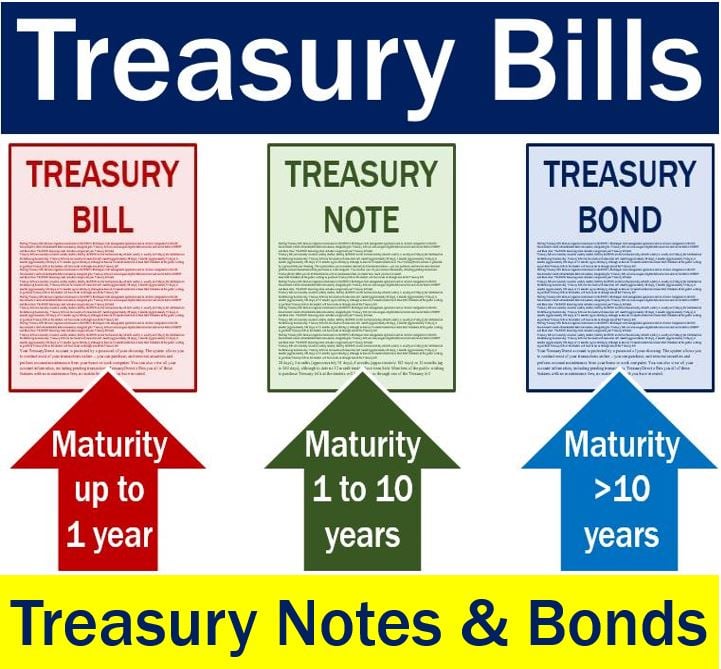
2. The so-called “federal” debt isn’t federal. It is the total of deposits into Treasury Security accounts, the contents of which are wholly owned by the depositors. The federal government doesn’t use those deposits for spending. They sit in the account, earning interest, until maturity, when the government transfers them to the owners’ checking accounts. Because the government doesn’t take ownership of the dollars, the government doesn’t owe the dollars. These accounts resemble bank safe deposit boxes where the contents are not bank debt. They are merely held for safekeeping. Thus, as with safe deposit boxes, the contents of T-security accounts are neither federal nor debt. Even if the “debt” (deposits) were trillions of dollars, that would mean trillions were sitting in Treasury Security accounts, waiting to be returned, which could be accomplished by the touch of a computer key. 3. The debt does not burden the government (it has the infinite ability to pay) or taxpayers (who are never asked to pay for those deposits). 4. The deposits have nothing to do with Gross Domestic Product (GDP), a federal plus non-federal spending measure. Even if the “Debt”/GDP  ratio were 100, 1000, or 10,000, this would have nothing to do with the government’s ability to return the dollars in T-Security accounts. If you go to the Debt/GDP ratio by country, you will see a long list of nations and their Debt/GDP ratios. Examine those ratios; you cannot tell anything about the nations’ finances. The ratio says nothing about a nation’s ability to pay what it owes, its economic safety, or its money. It tells you nothing about the past, the present, or the future. It is a classic Apples/Audis comparison, signifying nothing. Sadly, even that country comparison website falsely states, “(The ratio) typically determines the stability and health of a nation’s economy and offers an at-a-glance estimate of a country’s ability to pay back its current debts.” Wrong. The ratio does neither of those things. For a Monetarily Sovereign nation like the U.S., UK, Canada, China, Japan, et al., the ratio says nothing about the stability and health of a nation’s economy or its ability to pay its current debt. Whether federal “Debt” (that isn’t debt) grows faster or slower than GDP means nothing.

With uncertainty about so many variables, Bloomberg Economics has run a million simulations to assess the fragility of the debt outlook. In 88% of the simulations, the results show the debt-to-GDP ratio is unsustainable — defined as an increase over the next decade.

A normal human being would define “unsustainable” as something that cannot be continued. Apparently, Bloomberg describes it as an increase. “Unsustainable” is a favorite word for “debt” fear-mongers because it absolves them of the requirement to explain what cannot be sustained. The U.S. federal debt has increased from about $40 billion in 1940 to about $30 trillion this year (an astounding 75,000% increase), and fear-mongers have told you it’s a “ticking time bomb.” It has been ticking for 84 years, and still no problems. The prognosticators seem not to learn from failure.

The Biden administration says its budget, which includes a series of tax hikes on corporations and wealthy Americans, will ensure fiscal sustainability and manageable debt-servicing costs.

Our Monetarily Sovereign government has infinite fiscal sustainability and can manage any debt-serving costs. In fact, the more interest the federal government pays, the more GDP increases.

GDP=Federal Spending + Nonfederal Spending + Net Exports.

Economic growth benefits from federal interest payments.

“I believe we need to reduce deficits and stay on a fiscally sustainable path,” Treasury Secretary Janet Yellen told lawmakers in February. Biden administration proposals offer “substantial deficit reduction that would continue to hold interest expense at comfortable levels.

But we would need to work together to achieve those savings,” she said.

I do not know why Janet Yellen would promulgate such ignorance or lies. The U.S. has infinite fiscal sustainability and can comfortably pay any interest.

Alan Greenspan: “A government cannot become insolvent concerning obligations in its own currency. There is nothing to prevent the federal government from creating as much money as it wants and paying it to somebody. The United States can pay any debt it has because we can always print the money to do that.”

The trouble is that delivering such a plan will require action from a Congress that’s bitterly divided on partisan lines.

Republicans, who control the House, want deep spending cuts to bring down the ballooning deficit without specifying precisely what they’d slash.

Democrats, who oversee the Senate, argue that spending contributes less to debt sustainability deterioration, with interest rates and tax revenues being the key factors.

To paraphrase the old saying, “There are lies, damned lies, and claims about the federal debt.” Here is what deep spending cuts accomplish:

 U.S. depressions to come on the heels of federal surpluses. 1804-1812: U. S. Federal Debt reduced 48%. Depression began in 1807. 1817-1821: U. S. Federal Debt reduced 29%. Depression began in 1819. 1823-1836: U. S. Federal Debt reduced 99%. Depression began in 1837. 1852-1857: U. S. Federal Debt reduced 59%. Depression began in 1857. 1867-1873: U. S. Federal Debt reduced 27%. Depression began in 1873. 1880-1893: U. S. Federal Debt reduced 57%. Depression began in 1893. 1920-1930: U. S. Federal Debt reduced 36%. Depression began in 1929. 1997-2001: U. S. Federal Debt reduced 15%. Recession began 2001.
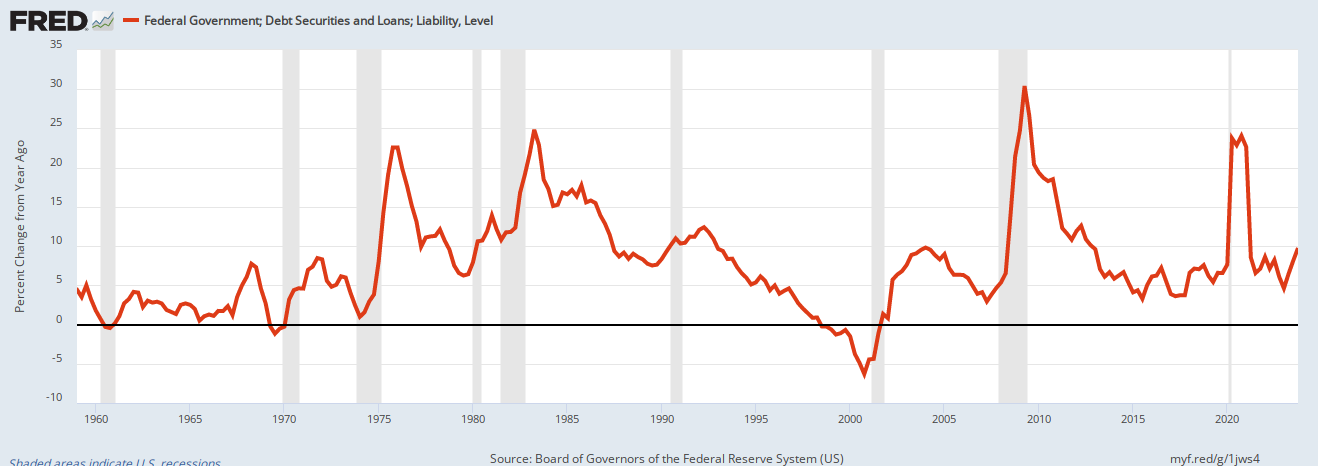
Here is what deficit cuts accomplish:
When deficits (red line) decline, we have recessions (vertical gray bars), which are cured by increased federal deficit spending.
Federal surpluses take dollars from the economy. Federal deficits add dollars to the economy. You can review the formula for GDP to see why the above effects occur.

Neither party favors squeezing the benefits provided by significant entitlement programs.

The public understands that federal spending helps the economy. One wonders why the “experts” don’t.

Ultimately, it may take a crisis — perhaps a disorderly rout in the Treasuries market triggered by sovereign U.S. credit-rating downgrades or a panic over the depletion of the Medicare or Social Security trust funds — to force action.

That’s playing with fire.

The credit-rating agencies have downgraded the U.S. credit, not because of high debt but because Congress threatened not to pay its bills with that ridiculous, useless “debt ceiling.” Congress always has the ability to pay its bills by creating dollars ad hoc. However, credit ratings will fall unnecessarily when Congress threatens creditors due to ignorance or political malevolence.

Last summer provided a miniature foretaste of how a crisis might begin. Over two days in August, a Fitch Ratings downgrade of the U.S. credit rating and an increase of long-term Treasury debt issuance focused investor attention on the risks.

Benchmark 10-year yields climbed by a percentage point, hitting 5% in October — the highest level in over a decade.

The federal government had no trouble pressing those computer keys that paid the interest. Further, the government didn’t need to pay higher interest; it set the bottom interest rate, and if there was no threat to paying, that will be the rate. For years following the “Great Recession of 2008, federal deficits increased massively, and interest rates stayed near zero. The government and Federal Reserve have the tools to control spending and interest rates.
The Federal Reserve sets interest rates to control inflation, not to help the government pay interest.

Shaking investor confidence in U.S. Treasury debt as the ultimate safe asset would take a lot.

If it evaporated, though, the erosion of the dollar’s standing would be a watershed moment, with the U.S. losing access to cheap financing and global power and prestige.

Yes, “it would take a lot” — a lot more than deficit spending, which, though massive, has not caused the “unsustainability” that the Henny Pennys fret about.

By law, the CBO is compelled to rely on existing legislation. That means it assumes the 2017 Trump tax cuts will expire in 2025. However, even President Joe Biden wants some of them extended.

According to the Penn Wharton Budget Model, permanently extending the legislation’s revenue provisions would cost about 1.2% of GDP each year starting in the late 2020s.

Hmmm.  Extending tax cuts (which allows the private sector to spend more money) would cost 1.2% of GDP each year—strange mathematics.

The CBO also must assume that discretionary spending, which Congress sets each year, will increase with inflation rather than keep pace with GDP.

What?? Discretionary spending will increase with inflation but not keep pace with GDP. If I read that correctly, the author warns that GDP will grow faster than inflation. And that’s a bad thing??

Market participants aren’t buying the benign rates outlook, with forward markets pointing to borrowing costs markedly higher than the CBO assumes.

Borrowing costs are determined by the Fed, which (wrongly) believes raising interest rates (which increases the prices of everything you buy) is a good way to fight inflation! If you can figure that one out, let me know. I can’t.

Bloomberg Economics has built a forecast model using market pricing for future interest rates and data on the maturity profile of bonds. Keeping all the CBO’s other assumptions in place shows debt equaling 123% of GDP for 2034.

Which is meaningless.

Debt at that level would mean servicing costs reach close to 5.4% of GDP — more than 1.5 times as much as the federal government spent on national defense in 2023, comparable to the entire Social Security budget.

All it means is that our Monetarily Sovereign government will create more growth dollars and add them to GDP. Is that supposed to be a problem? Mathematically, increases in federal spending increase economic growth.

Heavyweights from across the political spectrum agree the long-term outlook is unsettling.

Fed Chair Jerome Powell said earlier this year that it was “probably time—or past time” for politicians to start addressing the “unsustainable” path of borrowing.

The federal government does not borrow. T-bills, T-notes, and T-bonds do not represent borrowing. They represent deposits into Treasury Security accounts — money the federal government neither needs nor touches. The purpose of those accounts is not to provide spending money to a Monetarily Sovereign government but to provide a safe place to store unused dollars. This stabilizes the dollar.

Former Treasury Secretary Robert Rubin said in January that the nation is in a “terrible place” regarding deficits.

From the realm of finance, Citadel founder Ken Griffin told investors in a letter to the hedge fund’s investors Monday that the U.S. national debt is a “growing concern that cannot be overlooked.”

Days earlier, BlackRock Inc. Chief Executive Officer Larry Fink said the U.S. public debt situation “is more urgent than I can ever remember.”

Ex-IMF chief economist Kenneth Rogoff says while an exact “upper limit” for debt is unknowable, challenges will arise as the level keeps going up.

Rogoff’s broader point is well taken: forecasts are uncertain. To mitigate this uncertainty, Bloomberg Economics has run a million simulations on the CBO’s baseline view—an approach economists call stochastic debt sustainability analysis.

Ooooh! “Stochastic sustainability analysis.” And they did it a million times. How many of those times included the fact that the Monetarily Sovereign U.S. government never can run short of dollars to pay its bills and interest? Not yesterday, not today, not tomorrow, not ever? “stochastic” means: “Having a random probability distribution or pattern that may be analyzed statistically but may not be predicted precisely.”

Each simulation forecasts the debt-to-GDP ratio with a different combination of GDP growth, inflation, budget deficits, and interest rates, with variations based on patterns seen in the historical data.

In the worst 5% of outcomes, the debt-to-GDP ratio ends in 2034 above 139%, which means the U.S. would have a higher debt ratio in 2034 than crisis-prone Italy did last year.

But the ratio means nothing. It tells you nothing about “sustainability.” More importantly, the proof of abject ignorance comes with those last few words: “crisis-prone Italy.” OMG. They are too ignorant to understand the differences between a Monetarily Sovereign entity and a monetarily non-sovereign entity. Italy is monetarily non-sovereign. It can run short of euros. The U.S. is Monetarily Sovereign. It cannot run short of dollars (unless Congress continues with the foolish debt-limit nonsense.) It’s like claiming that birds can’t fly because elephants can’t fly.

The Treasury chief herself acknowledged in a Feb. 8 hearing that “in an extreme case,” there could be a possibility of borrowing reaching levels that buyers wouldn’t be willing to purchase everything the government sought to sell. She added that she saw no signs of that now.

I assume she’s talking about buyers of T-securities. Surely she knows that:
  1. The federal government doesn’t need to sell T-securities. They don’t provide the government, as a dollar creator, with anything. They provide dollar users with safe storage.
  2. If the government had a yen to sell more T-securities, it could always raise interest rates.

Getting to a sustainable path will require action from Congress. Precedent isn’t promising. Disagreements over government spending came to a head last summer when a standoff over the debt ceiling brought the U.S. to the brink of default.

The deal to halt the havoc suspended the debt ceiling until Jan. 1, 2025, postponing another clash over borrowing until after the presidential election.

This is what ignorance causes. It is an unnecessary battle over a meaningless number to reach a fruitless conclusion. And these are the geniuses we elect to Congress.

It’s hard to imagine a U.S. debt crisis. The dollar remains the global reserve currency. The annual and unseemly spectacle of government shutdown brinksmanship typically leaves barely a ripple on the Treasury market.

A fictional “debt crisis” (the U.S. federal government unable to create dollars?) has nothing to do with the dollar being the leading “reserve currency.” A reserve currency is just money banks keep in reserve to facilitate international trade. Though the U.S. dollar is a leader, other currencies are reserve currencies, depending on geography: The euro, the Canadian dollar, the Mexican peso, China, Japan, Australia, etc. all produce currencies that banks keep in reserve. There is no magic in being a reserve currency. And it does nothing to prevent a “debt crisis.

Still, the world is changing. China and other emerging markets are eroding the dollar’s role in trade invoicing, cross-border financing, and foreign exchange reserves.

This has nothing to do with any “debt crisis” or the Debt/GDP ratio.

Foreign buyers make up a steadily shrinking share of the U.S. Treasuries market, testing domestic buyers’ appetite for ever-increasing volumes of federal debt.

It’s not federal; it’s not debt, and it’s not a problem.

And while demand for those securities has lately been supported by expectations for the Fed to lower interest rates, that dynamic won’t always be in play.

The federal government doesn’t need to issue T-securities. It creates all its dollars by spending them. The spending comes first, and then it creates dollars.

Herbert Stein, head of the Council of Economic Advisers in the 1970s, observed that “if something cannot go on forever, it will stop.” If the U.S. doesn’t get its fiscal house in order, a future U.S. president will confirm the truth of that maxim. And if confidence in the world’s safest asset evaporates, everyone will suffer the consequences.

Given that the U.S. government has the infinite ability to create dollars, the endless ability to pay interest, the limitless ability to control interest rates paid by Treasuries, and the infinite ability to pay for anything, anytime, that sounds like the fiscal house is in good order. Because the debt-GDP ratio is meaningless, the following paragraphs are purely for entertainment purposes and should not be taken seriously. I have bolded the more humorous parts:

Methodology Bloomberg Economics uses the latest long-term CBO projections’ baseline fiscal and economic outlook—including the effective interest rate, primary budget balance as a percent of GDP, inflation as measured by the GDP deflator, and real GDP growth rate—as a starting point for the analysis. To calculate the debt-to-GDP ratio using market forecasts for rates, we substitute forward rates as of March 25, 2024, and project future effective rates on federal debt based on a detailed bond-by-bond analysis. To forecast the distribution of probabilities around the CBO’s baseline debt-to-GDP view, we conduct a stochastic debt-sustainability analysis: —We estimate a VAR model of short- and long-term interest rates, primary balance-to-GDP ratio, real GDP growth rate, and GDP deflator growth using annual data from 1990 to 2023. The covariance matrix of the estimated residuals is then used to draw one million sequences of shocks. —We use data on the maturities of individual bonds to map short- and long-term interest-rate shocks to the effective interest rate paid on U.S. federal debt. —Using this model, Bloomberg Economics considers two definitions of sustainability. First, we check if the debt-to-GDP ratio increases from 2024 to 2034. Second, we examine if the average inflation-adjusted interest expense, scaled by nominal GDP, over the ten years from 2025-2034 is less than 2%.——— (With assistance from Jamie Rush, Phil Kuntz, and Viktoria Dendrinou.)

Jamie, Phil, and Viktoria have invented two definitions of “sustainability.” One is debt/GDP increases, which have been going on for over 80 years and have caused nothing. The other is interest expense, which the government has the endless ability to pay, is controlled by the Fed, and adds to GDP growth. Apparently, Jamie, Phil, and Viktoria don’t know we’ve passed those road signs, but we are still sustaining. Folks, you have been fed a steady, 80+ years diet of garbage, the purpose being to convince you the government can’t afford to give you benefits. The rich know better, so they get all the tax benefits. The media are bribed to feed you garbage by advertising dollars and ownership. The economists are bribed via contributions to schools and promises of lucrative employment in think tanks. The politicians are bribed by campaign contributions and employment after they leave office. Sadly, the public eats the garbage, so the people struggle while the rich laugh. Ignorance is costly. Rodger Malcolm Mitchell Monetary Sovereignty Twitter: @rodgermitchell Search #monetarysovereignty Facebook: Rodger Malcolm Mitchell

……………………………………………………………………..

The Sole Purpose of Government Is to Improve and Protect the Lives of the People..

MONETARY SOVEREIGNTY

How can someone understand, but not understand, the same issue?

See related image detail. Opinion: College Rip-Off – John Stossel | Prescott eNews
John Stossel
John Stossel puzzles me. When you first conclude he knows nothing about economics, he writes something spot-on. Then he follows up with ignorance about the same subject. In that, he reminds of Paul Krugman, who alternately understands, then doesn’t understand, Monetary Sovereignty. Stossel can do it in two sentences. Here is an article on Reason.com, the Libertarian version of QAnon. Look at the subhead.

Worry About Budget Deficits, Not Trade Deficits Next year’s $1 trillion federal government budget deficit will bankrupt us. Trade deficits are trivial.

“Federal government’s budget deficit will bankrupt us.”  Suddenly, the U.S. government will go bankrupt? After world wars, numerous recessions and depressions, now, when the economy is growing rapidly, the federal government is going bankrupt??
The blue line is Gross Domestic Product. The red line is federal “debt.” There is no hint that federal “debt” is leading to bankruptcy. Quite the opposite. As “debt” grows, so does the economy.
.
The green line is real (allowing for inflation), per capita GDP. There still is no hint that increasing federal “debt” leads to bankruptcy. Again, quite the opposite.
If Stossel wants to bet that next year’s budget deficit will bankrupt the U.S. government, I will put up every dollar I own that says Stossel is wrong. One wonders why someone, anyone, would make such a foolish statement and expect belief. Being Monetarily Sovereign, the U.S. government cannot run short of U.S. dollars. Increased federal deficit spending is necessary for economic growth. GDP=Federal Spending+Non-federal Spending+Net Exports

Former Federal Reserve Chairman, Alan Greenspan: “A government cannot become insolvent with respect to obligations in its own currency.”

I suspect Stossel knows he’s wrong, so I’m guessing he hasn’t moved to another country or exchanged all his U.S. dollars for another currency in advance of a mythical U.S. bankruptcy. He’s just promulgating the usual Libertarian BS that has been wrong for at least 84+ years and will continue to be incorrect during his lifetime and beyond. But wait. He also says, “Trade deficits are trivial.” In that, he is correct. A trade deficit merely means we give other nations some of the plentiful U.S. dollars we create at the touch of a computer key, and in return, we receive valuable and scarce goods and services. I run trade deficits with my local Costco and with my cleaning lady. I don’t feel bad about it, though I don’t even have the government’s infinite ability to create dollars. The more money I have, the more stuff I can buy. The federal government has infinite money.

Maybe Donald Trump is such a powerful communicator and pot-stirrer that other countries, embarrassed by their own trade barriers, will eliminate them. Then, I will thank the president for the wonderful thing he did. Genuine free trade will be a recipe for wonderful economic growth.

But I fear the opposite: a trade war and stagnation—because much of what Trump and his followers say is economically absurd.

“What Trump and his followers say is economically absurd”? Who could have guessed that MAGAs know so little? Could it be possible that QAnon, Fox, Alex Jones, Marjorie Taylor Greene, Tucker Carlson, and Donald Trump are not reliable sources?

“(If) you don’t have steel, you don’t have a country!” announced the president.

Lots of things are essential to America—and international trade is the best way to make sure we have them. When a storm blocks roads in the Midwest, we get supplies from Canada, Mexico, and China. Why add roadblocks?

Steel is important, but “the choice isn’t between producing 100 percent of our steel (and having a country) or producing no steel (and presumably losing our country),” writes Veronique De Rugy of the Mercatus Center.

Trump uses the “you don’t have a country” meme for everything. “If you don’t have a steel industry, you don’t have a country.” “If you don’t have a border, you don’t have a country.” “If you don’t have a wall, you don’t have a country.” “If you don’t have a military, you don’t have a country.” “If you don’t have a strong military, you don’t have a country.” These are a few of his nonsense statements about the end of America. Ms de Rugy’s response was correct.

Today, most of the steel we use is made in America. Imports come from friendly places like Canada and Europe. Just 3 percent come from China.

Still, insists the president, “Nearly two-thirds of American raw steel companies have gone out of business!”

There’s been consolidation. But so, what? For 30 years, American steel production has stayed about the same. Profits rose from $714 million in 2016 to $2.8 billion last year. And the industry added nearly 8,000 jobs.

Trump loves to cherry-pick, twist, and outright lie about statistics to make his point. A day later, he’ll say the opposite. His followers will swoon at each new version despite its incompatibility with what Trump said yesterday.

Trump says, “Our factories were left to rot and to rust all over the place. Thriving communities turned into ghost towns. You guys know that, right?”

No. Few American communities became ghost towns. More boomed because of cheap imports.

It’s sad when a steelworker loses work, but for every steelworker, 40 Americans work in industries that use steel. They, and we, benefit from lower prices.

Right again, John. Wrong again, Donald.

Trump touts the handful of companies benefiting from his tariffs: “Century Aluminum in Kentucky—Century is a great company—will be investing over $100 million.”

Great. But now we’ll get a feeding frenzy of businesses competing to catch Trump’s ear. Century Aluminum got his attention. Your company better pay lobbyists. Countries, too.

After speaking to Prime Minister Malcolm Turnbull of Australia, Trump tweeted: “We don’t have to impose steel or aluminum tariffs on our ally, the great nation of Australia!”

So, the purpose of tariffs is . . . what? To punish our enemies? To reward our businesses? Or simply increase prices for the American consumer.

Economies thrive when there are clear rules that everyone understands. Now we’ve got “The Art of the Deal,” one company and country at a time.

I understand that Trump, the developer liked to make special deals, but when presidents do that, it’s crony capitalism—crapitalism. You get the deal if you know the right people. That’s what kept most of Africa and South America poor.

But Trump thinks trade itself makes us poorer: “We lose … on trade. Every year, $800 billion.”

Actually, last year’s trade deficit with China was $375 billion. But even if it were $800 billion, who cares? All a trade deficit shows is that a country sells us more than we sell them. We get the better of that deal. They get excess dollar bills, but we get stuff.

Right on, John. We have the infinite ability to create dollars by pressing computer keys. The U.S. government can send dollars into the economy whenever it wants to.

Former Federal Reserve Chairman Ben Bernanke: “The U.S. government has a technology, called a printing press (or, today, its electronic equivalent), that allows it to produce as many U.S. dollars as it wishes at essentially no cost.”

But we don’t have the infinite ability to create stuff. So, trading dollars for stuff is a great deal for us. Sadly, when the U.S. government does it, the Libertarians wrongly complain about federal deficits and debt. I wonder whether Stossel will hear about this from his Libertarian pals. And now we come to the usual Libertarian BS:

Real problems are imbalances like next year’s $1 trillion federal government budget deficit. That will bankrupt us.

It hasn’t happened. It can’t happen. It won’t happen. It’s just that incredible fearmongering by people who know better and should stop now.

Trade deficits are trivial. You run one with your supermarket. Do you worry because you bought more from them than they buy from you? No. The free market sorts it out.

Trump makes commerce sound mysterious: “The action I’m taking today follows a nine-month investigation by the Department of Commerce, Secretary Ross.”

But Wilber Ross is a hustler who phoned Forbes Magazine to lie about how much money he has. Now he goes on TV and claims, “3 cents worth of tin plate steel in this can. So if it goes up 25 percent, that’s a tiny fraction of one penny. Not a noticeable thing.”

Not to him maybe, but Americans buy 2 billion cans of soup.

Political figures like Ross—and Trump—shouldn’t decide what we’re allowed to buy. If they understood markets, they’d know enough to stay out of the way.

Like so many of the people Trump hires, Ross was, shall we say, a questionable character, with many, many claims against his honesty. The combination of Libertarianism and its attendant economic ignorance, together with economic dishonesty leads to bad (for America) decisions. Cut federal spending and we’ll have the bankruptcy Stossel and the Libertarians predict. As for John Stossel, he still puzzles me. Rodger Malcolm Mitchell Monetary Sovereignty Twitter: @rodgermitchell Search #monetarysovereignty Facebook: Rodger Malcolm Mitchell

……………………………………………………………………..

The Sole Purpose of Government Is to Improve and Protect the Lives of the People.

MONETARY SOVEREIGNTY

Are you planning to vote for the end of Medicare and Social Security? These people are.

The Libertarians (also known as the Republican Party) want to cancel Medicare and Social Security under the guise of fiscal prudence and courage. The right wing has created a fake “debt crisis” and then invented a non-solution that requires exactly what they deny they want: The end of Medicare and Social Security. (See: Congressional Republicans Want Big Cuts to Social Security) Although Congress is accustomed to misleading statements and outright lies, nowhere are the lies piled deeper than the discussions of Medicare’s and Social Security’s impending “insolvency.” Let’s get something straight. The US government, being Monetarily Sovereign, cannot become insolvent. It has the infinite ability to create U.S. dollars. This means no agency of the U.S. government can become insolvent unless Congress and the President vote for insolvency. Look at this list of federal departments and agencies that cannot run short of money unless Congress and the President vote for insolvency. The list runs alphabetically from the U.S. AbilityOne Commission to the Woodrow Wilson International Center for Scholars. There are 15 executive departments in the United States federal government, each of which is headed by a Cabinet member appointed by the President. The following is a list of the 15 executive departments:

Department of Agriculture Department of Commerce Department of Defense Department of Education Department of Energy Department of Health and Human Services Department of Homeland Security Department of Housing and Urban Development Department of the Interior Department of Justice Department of Labor Department of State Department of Transportation Department of the Treasury Department of Veterans Affairs

In addition to these departments, there are over 430 federal agencies in the United States, including 9 executive offices, 259 executive department sub-agencies and bureaus, 66 independent agencies, 42 boards, commissions, and committees, and 11 quasi-official agencies. Not one of the departments, agencies, executive offices, sub-agencies, bureaus, boards, commissions, committees, and quasi-official agencies can or will run short of dollars unless that is what Congress and the President want. Who says so? How about:

Former Federal Reserve Chairman Alan Greenspan said: “A government cannot become insolvent with respect to obligations in its own currency. There is nothing to prevent the federal government from creating as much money as it wants and paying it to somebody. The United States can pay any debt it has because we can always print the money to do that.”

Ben Bernanke: “The U.S. government has a technology, called a printing press (or, today, its electronic equivalent), that allows it to produce as many U.S. dollars as it wishes at essentially no cost.” Scott Pelley: Is that tax money that the Fed is spending? Ben Bernanke: It’s not tax money… We simply use the computer to mark up the size of the account.

Not many people realize that while state/local taxes pay for state/local spending, federal taxes pay for nothing. Rather than funding federal spending, the sole purposes of federal taxes are:
  1. To control the economy by taxing what the federal government wishes to discourage and by giving tax breaks to what the federal government wishes to reward,
  2. To assure demand for the U.S. dollar by requiring dollars to be used in paying taxes and
  3. To fool the public into believing some benefits are unsustainable unless taxes are raised, which reduces benefits.

Statement from the St. Louis Fed: “As the sole manufacturer of dollars, whose debt is denominated in dollars, the U.S. government can never become insolvent, i.e., unable to pay its bills. In this sense, the government is not dependent on credit markets to remain operational.”

Anyone who claims a federal “debt crisis” is ignorant about, or lying about, federal finances. There is no federal debt crisis. The Libertarians and their alter egos, the Republicans, are doing their best to provide you with false information. Here is a Libertarian article that could have been written by the Republicans:

Congress Is Trying To Avoid Taking Responsibility for the Debt Crisis It Created A fiscal commission might be a good idea, but it’s also the ultimate expression of Congress’ irresponsibility. ERIC BOEHM | 11.29.2023 2:30 PM

It’s inaccurate to say that no one in Congress wants to talk about the national debt and the federal government’s deteriorating fiscal condition.

How can the federal government, which as you’ve just read, has the infinite ability to create dollars, have a deteriorating fiscal condition”? It can’t. It’s like claiming the world’s oceans have a deteriorating liquid condition, or the universe has a deteriorating atomic condition. The lie about “deteriorating fiscal condition” forms the basis for the rest of the lies.

Indeed, during Wednesday morning’s meeting of the House Budget Committee, there was a lot of talk about exactly that.

“Runaway deficit-spending and our unsustainable national debt threatens not only our economy, but our national security, our way of life, our leadership in the world, and everything good about America’s influence,” said Rep. Jodey Arrington (R–Texas), the committee’s chairman.

Rep. Jodey Arrington either is stupendously ignorant or stupendously lying. The phrase “unsustainable national debt” consists of three words, all three of which are lies.
  1. “Unsustainable”: Interestingly, this word never is explained by those who use it incessantly. I suspect it means something like this: Federal finances are like personal finances. If your expenses are larger than your income, eventually, you won’t be able to pay your bills, so your debt will be “unsustainable.”The problem is that the federal government is Monetarily Sovereign while you are monetarily non-sovereign, which is totally different. You can run short of money. The federal government cannot.
  2. “National” This has to do with Treasury Securities, which indeed are national or federal. The federal government is the sole authority to issue T-bills, T-notes, and T-bonds. However, the owner of those T-bills, T-notes, and T-bonds is not the federal government. When someone or some nation buys a T-security, their dollars go into their T-security account. Those dollars remain the property of the buyer.They never are owned by the federal government. When the T-security reaches maturity, the dollars are returned to their owner. Think of a bank safe-deposit box. The bank never owns the contents. It holds them for safekeeping and returns the contents to the owner. The government’s storage of unused dollars for safekeeping, stabilizes the dollar.
  3. “Debt” relates to the mistaken claim that T-securities represent borrowing. But our Monetarily Sovereign government, with its infinite ability to create dollars, never borrows dollars. The only dollars the federal government ever owes are the dollars it uses to pay for things. Those dollars are paid in a timely fashion by a government that has the infinite ability to create dollars. There is no long-term buildup of federal “debt.”

He pointed to the Congressional Budget Office (CBO) projections showing that America’s debt, as a share of the size of the nation’s economy, is now as large as it was at the end of the Second World War—and that interest payments on the debt will soon cost more than the entire military budget.

The above paragraph refers to the infamous and much-misunderstood Debt/GDP ratio. It is a meaningless ratio that tells nothing and predicts nothing about a Monetarily Sovereign nation’s finances. A high or low ratio does not indicate solvency, growth, or any other financial factor. It is entirely useless. The so-called “Debt” (that isn’t a real debt) is the net total of all T-securities purchased and still outstanding for the past 10 years. They are not a burden on the federal government, which merely returns the dollars it holds for the owners when the security matures. By contrast, GDP is a one-year (or less) total of America’s (not just the federal government’s) spending. The formula for GDP is:

GDP = Federal Spending + Non-federal Spending + Net Exports

Comparing federal “Debt” to GDP is worse than comparing your 10-year income to the federal government’s spending this week: It is meaningless. The sole purpose of this comparison is to fool you into believing the federal government is running short of the dollars it has the infinite ability to create.

What’s missing, however, is any sense that Congress is willing to turn those words into action. Just look at the premise of Wednesday’s hearing: “Examining the need for a fiscal commission.”

Yes, it was a meeting about possibly forming a committee to discuss perhaps doing something to address the problem. In fact, it was the second such committee hearing in front of the House Budget Committee within the past few weeks.

It seems like there ought to be a more direct way to address this. , say, if a committee already existed within Congress was charged with handling budgetary issues. A House Budget Committee, perhaps.

But instead of using Wednesday’s meeting to seek consensus on how to solve the federal government’s budgetary problems, lawmakers debated a series of bills that aim to let Congress offload that responsibility to a special commission.

Unlike you, me, local governments, and businesses, the federal government’s only true “budgetary problem” is to decide where it wishes to spend its infinite hoard of dollars. While you et al. must worry about the availability of dollars, the federal government has no such constraints. It creates dollars by spending dollars. This is the process:
  1. When the federal government buys something and receives an invoice, it sends to the seller’s bank instructions (not dollars), instructing the bank to increase the balance in the seller’s checking account.
  2. When the bank does as instructed, new dollars are created and added to the M2 money supply measure.
  3. The instructions then are approved by the Federal Reserve, an agency of the federal government.
In short, the federal government creates dollars by spending dollars, and this creation is approved by the Federal Reserve, an agency of the federal government. The federal government creates the laws that approve its money-creation process. Being Monetarily Sovereign, the federal government can create any money-related laws it wishes, which is why no federal agency can run short of dollars unless the federal government wants it to run short. Federal agencies are not supported by federal taxes; they are supported by federal money creation. Medicare and Social Security can run short of dollars only if that is what Congress and the President want.

What that commission would look like and how its recommendations would be handled will depend on which proposal (if any of them) eventually becomes law—and even that seems somewhat unlikely, with Democrats voicing their opposition to the idea throughout Wednesday’s hearing.

To be fair, there are plenty of good arguments for why a fiscal commission might be the best way for Congress to fix the mess that it has made. It is an idea that’s certainly worthy of being considered, even if the whole exercise seems a little bit over-engineered.

All this blah, blah, blah is meant to disguise one simple fact: The rich, who run the U.S.  government, want to cut benefits for the middle and lower-income groups. Here is why:
  1. “Rich” is a comparative. A man owning a million dollars is rich if everyone else has a thousand dollars. But a man owning a million dollars is poor if everyone else has a hundred million dollars. During the Great Depression, anyone earning $20,000 a year was rich. Today, that salary would mark him as poor.
  2. To become richer requires widening the income/wealth/power Gap below you and narrowing the Gap above you.
  3. The rich always want to be richer, i.e.,  to widen the Gap below them.
  4. Because Social Security, Medicare, Obamacare, and all aid to the poor help narrow the Gap between the rich and the rest, the rich repeatedly try to eliminate all such benefits (while giving tax loopholes to the rich).
  5. Under the guise of fiscal responsibility, the right-wing makes unending efforts to cut the federal deficit spending that benefits those who are not rich (while continuing to run deficits that benefit the rich).

Romina Boccia, director of budget and entitlement policy at the Cato Institute, argues persuasively in her Substack that a fiscal commission is the best way to overcome the political hurdles that prevent Congress from taking meaningful action on borrowing and entitlement costs (which are driving a sizable portion of future deficits).

And there it is, the true purpose of a “fiscal commission” is to cut spending on so-called “entitlements” (i.e. Medicare and Social Security.) All the lies about Social Security and Medicare “trust funds” running short of dollars are to make you compliant with the Republican effort to make you poorer and the rich, richer. What you may not realize, these so called “trust funds” aren’t even trust funds.  To quote from the Peter G. Peterson Foundation web site:
A federal trust fund is an accounting mechanism used by the federal government to track earmarked receipts (money designated for a specific purpose or program) and corresponding expenditures. The largest and best-known trust funds finance Social Security, portions of Medicarehighways and mass transit, and pensions for government employees. Federal trust funds bear little resemblance to their private-sector counterparts, and therefore the name can be misleading. A “trust fund” implies a secure source of funding. However, a federal trust fund is simply an accounting mechanism used to track inflows and outflows for specific programs. In private-sector trust funds, receipts are deposited and assets are held and invested by trustees on behalf of the stated beneficiaries. In federal trust funds, the federal government does not set aside the receipts or invest them in private assets. Rather, the receipts are recorded as accounting credits in the trust funds, and then combined with other receipts that the Treasury collects and spends. Further, the federal government owns the accounts and can, by changing the law, unilaterally alter the purposes of the accounts and raise or lower collections and expenditures.
Thus, the federal government can do whatever it wishes with the “trust funds.” It can add to them, subtract from them, or change them from the wrongly presumed mission of supporting federal expenditures. At the click of a computer key or the passage of a law, the balance in the federal “trust funds” could be changed to $100 trillion or $0, and neither would affect taxpayers. Thus, the notion that any federal “trust funds” are, as the right wing claims, “in trouble,” is a lie, unless “trouble” comes from those who don’t wish you to understand the differences between the private sector’s real trust funds vs. the federal government’s phony “trust funds.”

Boccia’s preferred solution would allow the commission’s proposals to be “self-executing unless Congress objects,” meaning that legislators would have the “political cover to vocally object to reforms that will create inevitable winners and losers, without re-election concerns undermining an outcome that’s in the best interest of the nation.”

This would be the Republican’s way of saying, “Don’t blame us for cutting your Social Security. It was the commission that did it.”

It’s probably true that Congress itself is the biggest hurdle to managing the federal government’s fiscal situation. Unfortunately, that’s also the biggest reason to be skeptical: any decisions made by a fiscal commission will only be as good as Congress’ willingness to abide by them.

President Obama, of all people, tried this with the notorious Simpson/Bowles Commission, which made exactly the recommendations expected of it. Fortunately, America learned the plot, and the commission’s recommendations never were implemented. The commission’s recommendations included increasing the Social Security retirement age, cuts to military, benefit, and domestic spending, restricting or eliminating certain tax credits and deductions, and increasing the federal gasoline tax. The Simpson-Bowles proposal would have cut entitlement and social safety net programs, including Social Security and Medicare, which was opposed by critics on the left, such as Democratic Representative Jan Schakowsky (a Commission member) and economist Paul Krugman.

There’s no secret knowledge about reducing deficits that will only be unlocked by bringing together a collection of legislators and private sector experts, which is what most of the bills to create a commission propose doing.

Federal deficit spending is necessary for economic growth. Deficit reduction leads to recessions, which then are cured by deficit increases.
When federal deficits decline (red line). We have recessions (vertical gray bars), which are cured by increases in federal deficits.
One would think that repeatedly seeing the same effect — nine consecutive recessions caused by deficit reduction, 9 successive recessions cured by deficit increases — our leaders eventually would realize that far from being a bad thing, federal deficits are necessary. The ignorant have been claiming for more than 80 years that the federal budget is “unsustainable” and a “ticking time bomb.” Read a list of some such claims here. In all those years, much to the consternation of the ignorant, the ticking time bomb never has exploded.

Congress should hold hearings, invite experts to share their views, draft proposals, vet those ideas through the committee process, and then put the resulting bills on the House floor for a full vote.

Shielding Congress from the electoral consequences of making poor fiscal decisions doesn’t seem to improve budget-making quality. We need Congress to be held more accountable for this mess.

No, we need our leaders to be held accountable for disseminating the lie that federal deficits are harmful. Here is what happens when we ignore the fundamental truth that federal deficits are a blessing, not a curse: Every depression in U.S. history began with a reversal of federal deficit creation:

1804-1812: U. S. Federal Debt reduced 48%. Depression began 1807. 1817-1821: U. S. Federal Debt reduced 29%. Depression began 1819. 1823-1836: U. S. Federal Debt reduced 99%. Depression began 1837. 1852-1857: U. S. Federal Debt reduced 59%. Depression began 1857. 1867-1873: U. S. Federal Debt reduced 27%. Depression began 1873. 1880-1893: U. S. Federal Debt reduced 57%. Depression began 1893. 1920-1930: U. S. Federal Debt reduced 36%. Depression began 1929. 1997-2001: U. S. Federal Debt reduced 15%. Recession began 2001.

Here is what should be done: Step 1. Call it what it really is. Rather than talking about a federal “debt,” we should talk about the economy’s income. The misnamed “debt” is income for the economy. It’s money flowing from the infinitely wealthy federal government into the economy that needs and uses the money for growth. Step 2. Rather than instituting a commission to cut private sector income, thus causing recessions and depressions, America should create a plan to improve the lives of our people. Use the infinite money-creation power of the federal government to:
  • Fund public education about the benefits of Monetary Sovereignty
  • Fund a comprehensive, no-deductible Medicare for every man, woman, and child in America.
  •  for the homeless
  • Fund college for everyone in America who wants an advanced degree.
  • Fund Social Security benefits for every man, woman, and child in America.
  • Eliminate FICA, which funds nothing but is America’s most regressive tax.
  • Fund various research projects, including medical, physical, psychological, and environmental.
  • Fund long-term care
  • Fund housing
  • Fund childcare for working families.
And fund all the other projects that would benefit the public and narrow the Gap between the rich and the rest.

A $33 trillion national debt didn’t come crashing out of the sky like an asteroid that couldn’t be avoided.

“No responsible leader can look at the rapid deterioration of our balance sheet, the CBO projection of these unsustainable deficits, and the long-term unfunded liabilities of our nation and not feel compelled to intervene and change course,” Arrington said Wednesday.

He’s right, but that only draws a line under the contradiction. A responsible Congress would be working on a serious plan to get the deficit under control. Instead, the Budget Committee is working on proposals to avoid doing that.

The article ends with ignorance and lies. Contrary to the above statements, the facts are:
  1. The federal government’s balance sheet is not “deteriorating.”
  2. Deficits are necessary, not “unsustainable.”
  3. All federal liabilities are funded by the federal government’s infinite ability to create sovereign currency.
Finally, if you vote for the right-wing here is a letter you may wish to send to your children and grandchildren:

Dear Loved Ones

I sincerely apologize for electing people who fouled your water, your earth, and your air, cut Social Security, cut Medicare, cut Obamacare, increased your taxes, lied about COVID and vaccinations, and did nothing to improve the lives of all (except the rich, who were well rewarded).

I also apologize for electing a Hitler clone who admitted he would arrest everyone disagreeing with him and give all the nation’s wealth to those who already are wealthy.

I could claim ignorance, but to be honest, I was warned about what would happen. I guess I yielded to my hatred of blacks, browns, yellows, reds, Jews, Muslims, women, the poor, immigrants, and gays. 

I should have learned about Monetary Sovereignty, but I was so busy denying the danger of guns and the attempted coup I had neither the time nor the inclination to learn anything.

Perhaps you will be wiser.

I hope you will forgive me for the miserable, ignorant, hate-filled world I have left for you.

But at least the very rich are very happy.

  Rodger Malcolm Mitchell Monetary Sovereignty Twitter: @rodgermitchell Search #monetarysovereignty Facebook: Rodger Malcolm Mitchell

……………………………………………………………………..

The Sole Purpose of Government Is to Improve and Protect the Lives of the People.

MONETARY SOVEREIGNTY

When facts don’t matter. The right wing’s refusal to understand Monetary Sovereignty

Libertarians are Republicans in disguise. 

Both begin with the tacit (or not-so-tacit) assumption that government is harmful, and that people should be allowed to do what they darn well please.

The only significant difference between Libertarians and Republicans is the latter’s belief that only the rich should be allowed to do what they please, the rest of us being too lazy and too ignorant to know what is best.

Well, on reconsideration, that’s what they both believe, so perhaps there’s no difference at all.

Let us explore what the omniscient and omnipotent rich believe:

After Moody’s Warning, Federal Officials Continue to Ignore Fiscal Reality

Moody’s calculates that interest payments on the national debt will consume over a quarter of federal tax revenue by 2033, up from just 9 percent last year. ERIC BOEHM | 11.14.2023 4:15 PM

The “national debt” doesn’t “consume” anything. The so-called “debt” is two things, related by law and size, but not by function, neither of which is debt. The national debt is the:

  1. Total of federal deficits — the difference between federal tax collections and federal spending, which by law equal the:
  2. Net total of deposits into Treasury Security (T-bill, T-note. T-bond) accounts.

The government never touches the dollars in T-security accounts. Those dollars belong to the depositors.

Neither 1. nor 2. consumes federal tax revenue, which is destroyed upon receipt by the Treasury.

Two weeks ago, Treasury Secretary Janet Yellen caused some eyebrows to tilt when she told reporters that rising bond yields were “an important reflection of the stronger economy.”

That’s contrary to the, let’s say, traditional view of how government-issued bonds work.

A bond’s yield—that is, the return an investor expects to be paid at the end of the bond’s term—is the result of buyers pricing their risk into the purchase.

That is true of privately issued bonds, but far less so of federal bonds, which are risk-free (or close to it, depending on what Congress does regarding the useless and infantile “debt ceiling.”)

Interest rates on federal bonds evolve from the basic T-bill interest rate the Federal Reserve creates by fiat in its attempts to fight inflation. 

The Fed has no need to make rates attractive because it has no financial need to accept deposits in T-security accounts. The accounts resemble bank safe deposit boxes. The government holds and protects the contents but doesn’t take ownership of them.

Being Monetarily Sovereign, the federal government can create all the dollars it wants simply by stroking computer keys.

Former Fed Chairman Ben Bernanke: “The U.S. government has a technology, called a printing press (or, today, its electronic equivalent), that allows it to produce as many U.S. dollars as it wishes at essentially no cost.”

Contrary to popular wisdom, the federal government does not borrow its own sovereign currency. That confuses people who should (and probably do) know better.

What are treasury bills? Definition and meaning - Market Business News
To “pay off” these bills, notes, and bonds, the federal government merely returns the dollars from accounts that are wholly owned by depositors. The government never uses those dollars; it merely stores them, meaning it did not borrow the money.

Treasury bonds have historically been some of the most reliable investments out there and, as a result, have typically carried low yields.

In other words: Because you can be very confident that the U.S. government will pay you back at the end of the term, you know that your investment is safe, but you also don’t stand to make much on the risk.

And while U.S. Treasury bonds remain very safe investments, the traditional view would say that the recent uptick in yields means investors are pricing just a bit more risk into those purchases.

It really means:

  1. The Fed arbitrarily has raised the prime interest rate and/or
  2. Other investments carry low enough risk and/or are profitable enough to warrant switching over and/or
  3. A potential investor wishes to make a sale and retrieve so many dollars the private markets couldn’t handle without causing significant price movement (This can be true of government purchases).
  4. Or, a significant depositor (like China et al.) has decided to switch investments.

For example, the yield on 10-year Treasury bonds—a key benchmark that helps determine the rates of mortgages, student loans, and more—hit a 16-year-high of 5 percent late in October, though it has fallen a bit since then.

By no coincidence, the prime rate was last reconsidered on November 1, 2023. The Federal Open Market Committee voted to keep the target range for the fed funds rate at 5.25% – 5.50%. Therefore, the United States Prime Rate remains at 8.50%.

In short: Buyers will demand higher yields to make riskier investments.

That’s why the 10-year U.S. Treasury bond yield peaked at 5 percent, while a 10-year Russian bond comes with a yield north of 12 percent. (As an aside, there’s something cool and quite libertarian about all this: Governments must answer to the market.

It costs the Russian government more to borrow funds simply because investors are less confident that Russia won’t stiff them a decade from now.)

The U.S. government does not “answer to the market” the way a private bond issuer must.

The government arbitrarily sets the prime rate at any place it pleases, usually with an eye toward inflation. 

Because the federal government is Monetarily Sovereign, it doesn’t need to set interest rates for its own financial reasons. It can pay any interest rate with equal ease. 

Eric Boehm, the author of the article, seems ignorant of a Monetarily Sovereign government’s bonds from a private sector bond issuer.

Sadly, you can go on government websites that will tell you the government borrows and taxes to fund spending. This is wrong and results from ignorance and/or intent to deceive. Unlike you and me, the federal government has no need for any sort of income.

Why would a government, that has the infinite ability to create dollars, borrow dollars? It wouldn’t. As for taxes, the federal purpose is not to acquire spending funds but to:

  1. Control the economy by taxing what the government wishes to discourage and by giving tax breaks to whom the government wishes to reward
  2. Create assured demand by requiring taxes to be paid in dollars.
  3. At the direction of the rich, to fool the populace into accepting cuts to benefits and tax increases. both of which widen the income/wealth/power Gap between the rich and the rest. This is one way the rich become richer.

Quote from former Fed Chairman Ben Bernanke when he was on 60 Minutes:
Scott Pelley: Is that tax money that the Fed is spending?
Ben Bernanke: It’s not tax money… We simply use the computer to mark up the size of the account.

So, what could be causing investors to price higher risk into U.S. Treasury bonds right now? Yellen says it results from a strong economy and the sense that interest rates will remain higher for a longer-than-expected period.

But that seems to ignore the 300-pound gorilla in the room—or, rather, the $33 trillion mountain of IOUs threatening to bury the Treasury building and the U.S. economy.

Nonsense. That $33 Trillion is the most recent culmination of 84 years’ worth of deficits, beginning with a federal “debt” of $40 Billion in 1939.

Not once, in all those 84 years, has the misnamed “debt” buried the Treasury building or the U.S. economy.

On the contrary, deficits add growth dollars to the economy while the lack of deficits leads to recessions.

Declining deficits lead to recessions (vertical gray bars), which are cured by increasing deficits.


It seems more likely that investors are looking at the trajectory of federal budget deficits and the national debt and are now hedging their bets ever so slightly to account for the possibility of a first-ever federal default.

If there ever is a default, it will not be because the infinitely survivable federal “debt” is so large, but rather because an infinitely ignorant Congress arbitrarily has decided to enforce the infinitely stupid debt ceiling. 

Moody’s, one of the world’s “big three” credit rating services, added a significant data point in favor of that conclusion on Friday when it lowered the federal government’s credit outlook from “stable” to “negative.”

As long as boobs like Marjorie Taylor Greene and Mike Johnson run the House of Representatives, I would put the risk of something stupid at nearly 100%

The change reflects Moody’s belief that “downside risks to the nation’s fiscal strength have increased ‘and may no longer be fully offset by the sovereign’s unique credit strengths,'” The Wall Street Journal reported.

Moody’s calculates that interest payments on the national debt will consume over a quarter of federal tax revenue by 2033, up from just 9 percent last year.

The “national debt” consumes nothing. 

Unlike private sector (including state/local government) interest payments, federal interest payments do not burden our Monetarily Sovereign government. It could pay any amount of interest simply by tapping computer keys.

Need to make a $1 Billion interest payment? No problem for the federal government. What about a $100 Trillion payment? Still no problem.

The only thing that exceeds the government’s infinite ability to pay any financial obligation is the infinite ignorance of those who don’t understand Monetary Sovereignty. 

The announcement from Moody’s comes just three months after another of the primary credit rating services downgraded the federal government’s rating from “AAA” to “AA+” in August.

The change made Friday by Moody’s is not a rating downgrade but signals that one could be coming soon.

Rating downgrades never came during significant deficit growth but only when Congress politically debated whether it wished to pay its bills.

The political party that doesn’t hold the Presidency always tries to prevent economic growth by cutting the federal spending that grows the economy, all in the name of “fiscal prudence.”

That way, they can criticize the President for lack of economic growth and hope to fool a naive voting public.

Moody’s could hardly be clearer in saying how America’s mix of political dysfunction and its increasingly unwieldy debt could trigger that future downgrade.

Forget the “unwieldy pile of debt. The downgrade is 100% based on the debt ceiling and Congress’s willingness (not ability) to pay.

“Without effective fiscal policy measures to reduce government spending or increase revenues, Moody’s expects that the US’s fiscal deficits will remain very large, significantly weakening debt affordability,” Moody’s said in Friday’s announcement.

The above sentence is wrong. The so-called “debt” (that is not a debt of the U.S. government) is infinitely affordable. 

Alan Greenspan: “A government cannot become insolvent with respect to obligations in its own currency.”

“Continued political polarization within U.S. Congress raises the risk that successive governments will not be able to reach consensus on a fiscal plan to slow the decline in debt affordability.”

The polarization is entirely political. It has nothing to do with “debt affordability.” I suspect Eric Boehm knows this and simply is being paid to spread the bullsh*t. 

Yet, in Washington, that announcement was greeted by a chorus of federal officials (and their mouthpieces) denying reality yet again.

White House Press Secretary Karine Jean-Pierre said in a statement that the outlook change from Moody’s was “yet another consequence of congressional Republican extremism and dysfunction.”

True.

Yellen, on Monday, said she “disagrees” with Moody’s decision and claimed the Biden administration is “completely committed to a credible and sustainable fiscal path.”

I don’t know what “credible” means in this context, but the fiscal path is infinitely sustainable.

That’s even though the federal budget deficit doubled over the past year. That’s despite the White House’s request for more spending—which would require more borrowing—in ongoing budget negotiations.

More bullsh*t from Boehm. The federal government, unlike state/local governments, never borrows dollars. It creates all its spending dollars, ad hoc.

Alan Greenspan: “There is nothing to prevent the federal government from creating as much money as it wants and paying it to somebody.”

And now, we finally come to the real reason for all the lies. 

And that’s despite President Joe Biden’s utter unwillingness to engage with the problems facing America’s entitlement programs, drive much of the unsustainable future deficits.

There it is, where the Libertarians and the Republicans agree: Cut benefits to those who are not rich.

Both parties have sold their souls to the rich. You’ll notice no mention of raising taxes on the rich and no mention of eliminating the tax loopholes that allow billionaires like Donald Trump to pay less in taxes than you do.

No, the Libertarians and the Republicans want the money to come from the elderly on Social Security and from the sick on Medicare and Medicaid.

They claim it’s those poor lazy freeloaders who are taking all the money. 

In Yellen’s view, then, increased bond yields do not reflect increasing concern from investors about the fiscal state of the federal government, and growing federal budget deficits are a “sustainable fiscal path.”

Neither claim makes much sense.

On the Fence - Girlicity Girlicity
Boehm says Janet Yellen “may turn out to be right” about a statement that “makes no sense.”

Wrong, Eric. Both claims are correct.

She may turn out to be right, but this comes off as a lot of politically motivated gaslighting.

Huh? “Neither claim makes much sense,” but “She may turn out to be right”?

Poor Eric, he stands firmly with his legs planted on both sides of the fence. 

Americans would be wise to keep in mind that the sky is still blue and gravity still pulls you toward the center of the Earth, no matter how many federal officials might claim otherwise.

Americans would be wiser to keep in mind that 84 years of politically motivated bullsh*t warnings about our “unsustainable” federal debt, have proven wrong, wrong, wrong.

Sadly, that has not stopped Boehm et al from taking paychecks to spread it thick and wide.

If you wish to contact Boehm, you can write to his employer at: Reason Foundation, 1630 Connecticut Ave NW, Suite 600, Washington, DC 20009, or call them at (202) 986-0916, or even tweet him at @EricBoehm87.

Couldn’t hurt. Might help. 

Rodger Malcolm Mitchell
Monetary Sovereignty

Twitter: @rodgermitchell Search #monetarysovereignty
Facebook: Rodger Malcolm Mitchell

……………………………………………………………………..

The Sole Purpose of Government Is to Improve and Protect the Lives of the People.

MONETARY SOVEREIGNTY