How America can save the entire world — or sink it, along with itself. A Marshall Plan.

BACKGROUND
The U.S. government is Monetarily Sovereign, meaning it:
1. Created the first U.S. dollars from thin air, by creating laws from thin air. It arbitrarily created as many dollars as it wished and gave them the value it wished.
2. Never can run short of its own sovereign currency, the U.S. dollar. Even if it collected zero taxes or had no other form of income, it still could continue spending forever.
3. By arbitrarily changing laws, the government has absolute control over the relative value of the dollar, a value it arbitrarily has changed many times over the years.

Monetarily non-sovereign governments like state/local governments and euro currency governments do not have the above powers.

These governments resemble you, me, and businesses in that we all require some form of income in order to spend.

There are, however, Monetarily Sovereign governments whose credit history does not allow them to freely exercise power #3. above.

Consider, for instance, Argentina, which in the past century, as suffered from hyperinflation caused by extremely bad management, combined with the fact that they are a minor player in the currency-exchange markets.

Argentina finally was able to solve its hyperinflation by pegging its peso to the U.S. dollar. But, pegging the peso to the dollar requires that Argentina maintain a supply of U.S. dollars, which it buys on the open market, as collateral for its debts.

When its debts exceed its supply of dollars, it is unable to maintain its collateral,

Creditors then make demands that can’t be met or refuse to provide goods and services in exchange for pesos.

5 Surprising Facts about Hunger in America | United Way Worldwide
Tomorrow’s COVID-19 world?


Covid-19, The Coming Developing Country Debt Crisis and The Argentina Debt Reduction Proposal
Posted on April 30, 2020 by Yves Smith
Yves here. By Jayati Ghosh, Professor of Economics, Jawaharlal Nehru University. Originally published at the Institute for New Economic Thinking website

As the United Nations warns that the “Great Lockdown” threatens to become the “Great Meltdown”, it’s now clear that most sovereign debt of developing countries is simply unpayable.

Even before the Covid-19 pandemic, total public and private debt in developing countries was nearly double their GDP. External short-term debt is a real problem: as much as $1.62 trillion is due to be repaid by developing countries this year, with another $1.08 trillion due in 2021.

All Monetarily Sovereign nations, even small ones with bad credit history, easily can pay internal debt, simply by creating their own sovereign currency. (Monetarily non-sovereign nations raise taxes which recirculate to the populace.)

Only external debt can be a problem if that debt is owed in a foreign currency.

(Argentina’s debt) would have been a struggle before; now, the Covid-19 crisis makes it impossible.

Developing countries are being battered by a tsunami of falling export and tourism revenues and dramatic outflows of capital, causing sharp currency depreciation.

Without quick and substantial action, many governments will be forced into debt defaults.

So does the international community want a perfect storm of disorderly defaults that could wreck the global financial system?

Or a more equitable distribution of costs among lenders and borrowers, with less damage to people?

The UN has argued for a new “Global Debt Deal” for developing countries, involving a $1 trillion debt write-off, recognizing that this is one of those unusual moments in history when the fate of the international system hangs in the balance.

As usual, the UN is intentionally or unintentionally clueless about international finance.

A mere $1 trillion debt write-off would be like taking a bucket of water from the ocean, hoping to reduce the tide.

But the concept is good. Monetarily Sovereign governments, and especially a powerhouse like the U.S. can afford unlimited debt writeoffs.

The new government in Argentina has proposed a set of principles and a framework for debt sustainability that make eminent sense. If adopted by creditors, it would set the stage for a manageable debt reduction in Argentina that would enable the country to grow its way out of the currently unsustainable debt.

It would also provide a template for dealing with other unsustainable developing country debt.

A brief history first. (To deal with its hyperinflation, Argentina called in the International Monetary Fund (IMF), which provided a controversial bailout with its usual conditions—massive budget cuts, primary budget balance in 2019 and a reduction of the external deficit.

Argentina did everything the Fund asked for, and the economy got steadily worse. Growth had collapsed well before the pandemic, inflation is surging, and there is immense hardship among people.

The IMF is the world’s loan shark. Like the typical loan shark, it provides money along with onerous conditions that are guaranteed to further impoverish the borrowing nations.

“Massive budget cuts,  a balanced budget, and a reduction of external debt” are known together as “austerity,” which always causes a financial disaster ore exacerbates an existing disaster.

As such, austerity is a favorite of the rich, because it creates a needy and beholden public, willing and desperate to labor at difficult jobs for minimal wages — in short, a helpless slave class.

One is reminded of the onerous financial conditions the Allies placed on Germany after WWI, which only 25 years later led to WWII.

Argentina is offering to restructure $65 billion of foreign debt to bondholders, under which interest payments would resume in 2023 and principal payments in 2026.

While some creditor groups rejected the offer, the negotiations continue.

Creditors who want to be paid at all should recognize that they have to take a haircut now.

Asking the private sector to “take a haircut” for public sector debt is bad economics, especially when there exists a primary creditor that has no need for repayment, and can take endless “haircuts” without suffering a burden.

The U.S. government, for instance, neither needs nor has any use for debt repayment. Any dollars received would cease to exist. The federal government very simply destroys all income it receives.

In the case of a nation that has pegged its currency to the U.S. dollar, and has more debt than dollars, the U.S. should supply the needed dollars. No strings.

Other than that, the U.S. should simply give dollars, on a per capita basis, to every nation meeting certain criteria, for example, a democratically elected government, a government with, or in danger of, impoverishment, or a friendly nation.

It would be similar to a “Marshall Plan” for the COVID-19 virus:Marshall Plan - Wikipedia

The Marshall Plan: Following WWII, some of the leading industrial and cultural centers of Great Britain, France, Germany, Italy, and Belgium, had been destroyed.

Some regions of the continent were on the brink of famine because agricultural and other food production had been disrupted by the fighting.

In addition, the region’s transportation infrastructure – railways, roads, bridges, and ports – had suffered extensive damage during airstrikes, and the shipping fleets of many countries had been sunk.

Aid was distributed to 16 European nations, including Britain, France, Belgium, the Netherlands, West Germany, and Norway, essentially on a per capita basis.

The countries that received funds under the plan didn’t have to repay the United States, as the monies were awarded in the form of grants.

Note that when the Marshall Plan was instituted, the U.S. was somewhat less than Monetarily Sovereign, as it still was on a gold standard. This limited the amount of money the U.S. could afford to give.

Today, no such limitation exists, and the U.S. easily can afford to support not only our own states, counties, cities, businesses, and citizens, but also other nations.

Such aid easily is affordable, and it would come back to us as prosperity by preventing a virus-induced world-wide depression and its economic devastation.

A COVID-19 “Marshall Plan” for Americans and for the world would truly make America “great again” and restore us to that “shining city on a hill” we always imagine ourselves to be.

Rodger Malcolm Mitchell
Monetary Sovereignty
Twitter: @rodgermitchell
Search #monetarysovereignty Facebook: Rodger Malcolm Mitchell

…………………………………………………………………………………………………………………………………………………………………………………………………………………………………………………………………………………………..

THE SOLE PURPOSE OF GOVERNMENT IS TO IMPROVE AND PROTECT THE LIVES OF THE PEOPLE.

The most important problems in economics involve:

  1. Monetary Sovereignty describes money creation and destruction.
  2. Gap Psychology describes the common desire to distance oneself from those “below” in any socio-economic ranking, and to come nearer those “above.” The socio-economic distance is referred to as “The Gap.”

Wide Gaps negatively affect poverty, health and longevity, education, housing, law and crime, war, leadership, ownership, bigotry, supply and demand, taxation, GDP, international relations, scientific advancement, the environment, human motivation and well-being, and virtually every other issue in economics.

Implementation of Monetary Sovereignty and The Ten Steps To Prosperity can grow the economy and narrow the Gaps:

Ten Steps To Prosperity:

1. Eliminate FICA

2. Federally funded Medicare — parts A, B & D, plus long-term care — for everyone

3. Provide a monthly economic bonus to every man, woman and child in America (similar to social security for all)

4. Free education (including post-grad) for everyone

5. Salary for attending school

6. Eliminate federal taxes on business

7. Increase the standard income tax deduction, annually. 

8. Tax the very rich (the “.1%”) more, with higher progressive tax rates on all forms of income.

9. Federal ownership of all banks

10. Increase federal spending on the myriad initiatives that benefit America’s 99.9% 

The Ten Steps will grow the economy and narrow the income/wealth/power Gap between the rich and the rest.

MONETARY SOVEREIGNTY
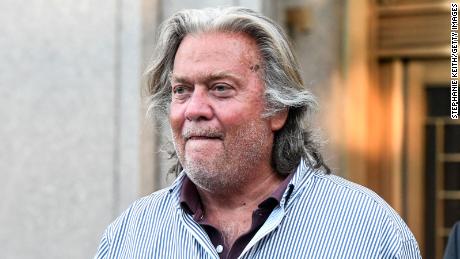
Two Chicago Tribune Columnists. Which one is clueless?

Here are excerpts from two articles that appeared in today’s Chicago Tribune. One of the authors has proved time and again he is a Trump conservative and clueless about economics — a redundancy.

Here are excerpts from the two articles.

Fed bailout for state akin to aiding bust-out gambler
John Kass

If you’re a taxpayer from a well-run state with low public worker union pension debt, you may be watching in horrified fascination as House Speaker Nancy Pelosi pushes the political buttons for the new CARES Act 2 federal coronavirus relief bill.

People and businesses need help. The government shut down the economy to deal with the pandemic. There are serious coronavirus costs and federal help is needed.

But what’s worrisome is this: politics could morph necessary relief into a massive no-strings-attached bailout for Illinois, New York, New Jersey and other poorly run states to pay down their unfunded public worker pension debts.

And who pays? You do.

It’s like watching your grandma take your college fund to pay off her brother’s gambling debts.

OK, you guessed it. John Kass, whose column appears on the coveted page 2 of the Tribune, writes a good column about local government, but he is Trump-dumb when it comes to federal finance.

I have corresponded with him numerous times about the difference between the federal government’s (Monetarily Sovereign) financing vs. state/local government (monetarily non-sovereign) financing.

I have explained to him that unlike state/local taxpayers, who do fund state/local government spending, federal taxpayers do not fund anything.

Their tax dollars are destroyed upon leaving their checking account, and the federal government creates brand new dollars, ad hoc, every time it pays a bill.

So it is nothing at all “like watching your grandma take your college fund to pay off her brother’s gambling debts.”

That might be a decent analogy if Kass were talking about state/local government taxpayers, but it simply is wrong when talking about federal taxpayers.

But (and I’m sure you have learned this), Trump-dumb people are Trump-dumb stubborn, especially when it comes to learning something Trump or Fox has not told them.

So Kass continues on his merry way, spreading Trump-ignorance to the masses, with the able assistance from such learned scientists as Russ (“It’s the common cold.”) Limbaugh and Sean (“There is no crisis.”) Hannity, and the boobs at Fox & Friends.

More excerpts from the Kass article:

The Democratic governors have their talking points. This isn’t a bailout, they say. Instead, it’s all about “fairness” and “donor states.”

“As you know, we are a donor state to the federal government,” Illinois Governor Pritzker said the other day. “We pay more in federal taxes in Illinois than we get back from the federal government.

“The states who are being bailed out, year after year, are the states who take more out of the federal dole than they put in.”

The Democratic talking points sound reasonable, until you realize the states Pritzker says are being “bailed out, year after year,” are in the main, extremely poor states, with many poor people who need federal assistance programs.

These “extremely poor states, with many poor people who need federal assistance programs” also, by strange coincidence mostly are “red” states that gather nice, big, fat surpluses from the federal government.

Perhaps Kass was being compassionate, right? Uh, not really.

The political class in each of these states, mostly Democrats but with help from a few local Republican handmaidens, had put taxpayers on the hook for unsustainable public pension deals for government workers.

Now in Illinois, the unfunded public worker pension debt is estimated in the hundreds of billions of dollars. The state’s bond ratings are just above junk status. Illinois state Senate President Don Harmon, D-Chicago, has asked Congress for a $41.6 billion bailout.

Taxpayers are on the hook and the pension burden shifts to property taxes. The property taxes rise, and their home values fall. Taxpayers are now the servants of public servants.

Coronavirus didn’t do this. Trump didn’t do this. Local politicians did this.

“Compassionate” Kass is concerned about the “many poor people who need federal assistance programs” in red states, but far less concerned about public workers whose pensions are in danger in blue states.

He also is far less concerned about Illinois (blue state) homeowners whose already high property taxes will rise again and whose homes will lose value. After all, they mostly are anti-Trump Democrats.

And Mr. Jack (Trump shill) Kass, thank you for making sure we understand that Trump wasn’t at fault.

But then, he never is at fault for anything, is he?

So why should taxpayers of “well-run and prudent states” be asked to bail out the politicians of Illinois and elsewhere for decades worth of bad decision-making?

The politicians and mouthpieces will prattle on about “fairness” and “donor states.” But they want someone else to pay their debts.
And the bill is due.

jskass@chicagotribune.com
Twitter @John_Kass

Now let’s get to the facts, which the Trump-dumb always ignore in favor of scorn tossed at some non-Trump group.

The states having big cities with large, minority, poor populations are the ones having the worst financial problems, because these large, minority, poor populations need the most government financial assistance — which liberal blue states provide and conservative red states avoid (like paying for health-care).

Blue, progressive states are more likely to help the poor. The red, conservative states are the ones that do the least for the poor.

That’s an important reason why the red states appear (to Kass) to be “well-run and prudent states.” In Kass/Trump world, “prudent” means: “Screw the poor.”

It sure isn’t that the red-state governments are less crooked, or more “well-run and prudent.” (Lousiana, Missippi, Alabama, Georgia, South Carolina, North Carolina, Kansas — well-run and prudent? Really?)

Those red-neck southern politicians are no less slimy than the blue state grafters.

Of course, all the phony moralizing by Jack Kass is a “look-the-other-way” digression.

Federal spending costs federal taxpayers nothing. It would take $0 from any taxpayer’s pocket if the federal government simply gave billions to every state and didn’t take anything from any state.

And now we come to a second article that appeared in today’s Tribune:

Turnabout’s fair play: Illinois has been ‘bailing out’ other states for decades
Gov. J.B. Pritzker responded Monday to a tweet by President Donald Trump, saying Illinois pays “more in federal taxes in Illinois than we get back” from the feds.
Eric Zorn

President Donald Trump took to Twitter midmorning Monday with an aggressive question : “Why should the people and taxpayers of America be bailing out poorly run states (like Illinois, as example) and cities, in all cases Democrat run and managed, when most of the other states are not looking for bailout help?”

Trump was amplifying a complaint April 22 about “blue-state bailouts” by U.S. Senate Majority Leader, Republican Mitch McConnell, R-Ky., as well as South Carolina’s former Republican Gov. Nikki Haley’s tweet on Saturday singling out Illinois when making the case that federal pandemic relief funds “should not bail out states that have recklessly spent and taxed their way into oblivion.”

Gee, I wonder where Jack Kass got his talking points.

They sound just like Trump and Trump toadies Moscow Mitch McConnell and the Republican former governor Nikki Haley.

Plagiarism?

According to a January analysis by the State University of New York’s Rockefeller Institute of Government, in the years 2015 through 2018, Illinois sent an average of $5.6 billion a year more to Washington than Washington sent back in such forms as grants to state and local governments, wages to federal workers, safety-net programs, contracts, and Social Security, veterans’ and Medicare benefits.

Haley’s home state of South Carolina? That red state received an average $21.8 billion more from Uncle Sam than its taxpayers remitted, according to the Rockefeller data.

McConnell’s red state of Kentucky? A whopping average of $37 billion more.

The Rockefeller study identified 10 other states along with Illinois that pay more in federal taxes than they get back.

On that list are only two “red” states that voted for Republican Trump in the 2016 presidential election: No. 8 Nebraska ($752 million) and No. 10 Utah ($595 million).

A similar analysis by the New York state comptroller’s office that focused just on fiscal year 2018 found Illinois had a negative federal balance of $11.4 billion.

In that study, Illinois was one of just seven donor states, all of which voted for Democrat Hillary Clinton in 2016.

South Carolina, for reference, came out $26.1 billion ahead in 2018; Kentucky came out $29.9 billion ahead.

Odd how Jack Kass failed to mention those numbers.

Illinois residents “bailed out” other states to the tune of $863 per person, the New York comptroller’s report shows.

Each South Carolina resident, in contrast, came out $5,139 ahead on average, while each Kentucky resident came out $6,694 ahead.

According to “ States Most Dependent on the Federal Government ,” published in 2019 by SmartAdvisor, Illinois is the 45th most dependent on federal dollars with 29.4% of its annual budget coming from the feds. South Carolina is 28th most dependent with 33.2% and Kentucky is sixth at 41%.

I guess they are what is known as “well-run and prudent states,” so long as the federal government is pumping billions of dollars into their treasuries.

This sort of imbalance is nothing new.

Data in an old Tax Foundation study, “ Federal Taxes Paid vs. Federal Spending Received by State, 1981-2005 ,” shows that on average, Illinois had a $16 billion annual negative balance over those 25 years, with taxpayers getting back an average of 74 cents in federal spending in the state for every dollar they sent to the IRS.

The Tax Foundation has not updated that study, and the Illinois governor’s Office of Management and Budget does not track these figures.

Numerous factors influence how federal dollars are acquired and distributed at the state level, including poverty rates, the age of the population, the location of military bases, universities and major businesses and prevailing wages.

O.K., so that should take care of the Trump/Kass “bailout bullshit.

But then, oh dear, save us from our friends. It looks like even the more intelligent writers still are ignorant about federal finances. Eric Zorn’s article continues:

But no matter how or why the money flows where it does, the bottom line is that Illinois and other donor states are helping prop up such recipient states as South Carolina and Kentucky.

Our taxpayers in effect funnel money into their economies, money that props up their businesses and keeps their taxes and government spending lower than they would otherwise have to be.

No, Eric, Illinois taxpayers do not funnel money to South Carolina or Kentucky.  All federal tax dollars are destroyed as soon as they leave a taxpayer,s checking account.

The fact that Illinois taxpayers pay more, and Kentucky taxpayers receive more gives the illusion that Illinois taxes pay for Kentucky’s largess.

(Just to be fair to Eric Zorn, he did say “in effect,” so perhaps he does understand that federal taxpayers do not “funnel money” to anywhere or any thing. Those dollars immediately are destroyed.)

That is like the railroad crossing illusion in which the blinking lights individually turn off and on, but look like they are bouncing back and forth.

Train Crossing, Flashing Red Lights, Railroads

The railroad crossing lights are an analogy for Monetary Sovereignty. Think of the left light being taxpayers and the right light as the Treasury.

The left light going off is equivalent to dollars in the checking account of a taxpayer being instantly destroyed as soon as the check is cashed.

The right light going on is equivalent to an internal, accounts receivable, balance sheet credit.

Then, the right light going off is equivalent to a debit to that accounts receivable account, and the left light going on is equivalent to a credit to a private-sector checking account — new money being created.

The lights and the dollars do not flow back and forth. They are alternately created and extinguished.

It only is instructions that tell each party what to do, just as instructions tell each railroad light to turn on and off.

There is no back-and-forth flow of money or light.

The U.S. government has the unlimited ability to debit and credit (light and extinguish) its balance sheet at will.

But that does not affect its ability to send instructions to a creditor’s bank, which debits and credits a private sector account.

But if Illinois had gotten back even close to what its taxpayers had put into the federal system over the years, its public pensions would be fully funded and the treasury would still show a surplus of literally hundreds of billions of dollars.

And that is the key. Blue state residents send billions of dollars to a federal government that destroys every dollar it receives and creates new dollars for spending.

Of course that’s not how it works. Not in a city, where taxes from wealthier neighborhoods support services in poorer neighborhoods.

Not in a state, where taxes from prosperous regions support residents in struggling areas.

And not in a nation, where, in the end, we’re all supposed to be in the fight together.

The answer to Trump’s question about why the people and taxpayers elsewhere should be bailing out states particularly hard hit by this pandemic is simple: Because we’ve been bailing them out for years.
ericzorn@gmail.com
Twitter @EricZorn

Not quite. We (Illinois et al) needlessly have been tossing dollars down the federal toilet.

That is a huge reason “we” need money from the federal government.

Rodger Malcolm Mitchell
Monetary Sovereignty
Twitter: @rodgermitchell
Search #monetarysovereignty Facebook: Rodger Malcolm Mitchell

…………………………………………………………………………………………………………………………………………………………………………………………………………………………………………………………………………………………..

THE SOLE PURPOSE OF GOVERNMENT IS TO IMPROVE AND PROTECT THE LIVES OF THE PEOPLE.

The most important problems in economics involve:

  1. Monetary Sovereignty describes money creation and destruction.
  2. Gap Psychology describes the common desire to distance oneself from those “below” in any socio-economic ranking, and to come nearer those “above.” The socio-economic distance is referred to as “The Gap.”

Wide Gaps negatively affect poverty, health and longevity, education, housing, law and crime, war, leadership, ownership, bigotry, supply and demand, taxation, GDP, international relations, scientific advancement, the environment, human motivation and well-being, and virtually every other issue in economics.

Implementation of Monetary Sovereignty and The Ten Steps To Prosperity can grow the economy and narrow the Gaps:

Ten Steps To Prosperity:

1. Eliminate FICA

2. Federally funded Medicare — parts A, B & D, plus long-term care — for everyone

3. Provide a monthly economic bonus to every man, woman and child in America (similar to social security for all)

4. Free education (including post-grad) for everyone

5. Salary for attending school

6. Eliminate federal taxes on business

7. Increase the standard income tax deduction, annually. 

8. Tax the very rich (the “.1%”) more, with higher progressive tax rates on all forms of income.

9. Federal ownership of all banks

10. Increase federal spending on the myriad initiatives that benefit America’s 99.9% 

The Ten Steps will grow the economy and narrow the income/wealth/power Gap between the rich and the rest.

MONETARY SOVEREIGNTY
OMG! Please Mr. Biden, please: Not Larry Summers.

Joe Biden Needs To Stay Away From Larry Summers | HuffPost
Biden and Summers. Oh, no, no, no, please, no.

I favor Joe Biden in the next election, not because I believe he will be a great President (He won’t), but because anyone or anything, even my pet Shetland Sheep Dog, will be a smarter, more honest, just all-around-better President than Donald (“bottom of the barrel“) Trump.

And my dog died years ago.

So I will take a deep breath and check the Biden box next November. But my patience with Joe (“far lesser of two evils”) Biden stretched when I read the following article. Excerpts:

In a Slap in the Face to Progressives, Biden Appoints Larry Summers, a “Literal Architect of Neoliberalism,” to Economic Advisory Role
Posted on April 28, 2020 by Yves Smith

Over the past three decades, Summers has amassed a policy record of almost unrivaled social ruin.
—Zach Carter, Huffington Post

In a slap in the face to progressives, Joe Biden, who has already announced that if he’s elected “nothing would fundamentally change,” has appointed the head of Barack Obama’s National Economic Council, Larry Summers, as a key adviser to his campaign.

Immediately, history-savvy readers may gasp, for if Barack (“The federal government should live within its means”) Obama was bad at anything, it was economics.

From a 2013 post on this site:

“Obama is the one who allowed the most regressive tax in US history (FICA) to rise about 25%, fired many thousands of government workers and repeatedly has stumped for reductions in Social Security benefits and reductions in other spending that would help the underclasses (his ‘Grand Bargain.’)”

Obama also became known as the “deporter-in-chief,” later to be surpassed only by the notorious Donald (“I know more about everything than anyone“) Trump.

The Yves Smith article continues:

Former Treasury Secretary Lawrence Summers is advising Joe Biden’s presidential campaign on economic policy, including its plans to revive the U.S. economy after the coronavirus pandemic.

The Obama and Clinton administration veteran’s role roiled progressives who view his past work on the 2009 recovery as too favorable to big banks.

Two Sanders-aligned groups, Justice Democrats and Sunrise Movement, said Friday they “hope Biden publicly rejects Summers’s role as an economic adviser to better earn the trust of our generation.”

They said they also plan to start a petition calling on Biden to pledge to exclude Summers from his transition team or administration.

Please, where is that petition? I want to sign it. My wife will sign it. My children and grandchildren will sign it. My dead dog (who has caused fewer problems than Trump, but also caused way fewer than Summers) will sign it.

Summers is such a bad choice that The American Prospect writer Robert Kuttner put Summers at the top of his “do not re-appoint” list.

Here is what I published previously about Larry Summers:

As you know, Larry Summers is almost perfect. He has screwed up virtually everything he has touched (except raking in dollars for himself) (from Wikipedia):

“Summers said, ‘There isn’t a risk of an apocalypse due to global warming or anything else. The idea that we should put limits on growth because of some natural limit, is a profound error and one that, were it ever to prove influential, would have staggering social costs.’”

“There was a scandal when it emerged that some of (Summers’s) Harvard (Russian adviser) project members had invested in Russia, and were therefore not impartial advisers.

“Summers pressured the Korean government to raise its interest rates and balance its budget in the midst of a recession.”

“Summers was a leading voice within the Clinton Administration arguing against American leadership in greenhouse gas reductions.”

“As Treasury Secretary, Summers led the Clinton Administration’s opposition to tax cuts proposed by the Republican Congress.”

“Summers hailed the Gramm-Leach-Bliley Act in 1999, which lifted more than six decades of restrictions against banks offering commercial banking, insurance, and investment services (by repealing key provisions in the 1933 Glass–Steagall Act).”

Summers said, “The parties to these kinds of contract (derivatives) are largely sophisticated financial institutions that would appear to be eminently capable of protecting themselves from fraud and counterparty insolvencies.”

And let’s not even get into all his Harvard debacles. The list of Summers’s idiocy goes on and on. The above is but a short sample. The man is an economics clown.

Summers is the classic Peter Principle failure, having repeatedly been promoted so far above his abilities that his brain must have suffered from oxygen deprivation.

So aside from Biden wanting to ride Obama’s coattails into the Oval office, why would Biden choose such an obvious charlatan to be his economic advisor?

Yves Smith answers:

But as Rising’s Saagar Enjeti points out, the real group that Biden needs to assure isn’t Progressive Avenue or even Main Street — it’s Wall Street.

As Bloomberg put it, with this move Biden has “offered some reassurance [to] Wall Street that Biden is not moving too far to the left from the centrist positions that earned him his establishment support.”

As Robert Kuttner pointed out:

Obama’s team was headed by Jason Furman, a close protégé of investment bankerRobert Rubin.

But the most senior appointees would eventually be Lawrence Summers as head of the National Economic Council and Tim Geithner as Treasury Secretary. They would make sure that the big banks would be bailed out rather than cleaned out.

[Note that under Obama and Summers not one high-level criminal banker was sent to jail. Jail was for people like shop-lifters and corner marijuana sellers, not billion-dollar bank crooks.]

Previously, under Clinton, Summers was a prime architect and huge enthusiast of what proved to be fatal financial deregulation.

He was also in charge of Clinton’s economic policy for post-Soviet Russia economic policy for post-Soviet Russia, and was responsible for pushing for early and catastrophic privatization of state assets, a fire sale that led directly to the creation of Russia’s oligarchs.

As president of Harvard, he proved to be both arrogant and sexist, to the point where he got himself fired. …

It just gets worse and worse:

[As Obama’s chief economic advisor, Summers] not only lowballed the necessary economic stimulus and ended it prematurely, but he successfully fought for rescuing the biggest banks rather than taking them into temporary receivership.

Back at Harvard, Summers earns over $600,000 as a university professor but also moonlights at the hedge fund D.E. Shaw, where his compensation is well into the seven figures. (Some would say he moonlights at Harvard.)

There are so many ways that Summers is a bad choice, it’s difficult to enumerate them, though both Kuttner and the HuffPost’s Zach Carter try, “Over the past three decades, Summers has amassed a policy record of almost unrivaled social ruin.”

Then he lists the ways.

If Biden had said, “I know absolutely nothing about how to grow an economy. I need to hire the most stupid person in America, so I can look smart by comparison,” I would have suggested he choose between Larry Summers and Donald Trump.

How the heck did the United States of America, the most powerful nation in history, ever wind up with these two Presidential candidates, one of whom hired the most crooked and ignorant team ever, and the other of whom seems determined to do the same?

God help us all.

Rodger Malcolm Mitchell
Monetary Sovereignty
Twitter: @rodgermitchell
Search #monetarysovereignty Facebook: Rodger Malcolm Mitchell

…………………………………………………………………………………………………………………………………………………………………………………………………………………………………………………………………………………………..

THE SOLE PURPOSE OF GOVERNMENT IS TO IMPROVE AND PROTECT THE LIVES OF THE PEOPLE.

The most important problems in economics involve:

  1. Monetary Sovereignty describes money creation and destruction.
  2. Gap Psychology describes the common desire to distance oneself from those “below” in any socio-economic ranking, and to come nearer those “above.” The socio-economic distance is referred to as “The Gap.”

Wide Gaps negatively affect poverty, health and longevity, education, housing, law and crime, war, leadership, ownership, bigotry, supply and demand, taxation, GDP, international relations, scientific advancement, the environment, human motivation and well-being, and virtually every other issue in economics.

Implementation of Monetary Sovereignty and The Ten Steps To Prosperity can grow the economy and narrow the Gaps:

Ten Steps To Prosperity:

1. Eliminate FICA

2. Federally funded Medicare — parts A, B & D, plus long-term care — for everyone

3. Provide a monthly economic bonus to every man, woman and child in America (similar to social security for all)

4. Free education (including post-grad) for everyone

5. Salary for attending school

6. Eliminate federal taxes on business

7. Increase the standard income tax deduction, annually. 

8. Tax the very rich (the “.1%”) more, with higher progressive tax rates on all forms of income.

9. Federal ownership of all banks

10. Increase federal spending on the myriad initiatives that benefit America’s 99.9% 

The Ten Steps will grow the economy and narrow the income/wealth/power Gap between the rich and the rest.

MONETARY SOVEREIGNTY

How the federal government first will cause stagflation, then exacerbate it.

British Chancellor of the Exchequer Iain MacLeod invented the term, “stagflation,” to describe a combination of economic stagnation, high unemployment, and inflation.

Mobster Al Capone Ran a Soup Kitchen During the Great Depression ...
The Depression of 1929

Today, we’re well on our way. We already have economic stagnation and unemployment, and because of the inept way Congress and the President are operating, we soon will have inflation.

Americans on Cusp of Meat Shortage With Food Chain Breaking
By Michael Hirtzer and Jen Skerritt, Bloomberg, April 27, 2020

The coronavirus pandemic is pushing the food supply chain to its limits.

Plant shutdowns are leaving Americans dangerously close to seeing meat shortages at grocery stores. Meanwhile, farmers are facing the likely culling of millions of animalsand mass burial graves could soon be dug across the heartland.

“The food supply chain is breaking,” said John Tyson, chairman of Tyson Foods Inc., the biggest U.S. meat company.

Outbreaks are forcing the closure of some of the country’s biggest slaughterhouses, where tens of thousands of animals are processed daily.

As the plants shutter, producers are left with nowhere to sell their livestock. It’s forcing farmers to make gut-wrenching decisions to dispose of their animals.

The situation is so severe that the U.S. government is setting up a center partly to assist on “depopulation and disposal methods.”

Smithfield Foods Inc., the world’s No. 1 pork producer, and JBS SA, the biggest global meat company, say that consumers are likely to see meat shortfalls.

10,000 Line Up For Free Food In San Antonio - News & Guts Media
Food lines: 2020

“It’s absolutely unprecedented,” said Brett Stuart, president of Denver-based consulting firm Global AgriTrends. “It’s a lose-lose situation where we have producers at the risk of losing everything and consumers at the risk of paying higher prices. Restaurants in a week could be out of fresh ground beef.”

Meat prices are surging on the supply disruptions. U.S. wholesale beef has surged to a record, and wholesale pork soared almost 30% last week.

And these shutdowns are happening at a time when global meat supplies were already tight. China, the world’s top hog producer, has been battling an outbreak of African swine fever, which destroyed millions of the country’s pigs. Plus the virus is hitting production after some meat companies had already taken steps to slow output because of the closure of restaurants around the world.

Meanwhile, plants are also facing a labor crunch as employees fall ill. It’s been reported that a large chicken-processing company was forced to kill 2 million of its birds earlier this month because of worker shortages.

And speaking of worker shortages:

Here is what you can foresee as the greatest danger to America since the Civil War:

1. Meat prices will first fall because of oversupply; then prices will rise dramatically as animals are culled and shortages begin.
2. When the Fed sees the resultant inflation, it will increase interest rates, which the stock markets will perceive as a negative signal, and act accordingly.
3. Congress will see inflation and falsely attribute it to “excessive” federal stimulus spending, so it will institute austerity by cutting spending and raising taxes.
4. The resultant lack of federal financial support for businesses and consumers will exacerbate the current massive unemployment and a recession, the first two legs of stagflation.
5. The recession will cause economists, politicians, and the media to demand further austerity — tax increases and a reduction in federal spending — which will drive us down into a depression.
5. With each drop in GDP, demands for greater austerity will be issued.
6. Meanwhile, a strongman will emerge to claim that the situation calls for laws giving him the power to cure the depression, which he will not do.
7. Instead, he will use those new powers to enrich himself and his family, which he will appoint to unassailable positions of political, monetary, and military power.
6. The depression will widen the Gap between the rich and the rest, leading to an American autocracy, obliterating the results of the Revolutionary War.
7. Ultimately, America will turn into a shadow North Korea or Cuba where a single family wields ultimate power for decades.

And it all will have begun with five myths:

Myth I. Federal deficit spending is unsustainable.
(Fact: The federal government, being Monetarily Sovereign, can sustain any amount of deficit spending. It never can run short of dollars, and does not need or use tax dollars to fund spending.)

Myth II. Federal deficit spending leads to inflation.
(Fact: Food and/or energy shortages, not deficit spending, cause inflations. Thus inflations actually can be cured by deficit spending to create or obtain and distribute the scarce products.)

Myth III. Austerity, which takes money from the economy, is fiscally prudent.
(Fact: The lack of federal deficit spending leads to recessions and depressions.)

Myth IV. During financial emergencies, the protections afforded by the Constitution must temporarily end until the crisis passes.
(Fact: The Constitution was written during a time of financial crisis. Crisis is what the Constitution was designed to cope with, but the Congress and the U.S. Supreme Court will agree with ending Constitutional protections, as they often have during crises.)

Myth V.  During a financial crisis, the nation must come together behind a strong leader.
(Fact: The single greatest financial crisis facing America is the immoral and widening Gap between the very rich and the rest. The nation must come together, not behind a strong man but behind strong morals, to lift up the poor and downtrodden. Narrowing the Gap will make America Great, Again.)

That is our America, the America who built the most admired nation in the world, the America who created the Bill of Rights, the America who displays the Statue of Liberty on its shore, upon which are inscribed the immortal words:

“. . .  Mother of Exiles. From her beacon-hand
Glows world-wide welcome; her mild eyes command
. . .  “Give me your tired, your poor,
Your huddled masses yearning to breathe free,
The wretched refuse of your teeming shore.
Send these, the homeless, tempest-tost to me . . .”

When we speak of “the American dream,” that is the dream. When we speak of the American way, that is the way.

And it all is possible if we reject the myths promulgated by cold-hearted, mean-spirited, ignorant rich men, whose only wish is to climb by stepping on the backs of the rest of us.

We have a federal government with the power to eliminate poverty, not exploit it. That could be our strength. That could be who we are.

That, not raw, exclusionary power, could really be what makes America great, again.

Rodger Malcolm Mitchell
Monetary Sovereignty
Twitter: @rodgermitchell
Search #monetarysovereignty Facebook: Rodger Malcolm Mitchell

…………………………………………………………………………………………………………………………………………………………………………………………………………………………………………………………………………………………..

THE SOLE PURPOSE OF GOVERNMENT IS TO IMPROVE AND PROTECT THE LIVES OF THE PEOPLE.

The most important problems in economics involve:

  1. Monetary Sovereignty describes money creation and destruction.
  2. Gap Psychology describes the common desire to distance oneself from those “below” in any socio-economic ranking, and to come nearer those “above.” The socio-economic distance is referred to as “The Gap.”

Wide Gaps negatively affect poverty, health and longevity, education, housing, law and crime, war, leadership, ownership, bigotry, supply and demand, taxation, GDP, international relations, scientific advancement, the environment, human motivation and well-being, and virtually every other issue in economics.

Implementation of Monetary Sovereignty and The Ten Steps To Prosperity can grow the economy and narrow the Gaps:

Ten Steps To Prosperity:

1. Eliminate FICA

2. Federally funded Medicare — parts A, B & D, plus long-term care — for everyone

3. Provide a monthly economic bonus to every man, woman and child in America (similar to social security for all)

4. Free education (including post-grad) for everyone

5. Salary for attending school

6. Eliminate federal taxes on business

7. Increase the standard income tax deduction, annually. 

8. Tax the very rich (the “.1%”) more, with higher progressive tax rates on all forms of income.

9. Federal ownership of all banks

10. Increase federal spending on the myriad initiatives that benefit America’s 99.9% 

The Ten Steps will grow the economy and narrow the income/wealth/power Gap between the rich and the rest.

MONETARY SOVEREIGNTY